India IPO Timeline 1991-2026: Biggest IPOs, Records and the 2026 Boom
Track India's IPO history from the 1991 reforms to the 2026 IPO rush: NSE, dot-com listings, Coal India, Zomato, Paytm, Nykaa, LIC, Hyundai and Jio.
Latest Story
India is running one of the busiest IPO markets in the world right now. Reuters reported that the country had logged 165 IPOs raising $8.61 billion by late August 2026, and that a record six IPOs were lined up to open on a single day in September. That is not a sudden spike. It is the payoff of a three-decade build: the 1991 reforms that opened India’s economy, the electronic exchange the NSE brought to Dalal Street in the 1990s, a generation of retail investors who now trade from a phone, private-equity funds looking for an exit, a wave of startups that decided the stock market was the next stage of growth, and deep domestic liquidity chasing a shrinking supply of good companies. This India IPO timeline tracks how it happened, year by year — and why not every IPO in a boom turns out to be a good one.
📱 Short Answer: Is India in an IPO Boom?
Yes. India is in a major IPO boom in 2026. Reuters reported that India had 165 IPOs raising $8.61 billion by late August 2026, and that a record six IPOs were scheduled for one day in September. The boom is driven by strong domestic investor demand, private-equity exits, startup maturity, SEBI approval activity and major expected listings such as NSE and Jio. But the market is selective, and not every IPO delivers strong returns.
India is seeing an IPO boom because many companies are using strong domestic investor appetite, high market participation, faster regulatory approvals, private-equity exit needs and growth-sector demand to go public. But investors are becoming more selective, so not every IPO is automatically a winner.
What to hold onto
- Three decades in the making. India’s IPO story accelerated after the 1991 economic reforms and the rise of modern, electronic exchanges.
- NSE modernised the plumbing. Electronic trading, transparent settlement and national reach in the 1990s replaced a floor-based, broker-driven system.
- Cycles, not a straight line. The 2000s brought dot-com and infrastructure listings, then the 2008 global financial crisis shut the IPO window almost overnight.
- Record markers keep shifting. Coal India, Paytm, LIC and Hyundai Motor India each became the biggest IPO of their moment.
- 2021 changed the buyer base. The startup IPO wave — Zomato, Paytm, Nykaa — brought internet, loss-making, high-growth companies to a market used to profitable industrials.
- 2026 is the busiest year yet. Reuters reported 165 Indian IPOs raising $8.61 billion by late August 2026.
- Six IPOs, one day. September 2026 saw a record single-day cluster of new listings, a sign of both demand and a crowded pipeline.
- NSE and Jio are the watchlist. Both are widely reported mega-IPO candidates for India’s next stage — treat every figure as reported or expected until it is final.
- Fame is not the same as value. A well-known brand can still list at an expensive price.
- This article is informational only and should not be treated as investment advice.
India IPO Timeline: 1991-2026
Newest first
NSE and Jio Watch
What’s happening: the National Stock Exchange’s own long-pending public issue moved forward in 2026 with SEBI’s regulatory nod reported for its listing process, while Jio Platforms received SEBI’s observation letter on its draft prospectus on 28 August 2026 for a proposed fresh issue of up to 27 crore shares, reported near $3.8 billion.
Why it matters: together, NSE and Jio are described by market participants as the two mega-listings that could anchor India’s IPO pipeline into 2027. Neither has a confirmed price band or listing date as of this update — use “expected”, “filed” or “approved” language until the final offer documents say otherwise.
IPO Rush Hits High Gear
What happened: Reuters reported that by late August 2026, India had recorded 165 IPOs raising $8.61 billion. Reuters also reported that a record six IPOs were lined up to open on one day in September 2026 — six mainboard and SME issues opening together on 9 September, part of an 11-issue window targeting roughly ₹7,055 crore that week.
Why it matters: high listing volume signals confidence, but it also spreads investor money thin and creates fatigue — several IPOs competing for the same subscription cycle, the same anchor-investor pool and the same retail attention.
IPO Market Broadens
What happened: the market widened past the old industrial-and-bank pattern. Hyundai Motor India’s October 2024 offer-for-sale raised about ₹27,870 crore, becoming India’s largest IPO by issue size at the time and a landmark for the auto sector. Alongside it, consumer, financial-services, defence and SME-segment issuers all reached the market in growing numbers through 2024-25.
Why it matters: a broader mix of sectors listing is usually read as a healthier market than one dominated by a handful of mega state-backed offers.
LIC IPO Marks a New Scale
What happened: the Life Insurance Corporation of India, the country’s largest insurer, listed in May 2022 through a government offer-for-sale of about ₹21,000 crore (roughly $2.7 billion), priced at the top of its range.
Why it matters: LIC was the biggest Indian IPO of its kind — a state-owned financial giant, not a startup or an industrial firm — and it tested how much retail and institutional demand a single mega-offer could absorb.
Startup IPO Wave Arrives
What happened: 2021 brought India’s first big cohort of consumer-internet listings. Zomato raised about ₹9,375 crore and listed on 23 July 2021, becoming the country’s first major food-delivery-platform IPO. Nykaa’s parent FSN E-Commerce raised about ₹5,352 crore and listed on 10 November 2021. Paytm’s parent One97 Communications raised about ₹18,300 crore in November 2021, then India’s largest IPO by issue size.
Why it matters: these were app-based, often loss-making platform businesses valued on growth and market share rather than current profit — a different underwriting story than the market was used to. Paytm’s stock fell sharply after listing, which became a widely cited caution about valuation versus hype in new-economy IPOs.
Insurance, Exchanges and New Financial Listings
What happened: India’s IPO market deepened on the financial side. State-run and private insurers, including General Insurance Corporation and New India Assurance, listed through large public issues, and market-infrastructure-adjacent financial firms tested public investor appetite for regulated, capital-heavy businesses.
Why it matters: insurance and financial-infrastructure listings brought long-duration, dividend-oriented businesses to the exchange, a contrast to the growth-stock startup listings that would follow in 2021.
Coal India Becomes a Landmark IPO
What happened: Coal India, the state-run coal producer and the world’s largest coal company by output, raised about ₹15,200 crore in an October 2010 public offer, then the biggest IPO in Indian stock market history. It listed on the BSE and NSE on 4 November 2010, opening at a roughly 17% premium to its issue price.
Why it matters: Coal India’s IPO was a record marker for its era and a template for large public-sector offers that followed, including LIC in 2022.
Boom Meets Global Financial Crisis
What happened: the global financial crisis hit just as India’s mid-2000s IPO boom was near its peak. Liquidity dried up, risk appetite collapsed, and several planned Indian IPOs were shelved or downsized through 2008-09.
Why it matters: the 2008 crash is the clearest historical reminder that an IPO window can close as fast as it opened — a lesson relevant to reading the scale of the 2026 rush.
Bull Market and Infrastructure IPOs
What happened: a multi-year bull run coincided with fast GDP growth, and infrastructure, telecom, finance and industrial companies queued up to raise capital. Rising participation from domestic and foreign institutional investors deepened the market’s capacity to absorb bigger issues.
Why it matters: this period built the investor base and underwriting infrastructure that later record-setting IPOs (Coal India, LIC, the 2021 startup wave) would depend on.
Dot-Com Excitement Reaches Dalal Street
What happened: global dot-com enthusiasm spilled into Indian markets. Technology and internet-linked listings drew intense investor interest, and valuations for some issuers ran well ahead of their underlying business fundamentals.
Why it matters: quality and financial discipline varied sharply across this cohort. When the global dot-com bubble burst in 2000-01, several of these listings lost most of their value — an early version of the same warning the 2021 startup wave would later revisit.
NSE Era Begins
What happened: the National Stock Exchange of India was incorporated in 1992 and began operations with wholesale debt trading in mid-1994, followed by electronic equity trading later that year. It replaced the old open-outcry, broker-controlled floor system with a nationwide, screen-based, transparent order-matching system.
Why it matters: NSE’s arrival democratised market access — an investor in a small town could trade on equal footing with one in Mumbai, for the first time. That infrastructure shift is what made every later IPO boom, from Coal India to Jio, logistically possible at national scale.
Economic Reforms Open the Door
What happened: facing a balance-of-payments crisis, India’s government launched sweeping economic reforms in 1991 — delicensing much of industry, opening the door to foreign investment, and gradually dismantling the license-permit system that had constrained private enterprise for decades.
Why it matters: liberalisation created the conditions for a much larger universe of private companies to grow, seek capital and eventually go public. Without 1991, there is no Coal India IPO, no startup wave, no 2026 rush — this is the root event of India’s modern IPO story.
How India’s IPO Boom Works
The chain from 1991 reforms to the 2026 rush
A busy pipeline is not the same as a safe one — see the investor caution box below.
How an IPO Actually Gets to Market
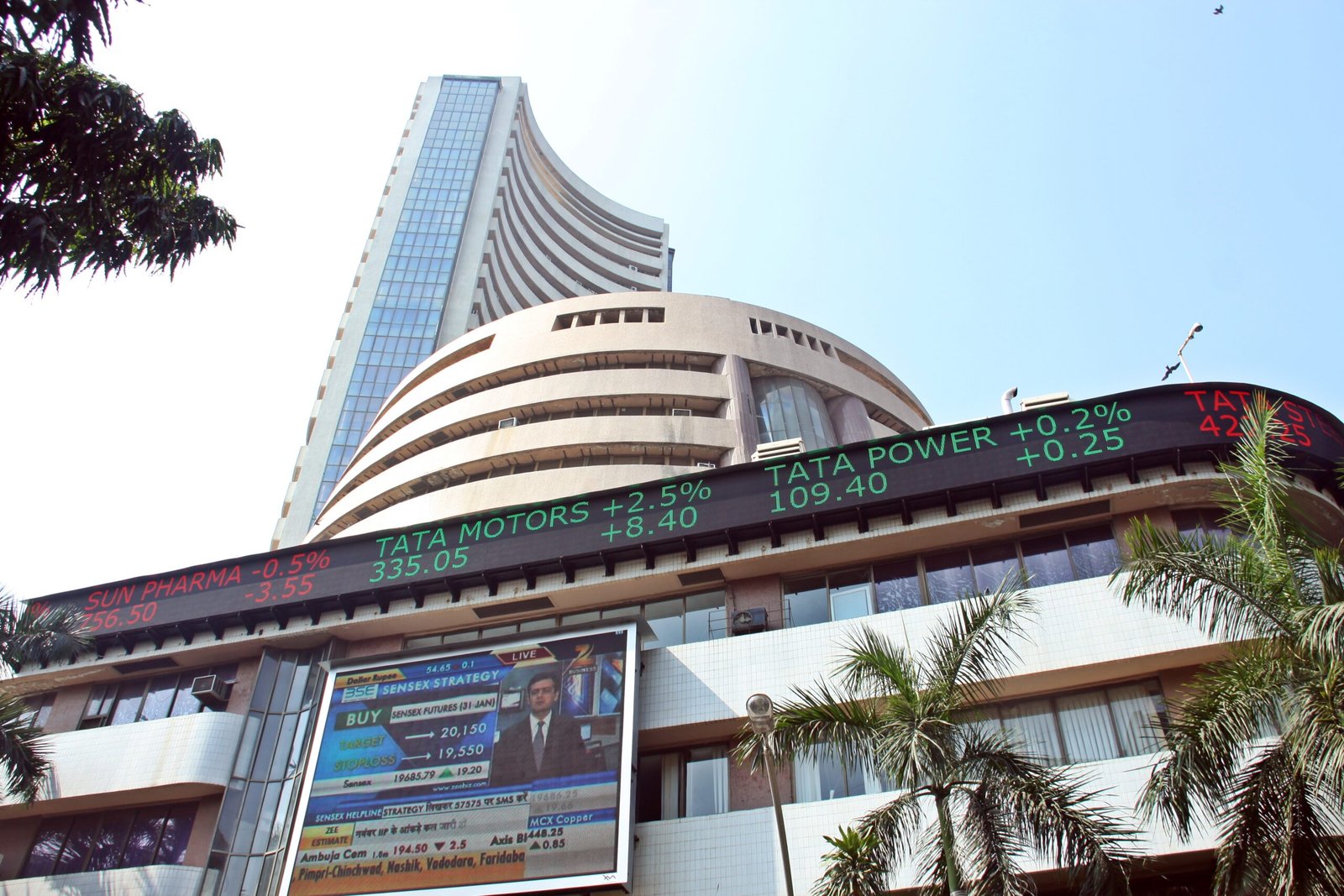
The Bombay Stock Exchange building at Dalal Street, Mumbai — the historic heart of India’s equity markets. (Wikimedia Commons, CC BY-SA 3.0)
India’s Biggest IPO Milestones
Verified figures only — watchlist rows are reported, not final
| Company | Year | Approx. issue size | Why it mattered | Status note |
|---|---|---|---|---|
| Hyundai Motor India | 2024 | ~₹27,870 Cr | Largest IPO by issue size at the time; major auto-sector listing | Completed · listed Oct 2024, pure OFS |
| LIC | 2022 | ~₹21,000 Cr | Landmark state-backed insurance listing | Completed · listed May 2022 |
| Paytm / One97 Communications | 2021 | ~₹18,300 Cr | Major fintech and startup-era listing; India’s largest IPO of its time | Completed · sharp post-listing volatility |
| Coal India | 2010 | ~₹15,200 Cr | Landmark PSU IPO, biggest of its era | Completed · listed Nov 2010 |
| Zomato | 2021 | ~₹9,375 Cr | Symbol of the startup IPO wave; first major food-delivery listing | Completed · listed Jul 2021 |
| Nykaa (FSN E-Commerce) | 2021 | ~₹5,352 Cr | Consumer internet / beauty-commerce listing | Completed · listed Nov 2021 |
| Jio Platforms | 2026 watchlist | Reported ~₹37,000+ Cr / ~$3.8bn (filed) | Potential mega listing; would be India’s largest if completed near reported scale | SEBI observation letter received; not final until price band + listing |
| NSE | 2026 watchlist | Reported / filed figures only | Market-infrastructure mega listing; the exchange itself going public | SEBI regulatory nod reported; not final until completed |
Exact issue sizes for Jio and NSE are not yet final and will change once the price band and post-issue share count are official.
Why Are So Many Indian Companies Going Public Now?
- Strong domestic mutual fund and retail participation — systematic monthly inflows give the market a steady bid regardless of foreign-investor mood.
- Private equity and venture capital exit needs — funds that invested years ago in now-mature startups need a liquidity event, and an IPO is often the cleanest one.
- Mature startups seeking public capital — companies that once relied on private funding rounds have grown large enough to tap public markets instead.
- Better market infrastructure and digital investing access — demat accounts, UPI-linked payments and mobile apps have made applying for an IPO a two-minute task for tens of millions of Indians.
- High valuations in selected sectors — strong pricing in consumer, financial-services and tech names encourages more issuers to test the same appetite.
- SEBI approval pipeline and expiring IPO permissions — a SEBI observation letter is valid for a limited window, which pushes companies to move once cleared rather than wait.
- Companies wanting brand trust from listing — public-company status carries a credibility signal with customers, lenders and future employees.
- Promoters using OFS routes to partially exit — an offer-for-sale lets founders or parent companies monetise part of their stake without diluting the company’s own balance sheet.
- Investor demand for growth sectors — consumer, finance, tech, manufacturing, energy and infrastructure names are all finding buyers in this cycle.
An IPO boom is not just a market statistic. It changes how ordinary investors talk about wealth. A company that was once only visible through an app, a telecom service, a mall brand or a bank branch suddenly becomes something people can buy on listing day. That excitement is powerful, but it can also make investors forget that a famous company is not automatically a cheap stock.
NSE and Jio: The 2026 Mega-IPO Watchlist
Two names dominate discussion of India’s next mega-listing. Jio Platforms, the digital-services arm of Reliance Industries, filed its DRHP on 19 June 2026 and received SEBI’s observation letter on 28 August 2026 for a proposed fresh issue of up to 27 crore shares, reported near $3.8 billion. NSE, India’s largest stock exchange, has been reported to have secured SEBI’s regulatory nod on its own long-pending public issue, positioning it for a mega-listing of its own.
Neither is confirmed. Both should be read with hedge words — expected, planned, filed, approved, reported — depending on the latest source, until a final price band, subscription dates and a completed listing exist. Treat any specific fundraising figure for either company as a reported estimate, not a locked-in number.
Jio Platforms
DRHP filed 19 June 2026; SEBI observation letter 28 August 2026; proposed fresh issue up to 27 crore shares, reported near $3.8 billion; no price band or listing date announced as of this update.
NSE
India’s largest exchange; SEBI regulatory nod reported in 2026, described as laying the groundwork for a mega-listing; final structure and size not yet public.
Explore More Timelines
Frequently Asked Questions
⚠️ Editorial Note & Sources
This article is an informational business-history and market timeline. It does not recommend buying, selling or subscribing to any security, does not predict listing performance, and does not give personalised investment advice. Figures for pending IPOs (NSE, Jio Platforms) are drawn from SEBI filings and credible reporting as of this update and will change once final offer documents are published.
Sources include Reuters, SEBI public filings, NSE and BSE listing data, company DRHP/RHP documents, Business Standard, Economic Times and other major financial publications, reported through September 2026.
Sources & further reading
Every dated entry above was checked against these references. Last reviewed 15 September 2026.