India Electric Scooter Timeline 2018–2026: Ola vs TVS, Bajaj & Ather
Track India's EV scooter market from Ather's 2018 debut to Ola's FY24 peak and the 2026 TVS-Bajaj reversal. Compare market share and service networks.
Latest Story
India’s electric scooter market has not slowed down — it has changed hands. Two years ago, Ola Electric controlled roughly a third of the country’s electric two-wheeler registrations and became the symbol of a startup wave taking on century-old automakers. By August 2026, TVS Motor led the market, Bajaj Auto was close behind, Ather Energy held a strong third, and Ola’s monthly share had fallen below 8%. At the same time, India bought roughly 64% more electric two-wheelers than a year earlier. The EV revolution didn’t collapse. It became competitive.
Data last verified: 2 September 2026. Figures are drawn from Vahan (Ministry of Road Transport & Highways) registration data as reported by Indian automotive trade press, company investor filings, and Reuters. Vahan data is provisional and can be revised after publication — see the methodology note before quoting any single figure. This article does not offer investment advice or recommend buying/selling any listed company’s shares.
🧠 AI Overview Summary
In August 2026, TVS Motor led India’s electric two-wheeler market with about 27% share, followed by Bajaj Auto (~22.5%) and Ather Energy (~16%). Ola Electric, which held roughly 35% of the market in FY2024, recorded about 7.6% share for the month — its lowest since its 2021 launch. Despite Ola’s decline, the overall electric two-wheeler market grew about 64% year-on-year in August 2026, showing the category itself is expanding even as competition among brands intensifies.
India electric two-wheeler market — August 2026
Full-month Vahan-based registrations, as reported by Indian automotive trade press.
| Manufacturer | Aug 2026 registrations | Market share |
|---|---|---|
| TVS Motor | ~46,587 | ~27.1% |
| Bajaj Auto | ~45,861 | ~22.5% |
| Ather Energy | ~27,218 | ~15.8% |
| Hero MotoCorp (Vida) | ~17,432 | ~10.1% |
| Ola Electric | ~13,132 | ~7.6% |
Total India electric two-wheeler registrations were about 172,000 in August 2026 — down 16% from July’s ~205,000 (partly reflecting a mid-year halving of the central EMPS purchase incentive, from ₹10,000 to ₹5,000 per vehicle) but still about 64% higher than August 2025’s ~105,000. TVS and Bajaj together held roughly half the market — the clearest sign of how far legacy manufacturers have closed the gap on the startups that defined the category’s early years.
India Electric Scooter Market: Key Questions
The state of India’s EV scooter war
- TVS led August 2026 with about 27% share, having overtaken Ola in cumulative registrations for the first time around August 24, 2026.
- Bajaj Auto is a close second at roughly 22.5%, powered by the Chetak range and its existing dealer/service network.
- TVS + Bajaj together hold about half the market — the single clearest marker of the shift from startup to mainstream automotive competition.
- Ather Energy held third at roughly 16%, broadening beyond enthusiast buyers via the Rizta and, from August 29, 2026, the mass-market Konarc.
- Ola Electric fell to fifth at about 7.6% — down from a ~35% FY2024 peak, though the two figures cover different measurement periods.
- The market itself grew ~64% year-on-year in August 2026 — Ola’s decline happened while India bought more EV scooters, not fewer.
- Ola faced real service and regulatory scrutiny (CCPA complaints, a 99.1% resolution claim the regulator questioned) — but this is one factor among several, not the sole explanation.
- Ola is restructuring, not shutting down — workforce cuts, a shift toward a dealer-led sales model, and continued investment in vertical integration (battery cells, a new platform).
- Hero MotoCorp is both a competitor and an investor — it sells EVs via Vida while raising its Ather Energy stake toward 32.8%.
- No permanent winner has been declared. Monthly leadership has already changed hands once in 2026 and can change again.
The market reversal, at a glance
Positioning has flipped since the early EV-startup era — described here as a multi-factor shift, not a single cause.
| Brand | Earlier position | August 2026 | What changed |
|---|---|---|---|
| TVS | EV challenger | ~27.1% — #1 | iQube scale, wider portfolio, established distribution/service network |
| Bajaj | EV challenger | ~22.5% — #2 | Chetak expansion plus decades-old manufacturing/distribution scale |
| Ather | Premium EV startup | ~15.8% — #3 | Rizta broadened its audience; Konarc opens a mass-market push from Aug 29, 2026 |
| Hero/Vida | Late-scaling entrant | ~10.1% — #4 | Brand and network scale plus a growing EV portfolio |
| Ola | Former market leader | ~7.6% — #5 | Competition, service and regulatory scrutiny, and operational restructuring |
India’s EV scooter market is booming. Its former leader is shrinking.
Ola didn’t lose share because India stopped buying EVs.
It lost share while India bought more of them.
August 2026 India electric two-wheeler registrations were about 64% higher than a year earlier. Ola Electric’s own registrations fell over that same window. That combination — a growing category and a shrinking former leader — is the real story here, not a story about EVs failing in India. The first EV battle was about convincing India to go electric at all. The second is increasingly about who can sell, finance and service the scooter after it’s sold.
35% to 7.6%: read the data trap correctly
Two real numbers, two different measurement periods.
FY2024 (Apr 2023–Mar 2024)
- Ola sold ~329,900 units
- Market share: ~35%
- Ola’s third straight year as overall e-2W leader
- Separately, Ola crossed 400,000 units in calendar year 2024 (~407,700 units, also ~35% share of that year’s 1.14M-unit market)
August 2026 (one month)
- Ola registered ~13,132 units
- Market share: ~7.6%
- Fifth place, behind TVS, Bajaj, Ather and Hero
- Not a like-for-like annual comparison to the FY2024 figure
The 35%-to-7.6% comparison is genuine and illustrates the scale of the reversal — but it compares a full financial year against a single month two years later. Ola’s own registrations also declined across full comparable periods: 2025 calendar-year registrations fell about 51% from 2024, and by August 2026 TVS had overtaken Ola in cumulative all-time domestic electric two-wheeler registrations (roughly 1.128 million for TVS versus 1.117 million for Ola as of August 24, 2026) — a period-matched measure that tells the same story without mixing timeframes.
📊 How we count electric scooter sales
Vahan (the Ministry of Road Transport & Highways’ vehicle registration database) is this article’s primary source for market-share figures, because it is the only registration-level, cross-manufacturer dataset available. Company press releases sometimes report “deliveries,” “dispatches” or “sales” instead, which can differ from Vahan registrations by weeks and by counting method.
Vahan data is provisional and gets revised as dealers file registrations late, so early-month figures (e.g. “August 1–26”) and end-of-month totals can differ by several percentage points. All monthly figures in this article are labelled by period; treat any single month’s share as directional rather than exact to one decimal place.
India’s electric scooter timeline, 2018–2026
Newest first — from Ather’s 2018 debut to the August 2026 market reversal.
TVS overtakes Ola cumulatively; Konarc and the Hero-Ather stake deal land
What happened: Around August 24, 2026, TVS’s cumulative domestic electric two-wheeler registrations passed Ola’s for the first time (~1.128M vs ~1.117M), after TVS registered over four times as many units as Ola in the month’s first 24 days. Five days later, Ather launched the Konarc, its first mass-market scooter, at ₹99,999 ex-showroom. On August 28, Hero MotoCorp agreed to buy 1.19 crore Ather shares from GIC, raising its stake toward 32.8%, a deal expected to close by September 3, 2026.
Why it matters: Three separate events in one week — a leadership crossover, a startup’s push downmarket, and a competitor deepening its stake in that same startup — capture how fluid the field still is.
Ola cuts about 5% of its workforce
What happened: Ola Electric announced a reduction of roughly 5% of its workforce (about 620 employees), following earlier rounds of cuts in late 2024 and March 2025, as part of a push toward automation and profitability.
Why it matters: A restructuring company is not the same as a failing one, but the pattern of repeated cuts through 2025–26 tracks closely with Ola’s declining registrations over the same period.
Legacy manufacturers accelerate; Ola’s registrations fall ~51%
What happened: TVS, Bajaj and Hero expanded EV portfolios, availability and distribution through 2025; Ather’s Rizta helped it reach family-scooter buyers beyond its enthusiast base. Over the same year, Ola Electric’s registrations fell approximately 51% versus 2024.
Why it matters: 2025 is the year the reversal actually happened in the data, even though it became widely visible only once TVS’s cumulative crossover made headlines in August 2026.
Ola peaks: ~35% FY2024 share, then 400,000+ units in calendar 2024 — alongside a service crisis
What happened: Ola held about 35% market share in FY2024 (~329,900 units) and became the first Indian EV two-wheeler maker to cross 400,000 registrations in a calendar year (~407,700 units in CY2024). In the same window, India’s Central Consumer Protection Authority (CCPA) recorded 10,644 complaints against Ola via the National Consumer Helpline between September 2023 and August 2024 — covering slow service/repairs, delayed deliveries and unfulfilled service promises. Ola told the CCPA it had resolved 99.1% of these; the CCPA’s cross-verification found that claim unsatisfactory and ordered a formal Director General investigation in November 2024.
Ola’s response: The company has said many complaints involved minor issues, including loose parts and customers unfamiliar with the vehicle’s software, and maintains it addressed the large majority of cases raised.
–23
Scale-up years: MoveOS, manufacturing ramp, intensifying competition
Ola expanded deliveries and its software platform (MoveOS) while building out manufacturing at its Krishnagiri “Futurefactory” — a site Ola described as designed for an eventual annual capacity of up to 10 million two-wheelers, an announced target rather than an achieved production figure. TVS’s iQube and Bajaj’s Chetak Electric expanded in parallel, and Ather remained a strong premium competitor. Competition among all four intensified through this period.
Ola unveils the S1 and S1 Pro
Ola Electric unveiled the S1 and S1 Pro, entering the market with aggressive pricing, an online-first purchasing model and a software-heavy product experience, backed by large-scale manufacturing ambitions at its Tamil Nadu plant.
–20
Ather expands; FAME II supports early EV adoption
Ather expanded its lineup with the 450X as India’s FAME II incentive scheme supported early electric two-wheeler adoption. EV two-wheelers remained a small fraction of overall scooter sales through this period.
Ather proves a premium connected e-scooter can work in India
Ather Energy launched the 450 and 340 in Bengaluru, introducing a connected dashboard, software-driven features and a company-built charging network. Electric two-wheelers already existed in India before this, but Ather is widely credited with establishing the modern, connected, premium electric-scooter category that startups and legacy makers alike would go on to compete in.
Ola’s service and regulatory test — and why it’s one factor, not the whole story
Ola’s market-share decline coincided with documented service complaints and regulatory scrutiny, but it also coincided with TVS, Bajaj, Ather and Hero all expanding competitive products, distribution, financing and after-sales reach at the same time. Treating service problems as the sole explanation overstates one factor among several — price competition, changing subsidy levels, product cycles and each rival’s own distribution build-out all moved in parallel.
Ola’s original online-first, company-run retail model helped it scale quickly, but that rapid growth also tested its after-sales operations. The company subsequently built out (and, by early 2026, was trimming and restructuring) its own store and service-centre network, and by mid-2026 was shifting toward a dealer-led sales and service model — a materially different position from a “pure D2C, no physical network” description that no longer fits the company as of this update.
TVS, Bajaj, Ather and Hero: the mainstream-era comeback
Possible structural advantages for legacy manufacturers — not a single proven cause.
TVS Motor
Led August 2026 with ~27.1% share and has held the #1 spot in monthly EV two-wheeler sales since April 2025, built on the iQube range and TVS’s existing dealer and service network.
Bajaj Auto
Holds ~22.5% via the Chetak range, combined with Bajaj’s decades-old manufacturing, dealership and parts-logistics scale.
Ather Energy
Holds ~15.8% (#3). The Rizta broadened Ather beyond enthusiast riders toward family buyers; the Konarc (from Aug 29, 2026, at ₹99,999) pushes further into the mass market.
Hero MotoCorp
Holds ~10.1% via its Vida brand, while separately raising its Ather Energy stake from 29.88% toward 32.8% — competing with and holding equity in the same rival.
Established manufacturers may benefit from nationwide distribution, service infrastructure, financing relationships and consumer familiarity built over decades — industry analysts have pointed to these as likely factors in TVS and Bajaj’s rise. This is not a proven single cause, and it is not a permanent duopoly: Ather and Hero together still hold roughly a quarter of the market, and no manufacturer here has “won” a category that changes leadership month to month.
Can Ola’s restructuring produce a comeback?
Ola remains operational: it delivered vehicles, generated revenue and continued a restructuring push through mid-2026, including a shift toward a dealer-led retail and service model to replace parts of its earlier company-run network. The company’s stated next bet is vertical integration — in-house battery cells, a next-generation vehicle platform and cost reduction — alongside expansion into electric motorcycles. Whether that strategy rebuilds share is genuinely unresolved; there is no evidence supporting claims that Ola is shutting down, and no evidence yet that it will regain its earlier leadership.
What to watch through 2027
👀 2027 watchlist
- Whether TVS holds the monthly and cumulative lead, or Bajaj/Ather close the gap
- Ather Konarc adoption now that it has shipped for a full month
- Hero Vida’s growth trajectory alongside Hero’s larger Ather stake
- Whether Ola’s dealer-led pivot and deliveries recover from their 2025 trough
- Honda’s and Suzuki’s electric two-wheeler scaling in India, once confirmed products/volumes exist
- Sub-₹1-lakh EV scooters and how far battery prices keep falling
- Whether EMPS incentive levels change again and how that moves monthly registrations
None of these are predictions. Monthly market share in this category has already flipped once in 2026; the honest framing is to track the data as it updates, not to call a winner in advance.
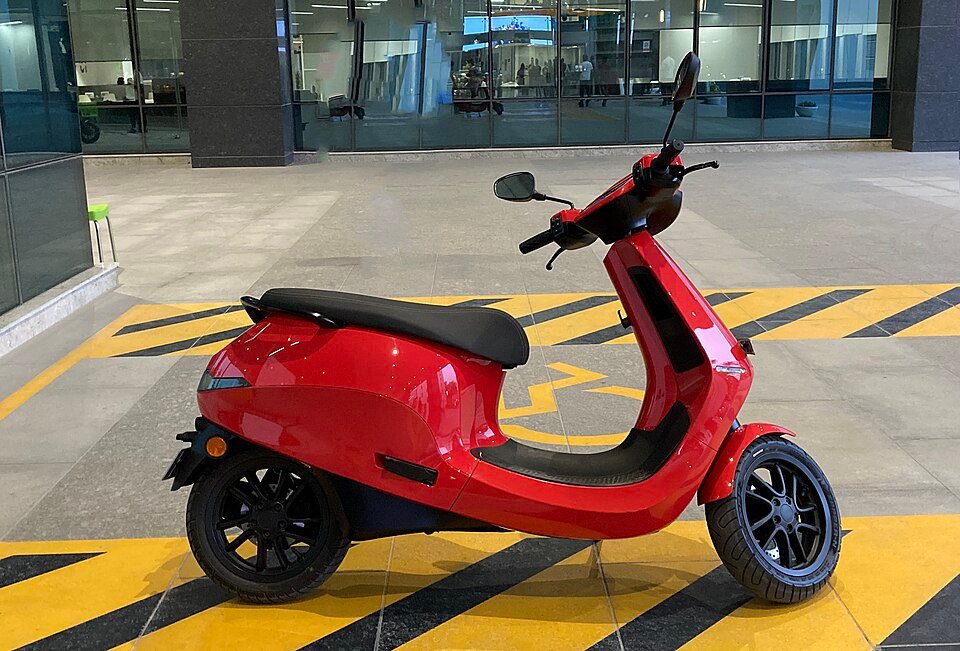
Why buyers are switching, and what changed
For an early adopter in 2019 or 2020, the question was often “can an electric scooter actually replace my petrol scooter?” By 2026, the more common question is “which electric scooter gives me the best ownership experience?” That shift matters: once a category goes mainstream, buyers stop rewarding novelty alone and start comparing purchase price, monthly EMI, real-world range, distance to the nearest service centre, repair turnaround, spare-parts availability, warranty terms, family usability and resale confidence. That is the point where an electric scooter stops being a technology experiment and simply becomes a scooter — and it is the environment TVS, Bajaj, Ather and Hero are now competing in.
💡 The bigger takeaway
- Competition means more products, more price points, more service locations and more financing options for buyers — not fewer choices.
- India’s EV two-wheeler category grew even as its early leader shrank — those two facts describe a maturing market, not a failing one.
- No single factor (service, price, distribution or technology) fully explains the reversal; it is the combination that moved market share.
Explore More Timelines
People also ask
Sources & methodology
📋 Sources
Market-share and registration figures: Vahan (Ministry of Road Transport & Highways) data as compiled and reported by Indian automotive trade publications (Autocar India, Autocar Professional, Inc42) and Reuters. Company-specific figures (deliveries, revenue, restructuring, store counts): Ola Electric and Ather Energy investor relations disclosures and press releases. Regulatory details: Central Consumer Protection Authority (CCPA) notices as reported by Indian business press.
Corrections policy: Vahan registration data is provisional and subject to revision after publication. If a figure in this article is later corrected by the source data, this page will be updated and the change reflected in the update log below.
⚠️ Editorial Note
This article separates verified registration data (Vahan-sourced), company-reported figures (investor filings/press releases) and regulatory findings (CCPA) from editorial interpretation. It does not recommend buying or selling shares in any company named, and does not predict which manufacturer will lead this market in future months.
🕑 Update log
- September 2, 2026: Full August 2026 Vahan-based registration data added; TVS cumulative crossover, Ather Konarc launch and Hero-Ather stake deal incorporated.
Sources & further reading
Every dated entry above was checked against these references. Last reviewed 15 September 2026.
- Vahan Dashboard, Ministry of Road Transport and Highways, Government of India
- Autocar India — TVS overtakes Ola in cumulative electric two-wheeler sales
- Inc42 — E2W registrations contract in August; Ola Electric's market share improves
- Business Today — Ather Energy launches Konarc electric scooter at Rs 99,999
- Business Standard — Ather Energy surges as Hero MotoCorp to hike stake to 32.8%
- Deccan Herald — Over 10K consumer complaints against Ola Electric; CCPA issues notice
- Ola Electric — Investor Relations
- Ather Energy — Company Site