India Coal Power Timeline 1975–2026: Why the World’s Solar Giant Still Depends on Coal
India's coal power timeline 1975-2026: Coal India's creation, shortages, rail supply, power crises, renewables and the energy-security challenge.
Latest Story
India can build solar parks at record speed and still need coal trains in a crisis. That is the puzzle at the heart of India’s power system: solar panels can flood the grid with electricity in the afternoon, but the country also needs power at night, during heatwaves, through weak monsoon spells and whenever demand suddenly surges. Until storage, flexible grids, nuclear, hydro and demand management scale up further, coal remains the fallback India keeps returning to. This India coal power timeline traces that dependence from Coal India’s creation in 1975 to the September 2026 scramble to keep rail-borne coal moving to power stations — and explains why record renewable growth and continued coal reliance are the same story, not opposite ones.
🧠 Quick Answer
India still depends on coal because electricity demand is rising quickly and renewable energy is variable. Solar and wind capacity are growing fast — India’s non-fossil capacity crossed 297 GW, or 54% of the total, by June 2026 — but they do not always generate power exactly when demand peaks. Coal plants provide dispatchable electricity, especially during evenings, heatwaves and low-renewable periods, which is why coal still supplied roughly seven of every ten units of electricity actually generated in 2025–26. The long-term challenge is to replace coal’s reliability role with storage, hydro, nuclear, flexible grids and demand management — not simply to add more renewable capacity.
India Coal Power: Key Questions
What India’s coal dependence really shows
- India’s coal dependence is about reliability, not just installed capacity — coal is roughly 41% of installed capacity but still generates close to 70% of the electricity India actually uses.
- Solar and wind are expanding at record pace — India’s non-fossil capacity reached 297,369 MW (54.18% of the total) by June 2026 — but their output changes by time of day, season and weather.
- Coal stocks at power plants matter because electricity can’t wait for fuel stuck at a mine — a plant with a healthy coal reserve nationally can still run low if fuel isn’t reaching its own stockyard fast enough.
- Railways are a hidden part of India’s energy security — coal loading to the power sector rose from 370 rakes a day on 3 September 2026 to 444 rakes a day by 6 September, as the Coal Ministry pushed to refill depleted stockyards.
- The number of critically low-stock power plants rose sharply through 2026 — from 45 in late August to 58 by 5 September, together representing about 224 GW of capacity running on only 48% of their prescribed coal reserves.
- 2012’s grid blackout, still the largest in world history by people affected, remains the starkest reminder that installed capacity on paper does not guarantee a stable supply of electricity in practice.
- Heatwaves and weak monsoons put stress on the system from two different directions — heat spikes cooling demand while sometimes also disrupting coal transport and reducing hydro output.
- India has pledged 500 GW of non-fossil capacity by 2030, roughly two-thirds of projected total capacity — a target that requires scaling storage, transmission, hydro, nuclear and demand flexibility, not renewable capacity alone.
- India’s real transition challenge is replacing coal’s dispatchable role, not just adding more solar panels and wind turbines to the grid.
Can India Keep the Lights On Without Coal?
Pick a grid condition to see which power sources actually carry the load — illustrative, not a live grid feed
A Lump of Coal’s Journey to Your Light Switch
Coal power is a logistics story as much as a mining story
India isn’t choosing between coal and solar in a moral contest. It is trying to keep a huge, fast-growing grid reliable while changing the fuel base underneath it — and that takes years, not a single good monsoon or a record solar quarter.
Timeline: India’s Coal Power Story, 1975–2026
Newest first — from this week’s rail shipments back to the birth of Coal India
The sequence below shows a system that has repeatedly been asked to do two things at once: keep expanding to meet fast-rising demand, and gradually change what it runs on. Reading it in order makes clear that today’s coal-stock stress is not a new failure — it is the same reliability challenge that has recurred, in different forms, for five decades.
India Ramps Up Coal Rail Shipments as Plant Stocks Fall
What happened: India increased coal shipments by rail to power plants after fuel inventories at several generators fell to critically low levels. The Coal Ministry said coal loading to the power sector rose from 370 rakes a day on 3 September to 387 on 4 September, 413 on 5 September and 444 on 6 September — a rapid, deliberate ramp-up rather than a routine increase.
Why it matters: This is the current trigger for the whole story: even though total coal availability across pitheads, ports and stock in transit remained large enough to cover roughly 62 days of power-sector demand, the coal sitting inside individual plant stockyards — the fuel that can actually be burned that week — had fallen dangerously low at dozens of stations. Rail logistics, not total coal reserves, was the binding constraint.
Dozens of Power Plants Hit Critically Low Coal Stocks
What happened: Government data showed 45 Indian coal power plants running on critically low fuel as of 25 August 2026, up from 31 at the end of July, as an uneven monsoon and hotter-than-usual weather pushed up cooling demand while disrupting coal supply. By 5 September, the count of plants with stocks below 25% of their required inventory — or fuel for less than three days of generation — had risen further to 58, representing roughly 224 GW of capacity holding only about 48% of its prescribed coal reserves.
Why it matters: This is the clearest recent evidence that national coal supply and plant-level coal security are two different things. Aggregate coal stocks nationally were not “running out” — the problem was that supply wasn’t reaching specific stockyards fast enough to keep pace with a monsoon-and-heat-driven demand surge.
Record Renewable Additions, Coal Still Dominates Generation
What happened: India’s renewable capacity crossed 288 GW by mid-2026, with solar alone reaching 162,152 MW and wind 57,443 MW; combined with nuclear and large hydro, non-fossil sources reached 297,369 MW, or 54.18% of India’s total installed capacity of 548,858 MW as of 30 June 2026. Yet coal-based generation still supplied roughly 70% of the electricity actually produced in 2025–26, even as its share of installed capacity fell toward 41%, from over 52% just a few years earlier.
Why it matters: This is the installed-capacity-versus-generation gap in its clearest form. India has genuinely built more clean-energy capacity than almost any country on earth — and coal is still the workhorse that keeps the lights on for most hours of most days, because capacity that exists on paper isn’t the same as electricity available when demand peaks.
Coal Logistics and Rail Priority Become Critical
What happened: Following the shortages of 2021–22, the government leaned harder on prioritising rail movement of coal to power plants, expanding first-and-last-mile rail connectivity to mines and pushing power stations to maintain higher buffer stocks ahead of summer and monsoon demand peaks.
Why it matters: This period established the pattern that resurfaced in 2026: even when coal exists at the mine or pithead, the grid can still face real stress if rail movement and individual power-plant stockyards aren’t kept aligned with fast-changing demand.
Heatwave Power Crisis and the Imported-Coal Debate
What happened: An unusually early and severe heatwave pushed India’s electricity demand to record highs, straining a coal supply chain still recovering from the previous year’s shortage. The government invoked emergency powers directing coal-capable plants running on imported coal blends to operate at full capacity and asked states to import coal to blend into their fuel mix, even as several states experienced hours-long power cuts, particularly in rural areas.
Why it matters: This was the moment coal dependence became a national political issue rather than a technical footnote — it showed how quickly a heatwave can turn a manageable coal-stock situation into a headline power crisis.
Coal Shortage Returns After Post-COVID Demand Rebound
What happened: As industrial and commercial demand rebounded sharply after COVID-19 lockdowns eased, coal stocks at many Indian power plants fell to just a few days’ supply, driven by a combination of rebounding demand, heavy monsoon rains disrupting mining and evacuation, and high global coal and gas prices that made imported coal less attractive.
Why it matters: This was the first modern instance of the exact pattern that repeated in 2022 and again in 2026: demand recovers faster than the coal-supply chain can comfortably match, and plant-level stockpiles are usually the first place the strain becomes visible.
Solar Tariffs Crash, India’s Renewable Build-Out Accelerates
What happened: Competitive auctions drove Indian solar tariffs down dramatically through the late 2010s, falling to some of the lowest levels in the world, while large solar parks such as Bhadla in Rajasthan and Pavagada in Karnataka came online at gigawatt scale. India set increasingly ambitious renewable-capacity targets over this period, well beyond its earlier plans.
Why it matters: This is the period that made India’s later renewable-capacity numbers possible — cheap solar tariffs turned climate ambition into commercially viable megawatts, setting up the capacity-versus-generation contradiction that defines the grid today.
Supreme Court Cancels Coal Blocks, Auction-Based Allocation Begins
What happened: The Supreme Court cancelled more than 200 coal block allocations made since 1993, ruling the process illegal and arbitrary. The government responded with the Coal Mines (Special Provisions) Act, 2015, moving to a transparent, competitive e-auction system for allocating coal blocks to power, steel and cement companies.
Why it matters: This reform was meant to fix supply-side transparency and improve coal availability for power generation, addressing one root cause of chronic fuel-supply uncertainty that had dogged the sector for years.
India’s Massive Grid Blackout
What happened: India’s Northern Grid collapsed on 30 July 2012, and the following day the Northern, Eastern and North-Eastern grids failed together, cutting power to roughly 620 million people across more than 20 states — the largest blackout in world history by population affected. States drawing more power than their allocated quota, combined with grid-management failures, triggered a cascading collapse.
Why it matters: The causes were broader than coal supply alone — this was fundamentally a grid-discipline and transmission failure — but the blackout became the defining symbol of the gap between India’s installed generation capacity and the reliability of the system delivering it, a theme that runs through every coal-stock crisis since.
Ultra Mega Power Projects Add Giant Coal Plants
What happened: The government launched the Ultra Mega Power Project programme, competitively awarding 4,000 MW-scale coal plants such as Tata Power’s Mundra plant in Gujarat and Reliance Power’s Sasan plant in Madhya Pradesh, built with supercritical technology for greater fuel efficiency.
Why it matters: These giant projects were seen as necessary to deliver baseload power at the scale India’s fast-growing cities and industry needed, cheaply and at economies of scale that smaller plants couldn’t match — reinforcing coal’s central role even as the reform era matured.
Electricity Act Rewrites the Power Sector’s Rules
What happened: The Electricity Act, 2003 consolidated multiple older laws, delicensed most power generation, introduced open access to transmission and distribution networks, and created a clearer regulatory framework through State and Central Electricity Regulatory Commissions.
Why it matters: This reform opened the door for private investment in generation at scale, which is exactly what fuelled the following decade’s coal-plant construction boom, including the Ultra Mega Power Projects.
Economic Liberalisation Sends Power Demand Soaring
What happened: India’s 1991 economic reforms opened the economy to private investment and global trade, triggering sustained growth in manufacturing, urbanisation and household electricity connections over the following decades.
Why it matters: This is an economy story as much as an energy one: liberalisation created the demand growth that every coal-supply and grid-reliability challenge since has had to keep pace with, turning power planning into a race against a rapidly expanding economy.
Thermal Power Becomes the Backbone of India’s Grid
What happened: With Coal India’s mining output consolidated under one national holding company, state electricity boards built out coal-based thermal power stations rapidly through the 1980s to serve growing industrial demand and expanding rural and urban electrification.
Why it matters: This decade cemented coal’s position as the default fuel for new Indian power generation — a role it has never fully relinquished, even as the fuel mix has diversified around it.
Coal India Limited Is Born
What happened: Coal India Limited was incorporated as a holding company to manage India’s nationalised coal mining assets under a single administrative umbrella, absorbing five subsidiaries — Bharat Coking Coal, Central Coalfields, Eastern Coalfields, Western Coalfields and the Central Mine Planning and Design Institute — following the nationalisation of coking coal mines in 1972 and non-coking mines in 1973.
Why it matters: This was the moment coal became central to India’s national energy planning rather than a fragmented, privately-run industry — the founding decision that every later chapter of India’s coal power story builds on.
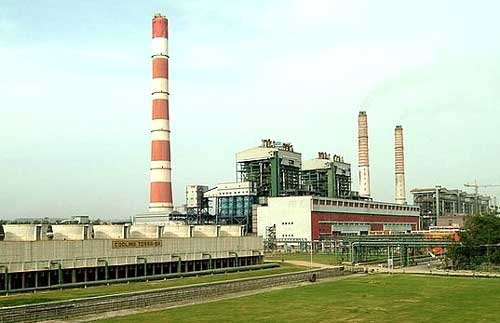
NTPC’s 3,260 MW Vindhyachal super thermal power station in Madhya Pradesh — India’s largest power plant. (Public domain / Wikimedia Commons)
India’s Power Mix: Capacity vs. What Actually Runs
CEA installed-capacity data, 30 June 2026
| Source | Installed capacity | Share of total capacity | Dispatchable on demand? |
|---|---|---|---|
| Coal | 224,158 MW | 40.84% | Yes — but needs fuel supply chain to keep pace |
| Solar | 162,152 MW | 29.5% | No — generates only in daylight, weather-dependent |
| Wind | 57,443 MW | 10.5% | No — generates only when wind conditions allow |
| Large hydro (incl. pumped storage) | 52,065 MW | 9.5% | Partially — depends on reservoir levels and monsoon |
| Nuclear | 8,780 MW | 1.6% | Yes — runs continuously as baseload |
| Total installed capacity | 548,858 MW | 100% | — |
The table shows why capacity numbers alone are misleading. Solar and wind together are almost 40% of installed capacity, yet neither can be relied on to produce power at a chosen moment. Coal, at under 41% of capacity, still ends up generating close to 70% of the electricity actually used across a year — because it is one of the few sources that can be told to run, right now, for as long as needed.
Facts Worth Knowing
- Coal India Limited was incorporated in November 1975, absorbing five regional coal-mining subsidiaries under one holding company.
- India’s 2012 grid blackout affected roughly 620 million people over two days — still the largest blackout in recorded world history by population affected.
- India’s non-fossil installed capacity crossed 297,000 MW by June 2026, but coal alone still generated more electricity than every other source combined.
- Coal-based generation actually declined for the first time on record in 2025–26, falling about 4% to 1,281 billion units from 1,331 billion units the year before — even as coal remained the single largest generation source.
- The Coal Ministry can ramp national coal rail loading by more than 70 rakes a day within roughly 72 hours when plant stocks run critically low, as it did in early September 2026.
Explore More Timelines
People Also Ask
Frequently Asked Questions
Related AiTimeline Coverage
⚠️ Editorial & Sources Note
Author: The AiTimeline Editorial Team · Editor: AiTimeline Editorial · Last updated: 7 September 2026. This article does not claim India can quit coal immediately, and it does not claim renewables are unreliable or not worth building — the opposite is true; India’s renewable build-out is among the fastest in the world. It does not claim the 2026 coal-stock stress caused nationwide blackouts, only that plant-level inventories fell critically low at dozens of stations and that the Coal Ministry responded with a rail-shipment increase, per available reporting. Coal-stock, capacity and generation figures are sourced to the Central Electricity Authority, the Ministry of Coal and Reuters-sourced reporting as cited in-text, and may be revised as newer data is published. This is editorial coverage of energy security and grid reliability, not investment or policy advice.
Sources & further reading
Every dated entry above was checked against these references. Last reviewed 15 September 2026.
- Business Standard — 45 Indian coal power plants have critically low fuel, government data shows
- The Business Standard (Bangladesh) — India ramps up coal rail shipments as power plant stocks dwindle
- Central Electricity Authority — All India Installed Capacity Report, June 2026
- Ministry of Power — 500 GW Non-Fossil Fuel Target (COP26 pledge)
- PV-Tech — India's renewable energy capacity hits 288GW in H1 2026
- Ember — Coal's diminishing role in India's electricity transition
- Coal India Limited — Corporate history
- Ministry of Coal, Government of India