Operation Flood History: How India Became a Dairy Giant
Operation Flood history: how Amul's 1946 Anand cooperative model went national from 1970 to 1996 and lifted India's milk output from 21.2 to 247.87 MT.
Latest Story
India’s milk story did not start with big dairy factories. It started with farmers in Kaira district, Gujarat, who in 1946 refused to keep selling milk to a private monopoly and formed their own cooperative in Anand. That cooperative became Amul. In 1965 the government set up the National Dairy Development Board in Anand to copy the model nationally, and in 1970 it launched Operation Flood, a 26-year programme that linked milk-producing villages to city markets. When it ended in 1996, India was producing 69.1 million tonnes of milk a year, up from 21.2 million in 1968-69. By 1998 India was the world’s largest milk producer, and in 2024-25 it produced 247.87 million tonnes. This is how Operation Flood worked, why it worked, what its critics said, and how much of today’s milk it can actually claim.
🧠 AI Overview Summary
Operation Flood was India’s national dairy development programme, run by the National Dairy Development Board (NDDB) from 1970 to 1996 in three phases. It copied the Anand Pattern of farmer-owned dairy cooperatives, first proven by Amul in Gujarat from 1946, and linked rural milksheds to city markets. Phase I was financed by selling dairy commodities donated by the European Economic Community through the World Food Programme; later phases also used World Bank loans. Milk output rose from 21.2 million tonnes in 1968-69 to 69.1 million in 1996-97. India became the world’s largest milk producer in 1998 and produced 247.87 million tonnes in 2024-25.
Operation Flood: Key Questions
The White Revolution in Ten Lines
- It began with a boycott: Kaira farmers, advised by Sardar Patel, stopped supplying the private Polson dairy and registered their own union on 14 December 1946.
- The model was the point: village societies, a district union and a state marketing federation, all owned by producers and run by professionals. This became the Anand Pattern.
- A Prime Minister’s visit started it nationally: after Lal Bahadur Shastri visited Anand in October 1964, the NDDB was set up in 1965 with Verghese Kurien as chairman.
- Food aid paid for Phase I: donated European milk powder and butter oil were sold in India and the money was used to build dairies.
- Phase I (1970–80) linked 18 milksheds to Delhi, Mumbai, Kolkata and Chennai.
- Phase II (1981–85) reached 136 milksheds, 290 urban markets and 43,000 village cooperatives with 4.25 million producers.
- Phase III (1985–96) added about 30,000 cooperatives and focused on vet care, feed, breeding and women’s societies.
- Milk availability had been falling: from 130 g per person per day in 1950-51 to 110 g in 1973-74. It reached 200 g in 1996-97.
- India overtook the US in 1998 to become the world’s largest milk producer, and has stayed there.
- It had serious critics: they said food aid risked undercutting Indian farmers and that the programme favoured procurement and cities over production.
1946: The Milk Strike That Built Amul
Before Operation Flood there was Anand.
In the 1940s, milk from Kaira (now Kheda) district in Gujarat went to Bombay through private contractors under the Bombay Milk Scheme. The main buyer was Polson, a private dairy in Anand with a supply contract that gave it an effective monopoly. Farmers had no say in the price, which was set by traders, and much of the value went to middlemen.
The farmers turned to Sardar Vallabhbhai Patel, who told them to form their own cooperative and sell directly to the Bombay scheme. He sent Morarji Desai to organise them. At a meeting in Chaklasi, farmers resolved to stop supplying Polson, and a milk strike followed. The Kaira District Co-operative Milk Producers’ Union was registered on 14 December 1946, with local leader Tribhuvandas Patel as its chairman. It began with two village societies and about 247 litres of milk a day.
The union is better known by its brand, Amul, adopted in 1955. The name is usually expanded as Anand Milk Union Limited and is also linked to the Sanskrit word amulya, “priceless”.
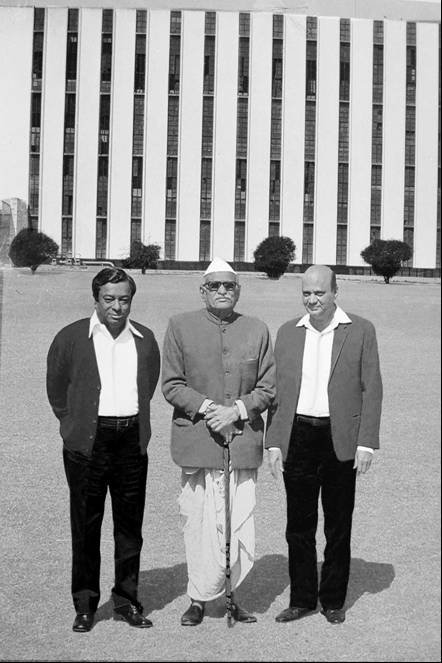
Two people who arrived later made the cooperative work technically. Verghese Kurien, an engineer who had been posted to the government creamery in Anand, joined the union in 1949 and became its general manager. Harichand Megha Dalaya developed a way to make skimmed milk powder and condensed milk from buffalo milk. Until then this had been done only with cow’s milk. It mattered because most of Gujarat’s milk came from buffaloes, and the cooperative now had a way to store the surplus from the flush season.
The Anand Pattern: Three Tiers, One Owner
The design Operation Flood would copy.
What became known as the Anand Pattern is a three-tier cooperative structure. The same people own every level: the milk producers.
The NDDB describes the key features as producer ownership, elected farmer leadership and professional management. That last element is easy to miss. The cooperatives hired trained managers, vets and engineers, so the dairy was owned by farmers but run as a modern business.
1964–1965: A Prime Minister Stays the Night
How the Anand model became national policy.
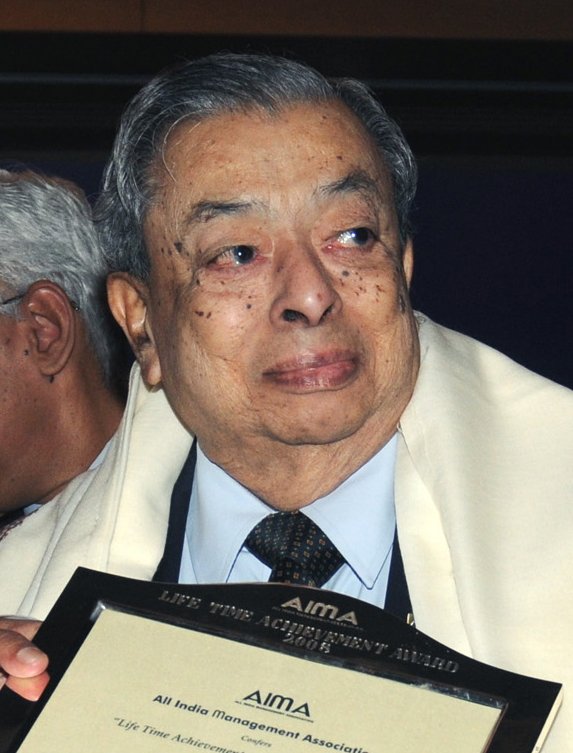
In October 1964 Prime Minister Lal Bahadur Shastri visited Anand to open Amul’s cattle-feed plant. He also spent a night in a village, talking to farmers about the cooperative. He then asked Kurien to reproduce the Anand model across India. The National Dairy Development Board was founded in Anand in 1965, with Kurien as its founding chairman. He held the post until 1998.
The NDDB began as a society. The NDDB Act, 1987 merged it with the Indian Dairy Corporation, the government body that had handled Operation Flood’s finances, with effect from 12 October 1987, and declared it an institution of national importance.
The problem Kurien faced was scale. Anand had worked in one district with one strong market in Bombay. India had hundreds of scattered milksheds, few chilling plants, poor roads and city dairies that depended on imported milk powder. The answer was Operation Flood.
1970–1980, Phase I: Food Aid Becomes Infrastructure
18 milksheds, four metros, and a clever way to pay for it.
Operation Flood was launched in 1970. The NDDB set three goals: produce more milk (a “flood of milk”), raise rural incomes, and supply city consumers at fair prices. The main tool was a national milk grid that treated village milksheds and city markets as one system instead of many isolated local markets.
The financing was the unusual part. The European Economic Community donated skimmed milk powder and butter oil through the World Food Programme. Instead of handing the powder out, Indian dairies recombined it into milk and sold it in the cities. The proceeds went into new dairy plants, chilling centres and cooperatives. Wikipedia puts Phase I’s cost at about Rs 116 crore.
The idea was that aid would pay for the capacity to replace aid. Europe had milk surpluses. The recombined milk kept city dairies supplied while the new rural cooperatives grew, so the cities would not undercut village milk with cheap imports.
Phase I linked 18 of India’s main milksheds with the four metros: Delhi, Bombay (Mumbai), Calcutta (Kolkata) and Madras (Chennai). NDDB dates it 1970 to 1980. In practice it was about building the pipeline from village to city.
🌎 Food aid → infrastructure → cooperatives
This sequence is why Operation Flood is studied in development economics. Most food aid is eaten and gone. Here it was sold, and the money was invested in a domestic system meant to make the aid unnecessary. Whether it worked out that way is the heart of the critics’ case, covered below.
1981–1985, Phase II: From Pilot to National Movement
136 milksheds and 4.25 million producers.
Phase II expanded the programme sharply, with World Bank loans added to the EEC aid. The number of milksheds rose from 18 to 136, and 290 urban markets became outlets for cooperative milk. By the end of 1985, the NDDB says, there was a self-sustaining system of 43,000 village cooperatives covering 4.25 million milk producers.
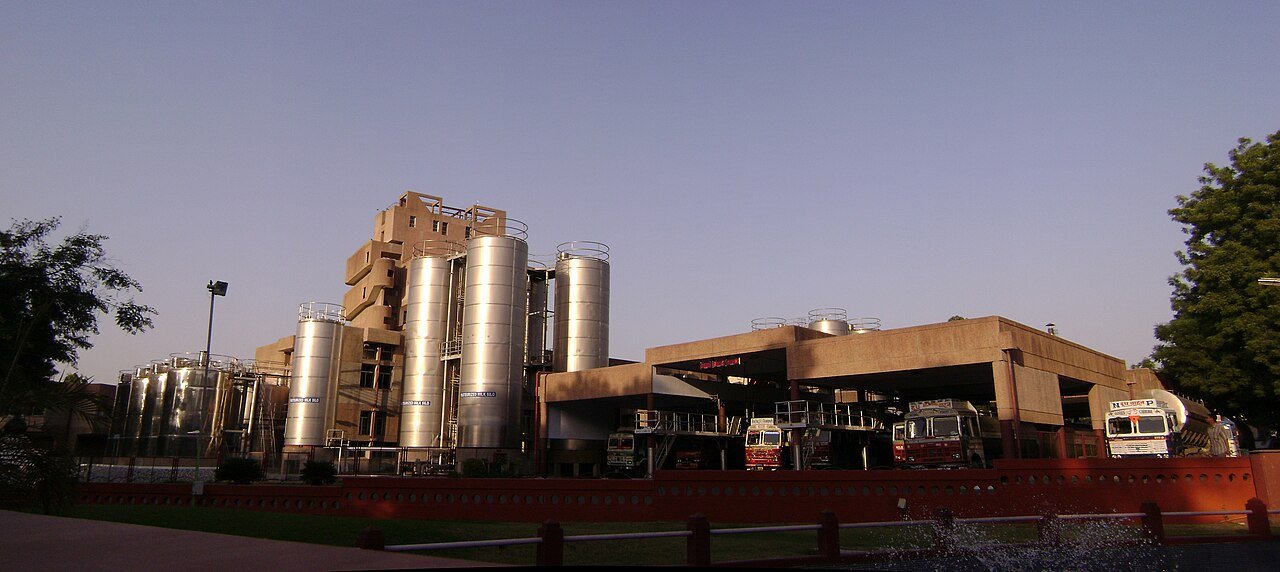
Processing capacity grew too. The NDDB says domestic milk powder production rose from 22,000 tonnes before the project to 140,000 tonnes by 1989, and credits all of the increase to dairies set up under Operation Flood. Powder mattered because milk production is seasonal. Cows and buffaloes give much more in the winter flush than in the summer lean season. Drying the surplus let the system carry milk from one season to the next and reduced the need for imported powder.
1985–1996, Phase III: Stronger, Not Just Bigger
Vets, feed, breeding and women members.
The third phase was more about strengthening the network than extending it. According to the NDDB, it added about 30,000 new dairy cooperatives to the 42,000 formed by the end of Phase II. The number of milksheds peaked at 173 in 1988-89. Cooperatives expanded their procurement and marketing infrastructure and put more into services that raise output per animal: veterinary first aid, balanced cattle feed and artificial insemination.
Research got more attention. The NDDB lists a theileriosis vaccine against a tick-borne cattle disease, bypass-protein feed and urea-molasses mineral blocks among the phase’s innovations. The question changed from “how much milk can a farmer sell?” to “how can a farmer produce more milk from the same animal?”
Phase III also expanded Women’s Dairy Cooperative Societies, and women’s membership rose significantly. In rural India women do much of the daily work of feeding, cleaning and milking, but men had usually held the society memberships and received the payments. Women’s societies gave the women doing that work membership and a direct payment.
Phase III ended in 1996. In 26 years Operation Flood had built a cooperative infrastructure that kept running after the project’s money stopped.
| Phase | Years | Scale reached | Main funding |
|---|---|---|---|
| Phase I | 1970–1980 | 18 milksheds linked to 4 metros | EEC dairy aid via WFP (~Rs 116 crore) |
| Phase II | 1981–1985 | 136 milksheds, 290 cities, 43,000 societies, 4.25M producers | EEC aid + World Bank loans |
| Phase III | 1985–1996 | +30,000 societies; 173 milksheds at peak (1988-89) | EEC aid + World Bank loans |
The Milk Curve: 17 to 247.87 Million Tonnes
Official production series, 1950-51 to 2024-25.
The official series shows why Operation Flood was needed. Output grew only from 17.0 million tonnes in 1950-51 to 21.2 million in 1968-69, slower than the population, so per-person availability fell from 130 grams a day to 112. It bottomed out at 110 grams in 1973-74. From then on both lines rose.
| Year | Milk (million tonnes) | Per capita (g/day) | Context |
|---|---|---|---|
| 1950-51 | 17.0 | 130 | Four years after Amul’s founding |
| 1960-61 | 20.0 | 126 | Growth slower than population |
| 1968-69 | 21.2 | 112 | Year before Operation Flood |
| 1973-74 | 23.2 | 110 | Lowest per-capita availability |
| 1979-80 | 30.4 | 125 | End of Phase I |
| 1985-86 | 44.0 | 160 | Start of Phase III |
| 1990-91 | 53.9 | 176 | Mid Phase III |
| 1996-97 | 69.1 | 200 | Operation Flood completed |
| 2016-17 | 165.4 | 355 | |
| 2022-23 | 230.58 | 459 | |
| 2023-24 | 239.30 | 471 | +3.78% on the year |
| 2024-25 | 247.87 | 485 | +3.58%; latest official figure |
From 23.2 million tonnes in 1973-74 to 247.87 million in 2024-25 is an increase of more than ten times. Operation Flood cannot claim all of it. Most of the growth came after 1996, driven by rising incomes, a bigger population, urbanisation, crossbred cattle, better feed and vet services, private dairies, later government schemes and the cooperatives the programme left behind. The NDDB itself describes Operation Flood as the foundation later programmes built on.
⚠️ A number to be careful with
Some write-ups give India’s 2024-25 milk output as 254.19 million tonnes, with 6.22% growth. That does not match the official release. The Department of Animal Husbandry and Dairying’s Basic Animal Husbandry Statistics 2025, released on National Milk Day in November 2025, puts 2024-25 production at 247.87 million tonnes, up 3.58%. We use the official figure.
Why Did Operation Flood Work?
No single cause. Eight parts that had to work together.
A buyer every day
The village society buys whatever the farmer brings, twice a day, all year. That reliability mattered more than any one price.
Farmers own it
Producers own the society, union and federation, so the surplus comes back to them instead of to a trader.
Professionals run it
Elected farmer boards hire trained managers, so the dairy is run like a business, not a government department.
Paid by fat and SNF
Testing each can of milk made payment transparent and rewarded quality, which built trust.
Chill, process, dry
Chilling centres, dairies and powder plants turned a perishable product into one that could travel and be stored.
The milk grid
Road and rail tankers linked surplus milksheds to deficit cities, balancing supply across regions.
Vet, feed, breeding
Services from the union raised output per animal and cut losses to disease.
One model, many districts
The same design was copied across states, so the cooperatives could reach national scale.
Growing cities
Expanding cities gave the whole system a large and dependable market to sell into.
🧩 Which bottleneck would you fix first?
Not enough milk? Breeding, feed and vet services. Milk spoils before it reaches the city? Collection, chilling and tankers. Seasonal glut? Dairy plants and powder drying. Farmers underpaid? Cooperative procurement and direct marketing. Cities short of milk? The national milk grid. Operation Flood’s answer was that you have to fix all five together. A dairy plant without a village supply fails, and a village society without a city market fails too.
The Critics: Was It Really a Flood of Indian Milk?
The debate the success story often leaves out.
Operation Flood was controversial while it was running. The best-known critique is Shanti George‘s Operation Flood: An Appraisal of Current Indian Dairy Policy (Oxford University Press, 1985). George argued that the programme relied on a high-cost, import-heavy model and that cheaper indigenous alternatives would have suited India better. She warned that donated European dairy commodities could discourage local production if city dairies preferred cheap recombined milk to village milk. She also argued that the programme focused on procurement, processing and city distribution at the expense of raising production. Other critics worried that European-style high-input breeds did not fit India’s low-input smallholders, and that milk bought up for cities could reduce what rural families, especially children, drank themselves.
Kurien and the NDDB rejected these arguments. They said the aid was deliberately sold, not dumped, and the money built capacity that ended the need for aid, and that a steady cash income from milk was the best way to raise rural incomes. The debate continued for years in journals such as the Economic and Political Weekly.
A fair reading is that both sides were partly right. The output figures and the size of the cooperative network are not in dispute. How much of the gain reached the poorest producers, how much the aid shaped the result, and whether a slower, cheaper route would have worked as well are still debated.
1976: Half a Million Farmers Fund a Film
Manthan, the White Revolution on screen.
The cooperative movement also produced one of Indian cinema’s best-known films. Shyam Benegal’s Manthan (“The Churning”, 1976), co-written with Vijay Tendulkar, dramatised the struggle to set up a milk cooperative in a Gujarat village against a local trader and caste divisions. It was paid for by about 500,000 dairy farmers of the Gujarat cooperatives, who contributed Rs 2 each towards a budget of about Rs 10 lakh. It is often called India’s first crowdfunded film.
Farmers reportedly travelled to cinemas in truckloads to watch “their” film. It won the National Film Award for Best Hindi Feature Film in 1977, and a restored version was screened in the Cannes Classics section in 2024.
After the Flood: The Network Today
1998 to 2026.
1998, world number one. The NDDB says Operation Flood helped India overtake the United States as the world’s largest milk producer in 1998, the same year Kurien stepped down as NDDB chairman. India has kept the top spot since.
2019, the network. As of March 2019, the NDDB counted 1,90,500 village dairy cooperatives affiliated to 245 milk unions and marketing dairies and 22 federations and apex bodies, with 16.9 million farmer members procuring an average of 508 lakh kg of milk a day.
2024, White Revolution 2.0. On 19 September 2024, Union Cooperation Minister Amit Shah launched standard operating procedures for White Revolution 2.0. It aims to raise milk procurement by dairy cooperatives by 50% over five years, to about 1,000 lakh litres a day, by setting up cooperatives in villages that do not yet have one. It focuses on women farmers, local production, infrastructure and exports.
2025, the latest data. Basic Animal Husbandry Statistics 2025 put production at 247.87 million tonnes for 2024-25, with 485 grams per person per day. The top producing states are Uttar Pradesh (15.66%), Rajasthan (14.82%), Madhya Pradesh (9.12%), Gujarat (7.78%) and Maharashtra (6.71%). Amul alone is controlled by about 3.6 million milk producers.
The next problems are different. Yields per animal are still low by world standards. Cooperatives compete with private dairies. Feed and fodder costs keep rising, cattle contribute to methane emissions, and adulteration is a concern for consumers. Collection now uses electronic weighing, automated fat testing and direct bank payments, but the principle hasn’t changed: measure the milk, pay the producer, build the market, raise productivity.
🥛 Why National Milk Day is 26 November
India marks National Milk Day on 26 November, Verghese Kurien’s birthday (born 1921 in Calicut). The government now releases its annual Basic Animal Husbandry Statistics, including the headline milk production figure, on that day.
1968-69 vs 2024-25: Before and After
The year before Operation Flood vs the latest official year
Operation Flood Full Timeline, 1946–2025
Newest first.
247.87 Million Tonnes
Official statistics released on National Milk Day put 2024-25 output at 247.87 million tonnes, up 3.58%, with per-capita availability of 485 g a day.
White Revolution 2.0
Amit Shah launches SOPs aiming to raise cooperative milk procurement 50% in five years. The same year, a restored Manthan is screened at Cannes.
1,90,500 Village Cooperatives
The network has 245 unions, 22 federations, 16.9 million farmer members and procures 508 lakh kg of milk a day.
Kurien Dies
Verghese Kurien dies at 90. He had resigned as GCMMF chairman in 2006.
India Becomes World No. 1
India overtakes the United States as the largest milk producer. Kurien’s 33 years as NDDB chairman end.
Operation Flood Completed
After 26 years the programme ends. Output in 1996-97 is 69.1 million tonnes, and per-capita availability is 200 g a day.
Milk Powder Reaches 140,000 Tonnes
Domestic milk powder output reaches 140,000 tonnes, up from 22,000 before the project, according to the NDDB. Kurien wins the World Food Prize the same year.
NDDB Act
NDDB merges with the Indian Dairy Corporation and becomes a statutory institution of national importance.
Phase II Ends, Phase III Begins
The network reaches 136 milksheds, 290 urban markets and 4.25 million producers. Shanti George publishes her critique the same year.
Manthan
About 500,000 farmers pay Rs 2 each to fund Shyam Benegal’s film about a milk cooperative.
GCMMF Formed; Availability Bottoms Out
Gujarat’s district unions form the Gujarat Cooperative Milk Marketing Federation to market Amul. National per-capita milk availability falls to its low of 110 g a day in 1973-74.
Operation Flood Launched
NDDB begins linking 18 milksheds to Delhi, Bombay, Calcutta and Madras, funded by selling EEC dairy aid supplied through the World Food Programme.
NDDB Founded
Set up after Shastri’s October 1964 visit to Anand, with Verghese Kurien as chairman.
The Amul Brand
The Kaira union adopts the brand name Amul. Around this time H.M. Dalaya’s process for making powder from buffalo milk lets the union store its surplus.
Kurien Arrives in Anand
A young government engineer posted to Anand joins Tribhuvandas Patel’s cooperative.
Kaira Union Registered
After a milk strike against Polson, Kaira farmers register their own cooperative union on Sardar Patel’s advice.
Myths and Mix-Ups, Checked
Common claims about the White Revolution, against the record.
What the record says
- “Operation Flood created Amul.” No. Amul came first, in 1946. Operation Flood, from 1970, copied Amul’s Anand Pattern across India.
- “India produced 254.19 million tonnes in 2024-25.” The official figure is 247.87 million tonnes (BAHS 2025), with growth of 3.58%, not 6.22%.
- “Operation Flood explains all of today’s milk.” It built the base. Most of the growth to 247.87 million tonnes came after 1996, from many causes.
- “It was built on big dairy farms.” The opposite. It was built on millions of small producers, many with only one or two animals.
- “Kurien founded the Kaira cooperative.” The union was organised in 1946 under Tribhuvandas Patel, on Sardar Patel’s advice. Kurien joined in 1949 and built it into Amul.
- “The aid was simply given away.” The EEC powder and butter oil were sold, and the money funded Indian dairies. Critics argued about the side effects, not about whether this happened.
Quiz: How Well Do You Know India’s White Revolution?
Tap a question to reveal the answer.
1. When did Operation Flood begin?
2. Which body implemented Operation Flood?
3. Where did the cooperative model behind it start?
4. What was the Anand Pattern?
5. How was Phase I financed?
6. How many milksheds did Phase II reach?
7. When did India become the largest milk producer?
8. What is India’s latest official milk output?
9. How much did each farmer contribute to fund Manthan?
10. Why is National Milk Day on 26 November?
Explore More Timelines
People Also Ask
Frequently Asked Questions
Related AiTimeline Stories
⚠️ Editorial Note
Phase dates, milkshed and cooperative counts, milk powder figures and the 2019 network data follow the NDDB’s own history pages. Production and per-capita figures follow the Department of Animal Husbandry and Dairying’s Basic Animal Husbandry Statistics (2015 and 2025 editions) and NDDB’s series. Some summaries of this story say India produced “254.19 million tonnes” in 2024-25 with 6.22% growth. That is not the official figure, so we use 247.87 million tonnes (+3.58%) from BAHS 2025. The Phase I cost is from Wikipedia, as we could not find it on an NDDB page. This is editorial, AI-assisted content.
Sources & further reading
Every dated entry above was checked against these references. Last reviewed 27 September 2026.
- NDDB: Operation Flood
- NDDB: Genesis (network statistics, March 2019)
- NDDB: Milk production and per capita availability in India
- DAHD: Basic Animal Husbandry Statistics 2025 brochure
- DAHD: Basic Animal Husbandry and Fisheries Statistics 2015
- NDDB Act, 1987
- Business Standard: Amit Shah launches White Revolution 2.0 (19 September 2024)
- Wikipedia: Operation Flood / White Revolution (India)
- Wikipedia: Amul
- Wikipedia: Verghese Kurien