Maruti 800 History: The Car That Put India on Wheels
Maruti 800 history: from Sanjay Gandhi's failed project and the 1982 Suzuki deal to the Rs 47,500 first car, 29 lakh+ units, and why it ended in 2014.
Latest Story
It was about 3.3 metres long, weighed around 600 kg and had a 796cc three-cylinder engine. Beside the Hindustan Ambassador and the Premier Padmini it looked almost like a toy. But on 14 December 1983, when Prime Minister Indira Gandhi handed its keys to Harpal Singh, an Indian Airlines employee from Delhi, the Maruti 800 began to change what owning a car meant in India. It was not India’s first car. It was the first modern car that a large share of India’s middle class could realistically plan to buy, and the factory, supplier and service system built around it outlived the car itself. This is the full history: why it was needed, why a failed Sanjay Gandhi project turned into a Suzuki partnership, what made it feel so new, and why a car that sold more than 29 lakh units was finally retired on 18 January 2014.
🧠 AI Overview Summary
The Maruti 800 was a small hatchback built by Maruti Udyog, a Government of India company that signed a joint venture with Japan’s Suzuki Motor on 2 October 1982. The first car was handed to Harpal Singh by Prime Minister Indira Gandhi on 14 December 1983; he paid Rs 47,500. It had a 796cc three-cylinder engine, front-wheel drive and front disc brakes, which were new for Indian buyers. It was India’s best-selling car until 2004, when the Alto overtook it. Sales stopped in 13 major cities in April 2010 because of BS-IV emission norms, and the last car left the Gurgaon plant on 18 January 2014. Maruti Suzuki credits the 800 with more than 29 lakh units.
Maruti 800: Key Questions
31 Years of the Maruti 800 in Ten Lines
- It began as a failure: Sanjay Gandhi’s Maruti company, set up in 1971, never delivered a car to the public and was wound up after the Emergency.
- The state revived it: after Sanjay Gandhi died in June 1980, the government set up Maruti Udyog in February 1981.
- Suzuki supplied what India lacked: a joint venture signed on 2 October 1982 gave Suzuki 26% and brought its small-car design and methods.
- Demand came before the car: bookings opened in April 1983 and passed 1.35 lakh by 8 June.
- 14 December 1983: Indira Gandhi handed the first car to Harpal Singh, who paid Rs 47,500.
- It felt new: front-wheel drive, front disc brakes, a floor gear lever and bucket seats were unusual on Indian roads.
- It started a system, not just a model: Indian parts makers, dealers and trained mechanics grew around it.
- The Alto replaced it on top: the 800 was India’s best-selling car until 2004.
- Emission rules ended it: BS-IV norms pushed it out of 13 cities in 2010; the last car was built on 18 January 2014.
- More than 29 lakh built: Maruti Suzuki’s own count, out of 3 crore vehicles made by April 2024.
Before 1983: Few Cars, Old Designs, Long Waits
Why India was ready for a small modern car.
For most of the three decades after Independence, an Indian car buyer had two realistic choices: the Hindustan Ambassador, built in Uttarpara near Calcutta and based on the 1950s Morris Oxford, and the Premier Padmini, built in Bombay and based on the Fiat 1100. Both were sturdy and both were familiar. Both were also designs from another era, with rear-wheel drive, bench seats and gear levers on the steering column.
The reason was policy. Under the Licence Raj, a manufacturer needed government permission to build, to expand capacity and to import technology. Cars were treated as a luxury, and production was kept low. For many middle-class families a car was something you waited years for, or did not expect to own at all. A scooter was the practical family vehicle.
What was missing was a small, modern, fuel-efficient car that could be made in large numbers. Sanjay Gandhi had spent the 1970s trying to build exactly that.
1970–1980: Sanjay Gandhi’s People’s Car
A promise that produced no car for sale.
The Maruti name began with Sanjay Gandhi, the younger son of Prime Minister Indira Gandhi. In 1970 a consultancy called Maruti Technical Services was set up, and in 1971 a company called Maruti Limited was formed with a licence to build an indigenous “people’s car”. It acquired about 297 acres of land in Gurgaon, in Haryana, and showed a prototype in 1972.
The project was controversial from the start. Critics saw favouritism in the licence and the land deal, and the company had little engineering capacity. No car reached the public. After the Emergency ended and the Janata government took office in 1977, the company went into liquidation, and a commission of inquiry led by Justice A. C. Gupta examined its affairs.
On 23 June 1980, Sanjay Gandhi died when the light aircraft he was flying crashed in Delhi. Indira Gandhi, back in power since January 1980, moved to revive his idea on a completely different footing: as a government company with a foreign technology partner.
1981–1982: Maruti Udyog and the Suzuki Deal
India had the land and the demand. Suzuki had the small car.
The government took over the old company’s assets and incorporated Maruti Udyog Limited in February 1981. V. Krishnamurthy, an engineer-administrator who had run the state-owned Bharat Heavy Electricals, became chairman. R. C. Bhargava, an IAS officer, joined as director of marketing and later became managing director. He is Maruti Suzuki’s chairman today.
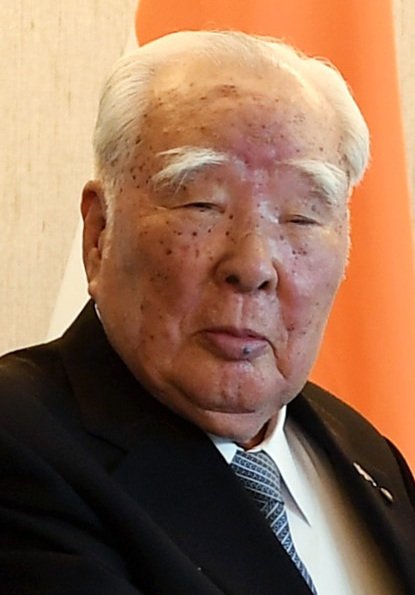
Maruti held talks with several foreign carmakers before choosing Suzuki Motor of Japan, which was then a small company in world terms but a specialist in very small, light cars. Its president, Osamu Suzuki, took the bet. The government engaged Suzuki in April 1982, and the joint-venture agreement was signed on 2 October 1982. Suzuki took a 26% stake; the government kept the rest.
The car chosen for India was based on Suzuki’s small hatchback of the day, sold in Japan as the Alto and Fronte (internal code SS80). According to Autocar India, the Gurgaon plant went from agreement to production in about 14 months, with an initial capacity of about 20,000 cars a year. Suzuki’s stake later rose to 50% in 1992, and it became the majority owner in 2002.
April 1983: 1.35 Lakh Bookings Before a Single Delivery
Demand was never the problem.
Maruti opened bookings for the 800 in April 1983, months before the first car was built. By 8 June 1983 the orders had passed 1.35 lakh. Against a plant planned for roughly 20,000 cars a year, that was a waiting list of several years before the first delivery.
The queue shaped the car’s early life. The first customers were chosen by a draw of lots. Once cars reached the road, a grey market grew: Autocar India reports that some buyers paid double the official price to skip the waiting list. In the Licence Raj economy, the scarcity that had held back car ownership now drove up the value of the car that promised to end it.
14 December 1983: The First Maruti 800
A ceremony in New Delhi, a Rs 47,500 car and a registration that became famous.
On 14 December 1983, at a ceremony in New Delhi, Prime Minister Indira Gandhi handed over the keys to the first ten allottees. The very first car went to Harpal Singh, an Indian Airlines employee who had won the right in the draw. He paid Rs 47,500, the figure most reports give; Autocar India puts the original price at about Rs 50,000. The white car was registered DIA 6479.
For Maruti, the date is the start of its history: Maruti Suzuki counts its production from December 1983. For the government, it was also the fulfilment of Sanjay Gandhi’s idea, three and a half years after his death. Indira Gandhi herself would be assassinated less than a year later, on 31 October 1984.
What Made the 800 Feel So New
Small details that were not small in 1983.
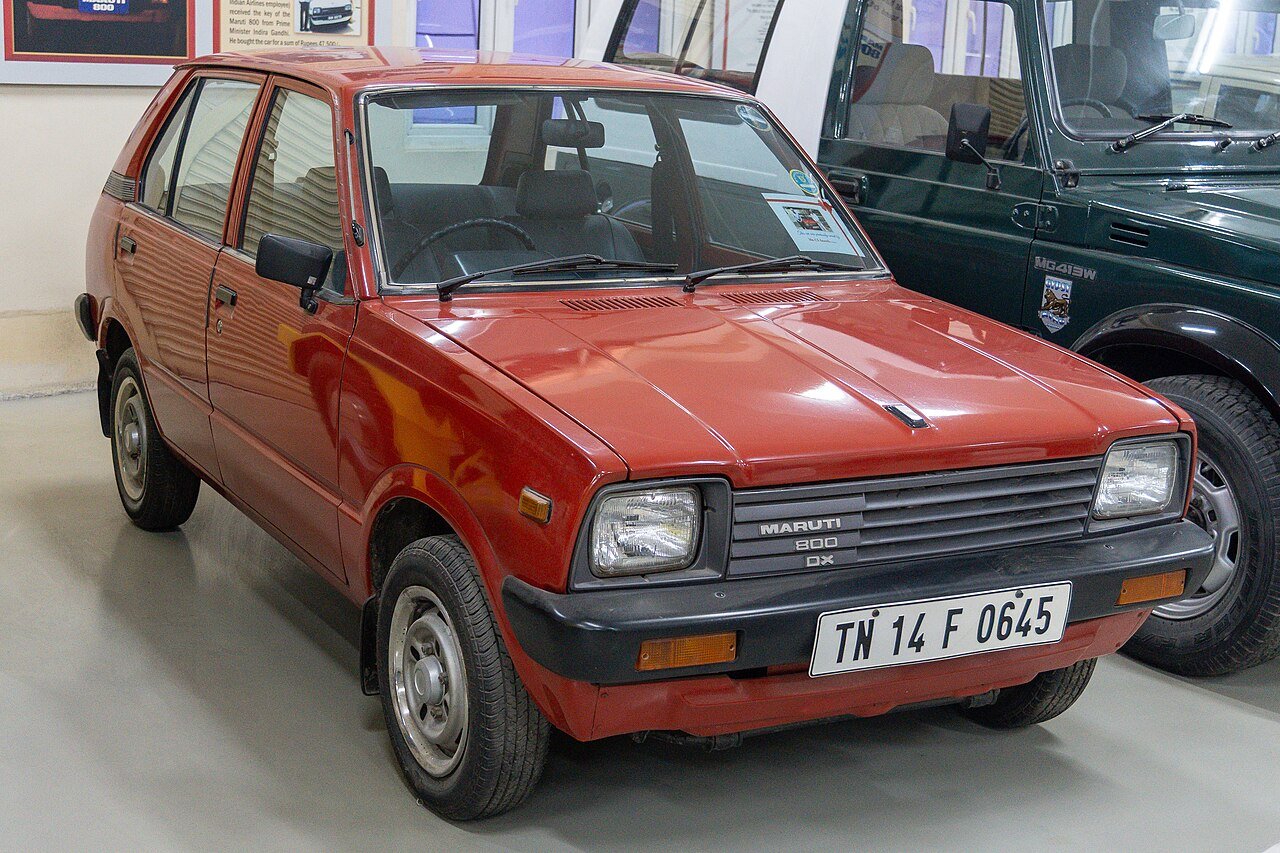
Writing for the car’s 40th anniversary, Autocar India’s Hormazd Sorabjee listed what set it apart: it was the first car in India with front disc brakes, front-wheel drive and synchromesh on first gear. It also had a floor-mounted gear lever, bucket seats and a moulded plastic dashboard. Next to the column shifts and bench seats of the Ambassador and Padmini, it felt like it came from a different decade, which it did.
The engineering idea was simple: keep the car light (the first version weighed about 616 kg), keep the engine small (796cc, three cylinders) and keep the mechanics simple. The result was a car that was cheap to run, easy to park and easy for a first-time driver to handle. Light steering and a small body made it the car on which a generation of Indians learned to drive.
It also changed who drove. The Ambassador was often a chauffeur-driven car for officials and wealthy families. The 800 was a car the owner drove: a teacher, a government clerk, a shopkeeper, a young professional.
Maruti 800 vs Ambassador vs Padmini
How India’s three best-known cars of the early 1980s compared on layout.
| Feature | Maruti 800 (1983) | Hindustan Ambassador | Premier Padmini |
|---|---|---|---|
| Based on | Suzuki SS80 (Alto/Fronte) | Morris Oxford III (1950s) | Fiat 1100 (1960s) |
| Engine | 796cc, 3-cylinder | About 1.5 litre, 4-cylinder | About 1.1 litre, 4-cylinder |
| Driven wheels | Front | Rear | Rear |
| Gear lever | Floor | Steering column | Steering column |
| Front seats | Bucket seats | Bench | Bench |
| Body | Hatchback | Saloon | Saloon |
| Typical driver | Owner | Often a chauffeur | Owner or taxi driver |
The Ecosystem: Suppliers, Dealers and Mechanics
Why the 800’s biggest legacy is not the car.
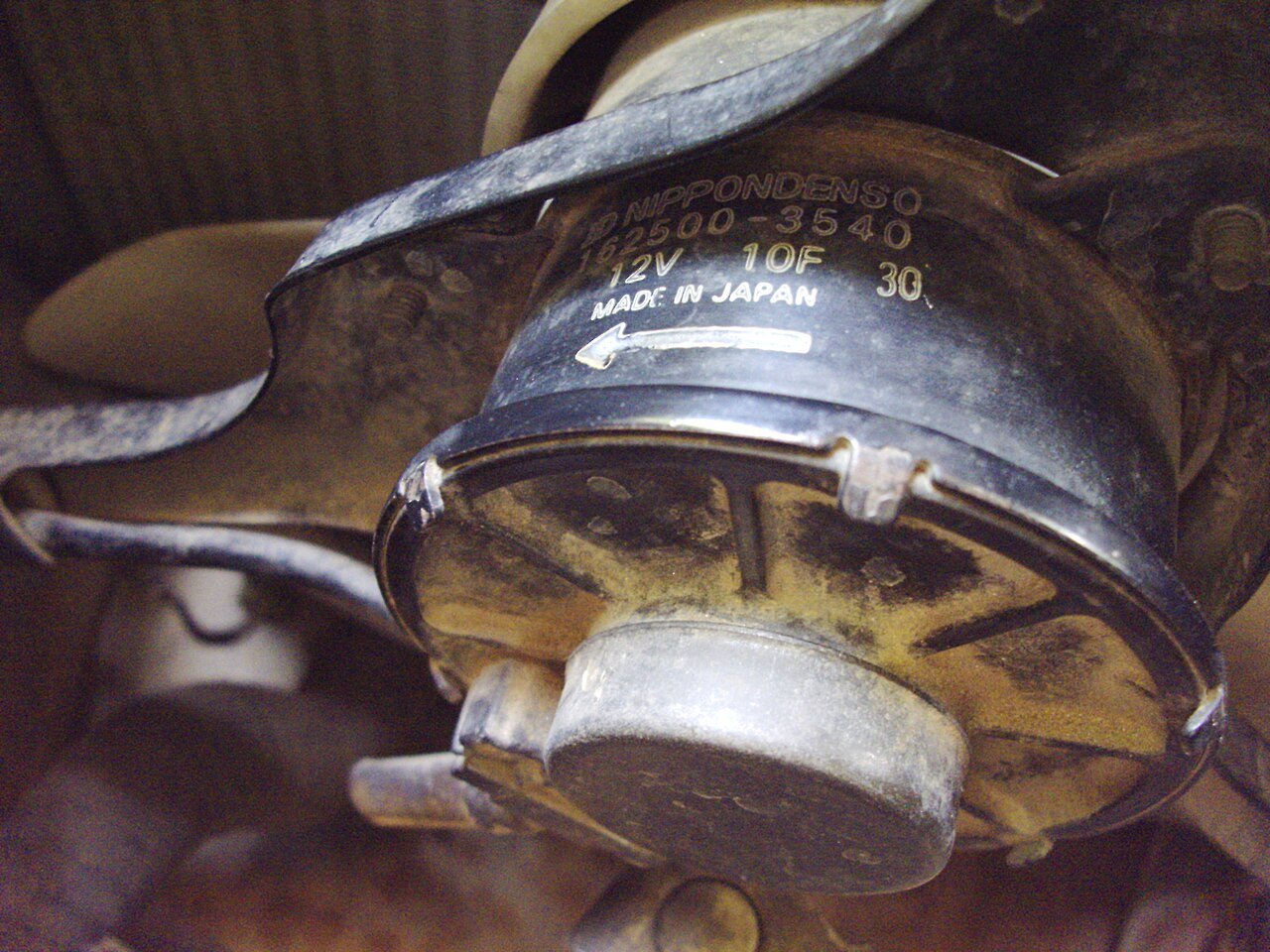
The first 800s were largely Japanese cars assembled in India. Many key parts, from engines to electrical components, came from Japan, and the photograph below shows a Nippondenso fan motor stamped “Made in Japan” inside an early car. Import dependence was expensive and politically awkward, so Maruti worked to build an Indian supplier base, often through joint ventures between Indian firms and Japanese component makers. That web of suppliers, much of it around Gurgaon and later Manesar, became the core of north India’s car industry.
The same happened downstream. Maruti built a network of dealers and authorised workshops, and because the 800 was mechanically simple, independent mechanics everywhere learned to fix it. Spare parts were cheap and easy to find. That made the car easy to own in a small town as well as a metro, and it made used 800s easy to sell, which in turn helped first-time buyers into the market.
Car finance followed. As more families wanted cars and more lenders offered loans, buying a car moved from a once-in-a-lifetime cash purchase towards a monthly instalment. Maruti’s Haryana plants have now made more than 2.68 crore vehicles, and they grew from the factory built for the 800.
1984–1990: From One Car to a Range
The 800 becomes the first step on a ladder.
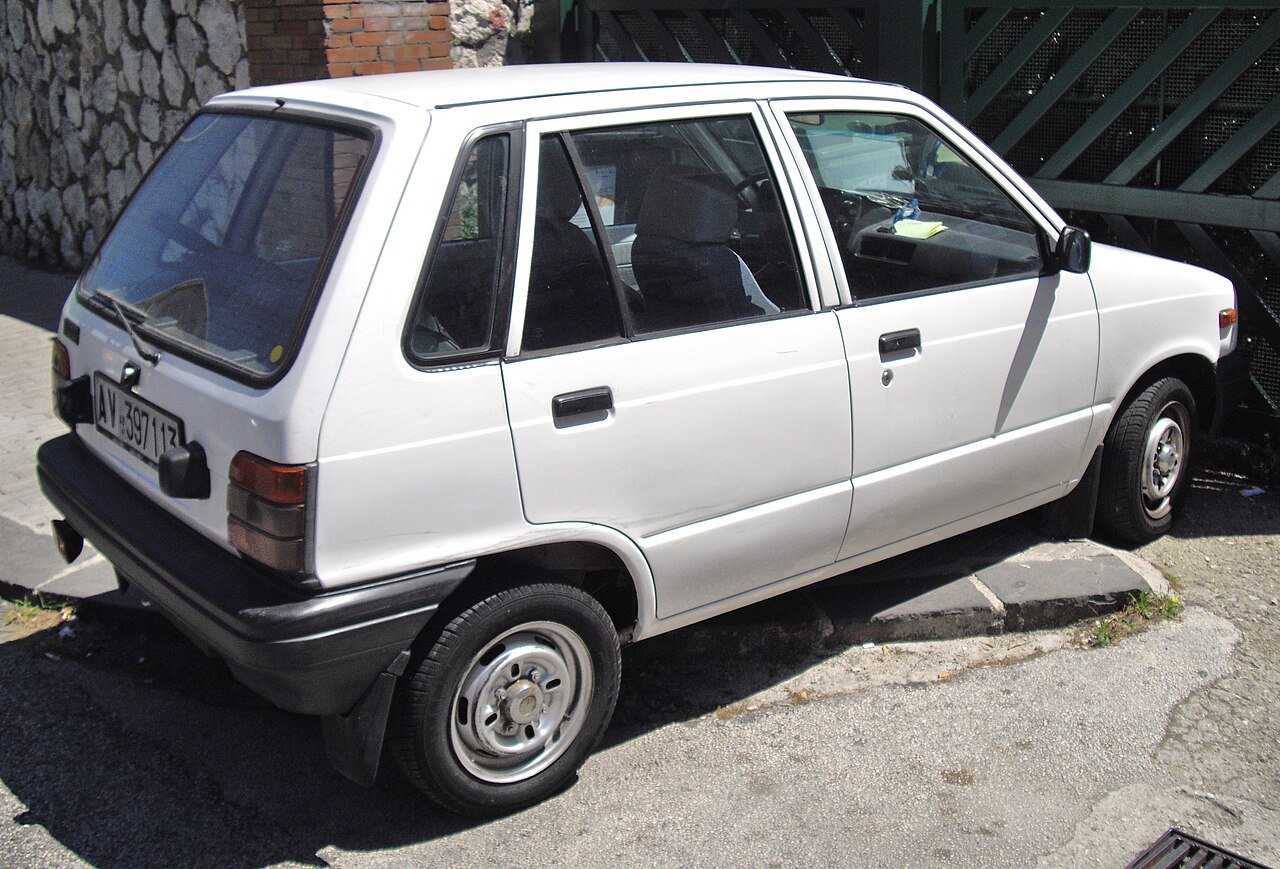
Maruti used the 800’s platform and engine to expand quickly. The Maruti Van (later the Omni) followed in 1984, and the Gypsy off-roader in 1985. In 1986 the 800 itself was replaced by a new generation based on Suzuki’s newer Alto (code SB308), with a rounder body and the same 796cc engine. That is the shape most Indians remember.
In 1990 Maruti launched the Maruti 1000 saloon. It created a path for an 800 owner to move up without leaving Maruti’s dealers and workshops. First-time buyers were becoming repeat customers, a pattern that would matter enormously once competition arrived.
1991–2007: Liberalisation, Rivals and Suzuki Control
The market the 800 built was opened to competitors.
India’s 1991 economic reforms dismantled much of the licensing system. Global carmakers started to arrive, and by the late 1990s the Hyundai Santro and the Tata Indica were competing directly for small-car buyers. But Maruti already had what newcomers could not buy: scale, suppliers and a service network in hundreds of towns. It had produced its first 1 million vehicles by March 1994.
Ownership shifted too. Suzuki raised its stake to 50% in 1992 and became majority owner in 2002. In 2003 Maruti Udyog was listed on the stock exchanges after a public issue that Wikipedia records as oversubscribed tenfold. In 2007 the government sold its remaining shares, and the company became Maruti Suzuki India.
Meanwhile the product was aging. The Alto, launched in 2000, offered a more modern small car at a similar price. In 2004 the Alto overtook the 800 as India’s best-selling car, ending a run of about two decades at the top. Maruti had built the entry-level market with the 800; now its own successor was taking it over.
Maruti Production Milestones, 1983–2024
The first million took more than ten years. The last ten million took about six.
2010–2014: Why the Maruti 800 Was Discontinued
India had outgrown the car it learned to drive in.
The end came in two steps. From April 2010, stricter Bharat Stage IV emission norms applied in 13 major cities. Rather than re-engineer an old design to meet them, Maruti stopped selling the 800 in those cities and kept it on sale elsewhere under the older BS-III rules.
At the same time, buyers wanted more: more space, air-conditioning as standard, better safety and more refinement. The Alto, the WagonR and rival small cars offered those at prices not far above the 800. In October 2012 Maruti launched the Alto 800, a new entry-level car that borrowed the famous number but not the old body.
On 18 January 2014 the last Maruti 800, reported as a Firebrick Red car bound for a buyer in Shillong, rolled out of the Gurgaon plant. Over 31 years, reports put total production at about 2.87 million, of which about 2.66 million were sold in India; Autocar India’s 2019 figure is 2.91 million, and Maruti Suzuki says “over 29 lakh”. The 800 name lasted a little longer on the Alto 800, which Maruti discontinued in 2023.
The irony is that the 800 did not fail. Indians did not stop wanting affordable cars. The 800 had created a mass market that now expected more than the 800 could give.
The Indian Car Buyer: 1983 vs 2014
The First Car’s Second Life
From a Green Park kerb to Maruti’s headquarters.
Harpal Singh kept DIA 6479 for the rest of his life. After he died in 2010, the car was left parked outside the family home in Green Park, Delhi, and slowly decayed in the sun and rain. Photographs of the neglected car spread online and reached Maruti Suzuki.
The company bought the car from the family and restored it using genuine parts. In 2022, 39 years after the first delivery, the restored car was put on display at Maruti Suzuki’s headquarters in New Delhi. Osamu Suzuki, who signed the 1982 deal, died on 25 December 2024, aged 94.
The People Behind the Maruti 800
Sanjay Gandhi
Launched the Maruti people’s-car project in 1971. It produced no car for sale. Died 23 June 1980.
Indira Gandhi
Revived Maruti as a government company and handed over the first keys on 14 December 1983.
Osamu Suzuki
Took Suzuki into the 1982 joint venture, which became its largest market. Died December 2024.
V. Krishnamurthy
Former BHEL chief who led Maruti Udyog through the setup of the Gurgaon plant.
R. C. Bhargava
Marketing director at launch, later managing director, now chairman of Maruti Suzuki.
Harpal Singh
Indian Airlines employee who won the first car in the draw and kept it until his death in 2010.
Maruti 800 Full Timeline, 1970–2024
Newest first.
3 Crore Vehicles; Osamu Suzuki Dies
Maruti Suzuki announces 3 crore cumulative production on 3 April 2024 and credits the M800 with over 29 lakh units. Osamu Suzuki dies on 25 December 2024.
The 800 Name Retires
Maruti discontinues the Alto 800, ending about 40 years of the 800 name in its line-up.
First Car Restored
Harpal Singh’s DIA 6479, bought back from his family and restored with genuine parts, goes on display at Maruti Suzuki’s headquarters.
The Last Maruti 800
A Firebrick Red 800, reportedly bound for Shillong, is the last car off the line after 31 years.
Alto 800 Launched
A new entry-level Maruti takes the famous number. It is a different car, not an updated 800.
10 Million Marutis
The 10 millionth vehicle, a WagonR, rolls out. Half of the total came in the previous six years.
Out of 13 Cities
Maruti stops selling the 800 in 13 major cities where BS-IV emission norms take effect. Harpal Singh also dies this year.
Government Exits
The government sells its remaining shares to Suzuki, and the company is renamed Maruti Suzuki India.
Alto Takes the Crown
The Alto overtakes the 800 as India’s best-selling car.
Maruti Goes Public
Maruti Udyog lists on the stock exchanges after a heavily oversubscribed public issue.
One Million Vehicles
Maruti’s cumulative production reaches 1 million, a little over ten years after the first car.
Suzuki Goes to 50%
A year after the 1991 reforms, Suzuki raises its stake to 50%.
Maruti 1000
Maruti adds a saloon so 800 owners can move up without leaving the brand.
Second-Generation 800
A new, rounder body based on Suzuki’s newer Alto replaces the SS80, keeping the 796cc engine.
Maruti Van; Gypsy Follows
The Maruti Van arrives in 1984 and the Gypsy in 1985, both built on 800 know-how.
The First Maruti 800
Indira Gandhi hands the keys to the first ten allottees. Harpal Singh gets car number one, DIA 6479, for Rs 47,500.
Bookings Open
Orders pass 1.35 lakh by 8 June, far beyond the plant’s first-year capacity.
Suzuki Joint Venture Signed
Maruti Udyog and Suzuki Motor sign the joint-venture agreement. Suzuki takes 26%.
Maruti Udyog Incorporated
The government revives the project as Maruti Udyog Limited, with V. Krishnamurthy as chairman.
Sanjay Gandhi Dies
The founder of the original Maruti project dies in a plane crash.
Maruti Limited Formed
Sanjay Gandhi’s company gets a licence for a people’s car and land in Gurgaon. It never sells a car and is wound up after 1977.
Quiz: How Well Do You Know the Maruti 800?
Tap a question to reveal the answer.
1. When was the first Maruti 800 handed over?
2. Who received the first Maruti 800?
3. What was the engine size?
4. What stake did Suzuki take in 1982?
5. Which car overtook the 800 as India’s best-seller in 2004?
6. Why was the 800 pulled from 13 cities in 2010?
7. What did the 800 have that the Ambassador did not?
Explore More Timelines
People Also Ask
Frequently Asked Questions
Related AiTimeline Stories
⚠️ Editorial Note
Dates and figures are cross-checked against Maruti Suzuki’s own press releases (3 crore production, April 2024), Suzuki Motor’s milestone releases, Autocar India’s 35th- and 40th-anniversary pieces by Hormazd Sorabjee, contemporary motoring press on the final car in 2014 and the restored first car in 2022, and Wikipedia’s articles on the Maruti 800 and Maruti Suzuki. Where sources differ, all are shown: the launch price (Rs 47,500 in most reports, about Rs 50,000 in Autocar India) and lifetime production (2.87 million, 2.91 million or “over 29 lakh”). Commonly repeated claims that the car was “four metres long”, that Suzuki joined in 1981, or that the first car was restored in 2019 are not supported by the record and are not used here. This is editorial, AI-assisted content.
Sources & further reading
Every dated entry above was checked against these references. Last reviewed 27 September 2026.
- Maruti Suzuki (3 April 2024): Maruti Suzuki achieves 3 crore cumulative production milestone
- Suzuki Motor (15 March 2011): Maruti Suzuki India production reaches 10 million units
- Suzuki Motor (12 May 2015): Maruti Suzuki rolls out its 15 millionth vehicle
- Autocar India: Maruti 800 @ 40 (Hormazd Sorabjee)
- Autocar India (2019): Maruti Suzuki sales cross 20 million mark
- Business Today (2022): First Maruti 800 restored, displayed at Maruti Suzuki HQ
- Motoroids: Maruti 800 production ceased, end of an era (2014)
- Team-BHP: Maruti 800 tribute, the car that put India on wheels
- Wikipedia: Maruti 800
- Wikipedia: Maruti Suzuki