Boeing 737 MAX Nosedive Survival: A Timeline of Resilience
How a flydubai Boeing 737 MAX 8 survived a 14,125 ft plunge in 29 seconds, lost part of its rudder and landed safely, plus the MAX story from MCAS to 2026.
Latest Story
On 30 September 2026 a flydubai Boeing 737 MAX 8 cruising towards Tel Aviv dropped 14,125 feet in 29 seconds, reached ground speeds above 600 knots and lost much of its rudder, and still landed safely at Tabuk with all 174 passengers alive. This is the Boeing 737 MAX nosedive survival story: what the aircraft went through, why it held together, and where FZ1073 sits in the MAX’s troubled 15-year history.
For the minute-by-minute account of the cockpit attack, the squawk codes and the diversion, see our FZ1073 diversion timeline. This page is about the airframe: speed, loads, the damaged tail and the certification margins that bought the people on board their chance. It also corrects some figures that have circulated since the incident, and clearly marks what is official and what is still reported.
💡 Short Answer
The Boeing 737 MAX 8 on flydubai FZ1073 survived a violent nosedive on 30 September 2026 because it had enough altitude left, its structure is certified with large margins above its limits, and an injured captain opened the flight-deck door so off-duty pilots could take over. It fell 14,125 ft in 29 seconds, lost part of its rudder, and landed at Tabuk with no deaths. The UAE calls the co-pilot’s attack an attempted terrorist act.
Boeing 737 MAX Nosedive: Key Questions
FZ1073 and the 737 MAX in Nine Points
- The event: a flight-deck attack sent flydubai’s 737 MAX 8 A6-FKF into a dive near the Saudi-Jordan border on 30 September 2026.
- The drop: 14,125 ft in 29 seconds, near 31,000 ft a minute, about five to seven times a normal emergency descent.
- The speed: ground speed above 600 knots; the jet was far beyond its Mach 0.82 / 340-knot limits.
- The damage: a large section of the rudder was missing after landing, most likely from overload or flutter.
- The people: an injured captain opened the door; passengers and crew restrained the attacker; off-duty pilots flew to Tabuk.
- The verdict so far: the UAE calls it an attempted terrorist act. No finding points at the aircraft.
- Not MCAS: the 2018–2019 crashes were a flight-control design failure; FZ1073 is not.
- Not Alaska 1282: the 2024 blowout was a factory-quality failure; FZ1073 is not that either.
- Still open: exact Mach and g-loads, the full damage survey and the aircraft’s future await the flight data and inspection.
The Dive, Second by Second
What public tracking data shows, and what it cannot.
FZ1073 left Dubai at 07:05 UAE time and climbed to about 34,000 ft. At 09:21, near the Saudi-Jordanian border, its altitude began to fluctuate. In the steepest measured segment it lost 14,125 ft in 29 seconds. It then pulled out, climbed to about 21,750 ft, and descended again to about 15,000 ft by 09:33, when the situation on the flight deck was coming under control. The WSJ’s reconstruction describes 92 seconds of nosedive at an angle of up to 39 degrees.
A passenger jet descending in an emergency, for example after losing cabin pressure, typically comes down at 4,000 to 6,000 ft a minute with its speed held near the limit. FZ1073 came down five to seven times faster, with its speed far beyond it. The figures come from ADS-B tracking, which reports pressure altitude and ground speed but not airspeed, angle of attack or g-load. Those are on the flight data recorder.
Was FZ1073 really at the speed of sound? Set an altitude, a ground speed and a wind, and see the Mach number and airspeed the 737 MAX would be flying.
Tracking sites show ground speed. Loads, flutter and the overspeed warning depend on airspeed and Mach. This calculator uses the International Standard Atmosphere, so it is a teaching estimate, not a reconstruction.
VMO 340 kt and MMO 0.82 are the published 737 MAX operating limits. Real temperatures differ from the standard atmosphere, the actual wind on 30 September has not been published, and the design dive speed used in certification is not public. The flight data recorder holds the real values.
Why the 737 MAX Held Together
Certification margins, altitude and timing.
1.5 times the limit load
US rules (14 CFR 25.303) require airliner structures to carry 1.5 times the largest load expected in service without failing. Limit loads include at least 2.5 g in a pull-up (25.337).
Design dive speed above MMO
The structure is designed and flight-tested to a dive speed above the maximum operating speed, so an overspeed does not immediately mean failure.
15% beyond design dive speed
Under 14 CFR 25.629 the aircraft must be free of flutter up to 15% above its design dive speed. A rudder losing a section suggests FZ1073 reached the edge of that envelope.
Height to recover
Starting from 34,000 ft left room to pull out. “What saved them is there was enough altitude left,” former NTSB investigator Jeff Guzzetti said.
Redundant flight controls
Without much of its rudder, the 737 still had ailerons, spoilers, elevators, stabiliser trim and the fixed fin for directional stability. That was enough for an approach.
Pilots in the cabin
Two off-duty flydubai pilots were aboard. Once the captain opened the door and the attacker was restrained, qualified hands flew the damaged jet to Tabuk.
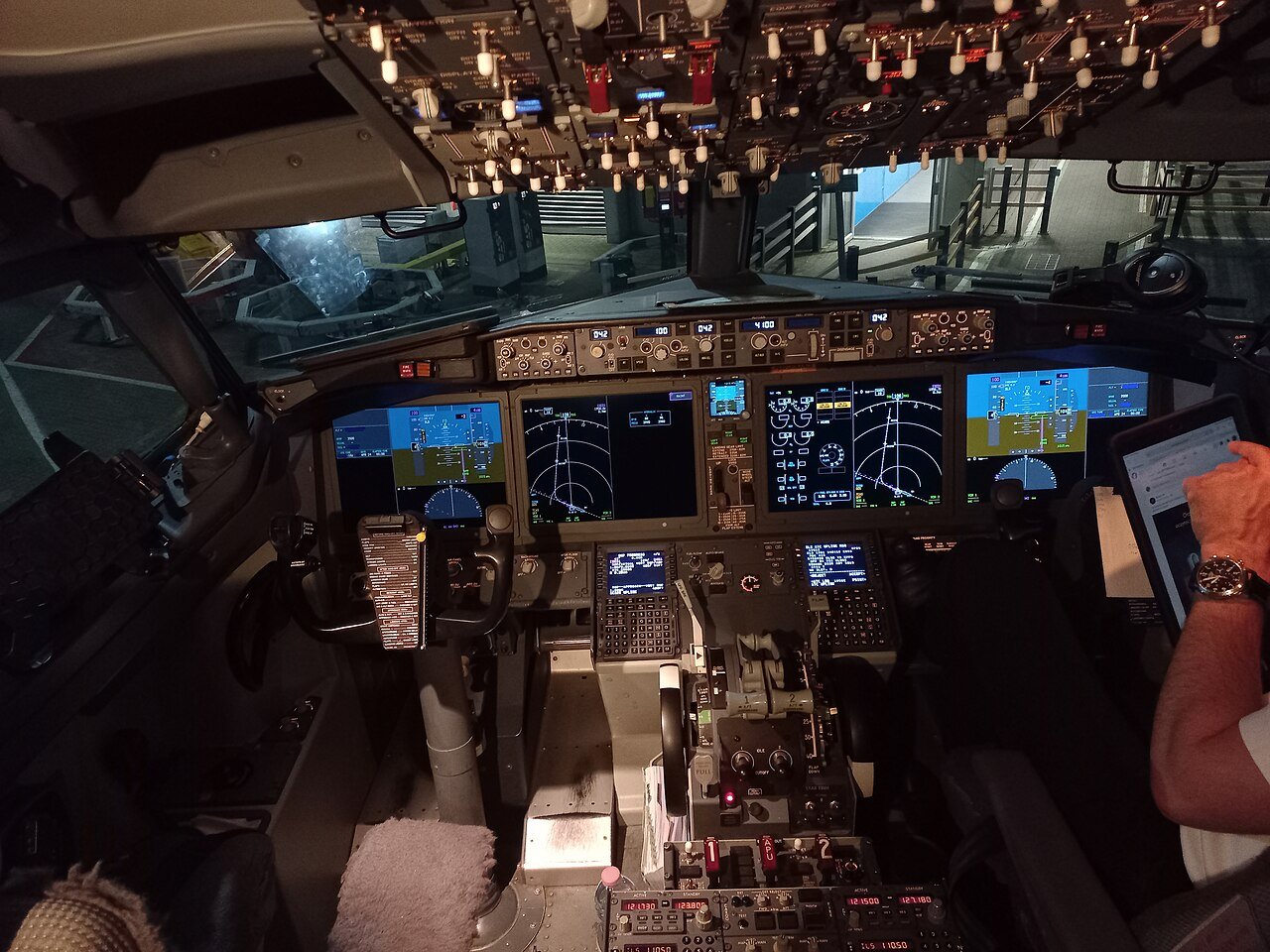
“It is remarkable they were able to pull out of that dive. What saved them is there was enough altitude left.”
Jeff Guzzetti, former NTSB and FAA crash investigator, as reported on 1 October 2026
What Happened to the Rudder?
The rudder is the hinged rear part of the vertical tail, used to control yaw. Photographs of A6-FKF at Tabuk show a large section of it missing. No investigator has yet published a cause. Aviation analysts offer three main candidates:
- Flutter at overspeed: above its certified speeds, a control surface can start to oscillate and tear itself apart in seconds. Most analysts see this as the leading theory.
- Aerodynamic overload: large rudder deflection at very high airspeed, whether from the struggle on the flight deck or the recovery, can exceed what the surface and its hinges were built for.
- Pull-out loads: the combination of high speed and the g-load needed to stop the dive stresses the whole tail.
These are analysts’ explanations, not findings. The investigation will check the rudder, fin, stabilisers, hinges, attachment fittings and actuators.
Where FZ1073 Fits in the 737 MAX Story
Five chapters, five different root causes.
Boeing 737 MAX Nosedive Survival: The Full Timeline
Newest first, from the UAE’s 3 October finding back to the MAX’s 2011 launch.
2026
UAE: an attempted terrorist act Official
UAE Attorney General Dr Hamad Saif Al Shamsi says the co-pilot planned and began executing a terrorist act during the flight, attacking the captain inside the flight deck with a crash axe and trying to take control of the aircraft’s flight controls. India’s embassy says Captain Smit Machchhar is recovering well.
What it means for the aircraft story: the official finding so far describes a deliberate act, not an aircraft or software failure. The engineering question is how a MAX 8 driven far outside its envelope stayed in one piece.
2026
The dive goes under the microscope Reported
Analysts reconstruct the dive from public tracking data. The Wall Street Journal reports a 92-second nosedive at a 39-degree angle, losing about 4,700 metres (roughly 15,400 ft) at the speed of sound, and the loss of key tail sections. Former NTSB and FAA investigator Jeff Guzzetti says: “What saved them is there was enough altitude left.”
On 1 October US President Donald Trump praises Boeing and chief executive Kelly Ortberg for the jet’s “powerful structural planning and design”, saying it withstood forces “far beyond what it was designed and expected to do”.
2026
Rudder missing after landing at Tabuk Reported
FZ1073 lands at Prince Sultan bin Abdulaziz Airport, Tabuk, at 10:45 UAE time, about 84 minutes after the dive began. Photographs of the aircraft on the ground show a large section of the rudder missing from the vertical tail. The captain and first officer go to hospital; passengers leave on a replacement flydubai aircraft at 18:40.
Engineering significance: the rudder is the 737’s yaw control. Losing much of it still left the ailerons, spoilers, elevators and stabiliser trim, plus the fin itself for directional stability, which proved enough for an approach and landing.
2026
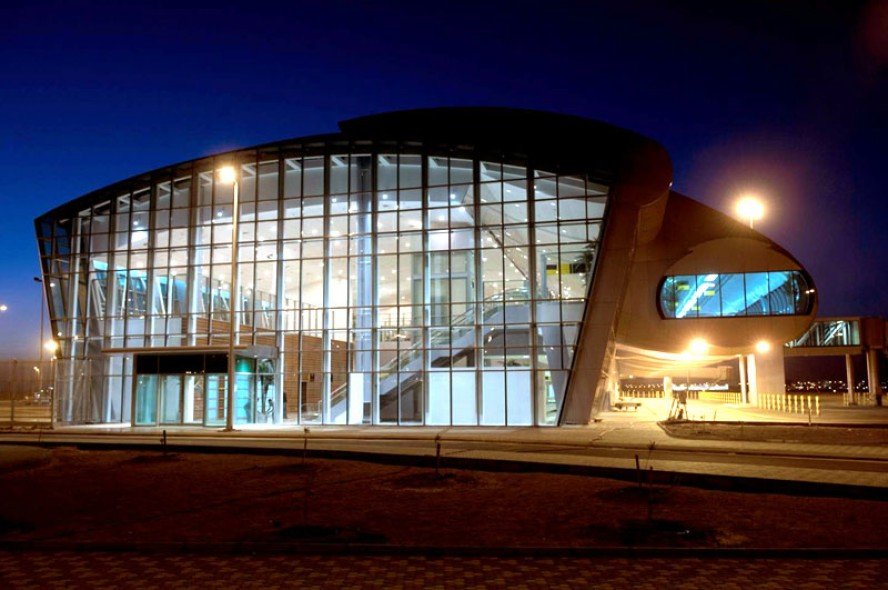
Captain opens the door; off-duty pilots take over
Wounded in the head and hands, Captain Smit Machchhar releases the reinforced flight-deck door from inside. Crew and passengers restrain the first officer. Two deadheading flydubai pilots riding in the cabin take the controls. The aircraft broadcasts 7700 (emergency) at about 09:28 and 7500 (unlawful interference) at about 09:35 UAE time, briefly crosses into Jordanian airspace and turns back for Tabuk.
2026
The plunge: 14,125 ft in 29 seconds
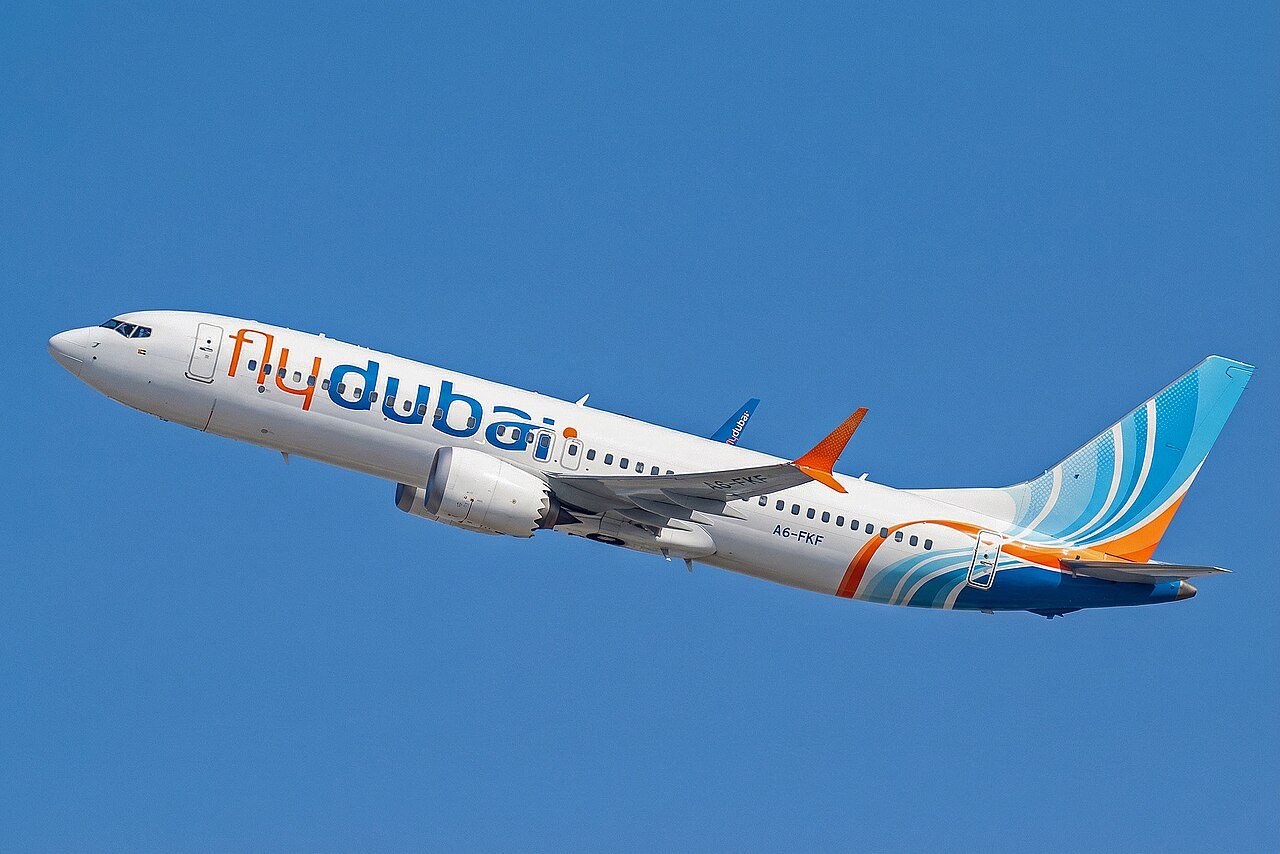
FZ1073, a Boeing 737 MAX 8 (A6-FKF) that left Dubai at 07:05 for Tel Aviv, is cruising at about 34,000 ft when its altitude starts to fluctuate at 09:21 UAE time. Flightradar24 data shows it falling from 30,875 ft to 16,750 ft between 05:22:07 and 05:22:36 UTC: 14,125 ft in 29 seconds, a descent rate near 31,000 ft per minute. Ground speed climbs from about 400 knots to more than 600 knots. It then climbs to about 21,750 ft and descends again to about 15,000 ft by 09:33.
Why it matters: at those speeds the MAX was far beyond its Mach 0.82 operating limit. A normal emergency descent is closer to 4,000 to 6,000 ft per minute.
2026
FAA clears 47 MAX a month
Boeing chief executive Kelly Ortberg says the company has passed the FAA’s capstone review to raise 737 MAX output from 42 to 47 jets a month. The production cap imposed after the Alaska Airlines blowout is now being lifted in steps, as the FAA judges Boeing’s quality system has improved.
2025
FAA lifts the cap to 42 a month
The FAA allows Boeing to raise 737 MAX production from 38 to 42 a month after safety inspectors review its manufacturing lines. The cap had been in place since January 2024.
2025
NTSB: four bolts never reinstalled
The NTSB adopts its final report on Alaska Airlines Flight 1282. The door plug had been opened for rework at Boeing’s Renton factory, and its four securing bolts were never reinstalled. The board blames Boeing’s failure to provide adequate training, guidance and oversight, and the FAA’s ineffective oversight of Boeing.
2024
Alaska 1282 door plug blows out
Shortly after take-off from Portland, a mid-cabin door plug separates from a two-month-old Alaska Airlines 737-9 MAX at about 14,800 ft. The cabin decompresses; the aircraft returns safely. Seven passengers and a flight attendant suffer minor injuries. The next day the FAA grounds 171 737-9s with the same plug. The MAX story shifts from software to factory quality.

2020
The MAX is cleared to fly again
After about 20 months, the FAA lifts its grounding order. Required changes include new flight-control software so MCAS compares both angle-of-attack sensors, activates only once per event and cannot command more nose-down trim than the pilot can counter with the control column; an AoA-disagree alert; separated wiring; and new simulator training for every MAX pilot.
2019
Ethiopian 302 crashes; the MAX is grounded
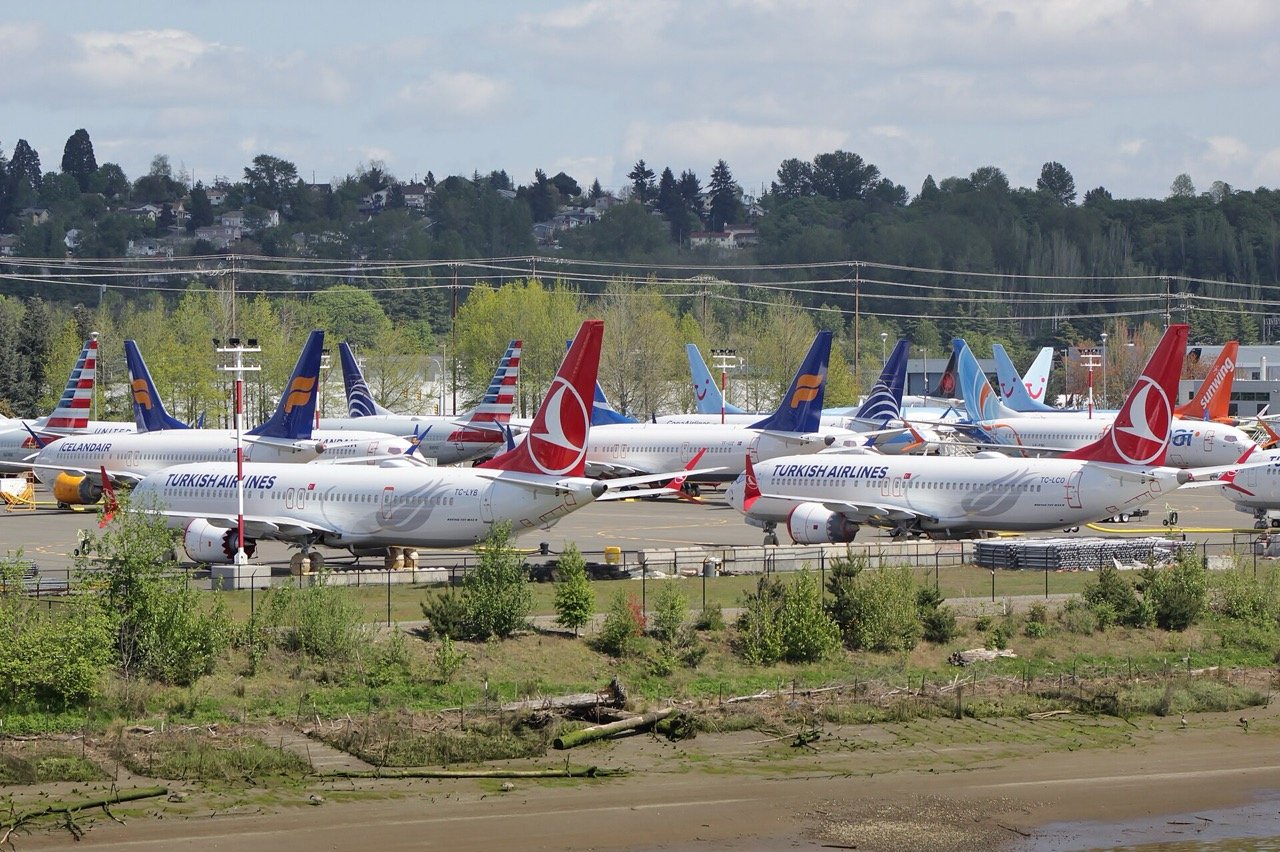
Ethiopian Airlines Flight 302 crashes six minutes after leaving Addis Ababa, killing all 157 aboard. The pattern matches Lion Air 610. China grounds the MAX first; the UAE and others follow, and on 13 March 2019 the FAA grounds the fleet. flydubai, then a major MAX operator, parks its aircraft.
2018
Lion Air 610: the first MAX crash
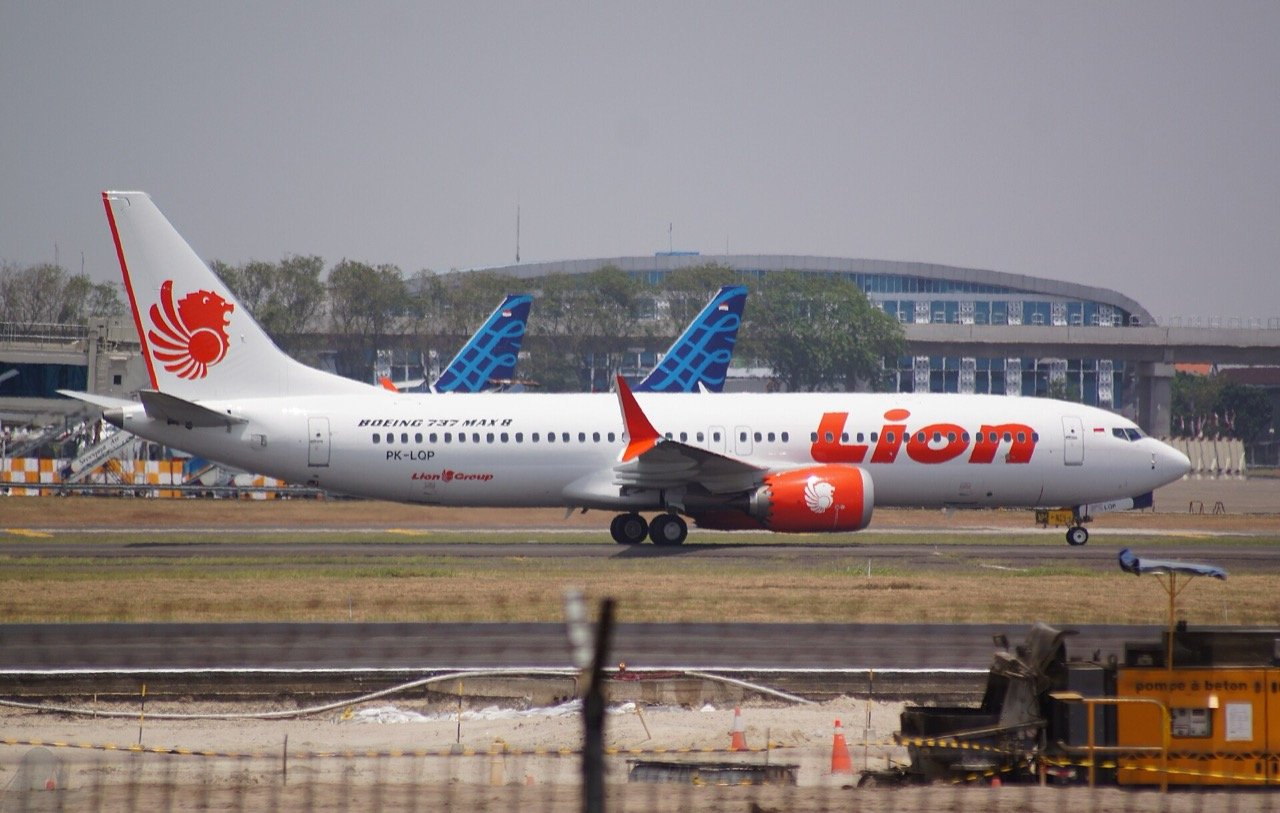
Lion Air Flight 610 crashes into the Java Sea 13 minutes after take-off from Jakarta, killing all 189 people aboard. Investigators find a faulty angle-of-attack sensor fed MCAS, which repeatedly trimmed the nose down. Pilots had not been told the system existed.
2017
flydubai takes its first MAX 8
Boeing delivers flydubai’s first 737 MAX 8, from an order placed at the 2013 Dubai Airshow. The MAX becomes the backbone of the Dubai carrier’s fleet. Malindo Air had flown the type’s first passenger service on 22 May 2017, after FAA certification on 8 March 2017.
2016
First flight from Renton
The first 737 MAX 8 flies from Renton, Washington. Larger, more efficient CFM LEAP-1B engines are mounted further forward and higher on the wing, which changes the aircraft’s pitch behaviour at high angles of attack. MCAS is added to make it handle like earlier 737s.
2011
Boeing launches the 737 MAX
Boeing’s board approves the 737 MAX: a re-engined 737 rather than a clean-sheet design, to match the Airbus A320neo’s fuel savings quickly and keep training commonality with the 737 Next Generation.
MCAS Crashes vs Alaska 1282 vs FZ1073
Three MAX emergencies that are often lumped together, and should not be.
| MCAS crashes | Alaska 1282 | FZ1073 | |
|---|---|---|---|
| Date | 29 Oct 2018 / 10 Mar 2019 | 5 Jan 2024 | 30 Sep 2026 |
| Aircraft | 737 MAX 8 | 737-9 MAX | 737 MAX 8 |
| Root cause | MCAS acting on one faulty AoA sensor | Door plug bolts not reinstalled at factory | Attack on the flight deck (UAE: attempted terrorist act) |
| Was the aircraft at fault? | Yes: design and certification | Yes: manufacturing quality | No evidence so far |
| Outcome | 346 killed | No deaths, minor injuries | No deaths, pilots injured |
| Regulatory result | Global grounding, redesign | 171 jets grounded, production cap | Criminal and safety investigations |
What Investigators Will Check on the Aircraft
- Download the recorders. Flight data and cockpit voice recorders give exact airspeed, Mach, g-load, control inputs and sounds on the flight deck.
- Compare with the limits. Recorded speeds and loads are checked against VMO, MMO, design dive speed and limit loads.
- Inspect the tail. Rudder, fin, horizontal stabilisers, hinges, attachment fittings and actuators, with non-destructive testing for hidden cracks or disbonds.
- Inspect the wings and fuselage. Overstress checks on wing-to-body joints, engine pylons, flaps, spoilers and skin panels.
- Check the flight controls. Control cables, power control units and trim systems, including any damage from the struggle.
- Decide repair or retire. Boeing, flydubai and the UAE regulator decide whether repair is safe and economic.
The Survival Story in Numbers
| Figure | What it is | Context |
|---|---|---|
| 30 Sep 2026 | 174 passengers + 6 crew | 27 children aboard; no deaths |
| ~34,000 ft | Cruise altitude | Dubai to Tel Aviv |
| 14,125 ft / 29 s | Steepest measured drop | Flightradar24: 05:22:07 to 05:22:36 UTC |
| ~31,000 ft/min | Peak descent rate | Normal emergency descent: 4,000–6,000 |
| 600+ kt | Ground speed in the dive | Cruise about 400 kt |
| Mach 0.82 / 340 kt | 737 MAX MMO / VMO | Published operating limits |
| ~84 min | Dive to touchdown | 09:21 to 10:45 UAE time |
| 2.5 g / ×1.5 | Certification load margins | Limit load and factor of safety |
| 346 | Deaths in the 2018–19 MAX crashes | Lion Air 610 and Ethiopian 302 |
| ~20 months | US grounding | 13 Mar 2019 to 18 Nov 2020 |
Corrections to Claims Circulating Online
“34,000 ft to 16,600 ft in seconds”
The measured drop was 30,875 ft to 16,750 ft in 29 seconds (14,125 ft). From cruise, the loss was about 17,000 ft in under a minute.
“It went supersonic”
Not established. Tracking shows 600+ knots ground speed, which includes wind. The WSJ says the speed of sound; the recorder will give the true Mach number.
“A 2017 test-flight nosedive”
An earlier AI-generated draft of this page described a 737 MAX prototype diving near Mach 1 over the Mojave in 2017. No such event is on record; it has been removed.
“The pilot stabbed the co-pilot”
Reversed. Officials say the first officer attacked the captain, Smit Machchhar.
“Another MCAS failure”
No evidence. The UAE describes an attempted terrorist act, and Boeing’s design has drawn praise, not blame, so far.
“More than 170 people”
Correct but imprecise: most reports give 174 passengers, including 27 children, plus six crew.
Did You Know?
- Crash axe: airliners carry an axe on the flight deck for fighting fires behind panels. On FZ1073 it became the weapon.
- Door logic: since 9/11, flight-deck doors are reinforced and lock from inside. That kept help out until the captain opened it.
- Same family, different eras: the 737 first flew in 1967. The MAX is its fourth generation.
- Cold air, slower sound: the speed of sound at cruise height is about 13% lower than at sea level.
- Deadheading: crew travelling as passengers to position for duty. Two of them flew FZ1073 home to the ground.
Quick Quiz: The 737 MAX Nosedive
1. How much height did FZ1073 lose in its steepest 29 seconds?
2. Which part of the aircraft was visibly damaged?
3. What is the 737 MAX’s maximum operating Mach number?
4. What did MCAS have to do with FZ1073?
5. How many 737-9s did the FAA ground after Alaska 1282?
6. Who landed FZ1073 at Tabuk?
Explore More Timelines
People Also Ask
Frequently Asked Questions
The Bigger Picture
The 737 MAX has been examined more closely than almost any airliner in history: two fatal crashes, a 20-month grounding, a software and training overhaul, a factory-quality crisis and a production cap. FZ1073 adds a different chapter. The emergency came from a person, not the machine, and the machine appears to have taken loads it was never meant to see and still brought 174 passengers to the ground. Safety is built in layers: design margins, redundant controls, training, a door that can be opened from inside, and people willing to act. On 30 September 2026 several of those layers had to work within about a minute. The flight data will show how close the margins came to running out.
Related AiTimeline Stories
⚠️ Editorial Note
Last updated 3 October 2026. This is a developing investigation. Items marked Official come from the UAE Attorney General (via WAM), the GCAA or flydubai. Dive figures come from Flightradar24 data as reported by NBC News, Simple Flying and Gulf News; the WSJ’s angle and speed-of-sound description is its own analysis. Damage descriptions are based on published photographs, not an investigation report. Certification rules are from 14 CFR Part 25. The Overspeed Explorer uses the standard atmosphere and is a teaching estimate. We do not name the suspect, who has not been publicly charged.
Sources & further reading
Every dated entry above was checked against these references. Last reviewed 3 October 2026.
- WAM via CNBC: UAE Attorney General says FZ1073 co-pilot attempted a terrorist act with a crash axe (3 October 2026)
- Gulf News: From cockpit altercation to terrorist act, the flydubai FZ1073 timeline
- Simple Flying: Trump praises Boeing after 737 MAX survives 14,000 ft plunge (Flightradar24 data)
- The Times of Israel: Photos of flydubai plane after landing show tail has broken rudder
- 14 CFR 25.629: Aeroelastic stability requirements (Cornell LII)
- NTSB: Board meeting summary, Alaska Airlines Flight 1282 door plug (24 June 2025)
- CNBC: FAA raises Boeing 737 MAX production cap to 42 a month (17 October 2025)
- Boeing: Boeing delivers first 737 MAX 8 to flydubai (31 July 2017)