Grenfell Tower Fire: Failures, Inquiry, and Legacy Timeline
Grenfell Tower fire timeline: the cladding and safety failures behind the 2017 disaster, what the inquiry found, and the reforms and charges still pending.
Latest Story
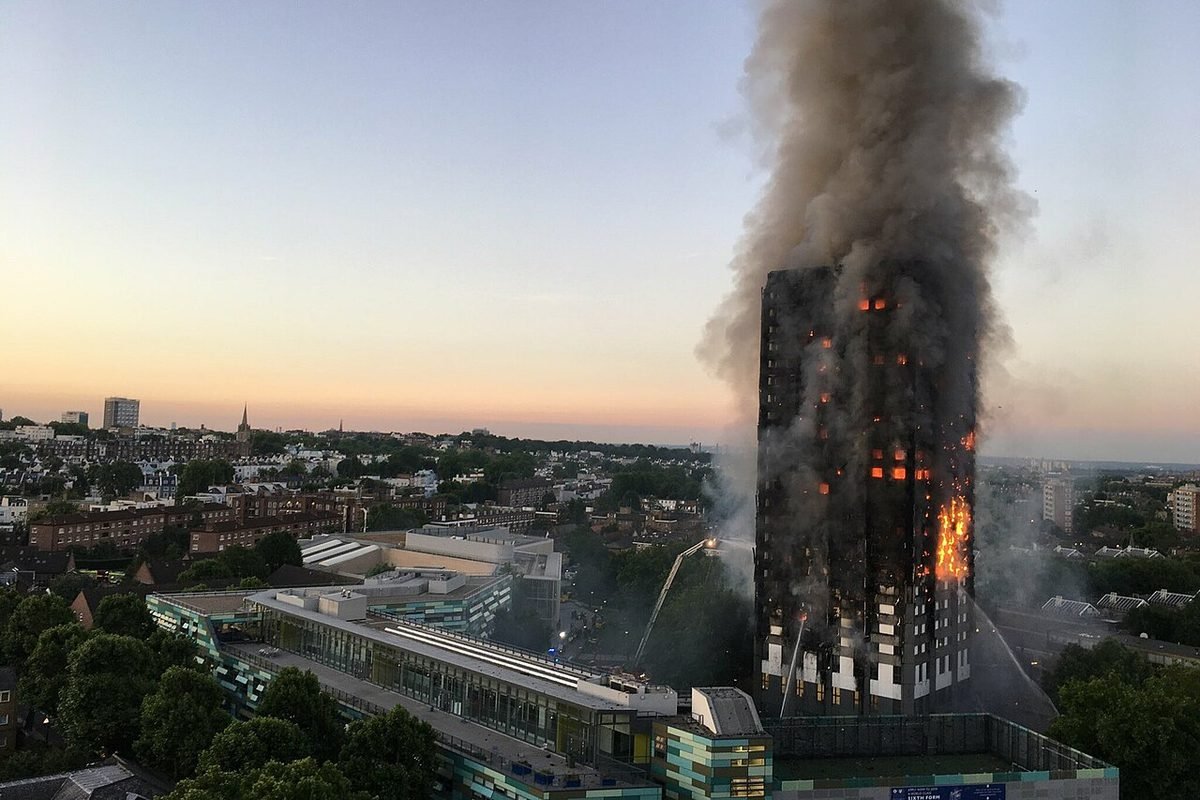
Shortly before 1am on 14 June 2017, a fridge-freezer caught fire in a fourth-floor kitchen of Grenfell Tower in west London. A fire like that should have stayed in one flat. Instead it escaped into the tower’s new cladding and, within half an hour, reached the roof. Seventy-two people died, including 18 children. The Grenfell Tower fire was not a freak accident: a public inquiry later concluded that every death was avoidable. This timeline follows the failures before the fire, the night itself, both phases of the Inquiry and the reforms that followed, through to October 2026, when police files on 54 people and 20 organisations were with prosecutors and half the Inquiry’s recommendations were still unfinished.
💡 Short Answer
The Grenfell Tower fire began at about 00:54 on 14 June 2017 in a kitchen on the fourth floor and spread up and around the 24-storey tower through combustible aluminium composite cladding fitted in a 2015–16 refurbishment. Seventy-two people died. The public inquiry found all the deaths were avoidable, blaming decades of failure by government, regulators, manufacturers, contractors and the landlord. No one has yet been charged; prosecutors aim to decide by June 2027.
Grenfell Tower Fire: Key Questions
Grenfell in Ten Points
- The start: a fridge-freezer fire in Flat 16 at about 00:54 on 14 June 2017.
- The spread: flames reached the roof within about half an hour via the external cladding.
- The material: ACM panels with a polyethylene core, fitted in a 2015–16 refurbishment.
- The advice: stay-put was dropped at 02:47; the Inquiry says it should have gone by 01:50.
- The toll: 72 people died, including 18 children.
- The warnings: residents had raised fire-safety concerns and were not taken seriously.
- The verdict: the Inquiry found in 2024 that all the deaths were avoidable.
- The industry: it found systematic dishonesty by some product manufacturers.
- The reforms: 30 of 61 recommendations complete by September 2026; target end-2029.
- The justice question: prosecutors are weighing files on 54 people and 20 organisations.
Grenfell Tower at a Glance
Scroll sideways on a phone.
| Detail | Key fact | Source |
|---|---|---|
| Location | Lancaster West Estate, North Kensington, west London | RBKC |
| Building | 24-storey council tower, built 1972–74, 129 flats, one staircase | Inquiry |
| Fire began | About 00:54, 14 June 2017, kitchen of Flat 16 (4th floor) | Inquiry Phase 1 |
| Cause | Electrical fault in a fridge-freezer | Inquiry Phase 1 |
| Main reason for spread | ACM panels with a polyethylene core, plus combustible insulation | Inquiry Phase 1 |
| Stay-put revoked | About 02:47; should have been 01:30–01:50 | Inquiry Phase 1 |
| Deaths | 72, including 18 children | Inquiry |
| Inquiry chair | Sir Martin Moore-Bick | Inquiry |
| Phase 1 report | 30 October 2019, 46 recommendations | Inquiry |
| Phase 2 report | 4 September 2024, 58 recommendations | Inquiry |
| Progress | 30 of 61 complete (Sep 2026) | MHCLG |
| Criminal case | Files on 54 people, 20 organisations with CPS since 30 Sep 2026 | Met Police |
Grenfell Tower Fire Timeline: From Refurbishment to the Search for Accountability
Newest first, from September 2026 back to the tower’s construction. Tags mark events, warnings, the disaster, the inquiry, reform, justice and 2026 developments.
2026
Police send files on 54 people and 20 organisations to prosecutors 2026
Nine years after the fire, the Metropolitan Police completed its investigation and passed files on 54 individuals and 20 companies and organisations to the Crown Prosecution Service, together with 14 overarching evidence files. Police asked prosecutors to consider corporate manslaughter, gross negligence manslaughter, health and safety offences, fraud-related offences and misconduct in public office.
Deputy Assistant Commissioner Kevin Southworth called it ‘a milestone moment’ in ‘one of the most complex investigations ever undertaken by any UK law enforcement agency’. The CPS has committed to charging decisions before the tenth anniversary on 14 June 2027.
2026
30 of 61 recommendations complete 2026
The government’s latest progress report recorded 30 of 61 tracked recommendations complete: 58 from Phase 2 plus three outstanding from Phase 1. Fire and rescue reforms were furthest ahead (9 of 13); construction-industry reforms, the heart of the Phase 2 findings, furthest behind (9 of 28).
On cladding, the government was monitoring 4,697 buildings at the end of July 2026: works had started on 2,551 and finished on 1,833. Responses to consultations on construction-product reform are promised later in 2026, with legislation ‘when Parliamentary time allows’.
2026
The ninth anniversary, and a memorial taking shape 2026
The community marked nine years since the fire. The bereaved-led Grenfell Tower Memorial Commission appointed the design team Freehaus in November 2025 to develop a permanent memorial on the site, described in consultation as a peaceful ‘sacred space’ with a garden and a monument. A planning application was expected in late 2026.
2026
Evacuation plans for disabled residents become law 2026
Building owners in England must now identify residents who could not evacuate unaided because of a physical or cognitive impairment, offer them a person-centred fire risk assessment, and agree an evacuation plan. Disabled residents were disproportionately among those who died at Grenfell; the Phase 1 report had called for such plans in 2019.
Demolition paused where handprints were found 2026
During visits before the floor-by-floor dismantling reached them, bereaved families found handprints on stairwell walls that they believe were left by people escaping, and an inscription reading ‘Allahu Akbar’ on another floor. When officials said no sections above the ninth floor would be kept, families sent a pre-action letter seeking a judicial review, and the government paused works around the affected landings.
2026
The Building Safety Regulator stands on its own 2026
The Building Safety Regulator, created by the 2022 Act inside the Health and Safety Executive, became a separate arm’s-length body in January 2026 and completed its staff transfer in June. The government published its response on a single construction regulator on 9 July 2026. That wider reform, one of the Inquiry’s central recommendations, still needs legislation.
Dismantling of the tower begins Event
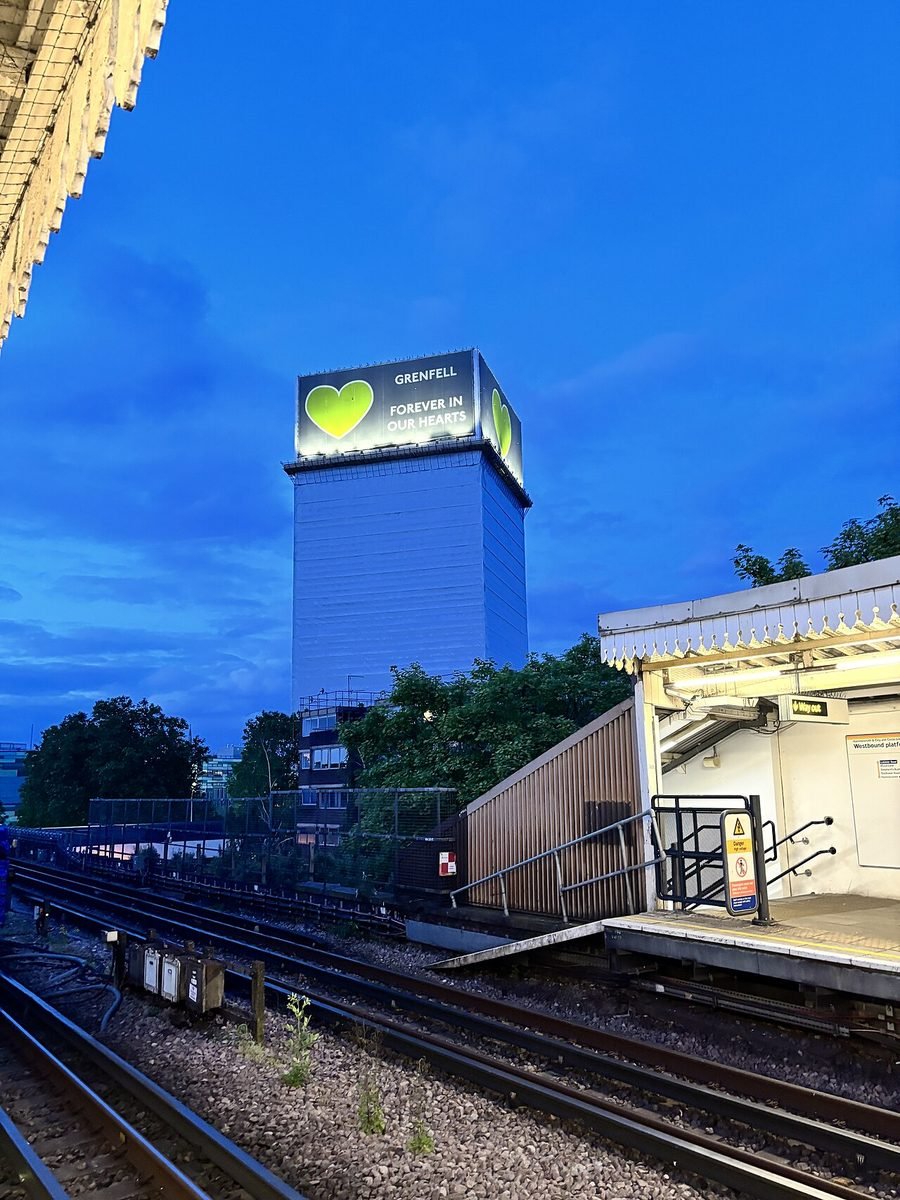
In February 2025 the government told families the tower would be taken down after engineers concluded it was structurally unsafe. Work began in September 2025 with the removal of the rooftop plant room, carried out by Deconstruct UK, which had maintained the site since 2017. The covering, bearing a green heart and the words ‘Forever in our hearts’, had stood over North Kensington for years.
2025
Contract-ban investigations put on hold Justice
Debarment investigations under the Procurement Act 2023, which could have barred firms from public contracts, had been opened into Arconic, Saint-Gobain (for Celotex), Exova, Harley Facades, Kingspan, Rydon and Studio E. The Cabinet Office paused them after police and prosecutors warned they could prejudice the criminal investigation and any trial. Survivors had urged the government to move faster.
2025
The government accepts every finding Reform
Deputy Prime Minister Angela Rayner presented the government’s response to Parliament, accepting all of the Inquiry’s findings. Of the 58 recommendations, 49 were accepted in full and the other nine, all aimed at government, in principle. The response promised a single construction regulator, tougher rules on construction products and a chief construction adviser.
Acceptance was the start of the work, not the end: many changes need consultation or new laws.
2024
Phase 2: ‘all the deaths were avoidable’ Inquiry
The final report concluded that the deaths of all 72 people were avoidable. It found the fire was the culmination of decades of failure by central government and others to act on the danger of combustible materials on high-rise homes, and systematic dishonesty by some cladding and insulation makers who manipulated tests and misled the market.
It also criticised the council and the TMO for ignoring residents, testing and certification bodies, the architects, contractors and fire engineers, and the London Fire Brigade’s slow learning from earlier fires.
2023
A civil settlement, and a new housing law Justice
Around 900 bereaved relatives, survivors and residents settled civil claims against 22 parties, including manufacturers, contractors, the council and the TMO. The terms were confidential and involved no admission of liability; the total was reported at about £150 million.
In July, the Social Housing (Regulation) Act 2023 gave the Regulator of Social Housing proactive inspection powers and introduced Awaab’s Law on hazards such as damp and mould.
2022
The Building Safety Act becomes law Reform
Building on Dame Judith Hackitt’s 2018 review, Building a Safer Future, the Act created a gateway system for higher-risk buildings in England, new duty-holders responsible for safety through a building’s life, and protection for many leaseholders from the cost of fixing historical defects. It followed the Fire Safety Act 2021, which made clear that external walls fall within fire risk assessments.
Phase 2 hearings begin Inquiry
The government accepted in principle all Phase 1 recommendations aimed at it. Days later, Phase 2 began examining the refurbishment, the products, testing, regulation and the council’s conduct. Hearings were paused during the Covid-19 pandemic and ended in November 2022.
2019
Phase 1 report: the night itself Inquiry
The first report found that the exterior did not comply with building regulations and was the principal reason the fire spread. It praised the courage of individual firefighters but found serious shortcomings in the London Fire Brigade’s control room and command, including a lack of planning for evacuating a tower.
Sir Martin Moore-Bick concluded that stay-put could and should have been abandoned between about 01:30 and 01:50, and that doing so would likely have saved lives. LFB Commissioner Dany Cotton retired early, on 31 December 2019.
A ban on combustible cladding, and a year of grief Reform
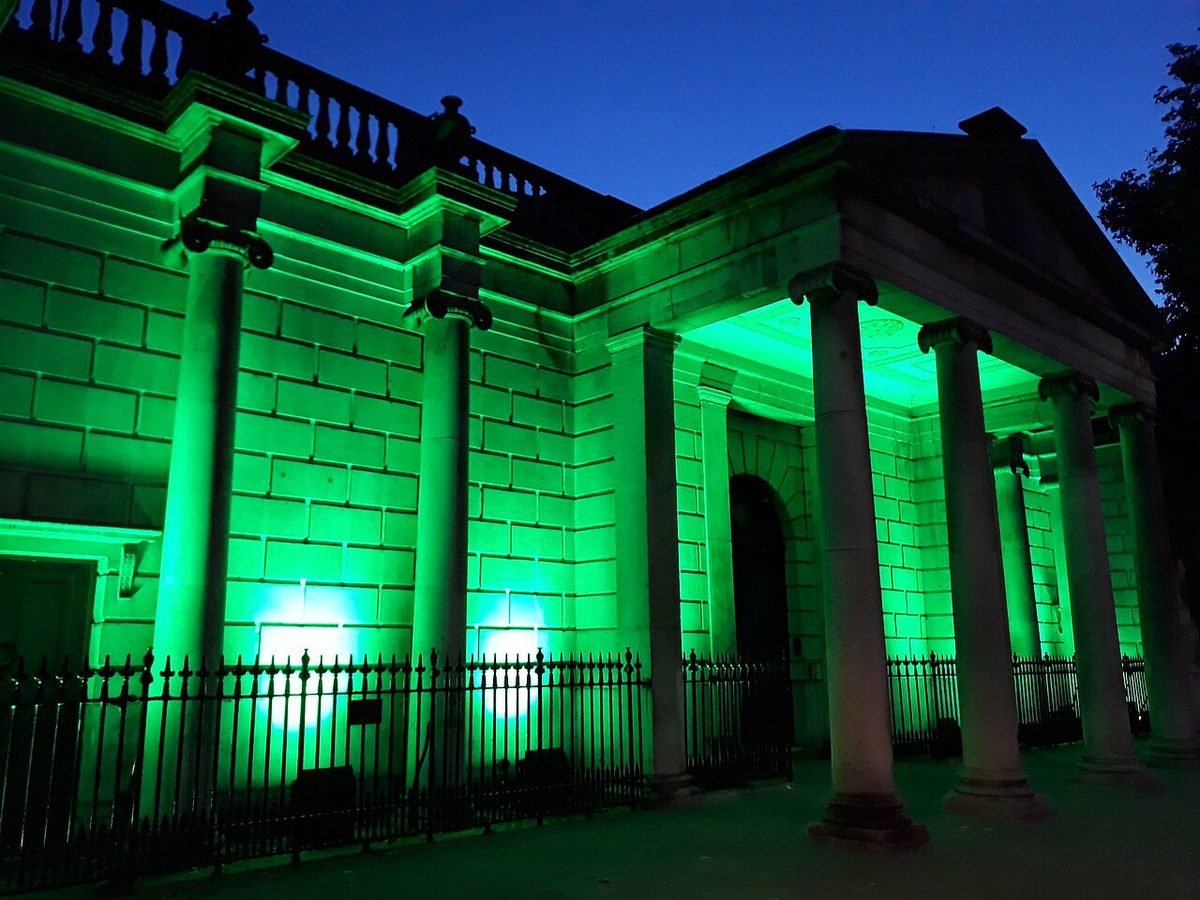
Dame Judith Hackitt’s independent review called the building regulation system ‘not fit for purpose’. On the first anniversary, buildings across the country were lit green, and the monthly silent walk continued. In December 2018 the government banned combustible materials in the external walls of new residential buildings over 18 metres.
2017
A public inquiry is set up Inquiry
Prime Minister Theresa May announced a public inquiry the day after the fire, and Sir Martin Moore-Bick, a retired Court of Appeal judge, was appointed chair on 29 June. The Inquiry opened on 14 September 2017. Meanwhile, emergency tests found ACM cladding on hundreds of other high-rise buildings across England, starting the national cladding crisis.
2017
72 lives lost Disaster
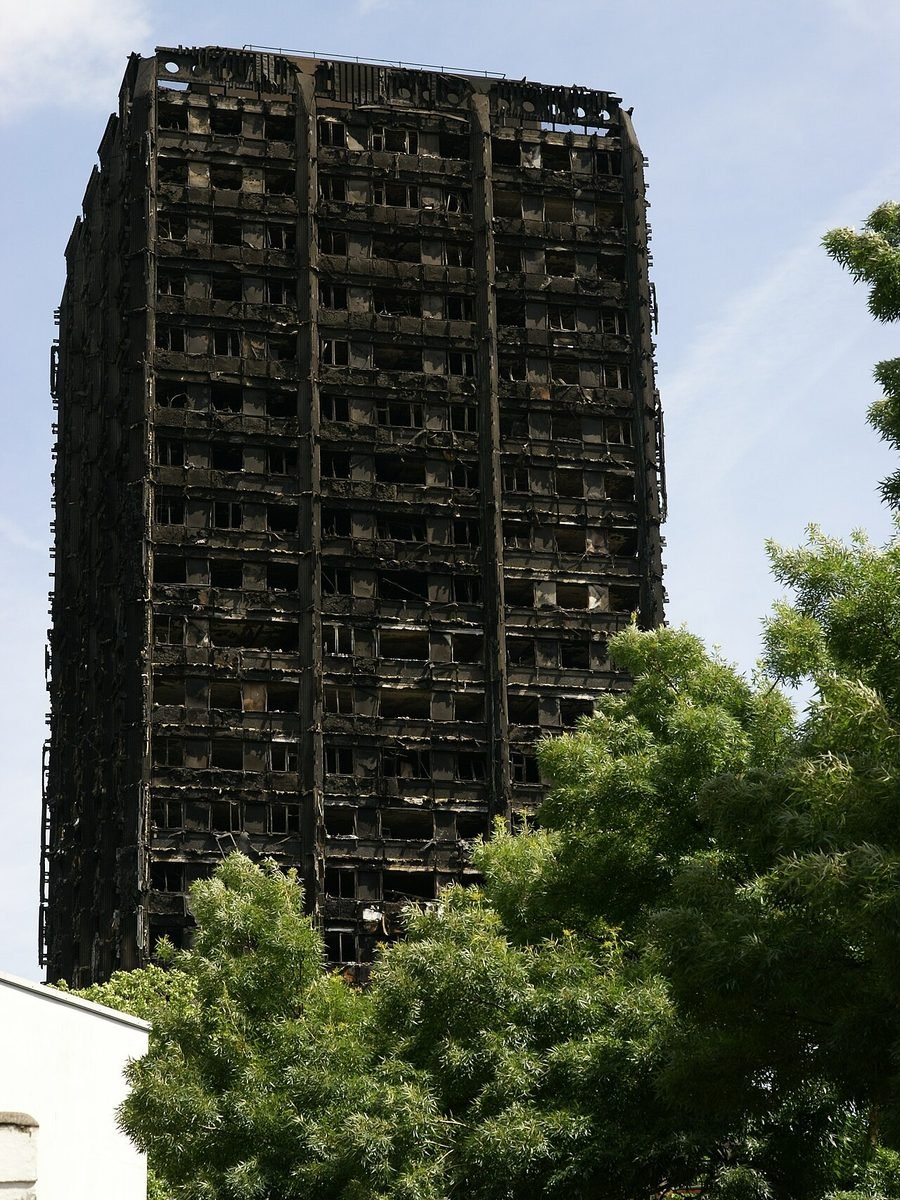
Seventy people died in the tower and two more later in hospital, the last in January 2018: 72 people, including 18 children. Many were on the upper floors, where the stairs filled with smoke. Disabled residents and those living highest up were disproportionately among the dead.
Survivors lost their homes and possessions, and the surrounding Lancaster West Estate was traumatised. It was the deadliest residential fire in Britain since the Second World War.
14 Jun
Stay-put is finally abandoned Disaster
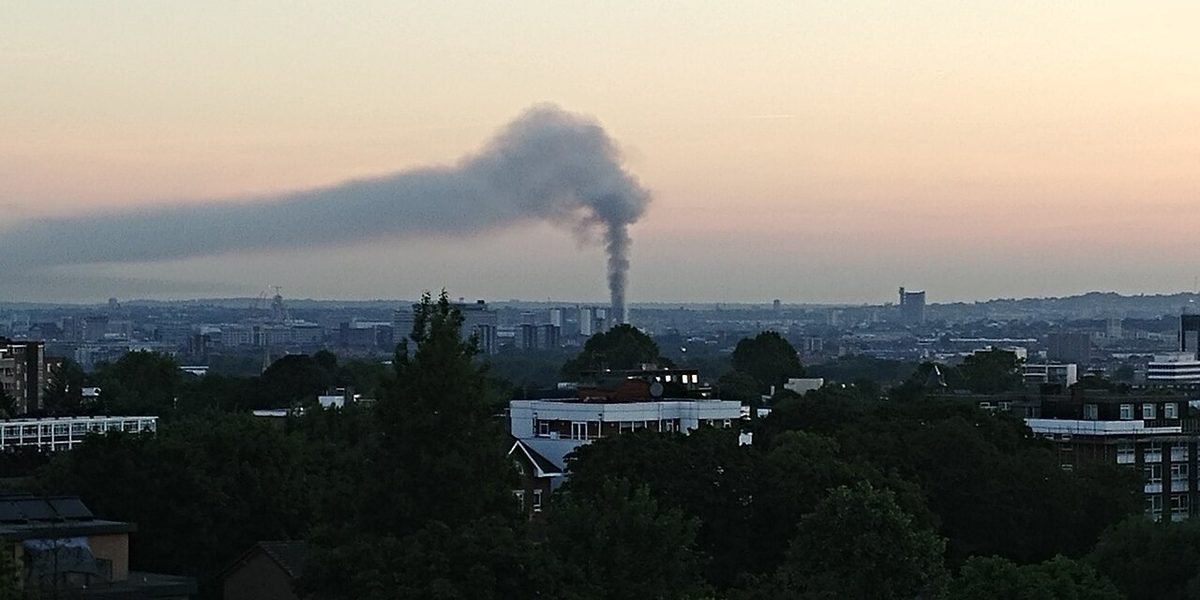
As flames wrapped the tower, the 999 control room kept advising many callers to stay in their flats, in line with the building’s fire strategy. The London Fire Brigade revoked stay-put at about 02:47. By then the single staircase was filling with smoke, and many residents who had been told to wait could no longer get out.
14 Jun
A kitchen fire in Flat 16 Disaster
Behailu Kebede, the resident of Flat 16, raised the alarm after an electrical fault in his fridge-freezer started a fire. Firefighters arrived within minutes. But the fire had already escaped through the kitchen window into the external wall, and within about half an hour it had climbed the east face to the top of the 24-storey tower, then spread sideways around the building.
‘Only a catastrophic event…’ Warning
The Grenfell Action Group wrote that only a catastrophic event would expose the ineptitude and incompetence of the landlord, the Kensington and Chelsea TMO. Residents had complained about fire doors, emergency lighting, a power surge and the conduct of the refurbishment.
The Inquiry found that the TMO and the council saw some residents as troublemakers and failed to treat their concerns with the seriousness they deserved.
2016
The refurbishment wraps the tower in cladding Warning
The refurbishment added new windows, heating and a rainscreen cladding system. Zinc panels were dropped in favour of cheaper ACM panels with a polyethylene core, fixed over combustible PIR and phenolic foam insulation. The panels were in a cassette form that, the Inquiry found, the manufacturer knew performed far worse in fire tests.
Architect Studio E had never designed cladding for a high-rise residential building. Building control approved the work without spotting that the materials did not meet the regulations.
A refurbishment is planned Event
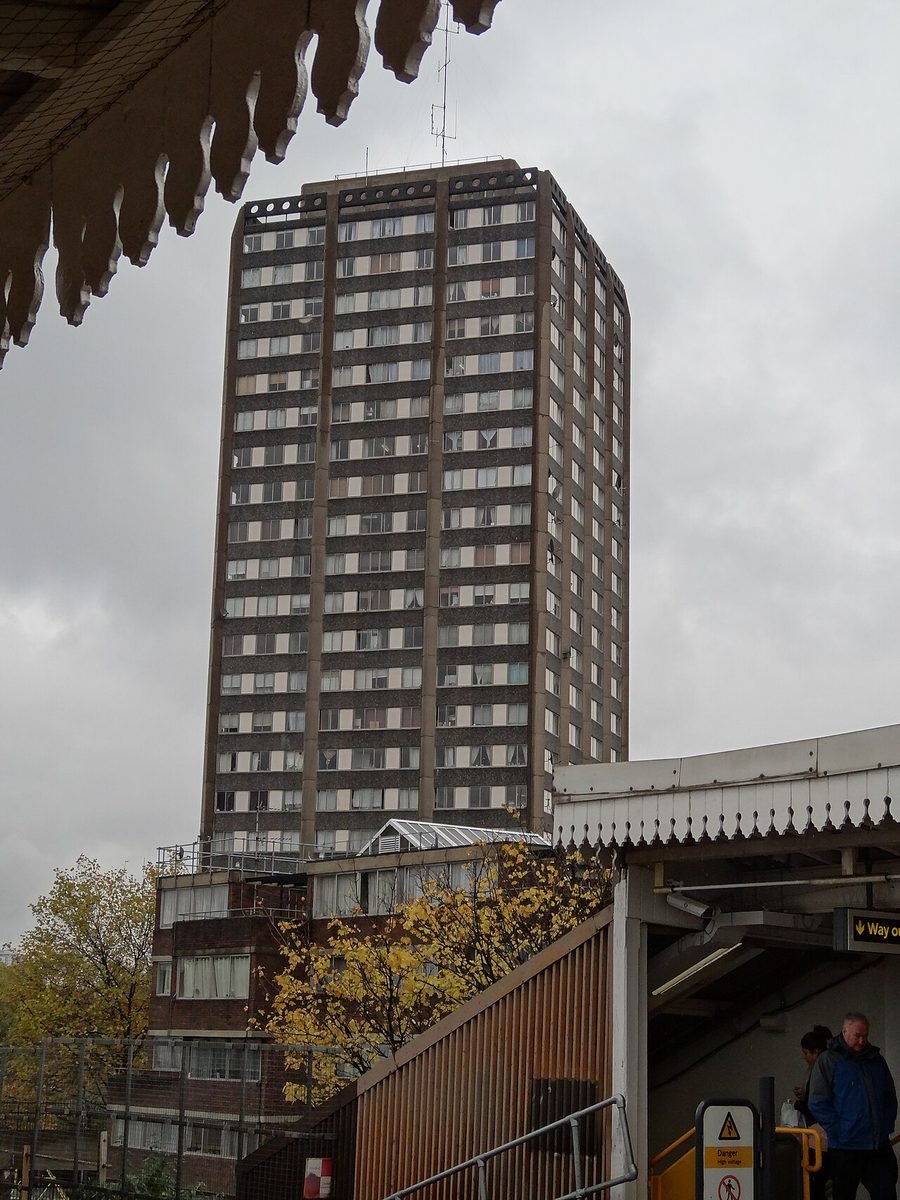
Kensington and Chelsea council and its tenant management organisation planned a major improvement of Grenfell Tower alongside the construction of a new academy and leisure centre beside it. Part of the aim was to improve the tower’s appearance.
1974
Grenfell Tower is built Event
Built by A E Symes for Kensington and Chelsea council, Grenfell Tower was a concrete social-housing block with a single staircase. Its fire strategy assumed that solid concrete walls and floors would keep a fire inside one flat, which is why stay-put was the standard advice. The refurbishment later brought the number of flats to 129.
The Night the Stay-Put Strategy Failed
Under two hours separated the first call and the change of advice.
Pick a moment. How long had the fire been burning, and what was happening?
The meter shows minutes since the first 999 call at 00:54, measured against the 113 minutes until stay-put advice was withdrawn at about 02:47. Times are from the Inquiry’s Phase 1 report; those marked ~ are approximate.
What Actually Went Wrong at Grenfell?
Not one mistake, but many protections failing at once.
1. The cladding and the external wall
The external wall was meant to keep fire out, not carry it. ACM panels with a polyethylene core release a large amount of energy when they burn, and they were fitted over combustible foam insulation with cavities that acted like chimneys. The Inquiry found the exterior did not meet building regulations and was the principal reason the fire spread. Fire safety depends on how the whole system behaves, not on the name of any one product.
2. Dishonest testing and marketing
Phase 2 found that some manufacturers deliberately manipulated fire tests and misled the market about how their products would perform, and that bodies meant to test and certify products failed to catch it. Designers and builders relied on information that was not true.
3. A regulatory system that did not work
Warnings about combustible cladding stretched back to at least 1999, and the government had been told of the risk repeatedly. Guidance was unclear, responsibility was spread across many bodies, and deregulatory pressure discouraged action. Building control approved the refurbishment without spotting the problem.
4. Residents were not heard
The tenant management organisation and the council treated some residents who raised concerns as troublemakers. Complaints about fire doors, emergency lighting and the works went unresolved. Residents often know first when something is wrong in their building; Grenfell showed what happens when nobody acts on it.
5. Emergency planning broke down
The London Fire Brigade had no plan for evacuating a whole tower, its control room was overwhelmed with calls, and information did not flow from the incident ground. Stay-put relied on compartmentation that had already failed. Emergency services need procedures that work when a building behaves in a way nobody planned for.
Phase 1 vs Phase 2: What the Inquiry Examined
Scroll sideways on a phone.
| Question | Phase 1 (2019) | Phase 2 (2024) |
|---|---|---|
| Focus | The night: origin, spread, emergency response | The causes: refurbishment, products, regulation, authorities |
| Published | 30 October 2019 | 4 September 2024 |
| Size | 4 volumes | 7 volumes, about 1,700 pages |
| Key finding | Exterior breached regulations and drove the spread; LFB had serious shortcomings | All 72 deaths avoidable; decades of failure; systematic dishonesty by some manufacturers |
| Recommendations | 46 | 58 |
| Status, Sep 2026 | 3 still outstanding, tracked with Phase 2 | Part of the 30 of 61 complete |
A public inquiry establishes facts and makes recommendations; it cannot decide criminal or civil liability. Witnesses were given an undertaking that their oral evidence would not be used against them in a criminal prosecution, which is one reason the police investigation runs on its own evidence and timetable.
Who Has Been Held to Account?
Six routes to accountability, and where each stands. Scroll sideways on a phone.
| Route | What it can do | Where it stands (Oct 2026) |
|---|---|---|
| Public inquiry | Establish facts, criticise, recommend | Finished, 4 Sep 2024 |
| Criminal investigation | Charges, trials, convictions | Files with CPS; decision before June 2027 |
| Civil claims | Compensation | ~900 claims settled, April 2023 |
| Debarment | Ban firms from public contracts | Paused since 10 July 2025 |
| Professional regulators | Discipline individuals | Depends on the criminal process |
| Reform programme | Change laws and practice | 30 of 61 recommendations complete |
For bereaved families and survivors, the gap between the Inquiry’s findings and any criminal trial is the hardest part of the legacy. A charging decision is promised by June 2027. If charges follow, trials would take years more.
Have the Lessons Been Learned?
The government’s own scorecard, nine years on.
Pick a theme. How much of the Inquiry’s reform programme is finished?
Figures from the government’s September 2026 progress report, updated on 2 October 2026. ‘Complete’ means the government counts the recommendation as implemented; it does not mean every building is safe.
What Changed After Grenfell?
Scroll sideways on a phone.
| Reform | When | What it does |
|---|---|---|
| Combustible materials ban | Dec 2018 | Bans combustible materials in external walls of new residential buildings over 18m |
| Fire Safety Act 2021 | Apr 2021 | Puts external walls and flat entrance doors inside fire risk assessments |
| Building Safety Act 2022 | Apr 2022 | Higher-risk building regime, duty-holders, leaseholder protections |
| Fire Safety (England) Regulations 2022 | Jan 2023 | Phase 1 duties: building plans for fire services, lift and equipment checks |
| Social Housing (Regulation) Act 2023 | Jul 2023 | Proactive inspections of social landlords, Awaab’s Law |
| Building Safety Regulator | Jan 2026 | Standalone body overseeing higher-risk buildings |
| Residential evacuation plans | Apr 2026 | Plans for residents who need help to evacuate |
| Construction products reform | Pending | Consultations closed May 2026; legislation awaited |
Grenfell and the Wider Cladding Crisis
Thousands of homes, and the question of who pays.
Within weeks of the fire, tests found ACM cladding on hundreds of high-rise blocks across England. Later checks found other unsafe materials too. Residents faced fire wardens, waking-watch bills, unsellable flats and years of building works. The Building Safety Act 2022 protected many leaseholders from remediation costs, and developers signed a remediation contract to fix buildings they built, but progress has been slow.
By the end of July 2026, works had started on 54% of the 4,697 monitored buildings and finished on 39%. The government’s Remediation Acceleration Plan aims for buildings over 18 metres in its funded schemes to be fixed by the end of 2029, with penalties for landlords who fail to act.
Who Was Involved
Sir Martin Moore-Bick
Retired Court of Appeal judge; led both phases from 2017 to 2024.
RBKC and the KCTMO
The council owned the tower; its tenant management organisation ran it and the refurbishment.
London Fire Brigade
Firefighters showed great courage; the brigade’s systems were found seriously deficient.
Arconic, Celotex, Kingspan
Makers of the panels and insulation; criticised for dishonest testing and marketing.
Rydon, Harley, Studio E
Main contractor, cladding subcontractor and architect of the refurbishment.
Grenfell United and the bereaved
Survivors and families who campaigned for truth, justice and safe homes.
Explore More Timelines
People Also Ask
Frequently Asked Questions
Conclusion: The Legacy Must Be Measured in Safer Homes
Grenfell exposed what happens when building safety is split between product makers, designers, contractors, regulators, landlords and emergency services, and when the people living in a building are not listened to. The Inquiry has given a detailed account of those failures. New laws, a new regulator and new duties are real changes, but half the recommendations are unfinished, thousands of buildings still need work, and no one has yet faced a criminal court.
Grenfell’s true legacy will be whether residents are listened to, unsafe buildings are made safe, and every organisation responsible for a home can be held to account for protecting the people who live inside it.
Related AiTimeline Stories
⚠️ Editorial Note
This article relies on the Grenfell Tower Inquiry’s Phase 1 and Phase 2 reports, the UK government’s responses and progress reports, legislation.gov.uk, the Metropolitan Police and Crown Prosecution Service, and reporting by established news organisations. Criticisms of companies and organisations are the Inquiry’s findings; no criminal charges have been brought and no court has found any person or organisation criminally liable. Times on the night are approximate where marked. Current to 14 October 2026.
Sources & further reading
Every dated entry above was checked against these references. Last reviewed 14 October 2026.
- Grenfell Tower Inquiry: Phase 2 Report
- Grenfell Tower Inquiry: Phase 1 Report, Volume 1
- Grenfell Tower Inquiry Phase 2 Report: Government Response
- Progress report September 2026: summary update
- Debarment investigations into Grenfell suppliers paused to safeguard integrity of criminal proceedings
- Police ask CPS to consider Grenfell manslaughter charges
- Grenfell Tower next steps
- UK halts demolition of parts of Grenfell Tower after handprints found on walls
- Building Safety Act 2022
- Social Housing (Regulation) Act 2023
- The Fire Safety (Residential Evacuation Plans) (England) Regulations 2025
- Grenfell Tower Memorial Commission