The Statesman: India’s Enduring Newspaper Legacy Timeline
The Statesman newspaper history: Knight's 1875 Calcutta daily, the 1943 Bengal famine photos, Emergency blank spaces, Gupta control and the UNI takeover.
Latest Story
Founded in Calcutta in January 1875, with roots in a Serampore paper of 1818, The Statesman has reported famines under the Raj, published the photographs that exposed the Bengal famine of 1943, defied censorship during the Emergency of 1975–77 and, in 2025, bought a national news agency while losing money. This is The Statesman newspaper history in order: its owners, editors, editions and fights with power, with every date sourced, conflicts between sources flagged, and its 2024–26 change of control set out from the filings reported by Scroll.
💡 Short Answer
The Statesman was founded in Calcutta in January 1875 by Robert Knight as The Indian Statesman, and absorbed the Friend of India (1818) in 1883. The Yule interests bought it in 1927; it opened a Delhi edition in 1931 and absorbed The Englishman in 1934. Editor Ian Stephens published the Bengal famine photographs in August 1943. Indian-owned from the mid-1960s, it defied Emergency censorship under C.R. Irani in 1975. It added Siliguri (1998), Bhubaneswar (2002) and the Bengali Dainik Statesman (2004), came under the Gupta family’s 90% control in 2024 and took over UNI in 2025.
The Statesman History: Key Questions
The Statesman in Ten Points
- 1818: the Friend of India starts at Serampore, campaigning against sati.
- January 1875: Robert Knight founds The Indian Statesman in Calcutta and buys the Friend of India for Rs 30,000.
- 1883: the two merge as The Statesman and Friend of India.
- 1927–1934: Sir David Yule buys it, Alfred Watson launches the Delhi edition (1931) and The Englishman is absorbed (1934).
- August 1943: Ian Stephens publishes the Bengal famine photographs.
- 1955: the ‘honourable exception’ to the ban on foreign-owned papers; Indian owners take over in the mid-1960s.
- 1975–77: blank spaces and lost advertising under C.R. Irani during the Emergency.
- 1998–2004: Siliguri, Bhubaneswar, a website and the Bengali Dainik Statesman.
- 2024–25: the Gupta family reaches 90%; The Statesman buys UNI out of insolvency.
- 2026: a decade without profit, and an unsecured loan from an unnamed lender, per Scroll.
Two Dates of Birth
Why sources say both 1818 and 1875, and why both are right.
The Friend of India
A Serampore mission paper the Statesman credits to William Carey. Knight bought it in 1875, moved it to Calcutta and merged it in 1883. Wikipedia’s infobox uses this date.
The Indian Statesman
Robert Knight’s Calcutta daily, founded in January 1875. The newspaper itself says it was ‘founded in Kolkata in 1875’ and is directly descended from the Friend of India.
The Statesman Timeline, 1818–2026
Newest first. Tags mark expansion, ownership, press-freedom tests and turning points. Where sources disagree, we say so.
A loan from an unnamed lender Ownership
Scroll reported that The Statesman’s long-term borrowings rose from Rs 22.1 crore to Rs 53.9 crore in 2024-25 through an unsecured loan from a lender the accounts did not name, which auditors said was ‘subject to confirmation’. The company had made no profit for more than ten years, had accumulated losses of Rs 47.4 crore and about Rs 1 crore in the bank, yet had just bought a national news agency. Two days earlier, Delhi Police had taken possession of UNI’s office after the High Court lifted a stay in a lease dispute. Ownership alone does not show how editorial decisions are made; it does show who now bears the paper’s risks.
2025
The Statesman takes over UNI Turning point
The National Company Law Tribunal approved The Statesman Ltd’s resolution plan for United News of India, the insolvent agency its employees had taken to the tribunal in August 2022. Admitted claims were about Rs 125 crore, Rs 104 crore of it owed to employees; the plan pays Rs 41.26 crore, including Rs 23.33 crore to employees, plus insolvency costs estimated at Rs 18.3 crore. By June 2025 the paper owned 100% of UNI. It closed a circle: The Statesman says it helped set up UNI, PTI and the Audit Bureau of Circulations. The same year, in January, The Statesman’s title turned 150.
2024
Special shares change control Ownership
Businessman Rajender Parshad Gupta, his wife and four nephews bought 7 lakh special shares for Rs 7 crore, according to Scroll, lifting the family’s holding from the roughly 20% held by Gupta’s firms to 90%. Until then about 64% had belonged to 15 Kolkata-based trusts, the diffuse ownership of the Irani era. For the first time since the Yule years, one business family controlled The Statesman.
Editor and publisher arrested Press freedom
The Statesman reprinted British columnist Johann Hari’s Independent article ‘Why should I respect these oppressive religions?’. After protests by Muslim groups outside Statesman House, editor Ravindra Kumar and publisher Anand Sinha were arrested and charged with deliberately outraging religious feelings, then given interim bail. The case became a reference point in Indian debates on free speech and religious offence.
2008
A Bengali paper, and Irani’s legacy Expansion
The company launched Dainik Statesman, a Bengali daily, in June 2004. C.R. Irani, managing director since 1968 and editor-in-chief since 1991, died in July 2005. In 2008 the C R Irani Foundation set up the Statesman Print Journalism School in his memory.
2002
Siliguri, Bhubaneswar and the web Expansion
A Siliguri edition, printed locally from 18 June 1998, served North Bengal, Lower Assam and Sikkim. The paper says it has had an active web presence since the late 1990s, earlier than many accounts suggest. In 1999 it became a founding member of the Asia News Network, and on 23 September 2002 it opened a Bhubaneswar edition, the first English paper, it says, to invest in printing plant in Odisha.
1991
A second clash with government Press freedom
The Statesman says the government of Rajiv Gandhi interfered with statutory clearances for its modernisation plans unless it changed its editorial stance, and that it refused. That is the paper’s own account; we have not found an independent record of the dispute. In 1991 C.R. Irani added the title of editor-in-chief to that of managing director.
1978
After the Emergency Press freedom
The Emergency ended in March 1977 after Indira Gandhi’s Congress lost the general election. Recognition followed: C.R. Irani received Freedom House’s Freedom Award in 1977, and The Statesman’s editor S. Nihal Singh was named International Editor of the Year by World Press Review in 1978. JS, the youth magazine, closed in August 1977.
1975
The Emergency: blank spaces Press freedom
When the Emergency was declared, newspapers were placed under pre-censorship. Under C.R. Irani, The Statesman left blank spaces where reports or photographs had been censored, as the Indian Express did with its blank editorial; on 29 June the government issued guidelines to stop papers flagging censorship that way. The paper’s policy obliges editors to resist tyranny and support the fundamental rights in the Constitution, and it cited that policy to justify its opposition. It describes itself as one of a handful of publications that ‘refused to either bend or crawl’, and says Indira Gandhi’s government attempted to suppress its voice. The cost was commercial: it was denied government advertising. Its resistance happened inside censorship, not outside it.
1968
JS, Irani and a rally comes to Kolkata Expansion
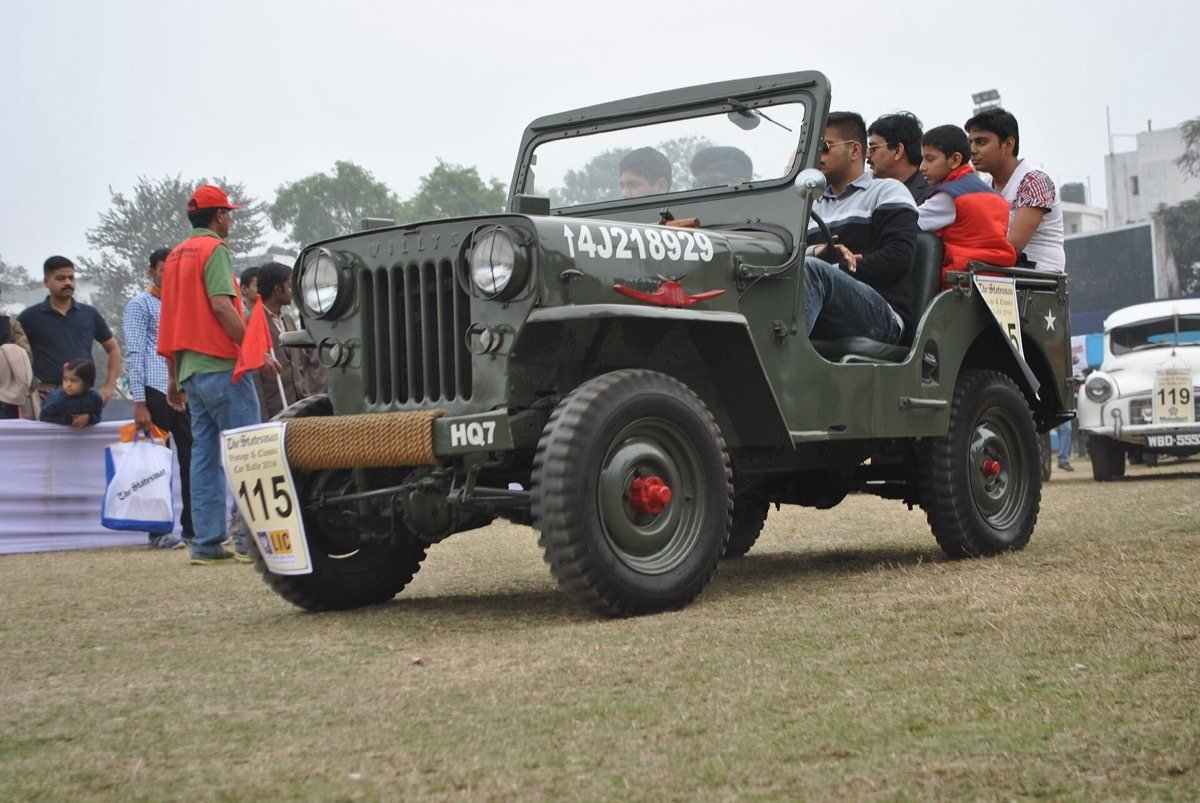
In February 1967 the paper launched JS, the Junior Statesman, edited by Desmond Doig, with the Beatles on its first cover; it is often called India’s first youth magazine. In 1968 Cushrow Russi Irani joined as managing director, and the Statesman Vintage and Classic Car Rally, begun in Delhi in 1964, came to Kolkata.
1960s
Indian ownership Ownership
The Statesman passed from British to Indian ownership: a consortium with jurist N.A. Palkhivala as chairman, and Pran Chopra as the first editor under the new owners. Alfred Evan Charlton, the last British editor, left India in late 1966, having planned JS to bring younger readers to the paper. Ownership later rested with a group of Kolkata trusts, which still held about 64% in 2024.
1956
The ‘honourable exception’ Turning point
When Nehru’s Cabinet adopted resolutions in 1955 barring foreign-owned publications from operating in India, The Statesman, still British-owned, was described as the ‘honourable’ exception. The paper was a founding member of the Indian Newspaper Society and lent it space in its Delhi building for more than 15 years, until the INS Building was inaugurated in 1956.
1951
Independence, and Stephens leaves Turning point
A British-owned paper now reported on an Indian government. The Statesman covered independence and the partition of Bengal in 1947, as it had the first partition in 1905. The Constitution came into force on 26 January 1950; the paper’s policy would later tie its editors to defending its fundamental-rights chapter. Ian Stephens left the editorship in 1951.
1943
The famine photographs Turning point
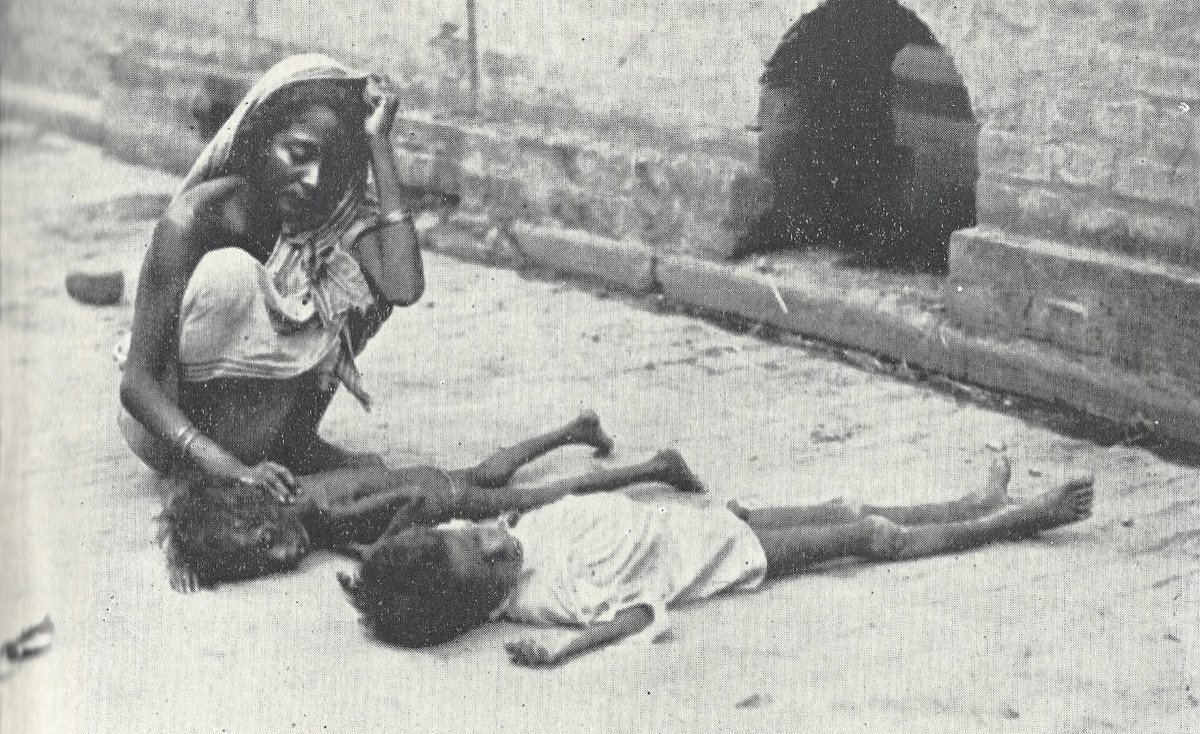
For months The Statesman had followed the official line on Bengal’s food crisis, blaming hoarders and praising ministers, and under wartime rules even the word ‘famine’ was discouraged. Then editor Ian Stephens had photographs taken of the starving in Calcutta and published them on 22 and 29 August 1943. They ‘sparked an international media frenzy’, and the paper’s editorials turned on government policy. The decision has been called ‘a singular act of journalistic courage and conscientiousness, without which many more lives would have surely been lost’. The famine had many causes, from war and inflation to failures of distribution and policy; the photographs did not end it, but they made it impossible to deny.
The Englishman is absorbed Expansion
The Englishman, a Calcutta daily founded in 1821 and long the voice of the European business community, was merged into The Statesman. The paper’s own history gives 1934; Wikipedia says it was absorbed in 1927, the year of the Yule purchase. We follow the paper, and note the conflict.
The Delhi edition Expansion
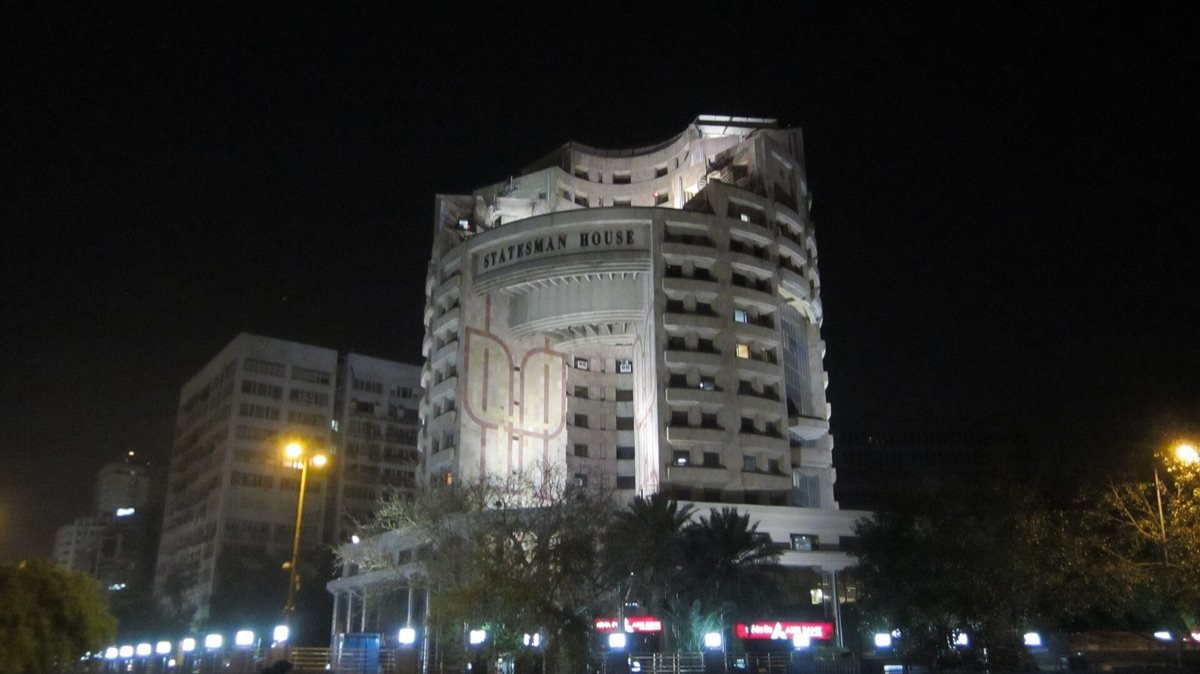
Under Alfred Watson The Statesman launched a Delhi edition, an innovation the paper says gave it a wider geographical spread than any newspaper in the world. New Delhi was about to be inaugurated as the capital, and the edition put the paper next to the Viceroy’s government. Watson also moved the Calcutta operation to 4 Chowringhee Square, and was knighted in 1932.
Sir David Yule buys the paper Ownership
The Knight family owned The Statesman until 1927, when it was acquired by Sir David Yule, head of the Calcutta trading house Andrew Yule and Co. The paper was then run by Alfred Watson. British business ownership lasted until the 1960s.
The Statesman and Friend of India Turning point
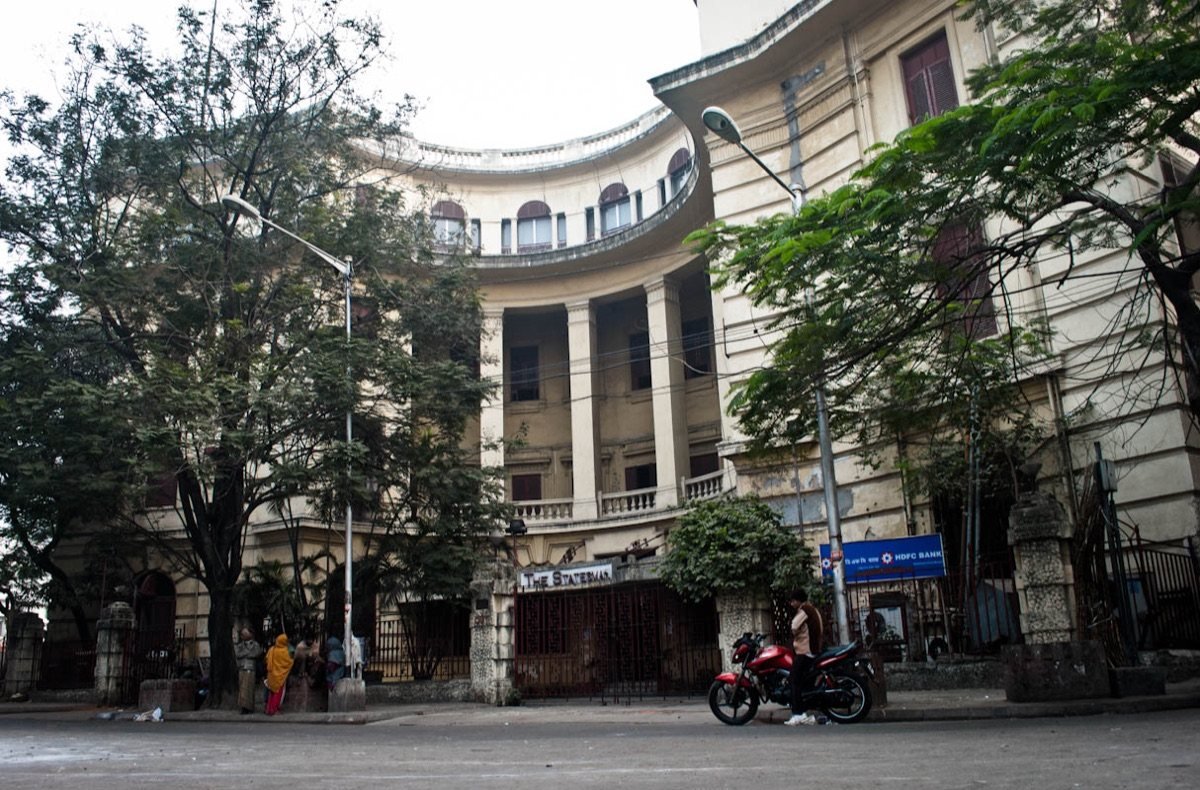
After nearly eight years of publishing both papers side by side, Knight incorporated the Friend of India into The Statesman in 1883, and the paper called itself The Statesman and Friend of India for many years. Knight also gave the newly founded Indian National Congress (1885) ‘one magnificent leading article after another’, the paper records, and the Indian-owned press called his death in 1890 a public calamity.
1878
Reporting the Great Famine Press freedom
The Statesman cites its ‘objective coverage’ of the famine of 1877, part of the Great Famine of 1876-78 in southern and western India, as one of two famines that made its name. Reporting mass death under a colonial government that was managing the official story set a pattern the paper would repeat in 1943.
1875
Robert Knight’s Indian Statesman Turning point
Robert Knight, formerly a principal founder of The Times of India in Bombay, established The Indian Statesman in Calcutta in January 1875 with backing from 24 merchants. Banglapedia records that it began as a one-anna daily. The Friend of India was then in severe distress; for Rs 30,000 Knight bought it and moved it from Serampore to Calcutta. His paper gave space to Indian demands for reform of the administration, unusual for a British-run daily.
Roots: the Friend of India Turning point
The Statesman’s lineage begins with the Friend of India, started at Serampore in 1818 by the Baptist mission; the paper’s history names William Carey. Despite its evangelical streak, it campaigned against sati and against the drowning of children at the Ganga Sagar mela, and found an ally in Governor-General Lord William Bentinck, who outlawed sati in 1829.
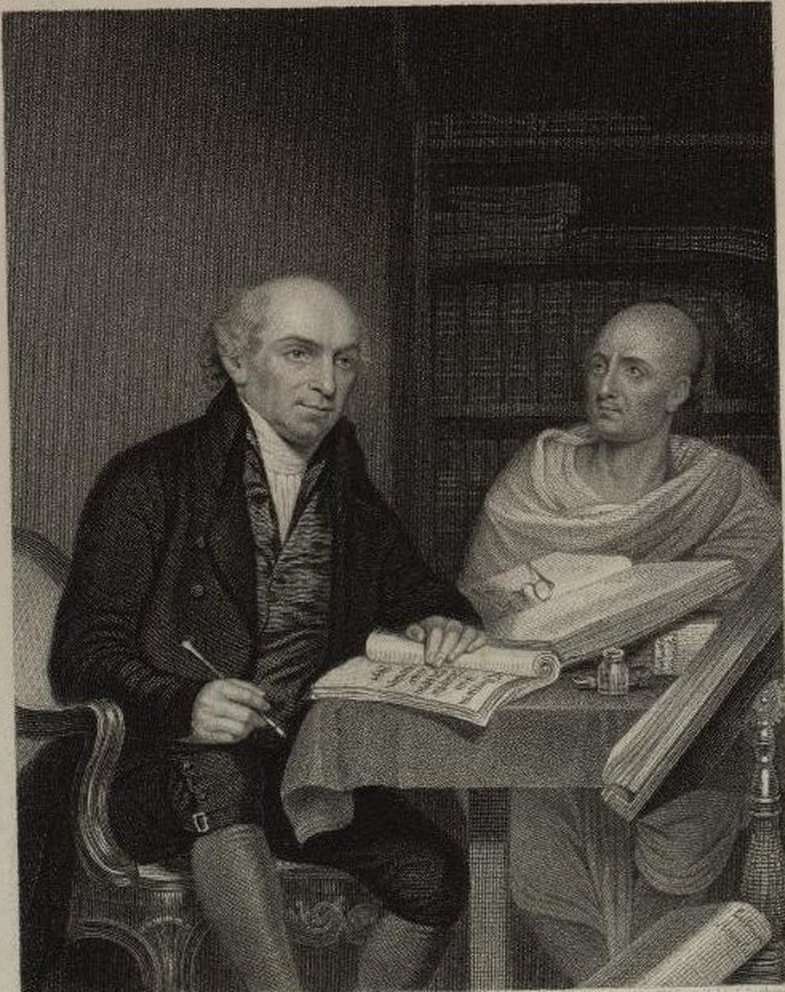
1875: The Newspaper That Started It All. Pick a year.
Drag from 1818 to 2026. Sepia chips are editions of The Statesman; blue chips are merged papers, sister titles and ventures. Dates from the newspaper’s own history unless stated.
Four Owners in 151 Years
The paper’s independence has always depended on who held the shares.
Six tests of an independent paper
The Statesman’s reputation rests on moments when it was pushed. Pick one to see what it did, what it cost, and the honest caveat.
Editions, Mergers and Sister Titles
From the newspaper’s own pages, Wikipedia and the JS record.
| Edition or title | Started | Language | Note |
|---|---|---|---|
| Friend of India | 1818, Serampore | English | Merged into The Statesman, 1883 |
| The Indian Statesman / The Statesman, Calcutta | January 1875 | English | Registered office: 4 Chowringhee Square |
| Delhi edition | 1931 | English | National office, Connaught Place |
| The Englishman | 1821; merged 1934 | English | Wikipedia: absorbed 1927 |
| JS (Junior Statesman) | Feb 1967 to Aug 1977 | English | Youth magazine, ed. Desmond Doig |
| Siliguri edition | 18 Jun 1998 | English | North Bengal, Lower Assam, Sikkim |
| Bhubaneswar edition | 23 Sep 2002 | English | Odisha |
| Dainik Statesman | June 2004 | Bengali | Sister daily |
| The Statesman Weekly | Undated | English | Compendium on airmail paper for readers abroad |
The People Who Shaped It
Founder, editors and the managing director who defined its Emergency.
| Person | Role | Years | Remembered for |
|---|---|---|---|
| Robert Knight | Founder, editor | 1875 to 1890 | Support for Indian reform and the Congress |
| Sir Alfred Watson | Head of the paper | From 1927 | Delhi edition, Chowringhee Square |
| Ian Stephens | Editor | 1942 to 1951 | The 1943 famine photographs |
| Evan Charlton | Last British editor | Left late 1966 | Planned JS |
| Pran Chopra | Editor | Mid-1960s | First editor under Indian owners |
| C.R. Irani | MD, later editor-in-chief | 1968 to 2005 | Defiance of Emergency censorship |
| S. Nihal Singh | Editor | 1970s | International Editor of the Year, 1978 |
| Ravindra Kumar | Editor and MD | Current | Asia News Network; 2009 arrest |
More Than a Newspaper
The Statesman helped build the institutions of the Indian press, then, in 2025, bought one of them.
INS, ABC, PTI and UNI
A founding member of the Indian Newspaper Society, which it housed in Delhi until 1956, it says it played a major role in setting up the Audit Bureau of Circulations, the Press Trust of India and United News of India.
Asia News Network
A founding member in 1999 of the grouping of Asian newspapers that share coverage of Asia ‘through Asian eyes’.
JS and the car rally
JS (1967–77) was India’s first youth magazine; the vintage car rally, running since 1964, is the oldest of its kind in India.
Print Journalism School
Set up in 2008 by the C R Irani Foundation in memory of the managing director who led the paper through the Emergency.
The UNI Deal, by the Numbers
How a loss-making newspaper bought a national news agency out of insolvency.
The Statesman in Numbers
Self-reported, estimated and filed figures, kept apart and labelled.
| Figure | What it measures | Source | How to read it |
|---|---|---|---|
| 24 | Merchants backing Knight in 1875 | The Statesman | Paper’s own history |
| Rs 30,000 | Price of the Friend of India | The Statesman | 1875 rupees |
| 1.5 to 3 million | Deaths in the 1943 Bengal famine | Historians’ estimates | Range, not a count |
| ~180,000 / 230,000 | Weekday / Sunday circulation | The Statesman, undated page | Self-reported, undated |
| ~234,000 / 250,000 | Weekday / Sunday circulation | Wikipedia | Undated; not audited here |
| 20% to 90% | Gupta family stake, Aug 2024 | Scroll, Mar 2026 | Via special shares |
| Rs 41.26 crore | UNI resolution plan | NCLT order, via Insolvency Tracker | Scroll values the deal at about Rs 75 crore |
| Rs 47.4 crore | Accumulated losses, 2024-25 | Scroll, Mar 2026 | No profit for 10+ years |
Corrections and Clarifications
Claims in the brief this page was built from, checked against the newspaper’s own history, Wikipedia, Banglapedia, Scroll and the NCLT record.
“April 1875: Friend of India joins”
The paper’s history gives no month for the Rs 30,000 purchase; it says only that Knight had already founded The Indian Statesman in January 1875 and the two ran side by side for nearly eight years.
“1934: The Englishman merged”
That is the paper’s date. Wikipedia says The Englishman was absorbed in 1927. We use 1934 and flag the difference.
“The famine of 1877”
The paper uses that year, but the famine ran from 1876 to 1878 and is usually called the Great Famine of 1876–78.
“2000s: digital news begins”
The Statesman says it has had an active web presence since the late 1990s. We could not verify a launch date for its e-paper, so we do not give one.
“Scroll investigated in 2025”
Scroll’s investigation was published on 22 March 2026. The share issue it describes took place on 5 August 2024.
The UNI takeover
The brief’s 2025–26 section omits the main event: The Statesman’s acquisition of United News of India, approved by the NCLT and completed in June 2025.
C.R. Irani and the blank spaces
The brief describes Emergency resistance without the managing director who led it or the form it took. Both are now in the timeline.
What else the brief left out
Robert Knight’s support for the Congress, the 1955 exemption, JS, the car rally, the Siliguri and Bhubaneswar editions, Dainik Statesman and the 2009 arrests.
What Comes Next
The Statesman’s reputation was made by people who accepted a cost: Stephens risking his position over the famine photographs, Irani giving up government advertising rather than filling censored columns. After the 1960s those choices were made at a paper owned by a consortium and then by trusts, not by one proprietor.
That has now changed. A single family controls 90% of the company, the paper has not made a profit in more than a decade, and it has taken on a news agency with a history of unpaid salaries, financed in part by a loan from a lender its accounts do not name. None of this proves anything about what the paper publishes. It does mean that the next test of The Statesman’s independence will be decided by its owners’ choices as much as its editors’.
Explore More Timelines
People Also Ask
Frequently Asked Questions
The Bottom Line
The Statesman is a Calcutta daily of 1875 with a lineage reaching back to 1818. It reported the famines of 1876–78 and 1943, the second time with photographs that changed how the world saw British rule in Bengal; it opened in Delhi in 1931; it was exempted from Nehru’s ban on foreign ownership in 1955 and became Indian-owned a decade later; and it defied Emergency censorship in 1975 at real commercial cost. Since 2024 it has been controlled by one family, and since 2025 it has owned UNI. Its legacy is secure. Its independence, as always, depends on the next set of choices.
Related AiTimeline Stories
⚠️ Editorial Note
Last updated 12 October 2026. Founding, mergers, ownership to the 1960s, the 1955 exemption, editions and institutional roles are from The Statesman’s own About Us pages, which describe the paper favourably and are labelled as its account where unverified elsewhere; Banglapedia and Wikipedia were used for cross-checks; famine coverage from Wikipedia’s articles on the 1943 media coverage and Ian Stephens; Emergency details from accounts of C.R. Irani and The Leaflet; the 2024 share issue, finances and UNI office seizure from Scroll (22 March 2026); the UNI resolution plan from Insolvency Tracker’s report of the NCLT order; the 2009 arrests from Dawn. Circulation figures are self-reported or undated and are not current counts. AiTimeline has no commercial relationship with The Statesman Ltd or UNI.
Sources & further reading
Every dated entry above was checked against these references. Last reviewed 12 October 2026.
- The Statesman: About The Statesman (Friend of India 1818, Knight 1875, Rs 30,000 purchase, 1883 merger, Yule 1927, Delhi edition, 1955 exemption, Emergency)
- The Statesman: About Us (1931 Delhi edition, Englishman merged 1934, Siliguri 18 Jun 1998, Bhubaneswar 23 Sep 2002)
- Banglapedia: Statesman, The (one-anna daily of 1875, famine and partition coverage)
- Wikipedia: Media coverage of the 1943 Bengal famine (Statesman photographs, 22 and 29 August 1943)
- Wikipedia: C. R. Irani (managing director 1968, editor-in-chief 1991, Emergency blank spaces)
- Scroll: How a loan from a mysterious lender helped a distressed newspaper take over UNI (22 Mar 2026)
- Insolvency Tracker: The Statesman acquires insolvent news agency UNI for Rs 41.26 crore (Mar 2025)
- Al Jazeera: The rise and fall of JS, India's 70s cult youth magazine (Dec 2021)
- Dawn: Statesman editor and publisher arrested in Kolkata (Feb 2009)
- Wikipedia: The Statesman (India)