Egypt New Administrative Capital: Timeline, Costs and the $60 Billion Question
Egypt New Administrative Capital timeline: the OECD's $60bn cost estimate, the 2023 ministry move, the 2026 monorail and why only 30,000 people live there.
Latest Story
East of Cairo, Egypt has spent a decade turning bare desert into a new seat of government. The Egypt New Administrative Capital, renamed ‘The New Capital’ in November 2025, now holds the ministries, parliament, the presidency, Africa’s tallest tower and the Octagon military command, and since May 2026 a monorail links it to Cairo. What it does not yet have is people. About 30,000 residents live in a city planned for 6.5 million, and the bill, put by the OECD at about $60 billion so far, has never been published in audited form. This guide follows the project year by year, decodes the competing cost figures and sets out how to judge whether it is working.
💡 Short Answer
Egypt’s New Administrative Capital is a planned city about 45 km east of Cairo, announced in March 2015 and run by ACUD, a company 51% owned by Defence Ministry entities. Ministries began working there in mid-2023 and it became the formal seat of government in April 2024. The OECD estimates costs so far at about US$60 billion, largely paid by developers. In October 2026 it had about 30,000 residents against a 6.5 million plan.
Egypt’s New Administrative Capital: Key Questions
Egypt’s New Capital in Nine Points
- Announced in 2015: unveiled at the Sharm el-Sheikh investment conference on 13 March 2015.
- Military-led: ACUD is 51% owned by Defence Ministry entities and 49% by the housing ministry’s NUCA.
- Government first: ministries moved in mid-2023; Sisi’s 2 April 2024 oath made it the seat of government.
- Cost unclear: about $60 billion so far (OECD), $58 billion (2019 reports), EGP 500 billion for phase one (ACUD).
- Currency matters: EGP 500 billion was about $32bn before 2022 and about $10bn at mid-2026 rates.
- Few residents: about 30,000 in October 2026, roughly 0.5% of the 6.5 million planned.
- Transport arrived late: light rail in 2022, the monorail on 6 May 2026, a hydrogen tram only at study stage.
- New name: officially ‘The New Capital’ since 8 November 2025.
- The test now: occupancy, private jobs, affordable homes and transparent accounts, not more towers.
Egypt’s New Capital at a Glance
Figures have different dates and scopes. Planned capacity is not occupancy. Scroll sideways on a phone.
| Detail | Key fact | Source / date |
|---|---|---|
| Location | East of Cairo, toward Suez; usually given as ~45 km (OECD: 35 km) | Varies by measuring point |
| Official name | ‘The New Capital’ (was New Administrative Capital) | ACUD, 8 Nov 2025 |
| Announced | 13 March 2015, Sharm el-Sheikh | Egypt Economic Development Conference |
| Developer | ACUD: 51% Defence Ministry entities, 49% NUCA | OECD, 2024 |
| Government moved | Mid-2023; formal seat from 2 Apr 2024 | OECD; Reuters |
| Planned area / people | 700–725 km²; ~6.5 million | OECD; ACUD |
| Residents now | ~30,000; target 60,000 by end-2026 | ACUD chairman, Oct 2026 |
| Cost estimate | ~US$60bn ‘so far’, largely developer-borne | OECD Economic Survey, Feb 2024 |
| Phase-one spending | EGP 500bn (infrastructure and buildings) | ACUD to Reuters, Jan 2024 |
| Landmarks | Iconic Tower (393.8 m), Octagon, Green River, Arts and Culture City | 2019–2026 |
| Transport | LRT (Jul 2022), East Nile Monorail (6 May 2026) | SIS; Reuters |
Timeline: From Desert Blueprint to Working Capital
Newest first, from October 2026 back to the 2015 announcement. Tags mark building, openings, moves, plans, costs and 2026 developments.
Population becomes the test 2026
In early October ACUD chairman Khaled Abbas said about 30,000 people now live in the capital. He set targets of about 60,000 by the end of 2026 and 250,000 within three years, and said the Central Bank of Egypt would move in within months, followed by 18 banks. These are targets, not counts: in January 2024 only about 1,200 families had moved in.
On 7 October the National Authority for Tunnels signed a memorandum with South Korea’s Hyundai Rotem to study a hydrogen-powered tram network of 44 trainsets on a route of roughly 28 km. No cost or financing was disclosed. The same week, official data showed urban inflation at 13.9% in September, with transport prices up 24.3% year on year.
The Octagon opens Opens
President Abdel Fattah el-Sisi inaugurated the State Strategic Command Headquarters, known as the Octagon, on 4 July. Egypt’s State Information Service called it the largest complex of its kind in the Middle East, linking the armed forces’ leadership with ministries, governorates and field commands. In his speech Sisi said attacks around Bab el-Mandeb had cost Egypt more than $10 billion in lost Suez Canal revenue.
An Asharq Al-Awsat report on 16 July summed up the paradox: the city hosted cabinet meetings, conferences and even a World Cup fan zone, but residential occupancy remained limited, with about 70% of first-phase land sold to developers.
The monorail carries passengers Opens
The driverless East Nile Monorail welcomed its first public passengers on 6 May 2026, running 6 a.m. to 6 p.m. over 16 stations from Marshal Tantawi in New Cairo to Justice City. The full line is 56.6 km with 22 stations to Nasr City, cost roughly $2.8 billion and can carry 600,000 passengers a day at full capacity. Fares run from EGP 20 to EGP 80.
On 19 May Prime Minister Mostafa Madbouly told ACUD to speed up the opening of the Arts and Culture City, the Olympic City, the Green River and commercial outlets, and stressed road and building maintenance – an admission that finished infrastructure was not yet a working city.
The Spine: a separate $27bn bet Plan
Talaat Moustafa Group unveiled The Spine, a 2.4 million square metre mixed-use city with 165 towers, planned with the National Bank of Egypt and a paid-up capital of EGP 69 billion. Its projected investment of EGP 1.4 trillion (about $27 billion) equals roughly 1% of Egypt’s GDP.
The Spine is not part of the New Administrative Capital. It sits beside TMG’s Madinaty and competes for the same buyers. Its price tag must not be added to, or confused with, the capital’s cost.
Feb 2026
A new name, and maybe another Plan
ACUD announced that the city would be called ‘The New Capital’ in all official correspondence, dropping ‘Administrative’ to sell it as a place to live rather than an office park. In February 2026 a draft law was reported to propose a special-status province named Memphis, after Egypt’s ancient capital. It had not become law by October 2026.
2024
Sisi sworn in at the new parliament Move
Abdel Fattah el-Sisi took the oath for his third term before the House of Representatives in its new building in the capital. The ceremony formally marked the city as Egypt’s seat of government, nine years after it was announced and four years after the original 2020 target.
Africa’s tallest tower is finished Build
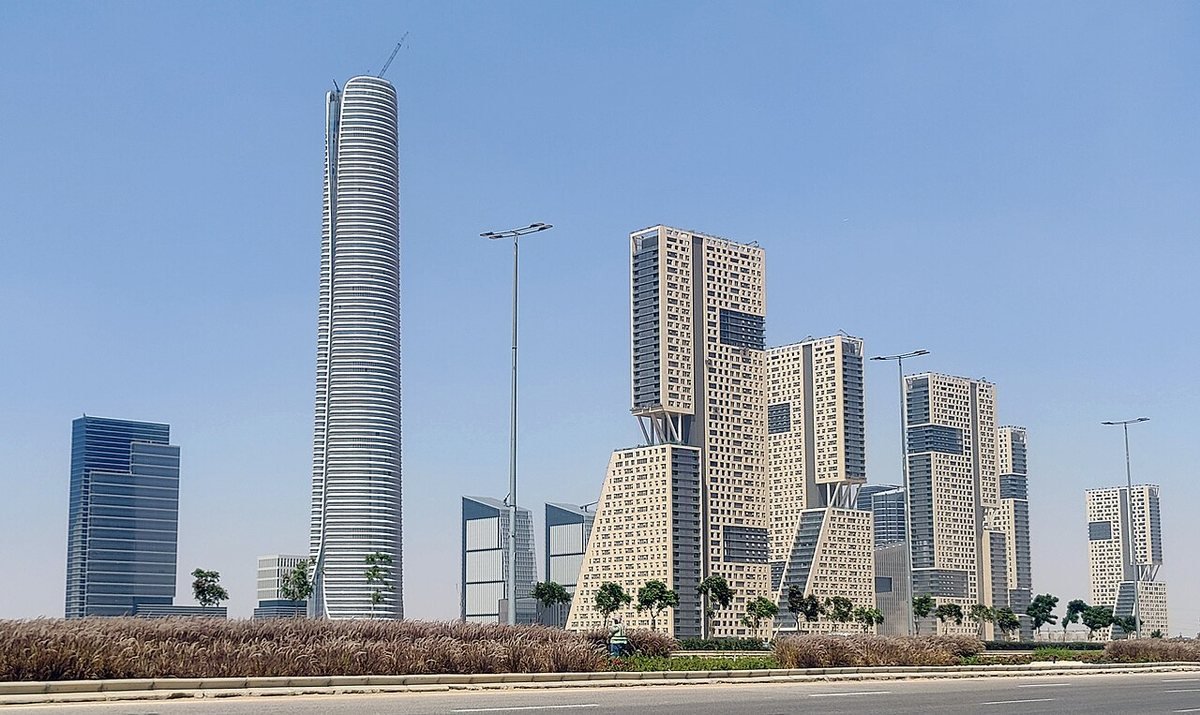
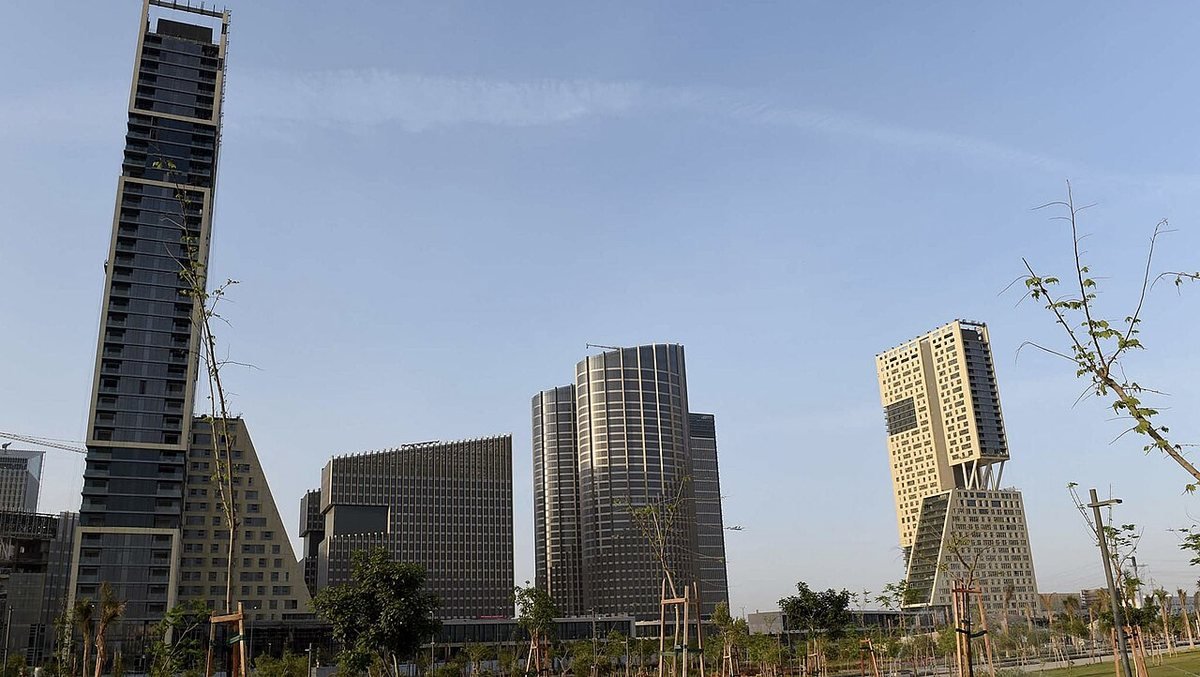
The Iconic Tower in the Central Business District, 393.8 metres and 77 storeys, was completed and listed by the Council on Tall Buildings and Urban Habitat as among the tallest buildings finished worldwide in 2024. It holds offices, branded apartments and a hotel. China State Construction Engineering Corporation built it and the surrounding CBD towers.
EGP 500 billion spent, the chairman says Cost
ACUD chairman Khaled Abbas told Reuters the company had spent EGP 500 billion on first-phase infrastructure and buildings and estimated the second phase’s infrastructure at EGP 250–300 billion. At early-2024 exchange rates EGP 500 billion was about $16 billion; before the 2022 devaluations it would have been about $32 billion.
About 48,000 employees commuted in daily, 100,000 housing units were finished, and about 1,200 families had moved in. On 14 January, handing over the first three CBD towers, Prime Minister Madbouly said financing was outside the state budget and ACUD’s profits had passed EGP 20 billion.
Ministries start work in the desert Move
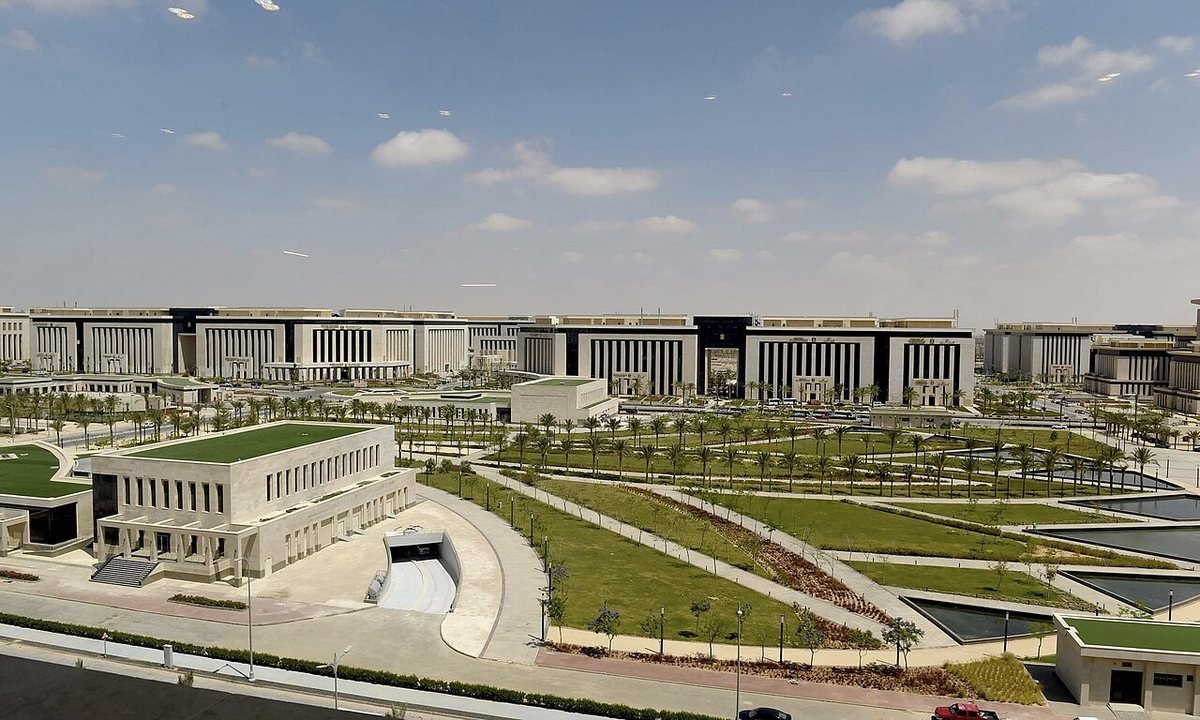
After delays blamed on COVID-19, civil servants began working in the Government District, a long mall of ministry buildings around a central green. The OECD dates the district’s start to mid-2023; Reuters dates ministries’ operation from July 2023.
The move turned a construction site into an administrative centre, but most staff commuted from Cairo by bus and, from 2022, by light rail. A government that works there is not the same as a city that lives there.
2022
The light rail arrives Opens
Sisi and China’s ambassador opened the first 70 km of the Cairo Light Rail Transit, an electric line from Adly Mansour station in eastern Cairo to the new capital and 10th of Ramadan City. It came from a $1.24 billion contract signed in August 2017 with China Railway Engineering Corporation and AVIC International.
The $58 billion headline Cost
Reporting in 2019 put the capital’s overall price at about $58 billion, the figure still repeated in news coverage in 2026. In May 2019 the independent outlet Mada Masr asked whether a project said to be ‘outside the state budget’ was also outside public accountability, since ACUD’s accounts went unpublished.
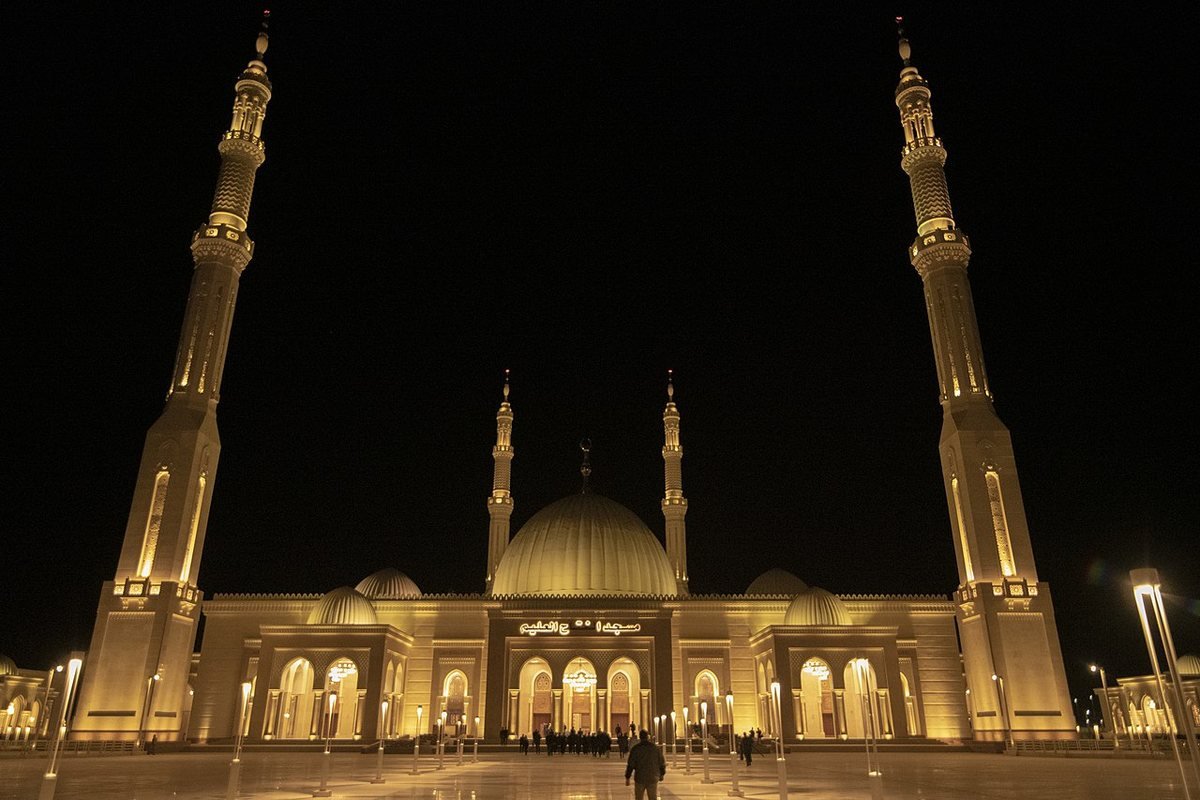
On 6 January, Coptic Christmas Eve, Sisi opened the Cathedral of the Nativity of Christ, then the largest church in the Middle East, and the Al-Fattah Al-Aleem Mosque on the same day, a statement of national unity built into the new city’s first finished landmarks.
The Central Business District rises Build
China State Construction Engineering Corporation, which had signed a memorandum on the capital in September 2015, began the Central Business District: some 20 office, residential and hotel towers led by the Iconic Tower. Chinese banks financed much of the package.
Desert, roads and a plan Build
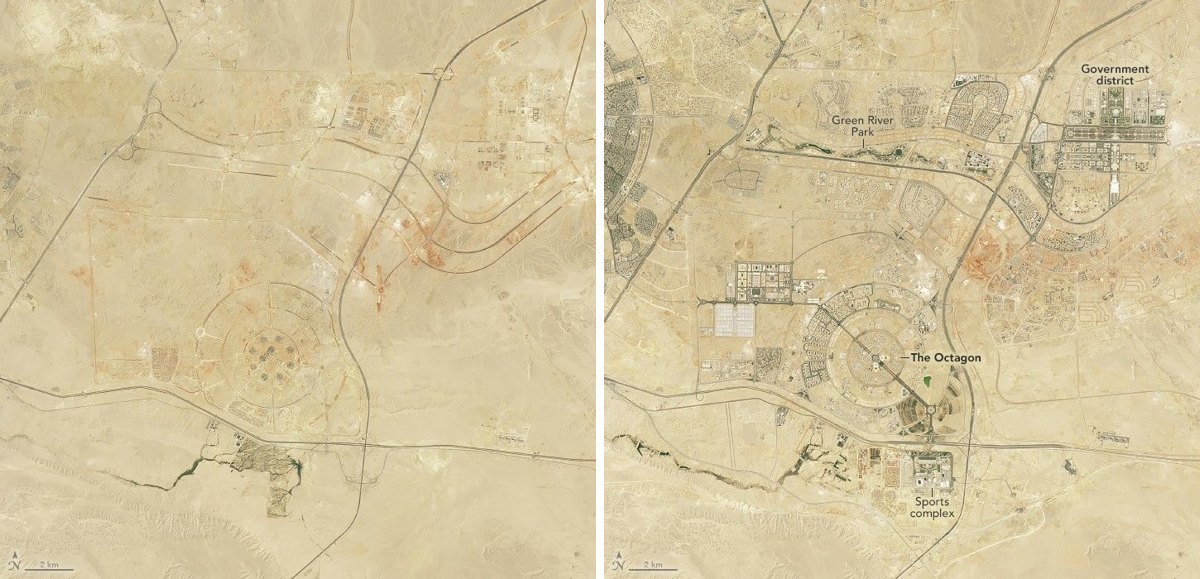
A NASA satellite image from August 2017 shows little more than graded road rings and building pads on bare desert. Over the next seven years roads, utilities, the government district, the first residential districts and the Green River park would fill the frame.
2016
ACUD is created Plan
The Administrative Capital for Urban Development company was set up to own and develop the land. According to the OECD, entities of the Ministry of Defence took 51% in return for contributing the land, and the New Urban Communities Authority took 49% for a EGP 20 billion injection.
The model: ACUD plans and services land, then sells or auctions plots to developers who build within set deadlines. It made the military the project’s senior partner and kept its accounts off the state budget.
2015
A new capital is announced Plan
At an investment conference in Sharm el-Sheikh, the government unveiled plans for a new capital between Cairo and Suez, pitched with an Emirati-led developer, Capital City Partners, at around $45 billion. That partnership did not proceed, and the state and military took the lead instead.
The promise: ministries, parliament, a presidential palace, embassies, a business district, parks and housing for millions, relieving a Greater Cairo of about 20 million people.
Who Will Live Here?
A government can move by decree. Residents have to choose to come.
Pick a milestone. How full is the city?
The meter shows each figure as a share of the 6.5 million people the capital is planned for. Targets are targets, not counts.
How Much Does Egypt’s New Capital Cost?
There is no single published bill. Here is what each headline number means.
| Figure | Date | What it measures | Can it be added? |
|---|---|---|---|
| ~US$45 billion | 2015 | Launch pitch with Capital City Partners | No: superseded plan |
| ~US$58 billion | 2019 | Reported overall price tag | No: an estimate, pre-devaluation |
| EGP 500 billion | Jan 2024 | Phase-one infrastructure and buildings spent (ACUD) | Part of the total |
| EGP 250–300 billion | Jan 2024 | Phase-two infrastructure, estimated (ACUD) | Forecast only |
| ~US$60 billion | Feb 2024 | Cost associated so far, largely developer-borne (OECD) | Best whole-project figure; unaudited |
| ~US$2.8 billion | May 2026 | East Nile Monorail (whole 56.6 km line) | Separate transport budget |
| EGP 1.4 trillion (~US$27bn) | Apr 2026 | The Spine, TMG’s separate city | No: a different project |
Pick a number from the headlines. What does it really measure?
Cost figures for the new capital come from different years, currencies and scopes. They cannot simply be added together.
Who pays?
ACUD’s model is to turn state land into money. It services land with roads and utilities, then sells or auctions plots to private and state-linked developers, who finance their own towers and compounds. The government says this keeps the capital outside the state budget, and Prime Minister Madbouly said in January 2024 that ACUD’s profits had passed EGP 20 billion.
The OECD’s 2024 survey of Egypt accepts that the cost has been ‘borne to a large extent by developers’, but adds that ACUD’s financial statements and balance sheet are not public, and neither are the related budget outlays and contingent liabilities. State banks lend to developers, state agencies buy offices, and public money builds the rail links. Without published accounts, outsiders cannot check how much risk sits with the public.
Why the dollar figure keeps moving
Egypt devalued its pound several times between 2022 and 2024, and the currency traded near EGP 50 to the dollar in mid-2026. Spending in pounds does not change when the exchange rate moves, but its dollar headline does.
Why Is Egypt Building a New Capital?
Relieve Cairo
Greater Cairo holds about 20 million people. Moving ministries out was meant to cut traffic and free central land, though most staff still commute.
Room for a bigger population
Egypt passed 100 million people in 2020. New desert cities are the state’s answer to housing demand outside the Nile Valley.
Modern offices
Purpose-built ministries and digital systems in one district; reform of how government works is a separate, harder task.
Land as revenue
Plot sales to developers fund infrastructure and generate profit for ACUD and its state shareholders.
A defensible seat of power
Critics note the capital moved government away from Cairo’s squares, where the 2011 uprising unfolded. The Octagon centralises military command there.
A national statement
Africa’s tallest tower, the largest church and mosque complexes and an Olympic City signal ambition to investors and Egyptians alike.
The Biggest Challenges Facing the New Capital
1. Cost and accountability
The project competes with schools, hospitals, existing-city infrastructure and debt service for national attention. The OECD’s point is not that the capital has failed financially, but that limited disclosure makes it impossible to tell.
2. Occupancy
About 30,000 residents in October 2026 is small for infrastructure designed for millions. Asharq Al-Awsat reported apartment prices around EGP 50,000 per square metre in July 2026, far above what most civil servants earn, so many keep commuting from Cairo.
3. Water and climate
The capital draws on the Nile through treatment plants that ACUD said would together use about 1% of Egypt’s share of the river. The 35 km Green River park and other landscaping need efficient irrigation and treated wastewater to be sustainable in one of the world’s most water-stressed countries.
4. Transport and daily life
The light rail and monorail now exist, but the monorail runs only 6 a.m. to 6 p.m. and a full-line daily commute costs about 22% of the minimum wage. Residents also need schools, clinics, shops and night-time life before the city feels like one.
5. Competition from other megaprojects
Private schemes such as The Spine, New Alamein on the coast and dozens of east-Cairo compounds compete for the same buyers and the same state attention.
How Should the Project’s Success Be Measured?
Population
Do people choose to live there permanently, beyond the 60,000 and 250,000 targets?
Occupancy
Are the finished flats and offices lived in and used, not just sold?
Employment
Do private firms create durable jobs beyond construction and government?
Affordability
Can ordinary workers afford homes and the daily commute?
Public finances
Are ACUD’s accounts, liabilities and returns disclosed?
Sustainability
Can water, energy and transport keep up as the city grows?
Explore More Timelines
People Also Ask
Frequently Asked Questions
Conclusion: A Capital Built Ahead of Its People
In eleven years Egypt has moved its government into the desert, built Africa’s tallest tower, two rail links and a vast military command, and sold most of the first phase’s land. As a project to relocate the state, the New Administrative Capital has largely been delivered.
As a city, it has barely begun. The question is no longer whether Egypt can build a new capital, but whether tens of thousands of residents can become hundreds of thousands at prices Egyptians can afford, and whether the public will ever see accounts that show what the $60 billion question really costs.
Related AiTimeline Stories
⚠️ Editorial Note
Cost and population figures come from the OECD’s 2024 Economic Survey of Egypt, ACUD statements reported by Reuters (January 2024) and Egyptian media (October 2026), Egypt’s State Information Service and Asharq Al-Awsat. They have different dates and scopes, and estimates are not audited totals; targets are not counts. Distances to Cairo vary by source. Developments are current to 14 October 2026. This is general information, not investment or property advice.
Sources & further reading
Every dated entry above was checked against these references. Last reviewed 14 October 2026.
- OECD Economic Surveys: Egypt 2024 (Box 2.6, The New Administrative Capital: ACUD ownership, USD 60 billion cost estimate, undisclosed accounts)
- Reuters via ThePrint: Egypt plans expansion of new capital as first residents trickle in (4 January 2024)
- Egypt State Information Service: PM says financing of the New Administrative Capital is outside the state budget (14 January 2024)
- Egypt State Information Service: East Nile Monorail begins first public passenger trips (6 May 2026)
- Egypt State Information Service: PM follows up operation of projects in the New Capital (19 May 2026)
- Egypt State Information Service: Inauguration of the State Strategic Command Headquarters, The Octagon (4 July 2026)
- Asharq Al-Awsat: Egypt's New Administrative Capital gains official momentum, but residential occupancy remains limited (July 2026)
- Ahram Online: Egypt's New Capital targets 250,000 residents within three years, ACUD chairman (October 2026)
- Asharq Al-Awsat: $27 billion city (The Spine) to be built east of Cairo (April 2026)
- Al Jazeera: Egypt's new monorail offers a modern ride, but Cairo is still not convinced (1 June 2026)
- Egyptian Streets: Egypt's New Administrative Capital officially renamed The New Capital (9 November 2025)
- The New Arab: Egypt explores hydrogen tram for new capital amid economic woes (12 October 2026)