Bank Nationalisation in India: From 14 Banks in 1969 to 12 Public-Sector Banks
India nationalised 14 banks on 19 July 1969 and six in 1980. The timeline from R.C. Cooper and rural branches to 12 PSBs and the 2026 IDBI-Fairfax sale.
Latest Story
On the evening of 19 July 1969, India’s 14 largest commercial banks became government property by ordinance. Six more followed on 15 April 1980. Bank nationalisation in India put most of the country’s deposits under public ownership, pushed branches into villages and redirected credit to farms and small firms. It also produced a Supreme Court defeat, decades of directed lending, bad-loan crises and, from 2017, a wave of mergers that cut the public-sector banks to 12. This timeline runs from the Imperial Bank of 1921 to October 2026, when the government agreed to sell control of IDBI Bank to Canada’s Fairfax.
💡 Short Answer
India nationalised 14 commercial banks with deposits of ₹50 crore or more on 19 July 1969, under Prime Minister Indira Gandhi, and six more with deposits of ₹200 crore or more on 15 April 1980. The aim was to spread banking to rural India and steer credit to agriculture and small industry. Bank offices rose from 8,262 in 1969 to 60,220 in 1991. Mergers since 2017 have left 12 public-sector banks.
Bank Nationalisation in India: Key Questions
Indian Bank Nationalisation in Ten Points
- Public banking started earlier: the RBI was nationalised in 1949 and the Imperial Bank became SBI in 1955.
- Control came before ownership: ‘social control’ from December 1967 tried to steer private banks for about six months.
- One ordinance, 14 banks: on 19 July 1969 banks holding about 85% of deposits passed to the state.
- The courts pushed back: the Supreme Court struck down the 1969 law on 10 February 1970; a new ordinance came four days later.
- Six more in 1980: the threshold was ₹200 crore of deposits.
- Branches went rural: rural offices rose from 1,833 to 35,206 between 1969 and 1991.
- Credit was directed: Lead Bank Scheme, priority-sector targets and Regional Rural Banks followed.
- Reform, not reversal: after 1991 private banks returned, but public-sector banks were never sold.
- Merged to 12: consolidation in 1993, 2017, 2019 and 2020 absorbed nine nationalised banks.
- 2026 is a turning point: record PSB profits, a new banking committee and the Fairfax–IDBI deal.
Bank Nationalisation at a Glance
The main milestones. Scroll sideways on a phone.
| Year | Milestone |
|---|---|
| 1921 | Imperial Bank of India formed from the three Presidency Banks |
| 1935 | Reserve Bank of India begins operations on 1 April |
| 1949 | RBI nationalised on 1 January; Banking Companies Act passed |
| 1955 | Imperial Bank becomes State Bank of India on 1 July |
| 1967 | Social control of banks announced in December |
| 19 July 1969 | 14 banks with deposits of ₹50 crore or more nationalised |
| 10 February 1970 | Supreme Court strikes down the 1969 Act (R.C. Cooper); new ordinance on 14 February |
| 1975 | First five Regional Rural Banks open on 2 October |
| 15 April 1980 | Six banks with deposits of ₹200 crore or more nationalised |
| 1991–93 | Narasimham Committee; RBI allows new private banks (22 January 1993) |
| 1993 | New Bank of India merged into Punjab National Bank |
| 2017 | SBI absorbs five associates and Bharatiya Mahila Bank |
| 2019 | Dena and Vijaya banks merged into Bank of Baroda |
| 2020 | Ten banks merged into four; 12 public-sector banks remain |
| 2026 | Record PSB profits; banking committee announced; IDBI stake sale to Fairfax approved |
The Timeline: From the Imperial Bank to the IDBI Sale
Newest first. Tags mark foundations, control of private banks, nationalisation, courts and law, the drive for reach, reform, mergers and 2025–26 developments.
2026
IDBI Bank stake goes to Fairfax 2025–26
The Union Cabinet approved the sale of 30.48% of IDBI Bank held by the government and 30.42% held by LIC to Canada’s Fairfax Financial Holdings. The government keeps 15% and LIC 19%, to be cut to 15% within two years. Fairfax faces a five-year lock-in, must keep the IDBI brand for three years and must merge or exit its 40% stake in CSB Bank within two years. RBI clearance and an open offer to minority shareholders are still needed, and the deal is expected to close this financial year. The Finance Minister called it ‘strategic restructuring’ rather than disinvestment.
2026
‘The committee is coming soon’ 2025–26
Opening a conference of public-sector bank chiefs, Sitharaman said the High-Level Committee on Banking promised in the Budget would be constituted soon and that the government would move quickly on its recommendations. She pointed to record profits and low bad loans as the conditions that made structural reform possible.
2026
Record profits for public-sector banks 2025–26
The Finance Ministry said the 12 public-sector banks posted their fourth straight year of overall profit. Net NPAs fell to 0.39%, deposits reached ₹156.3 lakh crore, gross advances ₹127 lakh crore and capital adequacy 16.6%. In March 2022 their gross NPA ratio had been 7.3%.
2026
‘No roadmap’ for more mergers 2025–26
Reports had suggested the government wanted to fold the 12 public-sector banks into about four large lenders by 2026–27. Sitharaman said she was not aware of any roadmap. The Finance Ministry later told Parliament no fresh merger proposal was under consideration.
2026
A banking committee for Viksit Bharat 2025–26
The Budget proposed a High-Level Committee on Banking for Viksit Bharat to review how the banking system, public and private, should be shaped to finance India’s 2047 development goal. Bankers compared its potential to the Narasimham Committee of 1991.
2025
Banking laws updated, including a 1968 limit Reform
The amendments came into force in two stages. From 1 August 2025 the threshold for a director’s ‘substantial interest’ in a company rose from ₹5 lakh, a figure set in the social-control law of 1968, to ₹2 crore; public-sector banks could also pay statutory auditors and move unclaimed shares to the IEPF. From 1 November 2025 depositors could name up to four nominees.
2025
One State, One RRB Merger
The Department of Financial Services merged RRBs within the same state so that most states have a single rural bank. The 1975 creation of the RRBs had started with five banks; by the mid-2000s there were 196 before successive rounds of mergers.
2021
Privatisation of two banks announced Reform
For the first time the government said it would sell control of two public-sector banks. Five years later neither had been named or sold, although the IDBI Bank sale went ahead separately.
2020
Ten banks become four Merger
The Cabinet approved the ‘mega consolidation’ on 4 March 2020, effective 1 April. It created seven large public-sector banks, each with business of over ₹8 lakh crore, plus five smaller ones. The total fell to 12. All ten banks involved had been nationalised in 1969 or 1980.
2019
Dena and Vijaya join Bank of Baroda Merger
Dena Bank, nationalised in 1969, and Vijaya Bank, nationalised in 1980, were amalgamated into Bank of Baroda, making it India’s third-largest lender at the time.

2019
LIC takes control of IDBI Bank Reform
With LIC as majority owner, IDBI Bank stopped being counted as a public-sector bank. In May 2021 the government and LIC decided to sell a controlling stake, the process that ended with the Fairfax deal in 2026.
2017
SBI absorbs its associates Merger
SBI merged its five remaining associate banks and the women-focused Bharatiya Mahila Bank, created in 2013. The associates had been state-linked banks taken over under the SBI (Subsidiary Banks) Act of 1959.
2017
A ₹2.11 lakh crore rescue Reform
After the RBI’s 2015 asset quality review forced banks to recognise hidden bad loans, the government announced a ₹2.11 lakh crore capital plan, largely through recapitalisation bonds. Gross NPAs at public-sector banks peaked above 14% in March 2018.
2014
Jan Dhan accounts for every household Reach
The financial-inclusion drive used the branch network built after 1969 to open basic accounts at scale. Public-sector banks and RRBs opened the large majority of Jan Dhan accounts.
1993
New Bank of India merges into PNB Merger
New Bank of India, one of the six banks nationalised in 1980, had run into losses and was amalgamated with Punjab National Bank. It was the first time a nationalised bank disappeared.
1993
Private banks are allowed again Reform
For the first time since 1969, the RBI invited applications for new private banks. They had to be listed, meet the same priority-sector lending rules and open rural and semi-urban branches. HDFC Bank, ICICI Bank and UTI Bank (now Axis Bank) were among the first licensed.
The Narasimham Committee reports Reform
Set up after the 1991 balance of payments crisis, the committee led by former RBI Governor M. Narasimham recommended cutting the statutory liquidity and cash reserve ratios, introducing international income-recognition and provisioning norms, phasing down directed credit and letting new private banks in. Bank nationalisation itself was not reversed.
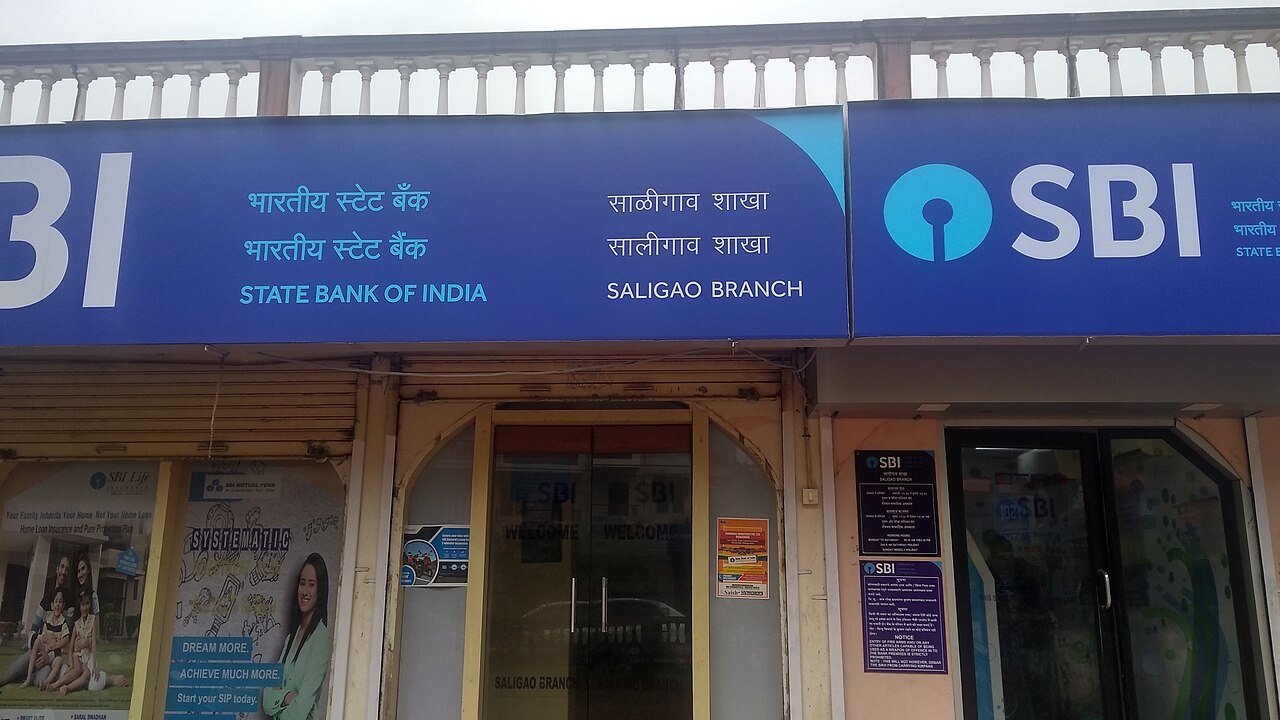
60,220 bank offices Reach
RBI statistics capture the scale of the change after 22 years: seven times as many bank offices as in 1969, deposits up from ₹4,646 crore to ₹2,01,199 crore and credit from ₹3,599 crore to ₹1,21,865 crore, in nominal terms.
1982
NABARD takes over rural refinance Reach
The RBI’s agricultural credit functions moved to NABARD, which refinances banks and RRBs for farm and rural lending.
1980
Six more banks nationalised Nationalisation
Back in power after the Janata years, Indira Gandhi’s government nationalised a second set of banks by ordinance, later replaced by the Banking Companies (Acquisition and Transfer of Undertakings) Act, 1980. With SBI and its associates, the state now controlled the great bulk of commercial banking.
1975
The first Regional Rural Banks open Reach
RRBs were designed as low-cost local banks for small and marginal farmers, landless labourers and artisans, owned by the Centre, the state and a sponsor bank.
1972
Cheaper loans for the poorest borrowers Control
Public-sector banks began offering loans at a concessional rate to selected low-income groups. The same year the priority sector was formally defined, and targets followed: a third of credit by 1979 and 40% by 1985.
1970
The Act that still governs the banks Courts & law
Act 5 of 1970 received the President’s assent, replacing the second ordinance. Its compensation terms met the Supreme Court’s objections, and the 14 banks became ‘corresponding new banks’ wholly owned by the government. It is the Act still amended today when public-sector bank rules change.
1970
A new ordinance in four days Courts & law
Four days after losing in court, the government had the President promulgate a fresh ordinance, so the banks never returned to private hands.
1970
Supreme Court strikes down the first law Courts & law
An 11-judge bench held the 1969 Act invalid because it singled out 14 banks while barring them from banking business and because its compensation was not fair. The judgment, which also widened the scope of fundamental-rights review, is still cited in constitutional law. Parliament later weakened the right to property through the 25th Amendment in 1971.
The Lead Bank Scheme Reach
Ownership alone would not put branches in villages, so the RBI assigned every district to a lead bank to survey credit needs and coordinate lending.
Parliament passes the 1969 Act Courts & law
Parliament converted the ordinance into the Banking Companies (Acquisition and Transfer of Undertakings) Act, 1969. Shareholders including Rustom Cavasjee Cooper had already gone to court.
1969
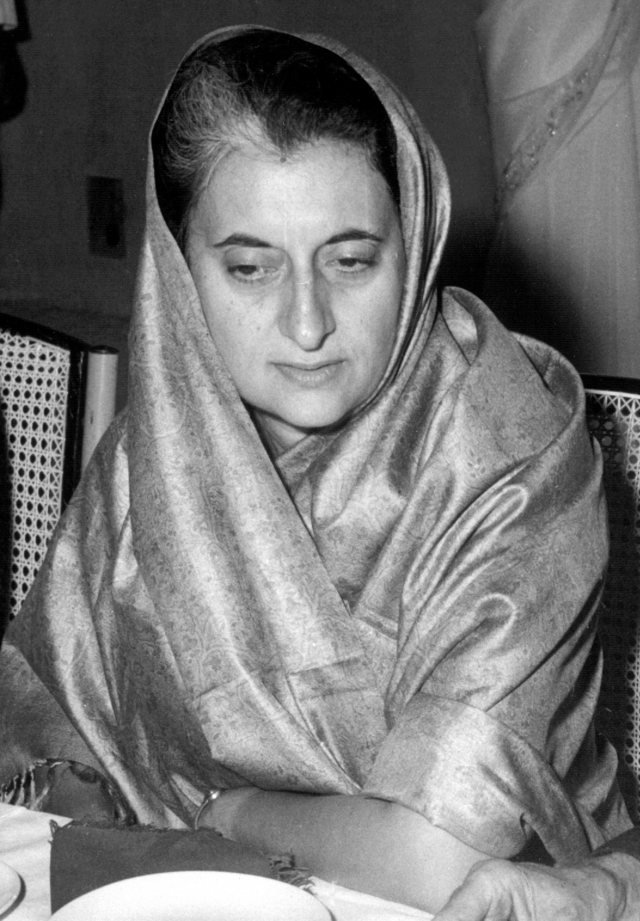
Fourteen banks nationalised overnight Nationalisation
Three days after Morarji Desai left the Finance Ministry, Prime Minister Indira Gandhi, now holding the portfolio herself, had the 14 largest banks nationalised by ordinance on the eve of Parliament’s Monsoon Session and announced it on All India Radio. The move was popular and helped her in the Congress split later that year.
Feb 1969
Social control: steering without owning Control
Finance Minister Morarji Desai’s alternative to nationalisation required bank boards to include experts from agriculture, small industry and finance, restricted loans to directors’ companies and set credit priorities through a National Credit Council. Critics said it was too slow; it lasted less than six months.
1962
Deposit insurance after bank failures Foundations
The collapse of two banks in 1960 led to deposit insurance and a wave of forced mergers of weak banks, reducing the number of small private banks through the 1960s.
1955
Imperial Bank becomes State Bank of India Foundations
On the recommendation of the All-India Rural Credit Survey, the government took over the Imperial Bank and made it SBI, with a target to open hundreds of branches in rural and semi-urban areas within five years. SBI later acquired state-associated banks under a 1959 law.

1949
The RBI itself is nationalised Foundations
The central bank, founded as a shareholders’ bank, passed into government ownership. In March that year the Banking Companies Act, 1949, renamed the Banking Regulation Act in 1966, gave it powers to license, inspect and direct commercial banks.
1935
The Reserve Bank opens Foundations
The RBI took over currency issue and banking oversight from the government and the Imperial Bank. Regulation and ownership remained separate questions for the next 34 years.
1921
Imperial Bank of India is formed Foundations
The three Presidency Banks merged into a single bank that also handled government business. Its successor, SBI, is still India’s largest bank.
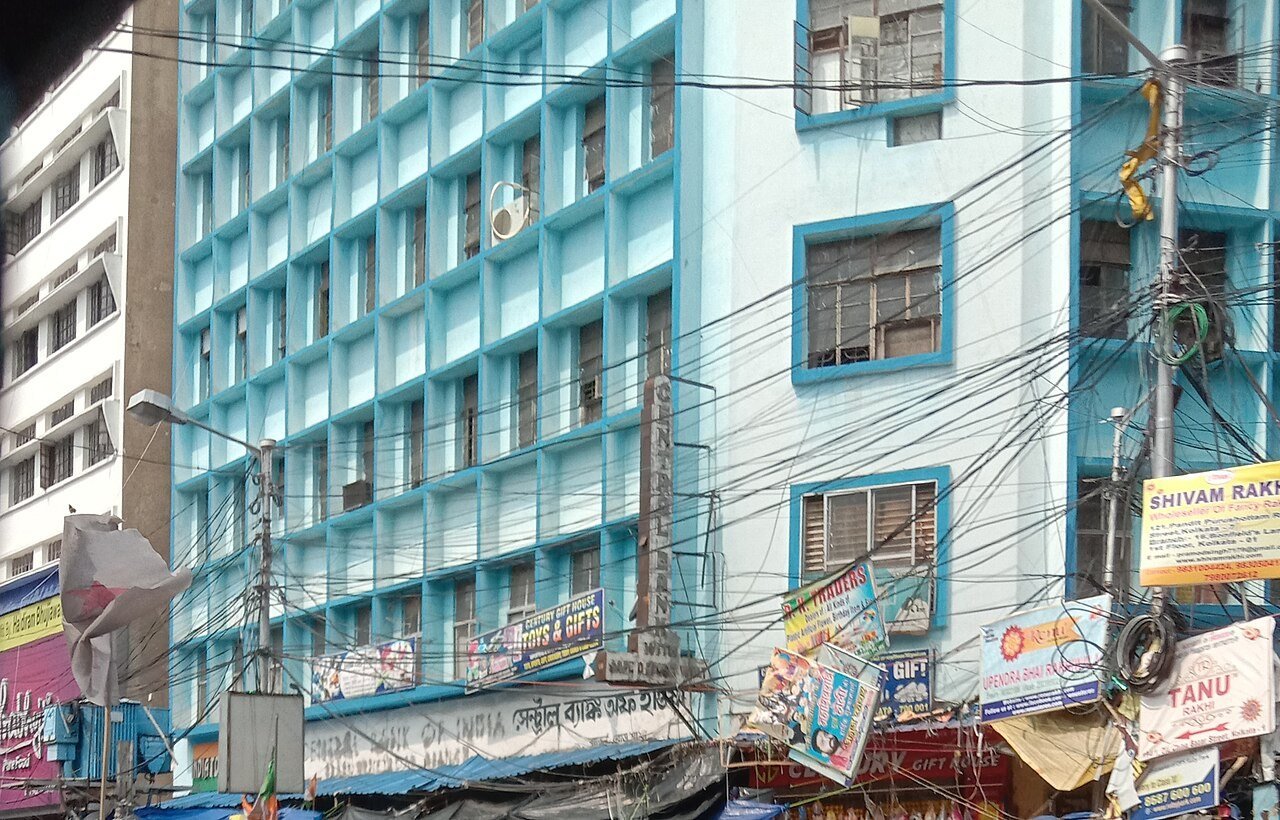
The 20 Nationalised Banks, and Where They Are Now
Names as they were at nationalisation.
The 14 banks nationalised on 19 July 1969
| No. | Bank (1969) | Today |
|---|---|---|
| 1 | Central Bank of India | Separate PSB |
| 2 | Bank of Maharashtra | Separate PSB |
| 3 | Dena Bank | Part of Bank of Baroda |
| 4 | Punjab National Bank | Separate PSB |
| 5 | Syndicate Bank | Part of Canara Bank |
| 6 | Canara Bank | Separate PSB |
| 7 | Indian Overseas Bank | Separate PSB |
| 8 | Indian Bank | Separate PSB |
| 9 | Bank of Baroda | Separate PSB |
| 10 | Union Bank of India | Separate PSB |
| 11 | Allahabad Bank | Part of Indian Bank |
| 12 | United Bank of India | Part of Punjab National Bank |
| 13 | UCO Bank | Separate PSB |
| 14 | Bank of India | Separate PSB |
The six banks nationalised on 15 April 1980
| No. | Bank (1980) | Today |
|---|---|---|
| 1 | Andhra Bank | Part of Union Bank of India |
| 2 | Corporation Bank | Part of Union Bank of India |
| 3 | New Bank of India | Part of Punjab National Bank |
| 4 | Oriental Bank of Commerce | Part of Punjab National Bank |
| 5 | Punjab and Sind Bank | Separate PSB |
| 6 | Vijaya Bank | Part of Bank of Baroda |
Pick any of the 20 nationalised banks. When was it taken over, and where is it now?
Twenty banks were nationalised in 1969 and 1980. Eleven of them still exist as separate banks; nine were merged into others. With SBI, those 11 make today’s 12 public-sector banks.
Why Did India Nationalise Its Banks in 1969?
The economic case was about where the money went. In June 1969 India had one bank office for every 64,000 people, most of them in cities, and only 14% of bank credit went to what would become the priority sectors. Many large banks were tied to industrial houses, and critics said deposits from the public were lent to the owners’ own companies. Bank failures in 1960 had also shaken confidence in small private banks.
The political case was just as important. Indira Gandhi was in a power struggle with the Congress party’s old guard, led by Morarji Desai, who had preferred ‘social control’. Taking over the Finance Ministry and nationalising the banks within days cast her as the champion of the poor and helped her win the split that followed in November 1969. Both explanations are true, and historians still argue over their weight.
1969 vs 1991: What the Nationalisation Era Changed
RBI statistics for all scheduled commercial banks, June 1969 and March 1991.
Pick a measure to see how much changed in the nationalisation era.
RBI figures for all scheduled commercial banks, the month before nationalisation and on the eve of the 1991 reforms. Rupee values are not adjusted for inflation.
Did Bank Nationalisation Work? A Scorecard
Our assessment against the government’s own stated aims of 1969.
| Goal of 1969 | What happened | Verdict |
|---|---|---|
| Branches in villages | Rural offices rose from 1,833 to 35,206 by 1991 | Achieved |
| Credit to farms and small firms | Priority-sector share rose from 14% to 37.7% of credit | Largely achieved |
| Mobilise savings | Deposits rose from ₹4,646 crore to over ₹2 lakh crore by 1991 | Achieved |
| Break concentration of control | Business-house banks ended; government control replaced it | Mixed |
| Sound, efficient banks | Bad-loan crises in the 1990s and 2015–18 needed public capital | Weak |
| Freedom from politics | Loan melas, waivers and directed credit drew criticism | Weak |
Reach is where nationalisation scored most clearly. The branch network built between 1969 and 1991 is the one that Jan Dhan accounts, direct benefit transfers and rural credit still run through. Efficiency is where it scored worst. Directed lending at controlled interest rates, frequent loan waivers and weak governance contributed to the bad-loan problems of the 1990s and the far larger crisis after 2015, when gross NPAs at public-sector banks rose above 14% and the government had to commit ₹2.11 lakh crore in new capital.
These outcomes were not caused by ownership alone. Branch-licensing rules, the Lead Bank Scheme, priority-sector targets and the RRBs did much of the work of spreading banking, while later problems also reflected the economy’s cycle and lending to infrastructure.
Today’s 12 Public-Sector Banks
Every one traces back to 1955, 1969 or 1980.
| Public-sector bank | Origin | Absorbed |
|---|---|---|
| State Bank of India | Imperial Bank, 1955 | Associate banks (2008–2017), Bharatiya Mahila Bank (2017) |
| Punjab National Bank | Nationalised 1969 | New Bank of India (1993), OBC, United Bank of India (2020) |
| Bank of Baroda | Nationalised 1969 | Dena Bank, Vijaya Bank (2019) |
| Canara Bank | Nationalised 1969 | Syndicate Bank (2020) |
| Union Bank of India | Nationalised 1969 | Andhra Bank, Corporation Bank (2020) |
| Indian Bank | Nationalised 1969 | Allahabad Bank (2020) |
| Bank of India | Nationalised 1969 | – |
| Central Bank of India | Nationalised 1969 | – |
| Indian Overseas Bank | Nationalised 1969 | – |
| UCO Bank | Nationalised 1969 | – |
| Bank of Maharashtra | Nationalised 1969 | – |
| Punjab and Sind Bank | Nationalised 1980 | – |
Bank Nationalisation in 2026: Consolidation, a Committee and a Sale
Fifty-seven years after the first ordinance, the public-sector banks are in their strongest financial shape in a generation: a record ₹1.98 lakh crore profit in 2025–26 and gross bad loans under 2%. That has reopened the question of what they are for. The Budget for 2026–27 announced a High-Level Committee on Banking for Viksit Bharat, which the Finance Minister said in August would be set up soon, while she has denied any roadmap for further mergers.
The biggest change came on 14 October 2026, when the Cabinet approved selling control of IDBI Bank to Fairfax for about ₹52,878 crore. IDBI was never a nationalised bank, and the government will keep a stake, but it is the first time a lender controlled by the state and LIC is being handed to a foreign owner. The two public-sector bank privatisations announced in 2021 have not yet happened.
Explore More Timelines
People Also Ask
Frequently Asked Questions
Conclusion: From Who Owns the Banks to How Well They Serve
Bank nationalisation answered the question of 1969, who should control India’s savings, decisively in favour of the state. It brought banks to villages and credit to farmers on a scale private banks had not attempted. The decades since showed that ownership alone does not guarantee sound lending, and the reforms of the 1990s, the mergers from 2017 and the IDBI sale of 2026 are all attempts to fix that without undoing the reach.
The question now is not whether India should have public-sector banks, but how many, how big and how independent of government they should be.
Related AiTimeline Stories
⚠️ Editorial Note
This timeline draws on the Reserve Bank of India’s history pages, banking chronology and Statistical Tables Relating to Banks in India, the RBI’s 1993 private-bank guidelines, the Banking Companies Acts of 1970 and 1980, a Cabinet release of 4 March 2020 via PIB, Finance Ministry figures for 2025–26, and 2025–26 reporting by Business Today, Business Standard, Free Press Journal and others. Branch and deposit figures before 1991 are for all scheduled commercial banks, not only public-sector banks. The IDBI Bank transaction still needs regulatory approval. This article is historical and is not investment advice.
Sources & further reading
Every dated entry above was checked against these references. Last reviewed 18 October 2026.
- Reserve Bank of India: Our History
- Brief chronology of banking events, 1968 to 1985
- Statistical Tables Relating to Banks in India: indicators June 1969 to March 1998
- Guidelines on Entry of New Private Sector Banks (22 January 1993)
- Banking Companies (Acquisition and Transfer of Undertakings) Act, 1970
- Banking Companies (Acquisition and Transfer of Undertakings) Act, 1980
- Cabinet approves Mega Consolidation in Public Sector Banks with effect from 1.4.2020
- Finance Ministry merges 26 RRBs under One State One RRB plan
- Public Sector Banks net profit hits record Rs 1.98 lakh crore in FY26: Finance Ministry
- No roadmap for now: FM Sitharaman clarifies on public sector banks merger
- Govt to announce high-level committee on banks this month, says Nirmala Sitharaman
- IDBI Bank stake sale is the largest FDI deal till date; Centre, LIC to continue to remain invested