← AiTimeline Home

Politics · Europe · 1789–2026

France Protests Timeline: From the 2026 Unrest to the French Revolution

📅 Updated 19 October 2026📢 23 uprisings, strikes and riots⚖️ Who won, who lost
Advertisement

View as Web Story

In short

France protests timeline: the 1789 Revolution, May 1968, the 1995 strikes, Yellow Vests, the 2023 pension fight and the October 2026 riots, newest first.

Advertisement

Latest Story

On 17 October 2026, hundreds of thousands of people marched across France against rising prices and failing schools, and smaller groups looted shops and set fire to Limoges town hall. It was the latest chapter in a long story. This France protests timeline runs newest first, from the October 2026 unrest and the 2025 ‘Block everything’ movement back through the Yellow Vests, May 1968 and the Popular Front strikes to the storming of the Bastille, and records what each movement demanded and whether it won.

Advertisement
Advertisement

💡 Short Answer

France has a long protest tradition, from the 1789 Revolution through the 1936 strikes, May 1968, the 1995 strikes, the 2006 anti-CPE movement and the 2018 Yellow Vests to the 2023 pension protests. In October 2026, school protests grew into nationwide marches over living costs; on 17 October between 550,000 and 800,000 people marched, looting hit many cities and about 2,400 people were arrested. On 19 October the prime minister ordered localised curfews.

⚡ France Protests: Quick Facts
Latest flashpoint17 October 2026
Marchers that day550,000 (official) to 800,000
Weekend arrests~2,400
Largest strikeMay 1968, 7–10 million
Record official march count1.28 million, 7 March 2023
Pension age now62 years 9 months (frozen to 2028)
⚡ Quick Answers — AI Overview Ready

France Protests: Key Questions

What are the main protests in French history?
The 1789 Revolution, the 1830 and 1848 revolutions, the 1871 Paris Commune, the 1936 Popular Front strikes, May 1968, the 1995 public-sector strikes, the 2005 riots, the 2006 anti-CPE protests, the 2018 Yellow Vests, the 2023 pension protests and the October 2026 unrest.
What started the October 2026 protests?
Secondary-school pupils began blockading schools in September 2026 over teacher shortages and run-down buildings. Unions, the left and Yellow Vests joined, and anger spread to prices and public services, with inflation at 3.1% and a €54 billion budget squeeze planned for 2027.
Do French protests work?
Sometimes. Protest forced retreats in 1984, 1986, 1995, 2006, 2018 and 2019–20, and won paid holidays in 1936. But pension reforms in 2010 and 2023 and the 2016 labour law passed despite mass marches. Results depend on unity, public support, disruption and the government’s majority.
How is the government responding in 2026?
Macron refused Interior Minister Laurent Nuñez’s resignation on 19 October and demanded new policing tactics. Prime Minister Lecornu ordered localised curfews and aid for looted shops, and had promised education proposals by the end of October.
📚 Key Takeaways

French Protest History in Ten Points

  • Revolutionary roots: 1789, 1830, 1848 and 1871 made the street a recognised path to political change.
  • Labour wins: the 1936 strikes won paid holidays and the 40-hour week.
  • May 1968: the biggest strike in French history, with lasting cultural, if not political, effects.
  • Retreats are common: governments backed down in 1984, 1986, 1995, 2006 and 2018.
  • Not always: the 2010 and 2023 pension reforms and 2016 labour law passed regardless.
  • Article 49.3: forcing bills through without a vote has repeatedly inflamed protest.
  • Policing flashpoints: the deaths of Malik Oussekine (1986), Zyed and Bouna (2005) and Nahel (2023) set off unrest.
  • Cost of living: fuel taxes in 2018 and prices in 2026 brought new, leaderless movements onto the streets.
  • Pension suspension: the 2023 reform was frozen in December 2025 after the ‘Block everything’ autumn.
  • October 2026: about 2,400 arrests, 3,000 businesses hit and curfews, with demands still unresolved.
Advertisement

France Protests Timeline: Latest Events First

Newest first. Each entry is tagged by type and ends with the outcome for protesters. Use the filter to follow one thread.

🎯 Interactive: Filter the Timeline

Follow one kind of protest across 237 years: living costs, pensions and labour, students, riots and policing, farmers, or revolutions.

–

Advertisement
19 Oct
2026

Curfews, and a minister who offered to quit Riots & policing

18 Oct: Interior Minister Laurent Nuñez offers to resign19 Oct: Macron refuses, citing the need for ‘continued command’ of the policePM Sébastien Lecornu orders ‘very limited’, localised curfewsMarseille bans gatherings; Denain curfew 9pm–6am to 25 Oct

Nuñez admitted authorities had ‘lost control’ in some big cities. Macron’s office acknowledged ‘failures in anticipation and intelligence-gathering’ and ordered new tactics against highly mobile groups of looters. Mayors attacked the government’s handling of security, and National Rally leader Jordan Bardella said the state had ‘failed’. Yellow Vest groups called another day of action for Saturday 24 October.

Outcome for protesters: Ongoing
17 Oct
2026

A national day of anger turns to looting and arson Taxes & living costs

550,000 marchers (Interior Ministry) vs 800,000 (organisers)Nearly 2,400 arrests over the weekend; about 1,000 police and gendarmes injuredAt least 3,000 businesses damaged or looted (government)Limoges town hall burned; Marseille, Lille and Angers town halls broken into

Students, unions and Yellow Vests marched against rising prices and failing schools; most protests were peaceful. Masked groups then looted shops from Paris luxury boutiques to supermarkets (Carrefour reported 50 stores damaged, 20 looted), torched Lyon’s tourist office on Place Bellecour and toppled a Marianne statue inside Marseille city hall. Background: inflation hit 3.1% in September, with energy up 21.3% in a year, and the draft 2027 budget plans a €54 billion fiscal adjustment to cut the deficit from 5.4% to 5% of GDP.
Outcome for protesters: Ongoing
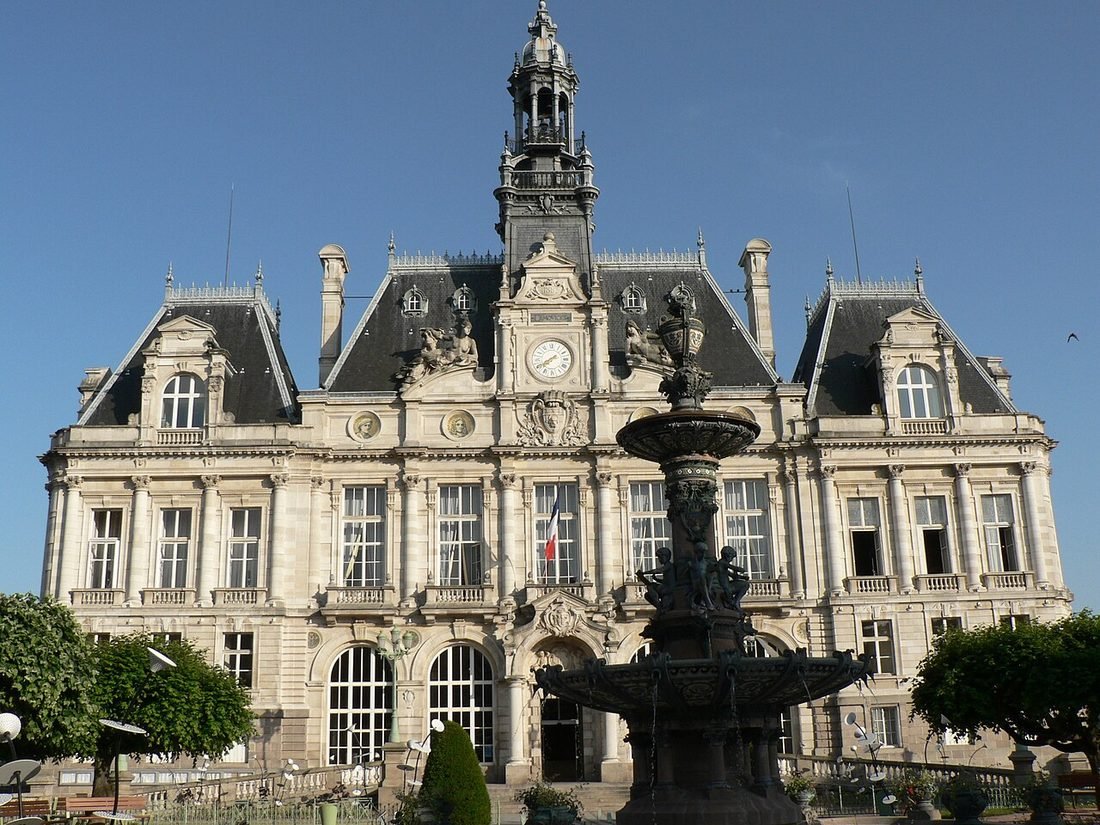
Limoges town hall, photographed in 2006
Limoges town hall, photographed in 2006, was gutted by fire during the unrest of 17 October 2026. Photo: Aratar, CC BY-SA 3.0, via Wikimedia Commons.
Sep–Oct
2026

The lycée revolt Students & schools

17 Sep: teachers strike at a Créteil lycée over staff shortages1 Oct: more than 1,000 secondary schools disrupted; Lecornu calls a crisis meeting6 Oct: about 266,000 marchers (Interior Ministry) vs 450,000 (organisers)8 Oct: ~3,000 substitute teachers sent to the worst-hit schools

Secondary-school pupils blockaded schools over missing teachers, crowded classes and crumbling buildings. Thousands were detained, most of them minors, and a 15-year-old in Lens lost a hand to a police grenade on 5 October. The movement, covered in detail in our French teenagers’ education protests timeline, became the spark for the wider October unrest.

Outcome for protesters: Ongoing
Sep–Dec
2025

‘Block everything’ and a pension U-turn Taxes & living costs

8 Sep: PM François Bayrou loses a confidence vote over debt10 Sep: Bloquons tout day, 175,000 participants and 473 arrests (Interior Ministry)18 Sep: union strike day, ~500,000 to 1 million+14 Oct: Lecornu promises to suspend the 2023 pension reform

The grassroots ‘Block everything’ call, spread on social media, attacked austerity plans and the cost of living. Unions followed with bigger strike days on 18 September and 2 October. Facing a hung parliament, Lecornu, appointed on 9 September, resigning on 6 October and reappointed on 10 October, bought time by suspending the pension reform. The 2026 social security budget, passed by the National Assembly 247–234 on 9 December, froze the retirement age at 62 years and nine months until January 2028.

Outcome for protesters: Partial win
2024–25

Farmers’ tractor revolts Farmers

18 Jan 2024: blockade of the A64 near Toulouse starts a national revolt29 Jan: farmers ring Paris with tractor blockades26 Jan & 1 Feb: Prime Minister Gabriel Attal drops a farm-diesel tax rise and promises simpler rulesNov–Dec 2024: new protests against the EU-Mercosur trade deal

Farmers protested about low incomes, rising costs, paperwork, environmental rules and cheap imports, part of a wider European movement. The government gave quick concessions, but grievances returned: in December 2025 farmers blocked roads again over mass culls of cattle during a lumpy skin disease outbreak.
Outcome for protesters: Partial win
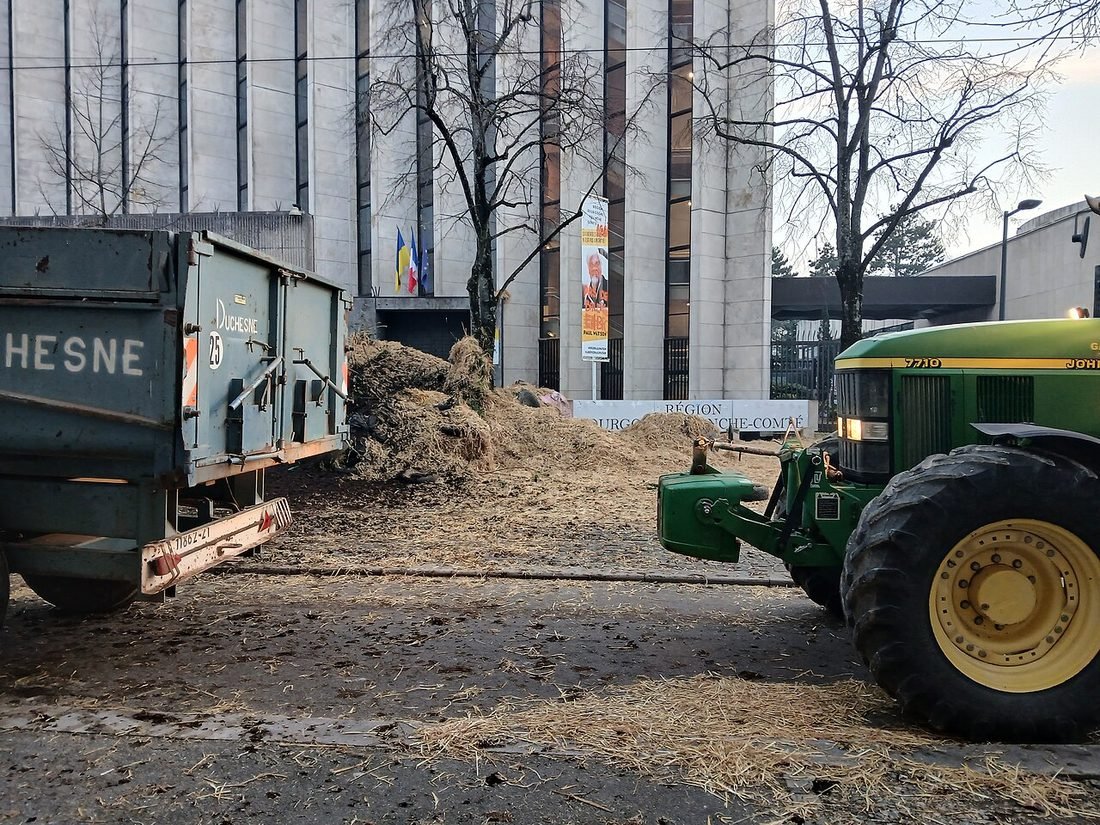
A tractor and dumped straw and slurry outside the regional council in Dijon
A tractor and dumped straw and slurry outside the regional council in Dijon during a farmers’ protest on 11 December 2024. Photo: DarkVador79-UA, CC BY-SA 4.0, via Wikimedia Commons.
Jun–Jul
2023

Riots after Nahel Merzouk is shot by police Riots & policing

27 Jun: a police officer shoots 17-year-old Nahel Merzouk at a traffic stop in NanterreAbout a week of nightly riots nationwideMore than 3,000 arrests; town halls, schools and police stations attackedOfficer charged with voluntary homicide

A bystander’s video contradicted the first police account that the car had driven at officers. The riots echoed 2005 and revived debates about policing, racism and life in the banlieues; they faded within about ten days after a heavy police deployment.

Outcome for protesters: No reform
Jan–Jun
2023

Fourteen strike days against retirement at 64 Pensions & labour

19 Jan: first union strike day7 Mar: 1.28 million marchers (Interior Ministry), the highest official count in decades; unions say 3.5 million16 Mar: government uses Article 49.314 Apr: Constitutional Council validates the reform’s core

All eight main unions marched together for the first time in over a decade, and refineries, rail and rubbish collection were hit. Using 49.3 to avoid a vote turned a pensions dispute into a democratic one; the no-confidence motion of 20 March fell nine votes short. The law raising the age from 62 to 64 took effect in September 2023, only to be suspended in 2025.
Outcome for protesters: Lost, then suspended
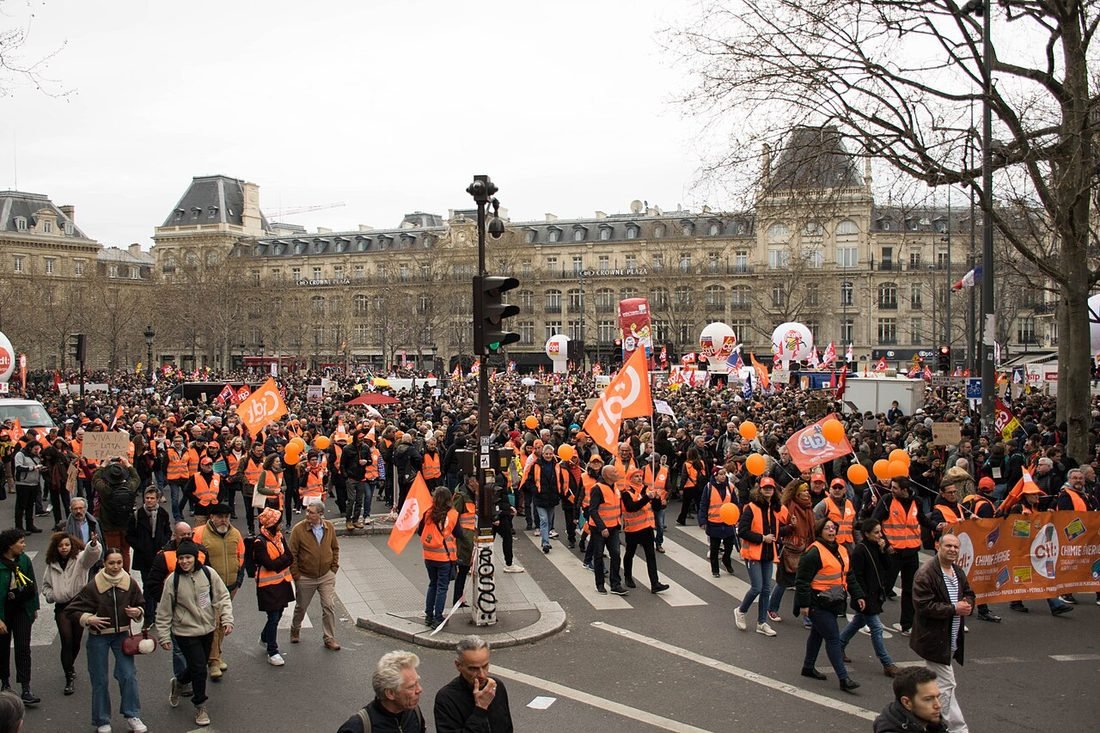
Marchers fill a Paris square
Marchers fill a Paris square during the 28 March 2023 strike day against raising the retirement age to 64. Photo: Jules*, CC BY-SA 4.0, via Wikimedia Commons.
Dec 2019–
Mar 2020

Strike against a universal points-based pension Pensions & labour

5 Dec 2019: open-ended strike begins; Paris metro and trains largely halted for weeks29 Feb 2020: government uses 49.3 on the first reading16 Mar 2020: reform suspended as Covid-19 hits

The plan would have merged 42 pension schemes into one points system. It became one of the longest transport strikes in French history. Covid-19, not the strike, formally ended the bill, but the government never revived it, and returned in 2023 with a simpler age increase instead.

Outcome for protesters: Won (shelved)
Nov 2018–
2019

The Yellow Vests Taxes & living costs

17 Nov 2018: about 290,000 people block roads nationwide1 Dec: Arc de Triomphe vandalised in Paris4–5 Dec: fuel-tax rise suspended, then scrapped10 Dec: Macron announces €100 a month for minimum-wage earners

Named after the high-visibility vests every driver must carry, the gilets jaunes had no leaders or unions and organised on Facebook. They spoke for small-town and rural France, squeezed by fuel costs and closing services. Macron’s Grand débat national in early 2019 followed. Weekly Saturday ‘acts’ continued for months, with many injuries from police rubber bullets, which became a controversy of their own.
Outcome for protesters: Partial win
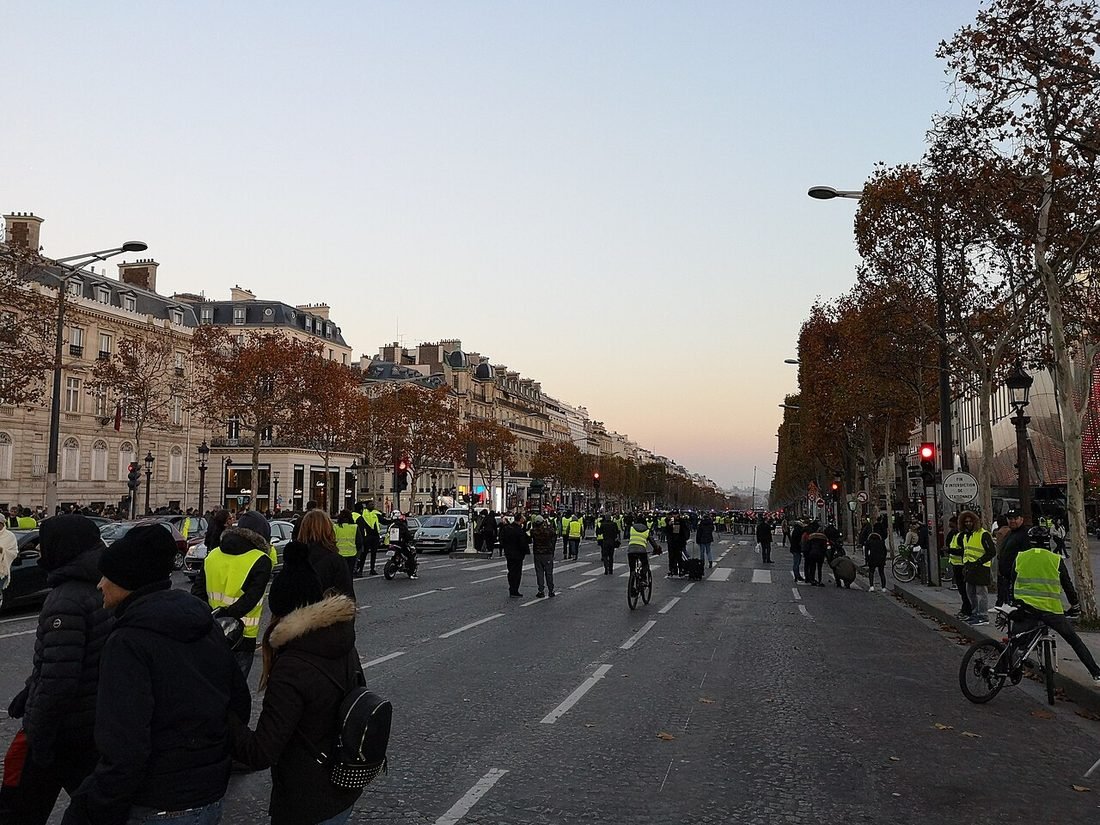
Yellow Vest protesters on the Champs-Élysées on 17 November 2018
Yellow Vest protesters on the Champs-Élysées on 17 November 2018, the movement’s first national day of action. Photo: Chabe01, CC BY-SA 4.0, via Wikimedia Commons.
Mar–Jul
2016

Labour-law protests and Nuit debout Pensions & labour

31 Mar: 390,000 marchers (Interior Ministry); unions 1.2 millionNuit debout occupation begins at Place de la République10 May and 5 Jul: government uses 49.38 Aug: El Khomri labour law enacted

The law let firm-level agreements override some sector rules on working time and eased layoffs. Months of strikes, refinery blockades and night assemblies did not stop it, but the government dropped some measures, such as a cap on unfair-dismissal awards, which Macron later brought in by decree in 2017.

Outcome for protesters: Lost
Sep–Nov
2010

Pension age to 62 Pensions & labour

12 Oct: 1.23 million marchers (Interior Ministry); unions 3.5 millionRefinery strikes cause fuel shortages at thousands of stations9 Nov: law raising the minimum age from 60 to 62 enacted

Eight national strike days under President Sarkozy failed to stop the reform. Lycée pupils joined in October. Unions learned that numbers alone did not move a government with a parliamentary majority, a lesson repeated in 2023.

Outcome for protesters: Lost
Jan–Apr
2006

Students defeat the CPE Students & schools

Jan: PM Dominique de Villepin unveils the First Employment Contract28 Mar: over 1 million marchers (Interior Ministry); unions 3 million31 Mar: law enacted10 Apr: President Chirac announces its replacement

The CPE would have let employers fire under-26s without stating a reason during their first two years. Universities were occupied, including the Sorbonne. Withdrawing a law already on the statute book was a rare retreat, and it badly damaged de Villepin’s presidential ambitions.

Outcome for protesters: Won
Oct–Nov
2005

Three weeks of riots in the banlieues Riots & policing

27 Oct: Zyed Benna, 17, and Bouna Traoré, 15, die in an electricity substation in Clichy-sous-Bois while hiding from police8 Nov: state of emergency declaredNearly 9,000 vehicles burned; nearly 2,900 arrests

The government used a 1955 emergency law, first applied during the Algerian war, to let prefects impose curfews. The riots exposed youth unemployment, segregation, discrimination and hostility between police and young people in poor suburbs. The two officers involved were finally acquitted in 2015.

Outcome for protesters: No reform
Nov–Dec
1995

The great strike against the Juppé plan Pensions & labour

15 Nov: PM Alain Juppé unveils social security and public-sector pension reforms24 Nov: rail strike begins; trains and the Paris metro stop for about three weeksMid-Dec: rail pension changes withdrawn

Millions walked to work through a cold December, yet polls showed many backed the strikers. Juppé kept his health-insurance reforms but dropped the changes to special pension schemes. It became the model of a successful public-sector strike and haunted later governments.

Outcome for protesters: Partial win
Nov–Dec
1986

The Devaquet bill and the death of Malik Oussekine Students & schools

Late Nov: students strike against a reform allowing university selection and higher fees4 Dec: huge march in Paris6 Dec: Malik Oussekine, 22, dies after a beating by police motorcycle officers; minister Alain Devaquet resigns8 Dec: bill withdrawn

Oussekine’s death made the ‘voltigeurs’, two-man motorbike police squads, a symbol of brutality, and they were disbanded.

Outcome for protesters: Won
Jun–Jul
1984

A million march for private schools Students & schools

24 Jun: about a million people march in Paris against the Savary bill to fold Catholic schools into public education12 Jul: President Mitterrand withdraws the bill17 Jul: Prime Minister Pierre Mauroy resigns

It was one of the largest marches in French history and a reminder that protest is not only a weapon of the left. It forced a Socialist government to drop a flagship promise.

Outcome for protesters: Won
May–Jun
1968

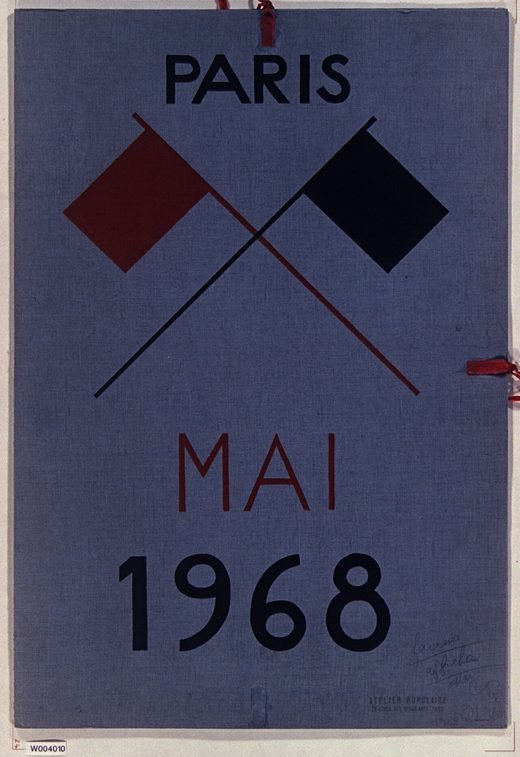
May 1968: students, then the whole country Students & schools

3 May: police clear the Sorbonne10–11 May: night of the barricades in the Latin Quarter13 May: general strike; an estimated 7–10 million eventually stop work27 May: Grenelle agreements raise the minimum wage 35%30 May: de Gaulle dissolves parliament

A protest about university rules became a revolt against authority in families, workplaces and the state. Workers rejected Grenelle at first, but the strikes faded in June, and de Gaulle’s party won a landslide at elections on 23 and 30 June. He resigned in April 1969 after losing a referendum. Its cultural legacy, from sexual freedom to workplace rights, outlasted the political defeat.
Outcome for protesters: Partial win
A ‘Paris Mai 1968’ poster cover
A ‘Paris Mai 1968’ poster cover from the period of the student and worker revolt. Image: unknown author, CC0, via Wikimedia Commons.
17 Oct
1961

The Paris massacre of Algerians Riots & policing

Tens of thousands of Algerians march peacefully against a discriminatory curfewPolice under prefect Maurice Papon charge the marchDead estimated from several dozen to more than 200; some thrown into the Seine

Historians often describe it as the deadliest repression of a street demonstration in post-war Western Europe, and it was officially hidden for decades. President Hollande acknowledged the ‘bloody repression’ in 2012, and Macron called it ‘inexcusable crimes’ in 2021. Its 65th anniversary fell on the day of the 2026 riots.

Outcome for protesters: No reform
May–Jun
1936

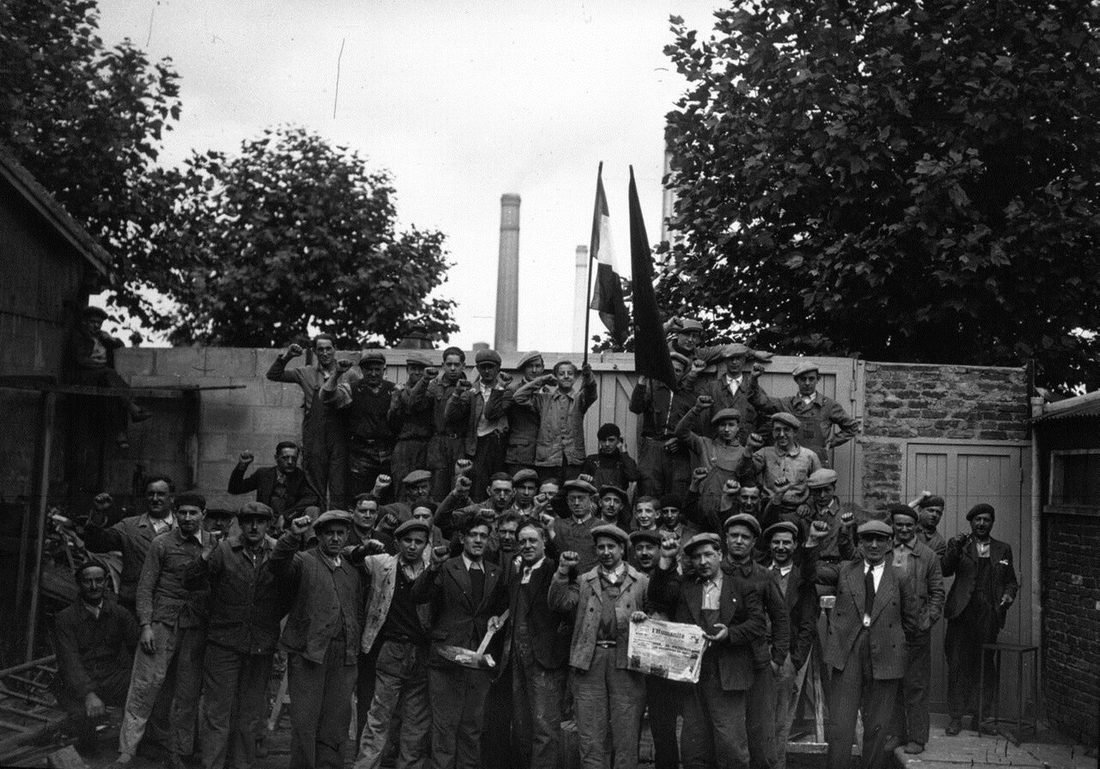
Popular Front strikes win paid holidays Pensions & labour

3 May: Popular Front wins electionsJune: about 2 million workers strike, many occupying factories7–8 Jun: Matignon agreements20–21 Jun: two weeks’ paid holiday and the 40-hour week become law

The joyful factory occupations, often with music and dancing, pushed Léon Blum’s new government further and faster. Wage rises of 7–15%, collective agreements and elected shop stewards followed. The first ‘congés payés’ summer, with workers seeing the sea for the first time, became a national legend.
Outcome for protesters: Won
Striking metalworkers occupy a factory in the Paris suburbs in June 1936,
Striking metalworkers occupy a factory in the Paris suburbs in June 1936, during the Popular Front strike wave. Photo: Agence Meurisse, public domain, via Wikimedia Commons / Gallica.
Mar–May
1871

The Paris Commune Revolution & regime change

18 Mar: Parisians resist the army’s seizure of the city’s cannon28 Mar: Commune proclaimed21–28 May: ‘Bloody Week’ as government troops retake Paris

After defeat by Prussia, Paris set up its own radical government, separating church and state and running workshops. Its suppression killed thousands of Communards, and many more were jailed or deported. The Commune became a founding myth for socialists worldwide.

Outcome for protesters: Crushed
Feb
1848

February Revolution and the Second Republic Revolution & regime change

22–24 Feb: banned political banquets lead to barricades in Paris24 Feb: King Louis-Philippe abdicates; republic proclaimed2 Mar: universal male suffrage27 Apr: slavery abolished in French colonies

The revolution sparked uprisings across Europe. But the closure of the national workshops led to the June Days revolt, which the army crushed, and the republic ended with Louis-Napoléon Bonaparte’s coup in 1851.

Outcome for protesters: Won, then reversed
Jul
1830

Three Glorious Days Revolution & regime change

25 Jul: Charles X issues ordinances muzzling the press and dissolving parliament27–29 Jul: Parisians fight troops behind barricades2 Aug: Charles X abdicates; Louis-Philippe becomes king

Three days of street fighting ended the restored Bourbon monarchy and gave France a more liberal constitutional king. Delacroix’s ‘Liberty Leading the People’ was painted in its memory.

Outcome for protesters: Won
1789

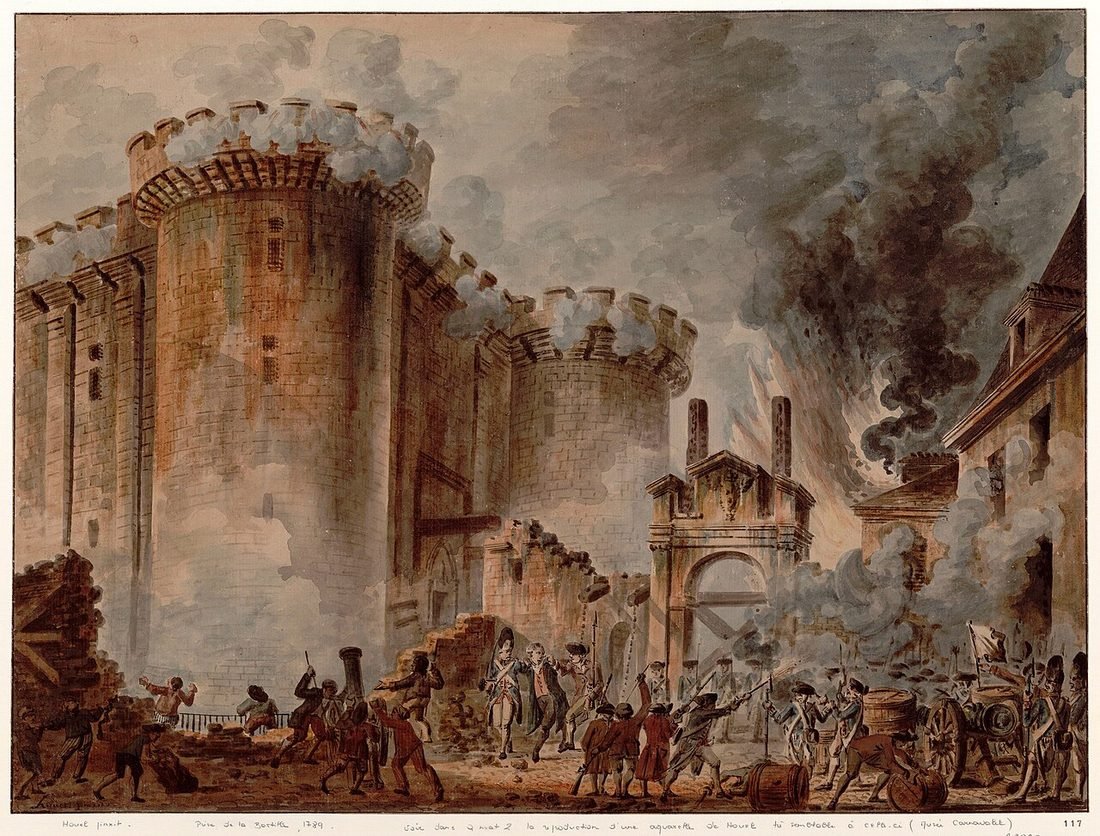
The French Revolution begins Revolution & regime change

5 May: Estates-General meets at Versailles20 Jun: Tennis Court Oath14 Jul: storming of the Bastille4 Aug: feudal privileges abolished26 Aug: Declaration of the Rights of Man and of the Citizen5–6 Oct: women’s march on Versailles

A bankrupt monarchy, unfair taxes and the price of bread drove crowds into the streets. The revolution abolished the monarchy in September 1792 but also brought the Terror and decades of war. Its legacy, including the idea that the people may rise against an unjust state, shapes how French people see protest today.
Outcome for protesters: Won
The storming of the Bastille on 14 July 1789
The storming of the Bastille on 14 July 1789, painted by Jean-Pierre Houël the same year. Image: Jean-Pierre Houël, public domain, via Wikimedia Commons.
Advertisement

Did the Protests Work? A Scorecard

Verdicts are judged against each movement’s main demand, not every grievance it raised.

YearMovementMain grievanceWhat happenedVerdict
2026Lycée revolt and 17 OctoberSchools, living costs, public servicesCurfews, 2,400 arrests; demands unresolvedOngoing
2025Bloquons tout and union strikesAusterity, purchasing power2023 pension reform suspendedPartial win
2024Farmers’ revoltIncomes, rules, importsDiesel tax rise dropped; disputes continuePartial win
2023Pension reform protestsRetirement age 62 to 64Passed by 49.3; suspended in 2025Lost, then suspended
2023Nahel Merzouk riotsPolice killing of a teenagerOfficer charged; no policing reformNo reform
2019–20Universal pension strikePoints-based pensionReform shelvedWon
2018Yellow VestsFuel tax, cost of livingTax rise scrapped; €100 wage boostPartial win
2016Labour law, Nuit deboutJob protectionsPassed by 49.3Lost
2010Pension age 60 to 62Retirement agePassedLost
2006Anti-CPEYouth job insecurityLaw replacedWon
2005Banlieue riotsPolice, exclusionState of emergencyNo reform
1995Juppé plan strikesPublic-sector pensionsPension changes droppedPartial win
1986Devaquet protestsUniversity selection and feesBill withdrawnWon
1984Private-school marchCatholic schools’ statusBill withdrawn; PM resignedWon
1968May 68Authority, wages, universities35% minimum-wage rise; Gaullist landslidePartial win
1936Popular Front strikesWages, hours, holidaysPaid holidays, 40-hour weekWon
1789French RevolutionPrivilege, taxes, breadMonarchy ended in 1792Won

How Big Were They?

Big French protest days: official count vs organisers’ count (millions)Interior MinistryUnions / organisers (where published)7 Mar 2023 (pensions)1.28m3.5m12 Oct 2010 (pensions)1.23m3.5m28 Mar 2006 (CPE)1.055m3m17 Oct 2026 (living costs)0.55m0.8m31 Mar 2016 (labour law)0.39m1.2m6 Oct 2026 (lycées)0.266m0.45m17 Nov 2018 (Yellow Vests)0.29mno single organisers’ figure10 Sep 2025 (Bloquons tout)0.175mno single organisers’ figureSources: Interior Ministry and union (CGT/intersyndicale) figures as reported at the time. May 1968 is excluded: it was a strike of 7–10 million, not a one-day march.
Official and union counts routinely differ by a factor of two or three, so compare like with like. On the ministry’s own figures, 17 October 2026 was the biggest protest day since the 2023 pension fight, but still well under half its peak.

Why Do Protests Have Such Influence in France?

History

A revolutionary tradition

The Republic was born in street uprisings, so protest is widely seen as legitimate even when its tactics are not.

Organisation

Unions that can stop the country

Union membership is low, but strikes in rail, energy, schools and refineries make a dispute felt in daily life.

Social model

Pensions and public services

Retirement, healthcare, schools and job protections are seen as rights, so cuts provoke opposition far beyond those directly affected.

Politics

A centralised state and 49.3

National reforms become tests of the president’s authority, and forcing them through without a vote moves the fight to the street.

Inequality

Banlieues and the periphery

The 2005 and 2023 riots and the Yellow Vests showed how divides between suburbs, small towns and big cities feed anger.

New tools

Leaderless movements

Facebook in 2018 and messaging apps in 2025–26 let movements mobilise without unions, which also makes them harder to negotiate with or police.

Policing: whether localised curfews and new tactics stop the looting without turning peaceful marchers against the police, as in 2005 and 2023. The street: Yellow Vest groups have called a new day of action on 24 October. Schools: the government promised education proposals by the end of October. Money: the 2027 budget, with a €54 billion adjustment, is before a divided parliament, and shopkeepers want compensation for losses estimated at several hundred million euros. Politics: with a presidential election due in spring 2027, every party is reading the unrest for votes.

Advertisement

Explore More Timelines

People Also Ask

Why is France rioting right now?
School protests in September 2026 grew into nationwide marches over living costs and public services. On 17 October smaller violent groups looted shops and attacked town halls, which turned a mostly peaceful day into the worst unrest in years.
Who is the French prime minister in 2026?
Sébastien Lecornu, appointed in September 2025 and reappointed in October 2025 after briefly resigning. Emmanuel Macron is president until the spring 2027 election.
Did protests stop the French pension reform?
Not in 2023: the reform passed despite 14 strike days. But political pressure led the Lecornu government to suspend it in the 2026 social security budget, passed in December 2025.
When did the Yellow Vest movement start?
On 17 November 2018, with road blockades across France against a fuel-tax rise. Weekly Saturday protests, numbered as ‘acts’, continued into 2019.
When was the French Revolution?
It is usually dated from 1789, when the Estates-General met in May and crowds stormed the Bastille on 14 July, to 1799, when Napoleon Bonaparte seized power. The monarchy was abolished in September 1792.

Frequently Asked Questions

What is happening in France in October 2026?
A month of school protests over teacher shortages and run-down buildings widened into nationwide demonstrations over living costs and public services. On 17 October between 550,000 people (Interior Ministry) and 800,000 (organisers) marched. Some cities saw looting and arson, including the burning of Limoges town hall, and about 2,400 people were arrested over the weekend.
Why are people protesting in France in 2026?
The movement began with secondary-school pupils protesting about teacher shortages, overcrowded classes and poor buildings in September 2026. Unions, left-wing groups and Yellow Vest activists joined. Anger grew over prices: inflation reached 3.1% in September, with energy up 21.3% in a year, while the government’s 2027 budget plans a €54 billion fiscal adjustment.
How many people were arrested in the October 2026 French riots?
Early tallies on 17 October put arrests at about 1,200. By 19 October the government said nearly 2,400 people had been arrested over the weekend nationwide, with about 1,000 police officers and gendarmes injured. The prime minister said at least 3,000 businesses had been damaged or looted.
Did Interior Minister Laurent Nuñez resign?
He offered to resign on 18 October 2026, saying he was responsible for what happened and that authorities had ‘lost control’ in some cities. On 19 October President Macron refused, citing the need for continuous command of the security forces, but acknowledged failures in anticipation and intelligence and ordered new policing tactics.
Are there curfews in France?
On 19 October 2026 Prime Minister Sébastien Lecornu told prefects to impose ‘very limited’ and localised night curfews in areas hit by looting, with Paris districts, Lyon, Marseille and Lille among cities discussed. The town of Denain had already ordered a 9pm-6am curfew until 25 October, and Marseille banned gatherings on 19 October.
What happened to Limoges town hall?
During the 17 October 2026 unrest, attackers broke windows and set fire to Limoges’s 19th-century Hôtel de Ville. The roof and clock tower collapsed and the building was largely destroyed. Mayor Guillaume Guérin called it a deliberate, premeditated attack and said people inside had feared for their lives.
Why do French people protest so much?
Several reasons combine: a revolutionary tradition that treats the street as legitimate, unions able to stop transport and schools, a strong attachment to pensions and public services, a centralised state where reforms become tests of presidential authority, and deep regional and social inequalities. Many big reforms have also been pushed through with Article 49.3, which fuels anger.
What was the biggest protest in French history?
By sheer numbers, May 1968 is usually counted as the largest: an estimated seven to ten million workers were on strike at its peak. In single-day marches, the Interior Ministry’s record count in recent decades was 1.28 million on 7 March 2023 against pension reform; unions claimed 3.5 million that day.
What was the 2023 French pension reform?
It raised the minimum retirement age from 62 to 64 in steps and sped up the rise in contribution years needed for a full pension. The government forced it through the National Assembly with Article 49.3 on 16 March 2023, survived a no-confidence vote by nine votes, and the Constitutional Council validated its core on 14 April 2023.
Was the 2023 pension reform cancelled?
Not cancelled, but suspended. Prime Minister Lecornu promised a suspension in October 2025, and the 2026 social security budget, adopted in December 2025, froze the legal retirement age at 62 years and nine months and paused the rise in required quarters until January 2028, after the 2027 presidential election.
What is Article 49.3?
Article 49.3 of the French Constitution lets the government adopt a bill without a vote unless the National Assembly passes a motion of no confidence within 48 hours. Governments used it for the 2016 labour law, the 2023 pension reform and recent budgets, and each use has become a flashpoint for protesters who see it as bypassing parliament.
What were the Yellow Vest protests about?
The gilets jaunes began on 17 November 2018 against a planned rise in fuel taxes, with about 290,000 people blocking roads that day by official count. The movement widened into anger about wages, rural decline and Macron’s policies. The tax rise was scrapped in December 2018 and Macron announced a €100 monthly boost for minimum-wage earners.
What was the Bloquons tout movement?
‘Block everything’ was a social-media call for a nationwide shutdown on 10 September 2025 against austerity plans. The Interior Ministry counted 175,000 participants, about 550 gatherings and 262 blockades, with 473 arrests. Unions followed with a much larger strike day on 18 September, put at between 500,000 and over one million people.
What happened in May 1968 in France?
Student protests in Paris in early May, met by police charges and the night of the barricades on 10-11 May, triggered a general strike from 13 May. The Grenelle agreements on 27 May raised the minimum wage by 35%. De Gaulle dissolved parliament on 30 May and won a landslide in June elections.
Which French protests made the government back down?
Clear retreats include the 1984 private-school bill, the 1986 Devaquet university reform, the 1995 public-sector pension changes, the 2006 CPE youth contract, the 2018 fuel-tax rise and the 2019-20 universal pension plan. The 2010 and 2023 pension reforms and the 2016 labour law passed despite mass protests.
What was the CPE in 2006?
The Contrat première embauche was a contract for workers under 26 that let employers dismiss them without giving a reason during the first two years. Students and unions protested for weeks; the Interior Ministry counted over one million marchers on 28 March 2006. The law was passed on 31 March but President Chirac announced its replacement on 10 April.
What caused the 2005 French riots?
On 27 October 2005 two teenagers, Zyed Benna and Bouna Traoré, died in an electricity substation in Clichy-sous-Bois while hiding from police. Riots spread to suburbs nationwide for about three weeks. The government declared a state of emergency on 8 November. Nearly 9,000 vehicles were burned and nearly 2,900 people arrested.
What happened after the death of Nahel Merzouk?
On 27 June 2023 a police officer shot 17-year-old Nahel Merzouk at a traffic stop in Nanterre. A video contradicted the initial police account. About a week of riots followed across France, with town halls, schools and police stations attacked and more than 3,000 arrests. The officer was charged with voluntary homicide.
What happened on 17 October 1961?
Tens of thousands of Algerians marched peacefully in Paris against a curfew imposed on them during the Algerian war. Police under prefect Maurice Papon attacked the march; many were beaten, thrown into the Seine or killed. Estimates of the dead range from several dozen to more than 200. France officially acknowledged the repression in 2012.
What did the 1936 strikes achieve?
After the Popular Front won elections in May 1936, about two million workers struck and occupied factories. The Matignon agreements of 7-8 June gave wage rises and collective bargaining, and laws of 20 and 21 June introduced two weeks of paid holiday and the 40-hour week.
Is it safe to travel to France during the protests?
Most of France functions normally, but demonstrations can disrupt transport and turn violent in city centres. Check your government’s travel advice, follow local news and prefecture announcements, avoid protest routes and gatherings, and allow for curfews or closures, as when the Louvre closed after the October 2026 riots.
What happens next in the 2026 French protests?
Yellow Vest groups called a new day of action on Saturday 24 October 2026. The government must decide on curfews, compensation for looted businesses and the 2027 budget, which parliament is debating, while the prime minister had promised education proposals by the end of October.

Conclusion: The Street Still Has a Vote

From the Bastille to Limoges town hall, French protest has toppled kings, won paid holidays, killed unpopular reforms and, just as often, failed. The common thread is a fight over who bears the cost of change and whether those in power listen.

The October 2026 unrest is best read not as an isolated riot but as the latest round of that argument. Its legacy will depend on whether the government can answer the grievances of peaceful protesters while stopping the violence that has overshadowed them.

Related AiTimeline Stories

⚠️ Editorial Note

This is a selected timeline of major protest movements, not a list of every French demonstration. Turnout figures differ sharply between the Interior Ministry and organisers; we give both where available. Protests, strikes and riots are different things, and violence by some should not be attributed to all participants. The October 2026 entries reflect reporting by Reuters, AP, Euronews and others available on 19 October 2026 and may change.

Advertisement
From Tiger Shroff to Rakesh Roshan: Timeline of Shooting Attacks on Bollywood Stars and Global Celebrities Euro Launch Anniversary: Survival, Crisis and the Future of Europe’s Currency
→
Next Article