Euro Launch Anniversary: Survival, Crisis and the Future of Europe’s Currency
Euro timeline from the 1999 launch and 2002 cash to the Greek debt crisis, Draghi's pledge, Bulgaria joining in 2026, ECB rate rises and the digital euro.
Latest Story
The euro was launched on 1 January 1999 and became everyday cash on 1 January 2002. Since then it has survived a global financial crisis, a sovereign debt crisis that nearly pushed Greece out, a pandemic and an inflation shock, and it is still growing: Bulgaria became the 21st member on 1 January 2026. This euro launch anniversary timeline runs newest first, from the October 2026 debt worries, the ECB’s 2026 rate rises and the digital euro back through Draghi’s ‘whatever it takes’ and the 2002 cash changeover to the Maastricht Treaty.
💡 Short Answer
The euro was launched as an electronic currency in 11 countries on 1 January 1999, and euro banknotes and coins entered circulation in 12 countries on 1 January 2002. It survived the 2008 financial crisis, the 2010–15 debt crisis, COVID-19 and the 2022 inflation surge. Bulgaria made it 21 members in January 2026. The ECB raised rates twice in 2026, and a digital euro could be issued from 2029 if EU law is passed.
Euro Anniversary: Key Questions
The Euro’s Story in Ten Points
- Two birthdays: the euro launched on 1 January 1999 and became cash on 1 January 2002.
- From 11 to 21: ten countries have joined since 1999, most recently Croatia (2023) and Bulgaria (2026).
- No exits: no country has ever left the euro, though Greece came close in 2015.
- Design flaw exposed: the debt crisis showed a shared currency without a shared budget or bank backstop was fragile.
- Seven rescues: Greece (three times), Ireland, Portugal, Spain’s banks and Cyprus received help from 2010 to 2015.
- Three words: Draghi’s 2012 ‘whatever it takes’ ended the acute crisis without the ECB spending a euro.
- From minus to plus: the deposit rate went from −0.50% (2019) to a record 4.00% (2023).
- 2026 hikes: an energy shock pushed inflation to 3.8% and the ECB raised rates in June and September.
- Digital euro: Parliament backed the law in July 2026; first issue could come in 2029.
- Fiscal risk: France’s budget fight is the main debt worry of autumn 2026, but officials see no new crisis.
Euro Timeline: Latest Developments First
Newest first. Each entry is tagged by theme and ends with why it matters. Use the filter to follow one thread.
Follow one thread of the euro’s story: crises, ECB decisions, new members, cash and digital money, or the treaties behind it.
–
Debt worries return, with France in the spotlight Crisis
Speaking to Reuters at the IMF meetings in Bangkok, Dombrovskis said governments must stay prudent as sovereign and corporate borrowing costs and inflation expectations rise, and urged France to adopt its budget on time to signal stability. He noted that Europe’s long average debt maturity gives governments time before higher yields feed into interest bills. Higher yields are not a repeat of 2010–12: the ECB now has crisis tools such as its Transmission Protection Instrument, and no country has lost market access.
2026
The ECB raises rates again as an energy shock hits ECB policy
Renewed US–Iran hostilities and the wider Middle East conflict pushed oil and gas prices up, and staff projections showed inflation staying well above target for an extended period. All Governing Council members backed the September hike, according to its published account, though they stressed the response should stay proportionate. Staff see growth of only 0.9% in 2026. After cutting rates eight times from June 2024 to June 2025, the ECB has turned again to defending its 2% target.
2026
Europeans vote on new euro banknotes Cash & digital money
The ‘European culture’ shortlist features figures such as Marie Curie, Beethoven and Leonardo da Vinci; ‘Rivers and birds’ features motifs such as a kingfisher and a white stork. The current notes, with their bridges, windows and gateways, will stay legal tender. The ECB also says cash remains essential even as it prepares a digital euro.
Jul 2026
The digital euro law moves forward Cash & digital money
The Parliament’s version provides for online and offline digital euros, cash-like privacy for offline payments and holding limits to protect bank deposits. On 6 October 2026 ECB Executive Board member Piero Cipollone said that, if the law is concluded by the end of 2026, the ECB aims to be ready for a first issuance in 2029, with a 12-month pilot involving 36 payment service providers starting in the second half of 2027.
2026
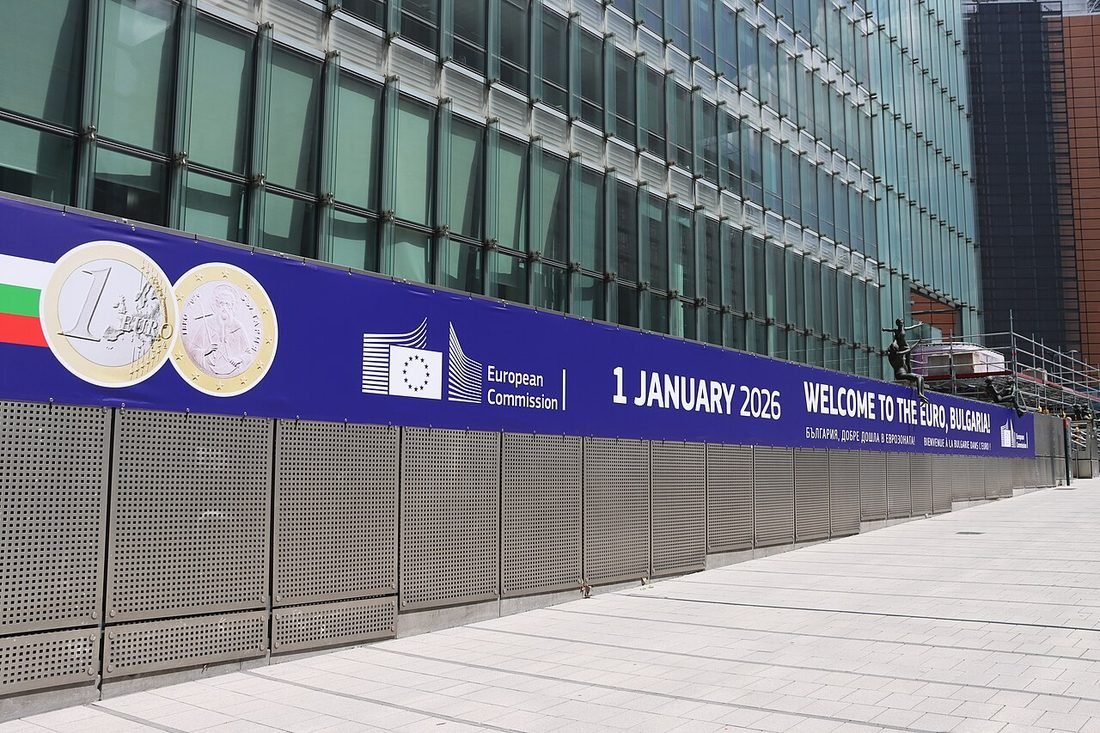
Bulgaria becomes the 21st euro member New members
The lev had been tied to the Deutsche Mark under a currency board since 1997 and then to the euro, so the rate did not change. Bulgaria entered the ERM II waiting room in July 2020. Supporters pointed to lower transaction costs and deeper ties with European markets; critics, including protesters in Sofia, feared price rises and the loss of the last trace of national monetary policy, which the currency board had already given up.
The digital euro moves to its next phase Cash & digital money
The ECB stressed that it would decide whether to issue a digital euro only after EU law is adopted. It also confirmed basic use would be free for individuals and that the design would let people pay offline, without the ECB seeing who paid whom.
2023
Inflation, war and ten straight rate rises ECB policy
The ECB had kept its deposit rate below zero from 2014 to 2022. It raised rates by 4.5 points in 14 months, its fastest tightening ever, and created the Transmission Protection Instrument in July 2022 so that spreads for countries such as Italy did not spiral. Households with variable-rate mortgages in countries such as Spain and Ireland felt the hikes much faster than those on fixed rates in Germany and France.
2023
Croatia joins as the 20th member New members
Croatia’s entry ended an eight-year pause in enlargement. Shops had to show prices in both kuna and euros for a year, and the government blamed some retailers for unjustified price rises around the changeover, a familiar complaint in many euro adoptions.
2021
COVID-19 and the first big joint EU borrowing Crisis
Lockdowns caused the deepest recession in the euro’s history. This time the response came fast: the ECB bought government and corporate bonds on a huge scale, and the EU agreed for the first time to borrow large sums jointly on markets to fund grants and loans for member states, with Italy and Spain the biggest recipients. NextGenerationEU was presented as a one-off, not a permanent fiscal union.
2019
Negative rates and quantitative easing ECB policy
With inflation stuck close to zero and fears of deflation, Draghi’s ECB used tools previously seen as off limits. Critics, especially in Germany, argued that negative rates hurt savers and banks and that bond buying amounted to financing governments; the German Constitutional Court challenged the programme in 2020.
2015
Greece’s ‘Grexit’ summer Crisis
Greece missed an IMF repayment on 30 June, and euro leaders openly discussed a temporary exit. Tsipras ultimately accepted tougher conditions than those voters had rejected, splitting his party. Lithuania joined the euro on 1 January of the same year, showing that the club was growing even as it struggled to hold on to Greece. Greece left its last rescue programme in August 2018.
2012
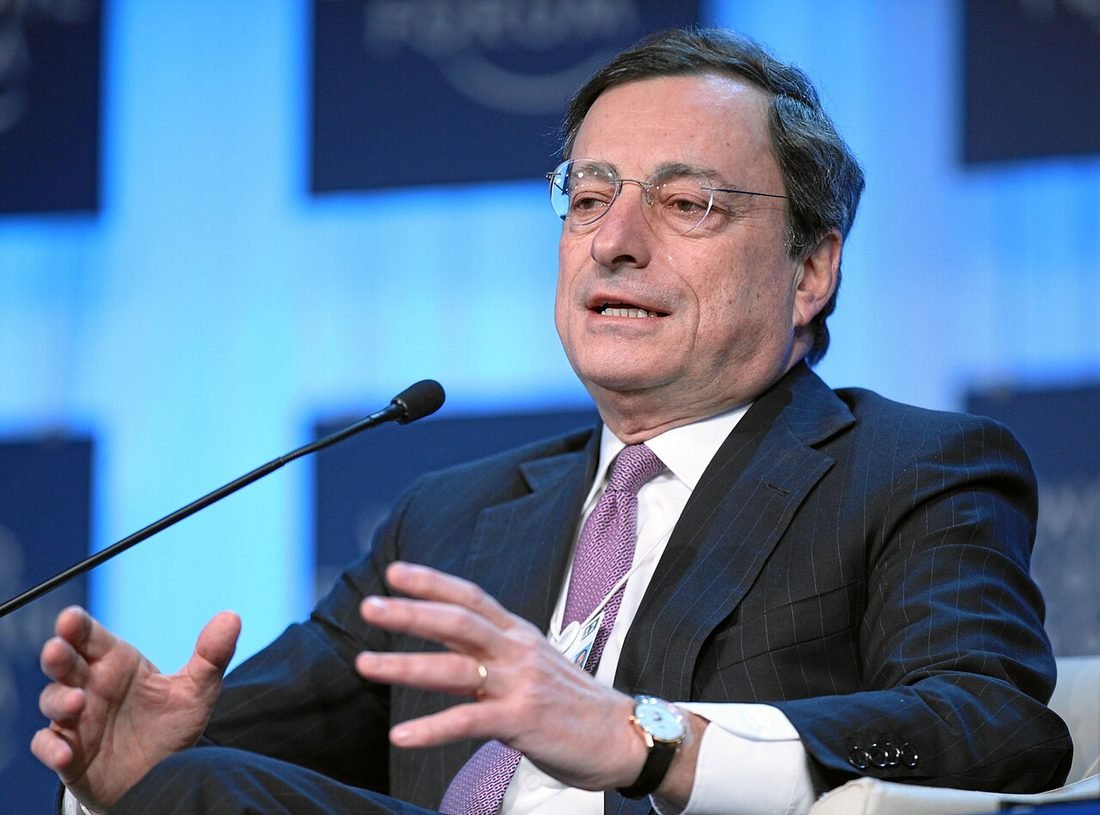
‘Whatever it takes’ ECB policy
Spanish and Italian borrowing costs had climbed above 6–7%, levels that had forced Greece, Ireland and Portugal into rescue programmes. Draghi’s words, backed by the OMT promise of unlimited bond purchases for countries in an ESM programme, broke the panic. OMT was never used. Leaders also agreed in June 2012 to build a banking union, with the ECB supervising the largest banks from November 2014.
2013
The sovereign debt crisis Crisis
The crisis exposed a design flaw: countries shared a currency and a central bank but not a budget, a banking safety net or a way to handle a government that could not pay. Rescue loans came with harsh austerity. Unemployment rose above 27% in Greece and above 26% in Spain, and mass protests filled squares such as Syntagma in Athens. Europe built new institutions in response, first the temporary EFSF in 2010, then the permanent ESM.

2009
The global financial crisis reaches Europe Crisis
European banks had loaded up on US mortgage securities and lent heavily into property booms in Ireland and Spain. Governments rescued banks, and the cost moved onto their own balance sheets. The euro itself held up, but the recession set the stage for the sovereign debt crisis.
2002
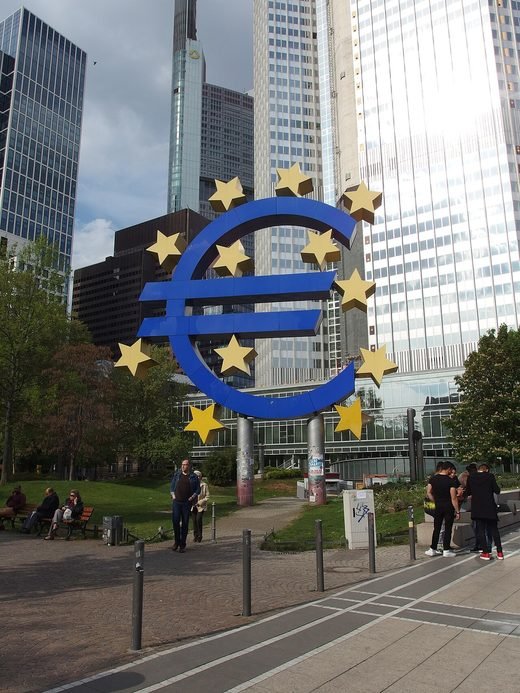
Euro banknotes and coins arrive Cash & digital money
It was the biggest cash changeover in history. Banks and shops were ‘front-loaded’ with euros in late 2001, and citizens could buy starter kits of coins in December. Within a week more than half of all cash payments were made in euros, and by 1 March more than 6 billion national banknotes and nearly 30 billion coins had been withdrawn. Many people felt prices rose; official statistics put the changeover effect at about 0.1–0.3 percentage points of inflation, mostly in cafés, restaurants and services.
2000
A weak start for the new currency New members
The euro lost nearly 30% against the dollar in its first two years as money flowed into the booming US economy. The coordinated intervention, and later ECB purchases, signalled that the big central banks would not let the slide continue. Sweden would also vote no, in 2003.
1999
The euro is born Treaties & politics
The euro first existed only in bank accounts, financial markets and electronic payments, while national notes and coins remained in use as fixed subdivisions of the euro. Wim Duisenberg was the ECB’s first president. The UK, Denmark and Sweden stayed out; Greece did not yet meet the criteria.
Leaders name the currency ‘euro’ Treaties & politics
The name replaced the ‘ecu’, the basket unit used since 1979. The Stability and Growth Pact, pushed by Germany, kept the 3% of GDP deficit limit binding after countries joined, though France and Germany themselves breached it in 2003.
1993
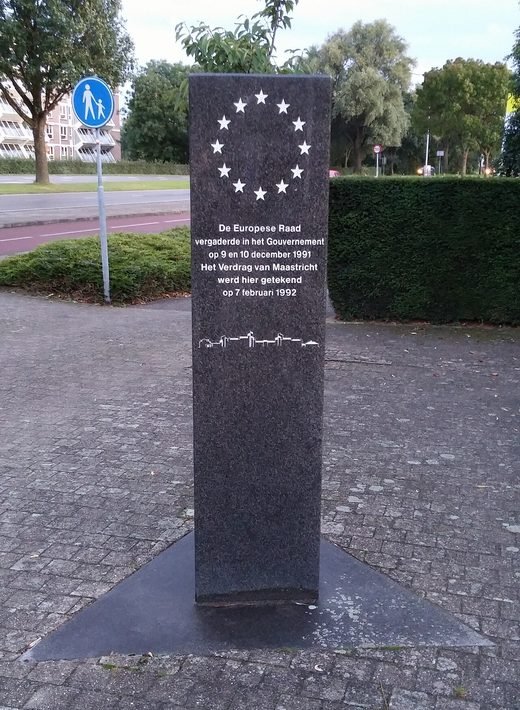
The Maastricht Treaty sets the course Treaties & politics
The treaty laid down the convergence criteria: low inflation, a budget deficit below 3% of GDP, public debt below 60% of GDP or falling, a stable exchange rate and low long-term interest rates. The 1992–93 currency turmoil, when speculators broke several currency pegs, convinced many leaders that only a single currency could end such attacks.
1989
The long road to monetary union Treaties & politics
The first plan foundered on the collapse of the Bretton Woods system and the oil shocks of the 1970s. The EMS kept European currencies within bands around one another, and the fall of the Berlin Wall in November 1989 gave new political urgency to tying a reunified Germany into a common European currency.
The Euro Against the Dollar Since 1999
Who Uses the Euro: 21 Members and Their Old Currencies
Fixed conversion rates set on entry, which can never change.
| Joined | Country | Old currency | Units per €1 |
|---|---|---|---|
| 1999 | Germany | Deutsche Mark (DEM) | 1.95583 |
| 1999 | France | French franc (FRF) | 6.55957 |
| 1999 | Italy | Italian lira (ITL) | 1936.27 |
| 1999 | Spain | Spanish peseta (ESP) | 166.386 |
| 1999 | Netherlands | Dutch guilder (NLG) | 2.20371 |
| 1999 | Belgium | Belgian franc (BEF) | 40.3399 |
| 1999 | Luxembourg | Luxembourg franc (LUF) | 40.3399 |
| 1999 | Austria | Austrian schilling (ATS) | 13.7603 |
| 1999 | Portugal | Portuguese escudo (PTE) | 200.482 |
| 1999 | Finland | Finnish markka (FIM) | 5.94573 |
| 1999 | Ireland | Irish pound (IEP) | 0.787564 |
| 2001 | Greece | Greek drachma (GRD) | 340.75 |
| 2007 | Slovenia | Slovenian tolar (SIT) | 239.64 |
| 2008 | Cyprus | Cypriot pound (CYP) | 0.585274 |
| 2008 | Malta | Maltese lira (MTL) | 0.429300 |
| 2009 | Slovakia | Slovak koruna (SKK) | 30.126 |
| 2011 | Estonia | Estonian kroon (EEK) | 15.6466 |
| 2014 | Latvia | Latvian lats (LVL) | 0.702804 |
| 2015 | Lithuania | Lithuanian litas (LTL) | 3.4528 |
| 2023 | Croatia | Croatian kuna (HRK) | 7.5345 |
| 2026 | Bulgaria | Bulgarian lev (BGN) | 1.95583 |
Found old Marks, francs or lira in a drawer? Convert any of the 21 currencies the euro replaced at its official, irrevocably fixed rate.
–
The Debt Crisis Rescues
Headline programme sizes; not every euro committed was drawn.
| Date | Country | Rescue | Lenders |
|---|---|---|---|
| May 2010 | Greece (1st) | €110 billion | Euro countries + IMF |
| Nov 2010 | Ireland | €85 billion | EFSF/EFSM, bilateral, IMF, Irish funds |
| May 2011 | Portugal | €78 billion | EFSF/EFSM + IMF |
| Mar 2012 | Greece (2nd) | ~€130 billion + private write-down | EFSF + IMF |
| Jul 2012 | Spain (banks) | Up to €100 billion (about €41 billion used) | EFSF/ESM |
| Mar 2013 | Cyprus | €10 billion + bank bail-in | ESM + IMF |
| Aug 2015 | Greece (3rd) | Up to €86 billion | ESM |
ECB Interest Rates: Key Turning Points
| Date | ECB deposit rate | Why |
|---|---|---|
| Jan 1999 | 2.00% | Euro launched |
| Oct 2000 | 3.75% | Weak euro, rising oil prices |
| Jul 2008 | 3.25% | Last pre-crisis hike |
| May 2009 | 0.25% | Global financial crisis |
| Jun 2014 | −0.10% | First negative rate, deflation fears |
| Sep 2019 | −0.50% | Record low |
| Sep 2023 | 4.00% | Record high after 10.6% inflation |
| Jun 2025 | 2.00% | End of eight cuts |
| Sep 2026 | 2.50% | Second hike of 2026 on energy shock |
How the Euro Survived: Four Lessons
A central bank is not enough
One interest rate cannot fix 21 different budgets, banking systems and labour markets. National policies still matter.
Credible promises work
The ECB’s 2012 pledge changed market expectations before a single bond was bought. Words backed by tools can stop a panic.
Crises rebuild the club
The ESM, banking union, the Transmission Protection Instrument and NextGenerationEU were all born in emergencies.
Growth is not proof
New members show the euro still attracts, but debt, low productivity and public distrust remain unsolved.
The Future of the Euro: What Comes Next?
Digital money: EU institutions aim to finish the digital euro law by the end of 2026. If they do, a pilot starts in the second half of 2027 and a first issue could follow in 2029, but the ECB will decide only after the law is passed. Privacy, holding limits and costs for banks remain the hard questions.
Rates and inflation: the ECB meets on 28–29 October 2026 with inflation at 3.8%. Markets in early October expected a hold, but the path depends on energy prices and the Middle East conflict.
Debt and budgets: France’s 2027 budget votes begin on 20 October. Rising defence spending and higher yields will test the EU’s reformed fiscal rules, in force since 2024, across the euro area.
Leadership: Christine Lagarde’s term as ECB president ends in October 2027. Reports throughout 2026 suggested she could leave early; the ECB says she has made no decision. Her successor will shape the digital euro and the response to the energy shock.
Cash and symbols: new banknote designs are due to be chosen around the end of 2026, just before euro cash turns 25 on 1 January 2027.
Explore More Timelines
People Also Ask
Frequently Asked Questions
Conclusion: From a Cash Revolution to a Digital Future
The euro began as a bold political bet and has been written off more than once: in 2000, when it sank below 83 US cents, and in 2012 and 2015, when markets bet on a break-up. Each time, governments and the ECB built new tools and compromises to keep it together, and new members kept joining.
As euro cash approaches its 25th birthday, the question is no longer whether the currency survives, but whether it can deliver faster growth, sustainable public finances and a modern way to pay, while keeping the trust of 358 million people with very different needs.
Related AiTimeline Stories
⚠️ Editorial Note
This timeline separates the euro’s 1999 financial launch from the 2002 cash changeover. The digital euro is a proposal, not an issued currency, and its timetable depends on EU legislation. Autumn 2026 fiscal pressures are described as risks, not as a new sovereign debt crisis, in line with official statements on 14 October 2026. Exchange rates are ECB reference rates; inflation figures are from Eurostat. Figures are as of 19 October 2026 and may change. This is not investment advice.
Sources & further reading
Every dated entry above was checked against these references. Last reviewed 19 October 2026.
- No signs of new EU debt crisis, but prudent fiscal policy is needed - Dombrovskis (Reuters, 14 October 2026)
- Bulgaria introduces the euro (1 January 2026)
- Account of the monetary policy meeting of 9-10 September 2026
- Key ECB interest rates
- Piero Cipollone: Money in the digital age - digital euro, tokenisation and the role of central banks (6 October 2026)
- Digital euro project progress
- FAQ on the redesign of euro banknotes
- HICP - all items, annual rate of change (euro area)
- Euro foreign exchange reference rates
- The 2002 euro cash changeover
- Verbatim of the remarks made by Mario Draghi (26 July 2012)
- Financial assistance programmes
- Timeline of EU actions during the financial crisis
- NextGenerationEU: recovery plan for Europe
- History and purpose of the euro