Parliament Attack 2001: The Security Failures That Shook Indian Democracy
How five gunmen reached India's Parliament on 13 December 2001: the fake MHA sticker, nine killed, the security overhaul and the 2023 breach case.
Latest Story
On 13 December 2001, five gunmen drove into the Parliament House complex in New Delhi in a white Ambassador car with a red beacon and a forged Home Ministry sticker. They were stopped before they could get inside the building, but nine people died defending it. The Parliament attack 2001 security failures began with a simple mistake: an official-looking car was treated as an official one. This is the timeline of how the breach happened, who stopped it, what changed afterwards, and why the date returned in 2023 and is still in the courts in 2026.
💡 Short Answer
On 13 December 2001, five Jaish-e-Mohammed gunmen entered India’s Parliament complex in a car with a red beacon and a fake Home Ministry sticker. Challenged near Gate 11, where the Vice-President’s motorcade blocked the road, they opened fire. In a 30-minute battle all five were killed before entering the building, and nine defenders and staff died. The attack led to Operation Parakram and a rebuilt Parliament security system.
Parliament Attack 2001: Key Questions
The 2001 Attack in Ten Points
- The warning was in plain sight: a Jaish-e-Mohammed attack on the Jammu and Kashmir Assembly on 1 October 2001 showed legislatures were targets.
- A sticker opened the gate: the attackers’ car carried a red beacon and a Home Ministry sticker made on a laptop.
- Luck blocked the road: the Vice-President’s motorcade at Gate 11 stopped the car reaching the doors.
- The challenge came from an escort: an ASI in the Vice-President’s security team ordered the car to stop.
- Thirty minutes of fighting: the gunmen moved from gate to gate and all five were killed outside.
- Nine people died: eight security personnel and a gardener; three received the Ashok Chakra.
- India nearly went to war: Operation Parakram mobilised about 500,000 troops for ten months.
- A long legal trail: Afzal Guru was sentenced in 2002 and hanged in 2013; two accused were acquitted.
- Security was rebuilt: fewer access points, RF tags and layered checks replaced trust in appearances.
- The date returned: on 13 December 2023 two men jumped into the Lok Sabha; that case is still being argued in 2026.
The Parliament Attack at a Glance
The essentials, from the Supreme Court’s judgment and official records. Scroll sideways on a phone.
| Key fact | Details |
|---|---|
| Date and time | Thursday 13 December 2001, about 11:30 a.m. |
| Place | Parliament House complex, New Delhi |
| Attackers | Five armed Jaish-e-Mohammed men from Pakistan, all killed |
| Groups blamed by government | Jaish-e-Mohammed and Lashkar-e-Taiba |
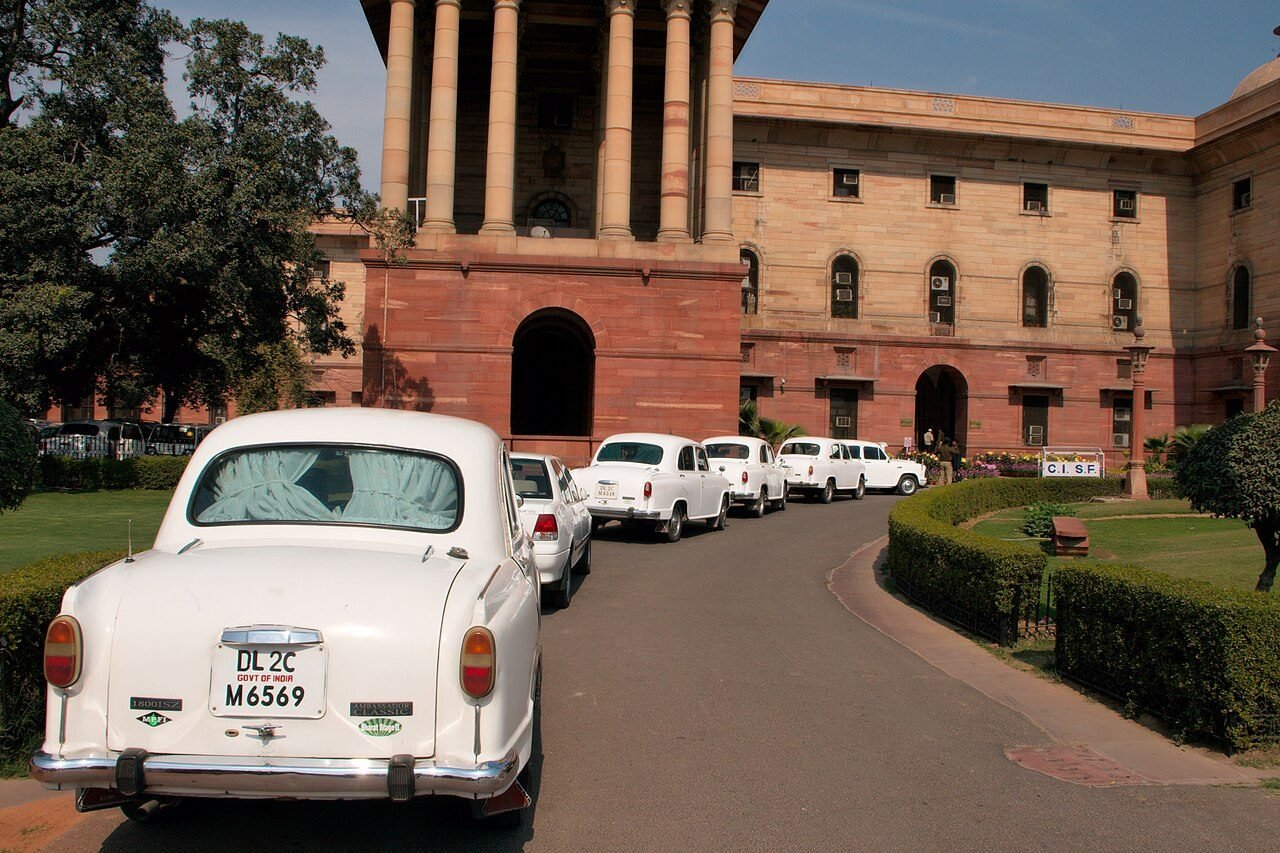
| Vehicle | White Ambassador DL 3C J 1527, red beacon, forged Home Ministry sticker |
| First challenge | Near Gate 11, by the Vice-President’s escort |
| Gun battle | About 30 minutes, around Gates 1, 5, 9 and 11 |
| Killed | 9: five Delhi Police, one CRPF, two Parliament security staff, one gardener |
| Injured | 16, including 13 security personnel |
| Did attackers enter the building? | No |
| Main convict | Afzal Guru, hanged 9 February 2013 |
| Military response | Operation Parakram, 15 December 2001 to 16 October 2002 |
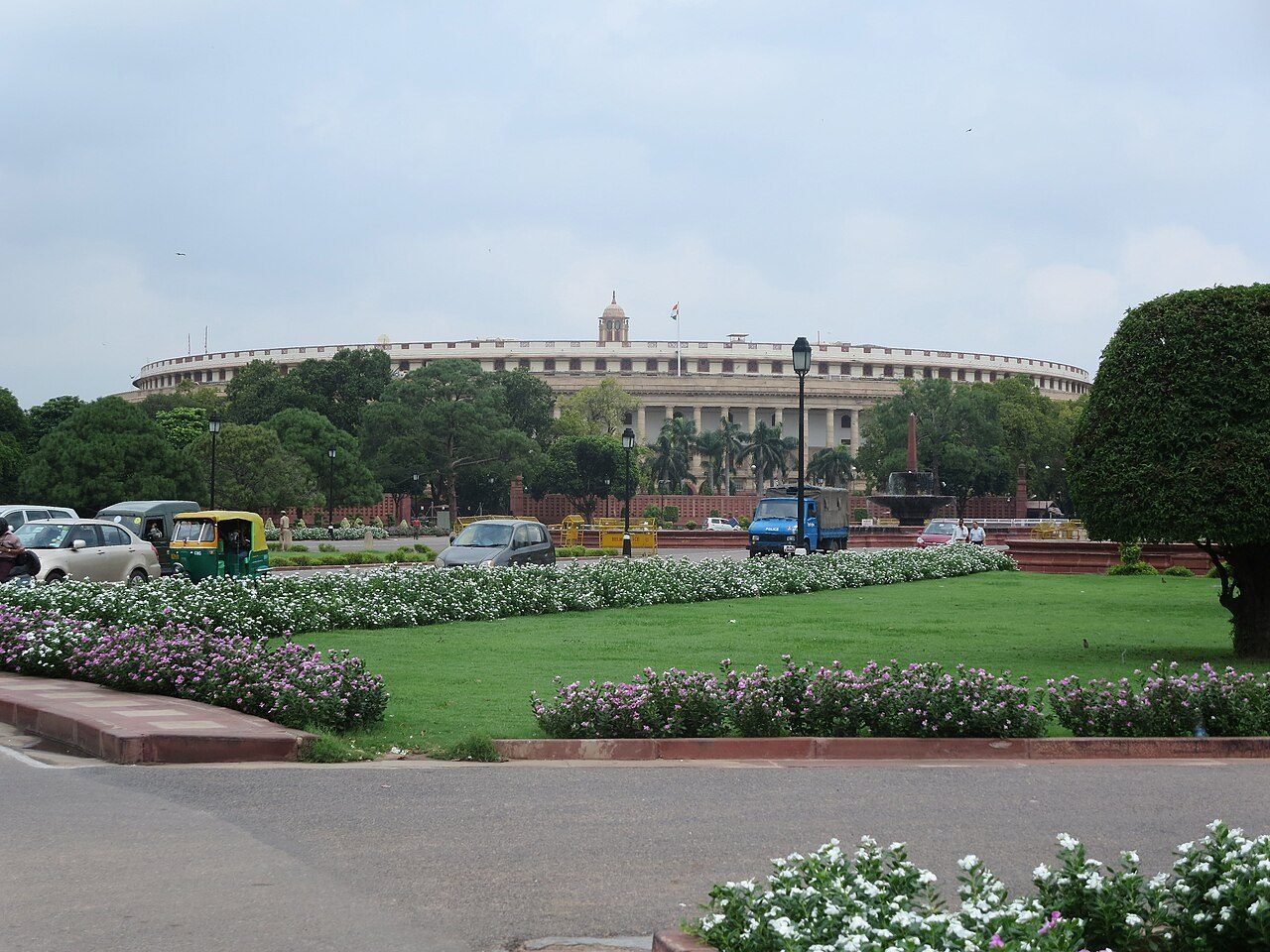
The Timeline: From the Srinagar Warning to the 25th Anniversary
Newest first. Tags mark warning signs, breaches, the defence, the political fallout, the courts, security changes and 2026 developments. Times on 13 December 2001 are approximate.
2026
The 25th anniversary 2026
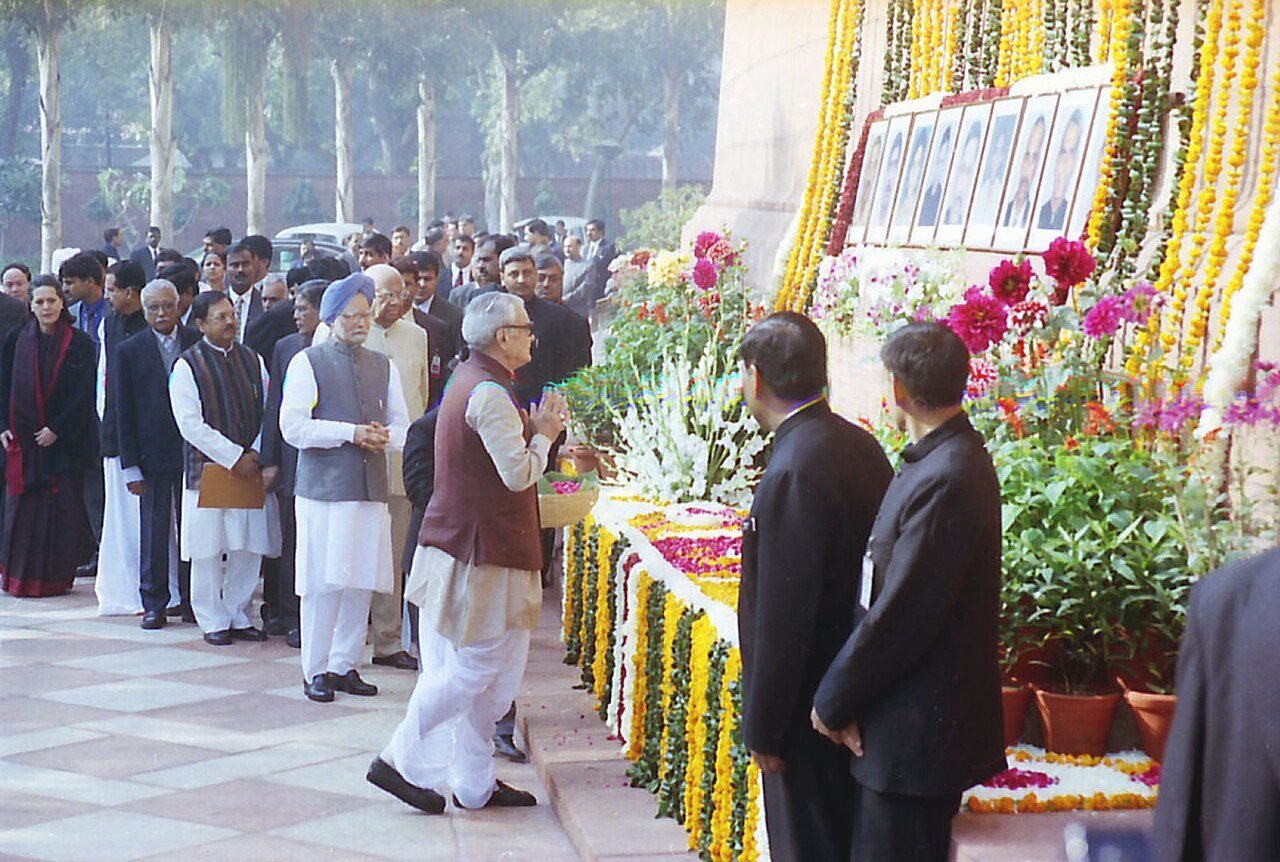
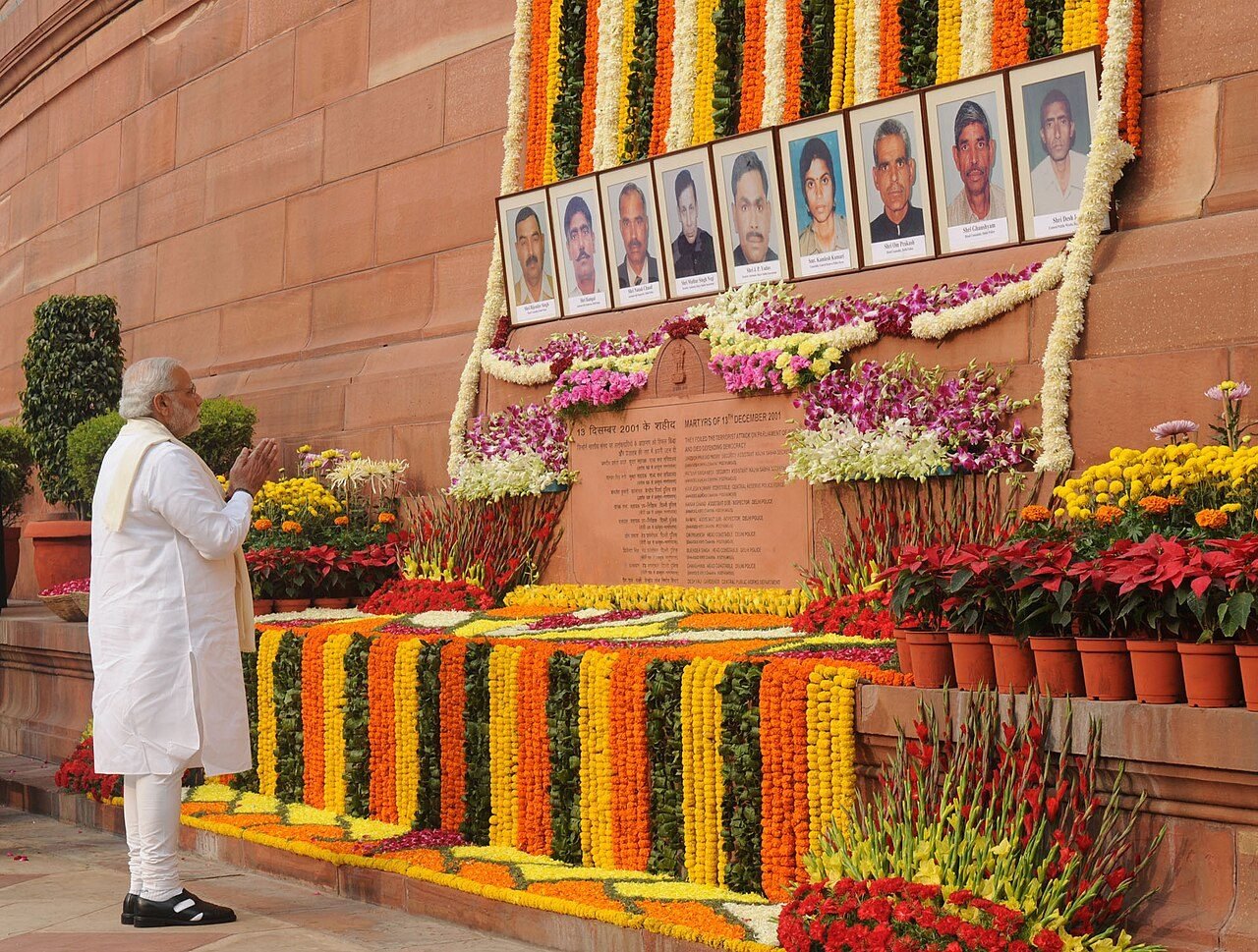
The attack’s 25th anniversary falls on a Sunday. The annual tribute is held at the memorial plaque between Gates 11 and 12 of the old Parliament House, now Samvidhan Sadan, where the portraits of the nine people killed are displayed. This page will be updated after the ceremony.
2026
Interim bail for a 2023 intruder 2026
Additional Sessions Judge Amit Bansal granted Sagar Sharma, one of the two men who jumped into the Lok Sabha chamber in 2023, 30 days’ interim bail after his father’s death, stressing it was ‘not on the merits of the case’. Five others, Manoranjan D, Amol Shinde, Neelam Azad (Ranolia), Lalit Jha and Mahesh Kumawat, remain accused.
2026
A multi-agency drill before the Monsoon Session 2026
The CISF led a mock drill at the Parliament complex to test response plans and coordination between agencies, the kind of joint rehearsal whose absence was exposed in 2001. CISF Director General Praveer Ranjan reviewed preparedness and met the Speaker and the Lok Sabha Secretary-General.
2026
A 13,967-page charge sheet 2026
Delhi Police’s Special Cell filed its fourth supplementary charge sheet in the 2023 breach case before the Patiala House court, which took it on record on 22 May. Defence lawyers objected that adding such a document while charge arguments were in progress was an abuse of process. Two and a half years after the intrusion, charges had still not been framed.
2026
‘Complete security breach’, says Delhi High Court 2026
Hearing Manoranjan D’s bail appeal, the High Court said ‘there was complete security breach in Parliament in this case’ and questioned how the smoke canister had been smuggled past the checks. His lawyer argued he had spent two years in custody without charges being framed; the prosecution said the act amounted to terrorism.
2025
The 24th anniversary Fallout
The tribute outside the old building was attended by leaders across parties, including Sonia Gandhi and Rahul Gandhi. CISF personnel, who now guard the complex, presented the salute.
2025
Court refuses to move Afzal Guru’s grave Courts
A petition sought the removal of the graves of Afzal Guru and JKLF founder Maqbool Bhat from Tihar Jail. The bench said no law forbids burial in jail premises and that such decisions are for the government, based on law and order.
2025
A man scales the perimeter wall Breach
A 20-year-old from Uttar Pradesh climbed over the wall and walked some distance inside the complex before CISF staff stopped him. Police said he appeared mentally unwell. It was a minor incident, but a reminder that perimeter detection, not just gates, is part of the layered system.
2025
Bail for two 2023 accused Courts
The High Court granted bail to two of the six accused on bonds of Rs 50,000 and a ban on speaking to the media about the incident. The others stayed in custody.
2024
The CISF takes over Parliament security Security change
After a review of the 2023 breach, the government handed counter-terrorism, anti-sabotage and access-control duties at both Parliament buildings to the Central Industrial Security Force, which guards airports and nuclear plants. The CRPF group and the Delhi Police contingent that had guarded the complex since the 2001 overhaul were withdrawn.
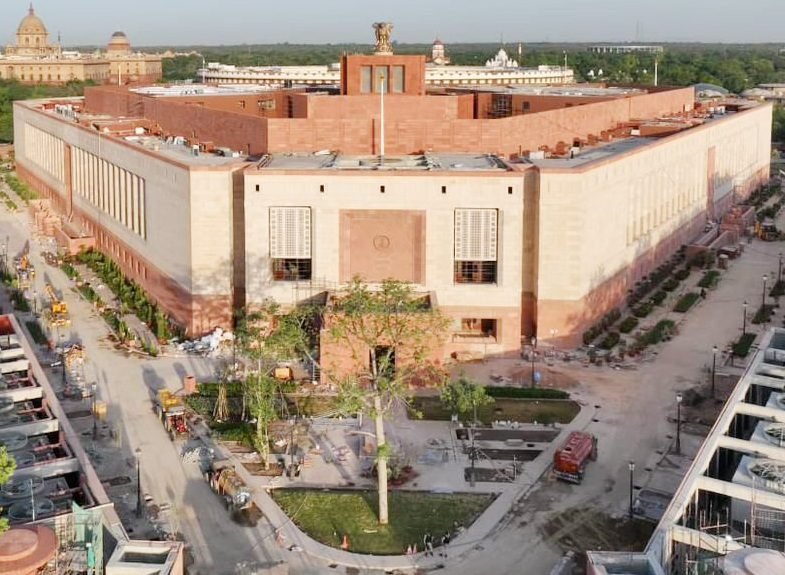
2023
Smoke in the Lok Sabha, 22 years to the day Breach
Sagar Sharma and Manoranjan D, admitted on visitor passes issued through a BJP MP’s office, jumped into the chamber of the new Parliament House and released yellow smoke before MPs and staff restrained them. Outside, Neelam Azad and Amol Shinde released coloured smoke. Lalit Jha was named as the organiser. All were charged under the UAPA, and eight Lok Sabha security staff were suspended.
2023
A new Parliament House opens Security change
The new building, part of the Central Vista project, was inaugurated in May 2023 and both Houses moved in that September. It was designed with separate entrances for MPs, staff and visitors.
2013
Afzal Guru is hanged Courts
After the President rejected his mercy petition, Afzal Guru was executed and buried in Tihar. The secrecy of the execution, and the fact that his family learned of it afterwards, made it contentious in Kashmir.
2005
The Supreme Court’s verdict Courts
Justices P. Venkatarama Reddi and P.P. Naolekar upheld Afzal Guru’s death sentence, convicted Shaukat Hussain Guru only of concealing the conspiracy and dismissed the state’s appeals against the acquittal of S.A.R. Geelani and Afsan Guru. The 107-page judgment remains the most detailed public account of the attack.
2003
High Court acquits Geelani and Afsan Guru Courts
The High Court found the evidence against the Delhi University lecturer and Shaukat’s wife insufficient, while confirming the death sentences on the other two.
2003
The cameraman dies Defence
Bisht was shot while filming the attack and spent most of the next year in AIIMS. He died after a fall from his wheelchair at home, often counted as the attack’s tenth victim among those who were not attackers.
2002
POTA court sentences three to death Courts
A year after the attack, the designated POTA court convicted all four accused. The charge sheet had been filed on 14 May 2002, five months after the attack.
Parliament’s security is rebuilt Security change
Parliament’s security service records that arrangements were ‘beefed up’ under the decisions of the Joint Parliamentary Committee on Security. Access points were streamlined to regulate vehicles and pedestrians, hi-tech equipment was installed at access control points and RF tag readers made vehicle identification ‘more scientific’. Road blockers, tyre-killers and checks on vehicles regardless of markings followed.
2002
Operation Parakram ends Fallout
India began withdrawing troops from the border after 10 months. The National Security Advisory Board put the cost at about Rs 7 crore a day. The standoff came close to war twice, after the attack and again after the Kaluchak massacre in May 2002.
2002
Pakistan bans JeM and LeT Fallout
President Pervez Musharraf announced bans on Jaish-e-Mohammed and Lashkar-e-Taiba and pledged that Pakistani territory would not be used for terrorism. The groups re-formed under new names.
2001
The US lists LeT and JeM as terrorist groups Fallout
The US State Department designated both groups, adding international pressure on Pakistan as Indian troops massed on the border. India had already recalled its High Commissioner from Islamabad.
2001
Parliament debates the attack Fallout
Advani told Parliament the attack had been carried out by Lashkar-e-Taiba and Jaish-e-Mohammed and praised the security staff for preventing a far greater disaster. Members asked why the attack on the Jammu and Kashmir Assembly had not led to tighter protection.
2001
Arrests, and the army moves Fallout
Phone records led police from a number printed on the attackers’ fake ID cards to Afzal Guru. Afzal and Shaukat were caught in a truck in Srinagar carrying a laptop and Rs 10 lakh. The same day, the Cabinet Committee on Security began Operation Parakram.
about noon
The attack is over Defence
After about 30 minutes of fighting, all five gunmen were dead: one outside Gate 1, where his explosive vest went off, one at the porch of Gate 5 and three at the porch of Gate 9. Bomb disposal teams from the NSG then cleared the car, which held a large ammonium nitrate bomb.
about 11:30 a.m.
The car is challenged at Gate 11 Breach
The car entered the complex and drove towards Gate 11, where Vice-President Krishan Kant’s motorcade was waiting. With the escort vehicle in the way, it turned left. The ASI in charge of the escort grew suspicious and ordered it to stop; the driver reversed into the Vice-President’s car. As the escort and the VP’s driver ran towards it, the five men got out, began laying wires and opened fire. Watch and Ward staff and Delhi Police raised the alarm and the building’s doors were shut.
about 11:00 a.m.
Both Houses adjourn Warning sign
The Lok Sabha and Rajya Sabha adjourned shortly before the attack. Prime Minister Vajpayee and Sonia Gandhi had left, but Home Minister L.K. Advani, many ministers, MPs and staff were still in the building.
2001
The car and the sticker Warning sign
According to the courts, the attackers’ leader, Mohammad, bought the car two days before the attack and prepared the Home Ministry sticker and fake identity cards on a laptop. Earlier, the group had surveyed the Delhi Assembly, the airport and the US and UK embassies before choosing Parliament.
2001
Attack on the Jammu and Kashmir Assembly Warning sign
A Jaish-e-Mohammed car bomb and gun attack on the state legislature complex in Srinagar showed that legislatures were targets. Ten weeks later, the same group struck Parliament using a car again.
Five Layers of Defence: Which Ones Failed?
Security works in rings. On 13 December the outer ring failed and the inner ones held.
Pick a checkpoint. How did it work in 2001, what happened that day, and what is there now?
Six layers of protection around Parliament, from the outer vehicle gate to visitor screening, based on the Supreme Court judgment and Parliament’s own security records.
What Were the Main Security Failures?
Some are shown directly by what happened; others are lessons drawn from it.
| Security area | What 13 December showed | What changed |
|---|---|---|
| Vehicle authentication | A forged sticker and a beacon were accepted as proof | RF tags, verification against records, barriers |
| Access control | One outer check, then the car could drive up to the building | Fewer, streamlined access points with layered checks |
| Intelligence to action | J&K Assembly attack 10 weeks earlier; no matching upgrade in Delhi | Joint committee reviews; IB in the security set-up |
| Inter-agency command | Delhi Police, CRPF and Watch and Ward each held separate posts | Joint drills; single CISF command since 2024 |
| Firepower | Some defenders were unarmed or lightly armed against assault rifles | Armed counter-terror units on permanent duty |
| Luck | The VP’s motorcade happened to block the road | Physical barriers so safety does not depend on chance |
Why the Fake Home Ministry Sticker Mattered
The sticker was not a sophisticated forgery. According to the Supreme Court, the attackers’ leader designed it on a laptop, along with fake identity cards, and the file was found later when the laptop was recovered. Its power came from the system it was used against. In 2001 Delhi’s official world ran on white Ambassadors, beacons and windscreen passes, and a car that looked like a ministry vehicle was treated like one.
The lesson has travelled well beyond Parliament, to airports, data centres and government offices: appearance is not authentication. A credential has to be checked against a record, and admission should not depend on a symbol anyone can copy. That is what the RF tags and verified passes introduced after 2001 were meant to do.
Did Intelligence Agencies Fail?
The record supports hard questions, not a single culprit.
The attack came ten weeks after Jaish-e-Mohammed bombed the Jammu and Kashmir Assembly in Srinagar, and in the debate that followed MPs asked why that had not led to tighter protection in Delhi. That is a fair criticism of preparedness. But the public record contains no evidence that any agency held specific intelligence about the date, the target or the car.
A fair assessment separates three things: a general threat environment, intelligence about a likely type of target, and actionable warning about a specific operation. India had the first and arguably the second in late 2001. The failure was that neither was translated into the kind of vehicle checks that would have stopped a car with a forged sticker. The investigation afterwards was fast: phone records cracked the conspiracy within 48 hours.
The Nine Who Died Defending Parliament
Their portraits hang at the memorial between Gates 11 and 12 of the old building.
| Name | Service | Honour |
|---|---|---|
| Kamlesh Kumari | CRPF constable | Ashok Chakra (posthumous) |
| Jagdish Prasad Yadav | Security assistant, Rajya Sabha Secretariat | Ashok Chakra (posthumous) |
| Matbar Singh Negi | Security assistant, Rajya Sabha Secretariat | Ashok Chakra (posthumous) |
| Nanak Chand | Delhi Police | Kirti Chakra (posthumous) |
| Rampal | Delhi Police | Kirti Chakra (posthumous) |
| Om Prakash | Delhi Police | Kirti Chakra (posthumous) |
| Bijender Singh | Delhi Police | Kirti Chakra (posthumous) |
| Ghanshyam | Delhi Police | Kirti Chakra (posthumous) |
| Deshraj | Gardener, CPWD | – |
The Trial: Four Accused, Three Verdicts
The courts disagreed sharply on two of the four.
| Accused | POTA court (Dec 2002) | Delhi High Court (Oct 2003) | Supreme Court (Aug 2005) |
|---|---|---|---|
| Mohammad Afzal Guru | Death | Death confirmed | Death upheld; hanged 2013 |
| Shaukat Hussain Guru | Death | Death confirmed | 10 years, concealment only |
| S.A.R. Geelani | Death | Acquitted | Acquittal upheld |
| Afsan Guru (Navjot Sandhu) | 5 years | Acquitted | Acquittal upheld |
The 2023 Breach: A Reminder That Security Must Keep Changing
On 13 December 2023, the 22nd anniversary, two men with visitor passes jumped from the public gallery into the Lok Sabha chamber of the new Parliament House and set off yellow smoke canisters they had hidden in their shoes. It was not an armed attack and no one was badly hurt. But it showed that layered screening could still fail, this time at the visitor gate rather than the vehicle gate. The government’s response was to put the CISF in charge of the whole complex.
Same date, 22 years apart. Pick a question to compare the two breaches.
The 2023 intrusion was not a terrorist attack like 2001, but both show where Parliament’s layers gave way.
Parliament Security in 2026
Twenty-five years on, the complex is guarded by a single central force. More than 3,300 CISF personnel have run access control and counter-terrorism at the old and new buildings since May 2024, alongside Delhi Police, the NSG, the NDRF and Parliament’s own staff. Before each session they rehearse together, as they did on 20 July 2026, the day before the Monsoon Session opened.
The 2023 case is moving slowly. Delhi Police filed a 13,967-page supplementary charge sheet in May 2026, arguments on framing charges were still continuing in mid-2026, and the Delhi High Court has called the intrusion a ‘complete security breach’. The 25th anniversary of the 2001 attack falls on 13 December 2026.
Explore More Timelines
People Also Ask
Frequently Asked Questions
Conclusion: A Breach That Reshaped Parliament Security
The 2001 attack exposed how a convincing disguise, a single outer check and a threat that had not been turned into practical protection could bring armed men to the doors of India’s Parliament. It is also a story of resistance: an escort who challenged a car, staff who shut the doors and nine people who died before the attackers could get inside.
The question the anniversary leaves is not whether security can be made perfect. It is whether every warning, checkpoint and response works together when the next crisis comes.
Related AiTimeline Stories
⚠️ Editorial Note
This article is based mainly on the Supreme Court’s judgment in State (NCT of Delhi) v. Navjot Sandhu (4 August 2005), Parliament Security Service records, Committee to Protect Journalists reporting, and 2024–2026 reporting by PTI, ANI, ETV Bharat, LiveLaw, The Pioneer and others. Times on 13 December 2001 are approximate and accounts differ by a few minutes. The 2023 breach case is under trial and the accused have not been convicted. Details of current security arrangements are limited to what has been made public.
Sources & further reading
Every dated entry above was checked against these references. Last reviewed 16 October 2026.
- State (NCT of Delhi) v. Navjot Sandhu (Afzal Guru), judgment of 4 August 2005
- Parliament Security Service: security arrangements after the 13 December 2001 attack
- CPJ mourns death of cameraman injured in Parliament attack
- 3,300 CISF contingent to take full charge of Parliament security from 20 May
- Delhi High Court refuses to entertain PIL to remove graves of Afzal Guru, Maqbool Bhatt from Tihar
- "There was complete security breach in Parliament": Delhi High Court (3 February 2026)
- Parliament Security Breach: 13,967-page 4th supplementary chargesheet filed in Delhi court
- Parliament security tightened as CISF conducts mock drill ahead of Monsoon Session
- 2023 Parliament security breach: Court grants interim bail to accused on humanitarian grounds
- How Parliament security protocol changed after 2001 attack