WeWork’s Rise and Fall: From a US$47 Billion Valuation to Bankruptcy, and Back
WeWork went from a $47B valuation in 2019 to Chapter 11 in 2023. The full timeline: SoftBank, the failed IPO, Neumann, the 2024 exit and WeWork India.
Latest Story
WeWork’s rise and fall is the defining start-up cautionary tale of the 2010s. A coworking company that opened one floor in SoHo in 2010 was valued at US$47 billion by SoftBank in January 2019, failed to list on the stock market that September, went public through a SPAC at about US$9 billion in 2021 and filed for Chapter 11 bankruptcy on 6 November 2023. It did not disappear: a much smaller WeWork emerged in June 2024 and says it is now EBITDA-positive, while WeWork India listed separately in Mumbai in October 2025.
The short version: the product worked, the financing did not. WeWork signed leases lasting 10 to 15 years and rented desks to members who could leave within months. While demand was strong and SoftBank’s money kept arriving, that looked like growth. When public investors read the numbers, and then the pandemic emptied offices, it became billions of dollars of losses.
💡 Short Answer
WeWork, founded in New York in 2010 by Adam Neumann and Miguel McKelvey, was valued at US$47 billion by SoftBank in January 2019. Its IPO collapsed in September 2019 after its prospectus revealed huge losses, long lease debts and founder control. It listed via a SPAC at about US$9 billion in 2021, filed for Chapter 11 on 6 November 2023 and emerged on 11 June 2024, smaller and debt-free, under Yardi Systems’ control.
WeWork’s Rise and Fall: Key Questions
WeWork in Ten Points
- The idea: ready-to-use offices on short contracts, launched at 154 Grand Street, SoHo, in 2010.
- The money: SoftBank put in US$4.4 billion in 2017 and US$2 billion in January 2019 at US$47 billion.
- The flaw: 10–15-year leases against month-to-month members.
- The losses: US$1.93 billion in 2018, US$3.77 billion in 2019, US$4.63 billion in 2021.
- The IPO: the public S-1 of 14 August 2019 exposed losses and founder control; it was pulled on 30 September.
- The founder: Adam Neumann stepped down on 24 September 2019 with a package reported at about US$1.7 billion.
- The pandemic: occupancy fell to roughly half in 2020, and hybrid work kept demand lower.
- The SPAC: NYSE listing on 21 October 2021 at about US$9 billion; shares fell more than 99%.
- The bankruptcy: Chapter 11 on 6 November 2023; emerged 11 June 2024 with about US$4 billion of debt gone.
- Today: a smaller, EBITDA-positive WeWork, and a profitable, separately listed WeWork India.
From US$1.5 Billion to US$47 Billion to Almost Nothing
Each number was set by a different kind of buyer, which is the point.
WeWork’s valuation rose for five years because each new private investor paid more than the last for a small slice of the company. Only one buyer, SoftBank, was willing to pay US$47 billion, and it bought just US$2 billion of stock at that price. When the IPO asked thousands of investors to agree, bankers discussed a range as low as US$10–15 billion before the deal was abandoned, and SoftBank’s October 2019 rescue reportedly valued WeWork at about US$8 billion.
| Moment | Value | What set it |
|---|---|---|
| August 2017 | ~US$20B | SoftBank and Vision Fund, US$4.4B |
| January 2019 | ~US$47B (peak) | SoftBank, US$2B |
| September 2019 | US$10–15B discussed | IPO bankers’ revised range before withdrawal (reported) |
| October 2019 | ~US$8B | SoftBank rescue, pre-money (reported) |
| March 2021 | ~US$9B enterprise value | BowX SPAC merger |
| November 2023 | <US$50M market value | Stock price at Chapter 11 filing |
| May 2024 | Equity wiped out | Yardi affiliate buys ~60% for a reported US$337M |
The Losses Behind the Growth
What the S-1 and later filings showed.
Revenue grew from under US$1 billion in 2017 to US$3.46 billion in 2019, but the net loss grew at least as fast. New buildings cost millions to design and fit out before they earned anything, and the company was opening them at record pace. After 2019 the losses continued because rent on empty space kept running through the pandemic. WeWork lost about US$17.4 billion between 2017 and 2022 and never reported an annual profit as a public company.
| Year | Revenue | Net loss | Context |
|---|---|---|---|
| 2017 | US$0.89B | US$0.93B | SoftBank invests US$4.4B |
| 2018 | US$1.82B | US$1.93B | Fastest expansion year |
| 2019 | US$3.46B | US$3.77B | IPO fails, SoftBank rescue |
| 2020 | US$3.42B | US$3.83B | Pandemic; occupancy about half |
| 2021 | US$2.57B | US$4.63B | SPAC listing |
| 2022 | US$3.25B | US$2.30B | Last full year before bankruptcy |
Pick an occupancy level for a hypothetical 1,000-desk WeWork floor and see what happens to the money.
Illustrative numbers, not WeWork’s: members pay US$700 a desk a month; rent, fit-out repayments, staff and services cost a fixed US$560,000 a month whether desks are full or empty.
Choose an occupancy level above
WeWork’s Rise and Fall: The Full Timeline
Newest first, from WeWork India’s 2026 deals back to one floor in SoHo in 2010.
WeWork India keeps signing large managed offices Reported
In early September WeWork India announces a managed-office deal with Cognizant in Chennai and plans for a 10 MWp solar power plant in Karnataka to supply its centres. Large, long contracts with big companies, rather than single desks for freelancers, now drive the Indian business.
WeWork India reports a ₹179 crore profit Official
In its first full year as a listed company, WeWork India reports revenue of ₹2,477.4 crore, EBITDA of ₹499.2 crore and a net profit of ₹179.0 crore for the year to March 2026. It runs 76 centres in eight cities with about 127,000 desks, 110,000 members and portfolio occupancy of 86.9%, and its net debt turns slightly negative.
WeWork says it is EBITDA-positive and targets an operating profit Reported
Chief executive John Santora says WeWork has been EBITDA-positive for three consecutive quarters for the first time in its history, was slightly cash-flow positive in the latest quarter and aims for an operating profit by the end of 2026. Members rise by about 20,000 to roughly 550,000. WeWork also launches WeWork Go, one- and four-person glass work pods for airports, hotels and convention centres.
2025
WeWork India lists on the NSE and BSE Official
WeWork India Management, majority-owned by Bengaluru’s Embassy Group and a separate company from WeWork Inc., completes a ₹3,000 crore IPO that is entirely an offer for sale: about 3.5 crore shares from Embassy and 1.1 crore from a WeWork Global affiliate. The issue is subscribed only about 1.15 times; the shares open at ₹646.50 and close the first day about 4% below the ₹648 issue price.
Why it matters: six years after the US IPO failed, the WeWork brand reached the stock market through its Indian licensee, not through the parent.
One year after bankruptcy: smaller and EBITDA-positive Reported
A year after emerging from Chapter 11, WeWork reports positive EBITDA for six months, no funded debt and plans to spend US$80–100 million refreshing locations in 2025. It has around 170 locations in North America and now favours management agreements and large enterprise deals, including managing close to 1 million sq ft for Amazon.
2024
WeWork emerges from Chapter 11 Official
WeWork completes its restructuring in the US and Canada and names John Santora, a veteran of property broker Cushman & Wakefield, as chief executive; David Tolley steps down. About US$4 billion of debt has been eliminated, around 170 locations exited and about 190 leases renegotiated, with rent savings reported at roughly US$12 billion over the remaining lease terms. Yardi affiliate Cupar Grimmond owns about 60%, SoftBank affiliates about 20%.
2024
Court confirms the restructuring plan Official
The bankruptcy court in New Jersey approves WeWork’s Chapter 11 plan after deals with landlords, lenders and SoftBank. Cupar Grimmond provides a reported US$337 million of new money for majority control. The existing shareholders, who had bought into a US$9 billion company less than three years earlier, are wiped out.
2024
Adam Neumann tries to buy WeWork back Reported
Neumann, now running the residential start-up Flow, makes an offer reported at more than US$500 million to buy WeWork out of bankruptcy, with financing backers that are not fully identified. WeWork’s advisers say the bid lacks detail, and the company proceeds with the Yardi-led plan instead.
2023
WeWork files for Chapter 11 Official
WeWork Inc. and certain subsidiaries file for Chapter 11. The case covers the US and Canada; locations elsewhere and franchises such as WeWork India continue outside it. Holders of about 92% of WeWork’s secured notes back a restructuring support agreement, and the company asks to reject leases at dozens of largely non-operational locations. Its stock market value by then is under US$50 million.
Why it matters: Chapter 11 lets a tenant walk away from leases, the one cost WeWork had never been able to cut fast enough.
2023
“Substantial doubt” about survival Official
Three months after chief executive Sandeep Mathrani leaves, WeWork warns there is “substantial doubt” about its ability to continue as a going concern, citing losses, member churn and weak office demand. A 1-for-40 reverse stock split in September keeps it listed, and on 2 October 2023 it skips interest payments, starting a grace period that ends in bankruptcy.
2021
WeWork goes public through a SPAC Official
Two years after the failed IPO, WeWork lists on the New York Stock Exchange under the ticker WE by merging with BowX Acquisition Corp., a deal announced on 26 March 2021 at an implied enterprise value of about US$9 billion, below a fifth of the 2019 peak. The shares open around US$11 but slide steadily as losses continue: US$4.63 billion in 2021.
COVID-19 empties the buildings Official
Sandeep Mathrani, a mall-industry executive, becomes chief executive on 18 February 2020 and begins cutting staff and exiting buildings. Weeks later lockdowns empty offices worldwide; occupancy falls to roughly half by the end of the year. In April SoftBank cancels the US$3 billion share tender promised in 2019, prompting a lawsuit from WeWork’s board special committee, settled in 2021. In July WeWork closes its first ever location, 154 Grand Street. The net loss for the year is US$3.83 billion.
2019
SoftBank takes control Official
SoftBank announces a rescue: US$5 billion of new financing, a tender offer of up to US$3 billion for existing shares and the acceleration of a US$1.5 billion warrant, taking its economic stake to about 80%. The deal reportedly values WeWork at about US$8 billion before the new money. Neumann gives up his voting control in exchange for a package reported at about US$1.7 billion.
2019
Neumann steps down; the IPO is withdrawn Official
After the listing is postponed in mid-September and reports of Neumann’s erratic behaviour pile up, SoftBank and other directors push him out. On 24 September he steps down as chief executive and becomes non-executive chairman; Artie Minson and Sebastian Gunningham become co-CEOs. On 30 September WeWork formally withdraws its IPO registration.
2019
The S-1 goes public, and the story falls apart Official
The public prospectus shows revenue of US$1.82 billion and a net loss of US$1.93 billion in 2018, and a loss of about US$900 million in the first half of 2019. It also reveals Neumann’s 20-votes-per-share stock, loans and leases between WeWork and buildings he part-owned, a US$5.9 million payment for the “We” trademark and roughly US$47 billion of future lease obligations. Its “community-adjusted EBITDA” is widely mocked.
2019
WeWork confidentially files for an IPO
The We Company says it has confidentially submitted a draft registration statement to the SEC. Confidential filing lets a company prepare its listing without publishing its accounts. The public S-1, and the scrutiny, only arrive in August.
2019
US$47 billion, and a new name Reported
SoftBank invests US$2 billion at a US$47 billion valuation, far below the roughly US$16 billion it had been reported to be planning before its own investors objected. WeWork renames its parent The We Company, covering WeWork offices, WeLive apartments and WeGrow schools.
Manhattan’s largest private office tenant
WeWork becomes the largest private office tenant in Manhattan and signs leases around the world, at times opening several locations a week. Revenue roughly doubles to US$1.82 billion, but the net loss more than doubles to US$1.93 billion: each new building costs millions to fit out before a single member pays rent.
SoftBank arrives with US$4.4 billion Official
SoftBank and its Vision Fund invest US$4.4 billion: US$3 billion into WeWork and US$1.4 billion into new WeWork companies for China, Japan and the Pacific, valuing WeWork at about US$20 billion. Masayoshi Son reportedly urges Neumann to be “crazier”. The same year WeWork enters India through a licence with Embassy Group, opening its first centre in Bengaluru.
Into Asia, and a US$16 billion valuation
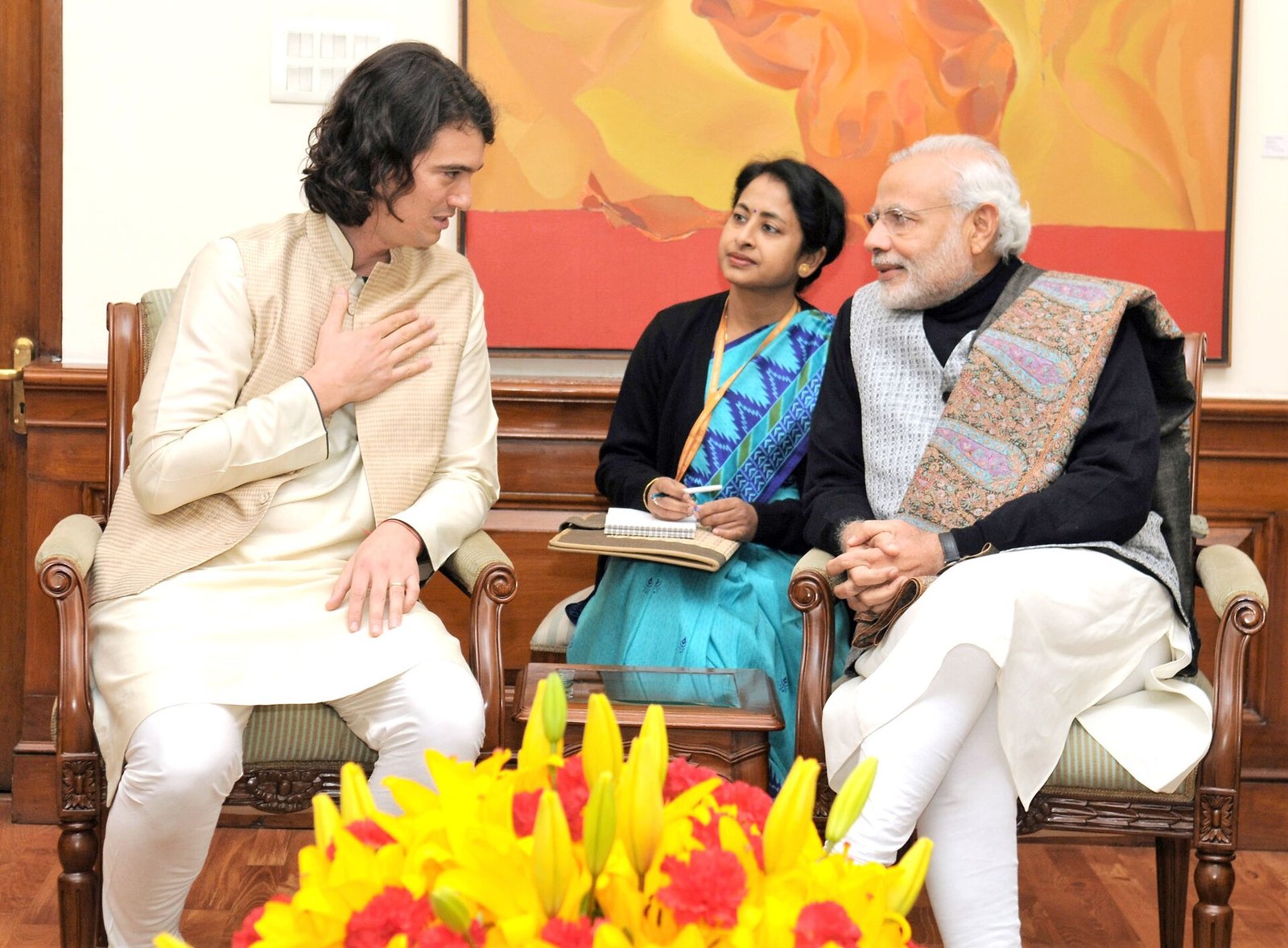
WeWork raises money at about US$16 billion, opens in Shanghai and Hong Kong, and launches WeLive co-living apartments on Wall Street. In January Neumann meets Prime Minister Narendra Modi in New Delhi during the Startup India launch.
From New York start-up to unicorn
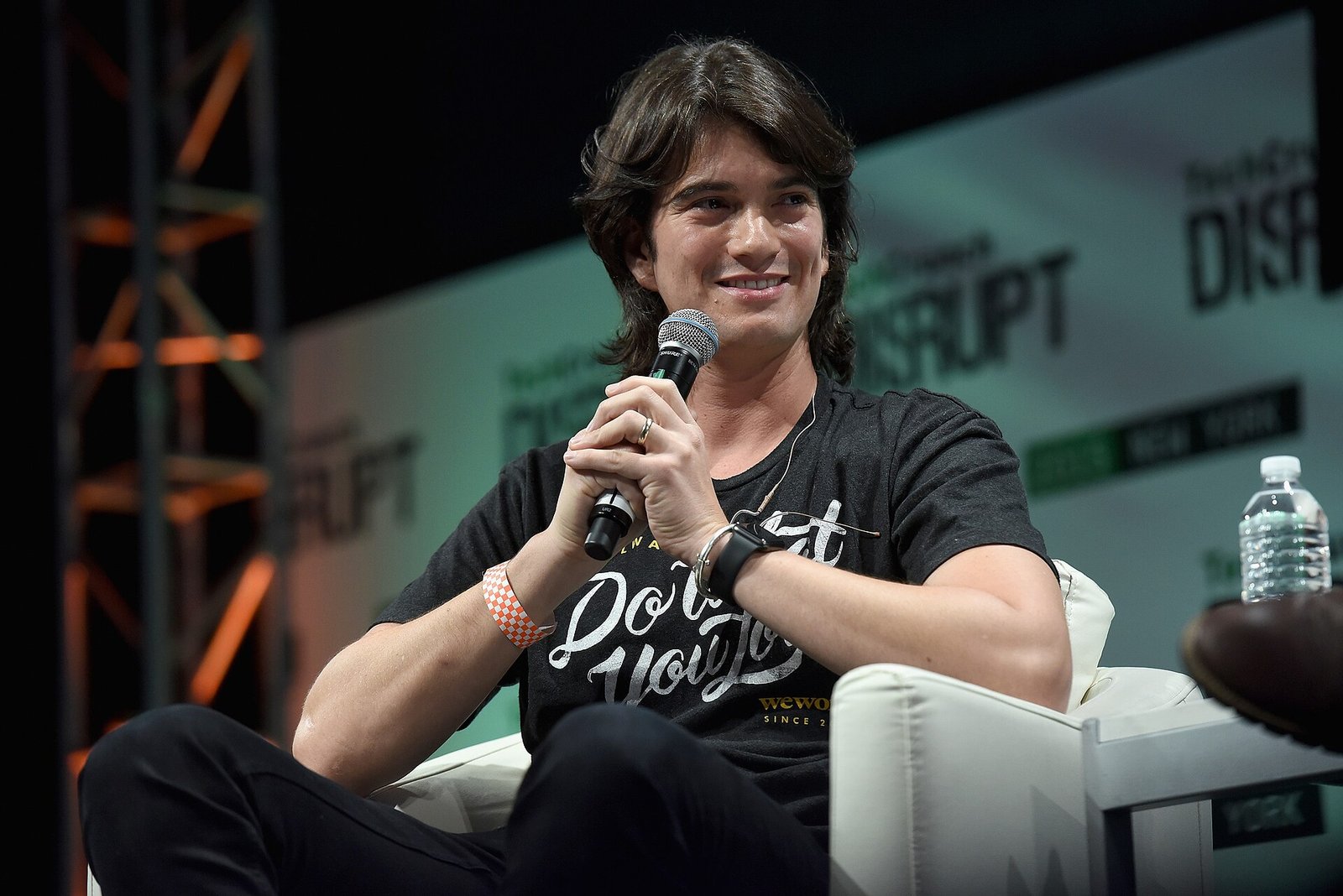
WeWork opens its first location outside the US in London in 2014 and its valuation climbs from about US$1.5 billion early in the year to roughly US$5 billion by December and about US$10 billion in 2015. Neumann pitches it as a “physical social network” rather than an office landlord.
WeWork opens in SoHo
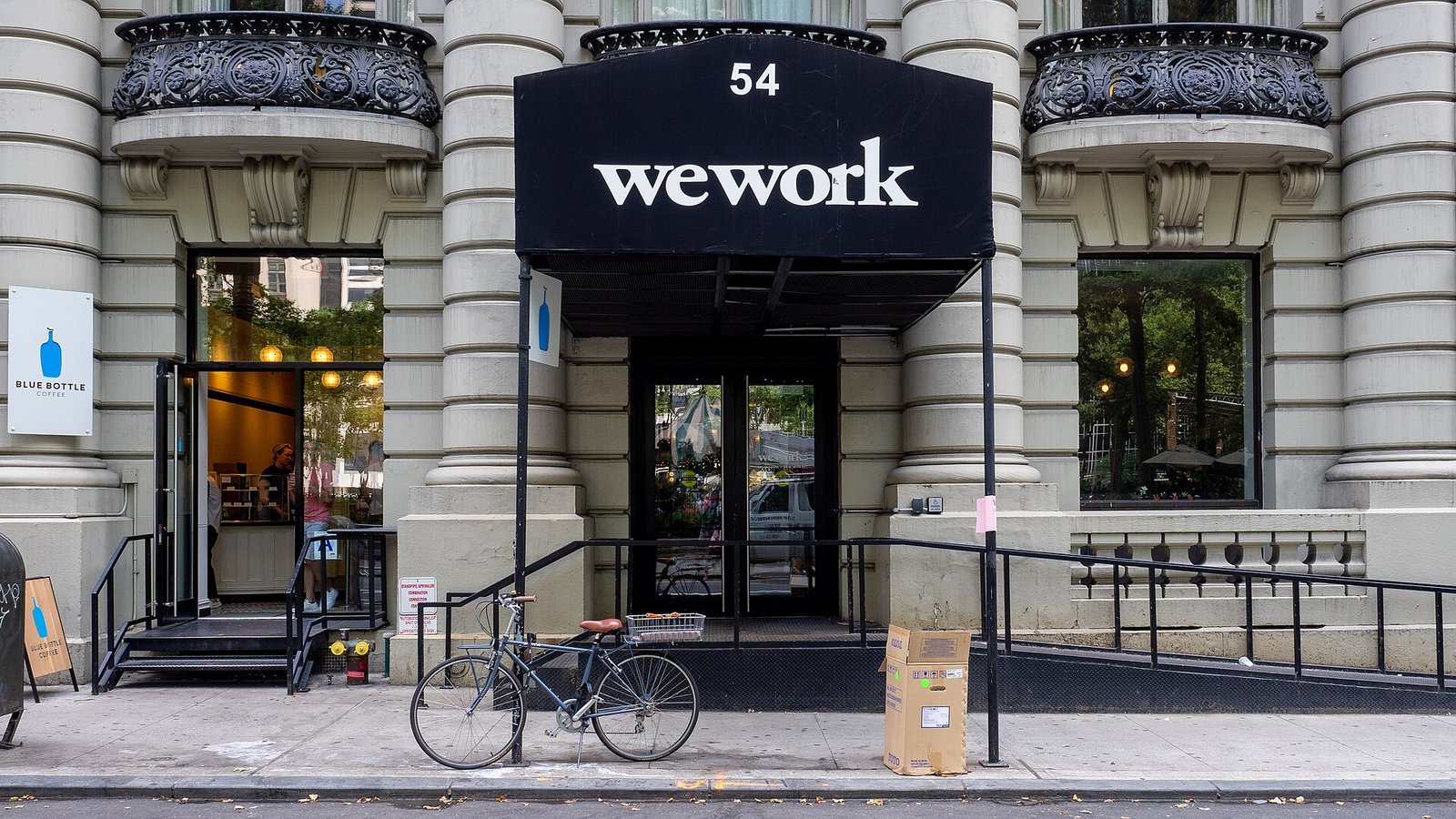
After selling their Brooklyn coworking business GreenDesk (started 2008), Adam Neumann and Miguel McKelvey found WeWork and open one floor at 154 Grand Street, SoHo, with glass-walled offices, shared lounges, free coffee and beer. Freelancers and start-ups fill it quickly, and the founders begin leasing more buildings.
Why it matters: the product, a ready-made office on a short contract, was good. The financing model built around it was the problem.
What Actually Went Wrong
Coworking was not the mistake. These were.
Long leases, short customers
Rent was fixed for a decade or more; members could leave in months. Revenue could fall fast, costs could not.
Growth before profit
WeWork opened buildings as fast as SoftBank’s money allowed, and losses grew with every one.
Priced like tech, built like property
A real-estate cost base was given a software-style valuation, and public investors refused to pay it.
Founder control and conflicts
Super-voting shares, related-party leases and the “We” trademark payment destroyed IPO investors’ trust.
Pandemic and hybrid work
Lockdowns halved occupancy, and the slow return to offices kept demand below what the leases assumed.
Restructuring came late
WeWork cut leases from 2020, but only bankruptcy let it reject them at the scale needed.
The Second WeWork
Smaller, landlord-friendly and, it says, finally making money.
The WeWork that emerged in June 2024 is a different company. It has no funded debt, far fewer locations in the US and Canada, and an owner, Yardi Systems, that sells software to landlords. Under John Santora it prefers management agreements and revenue-sharing deals, in which property owners pay for fit-outs and share the risk, to the long leases that sank the old company. It sells large private floors to companies such as Amazon, has upgraded its buildings and, in April 2026, launched WeWork Go work pods for airports and hotels.
The results are modest but real by WeWork standards: about 550,000 members, three consecutive EBITDA-positive quarters reported in April 2026 for the first time in its history, and a target of operating profit by the end of 2026. Those figures are the company’s own and are not audited public accounts, because WeWork no longer files with the SEC.
WeWork in 2019 vs WeWork in 2026
WeWork India: The Part That Kept Growing
A licensee, majority-owned by Embassy Group, that listed in 2025 and turned a profit.
WeWork entered India in 2017 through a licence deal with Bengaluru developer Embassy Group, opening its first centre in Bengaluru. Because WeWork India is a separate company, it was outside the 2023 US bankruptcy and kept expanding on demand from global capability centres, IT services firms and start-ups. On 10 October 2025 it listed on the NSE and BSE after a ₹3,000 crore IPO priced at ₹648, which drew a lukewarm 1.15 times subscription.
Its first annual results as a listed company, for the year to March 2026, showed revenue of ₹2,477.4 crore and a net profit of ₹179.0 crore, with occupancy of 86.9%. Indian flexible-office operators, including Awfis and Smartworks, have grown on the same trend: large companies taking managed floors rather than signing their own long leases. For the wider story of India’s start-up money cycle, see our India start-up boom timeline.
| WeWork (global) | WeWork India | |
|---|---|---|
| Owner | Yardi affiliate ~60%, SoftBank ~20% | Embassy Group (majority), public shareholders |
| Status | Private since 2024 | Listed on NSE and BSE since 10 Oct 2025 |
| Bankruptcy | Chapter 11, Nov 2023–Jun 2024 | Not part of the case |
| Latest scale | ~550,000 members, 600+ locations incl. partners (Apr 2026) | 76 centres, 8 cities, ~110,000 members (FY26) |
| Profit | EBITDA-positive; operating profit targeted by end-2026 | Net profit ₹179.0 crore (FY26) |
| Model | Shift to management and revenue-share deals | Leases plus managed offices for large firms |
Corrections to Claims Circulating Online
“April 2019: WeWork files its S-1”
On 29 April 2019 WeWork only said it had confidentially submitted a draft. The public S-1, which triggered the backlash, was filed on 14 August 2019.
“Valuation fell to roughly US$10 billion or less”
US$10–15 billion was the range discussed for the IPO. SoftBank’s October 2019 rescue reportedly valued WeWork at about US$8 billion.
“WeWork emerged from bankruptcy on 30 May 2024”
30 May was when the court confirmed the plan. WeWork emerged on 11 June 2024, and John Santora took over as chief executive on 12 June.
“WeWork India went bankrupt too”
No. WeWork India is a separately owned licensee. It was outside the Chapter 11 case and listed on Indian exchanges in October 2025.
“Lease changes cut US$13.3 billion of payments by September 2023”
We could not match this figure to a primary source and have not used it. The bankruptcy-era rent saving is reported at roughly US$12 billion.
The 2025–26 recovery
An earlier AI-generated draft of this page ended at the 2023 bankruptcy. WeWork’s emergence, its EBITDA turnaround and WeWork India’s IPO and results are now included.
Did You Know?
- Brooklyn first: before WeWork, Neumann and McKelvey ran GreenDesk, an eco-friendly coworking space in Brooklyn, from 2008.
- The first site closed: 154 Grand Street, WeWork’s original location, shut in July 2020 when its lease ended.
- Adjusted EBITDA: WeWork’s “community-adjusted EBITDA” excluded marketing, design and development costs, among others.
- Trademark refund: Neumann returned the US$5.9 million WeWork paid him for the “We” trademark.
- On screen: Apple TV+’s WeCrashed (2022) dramatised the story with Jared Leto and Anne Hathaway.
- Second act: Neumann’s next company, Flow, drew a reported US$350 million from Andreessen Horowitz in 2022.
Quick Quiz: WeWork’s Rise and Fall
1. Where was the first WeWork?
2. Who valued WeWork at US$47 billion?
3. When did the WeWork S-1 become public?
4. How did WeWork finally go public?
5. Which court handled WeWork’s Chapter 11?
6. Who controls WeWork after bankruptcy?
Explore More Timelines
People Also Ask
Frequently Asked Questions
The Lesson: Growth Is Not the Same as Value
WeWork had almost everything a start-up is told to want: a huge market, a famous brand, fast-growing revenue, a charismatic founder and the deepest-pocketed investor in the world. What it lacked was a financial structure that could survive a bad year. Its customers wanted flexibility, and WeWork gave it to them by taking on fixed obligations it could not escape. The company that emerged from bankruptcy has kept the product and changed the structure. Whether that makes it a durable business is the question its 2026 profit target will begin to answer.
Related AiTimeline Stories
⚠️ Editorial Note
Last updated 5 October 2026. Items marked Official rest on SEC filings, court records and company or exchange announcements; items marked Reported rely on news reports or company statements that are not audited public accounts, and are attributed. The lease-mismatch tool uses hypothetical numbers for illustration. This page is not investment advice. It replaces an earlier AI-generated draft; see the corrections section.
Sources & further reading
Every dated entry above was checked against these references. Last reviewed 5 October 2026.
- SEC: The We Company Form S-1 registration statement (14 Aug 2019)
- SEC: WeWork Inc. Form 10-K for fiscal 2021
- SoftBank Group: press release on WeWork financing package (23 Oct 2019)
- CNBC: WeWork releases S-1 filing for IPO
- WeWork via Business Wire: WeWork takes strategic action (Chapter 11 filing, 6 Nov 2023)
- WeWork via Business Wire: emergence from Chapter 11 and new leadership (11 Jun 2024)
- Business Today: WeWork India IPO price band, issue size and dates
- Fortune: WeWork's latest comeback bet (April 2026)