Intel’s Decline: How It Lost Its Chip Manufacturing Crown
Why Intel lost its chip manufacturing lead to TSMC: 10nm and 7nm delays, Apple silicon, IDM 2.0, 18A in production and 2026 Apple and Tesla deals.
Latest Story
Intel didn’t lose its manufacturing crown because someone suddenly built a better chip. It lost it because the factory stopped being its unbeatable advantage. For decades Intel invented the processor, invented the process, built the chip, shrank the process and repeated. Then 10nm ran three years late, 7nm slipped, and tick-tock broke down, while TSMC let hundreds of designers share one specialist factory. AMD, Apple and NVIDIA built on that factory. By 2024 Intel itself was buying its best laptop silicon from TSMC.
Intel did not surrender. In 2021 it launched IDM 2.0. Intel 18A entered production in 2025 and 18A-P entered risk production in June 2026. So this isn’t a story about Intel dying. It is the story of how the company that defined semiconductor manufacturing lost the crown, and why it is now spending tens of billions to win it back. The question is no longer “can Intel make an advanced chip?” It is: can Intel make millions of them, at high yield and competitive cost, and convince other companies to trust its factories with their future?
💡 Short Answer
Intel lost its chip manufacturing lead between 2016 and 2020, when its 10nm process ran about three years late and 7nm slipped again, while TSMC shipped 7nm in 2018 and 5nm in 2020 for customers including AMD and Apple. Intel’s 2021 IDM 2.0 plan has since put 18A into production, but as of September 2026 its foundry still earns little outside revenue and loses about US$2 billion a quarter.
Intel’s Manufacturing Decline: Key Questions
Intel’s Lost Crown in Ten Points
- The formula: for 40 years Intel designed and built its own chips, a new process roughly every two years.
- The rival model: TSMC, founded in 1987, made chips for everyone and designed none of its own.
- The first crack: 14nm arrived late in 2014 and tick-tock ended in 2016.
- The big miss: 10nm reached volume only in 2019, about three years late.
- The handover: TSMC shipped 7nm in 2018 and 5nm in 2020; AMD and Apple built on it.
- The second miss: Intel’s 7nm slipped again in July 2020.
- The reset: IDM 2.0 in 2021: Intel fabs, outside foundries and a foundry business for others.
- The cost: a US$7.0 billion foundry loss in 2023, a US$18.8 billion net loss in 2024 and Gelsinger’s exit.
- The rescue money: the US government, SoftBank, NVIDIA and a US$20 billion share sale.
- The test now: 18A works; the question is yield, outside customers and profit.
Two Ways to Make a Chip: IDM vs Foundry
The business model mattered as much as the transistors.
Intel: the integrated device manufacturer
Design → process technology → fab → packaging → chip, all inside one company. Designers and process engineers could tune the chip and the factory together. The catch: Intel’s fabs had essentially one customer, Intel, so every new node had to be paid for by Intel’s own products.
TSMC: the pure-play foundry
Chip designer → TSMC → wafer → packaging → product. Qualcomm, NVIDIA, AMD and Apple design; TSMC manufactures. Every customer helps fill the next US$20 billion fab, and TSMC learns from far more wafers than any single chipmaker. In 2025, 74% of its wafer revenue came from 7nm and more advanced.
The Full Intel Manufacturing Timeline, 1968 to 2026
Newest first. Entries tagged 2026 cover this year.
High-NA milestone, shaky shares2026
On 8 September Intel and ASML say more than one million wafers have been processed on High-NA EUV tools, which are used for select layers of Panther Lake on 18A. On 28 September Intel shares fall 5.7% to US$116.03 in a broad chip-stock sell-off. At a Deutsche Bank conference on 26 August, CFO David Zinsner said foundry breakeven, targeted internally for the end of 2027, might not come until the end of 2028.
US$20 billion share sale2026
Intel upsizes a share offering from US$15 billion to US$20 billion, selling 210.5 million new shares at US$95. With the underwriters’ extra shares the raise reaches about US$22.6 billion. Intel says the money is for general purposes including capital spending. The company that once funded every fab from its own profits is now raising equity to pay for them.
2026
Revenue up 25%, foundry still loss-making2026
Intel reports second-quarter revenue of US$16.1 billion, up 25%, its fastest growth in years, driven by data-centre demand (US$6.3 billion, up 59%). Intel Foundry revenue is US$5.8 billion with an operating loss of about US$2.1 billion. Intel launches Xeon 6+, its first server processor on 18A, and raises its 2026 capital spending plan.
2026
EUR 5 billion for Ireland2026
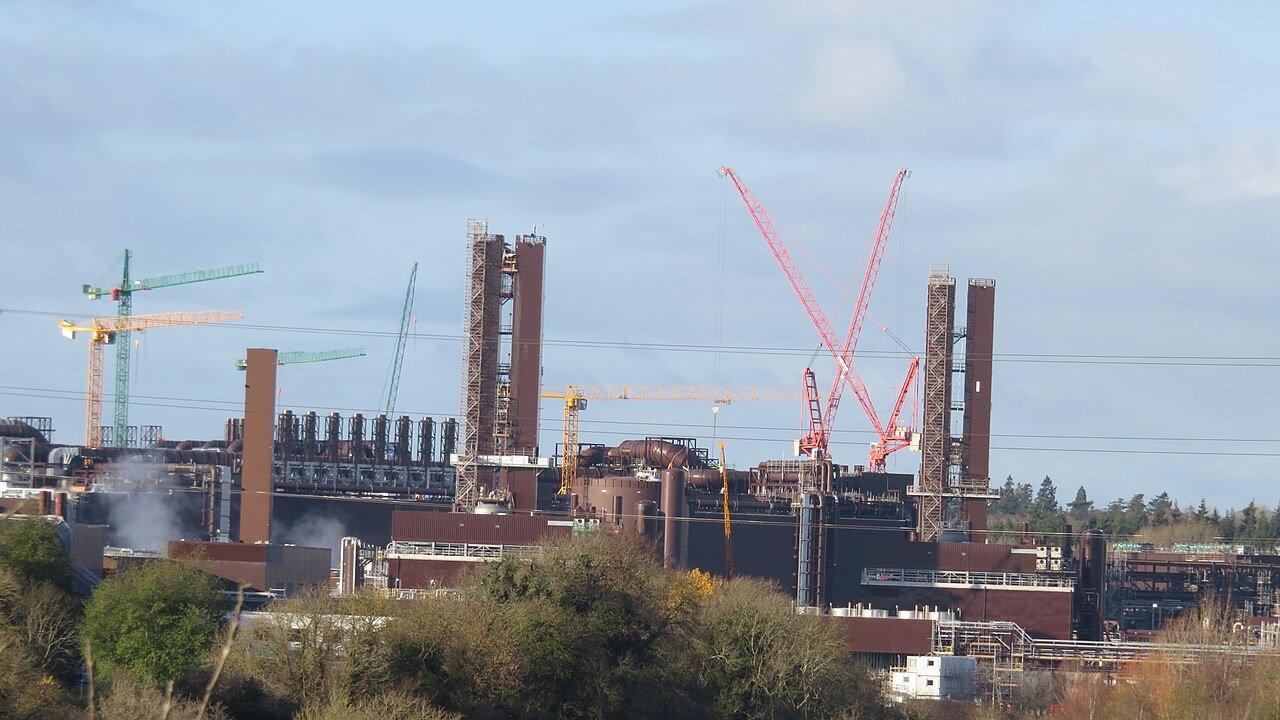
Intel announces a EUR 5 billion (about US$5.7 billion) investment at Leixlip to expand production on Intel 3, used for Xeon 6 and the next Xeon, with most of the spending by the end of 2027. It is the most advanced chip production in Europe, after Intel cancelled its planned Magdeburg and Poland sites in 2025.
2026
18A-P enters risk production2026
Intel says 18A-P, the first performance version of 18A, has entered risk production on the schedule promised to customers a year earlier. Intel measures about 9% more performance at the same power or 18% lower power at the same speed. Risk production means early customer designs run under near-production conditions; high-volume output comes later.
2026
Apple returns, as a foundry customer?2026
The Wall Street Journal reports that Apple and Intel have reached a preliminary agreement for Intel to manufacture some Apple chips, after more than a year of talks in which the US government played a role. Intel shares jump about 14%. Which chips, and when, are not disclosed.
Tesla picks 14A; foundry revenue still mostly internal2026
On 22 April Elon Musk says Tesla plans to use Intel’s 14A process for chips at its planned Terafab project in Austin, the first big public commitment to 14A. A day later Intel reports first-quarter revenue of US$13.6 billion; Intel Foundry had US$5.4 billion of revenue, of which just US$174 million was from outside customers, and an operating loss of US$2.4 billion.
Panther Lake launches
Intel launches Panther Lake as Core Ultra Series 3 at CES. Its compute tile is built on 18A in Arizona, bringing Intel’s leading PC chip back into its own fab after the 2024 TSMC generation. Lip-Bu Tan says Intel is now going “big time” into 14A after earlier hints it might abandon the node.
2025
Fab 52 runs 18A
Intel says Fab 52, its fifth high-volume fab at the Ocotillo campus in Chandler, Arizona, is fully operational and that Panther Lake is in production on 18A, with RibbonFET transistors and PowerVia backside power. Intel says 18A offers up to 15% better performance per watt and 30% more density than Intel 3.
Washington, SoftBank and NVIDIA buy in
SoftBank agrees to invest US$2 billion (18 August). On 22 August the US government agrees to take a 9.9% stake for about US$8.9 billion, converting unpaid CHIPS Act grants into shares at US$20.47, weeks after President Trump had called for Tan to resign. On 18 September NVIDIA agrees to invest US$5 billion and co-develop products with Intel.
No customer, no 14A
With second-quarter results, Intel cancels its planned fabs in Magdeburg, Germany and Poland, slows construction in Ohio, and warns investors it may pause or stop developing 14A if it cannot win a significant outside customer. It is the clearest admission yet that Intel cannot fund leading-edge fabs for itself alone.
2025
Lip-Bu Tan takes over
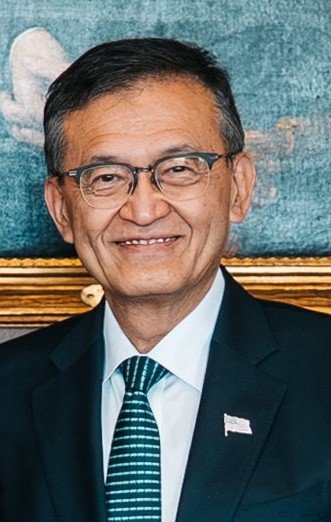
Lip-Bu Tan, the former Cadence Design Systems chief and a veteran chip investor, becomes chief executive. He promises to make Intel an engineering-led company again, cuts management layers and later sells 51% of Altera to Silver Lake.
Gelsinger out
Intel says Pat Gelsinger has retired as CEO and left the board, effective 1 December. Reports say the board had lost patience with the pace of the turnaround. A week earlier, on 26 November, the Commerce Department finalised a CHIPS Act award of up to US$7.86 billion. Intel ends 2024 with a net loss of about US$18.8 billion.
Crisis year: layoffs, 20A cancelled, TSMC inside
On 1 August Intel announces cuts of more than 15% of its workforce and suspends its dividend; the shares fall 26% the next day. On 4 September it cancels 20A and moves engineering to 18A. Its new Lunar Lake and Arrow Lake PC chips ship with their main compute tiles made on TSMC 3nm. On 16 September Intel Foundry becomes a separate subsidiary.
Intel Foundry opens its books
At its first Intel Foundry Direct Connect event on 21 February, Intel names Microsoft as an 18A customer and adds 14A to its roadmap. On 2 April, reporting manufacturing as a separate segment for the first time, it discloses an Intel Foundry operating loss of US$7.0 billion on US$18.9 billion of revenue in 2023.
Internal foundry model, Tower collapse, first EUV chip
In June Intel says manufacturing will run as an internal foundry with its own profit and loss, charging Intel’s product groups market prices. In August it ends its US$5.4 billion bid for Tower Semiconductor after China’s regulator failed to approve it, paying a US$353 million termination fee. On 14 December it launches Meteor Lake on Intel 4, its first process using EUV lithography, several years after TSMC.
2021
Nodes renamed: five in four years
Intel renames its processes to line up with the industry’s labels: enhanced 10nm becomes Intel 7, the old 7nm becomes Intel 4, followed by Intel 3, 20A and 18A. The goal, later called “five nodes in four years”, is to regain process leadership by 2025.
2021
IDM 2.0
Five weeks after returning as CEO on 15 February, Pat Gelsinger announces IDM 2.0: keep manufacturing in-house, use outside foundries where it makes sense, and sell manufacturing to others through a new Intel Foundry Services. Intel commits about US$20 billion to two new fabs at Ocotillo, Arizona, and says it will work with IBM on research.

Apple leaves Intel
Apple ships the first M1 Macs, built on TSMC 5nm, five months after announcing the move away from Intel. The M1 MacBook Air outperforms many Intel laptops while running cooler and longer on battery. Fifteen years earlier, in 2005, Apple had moved the Mac to Intel.
2020
7nm slips too
Intel says its 7nm process is about 12 months behind its internal plan because of a defect problem and that it may use outside foundries for some chips. Intel stock falls about 16% the next day. TSMC is already making 5nm chips for Apple’s next iPhone. Chief engineering officer Murthy Renduchintala leaves days later.
10nm finally ships in volume; AMD goes chiplet
Intel ships Ice Lake, its first high-volume 10nm processors, about three years after the original 10nm plan. AMD launches Zen 2 desktop and server chips that combine small TSMC 7nm CPU chiplets with a separate input-output die. In July Intel sells most of its smartphone modem business to Apple for about US$1 billion.
TSMC takes the lead
TSMC begins volume production of 7nm. Intel’s only 10nm chip, Cannon Lake, ships in tiny numbers with its graphics disabled. In August GlobalFoundries, which inherited AMD’s fabs, abandons 7nm, pushing AMD fully onto TSMC. For the first time in decades, the most advanced logic process belongs to someone other than Intel.
Tick-tock ends; Intel quits phones
Intel’s annual report replaces tick-tock with a three-step process, architecture, optimisation cycle, confirming each node will last longer. In April Intel cancels its Broxton and SoFIA smartphone chips, effectively leaving the phone processor market that TSMC’s customers dominated.
14nm arrives late
Intel’s first 14nm chips, Broadwell, ship in late 2014 after yield problems pushed them back from 2013. 14nm would end up powering Intel’s main chips until 2020 and beyond, refreshed again and again with “+” versions.
The peak, and the phone Intel passed on
On 6 June 2005 Apple announces it will move the Mac to Intel. In 2006 Intel sells its XScale mobile chip unit to Marvell, and, by Paul Otellini’s later account, declines to make a chip for the first iPhone because the price was too low. In 2007 Intel formalises tick-tock and ships 45nm chips with high-k metal gates, a lead rivals took years to match.
Pentium and Intel Inside
The Pentium processor launches, backed by the Intel Inside campaign that began in 1991 and made a hidden component into a consumer brand. Behind the brand was a manufacturing machine that shipped a new process roughly every two years.
Meanwhile, in Taiwan
Morris Chang founds TSMC in Hsinchu as a pure-play foundry: a chip factory for other companies that designs no chips of its own. The same year Andy Grove becomes Intel’s CEO, two years after steering Intel out of memory chips and into microprocessors. Few people saw the two events as connected.
The 4004
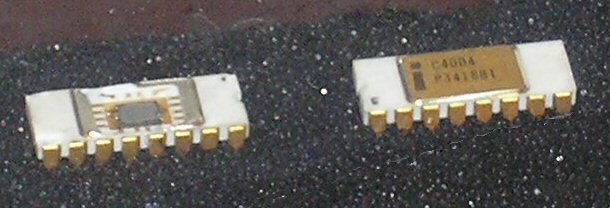
Intel releases the 4004, a 4-bit processor designed for a Japanese calculator maker and widely recognised as the first commercially available microprocessor. It is made on a 10-micron process, about 1,000 times larger than today’s node labels.
1968
Intel is founded
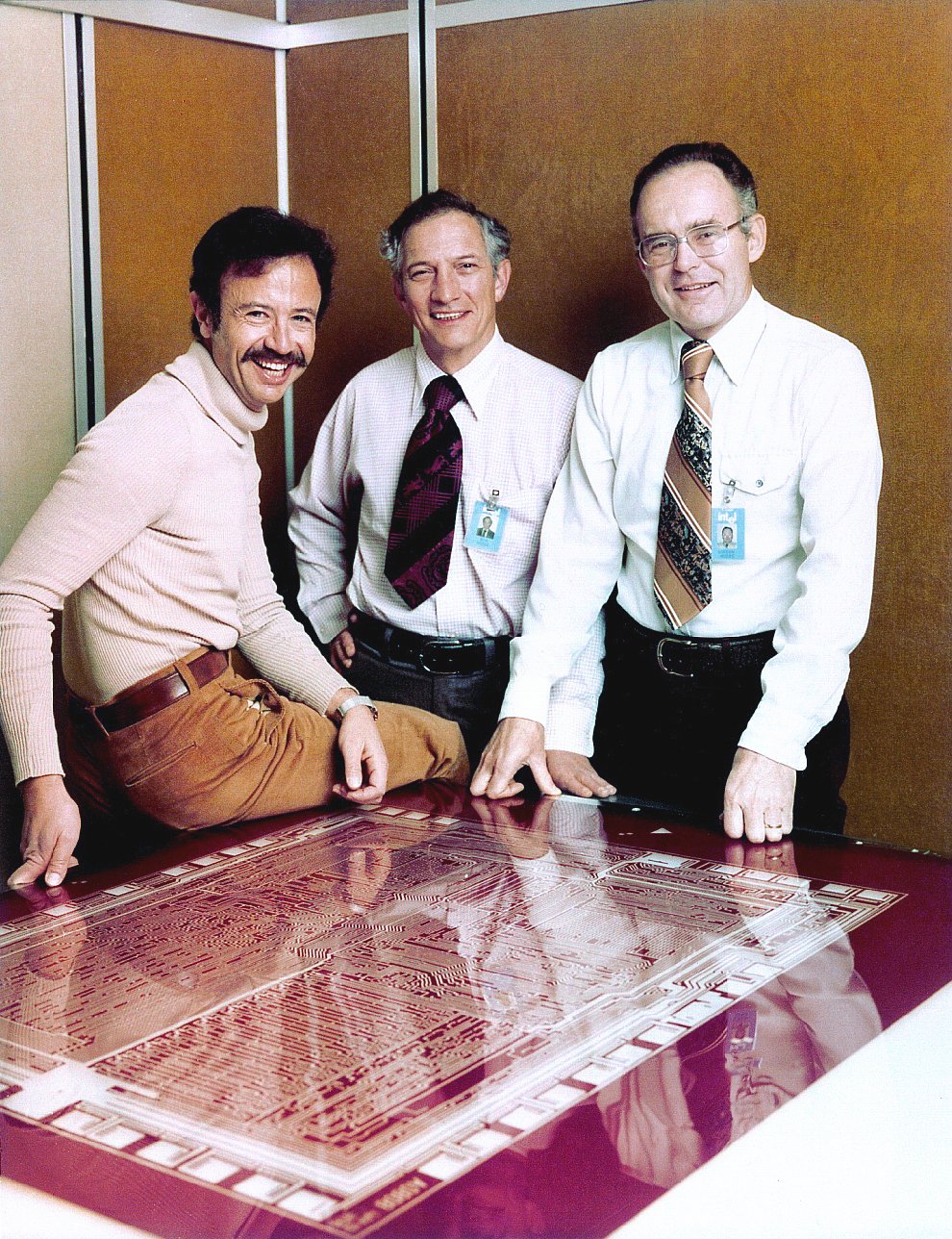
Robert Noyce and Gordon Moore leave Fairchild Semiconductor and found Intel, first to make memory chips. Andy Grove joins on day one as the first employee hired. Moore’s 1965 observation that transistor counts double at a steady pace, later called Moore’s Law, becomes Intel’s manufacturing roadmap.
The Node Race: Who Shipped First
Not “which number is smaller”, but who reached high-volume manufacturing first.
Node names stopped measuring anything physical around 2010. Intel’s 10nm was denser than TSMC’s 10nm and roughly equal to TSMC 7nm, which is why Intel renamed it Intel 7 in 2021. Intel 18A is not “worse” than TSMC 2nm because 18 is bigger than 2: both are the first gate-all-around generation, and both entered volume production around the end of 2025. What decides the race is performance, power, density, yield, cost, volume and the customer ecosystem, and on the last three TSMC is still far ahead.
Pick a processor. See who designed it, who made the silicon and who packaged it.
The brand on the laptop tells you less than it used to.
Intel’s Manufacturing Journey in Six Eras
| Era | Intel’s position | What changed |
|---|---|---|
| 1968–1985 | Memory to microprocessors | 4004 in 1971; exits DRAM in 1985 under Grove |
| 1985–2005 | Manufacturing powerhouse | 386, Pentium, Intel Inside; a new process every two years |
| 2006–2014 | Process leader | Tick-tock, high-k metal gate, first FinFETs in 2011 |
| 2015–2020 | The slip | 14nm stretches, 10nm three years late, 7nm delayed, Apple leaves |
| 2021–2024 | IDM 2.0 and crisis | Renamed nodes, foundry push, record losses, 20A cancelled, Gelsinger out |
| 2025–2026 | Rebuild under new owners | Lip-Bu Tan, US stake, 18A in production, 18A-P risk production, Apple and Tesla talks |
Why Did Intel Actually Lose Its Manufacturing Crown?
There wasn’t one failure. Several forces arrived together.
- Process complexity. Each node needed new materials, multi-patterning or EUV and years of yield learning. A mistake now cost billions.
- 10nm over-reach. Intel aimed for an aggressive density jump without EUV and hit years of yield problems.
- 7nm slipped too. The recovery node was itself a year late in 2020.
- Late to EUV. Intel’s first EUV chip shipped in December 2023; TSMC used EUV in volume from 2019.
- Fab economics. TSMC spreads each fab across hundreds of customers; Intel had to fill fabs with its own products.
- Smartphones. Intel passed on the iPhone and quit phone chips in 2016. The biggest new chip market filled TSMC’s fabs instead.
- Apple silicon. Apple showed that custom chips on TSMC could beat Intel in laptops.
- AMD’s chiplets. Small TSMC-made dies plus an I/O die gave AMD better manufacturing than Intel without owning a fab.
- AI. Growth moved to GPUs and accelerators, designed by NVIDIA and others and made at TSMC.
- Organisational load. Intel tried to design CPUs, build fabs, start a foundry, use outside foundries, develop packaging and compete in AI all at once.
Intel Foundry by the Numbers
Revenue is growing. Most of it still comes from Intel.
Since 2024 Intel has reported manufacturing as a separate business, Intel Foundry, which charges Intel’s own product groups for wafers. That made the cost of falling behind visible: a US$7.0 billion operating loss in 2023. In the first half of 2026 revenue rose, but only US$174 million of first-quarter revenue came from outside customers. A new fab is paid for years before it is full: spend now, capacity later, customers later, profit later. Meanwhile TSMC is already selling the wafers.
Where the Rebuild Money Came From
The company that once funded every fab from profits now has new shareholders.
| Source | Amount | When |
|---|---|---|
| CHIPS Act award | Up to US$7.86B | Finalised 26 Nov 2024; later largely converted into equity |
| SoftBank | US$2B | Agreed 18 Aug 2025 |
| US government | 9.9% for about US$8.9B | Agreed 22 Aug 2025, at US$20.47 a share |
| NVIDIA | US$5B | Agreed 18 Sep 2025, at US$23.28 a share |
| Altera stake sale | 51% to Silver Lake | Announced Apr 2025 |
| Public share sale | US$20B, about US$22.6B with extra shares | Priced 10 Aug 2026 at US$95 |
A leading-edge fab has to pass five tests. Tap each one to see where Intel stands in September 2026.
Winning one or two is not enough. TSMC passes all five every quarter.
So has Intel won back the crown?
Look at all five, then tap Reveal.
The Four Battles Intel Must Win
| Battle | Evidence, Sep 2026 | Status |
|---|---|---|
| Process technology | 18A in volume; 18A-P in risk production; 14A in development | Largely won |
| Yield | Not disclosed; Intel says on plan | Unproven |
| Customers | External revenue US$174M in Q1 2026; Tesla, Microsoft, Apple (preliminary) | Early |
| Scale and profit | Foundry loss about US$2B a quarter; breakeven 2027–2028 | Not yet |
The Apple Paradox
Apple moved the Mac to Intel in 2005, left in 2020, and may come back as a foundry customer. If the preliminary agreement reported in May 2026 becomes production orders, the company whose chips best demonstrated the limits of Intel’s old model would become proof that the new model works. That is exactly what IDM 2.0 was designed to achieve, and it is not confirmed yet.
The bigger picture is geopolitical. Most leading-edge logic is made in Taiwan. The US government’s 9.9% stake, the CHIPS Act and the Arizona and Ireland investments treat Intel as the main non-Asian source of advanced chips. See our TSMC history timeline for the other side of the story.
Myths vs Facts
“Intel stopped innovating”
It introduced high-k metal gates (2007), FinFETs (2011) and backside power (18A). The failure was execution and timing, not ideas.
“Intel stopped making its own chips”
It still makes most of them, and its 2026 flagship PC chip is built on Intel 18A. It also buys some tiles from TSMC.
“18A is behind 2nm because 18 is bigger than 2”
Node names are labels. Both are first-generation gate-all-around processes that reached volume around late 2025.
“Intel renamed its nodes in 2022”
The Intel 7/4/3/20A/18A names were announced on 26 July 2021.
“Andy Grove co-founded Intel”
Noyce and Moore founded it. Grove joined on day one as the first hire and is often called the third founder.
“Apple is back with Intel”
A preliminary agreement was reported in May 2026. Products, nodes and volumes are unconfirmed.
Did You Know?
- Memory first: Intel began as a memory company and only exited DRAM in 1985.
- Circle closed: Apple moved the Mac to Intel in 2005 and bought Intel’s phone modem business in 2019.
- First High-NA: Intel installed the first commercial High-NA EUV system in 2024, ahead of TSMC.
- Fab 52: Intel’s 18A fab is its fifth high-volume fab at the Ocotillo campus in Chandler, Arizona.
- Largest shareholder: since August 2025, the US government.
Test Yourself: Intel Manufacturing Quiz
1. What does IDM stand for?
2. Who founded Intel in 1968?
3. Which Intel process was about three years late?
4. When did Apple release its first M1 Macs?
5. When were Intel’s nodes renamed Intel 7, 4, 3, 20A and 18A?
6. What are RibbonFET and PowerVia?
7. How much external foundry revenue did Intel report in Q1 2026?
8. What stake did the US government agree to take in Intel in August 2025?
Explore More Timelines
People Also Ask
Frequently Asked Questions
The Question Still Open
Intel didn’t lose the crown in one moment. Tick-tock slowed, 10nm slipped, 7nm slipped, TSMC scaled the foundry model, AMD and Apple used it, and AI moved the industry’s centre of gravity to accelerators. Intel owned the factory, but the factory had to keep winning. Now 18A is in production, 18A-P is in risk production and new money is in the bank. The unanswered question is whether Intel can turn 18A from a technology comeback into a manufacturing comeback.
Related AiTimeline Stories
⚠️ Editorial Note
Financial figures are from Intel’s quarterly earnings releases and SEC filings; TSMC node shares from its 4Q25 management report; 18A-P, Fab 52, Ireland and High-NA details from Intel and ASML announcements. The Apple agreement is as reported by the Wall Street Journal and is unconfirmed by either company. Corrections to widely shared versions of this story: Intel was founded by Noyce and Moore, with Grove as first hire; the node renaming was in July 2021, not 2022; Fab 52 was declared fully operational in October 2025, not 2026. Yields are not published by Intel or TSMC. Share prices change daily; this article is not investment advice.
Sources & further reading
Every dated entry above was checked against these references. Last reviewed 30 September 2026.
- Intel: Q2 2026 earnings release (23 July 2026), SEC Form 8-K
- Intel: Q1 2026 earnings release (23 April 2026), SEC Form 8-K
- Intel Foundry: Process milestones at VLSI Symposium, 18A-P risk production (June 2026)
- Intel: EUR 5 billion investment to expand manufacturing in Europe (13 July 2026)
- Intel: Upsize and pricing of US$20 billion common stock offering (August 2026)
- Intel and ASML: High-NA EUV industry readiness (8 September 2026)
- Intel: Panther Lake architecture and Fab 52 fully operational (9 October 2025)
- CNBC: Intel shares soar on Apple chip deal report (8 May 2026)
- DCD: Musk says Tesla will use Intel 14A at Terafab (April 2026)
- TSMC: 4Q25 management report (January 2026)
- Intel: Form 10-K for fiscal 2025, SEC