Delhi EV Policy 2026 Timeline: Zero Road Tax, Registration Fee Exemption, Incentives & Complete Policy History (2020–2030)
Delhi EV Policy 2026: zero road tax and registration fees for e-cars up to Rs 30 lakh, EV subsidies, a scrapping incentive and charging plans explained.
Latest Story
The Delhi EV Policy 2026 timeline tracks a policy that is now official: on 1 July 2026 the Lieutenant Governor of Delhi notified the Delhi Electric Vehicles Policy 2026 (widely called EV Policy 2.0), replacing the pioneering 2020 policy that had run on repeated extensions. The headline benefit is simple — 100% exemption from road tax and registration fees for electric cars priced up to ₹30 lakh, plus purchase subsidies for two- and three-wheelers and a ₹1 lakh scrapping incentive. This reverse-chronological guide separates what is officially notified from what is only scheduled, drafted or analysed, and compares the 2026 policy with 2020 for full historical context. The policy is valid until 31 March 2030.
🧠 Delhi EV Policy in 60 Seconds — AI Overview
The Delhi EV Policy 2026 took effect on 1 July 2026 and runs to 31 March 2030. Electric cars costing up to ₹30 lakh get full road tax and registration-fee exemption; cars above ₹30 lakh are excluded. Buyers get subsidies of up to ₹30,000 for e-two-wheelers and ₹50,000 for e-three-wheelers, plus a ₹1 lakh scrapping incentive. From January 2027 only electric three-wheelers, and from April 2028 only electric two-wheelers, can be newly registered. Delhi is investing about ₹15,000 crore and targeting 30,000-plus charging points.
Delhi EV Policy 2026: Key Questions
Delhi EV Policy 2026 at a Glance
- It's official: notified with effect from 1 July 2026, valid until 31 March 2030, replacing the 2020 policy.
- Zero road tax and registration for battery-electric cars priced up to ₹30 lakh; cars above ₹30 lakh are excluded.
- Subsidies: up to ₹30,000 for e-two-wheelers and ₹50,000 for e-three-wheelers in the first year, tapering over three years.
- Scrapping incentive: ₹1 lakh for scrapping an old BS-IV-or-earlier four-wheeler and buying an EV.
- Hybrids are excluded from state support; the final policy focuses only on zero-emission battery EVs.
- Scheduled mandates: only electric three-wheelers newly registered from 1 January 2027; only electric two-wheelers from 1 April 2028.
- The 2028 rule is a registration ban, not a usage ban — existing petrol two-wheelers can still be driven.
- Big spend: around ₹15,000 crore over four years and a target of 30,000-plus public charging points.
- Context: the 2020 policy helped Delhi reach roughly 14% EV penetration by 2025; the 2026 policy targets about 30% of the fleet by 2030.
What's New in the 2026 Policy
Six headline features of the notified Delhi Electric Vehicles Policy 2026.
Notified
Notified
Planned
Notified
Notified
Changed from draft
Delhi EV Policy: 2020 vs 2026
How the notified 2026 policy compares with the original 2020 policy.
2020 Policy vs 2026 Policy
Delhi EV Policy Timeline (Reverse Chronological)
Latest and upcoming milestones first. Each entry is labelled notified, scheduled, draft or historical.
Scheduled: only electric two-wheelers can be newly registered
Government decision: Under the notified 2026 policy, from 1 April 2028 Delhi will register only electric two-wheelers — new petrol, CNG and diesel two-wheeler registrations stop.
Consumer impact: This is a ban on new registrations, not on use. Anyone who already owns a petrol two-wheeler, or buys one before 31 March 2028, can keep riding it legally.
Environmental impact: Two-wheelers are the largest vehicle category in Delhi, so shifting them to electric targets a major source of tailpipe pollution.
Industry reaction: Manufacturers had sought realistic timelines; the 2028 date gives the two-wheeler industry lead time to expand electric line-ups.
Scheduled: only electric three-wheelers & N1 trucks registered
Government decision: From 1 January 2027, new registrations of petrol and CNG auto-rickshaws (and non-electric N1 light goods vehicles) are halted; only electric three-wheelers and N1 trucks can be registered.
Vehicle categories affected: Three-wheeler autos and N1-category light commercial vehicles — both heavily used for passengers and last-mile delivery.
Consumer and industry impact: Fleet operators and delivery firms accelerate electric adoption; e-auto makers gain a captive new-registration market.
Environmental impact: Auto-rickshaws and small goods vehicles are intensive urban polluters relative to their size, so this is an early, high-impact cutoff.
Delhi EV Policy 2026 comes into effect
Official notification: The Lieutenant Governor of the National Capital Territory of Delhi notified the Delhi Electric Vehicles Policy 2026 with effect from 1 July 2026, valid until 31 March 2030.
Policy change: 100% road tax and registration exemption for battery-electric cars up to ₹30 lakh; subsidies for e-two- and three-wheelers; a ₹1 lakh scrapping incentive; and hybrids excluded from state support.
Financial benefit: An eligible e-car buyer saves both road tax and registration; e-two-wheeler buyers get up to ₹30,000 and e-three-wheeler buyers up to ₹50,000 in year one.
Environmental impact: The policy aims for about 30% of Delhi's vehicle fleet to be electric by 2030 as part of a move toward zero-emission transport.
Industry reaction: EV makers welcomed the certainty after years of extensions; some carmakers were disappointed that hybrids were left out.
Delhi Cabinet approves the EV Policy 2026
Government decision: The Delhi Cabinet cleared the Electric Vehicles Policy 2026, paving the way for the LG notification days later.
Policy change from draft: The approved version fixed the ₹30 lakh price cap for the car tax waiver and removed a draft proposal to give strong hybrids under ₹30 lakh a 50% tax concession — keeping the policy focused on battery EVs.
Why it matters: Cabinet approval ended years of uncertainty and repeated extensions of the 2020 policy, giving buyers and industry a clear four-year roadmap.
Draft revised, government changes, 2020 policy extended
Policy change: Following the February 2025 Delhi Assembly election and a change of government, officials revised the EV Policy 2.0 draft, while the 2020 policy continued on short extensions so existing benefits would not lapse.
Draft proposals (not implemented): Earlier drafts floated tighter timelines for phasing out petrol two-wheelers and CNG autos, and some concessions that were later changed or dropped. These were proposals under consultation, not notified rules.
Why it matters: It shows how a draft evolves — several widely reported provisions shifted before the final, notified policy.
EV Policy 2.0 draft prepared; charging network grows
Policy change: The Transport Department worked on the EV Policy 2.0 draft and sought industry and public feedback, while Delhi's public charging network kept expanding under the 2020 framework.
Consumer impact: EV buyers continued to benefit from 2020-policy incentives during the transition, though some subsidy windows tightened as the policy neared expiry.
2020 policy extended; Delhi among India's top EV adopters
Policy change: With the original three-year policy due to lapse, the Delhi government extended the 2020 EV Policy while the successor policy was drafted.
Environmental and market impact: Delhi recorded one of the highest EV shares of any Indian state, driven especially by electric two- and three-wheelers.
Original Delhi EV Policy 2020 launched
Government decision: The then-Delhi government launched the Delhi EV Policy 2020, one of India's most ambitious state EV policies.
Policy change: It waived road tax and registration fees for battery EVs, offered purchase incentives of about ₹5,000 per kWh for two-wheelers (up to ₹30,000) and up to ₹1.5 lakh for the first 1,000 electric cars, added scrapping incentives, and targeted 25% of new vehicle registrations being electric by 2024.
Why it matters: It established the incentives, charging goals and EV cell that made Delhi a national EV leader — the foundation the 2026 policy builds on.
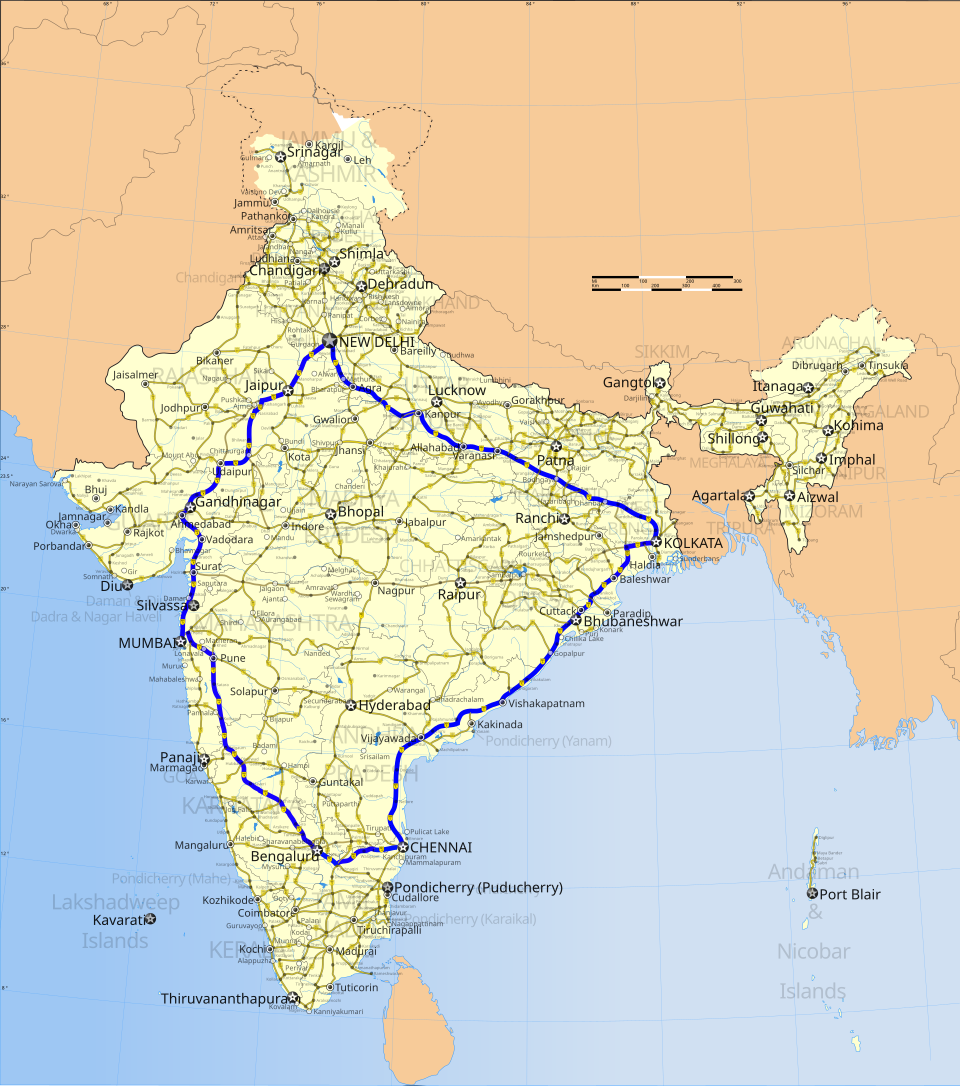
Delhi anchors India's EV transition in the National Capital Region, alongside national schemes such as FAME and PM E-DRIVE. (Illustrative map.)
Eligible Vehicles & Benefits
Who gets what under the Delhi EV Policy 2026 (battery-electric vehicles only).
| Vehicle Type | Road Tax | Registration Fee | Purchase Subsidy | Key Condition |
|---|---|---|---|---|
| Electric car (up to ₹30 lakh) | Waived (100%) | Waived (100%) | Tax + fee waiver is the main benefit | Ex-showroom ₹30 lakh or less, BEV |
| Electric car (above ₹30 lakh) | Not waived | Not waived | Not eligible | Excluded from the car waiver |
| Electric two-wheeler | Waived | Waived | ₹30k / ₹20k / ₹10k (Yr 1/2/3) | Battery-electric |
| Electric three-wheeler | Waived | Waived | ₹50k / ₹40k / ₹30k (Yr 1/2/3) | Only e-3W registrable from Jan 2027 |
| N1 electric truck | Waived | Waived | Up to ₹1 lakh | Battery-electric goods vehicle |
| Strong hybrid | Not eligible | Not eligible | Not eligible | Excluded (BEV-only policy) |
Financial Benefits: How Much Can You Save?
Illustrative savings. Actual road tax depends on the RTO calculation for your vehicle.
Road tax savings. In Delhi, motor-vehicle tax on a car is charged as a percentage of its cost, so a full waiver on an eligible electric car can save a meaningful share of the purchase price. On a mid-priced EV, that can run from tens of thousands of rupees into the low lakhs — the higher the (eligible) price, the larger the absolute saving, up to the ₹30 lakh ceiling.
Registration savings. The registration fee is also waived for eligible EVs, removing another upfront charge at the time of registration.
Purchase subsidies. Two- and three-wheeler buyers get direct subsidies (₹30,000 and ₹50,000 respectively in year one), which stack on top of the tax and fee waivers to cut the effective on-road price.
Scrapping incentive. Owners scrapping a BS-IV-or-older four-wheeler and switching to an EV can claim a ₹1 lakh incentive — rewarding the retirement of older, more-polluting vehicles.
Charging and running costs. Beyond the policy itself, electricity as a fuel is typically far cheaper per kilometre than petrol or diesel, so ownership savings continue well after purchase — especially for high-use vehicles like autos and delivery fleets.
How the price band matters. For a buyer choosing an electric car under ₹30 lakh, the road tax and registration waivers are pure savings. Cross the ₹30 lakh line and those car benefits disappear — a deliberate design choice to steer support toward mass-market EVs rather than luxury models.
Key Entities Behind the Policy
The institutions and schemes that shape Delhi's EV push.
Government of NCT of Delhi
The Delhi state government frames and funds the EV policy. The 2020 policy was launched under the then-AAP government; the 2026 policy was notified under the current government following the February 2025 assembly election.
Transport Department, GNCTD
Delhi's Transport Department administers registrations, road tax, incentives and the EV cell. It is the authority to confirm current rules and to process road tax and registration-fee exemptions.
Ministry of Heavy Industries
The central ministry runs national EV schemes that complement state policies. Its incentives for manufacturing and demand sit alongside Delhi's state-level tax and subsidy benefits.
FAME / PM E-DRIVE
India's national demand-incentive schemes (FAME II, succeeded by PM E-DRIVE) subsidise EVs and charging nationwide. Buyers in Delhi can benefit from national and state support together, subject to each scheme's rules.
Electric Vehicles (BEVs)
The 2026 policy supports battery-electric vehicles only — cars, two- and three-wheelers and N1 trucks that run purely on electricity. Hybrids and internal-combustion vehicles are outside its incentives.
Charging Infrastructure
Public chargers, home charging, fast charging and battery swapping underpin EV adoption. The 2026 policy targets 30,000-plus public charging points to address range and convenience concerns.
Charging Infrastructure Under the 2026 Policy
The plan to make charging convenient across Delhi.
Public charging. The policy targets 30,000–32,000 public charging points across Delhi, with roughly ₹1,000 crore earmarked for charging infrastructure and land already identified for sites. Widespread public charging is central to easing range anxiety for car and fleet buyers.
Home and workplace charging. Most private EV owners charge at home or work overnight. Enabling easy installation of home and residential-society chargers remains a practical priority alongside public points.
Fast charging. Fast chargers along key corridors and hubs support high-use vehicles and intercity travel, complementing slower destination charging.
Battery swapping. Swapping is especially relevant for two- and three-wheelers and commercial fleets, letting drivers exchange a depleted battery for a charged one in minutes rather than waiting to recharge.
Future expansion. As the phased registration mandates take effect in 2027 and 2028, charging and swapping capacity will need to scale in step with rising numbers of electric autos, two-wheelers and delivery vehicles.
Case Studies: Who Benefits, and How
Illustrative scenarios based on the notified benefits.
1. Buying an electric car under ₹30 lakh
A family buying a battery-electric car priced below ₹30 lakh pays no road tax and no registration fee in Delhi. Combined with cheaper per-kilometre running costs, this materially lowers both the upfront and ongoing cost compared with an equivalent petrol car — the clearest win in the policy.
2. Fleet operator savings
A ride-hailing or logistics operator running many vehicles benefits from tax and fee waivers on each eligible EV, plus lower fuel and maintenance costs at scale. With N1 electric trucks eligible for up to ₹1 lakh in incentives, commercial fleets have a strong case to electrify ahead of the 2027 registration cutoff.
3. Electric two-wheelers
A commuter buying an electric scooter can claim up to ₹30,000 in first-year subsidy on top of waived road tax and registration. With only electric two-wheelers registrable from April 2028, e-two-wheelers are set to become the default choice for new buyers well before the deadline.
4. Commercial EV adoption (autos and delivery)
From January 2027, only electric three-wheelers and N1 trucks can be newly registered, so auto drivers and last-mile delivery operators moving now can lock in subsidies (up to ₹50,000 for an e-auto) and get ahead of the mandate rather than scrambling later.
5. Pollution reduction impact
By steering the highest-volume categories — two- and three-wheelers — toward electric, and by incentivising the scrapping of old four-wheelers, the policy targets the vehicles that contribute most to Delhi's air pollution. The stated aim is roughly 30% fleet electrification by 2030 as part of a broader zero-emission transport goal.
Delhi EV Policy 2026 by the Numbers
Key figures from the notified policy and its 2020 predecessor.
| Metric | Figure | Notes |
|---|---|---|
| Effective period | 1 Jul 2026 – 31 Mar 2030 | Notified by the LG of Delhi |
| Road tax / registration waiver | 100% (e-cars ≤ ₹30 lakh) | Cars above ₹30 lakh excluded |
| E-two-wheeler subsidy | ₹30k / ₹20k / ₹10k | Years 1 / 2 / 3 |
| E-three-wheeler subsidy | ₹50k / ₹40k / ₹30k | Years 1 / 2 / 3 |
| N1 e-truck incentive | Up to ₹1 lakh | First year |
| Scrapping incentive | ₹1 lakh | BS-IV or older 4W to EV |
| Total investment | ~₹15,000 crore | Over four years |
| Charging points target | 30,000–32,000 | ~₹1,000 crore allocated |
| 2030 adoption target | ~30% of fleet | Up from ~14% penetration in 2025 |
💡 Delhi EV Policy — Fast Facts & Discover Notes
- The 2026 policy took effect on 1 July 2026, the day after the long-running 2020 policy lapsed.
- The road tax waiver is capped at ₹30 lakh ex-showroom for cars — luxury EVs are deliberately excluded.
- The April 2028 rule bans new petrol two-wheeler registrations, not the use of existing ones.
- Hybrids were supported in an early draft but dropped from the final, BEV-only policy.
- Delhi is targeting 30,000-plus public charging points, backed by around ₹1,000 crore.
- The 2020 policy's success (about 14% EV penetration by 2025) is the base for the 2030 target of roughly 30%.
Explore More Timelines
People Also Ask
Delhi EV Policy 2026 FAQ
Detailed answers to the most-searched questions about the policy.
⚠️ Editorial & E-E-A-T Note
This timeline separates official government notifications and Cabinet decisions (stated as fact), scheduled mandates that are notified but start on future dates (2027 and 2028), earlier draft proposals (some later changed or dropped, and never presented as implemented), and industry analysis and editorial commentary. Figures are drawn from the Delhi government's notified policy and credible news reports; some numbers (such as total investment and charging targets) are policy targets, not guaranteed outcomes. This article is independent, is not affiliated with any government body, and is informational only — not legal or financial advice. Verify current rules with the Transport Department, Government of NCT of Delhi.
Explore More Timelines
Sources & further reading
Every dated entry above was checked against these references. Last reviewed 6 September 2026.