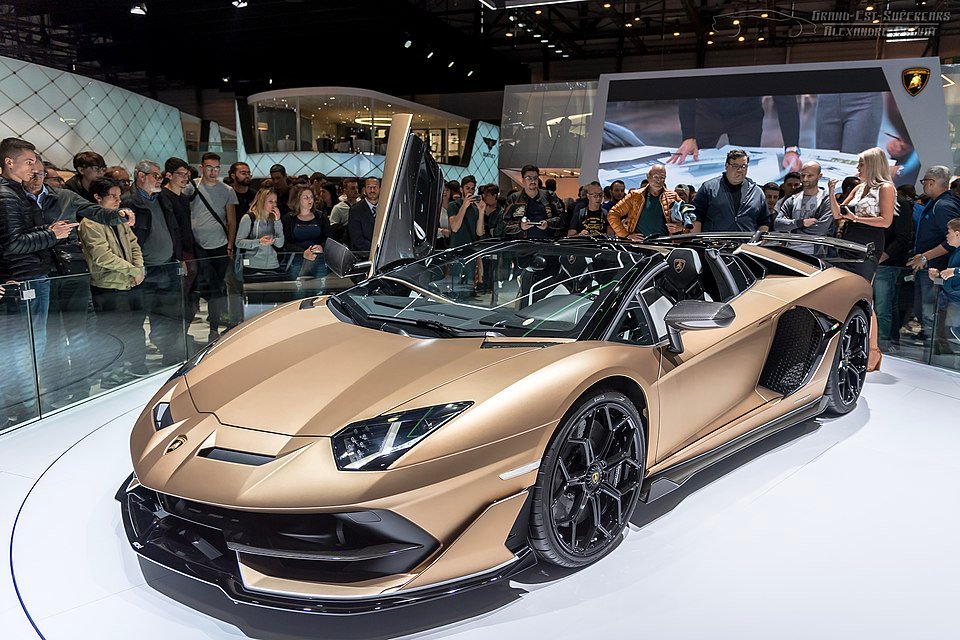
Supercars History Timeline: From the Lamborghini Miura to Modern Hypercars
Supercars history timeline: from the Lamborghini Miura to today's hypercars - the models, brands and races that defined half a century of speed.
Latest Story
The supercar is the automobile at its most extreme — a rolling statement of engineering ambition, design daring and raw performance. From the 1966 Lamborghini Miura, widely regarded as the first true supercar, to today’s 1,900-horsepower electric hypercars, this Supercars History Timeline traces seven decades of milestones, breakthroughs and legendary machines that redefined what a car could be. Read in reverse chronological order, latest era first.
Supercar History: Key Facts
Supercars History — Key Takeaways
- The 1966 Lamborghini Miura introduced the mid-engine layout that defines supercars to this day.
- The 1987 Ferrari F40 was the first production car to break 200 mph and the last approved by Enzo Ferrari.
- The 1992 McLaren F1 was the first production car with a full carbon-fibre monocoque chassis.
- The McLaren F1 hit 240.1 mph in 1998 — still the fastest naturally aspirated production car ever.
- The 2005 Bugatti Veyron smashed the 400 km/h (253 mph) barrier with its quad-turbo W16 engine.
- 2013’s “Holy Trinity” — McLaren P1, Ferrari LaFerrari, Porsche 918 — launched the hybrid hypercar era.
- The Bugatti Chiron Super Sport 300+ became the first production car to exceed 300 mph in 2019.
- The 2021 Rimac Nevera proved electric hypercars could hit 258 mph and out-accelerate every petrol rival.
- Carbon-fibre construction, once exotic, is now standard across the entire supercar segment.
- Modern supercars are increasingly hybrid or fully electric as performance and emissions rules converge.
The 10 Most Influential Supercars Ever Made
Ranked by their lasting impact on engineering, design and the supercar idea itself. Top speed shown as the headline figure.
United Kingdom
Italy
Italy
France / VW
Italy
United Kingdom
Germany
France / VW
Croatia
Italy
Supercars History Timeline (Reverse Chronological)
Latest developments first, oldest milestones last — the complete evolution from gullwing doors to electric hypercars.
26
The Hybrid & Electric Hypercar Era
The supercar’s latest chapter is defined by electrification at the very top. Ferrari’s F80 (revealed 2024) pairs a twin-turbo V6 with three electric motors for around 1,200 hp, while McLaren’s W1 succeeds the P1 with 1,275 hp of hybrid power. Bugatti’s Tourbillon replaces the W16 with a naturally aspirated V16 hybrid, and the Mercedes-AMG One brings a genuine Formula 1 power unit to the road. Hybrid V12s like the Lamborghini Revuelto prove the combustion supercar is evolving, not dying — for now.
24
Electrification & the Performance Revolution
The early 2020s saw electric power rewrite the performance rulebook. The Rimac Nevera (2021), built in Croatia, delivers 1,914 hp from four motors, hits 0–60 mph in 1.85 seconds and tops 258 mph — out-accelerating every combustion rival. Petrol fought back with the Koenigsegg Jesko and its 1,600 hp twin-turbo V8, while the Gordon Murray T.50 (2022) revived the McLaren F1 philosophy with a screaming V12 and a rear fan for downforce. Carbon-fibre, active aero and torque-vectoring became universal.
Bugatti Chiron Super Sport 300+ Breaks 300 mph
On a closed VW test track, racing driver Andy Wallace piloted a pre-production Bugatti Chiron Super Sport 300+ to 304.77 mph (490.48 km/h), becoming the first production-based car to break the 300 mph barrier. Powered by an uprated 1,578 hp version of Bugatti’s 8.0-litre quad-turbo W16, the run capped a two-decade Volkswagen-era project that began with the Veyron. A 30-unit production run followed.
The “Holy Trinity”: McLaren P1, Ferrari LaFerrari & Porsche 918
In a single year, three manufacturers launched hybrid hypercars that changed everything. The Ferrari LaFerrari (950 hp) used a HY-KERS system derived from Formula 1; the McLaren P1 (903 hp) brought active aerodynamics and a track-focused DRS-style wing; and the Porsche 918 Spyder (887 hp) added all-wheel drive and a 6:57 Nürburgring lap. Together they proved electric assistance meant more performance, not less — and established the blueprint for every hypercar since.
Bugatti Veyron — The First Hypercar
Volkswagen’s revived Bugatti set out to build a 1,000 hp car capable of 400 km/h with luxury-car civility — and succeeded. The Veyron 16.4 produced 987 hp from a unique 8.0-litre quad-turbocharged W16, reached 253 mph (407 km/h), and sprinted 0–60 in 2.5 seconds. It required ten radiators and a fortune to develop. The Veyron didn’t just raise the bar; it created the “hypercar” tier that sits above ordinary supercars.
McLaren F1 Sets the 240 mph Record
Six years after launch, a McLaren F1 (chassis XP5) driven by Andy Wallace reached 240.1 mph (386.4 km/h), making it the fastest production car in the world — a record it held until the Veyron in 2005. Remarkably, the F1 remains the fastest naturally aspirated production car ever built, a record now unlikely to be broken in the turbocharged, electrified modern era.
McLaren F1 Launch — The Engineering Masterpiece
Conceived by Formula 1 designer Gordon Murray, the McLaren F1 was the first production car built around a carbon-fibre monocoque. Its central driving position, gold-lined engine bay and bespoke 6.1-litre BMW V12 producing 627 hp made it the most advanced road car of its time. Only 106 were built. No turbochargers, no electronic aids — just obsessive engineering that many still call the greatest supercar ever made.
Ferrari F40 — The First 200 mph Road Car
Built to celebrate Ferrari’s 40th anniversary and the last car personally approved by Enzo Ferrari, the F40 became the first production car to exceed 200 mph (201 mph top speed). Its 2.9-litre twin-turbo V8 made 471 hp, fed through a stripped-out Kevlar and carbon-fibre body with no carpets, no door handles and sliding plastic windows. Raw, loud and uncompromising, the F40 is the definitive driver’s Ferrari.
Lamborghini Countach — The Wedge Revolution
If the Miura was beautiful, the Countach was shocking. Marcello Gandini’s razor-edged wedge design and signature scissor doors defined the look of the exotic supercar for a generation. Powered by a mid-mounted V12, it became the ultimate bedroom-wall poster car of the 1970s and 80s. Produced until 1990, the Countach turned the supercar into a cultural symbol of speed and excess.
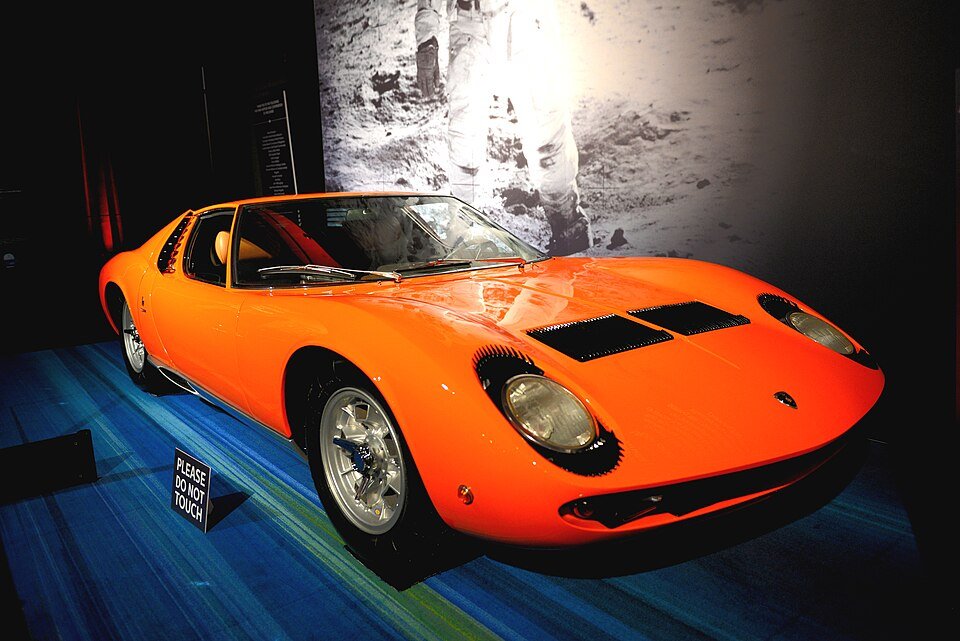
Lamborghini Miura — The First Supercar
The Lamborghini Miura stunned the 1966 Geneva Motor Show with a layout no road car had used before: a transverse mid-mounted V12. Designed by a young Marcello Gandini at Bertone and named after a Spanish fighting-bull breed, the Miura’s 3.9-litre V12 produced around 350 hp for a ~170 mph top speed. Gorgeous and fast, it created the mid-engine supercar template that endures 60 years later.
Mercedes-Benz 300 SL Gullwing — The Proto-Supercar
Before “supercar” was even a word, the Mercedes-Benz 300 SL set the template. Its dramatic gullwing doors were born of a lightweight spaceframe, and it was the first production car with fuel injection (Bosch mechanical direct injection). With around 215 hp and a ~160 mph top speed, the 300 SL was the fastest production car of its day — a road-going racer that previewed everything the supercar would become.
The Evolution of the Supercar: Seven Engineering Eras
1. The Birth of the Supercar
The supercar was born when manufacturers stopped adapting race cars for the road and began designing road cars with race-car ambition. The Mercedes 300 SL (1954) and especially the Lamborghini Miura (1966) proved buyers would pay for uncompromised performance and beauty. The Miura’s mid-engine layout was the genuine breakthrough — placing the engine behind the driver but ahead of the rear axle for ideal weight distribution.
2. The Mid-Engine Revolution
After the Miura, the mid-engine layout became supercar orthodoxy. Ferrari, Lamborghini, Maserati and later McLaren all adopted it because it delivers the balance and agility a front-engine car cannot. From the Countach to today’s Ferrari and McLaren ranges, the mid-engine silhouette remains the universal signature of the breed.
3. Aerodynamics Evolution
Early supercars chased low drag; modern ones generate downforce. The wedge-shaped Countach hinted at aero awareness, but it was motorsport know-how that brought active wings, underbody diffusers and, in the McLaren P1 and Gordon Murray T.50, movable aerodynamic devices and fans that press the car onto the road at speed.
4. The Turbocharging Era
The Ferrari F40 (1987) made forced induction glamorous, using twin turbochargers to crack 200 mph. Turbocharging let smaller engines produce supercar power, and by the 2010s nearly every new supercar — Ferrari, McLaren, Bugatti — relied on turbos for their immense outputs.
5. Carbon-Fibre Construction
The McLaren F1 (1992) introduced the first carbon-fibre monocoque in a production car, borrowing directly from Formula 1. Carbon-fibre’s strength-to-weight ratio transformed safety and performance, and it is now the standard chassis material across the supercar industry.
6. Hybrid Performance Systems
2013’s Holy Trinity — LaFerrari, McLaren P1 and Porsche 918 — used electric motors not to save fuel but to add instant torque and fill turbo lag. Hybridisation delivered the best of both worlds and is now the dominant approach for flagship hypercars from Ferrari, McLaren and Mercedes-AMG.
7. Electric Hypercars
The Rimac Nevera (2021) showed a fully electric hypercar could beat every petrol car to 60 mph and top 258 mph. With nearly 2,000 hp, instant torque and four-motor torque vectoring, electric hypercars represent the newest frontier — even as combustion flagships continue alongside them.
The Brands That Built the Supercar
How seven manufacturers shaped the evolution of high-performance motoring.
Pagani
Founded by former Lamborghini engineer Horacio Pagani in 1992, the Italian firm fuses art and carbon-fibre science. The Zonda (1999) and Huayra turned the hypercar into rolling sculpture, with obsessive detailing and exposed carbon weave that command multi-million-dollar prices.
Rimac
Croatia’s Rimac, founded by Mate Rimac in 2009, leapt from a garage project to electric-hypercar leadership. The 1,914 hp Nevera holds multiple EV acceleration records, and Rimac now supplies powertrain technology to legacy brands — even taking joint control of Bugatti.
Comparison Tables
| Vehicle | Year | Top Speed | Horsepower | Innovation | Legacy |
|---|---|---|---|---|---|
| Lamborghini Miura | 1966 | ~170 mph | 350 hp | Mid-engine layout | First supercar |
| Ferrari F40 | 1987 | 201 mph | 471 hp | Twin-turbo, 200 mph | Purist icon |
| McLaren F1 | 1992 | 240 mph | 627 hp | Carbon monocoque | Greatest ever |
| Bugatti Veyron | 2005 | 253 mph | 987 hp | Quad-turbo W16 | First hypercar |
| Ferrari LaFerrari | 2013 | 217 mph | 950 hp | HY-KERS hybrid | Holy Trinity |
| Bugatti Chiron SS | 2019 | 304 mph | 1,578 hp | 300+ mph barrier | Speed king |
| Rimac Nevera | 2021 | 258 mph | 1,914 hp | Quad-motor EV | Electric benchmark |
| Attribute | Supercar | Hypercar |
|---|---|---|
| Price | $200k – $500k | $1 million and up |
| Production volume | Hundreds to thousands | A few to a few hundred |
| Technology | Turbo V8/V10/V12 | Hybrid / electric, F1-derived |
| Performance | ~200 mph, 500–700 hp | 217–300+ mph, 900–1,900 hp |
| Exclusivity | High | Extreme / bespoke |
| Examples | Ferrari 296, McLaren 720S, Lambo Huracán | Bugatti Chiron, LaFerrari, Rimac Nevera |
Case Studies: Five Cars That Changed Everything
Case Study 1 — Lamborghini Miura (1966)
Development story: Lamborghini’s engineers designed the Miura’s mid-engine chassis in their spare time; Ferruccio initially doubted it would sell. Engineering breakthrough: the transverse-mounted V12 behind the cockpit. Industry impact: it forced every rival to rethink layout and launched the supercar genre. Collector significance: pristine SV examples now sell for several million dollars.
Case Study 2 — Ferrari F40 (1987)
Development story: rushed to mark Ferrari’s 40th anniversary, it was the last car Enzo Ferrari signed off before his death. Engineering breakthrough: a composite body and twin-turbo V8 that broke 200 mph. Industry impact: proved buyers craved raw, race-bred machines. Collector significance: one of the most desirable modern Ferraris, with values climbing for decades.
Case Study 3 — McLaren F1 (1992)
Development story: Gordon Murray’s no-compromise vision, funded by McLaren’s F1 success. Engineering breakthrough: the first carbon-fibre monocoque road car, with a central driving seat. Industry impact: redefined what a road car’s structure could be. Collector significance: the most valuable modern supercar, with examples trading above $20 million.
Case Study 4 — Bugatti Veyron (2005)
Development story: Volkswagen chairman Ferdinand Piëch demanded 1,000 hp and 400 km/h. Engineering breakthrough: the 8.0-litre quad-turbo W16 and its ten-radiator cooling. Industry impact: created the hypercar class and a new performance ceiling. Collector significance: a modern engineering landmark, appreciating as W16 production winds down.
Case Study 5 — McLaren P1 (2013)
Development story: McLaren’s hybrid answer to the question “what comes after the F1?” Engineering breakthrough: active aerodynamics and an Instant Power Assist electric system. Industry impact: co-founded the Holy Trinity and the hybrid hypercar era. Collector significance: a future classic, with limited numbers ensuring strong demand.

Data Insights: Speed, Power & Price Over Time
| Decade | Fastest Production Car | Top Speed |
|---|---|---|
| 1950s | Mercedes-Benz 300 SL | ~160 mph |
| 1960s | Lamborghini Miura | ~170 mph |
| 1970s | Lamborghini Countach | ~180 mph |
| 1980s | Ferrari F40 | 201 mph |
| 1990s | McLaren F1 | 240 mph |
| 2000s | Bugatti Veyron | 253 mph |
| 2010s | Bugatti Chiron SS 300+ | 304 mph |
| 2020s | Rimac Nevera (electric) | 258 mph |
| Year | Milestone Car | Horsepower | Power Source |
|---|---|---|---|
| 1954 | Mercedes 300 SL | ~215 hp | NA inline-6 |
| 1966 | Lamborghini Miura | 350 hp | NA V12 |
| 1987 | Ferrari F40 | 471 hp | Twin-turbo V8 |
| 1992 | McLaren F1 | 627 hp | NA V12 |
| 2005 | Bugatti Veyron | 987 hp | Quad-turbo W16 |
| 2013 | Ferrari LaFerrari | 950 hp | Hybrid V12 |
| 2021 | Rimac Nevera | 1,914 hp | Electric (4 motors) |
Speed Record Progression (Production Cars)
- 1954 — Mercedes 300 SL: ~160 mph, fastest production car of its era
- 1987 — Ferrari F40: 201 mph, first to break 200 mph
- 1998 — McLaren F1: 240.1 mph, fastest NA car ever
- 2005 — Bugatti Veyron: 253 mph, first past 250 mph
- 2010 — Veyron Super Sport: 268 mph
- 2017 — Koenigsegg Agera RS: 277.9 mph (two-way average)
- 2019 — Bugatti Chiron SS 300+: 304.77 mph, first past 300 mph
Price Inflation Snapshot
Supercar flagship prices have climbed from roughly $20,000 for a 1966 Miura (around $190,000 today) to $1.7 million for a 2005 Veyron and $2.4 million for a 2021 Rimac Nevera. Adjusted for inflation, the halo car has grown roughly tenfold in real terms as technology and exclusivity have escalated.
Rivalries, Records & Unexpected Facts
Stories Behind the Legends
- The founding feud: Lamborghini exists because Ferruccio Lamborghini, a tractor magnate, was insulted by Enzo Ferrari over a clutch complaint — and built better cars to prove a point.
- Gold for cooling: the McLaren F1’s engine bay is lined with gold foil because gold is one of the best heat reflectors available.
- Three seats: the McLaren F1 seats the driver in the centre, flanked by two passenger seats set slightly back — a layout no other production supercar copied.
- Enzo’s farewell: the F40 was the last Ferrari personally approved by Enzo Ferrari before his death in 1988.
- Ten radiators: the Bugatti Veyron needs ten separate radiators to manage the heat of its 1,000 hp W16 at full speed.
- Tyre limits: at 250+ mph the Veyron’s special Michelin tyres deflate their tread in minutes — and a full-speed run empties the fuel tank in about 12 minutes.
- Famous owners: Rowan Atkinson, Elon Musk, Jay Leno and the Sultan of Brunei have all owned landmark supercars, with Leno’s McLaren F1 among the world’s best known.
Explore More Timelines
Frequently Asked Questions
Explore More Timelines
Sources & further reading
Every dated entry above was checked against these references. Last reviewed 15 September 2026.