Mobile World Congress Timeline: The Phone Features That Actually Survived
Mobile World Congress timeline, 2001-2026: which MWC phone features survived (cameras, apps, NFC, 5G, foldables) and which flopped, like 3D and projectors.
Latest Story
Every February or March, Barcelona fills with phones that fold, roll, project, film in 3D or promise to talk to satellites. Most of those ideas are forgotten within two years. This Mobile World Congress timeline follows the ones that were not: the camera phone, downloadable apps, NFC, fingerprint unlock, water resistance, 4G and 5G, and the foldable, which survived but only as a premium niche. It also tracks the ghosts, from glasses-free 3D to projector phones and modular add-ons, and the platforms that launched at MWC and disappeared. The question is not which phone won an award at the show. It is which ideas lasted long enough to become boring.
💡 Short Answer
The MWC-era phone features that survived are the camera phone, downloadable apps on touchscreen phones (HTC Magic, 2009), NFC (Galaxy S II, 2011), fingerprint unlock and water resistance (Galaxy S5 and S7), 4G and 5G, and foldables (Huawei Mate X, 2019), which remain a premium niche. Glasses-free 3D (2011), projector phones (2012) and modular add-ons (2016) did not. AI agents are the next test.
Mobile World Congress Phone Features: Key Questions
What 25 Years of MWC Phones Show
- Launched at MWC is not invented at MWC: camera phones, Android, NFC and Touch ID all started elsewhere.
- The camera phone predates MWC in Barcelona: the Nokia 7650 was unveiled there in 2001, when the congress was still in Cannes.
- The most durable idea is software: the app-platform phone, shown at MWC 2009 with the HTC Magic.
- NFC survived, but payments ended up run by card networks and phone makers, not the operators that first demoed it. India went QR-first with UPI.
- Quiet upgrades win: water resistance and fingerprint readers asked nothing of the buyer.
- Ideas that needed new habits died: 3D, projectors and modules.
- Platforms can die too: Windows Phone and Firefox OS both launched in Barcelona.
- 5G is ordinary now: 3.1 billion subscriptions by March 2026, carrying about half of mobile data.
- Foldables are a premium niche, strengthened by Apple’s entry in 2026, not a replacement for normal phones.
- MWC itself changed: by 2026 it was more an AI and network show than a handset show.
Survivors, Niches, Stepping Stones and Ghosts
Four outcomes for an idea shown in Barcelona.
Now taken for granted
Cameras, touchscreens, app stores, NFC, fingerprint unlock, water resistance, 4G and 5G. Nobody calls them revolutionary any more, which is the point.
Real, but specialised
Foldables, stylus phones and satellite messaging. They have loyal buyers and real products, but most people do not need them.
Mattered, then absorbed
Dual-core marketing, gigabit LTE demos, MMS. The need survived; the specific technology was replaced by something better.
Spectacular, then gone
3D phones, projector phones, modular add-ons and platforms like Windows Phone and Firefox OS. They looked like the future on the show floor.
Which MWC phone features are still on your phone today? Tap a feature to see its verdict.
Verdicts as of October 2026. Green = survived, pink = niche, red = gone.
Choose a feature above
The Survival Chart
Thirteen ideas, when they appeared and where they ended up.
Mobile World Congress Timeline, 2001–2026
Newest first. Tags: survived, niche, stepping stone, ghost, and moments for the show itself.
India Mobile Congress, and Apple’s foldable reaches shops Niche
The 10th India Mobile Congress opens at Yashobhoomi in New Delhi on 7 October 2026, with AI, 6G, satellite communications and semiconductors on the agenda. Later in the month Apple’s first foldable, the iPhone Duo, goes on sale on 23 October (pre-orders from 16 October). Apple announced it on 9 September at its own event, not at MWC: a 7.6-inch inner screen, a 5.4-inch outer screen and a starting price of $1,999.
Why it matters: seven years after the Mate X, the last big phone maker without a foldable has joined in, which is the clearest sign yet that the category will last.
MWC26: the 20th Barcelona show The show
The GSMA’s 20th Barcelona edition drew nearly 105,000 attendees, about 3.7% fewer than 2025’s record-equalling 109,000, and the organiser framed it around AI, 5G-Advanced, programmable networks and digital infrastructure. Phones were a smaller part of the story, but still there: the global launch of the Xiaomi 17 Ultra with a 200-megapixel periscope camera, the Nothing Phone (4a), and Honor’s Robot Phone, a concept with a pop-out gimbal camera that tracks and reacts to people.
Why it matters: MWC has turned from a handset show into a network and AI show. The phone features now on trial are AI agents and novel camera hardware.
2026
5G passes 3 billion subscriptions Survived
Ericsson counted 3.1 billion 5G subscriptions at the end of March 2026, after about 660 million were added in 2025. 5G made up roughly a third of all mobile subscriptions at the end of 2025 and carried about half of the world’s mobile data. Ericsson forecasts 6.4 billion 5G subscriptions by 2031.
Why it matters: the network generation MWC 2019 promoted is now ordinary, even if the futuristic use cases promised at launch mostly did not arrive.
Satellite messaging comes to an Android phone Ghost
Bullitt Group and Motorola unveiled the rugged Motorola Defy 2 and the Defy Satellite Link accessory, promising two-way satellite messaging for areas with no mobile signal. The service did not last: Bullitt went into administration in 2024. Satellite SOS did survive, but through phone makers and chipmakers building it into ordinary devices, starting with Apple’s iPhone 14 in 2022.
Why it matters: the feature survived; the first company to sell it at MWC did not.
MWC is cancelled, then shrinks The show
After LG, Ericsson, Amazon, Nokia, Intel and dozens of other exhibitors pulled out over COVID-19, the GSMA cancelled MWC 2020 on 12 February, less than two weeks before opening. The show returned on 28 June 2021 as a much smaller, hybrid event with about 20,000 in-person visitors. Attendance then climbed back: about 60,000 in 2022, 88,500 in 2023 and 101,000 in 2024.
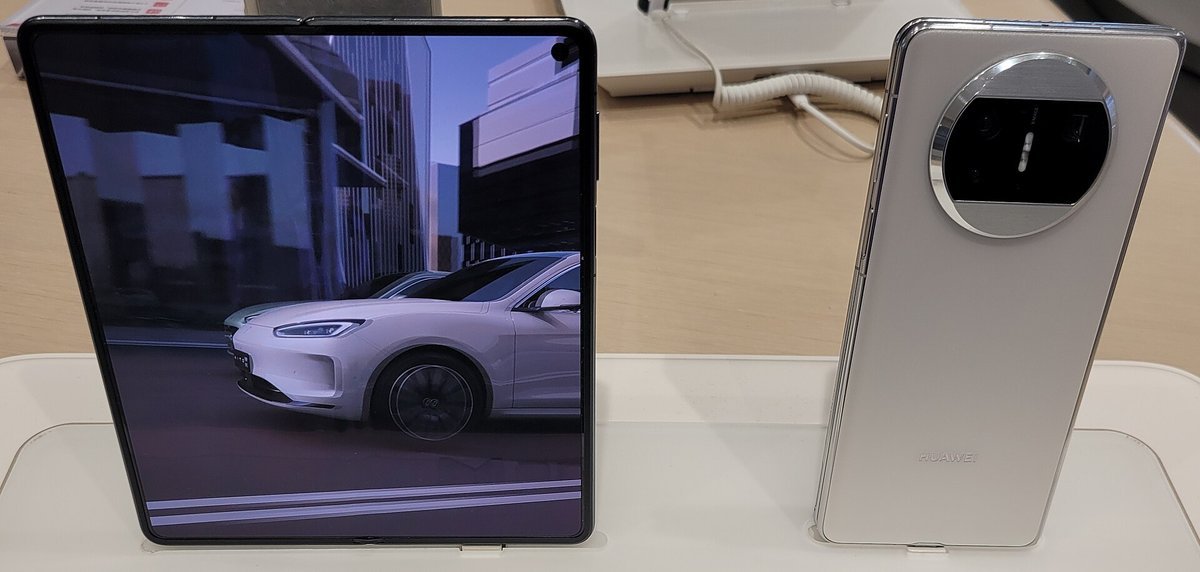
Foldables and 5G arrive together Survived
Huawei unveiled the Mate X, a phone with an 8-inch flexible OLED that folded outward into a 6.6-inch phone, powered by its Balong 5000 5G modem and priced at €2,299. The same show was full of 5G phones from LG, Xiaomi and others. Samsung’s Galaxy Fold and Galaxy S10 5G had been announced in San Francisco on 20 February and were shown in Barcelona; the S10 5G went on sale in South Korea on 5 April. Both foldables were delayed: the Galaxy Fold to September after review-unit screen failures, and the Mate X to November in China.
Why it matters: this was the moment the two big hardware stories of the next seven years, foldables and 5G, shared one stage.
The ‘Gigabit Phone’ that was never sold Stepping stone
ZTE showed a Gigabit Phone able to download at up to 1 Gbps over 4G LTE, using carrier aggregation, 4×4 MIMO antennas and 256-QAM. It was a prototype and never went on sale. Gigabit-class LTE modems reached consumers inside ordinary flagships later in 2017. The same MWC brought back the Nokia 3310 as a nostalgia feature phone, a reminder that the show is also a marketing stage.
Water resistance goes mainstream; modular phones flop Survived
Samsung launched the Galaxy S7 in Barcelona with IP68 dust and water resistance, making a sealed phone the default for its flagships. At the same show LG’s G5 let owners slide out the bottom and add ‘Friends’ modules such as a camera grip and a hi-fi audio unit. Few bought them, LG dropped the idea for the G6, and its phone division closed in 2021.
Why it matters: two upgrades, one survivor. Water resistance asked nothing of the buyer; modules asked them to buy, carry and swap extra parts.
Fingerprints and heart rate on Samsung’s flagship Survived
The Galaxy S5 added a fingerprint scanner for unlocking and mobile payments, IP67 water resistance and the first built-in heart-rate sensor on a phone. Apple had popularised fingerprint unlock with Touch ID on the iPhone 5s in September 2013, away from MWC. At the same show Nokia launched the Nokia X, an Android phone without Google services, which Microsoft dropped within months of buying Nokia’s phone business.
Firefox OS: a web-app phone platform Ghost
Mozilla and operators led by Telefónica presented Firefox OS, a low-cost platform built on web technologies, with phones from Alcatel and ZTE. It never won enough users or developers and was dropped for phones in 2016. Its code did not die: it became the base of KaiOS, which powered Reliance’s JioPhone feature phones in India from 2017.
41 megapixels, a projector phone and LTE Stepping stone
Nokia’s 808 PureView paired a 41-megapixel sensor with Carl Zeiss optics and won best new handset at the show; combining pixels for better quality and lossless zoom is now standard. Samsung’s Galaxy Beam built in a 15-lumen projector that could throw a 50-inch picture onto a wall, an idea that went nowhere. Meanwhile 4G LTE phones were moving from operator demos into mainstream ranges.
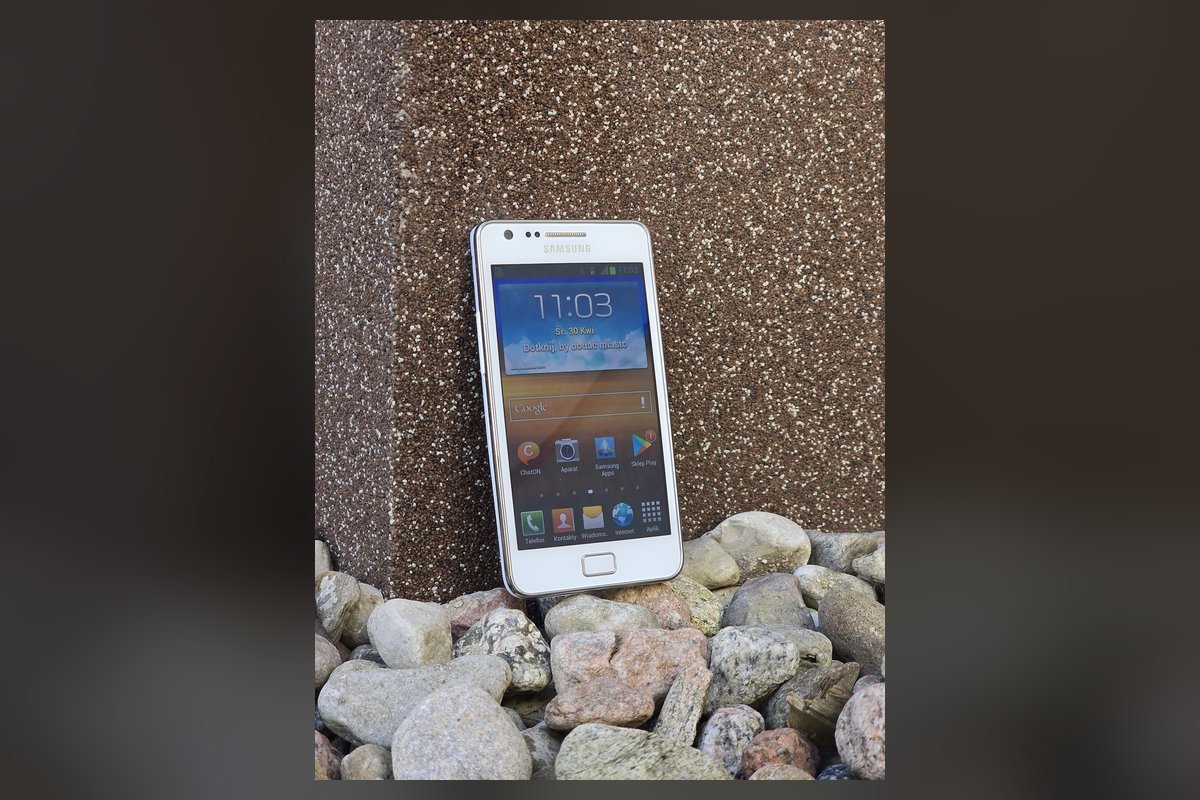
Dual-core, NFC, and a 3D phone Survived
Samsung unveiled the Galaxy S II: a dual-core processor, Super AMOLED Plus screen, 8-megapixel camera with 1080p video, HSPA+ and NFC on some versions for operator payment trials. It sold 10 million units in about five months. Down the hall, LG’s Optimus 3D offered a glasses-free 3D screen and a dual camera to record 3D video.
Why it matters: NFC became standard for payments, transit and pairing; 3D screens vanished within a couple of years.
Windows Phone 7 unveiled Ghost
Microsoft chief executive Steve Ballmer revealed Windows Phone 7 Series in Barcelona, with a tile-based interface and Xbox Live and Zune built in. It was well reviewed and later backed by Nokia, but it arrived after iPhone and Android had won developers. Microsoft ended support for Windows 10 Mobile in January 2020.
Why it matters: MWC can launch a platform but cannot make developers follow it.
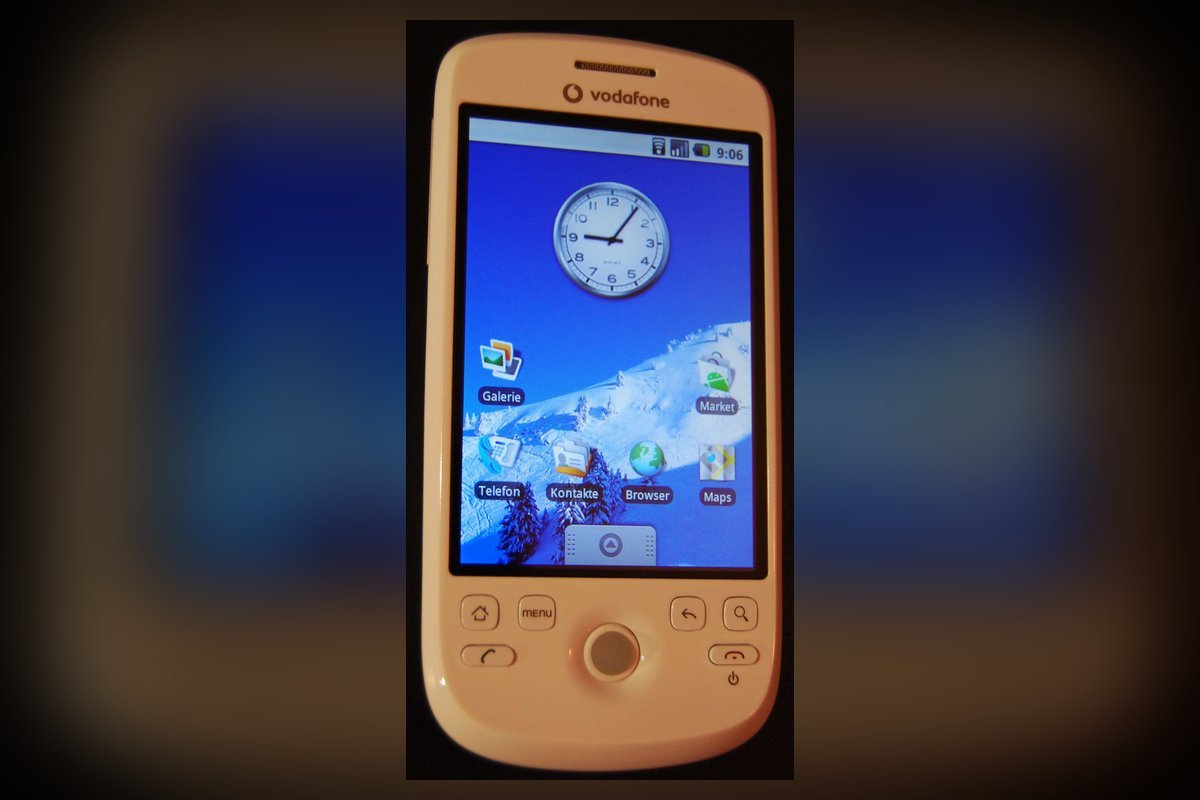
HTC Magic: Android comes to MWC Survived
Vodafone and HTC unveiled the HTC Magic, the second Android phone after the T-Mobile G1 and the first without a physical keyboard. It offered a touchscreen, a 3.2-megapixel camera, Google services and the Android Market for downloadable apps, and went on sale in Britain, France, Germany, Italy and Spain.
Why it matters: the phone became a platform that improves after purchase, the most durable idea in this whole timeline.
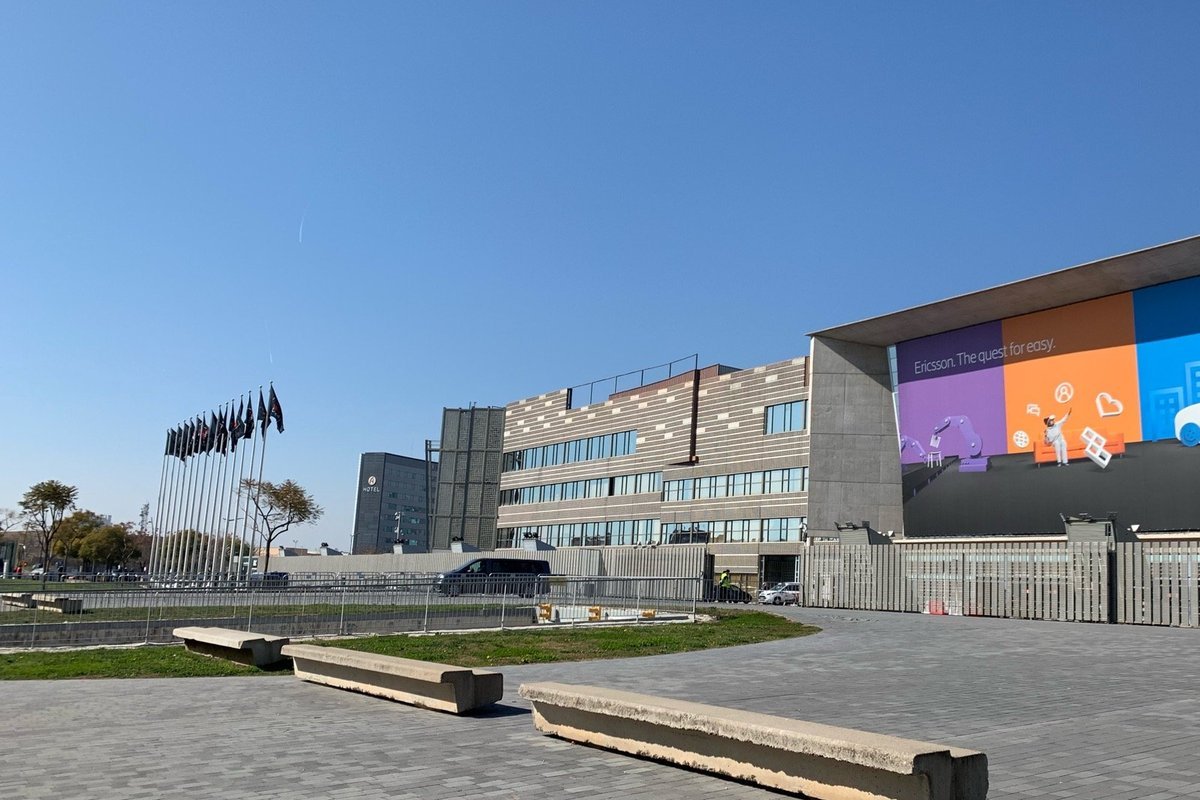
The congress moves to Barcelona and gets its name The show
The 3GSM World Congress had outgrown Cannes, where it had been held since 1996, and moved to Barcelona in 2006. In 2008 the GSMA completed its purchase of the show and renamed it Mobile World Congress. In 2019 it became MWC Barcelona, with spin-offs in Shanghai, Las Vegas, Kigali and Doha.
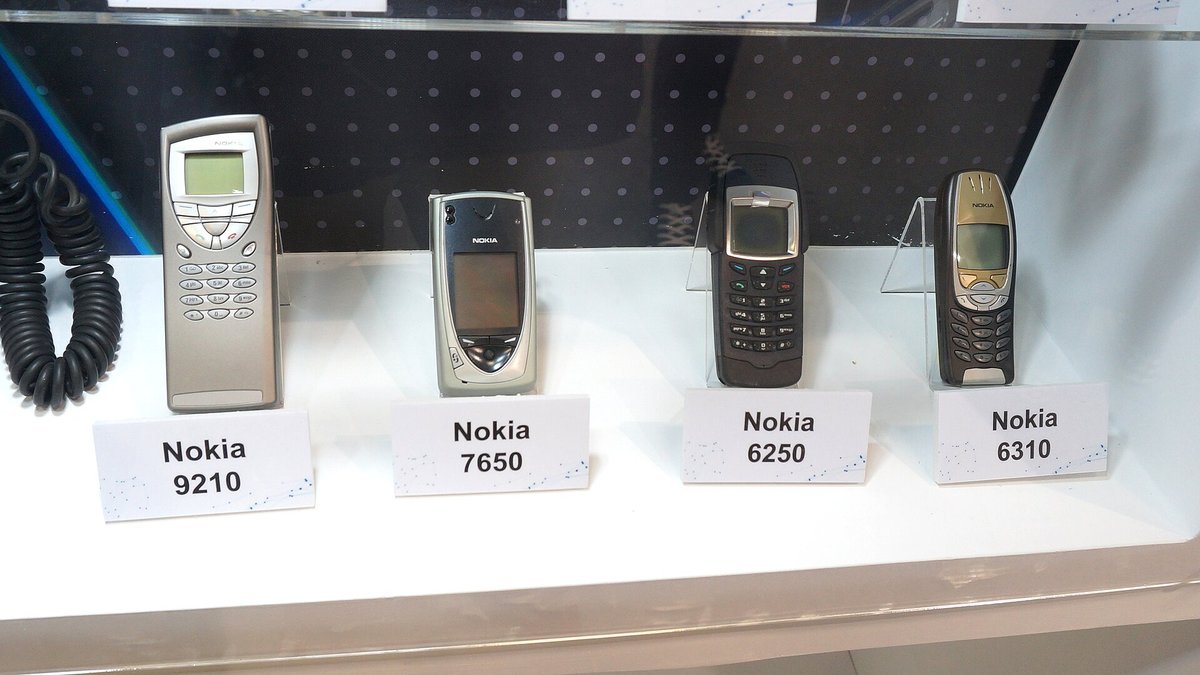
Nokia 7650: the camera phone, in Barcelona but not at MWC Survived
Nokia unveiled the 7650, its first phone with a built-in camera, at its own event in Barcelona. The industry congress was still held in Cannes at the time. The 7650 combined a 640 x 480 camera, a colour screen, GPRS, Bluetooth and MMS picture messaging, and was the first phone running Nokia’s Series 60 smartphone software. It went on sale in 2002. Sharp had sold a camera phone in Japan from 2000.
Why it matters: taking, storing and sending a photo from one device was the idea that eventually emptied the compact-camera shelf. MMS, the sending method, was later overtaken by internet messaging.
The MWC Phone Feature Scorecard
Fourteen ideas and where they stand in October 2026. Swipe sideways on mobile.
| Feature | MWC moment | Verdict | Where it stands in 2026 |
|---|---|---|---|
| Camera + photo messaging | Nokia 7650 (Barcelona, 2001, pre-MWC) | Camera survived; MMS replaced | Multi-camera, computational photography |
| Touchscreen + app store | HTC Magic (2009) | Survived | The foundation of every smartphone |
| NFC | Galaxy S II (2011) | Survived | Tap-to-pay, transit, pairing, digital keys |
| Glasses-free 3D | LG Optimus 3D (2011) | Ghost | Gone from phones |
| Huge camera sensor | Nokia 808 PureView (2012) | Idea survived | Pixel-binning 200 MP sensors |
| Projector | Samsung Galaxy Beam (2012) | Ghost | Gone from phones |
| Fingerprint unlock | Galaxy S5 (2014); Touch ID 2013 outside MWC | Survived | Under-display and side-button sensors |
| Water resistance | Galaxy S5 IP67 (2014), S7 IP68 (2016) | Survived | Expected on mid-range and flagship phones |
| Modular add-ons | LG G5 (2016) | Ghost | Abandoned by 2017 |
| Gigabit LTE | ZTE Gigabit Phone prototype (2017) | Stepping stone | Absorbed into 5G |
| 5G | MWC 2019 (Mate X, LG, Xiaomi; Samsung shown) | Survived | 3.1 billion subscriptions |
| Foldable OLED | Huawei Mate X (2019) | Premium niche | 100 million+ lifetime; Apple joined 2026 |
| Satellite messaging | Motorola Defy 2 (2023) | Feature survived, pioneer failed | Built into some phones |
| AI agents | MWC 2025–26 demos | On trial | Too early to call |
The Ghosts of MWC
Ideas that looked like the future on the show floor.
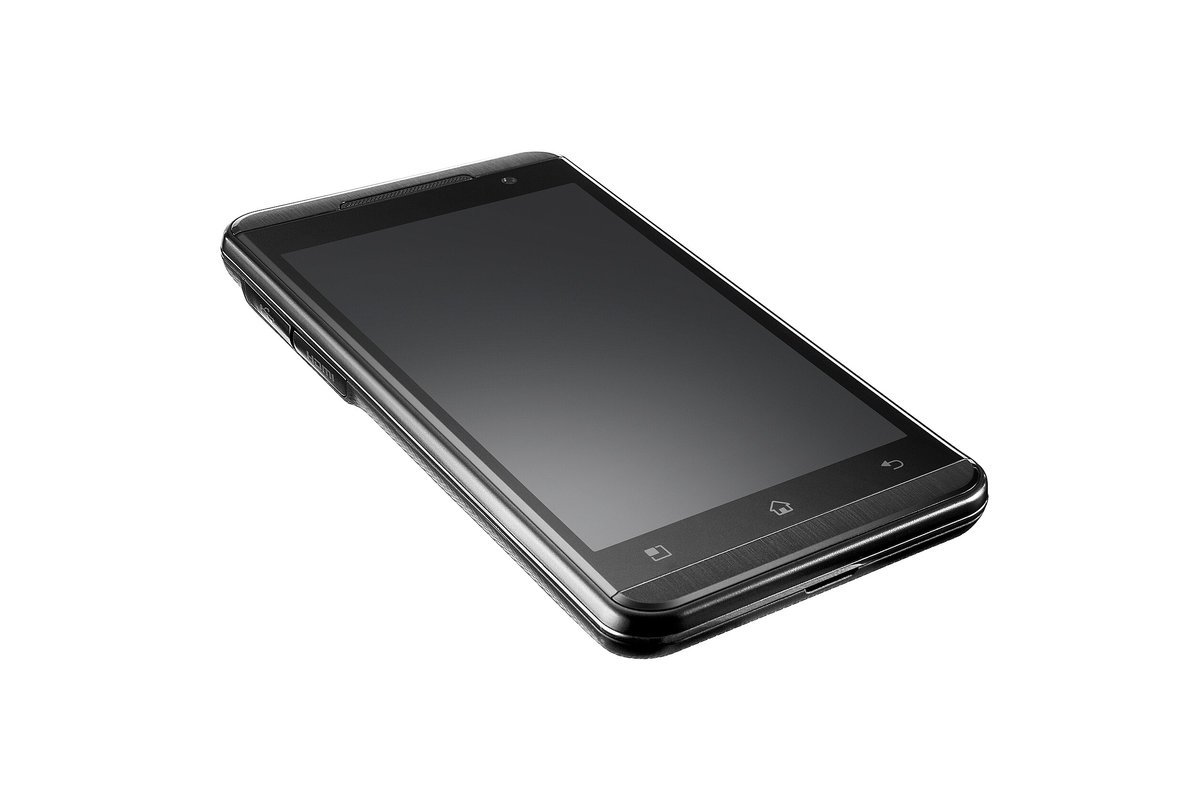
Glasses-free 3D
The LG Optimus 3D had a parallax-barrier screen and a dual camera for 3D video. There was little to watch, the effect strained eyes and it cost more. It was gone from flagships within two years.
Projector phones
The Galaxy Beam’s 15-lumen projector needed a dark room and drained the battery. Casting a phone screen to a TV did the same job better.
Modular add-ons
LG’s G5 ‘Friends’ turned upgrades into extra purchases. Most buyers never bought a module, and the phone had to be switched off to change one.
Platforms
Windows Phone and Firefox OS were unveiled in Barcelona with operator support. Neither attracted enough apps, and both were wound down; Firefox OS lives on as KaiOS.
The Show Itself: Cannes to Barcelona
How the congress got its home and its name.
| Years | Name | Where |
|---|---|---|
| Before 1996 | GSM World Congress | Rotating European cities, including Nice, Berlin, Lisbon, Athens and Madrid |
| 1996–2005 | GSM / 3GSM World Congress | Cannes |
| 2006–2007 | 3GSM World Congress | Barcelona, Fira Montjuïc |
| 2008–2018 | Mobile World Congress | Barcelona (Fira Gran Via from 2013) |
| 2019–present | MWC Barcelona | Fira Gran Via; 2020 cancelled |
| 1–4 Mar 2027 | MWC27 | Fira Gran Via, Barcelona |
MWC was never only a phone launch. It is where operators, chipmakers, network-equipment companies, software firms and regulators meet, which is why a feature shown there is pitched to the whole supply chain at once. That cuts both ways. A feature needs phone + chip + network + software + operator + apps + buyers to line up, and if one link fails, it disappears. Apple, which has never exhibited at MWC, is the reminder that the show is one stage, not the only one: Touch ID in 2013 and the iPhone Duo in 2026 both arrived elsewhere.
Why Some Features Survive
Five tests that separate the camera from the projector.
It solves a real problem
Capture a moment, pay with a tap, unlock without a code, survive a drop in the sink. 3D video solved nothing people asked for.
It fits existing habits
People already took photos and paid for things. Nobody already carried phone modules or projected films onto walls.
The cost falls
Fingerprint readers and water sealing moved from flagships to budget phones. Foldables are still near $2,000 at the top end, which keeps them niche.
The ecosystem supports it
NFC needed shop terminals; 5G needed networks; apps needed developers. Windows Phone had a good phone and too few apps.
Many makers can adopt it
Features one company owns tend to die with it, as Bullitt’s satellite service did. Features every maker can ship become standard.
It becomes boring
Demo, early adopters, falling cost, more makers, mass adoption, then silence. When nobody talks about a feature any more, it has won.
Foldables and 5G: The 2019 Bet, Seven Years On
MWC 2019 put both on the same stage.
Foldables vs 5G, 2019 to 2026
The comparison shows the survival rule at work. 5G succeeded without delivering most of its launch-stage promises, such as everyday cloud gaming or mass augmented reality, because it only had to become the next dependable layer of coverage and buyers did not have to choose it. Foldables asked buyers to pay much more for a bigger screen, and only some wanted to. Both survived; only one became invisible.
Corrections and Clarifications
Claims in the material this page was built from, and in common coverage.
“Nokia 7650 arrived in the Barcelona-era 3GSM environment”
The 7650 was unveiled in Barcelona on 19 November 2001 at a Nokia event. The 3GSM World Congress was held in Cannes until 2005 and moved to Barcelona in 2006, so this was not an MWC launch.
“At MWC 2018, ZTE showcased the Axon M”
ZTE announced the dual-screen Axon M at its own event in New York on 17 October 2017, with AT&T as the US carrier. It was not an MWC 2018 debut.
“ZTE’s world’s first gigabit smartphone”
The ZTE Gigabit Phone at MWC 2017 was a prototype that never went on sale. Gigabit-class LTE reached buyers in regular flagships later that year.
“Galaxy S10 5G and other MWC devices”
Samsung announced the Galaxy S10 5G and the Galaxy Fold at its San Francisco Unpacked event on 20 February 2019 and showed them at MWC afterwards. Huawei’s Mate X was the genuine MWC 2019 foldable launch.
“GSMA: more than 40 new smartphones at MWC 2016”
We could not find this figure in a GSMA source, so it is not used. MWC 2016 did launch the Galaxy S7 with IP68 and the modular LG G5.
What the package left out
The 2020 cancellation, Windows Phone and Firefox OS, the Nokia 808 PureView, the Galaxy S5 and S7, Bullitt’s satellite collapse, 5G passing 3 billion, and Apple’s iPhone Duo, announced in September 2026.
What to Watch Next
India Mobile Congress
The 10th IMC in New Delhi, themed ‘Scale Without Boundaries’, with AI, 6G, satellite communications and semiconductors on the agenda.
iPhone Duo sales
Whether Apple’s first foldable, at $1,999, expands the category as Counterpoint expects, or stays a luxury option.
MWC27
AI agents on phones, 5G-Advanced, satellite-to-phone links and early 6G demonstrations. Ask what each one fixes that today’s phone cannot.
AI as the phone’s operating layer
Summaries are common. The real test is an assistant that completes tasks across apps reliably enough that people stop noticing it.
Did You Know?
- Older than the name: the event began as the GSM World Congress and only became Mobile World Congress in 2008.
- Apple stays away: it has never exhibited at MWC, so many phone milestones happened outside Barcelona.
- 0.3 megapixels: the Nokia 7650’s VGA camera; MWC26’s Xiaomi 17 Ultra has a 200-megapixel periscope camera.
- A heart-rate first: the Galaxy S5 (MWC 2014) was the first phone with a built-in heart-rate sensor.
- Firefox OS lives on: its code became KaiOS, which ran on tens of millions of JioPhones in India.
- Back to 2019 levels: MWC attendance only matched its 2019 record again in 2025.
Quick Quiz
1. Where was the 3GSM World Congress held when the Nokia 7650 was unveiled in 2001?
2. Which Android phone was unveiled at MWC 2009?
3. Which MWC 2012 phone had a built-in projector?
4. Why was there no MWC in 2020?
5. How many 5G subscriptions did Ericsson count at the end of March 2026?
Explore More Timelines
People Also Ask
Frequently Asked Questions
The Bottom Line
Over a quarter of a century, the phones shown in Barcelona have included plenty of spectacle: 3D screens, projectors, snap-on modules and platforms that briefly looked like rivals to Android. The ideas that lasted were different. They solved problems people already had, they fitted existing habits, they got cheaper, and every manufacturer could ship them. The camera made a separate camera optional, apps made phones programmable, NFC made them wallets and keys, and 4G and 5G made them broadband computers.
Foldables are still proving that more screen is worth more money, and AI is waiting for its own verdict. MWC does not decide what the future is. It shows candidates, and buyers decide which ones survive, usually by ceasing to notice them.
Related AiTimeline Stories
⚠️ Editorial Note
Last updated 6 October 2026. ‘Launched at MWC’ is not the same as ‘invented at MWC’: a feature qualifies here when MWC (or, for the Nokia 7650, Barcelona before MWC moved there) was a significant public launch or showcase for it. Event history and attendance are from the GSMA and reports of its closing figures; 5G figures from Ericsson’s June 2026 Mobility Report; foldable forecasts from Counterpoint Research; product dates from manufacturers’ announcements. Survival verdicts are editorial judgements.
Sources & further reading
Every dated entry above was checked against these references. Last reviewed 6 October 2026.
- GSMA MWC26 Barcelona closes 20th anniversary edition
- 20 years of MWC Barcelona
- Ericsson Mobility Report: 5G subscriptions top three billion as uplink gains momentum
- Apple unveils iPhone Duo
- Samsung to Retain Lead as Global Foldable Market Set for 21% YoY Growth in 2026
- The Next Generation Speed and Performance Starts with Galaxy S10 5G
- Microsoft Unveils Windows Phone 7 Series
- Flashback: Nokia's first cameraphone was also the first Symbian S60 smartphone
- GSMA cancels Mobile World Congress due to coronavirus concerns