India’s Defence Imports: How One of the World’s Biggest Arms Buyers Became a Defence Exporter, 1947–2026
India defence imports 1947-2026: output hit Rs 1.78 lakh crore and exports Rs 38,424 crore, yet India is still the No. 2 arms importer. Russia now 40%.
Latest Story
India hasn’t stopped importing weapons. It is trying to make sure it no longer has to import everything. Measured by money, the shift is dramatic: indigenous defence production rose from ₹46,429 crore in 2014–15 to a record ₹1.78 lakh crore in 2025–26, and exports from ₹686 crore to ₹38,424 crore. Measured by India’s defence imports, it is slower: SIPRI still ranks India the world’s second-largest arms importer, and Indian imports fell only 4% between 2016–20 and 2021–25. This is the full record, from the Soviet era and licence production to BrahMos, DAP 2020, the indigenisation lists and the 2026 Rafale and submarine decisions, with the numbers that flatter the story and the ones that don’t.
💡 Short Answer
India built its armed forces on imported and licence-built weapons, mostly Soviet and Russian, from the 1960s. Since 2014, and especially since DAP 2020 and the indigenisation lists, it has shifted procurement to Indian industry: production reached ₹1.78 lakh crore and exports ₹38,424 crore in 2025–26. But India remains the world’s second-largest arms importer (SIPRI, 2021–25), Russia’s share has fallen to 40%, and engines, sensors and fighter jets are still the hardest gaps.
India Defence Imports: Key Questions
From Buyer to Builder, in Ten Points
- The starting point: India inherited factories, not design capability, and filled the gap with Soviet licence production from 1962.
- The engine lesson is old: India’s first home-designed jet, the 1961 HF-24 Marut, was held back by underpowered engines.
- The long bets: missiles and the Light Combat Aircraft started in 1983; Tejas entered service only in 2016.
- The partnership model: BrahMos (1998) showed joint development could build capability, and is now exported to three countries.
- Procurement as industrial policy: DAP 2020, 509 items on indigenisation lists and 75% of the capital budget reserved for Indian firms.
- Output: ₹46,429 crore in 2014–15 to ₹1.78 lakh crore in 2025–26, with private firms at 24%.
- Exports: ₹686 crore to ₹38,424 crore in 12 years, but still small next to imports.
- Imports barely fell: down 4% between 2016–20 and 2021–25; India is still No. 2 worldwide.
- Diversified, not independent: Russia 40%, France 29%, Israel 15% of imports.
- The real test in 2026: 114 Rafales, German-designed submarines and an undelivered Tejas Mk1A all turn on engines and core technology.
Three Numbers That Tell the Story, and One That Complicates It
Production and exports are official Indian figures; supplier shares are SIPRI’s.
The rupee figures are nominal, not adjusted for inflation, and they measure value made in India, which includes imported parts inside Indian-assembled systems. The import figures come from SIPRI, which counts deliveries of major arms such as aircraft, ships, missiles and armoured vehicles by volume, not price. Put together, they say something more precise than ‘India stopped importing’: India now makes far more and buys from more countries, but the volume of major weapons it imports has barely changed.
How much of a modern weapon can India actually build itself? Pick a system and check its seven layers.
Simplified from public sources; ‘Partner’ means joint venture, licence or foreign-designed part built in India. Updated 6 October 2026.
Choose a system above
India’s Defence Imports and Self-Reliance Timeline, 1947–2026
Newest first. Tags mark imports, policy, building at home, exports, delays and data releases.
Zero Tejas Mk1A delivered; submarine deal nears Delay
Air Chief Marshal A.P. Singh said the Air Force was down to 29 fighter squadrons against 42 authorised, and that not one Tejas Mk1A had yet been handed over, some two years behind schedule. ‘It is going to hurt us,’ he said. Three days earlier Defence Secretary Rajesh Kumar Singh said India was in the final stages of approving Project 75(I), a deal worth more than ₹80,000 crore for six submarines to be built by Mazagon Dock with Germany’s TKMS.
Why it matters: the indigenous fighter is ready on the ground but waiting on an imported engine, and the next big naval programme is again a foreign design built in India.
₹1.1 lakh crore of approvals, ~98% Indian Policy
The Defence Acquisition Council cleared about ₹1.1 lakh crore of proposals, with around 98% to be sourced from Indian companies. They included Arudhra radars for naval air stations, ground-based jammers, mine layers, Advanced Light Helicopters and a programme to design and develop marine gas turbines, one of the propulsion technologies India still imports.
Indonesia signs for BrahMos Export
BrahMos Aerospace and Indonesia’s Ministry of Defense signed a contract for the BrahMos supersonic cruise missile in Jakarta, during Prime Minister Narendra Modi’s visit. In May, Defence Secretary Rajesh Kumar Singh had confirmed at the Shangri-La Dialogue that a Vietnam deal was also signed. The Philippines was the first buyer, in 2022.
Production hits ₹1.78 lakh crore Data
The ministry reported record indigenous defence production of ₹1.78 lakh crore in 2025–26, up from ₹1,54,071 crore and more than double the ₹84,643 crore of 2020–21. Defence PSUs made about 76%; private companies’ share rose to 24%. The same month India sent France a letter of request for the 114 Rafales, the biggest import programme in its history.
Exports reach ₹38,424 crore Export
Defence exports jumped ₹14,802 crore in a year to ₹38,424 crore. Defence PSUs exported ₹21,071 crore and private firms ₹17,353 crore, and the number of exporting companies rose from 128 to 145. Indian defence products now reach more than 80 countries, the ministry says.
Why it matters: exports have grown 56-fold since 2013–14, but they are still a fraction of what India spends on foreign weapons.
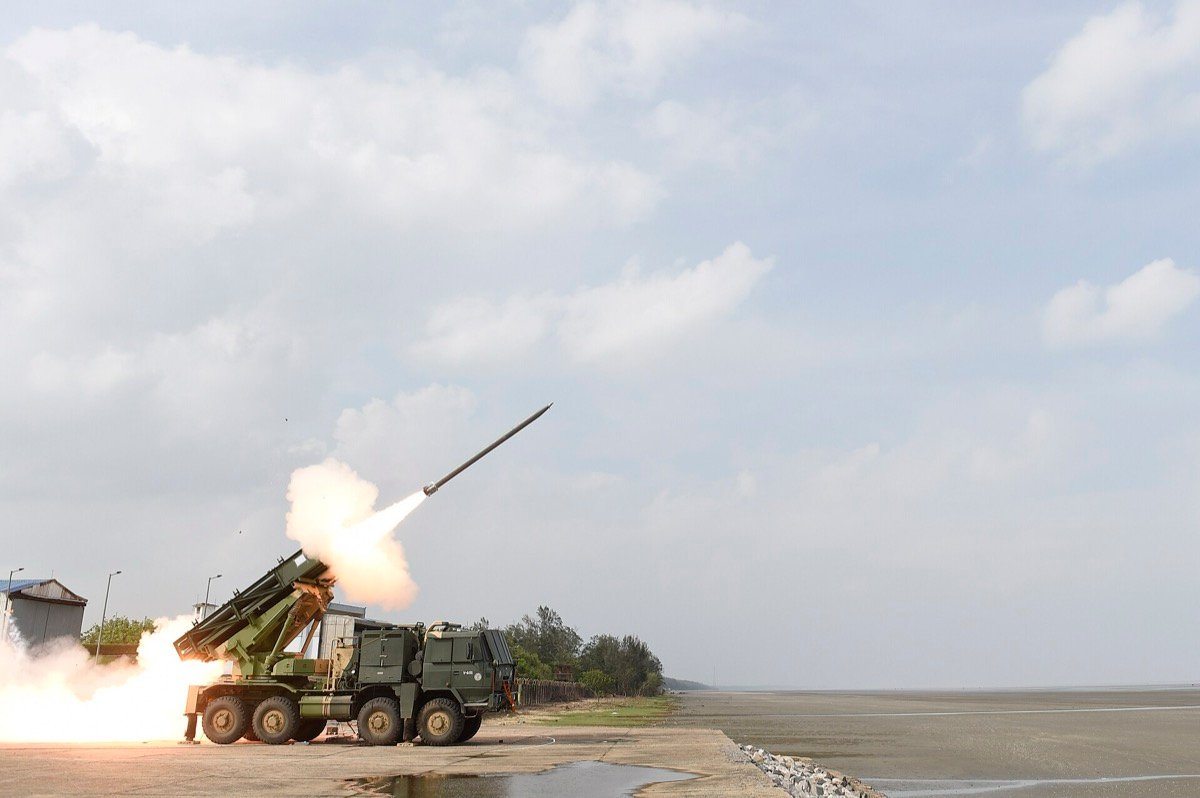
SIPRI: second-largest importer, Russia down to 40% Import
SIPRI ranked India the world’s second-largest arms importer in 2021–25, after Ukraine. Russia supplied 40%, France 29% and Israel 15%. SIPRI credited India’s growing ability to make its own weapons for a 4% fall in imports, but warned that planned orders, including up to 140 combat aircraft from France and 6 submarines from Germany, pointed to ‘continued and probably increasing reliance on foreign suppliers’. On 27 March the DAC cleared ₹2.38 lakh crore of proposals, including more S-400 systems from Russia.
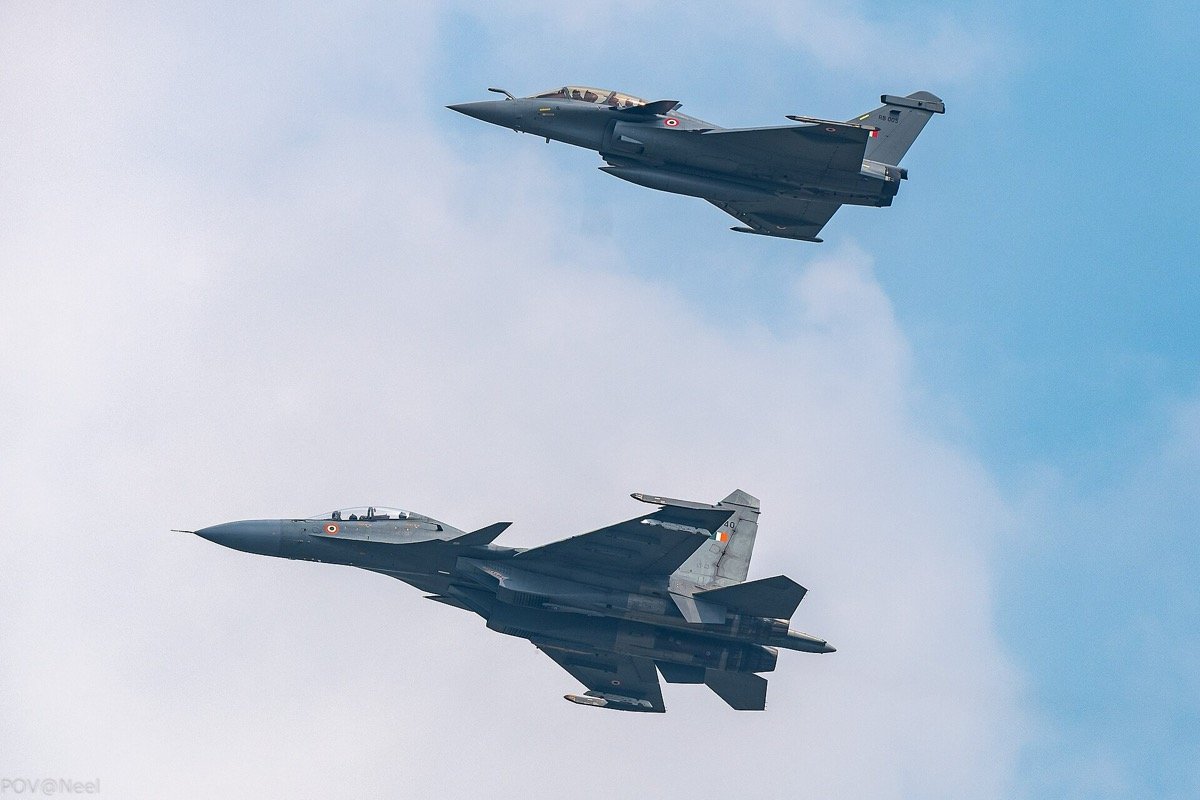
Draft DAP 2026 and the 114-Rafale approval Policy
Two decisions two days apart captured the whole dilemma. The draft Defence Acquisition Procedure 2026 proposed lifting indigenous content for Buy (Indian-IDDM) to at least 60% and requiring 30% even in Buy (Global) deals. Then the Defence Acquisition Council cleared buying 114 Rafale fighters, 18 ready-built and the rest made in India. The 2026–27 Budget set defence spending at ₹7.85 lakh crore.
97 more Tejas Mk1A ordered Build
The ministry signed for 97 Tejas Mk1A (68 fighters, 29 twin-seaters), taking orders to 180. The batch adds 67 more indigenous items, including the UTTAM AESA radar and the Swayam Raksha Kavach self-protection suite, with about 105 Indian firms making components. Deliveries are due from 2027–28. HAL later agreed with GE to buy 113 more F404 engines.
Operation Sindoor: a combat test Build
In four days of fighting after the Pahalgam attack, the government highlighted Indian and jointly made systems such as BrahMos and Akash. SIPRI’s reading is more mixed: both sides used imported major arms, and India’s French Rafales and Russian-supplied S-400s were among the systems widely reported in action. The episode strengthened the case for local production and supply security, and also sped up emergency foreign buys.
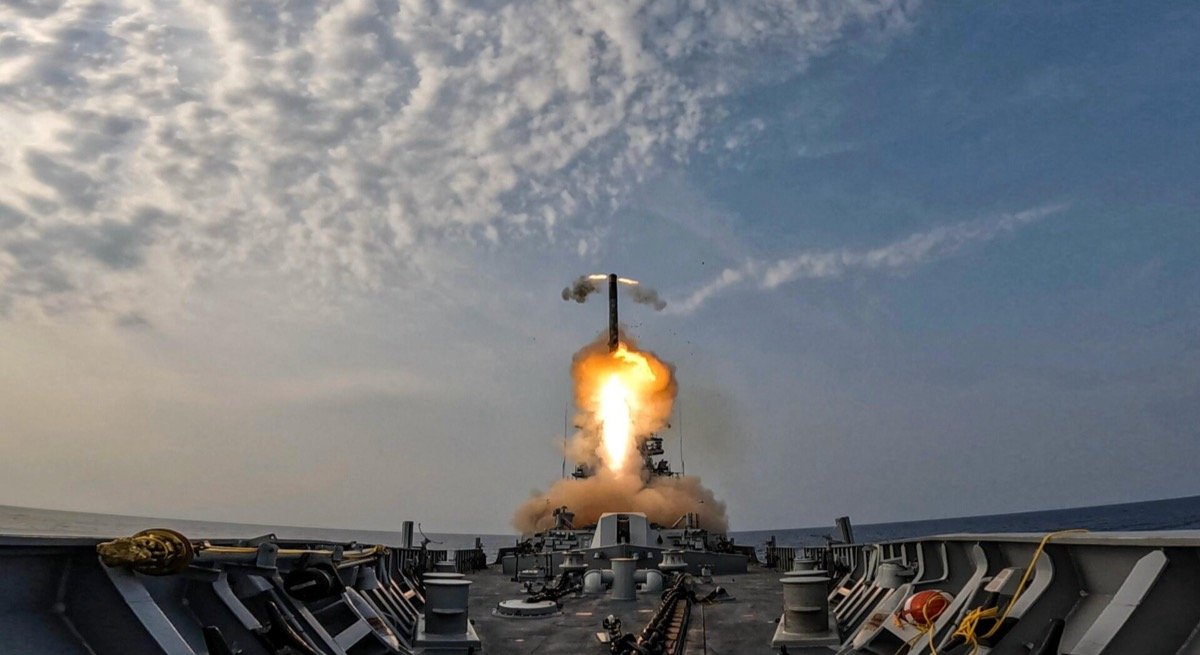
26 Rafale-M for the carriers Import
India signed an intergovernmental agreement for 26 Rafale Marine fighters for its aircraft carriers, because no Indian naval fighter was ready. The indigenous twin-engine deck-based fighter remains a future programme.
₹1.54 lakh crore production, ₹23,622 crore exports Data
Production was first announced as ₹1,50,590 crore and later revised to ₹1,54,071 crore. Exports were ₹23,622 crore. In July 2024 the Department of Defence Production notified a fifth DPSU indigenisation list of 346 items with an import-substitution value of ₹1,048 crore.
First Tejas Mk1A flies; first BrahMos export delivered Build
The first Tejas Mk1A flew for 18 minutes from HAL Bengaluru, on the month its first delivery to the IAF had been due under the 2021 contract. Weeks later India delivered the first BrahMos batteries to the Philippines, its first export of a major missile system.
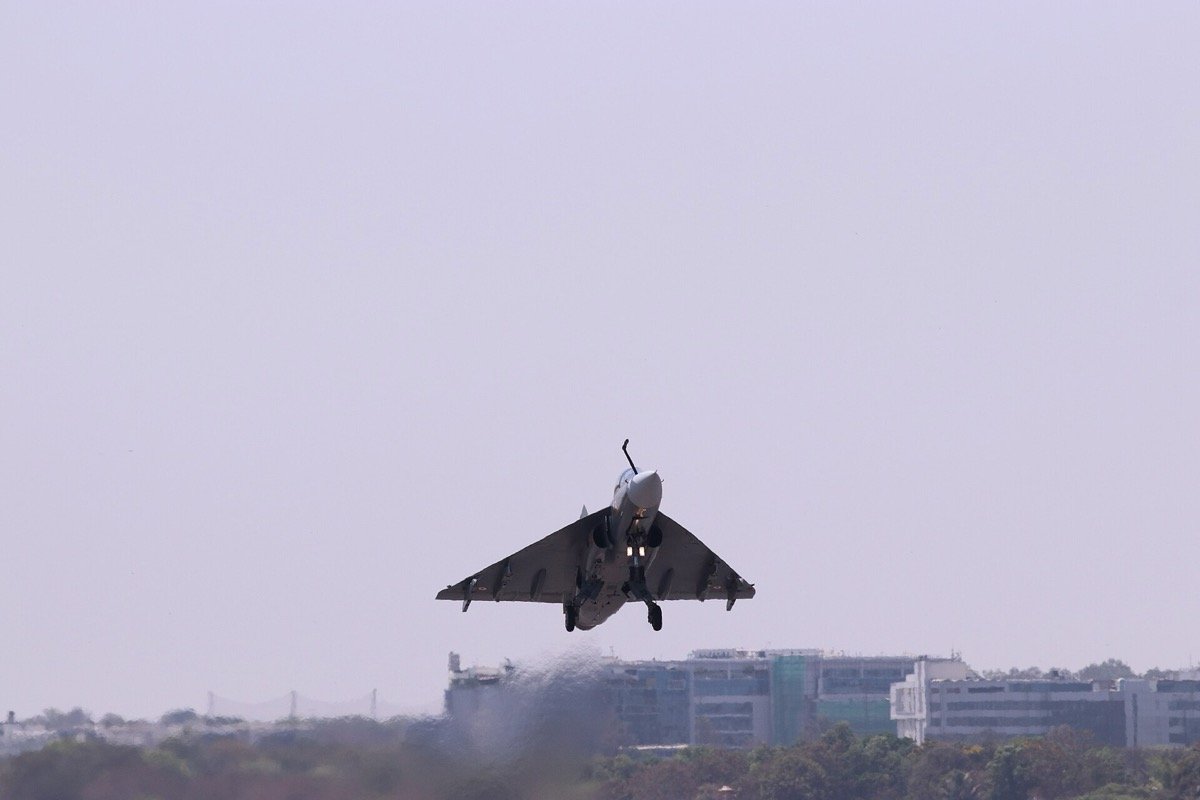
₹2.23 lakh crore approvals, 98% domestic Policy
The DAC approved proposals worth ₹2.23 lakh crore, about ₹2.20 lakh crore of it, or 98%, to be sourced from Indian industry. These are approvals of need, not signed contracts, and they measure where money is directed, not how much technology inside is Indian.
75% of the capital budget reserved for Indian industry Policy
The ministry earmarked 75% of the capital acquisition budget for domestic industry, up from 68% the year before. Production reached about ₹1.27 lakh crore and exports crossed ₹21,000 crore for the first time.
INS Vikrant commissioned Build
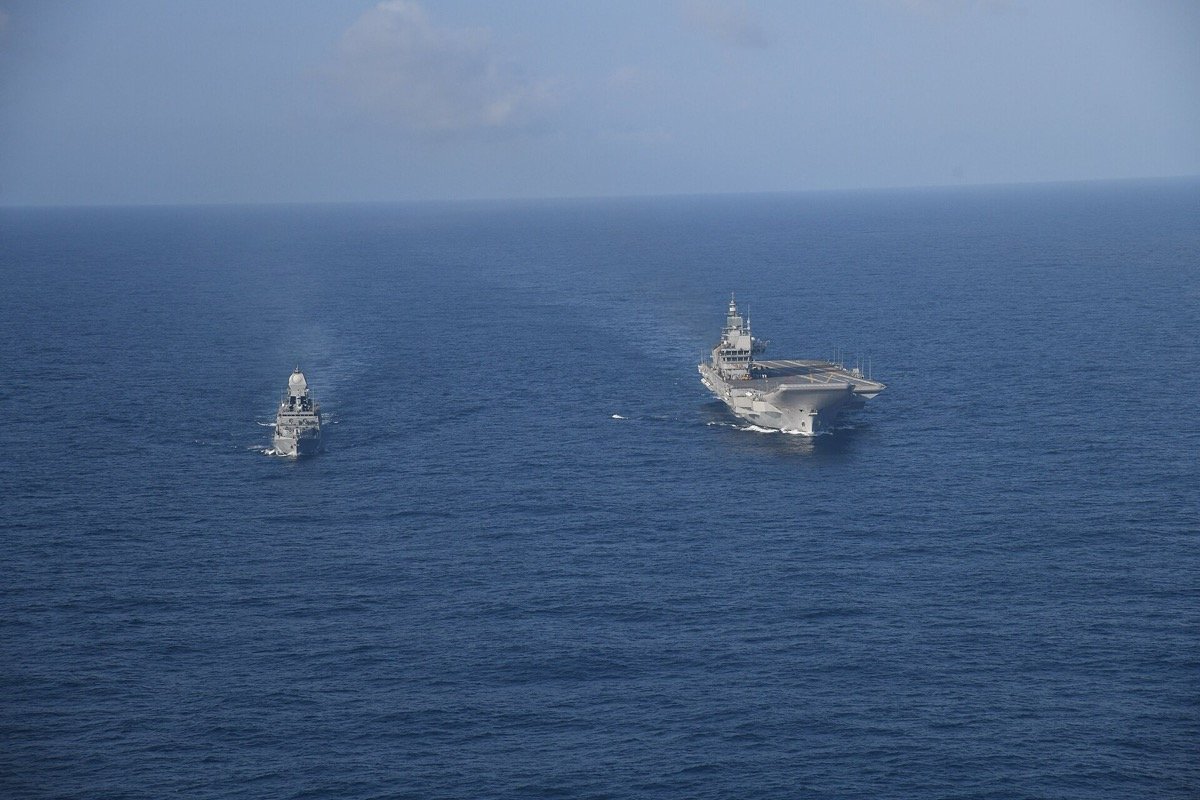
India commissioned its first home-built aircraft carrier, designed by the Navy’s Warship Design Bureau and built in Kochi with Indian warship-grade steel. Its gas turbines are General Electric designs and its jets are imported, a good example of how ‘indigenous’ is a percentage.
The Philippines buys BrahMos Export
The Philippines signed India’s first major missile export deal, for three shore-based BrahMos anti-ship batteries. It turned a jointly developed missile into a calling card for Indian defence exports in Southeast Asia.
Ordnance Factory Board split into seven companies Policy
The government dissolved the roughly 200-year-old Ordnance Factory Board and turned its 41 factories into seven corporations, including Munitions India, Armoured Vehicles Nigam, Advanced Weapons and Equipment India and Yantra India, to make them commercially accountable.
83 Tejas Mk1A ordered Build
The biggest indigenous fighter order to date: 73 fighters and 10 trainers. The first was due in March 2024. Because the aircraft depends on GE’s F404 engine, the contract also became the clearest lesson in what self-reliance still lacks.
2020
First indigenisation list and DAP 2020 Policy
Defence Minister Rajnath Singh announced the first positive indigenisation list of 101 items, from artillery and assault rifles to corvettes, sonar and transport aircraft, to be bought only from Indian industry after set dates. The Defence Acquisition Procedure 2020 made Buy (Indian-IDDM) the top category and raised its minimum indigenous content from 40% to 50%. Foreign direct investment through the automatic route was raised to 74%.
Two defence industrial corridors Policy
The government announced corridors in Uttar Pradesh (Lucknow, Kanpur, Agra, Aligarh, Jhansi, Chitrakoot) and Tamil Nadu (Chennai, Coimbatore, Hosur, Salem, Tiruchirappalli). By April 2026 the ministry reported ₹42,057 crore of commitments but ₹4,409 crore actually invested in UP, and ₹32,699 crore and ₹6,446 crore in Tamil Nadu.
Why it matters: commitments are far ahead of money on the ground, a gap worth watching.
Make in India puts defence on the industrial agenda Policy
Defence became one of the priority sectors of the Make in India campaign. Industrial licences were extended from 7 to 15 years in 2015, and the number of licensed companies grew from 258 in 2015 to 834 by March 2026. The baseline: ₹46,429 crore of production and ₹686 crore of exports in 2013–14.
Tejas: from first flight to first squadron Build
The Light Combat Aircraft flew for the first time in January 2001, 18 years after the programme was sanctioned, and entered IAF service with No. 45 Squadron in 2016. In May 2001 the government opened defence manufacturing to private Indian companies for the first time.
BrahMos: the joint-venture model Build
Rather than buy a Russian missile, India co-founded BrahMos Aerospace to design, produce and market a supersonic cruise missile together. Named after the Brahmaputra and Moskva rivers, it showed that a foreign partnership could build Indian capability rather than only dependence.
The big indigenous bets: missiles and a fighter Build
India launched the Integrated Guided Missile Development Programme under A.P.J. Abdul Kalam, which produced Prithvi, Agni, Akash and Nag, and sanctioned the Light Combat Aircraft, managed from 1984 by the new Aeronautical Development Agency. Both took decades, but they built the design teams that later programmes relied on.
The Soviet turn Import
After the 1962 war with China exposed the armed forces’ gaps, India signed for MiG-21 fighters with licence production at HAL, and Moscow became its main arms supplier. The 1971 Treaty of Peace, Friendship and Cooperation cemented the relationship. For the next 40 years, most Indian tanks, fighters, submarines and missiles were Soviet or Russian designs.
Why it matters: licence production gave India factories and skills, but not ownership of the designs.
HF-24 Marut: the engine lesson Delay
HAL’s HF-24 Marut, designed by a team led by the German engineer Kurt Tank, became the first jet fighter designed in India. A planned more powerful engine never materialised, so it flew with underpowered Orpheus engines and could not reach its intended supersonic performance. Sixty years later, engines are still the hardest part.
Building the institutions Build
India inherited ordnance factories and repair depots but little design capability. It set up Bharat Electronics (1954), the Defence Research and Development Organisation (1958) and, by merging Hindustan Aircraft with the MiG project company, Hindustan Aeronautics Limited (1964). For decades they made more than they designed.
Production and Exports by Year
Ministry of Defence figures. Swipe sideways on mobile.
| Financial year | Indigenous production | Defence exports |
|---|---|---|
| 2013–14 | ₹43,746 crore | ₹686 crore |
| 2014–15 | ₹46,429 crore | — |
| 2020–21 | ₹84,643 crore | ₹8,434 crore |
| 2022–23 | — | ₹15,920 crore |
| 2023–24 | ₹1.27 lakh crore | ₹21,083 crore |
| 2024–25 | ₹1,54,071 crore (revised) | ₹23,622 crore |
| 2025–26 | ₹1.78 lakh crore (record) | ₹38,424 crore (record) |
| Target, 2029 | ₹3 lakh crore | ₹50,000 crore |
The Policy Tools, and What They Have Delivered
How procurement was turned into industrial policy.
| Policy tool | Year | What it does | Evidence so far |
|---|---|---|---|
| Private sector opened | 2001 | Indian private firms allowed to make defence equipment | Private share of output 24% in 2025–26 |
| Make in India | 2014 | Defence named a priority manufacturing sector | Licences up from 258 (2015) to 834 (2026) |
| Defence corridors | 2018 | UP and Tamil Nadu manufacturing clusters | ₹74,756 crore committed, ₹10,855 crore invested by Apr 2026 |
| DAP 2020 | 2020 | IDDM top category, minimum 50% local content | Replaced by draft DAP 2026 proposing 60% |
| Indigenisation lists | 2020–24 | Import embargoes with timelines | 509 military items, 5,012 DPSU items |
| OFB corporatisation | 2021 | 41 factories into 7 defence PSUs | Part of the PSU share of production |
| Domestic budget share | 2022–26 | 68%, then 75% of capital acquisition for Indian industry | Most new approvals ~98% domestic |
| iDEX | 2018– | Grants and orders for start-ups and MSMEs | 676 start-ups and innovators engaged by Mar 2026 |
The tools work at different levels. DAP rules decide who can bid. Indigenisation lists decide what can no longer be imported, increasingly down to components and line-replaceable units, because a platform can be ‘made in India’ while full of imported parts. The budget share decides where money goes. None of them on its own decides how much of the core technology is Indian, which is why the draft DAP 2026 moves towards measuring indigenous design and content more strictly.
Why India Still Imports: Two Clocks
The security clock and the industrial clock run at different speeds.
What the forces need now
The IAF has 29 fighter squadrons against 42 authorised. Old MiG-21s have retired. That gap cannot wait for an engine programme, so India approved 114 Rafales and more S-400s.
What India can make, and when
Tejas took 18 years from sanction to first flight and 33 to squadron service. A fighter engine with Safran would take about a decade more. Submarines under P-75(I) will be German-designed but Indian-built.
Buy, build, develop, partner
Buy what is urgent. Build what India can build. Develop what India must eventually control. Partner where technology transfer genuinely shortens the journey, as with BrahMos.
The Hard Parts: Where Self-Reliance Is Thinnest
- Aero-engines: Tejas depends on GE’s F404; the Mk2 will use the F414; the AMCA engine with Safran awaits approval. This is the single biggest gap.
- Marine propulsion: major warships use foreign-designed gas turbines; the September 2026 DAC approval to develop marine gas turbines targets this.
- Submarine design: India builds submarines, but its conventional boats are French (Scorpène) and next German (Type 214-based) designs.
- Seekers, sensors and chips: radars like UTTAM are Indian, but many high-end semiconductors, infrared detectors and seekers are imported.
- Materials and machine tools: specialist alloys, carbon fibre and precision machine tools remain partly imported.
India’s Defence Self-Reliance Scorecard, October 2026
Direction of travel, with the evidence behind each rating.
| Area | Direction | Evidence |
|---|---|---|
| Domestic production | 🟢 Strong growth | ₹46,429 crore to ₹1.78 lakh crore since 2014–15 |
| Exports | 🟢 Rapid growth | ₹38,424 crore, 80+ countries; BrahMos to 3 nations |
| Missiles and rockets | 🟢 Strong | Agni, Akash, Pinaka; BrahMos jointly |
| Warships | 🟢 Strong hulls | Vikrant 76% indigenous; propulsion still partly foreign |
| Supplier concentration | 🟢 Falling | Russia 70% to 40% of imports (SIPRI) |
| Total imports | 🟠 Barely down | −4% between 2016–20 and 2021–25; still 2nd in world |
| Fighter aircraft | 🟠 Delayed | Zero Tejas Mk1A delivered as of 4 Oct 2026 |
| Aero-engines | 🔴 Major gap | F404/F414 from GE; Safran AMCA engine awaiting approval |
| Submarines | 🟠 Foreign designs | P-75(I) with Germany’s TKMS |
| Semiconductors and seekers | 🟠 Gap remains | Most high-end chips imported |
Corrections and Clarifications
Claims in the material this page was built from, and in common coverage.
“Russia 72% to 55% to 36%”
Those are SIPRI’s 2025 figures (2010–14, 2015–19, 2020–24). Its March 2026 edition gives 70%, 51% and 40% for 2011–15, 2016–20 and 2021–25. The rise from 36 to 40 is a change of window and data revision, not a reversal.
“₹1.50 lakh crore in 2024–25”
First reported as ₹1,50,590 crore; the ministry’s June 2026 release uses a revised ₹1,54,071 crore. The ₹1.78 lakh crore growth rate of 15.6% is calculated on the revised base.
“Three lists of 101, 108 and 101 items”
The military lists continued: five lists now total 509 items. Separately, defence PSUs have notified five lists of 5,012 items, including the 2022 line-replaceable-unit list and 346 items in July 2024.
“India has reached the export stage” for its major platforms
For missiles and rockets, yes. But no Tejas has been exported, and as of 4 October 2026 none of the 180 ordered Mk1As had even been delivered to the IAF.
“65% of defence equipment is made in India”
That is a government estimate by value, not an audited count. It is consistent with rising production, but sits alongside SIPRI data showing imports down only 4%.
The 2025–26 import decisions
The material left out the 114-Rafale approval, 26 Rafale-M, more S-400s, the German submarine deal, the draft DAP 2026 and the Tejas engine delays, all of which shape what ‘self-reliance’ means today.
What to Watch Next
First Tejas Mk1A delivery
HAL expects more F404 engines from October to December 2026. A first delivery would end a two-and-a-half-year slip.
Rafale and P-75(I) terms
How much design, source code and engine work transfers to India under the 114-Rafale and German submarine contracts.
The Safran AMCA engine
Cabinet approval for the 110–130 kN co-development deal would be India’s most serious attempt yet to close the engine gap.
Final DAP 2026
Whether the 60% IDDM and 30% Buy (Global) content rules survive into the notified procedure.
Quick Quiz
1. Which country supplied the largest share of India’s arms imports in 2021–25?
2. What were India’s defence exports in 2013–14?
3. What is the main reason the Tejas Mk1A is late?
4. In which year did India and Russia agree to create BrahMos?
5. What indigenous-content level does the draft DAP 2026 propose for Buy (Indian-IDDM)?
Explore More Timelines
People Also Ask
Frequently Asked Questions
The Bottom Line
India’s defence story is usually told as ‘from importer to exporter’. That is true for rupees and incomplete for technology. The country now makes nearly four times as much as in 2014–15, exports to more than 80 countries, and buys from a wider spread of suppliers. It also still imports almost as much major weaponry as it did a decade ago, and its newest indigenous fighter sits waiting for an American engine.
The goal was never zero imports. It is the freedom to decide when to buy from abroad, rather than being forced to because India cannot build at home. By that test, India is much further along in missiles, rockets and ship hulls than in engines, sensors and fighters, and the contracts signed in 2026 and 2027 will show whether the next big imports also bring the core technology home.
Related AiTimeline Stories
⚠️ Editorial Note
Last updated 6 October 2026. Production, export, budget, corridor and indigenisation figures are from Ministry of Defence releases via PIB, including the June 2026 ‘Defence Decade’ note. Import rankings and supplier shares are from SIPRI’s March 2026 fact sheet; SIPRI measures volumes of major arms, not spending. Deal values not officially published are given as reported. Rupee figures are nominal. The interactive layer ratings are a simplified editorial summary of public information.
Sources & further reading
Every dated entry above was checked against these references. Last reviewed 6 October 2026.
- Defence production soars to a record Rs 1.78 lakh crore in FY 2025-26 (PIB, Ministry of Defence, 17 June 2026)
- Defence exports reach record Rs 38,424 crore in FY 2025-26 (PIB, Ministry of Defence)
- The Defence Decade: Enhanced Capability, Greater Capacity, Stronger Credibility (PIB backgrounder, June 2026)
- Trends in International Arms Transfers, 2025 (SIPRI Fact Sheet, March 2026)
- MoD signs Rs 62,370 crore contract with HAL for 97 LCA Mk1A (PIB, 25 September 2025)
- Cabinet approves procurement of 83 LCA Tejas from HAL (PIB, January 2021)
- Ministry of Defence Year End Review 2025 (PIB)
- Draft Defence Acquisition Procedure 2026 released for consultation (Airforce Technology, February 2026)