First iPhone Unveiling: Apps, Anniversaries, and Evolution
Steve Jobs unveiled the first iPhone on 9 January 2007. Its anniversaries, the 2008 App Store, every generation since, and the 2026 foldable iPhone Duo.
Latest Story
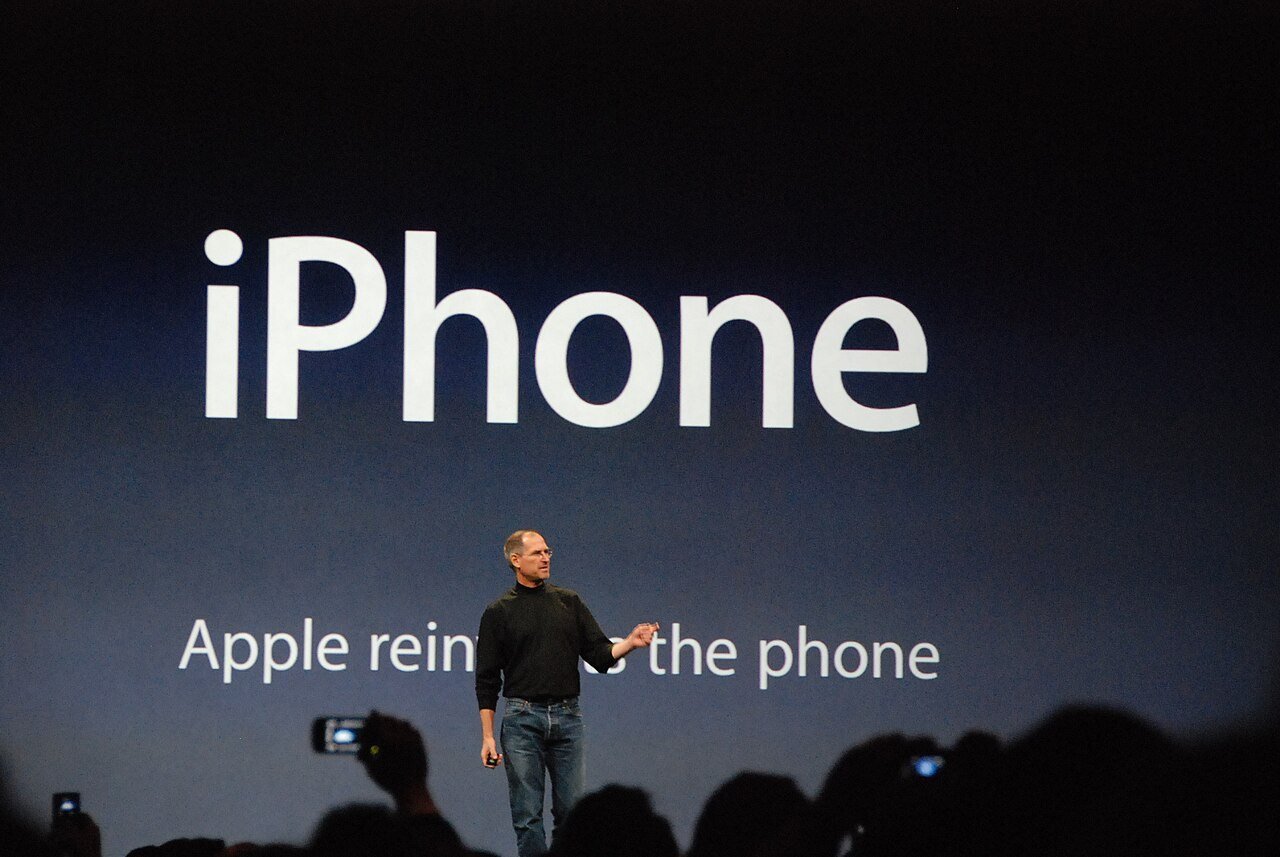
On 9 January 2007, Steve Jobs told the Macworld audience in San Francisco that Apple was going to reinvent the phone. The first iPhone unveiling introduced a device with a 3.5-inch multi-touch screen, a real web browser and no physical keyboard, but also no App Store, no 3G and no GPS. It went on sale on 29 June 2007. A year later the App Store turned it into a platform, and three billion iPhones later Apple is selling its first foldable, iPhone Duo, from 23 October 2026. This timeline traces the anniversaries that matter and how each generation changed the phone.
💡 Short Answer
Steve Jobs unveiled the first iPhone at Macworld in San Francisco on 9 January 2007, and it went on sale in the US on 29 June 2007 at $499 for 4GB and $599 for 8GB. It had no App Store until 10 July 2008, when Apple opened one with 500 apps. Apple shipped its three billionth iPhone in July 2025 and released its first foldable, iPhone Duo, in October 2026.
First iPhone Unveiling: Key Questions
The iPhone Story in Ten Points
- Unveiled 9 January 2007: Steve Jobs introduced the iPhone at Macworld San Francisco.
- On sale 29 June 2007: US only, at $499 and $599 on an AT&T contract.
- A price cut in 10 weeks: the 8GB model fell to $399 on 5 September 2007; a million were sold by 10 September.
- No App Store at launch: it opened on 10 July 2008 with 500 apps.
- The iPhone 3G fixed the gaps: 3G data and GPS, and the first official launch in India in August 2008.
- The hardware milestones: Retina (2010), Siri (2011), Touch ID (2013), big screens (2014), Face ID (2017).
- Software took over: computational photography, Apple Intelligence in 2024 and Siri AI in 2026.
- Three billion shipped: nine years to the first billion, four to the third.
- A new CEO: John Ternus succeeded Tim Cook on 1 September 2026.
- A new shape: iPhone Duo, the first foldable iPhone, goes on sale 23 October 2026.
The iPhone Anniversaries That Matter
Dates worth remembering, and what each one marks.
| Date | Anniversary | What it marks |
|---|---|---|
| 9 January | Unveiling day | Steve Jobs introduces the iPhone at Macworld, 2007 |
| 29 June | On-sale day | First iPhone sold in the US, 2007 |
| 10 July | App Store birthday | App Store opens with 500 apps, 2008 |
| 11 July | iPhone 3G | 3G, GPS and a global roll-out, 2008 |
| 22 August | India launch | First official iPhone in India, 2008 |
| 9 January 2017 | 10th anniversary | Followed by iPhone X that November |
| 9 January 2027 | 20th anniversary | Next milestone; no product announced |
The Timeline: From Macworld 2007 to the Foldable iPhone
Newest first. Tags mark launches, the app platform, hardware, software and AI, business milestones and 2026 developments.
2026
iPhone Duo goes on sale 2026
Pre-orders opened on 16 October and the phone reaches customers on 23 October, with 28 more countries following on 30 October, according to Apple. iPhone Duo is the first new iPhone form factor since the original: a 5.4-inch outer screen and a 7.6-inch inner screen on a hinge Apple says uses more than 100 components.
2026
iPhone 18 Pro reaches stores Hardware
The iPhone 18 Pro ($1,199) and Pro Max ($1,299) went on sale after pre-orders from 12 September. The main camera gained six-blade variable aperture from ƒ/1.48 to ƒ/4, and the phones carry C2, Apple’s second-generation in-house cellular modem.
2026
iOS 27 and Siri AI Software & AI
iOS 27 brought the rebuilt Siri to iPhone 15 Pro and later models. The original iPhone ran software that could not be updated with new apps at all; nineteen years on, the assistant itself arrives as a staged beta.
2026
Ternus’s first iPhone event Launch
Apple’s first launch under its new chief executive introduced the foldable alongside the Pro models. No standard iPhone 18 was announced, a break with the usual September pattern.
2026
John Ternus becomes CEO Business
Ternus, Apple’s hardware engineering chief, joined the company in 2001, before the iPhone existed. Cook had run Apple since August 2011, presiding over the iPhone’s growth from its fifth model to its third billion.
2026
Siri AI unveiled at WWDC26 Software & AI
Apple introduced Siri AI as ‘an entirely new version of Siri’. In January 2026 Apple and Google had said Google’s Gemini models would help power the next generation of Apple’s foundation models; Apple’s WWDC release itself did not name Google. Apple said it could not ship Siri AI in the EU at launch because of the Digital Markets Act.
2026
Apple turns to Google’s Gemini Software & AI
The two companies said Gemini models and cloud technology would underpin future Apple models, after Apple’s own revamped Siri slipped from 2025. Google already paid Apple billions a year to be the default search engine in Safari, the browser that was one of the first iPhone’s headline features.
2025
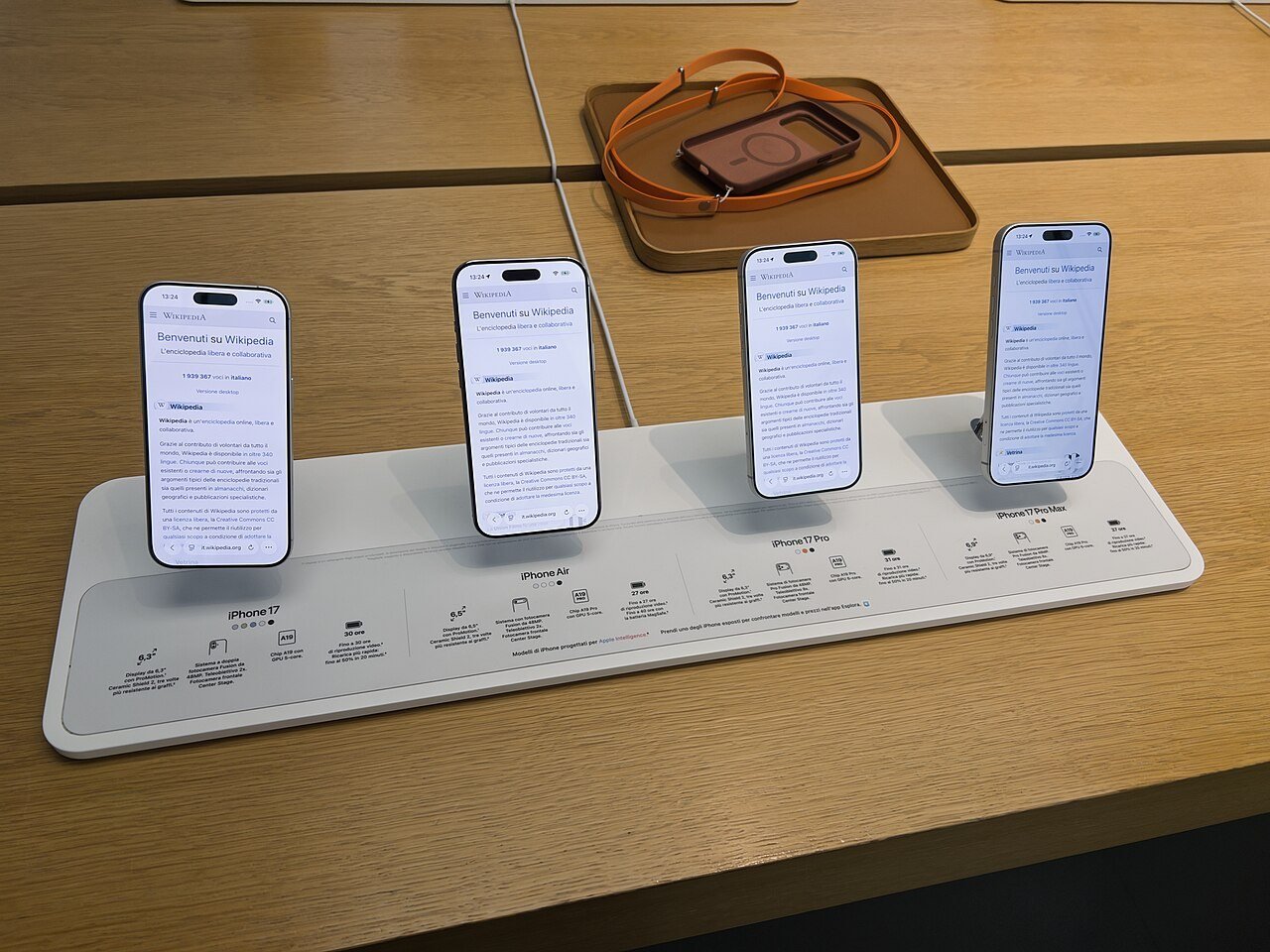
iPhone 17 and the ultra-thin iPhone Air Hardware
The iPhone Air was Apple’s thinnest phone yet, and iOS 26 introduced the translucent ‘Liquid Glass’ look, the largest visual redesign since iOS 7 in 2013.
2025
Three billion iPhones Business
Apple confirmed it had shipped its three billionth iPhone. iPhone revenue in that quarter was $44.6 billion, up 13% from a year earlier.
2025
iPhone 16e and Apple’s own modem Hardware
The budget iPhone 16e carried Apple’s first in-house cellular modem, C1, beginning the move away from Qualcomm that the C2 continued in 2026.
2024
Apple Intelligence arrives Software & AI
First announced at WWDC on 10 June 2024, Apple Intelligence reached iPhone 15 Pro and iPhone 16 owners in stages, with more languages, including English (India), added in 2025. The more personal Siri promised in 2024 was delayed.
2023
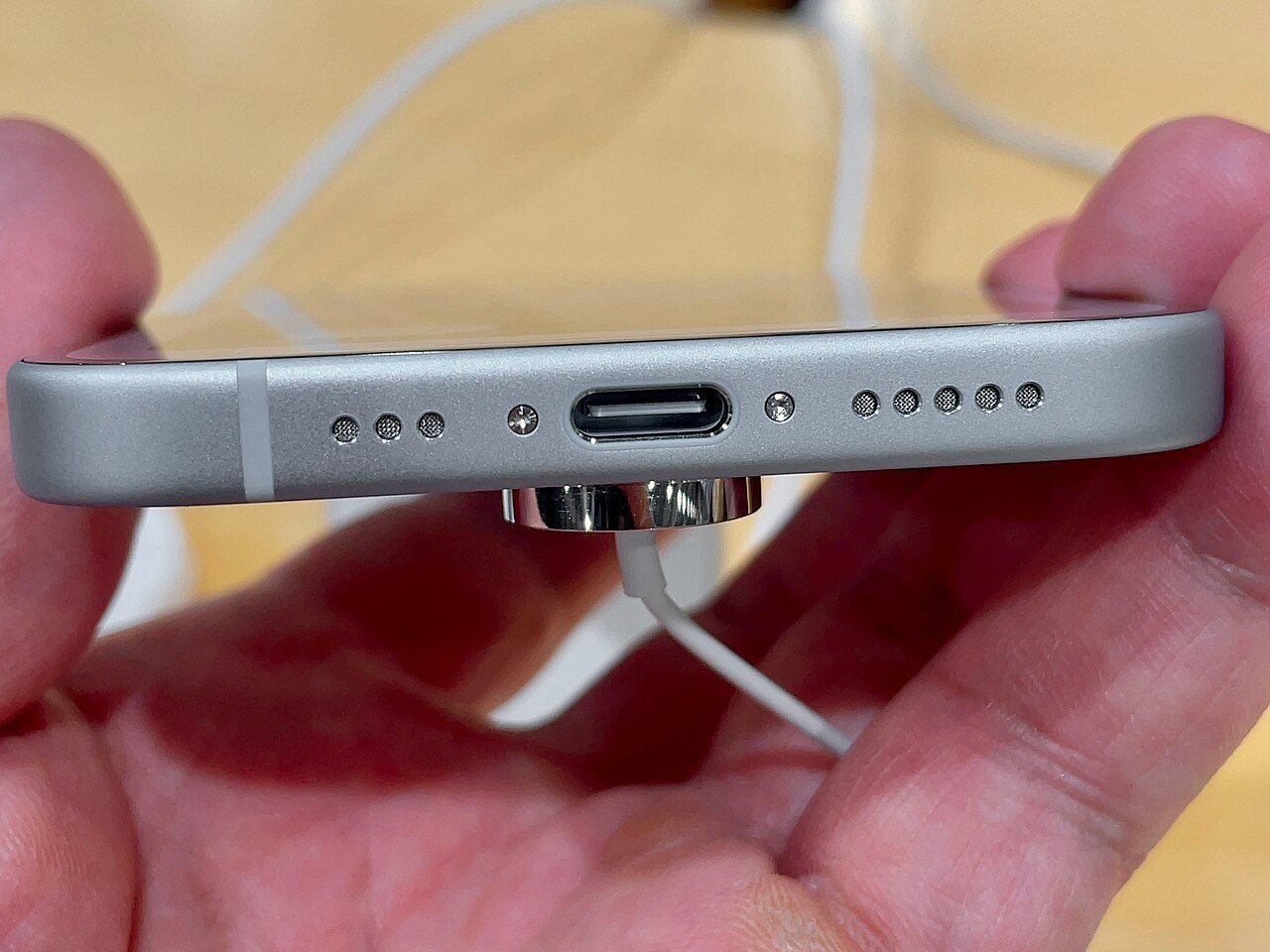
USB-C replaces Lightning Hardware
The change came ahead of an EU common-charger rule taking effect at the end of 2024. The original iPhone had used Apple’s wide 30-pin dock connector inherited from the iPod.
2022
Emergency SOS via satellite Hardware
The iPhone 14 could send text messages to emergency services via satellite where there was no cellular or Wi-Fi coverage, a feature later extended to roadside assistance and Messages.
2020
5G and MagSafe Hardware
The iPhone 12 range brought 5G to every model and magnetic MagSafe accessories. Apple stopped including a charger and earphones, citing environmental reasons.
2019
Night mode and three cameras Hardware
Computational photography became the main battleground: software combined multiple exposures to get usable photos in near-darkness. The first iPhone’s 2-megapixel camera could not record video at all.
2017
iPhone X: the tenth-anniversary phone Hardware
Announced on 12 September 2017 at the first event in the Steve Jobs Theater, the iPhone X replaced the Home button that had defined the iPhone since 2007 with gestures, and fingerprint unlocking with facial recognition.
2016
One billion iPhones Business
Tim Cook announced the billionth iPhone had been sold the previous week, calling the iPhone one of the most successful products in history.
2016
Goodbye headphone jack Hardware
Removing the 3.5mm jack was controversial; Phil Schiller called it ‘courage’. The 7 Plus’s second camera enabled Portrait mode later that year.
2014
Bigger screens and Apple Pay Hardware
Apple finally answered large Android phones. The original iPhone’s 3.5-inch screen had seemed huge in 2007; the 6 Plus was more than twice its area.
2013
Touch ID and 64-bit Hardware
Touch ID made a passcode-free phone practical and later secured Apple Pay. The A7 was the first 64-bit chip in a smartphone.
2012
Taller screen, LTE and Lightning Hardware
The first change to the iPhone’s screen size since 2007 added a fifth row of icons. The same year Apple Maps replaced Google Maps, an app that had been on the iPhone since day one, with a rocky debut.
2011
Siri arrives, and Jobs dies the next day Software & AI
Siri brought a voice assistant to a mainstream phone. Jobs had resigned as CEO in August 2011; Tim Cook announced the 4S in his first iPhone keynote.
2010
iPhone 4, Retina and FaceTime Hardware
The iPhone 4 doubled the resolution of the screen and added a front camera for FaceTime video calls. Its antenna problems led to a July press conference and free bumper cases.
2009
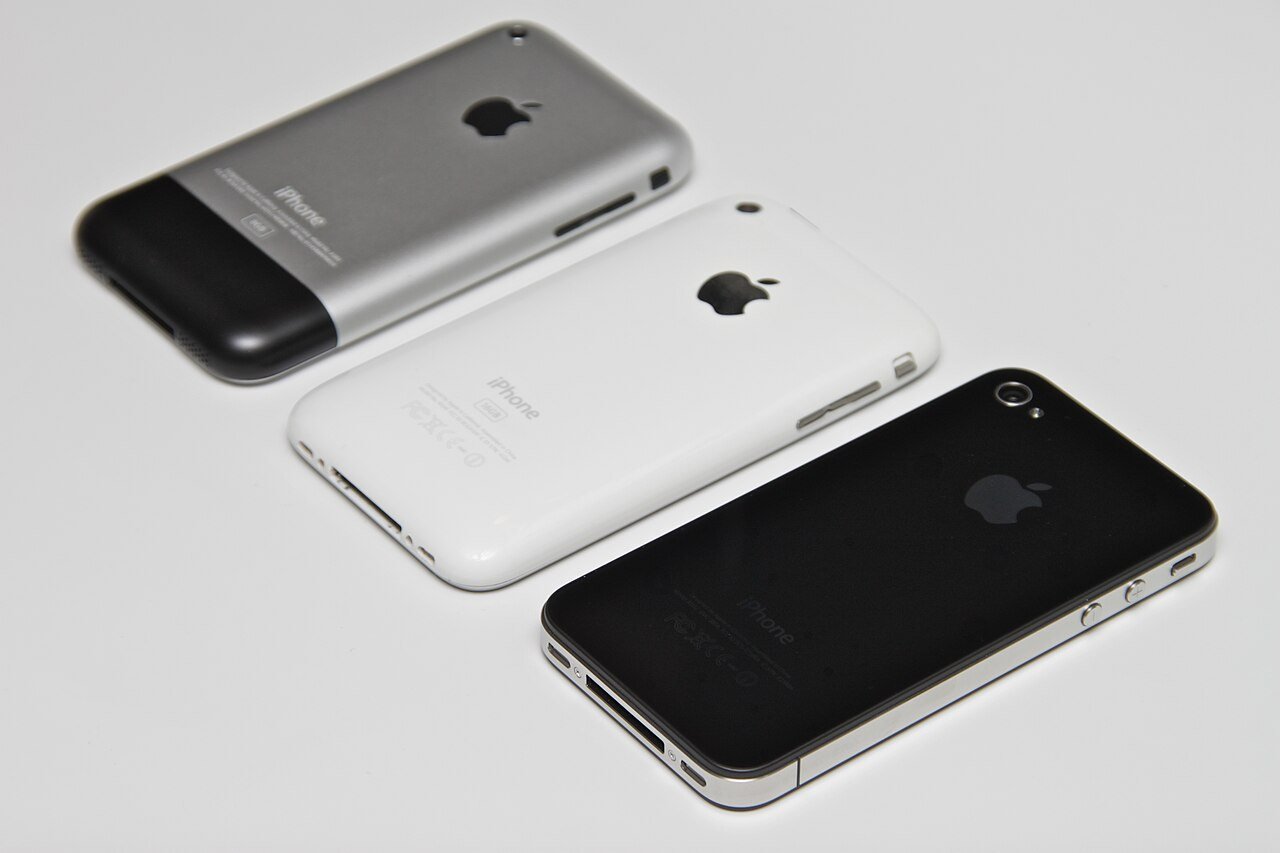
One billion app downloads Platform
The App Store’s speed made software the iPhone’s main selling point and set the model, a curated store with a 30% commission, that regulators would challenge a decade later.
2008
The iPhone reaches India Launch
India got its first official iPhone with the 3G model. High prices kept it a niche product for years; by the 2020s Apple was assembling iPhones in India and opened its own stores in Mumbai and Delhi in April 2023.
2008
iPhone 3G: faster, cheaper, with GPS Hardware
The second iPhone fixed the original’s two biggest gaps, slow EDGE data and no GPS, and was priced far lower with carrier subsidies. Location-aware apps became possible overnight.
2008
The App Store opens Platform
A year after launch, third-party developers could finally sell native apps to iPhone users. By the following Monday, Apple counted more than 800 apps, over 200 of them free and more than 90% under $10.
2008
The iPhone SDK Platform
Apple released the tools developers needed to build native apps, reversing its 2007 line that web apps in Safari were enough. Jobs had promised the SDK in an open letter in October 2007.
2007
One million iPhones in 74 days Business
Apple cut the 8GB model to $399 a little over two months after launch, angering early buyers, who were offered a $100 store credit. Sales hit a million days later.
2007
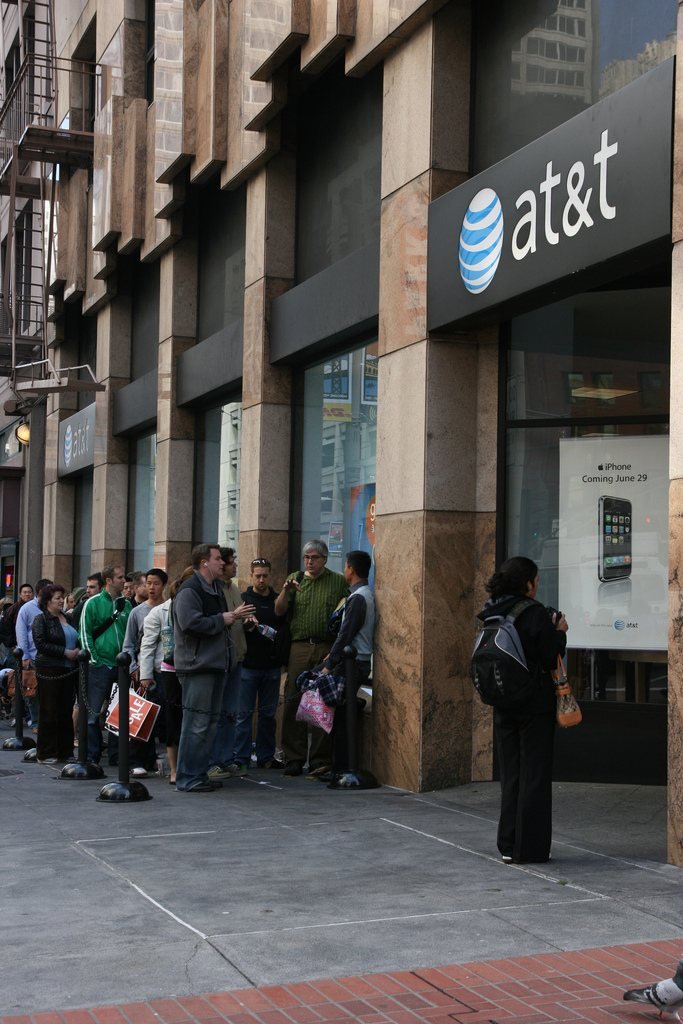
The first iPhone goes on sale Launch
Buyers queued for days outside Apple’s Fifth Avenue store in New York and stores across the US. It went on sale in the UK, Germany and France that November.
2007
‘Apple reinvents the phone’ Launch
Jobs teased ‘a widescreen iPod with touch controls, a revolutionary mobile phone, and a breakthrough Internet communications device’, then revealed they were one product. Prices were $499 (4GB) and $599 (8GB) on a two-year Cingular contract. The same day Apple Computer dropped ‘Computer’ from its name.
2006
Project Purple Hardware
Apple’s phone grew out of multi-touch work for a tablet. A 2005 Motorola ROKR phone with iTunes disappointed Jobs, and Apple chose to build its own handset with a deal giving Cingular exclusivity.
What the Original iPhone Could, and Could Not, Do
The phone Jobs unveiled, as it went on sale in June 2007.
| Feature | Original iPhone (2007) |
|---|---|
| Announced / on sale | 9 January 2007 / 29 June 2007 (US) |
| Display | 3.5-inch, 320 x 480 pixels, multi-touch |
| Storage | 4GB or 8GB (16GB added February 2008) |
| Camera | 2 megapixels; no video, no flash, no front camera |
| Connectivity | EDGE, Wi-Fi (802.11b/g), Bluetooth 2.0 |
| Apps | Phone, Mail, Safari, iPod, Maps (Google), YouTube, Photos, Calendar, Weather, Stocks and others |
| Missing | App Store, 3G, GPS, MMS, copy and paste, video recording |
| US price | $499 / $599 on a two-year contract; 8GB cut to $399 in September 2007 |
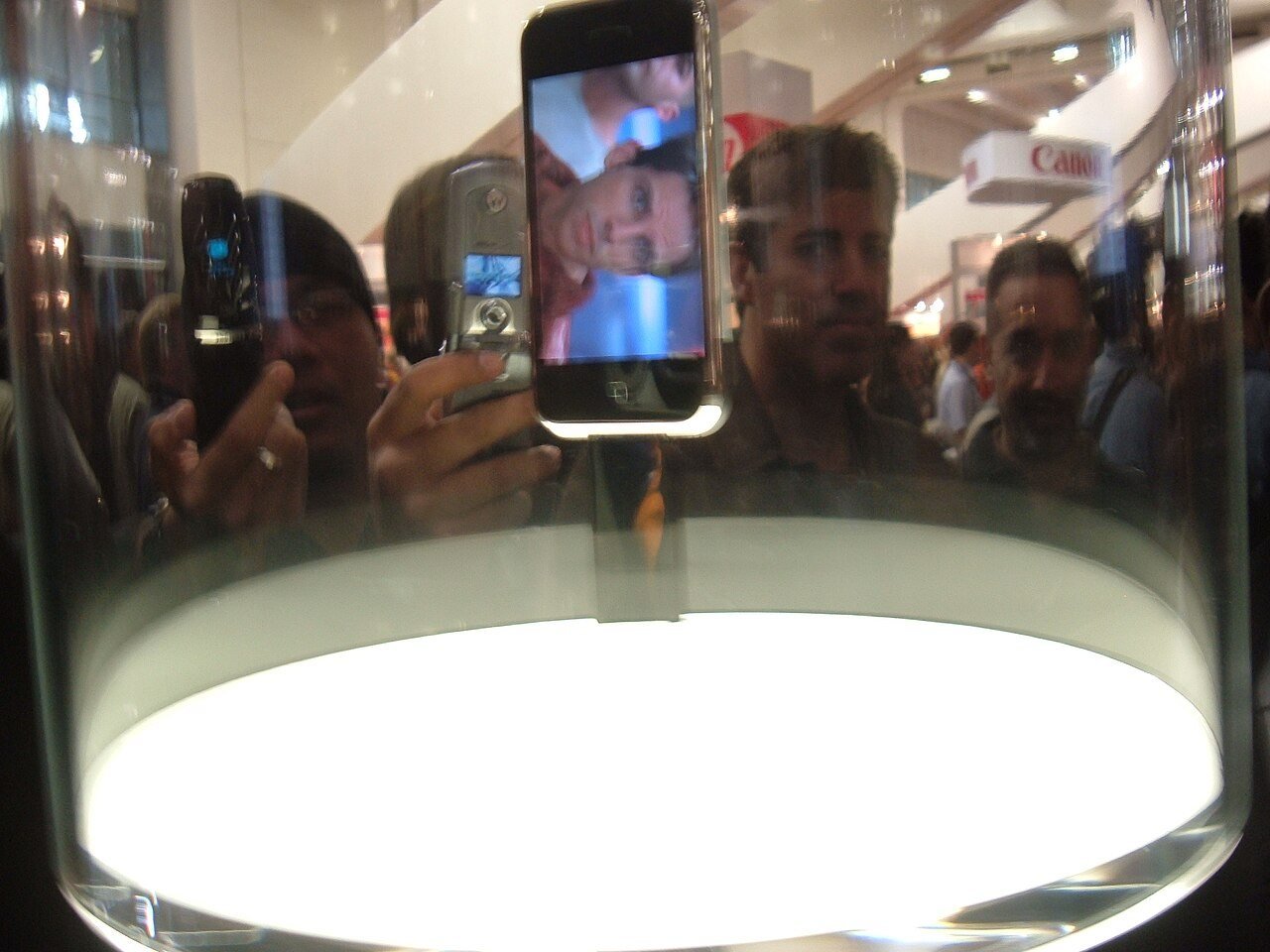
The original iPhone was a bundle of compromises held together by its interface. Its EDGE data was slow even by 2007 standards, its camera could not shoot video and it could not send picture messages. What it did offer was a screen you operated with your fingers, pinch-to-zoom, a desktop-class web browser and visual voicemail, which let you choose which messages to play. Rivals such as BlackBerry and Nokia sold far more phones that year, but the interface was what they would spend the next five years trying to match.
Pick a generation to see its headline feature, its catch, and how many years after the first iPhone it arrived.
Seventeen milestone models, from the 2007 original to the 2026 foldable. Not every model is listed.
2008: How the App Store Made the iPhone a Platform
Apple’s first answer to developers in June 2007 was web apps: software that ran inside Safari. Jailbreakers were already installing native apps on hacked iPhones, and in October 2007 Jobs published a letter promising a software development kit. It arrived on 6 March 2008, and the App Store opened on 10 July with 500 apps. Developers kept 70% of each sale; Apple handled payment, distribution and review.
The effect was immediate. More than 10 million apps were downloaded in the first weekend and one billion by April 2009. A phone bought in 2008 could gain new functions every week, and the model was copied by Google’s Android Market the same year. The same rules later drew antitrust cases, Epic Games’ lawsuit in 2020 and the EU’s Digital Markets Act, which in 2026 also delayed Siri AI in Europe.
Every Generation That Changed the iPhone
One defining change per milestone model. Scroll sideways on a phone.
| Year | Model | What it changed |
|---|---|---|
| 2007 | iPhone | Multi-touch phone with a full web browser |
| 2008 | iPhone 3G | App Store, 3G, GPS |
| 2010 | iPhone 4 | Retina display, FaceTime |
| 2011 | iPhone 4S | Siri |
| 2012 | iPhone 5 | 4-inch screen, LTE, Lightning |
| 2013 | iPhone 5s | Touch ID |
| 2014 | iPhone 6 / 6 Plus | Large screens, Apple Pay |
| 2016 | iPhone 7 | Water resistance; no headphone jack |
| 2017 | iPhone X | Face ID, OLED, no Home button |
| 2019 | iPhone 11 Pro | Night mode, triple camera |
| 2020 | iPhone 12 | 5G, MagSafe |
| 2022 | iPhone 14 | Emergency SOS via satellite |
| 2023 | iPhone 15 | USB-C |
| 2024 | iPhone 16 | Apple Intelligence |
| 2025 | iPhone 17 / Air | Thinnest iPhone, Liquid Glass |
| 2026 | iPhone Duo / 18 Pro | First foldable; Siri AI; 2nm A20 Pro |
The First iPhone vs the 2026 iPhone
Pick a feature to compare the first iPhone with the 2026 lineup.
2007 figures are for the original iPhone at launch; 2026 figures from Apple’s September 2026 announcements. Prices are not adjusted for inflation.
The iPhone in 2026: A New CEO, Siri AI and a Foldable
2026 has been the iPhone’s busiest year in a decade. In January Apple and Google said Gemini would help power Apple’s future models. In April Apple named John Ternus to succeed Tim Cook, who had led the company since 2011. In June it unveiled Siri AI, the assistant it had promised two years earlier, though not for EU users at launch. In September Ternus introduced the iPhone 18 Pro and iPhone Duo, Apple’s first foldable, which goes on sale on 23 October from $1,999 in more than 70 countries including India.
The foldable answers rivals such as Samsung, which have sold folding phones since 2019, much as the iPhone 6 answered large Android phones in 2014. Whether it changes the market as the first iPhone did is a question its first year of sales will start to answer. The next date to watch is 9 January 2027, the 20th anniversary of the unveiling.
Explore More Timelines
People Also Ask
Frequently Asked Questions
Conclusion: From a Touchscreen Phone to a Computing Platform
The first iPhone was not the first smartphone, the first touchscreen phone or the first phone on the internet. Its significance lies in how Apple combined those ideas into one tightly integrated product and then, with the App Store in 2008, let outside developers keep extending it. Every later milestone, from the Retina display to Face ID to Siri AI, built on that platform.
Nearly twenty years after Macworld 2007, the iPhone is changing shape for the first time. The next chapter will be judged, as the first was, by whether it makes everyday tasks simpler.
Related AiTimeline Stories
⚠️ Editorial Note
This timeline is based on Apple Newsroom releases from 2007 to October 2026, including the original iPhone announcement, the 2007 one-million milestone, the 2008 App Store figures, ‘The App Store Turns 10’ (2018), ‘iPhone at Ten’ (2017), Apple Intelligence (2024), the 2026 CEO transition, Siri AI, iPhone 18 Pro and iPhone Duo announcements, plus Apple’s July 2025 earnings call as reported by 9to5Mac. The two-billion figure in the chart is an analyst estimate. Prices are US launch prices unless stated. AiTimeline is independent and not affiliated with Apple.
Sources & further reading
Every dated entry above was checked against these references. Last reviewed 18 October 2026.
- Apple Reinvents the Phone with iPhone (9 January 2007)
- iPhone Premieres This Friday Night at Apple Retail Stores (28 June 2007)
- Apple Sells One Millionth iPhone (10 September 2007)
- iPhone App Store Downloads Top 10 Million in First Weekend (14 July 2008)
- The App Store turns 10 (5 July 2018)
- iPhone at Ten: The Revolution Continues (8 January 2017)
- The future is here: iPhone X (12 September 2017)
- Introducing Apple Intelligence for iPhone, iPad, and Mac (10 June 2024)
- Tim Cook just announced Apple sold its three billionth iPhone (31 July 2025)
- Tim Cook to become Apple Executive Chairman; John Ternus to become Apple CEO (20 April 2026)
- Apple introduces Siri AI (8 June 2026)
- Apple debuts iPhone 18 Pro and iPhone 18 Pro Max (9 September 2026)
- Apple unveils iPhone Duo (9 September 2026)