The Times of India History: From the 1838 Bombay Times to India’s Largest English Daily
Times of India history, 1838-2026: from the Bombay Times to India's largest English daily. Owners, the 1994 price war, the website and audited circulation.
Latest Story
The Times of India began in Bombay on 3 November 1838 as a twice-weekly paper for merchants. It has since been owned by shareholders, a British company, an industrialist later jailed for fraud, a court-appointed government board and the Sahu Jain family. This is the history of The Times of India: how it became a daily, took its name, moved into Delhi, won a price war, went online, became India’s largest English daily on audited figures, and why its newest test, in 2026, is about trust rather than size.
💡 Short Answer
The Times of India began on 3 November 1838 as The Bombay Times and Journal of Commerce, became a daily in 1850 and took its present name in 1861. Bennett, Coleman and Co. acquired it in 1892, Ramkrishna Dalmia bought the company in 1946, and after seven years under a government-appointed board (1969-1976) it has been run by the Sahu Jain family. A Delhi edition followed in 1950, a 1990s price-and-supplement strategy made it India’s largest English daily, and it went online in 1996. ABC audited sales were 1.84 million copies a day in late 2025.
Times of India History: Key Questions
The Times of India in Ten Points
- 1838: The Bombay Times and Journal of Commerce, twice a week.
- 1850: a daily, under George Buist.
- 1861: Robert Knight renames it The Times of India after a merger with the Bombay Standard.
- 1892: Bennett, Coleman and Co. takes over; the name survives to today.
- 1946: Indian ownership, via Ramkrishna Dalmia, whose takeover funding was later found improper.
- 1969-1976: a government-appointed board ran the company, by court order.
- 1994: Bombay Times and a Rs 1.50 Delhi price reshape the market.
- 1996: online, by most accounts, not 1997.
- Numbers: the group’s milestones (up to ‘close to 5 million’) run above audited figures (peak 3.18 million in 2016).
- 2026: 1.84 million audited copies, and a public row over a fabricated story.
The Times of India Timeline, 1838–2026
Newest first. Tags mark expansion, ownership changes and turning points. Where sources conflict, we say so, and figures from the paper’s own history are labelled as such.
Sep 2026
An AI-era credibility test Turning point
In July 2026 The Times of India published a story saying the American writer Sarah Kendzior had quit writing to work in a garden centre and ‘found unexpected joy’. On 15 September Kendzior wrote that the piece was fabricated: it had stitched her real biography to a CNBC article about another woman, Leslie Friday, who had taken such a job. She said her requests for a correction went unanswered, that AI chatbots were now repeating the claim, and that readers had cancelled subscriptions to her newsletter because of it. The article was later removed from the site. We found no public statement from the paper. A year earlier, in July 2025, its sister title The Economic Times had removed a fabricated quote from an AI-assisted story, The News Minute reported. For a paper whose 188-year asset is trust, these are small stories with a large point.
2026
Print steadies, the group reshapes Expansion
The audited numbers stopped falling. The Audit Bureau of Circulations put The Times of India at 1,837,731 copies a day for July to December 2025, up from 1,640,418 in the first half of the year, as reported by exchange4media, against about 6.2 lakh for Hindustan Times in H1 2025. Bennett, Coleman’s consolidated revenue rose 4.3% to Rs 10,209 crore in 2024-25. The digital arm kept buying: Times Internet acquired the entertainment brand Instant Bollywood on 2 June 2026. Print is smaller than in 2016, but it is still the largest English daily in India by a wide margin.
One group, two businesses Ownership
The Times Group was split between the brothers: the print properties, The Times of India among them, went under Samir Jain, while radio and broadcast businesses such as Radio Mirchi and Times Now stayed with Vineet Jain. Their mother, Indu Jain, who had chaired the group for decades, died in May 2021. It was the biggest change in how the paper is held since the family regained it in 1976.
The audited peak Turning point
The Audit Bureau of Circulations certified 3,184,727 copies a day for The Times of India in July to December 2016, the highest of any English daily in India by more than double: The Hindu sold 1,464,297 and Hindustan Times 1,194,816 in the same period. It is the high-water mark of the independently audited series. By April 2023 the figure was 1,872,442.
175 years, and a stamp Turning point
The paper turned 175 on 3 November 2013, and India Post issued a Rs 5 stamp for it on 13 November. Its anniversary material described a paper that had grown from one edition of a few thousand copies to some 50 editions with a circulation ‘close to five million’. That is the group’s own figure, not an audited one; the ABC figure three years later was 3.18 million. A Kolhapur edition opened in February. A month earlier, the group had launched Alive, an augmented-reality app that turned printed pages into triggers for video.
2012
Scrutiny of the model Ownership
The business model that built the paper’s scale also drew the sharpest criticism. A 2010 Press Council of India subcommittee report on paid news criticised Medianet, the group’s scheme for paid coverage of launches and events. In October 2012 Ken Auletta’s New Yorker profile, ‘Citizens Jain’, reported that through private treaties, advertising paid for with equity, BCCL held stakes in about 350 companies, generating 15% of its revenue. The group defended both, saying the content was marked as advertorial and that its journalists were not bound by the deals.
South, and four million Expansion
The Times of India entered Chennai on 12 April 2008, the home of The Hindu, as part of a push into southern cities. Its own history says circulation passed four million that year and that the edition count rose from 29 in 2008 to 52 by 2013. Edition-by-edition expansion, each with city pages and supplements, was the growth engine of the decade.
2007
The world’s largest English daily Expansion
In late 2006 the Times Group bought Vijayanand Printers, publisher of the market-leading Kannada daily Vijay Karnataka and the English Vijay Times, strengthening its hand in Bangalore. From around 2007 the paper began to call itself the world’s largest-selling English daily. Wikipedia today lists it as the ninth-largest selling English-language daily in the world, which shows how much depends on who is counting and how.
2004
Colour, and three million Turning point
The Times of India began converting its editions to all colour, starting in Delhi, in 2003. Colour changed what a newspaper page looked like: larger photographs, graphics and full-colour advertisements on every page. By the group’s count circulation passed three million in 2004.
2000
Online, and a million copies Turning point
The Times of India went online in 1996, among the first Indian newspapers to do so, and the group launched its Indiatimes portal the same year. (Some timelines, including the brief this page started from, say 1997.) The group says the paper crossed one million copies a day in 1996 and two million in 2000. The digital business later became Times Internet; by 2009 the paper claimed its website was the world’s most visited English newspaper site by page views.
Bombay Times and the Delhi price war Turning point
Two moves in one year changed the Indian newspaper business. In Mumbai the paper launched Bombay Times, a free entertainment and society supplement edited by Bachi Karkaria, which made celebrity and lifestyle coverage a daily habit and gave advertisers a separate shop window. In Delhi, according to The Caravan and afaqs, it cut its price from Rs 2.30 to Rs 1.50 to take on the Hindustan Times; TOI’s own history dates a Rs 1.50 invitation price to 1992. In 1991 it had sold about 70,000 copies in Delhi to HT’s 3.5 lakh, according to an ICMR case study. By 1998 HT had slipped to second place in Delhi.
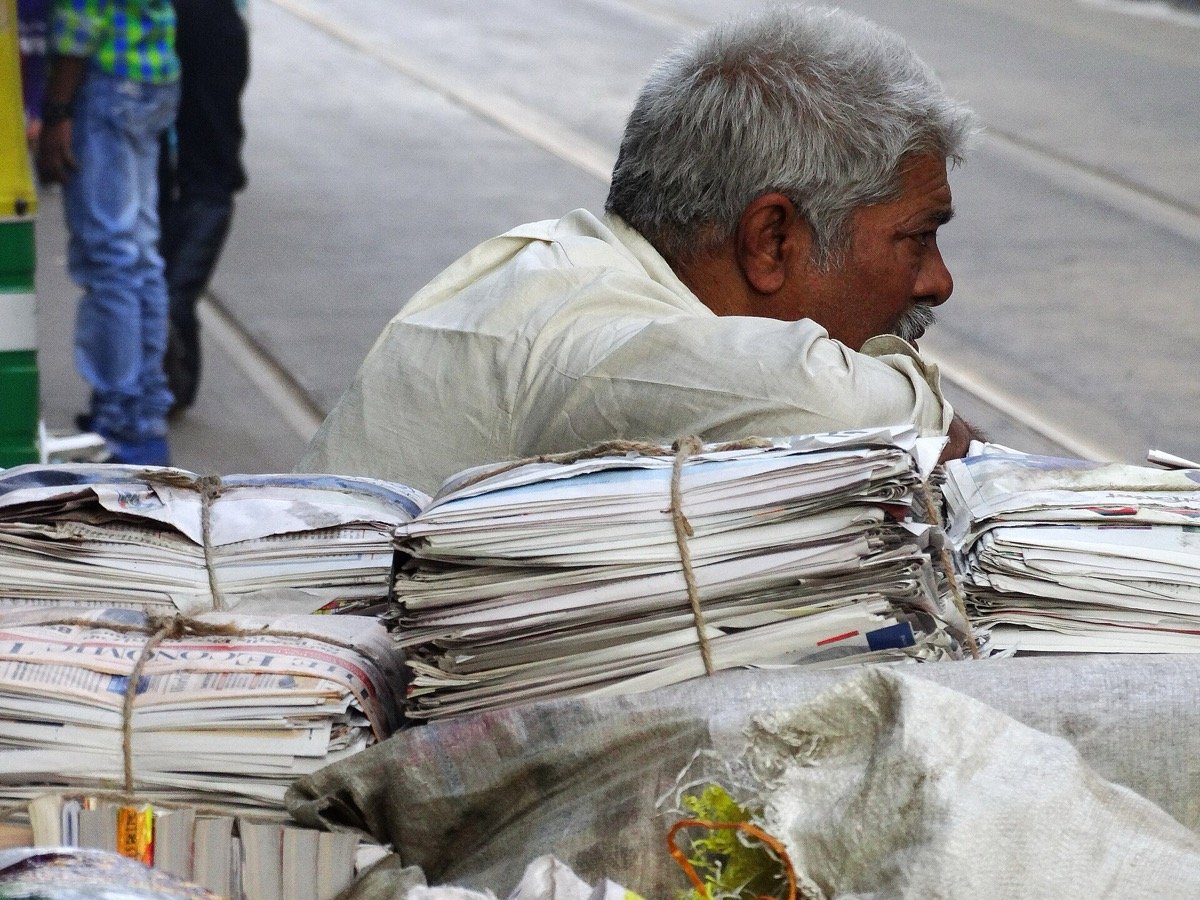
A newspaper about the reader Turning point
In the paper’s own words, from 1991 ‘the first page made way for urban issues, social trends and human interest stories’. The driving force was Samir Jain, who had joined the company in 1975 and treated the paper as a consumer brand: cheaper cover prices, a lighter tone, more city news and more pages that advertisers wanted. Critics said he made editors subordinate to marketing. The same year the BBC ranked TOI among the world’s six best newspapers.
Newspaper in Education Expansion
The paper launched Newspaper in Education, a programme and edition for school students, according to its own timeline. It was public service and audience strategy in one: build the reading habit before readers choose a paper for themselves.
1976
The Emergency, and back to the Jains Ownership
On 26 June 1975, the day after the Emergency was declared, the Bombay edition carried a notice in its obituary column: ‘D.E.M. O’Cracy, beloved husband of T. Ruth, father of L.I. Bertie, brother of Faith, Hope and Justice, expired on 25 June.’ It became one of the most quoted acts of press defiance of the period. In 1976, still during the Emergency, the government handed ownership back to Ashok Kumar Jain, Shanti Prasad Jain’s son and Dalmia’s grandson.
A court hands the paper to the government Ownership
Acting on a government petition based on the Vivian Bose Commission’s findings against the Dalmia-Jain group, the Bombay High Court on 28 August 1969 disbanded the Bennett, Coleman board and constituted a new one under the government. Shanti Prasad Jain, who had been jailed earlier in the decade over newsprint sales on the black market, ceased to be a director. D. K. Kunte, an opposition MP with no business experience, became chairman. The country’s biggest English daily was, for seven years, run by a board the state appointed.
1968
A portfolio, not a paper Expansion
The company built titles around the paper: Filmfare in 1952, Femina in 1959 and The Economic Times in 1961, now India’s largest business daily. The Times of India itself added an Ahmedabad edition in 1968, according to the group. The Times of India press also printed influential magazines such as the Illustrated Weekly of India and the Hindi Dharmyug, most of which closed in the 1990s.
Delhi, a century later Expansion
‘The paper came to Delhi after a century,’ as its own anniversary history puts it. The Delhi edition gave the Bombay paper a base in the new republic’s capital and its politics. It would spend most of the next 40 years well behind the Hindustan Times in the city.
1955
Indian ownership, and a scandal Ownership
As the British owners left India, Bennett, Coleman and Co. was sold to the sugar magnate Ramkrishna Dalmia for about Rs 2 crore. In 1955, after questions raised in Parliament by Feroze Gandhi, the Vivian Bose Commission found that Dalmia had financed the 1947 takeover with money moved from a bank and an insurance company he chaired. He was jailed for embezzlement and fraud. His son-in-law Sahu Shanti Prasad Jain, to whom he had entrusted the company, kept control. That is how the Sahu Jain family came to the paper.
The first price war Turning point
Under its new editor Stanley Reed, who would edit it until 1924 and correspond with Mahatma Gandhi, the paper cut its price from four annas to one anna, and its circulation rose about fivefold, according to the paper’s own history. Near the turn of the century the Viceroy, Lord Curzon, had called it ‘the leading paper in Asia’.
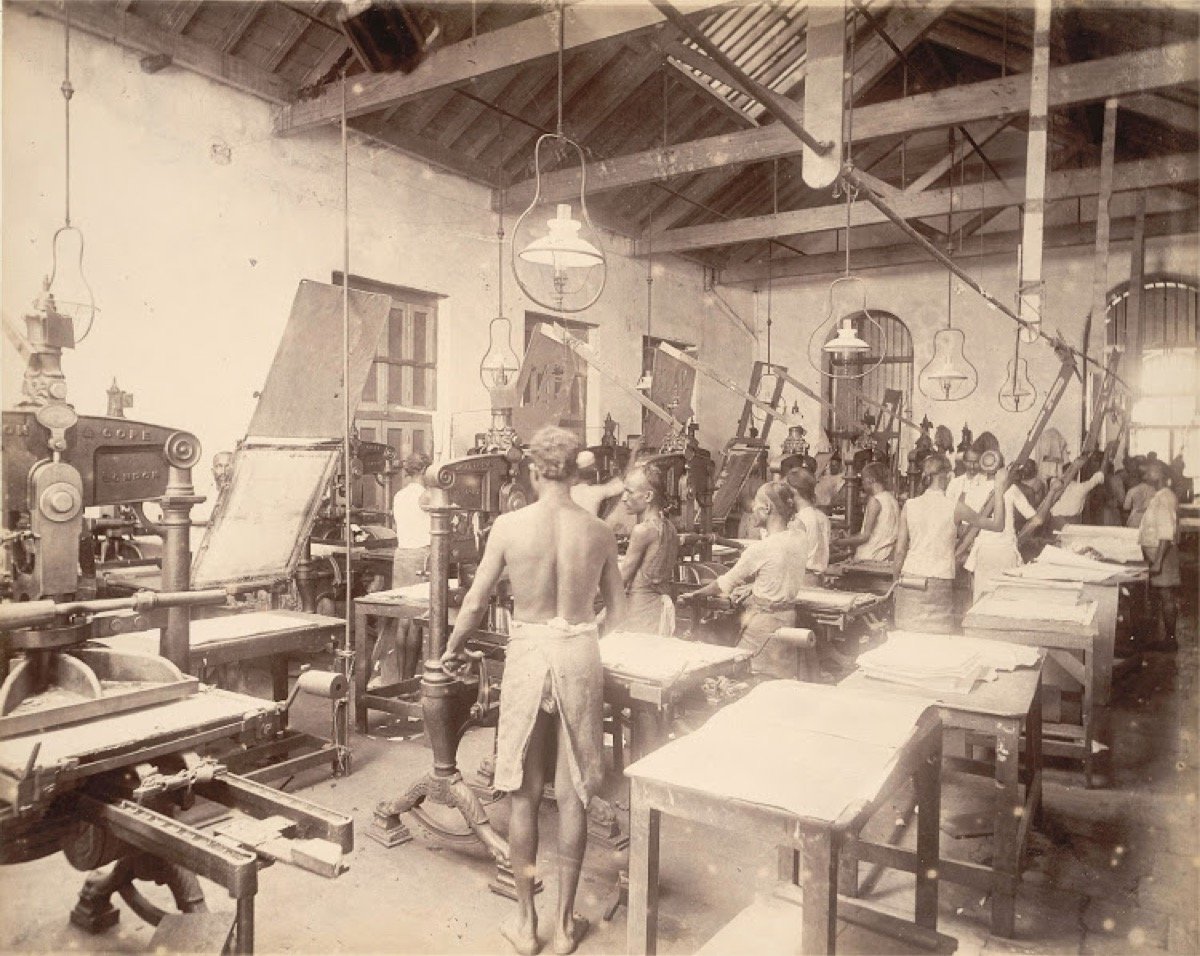
Bennett, Coleman and Co. Ownership
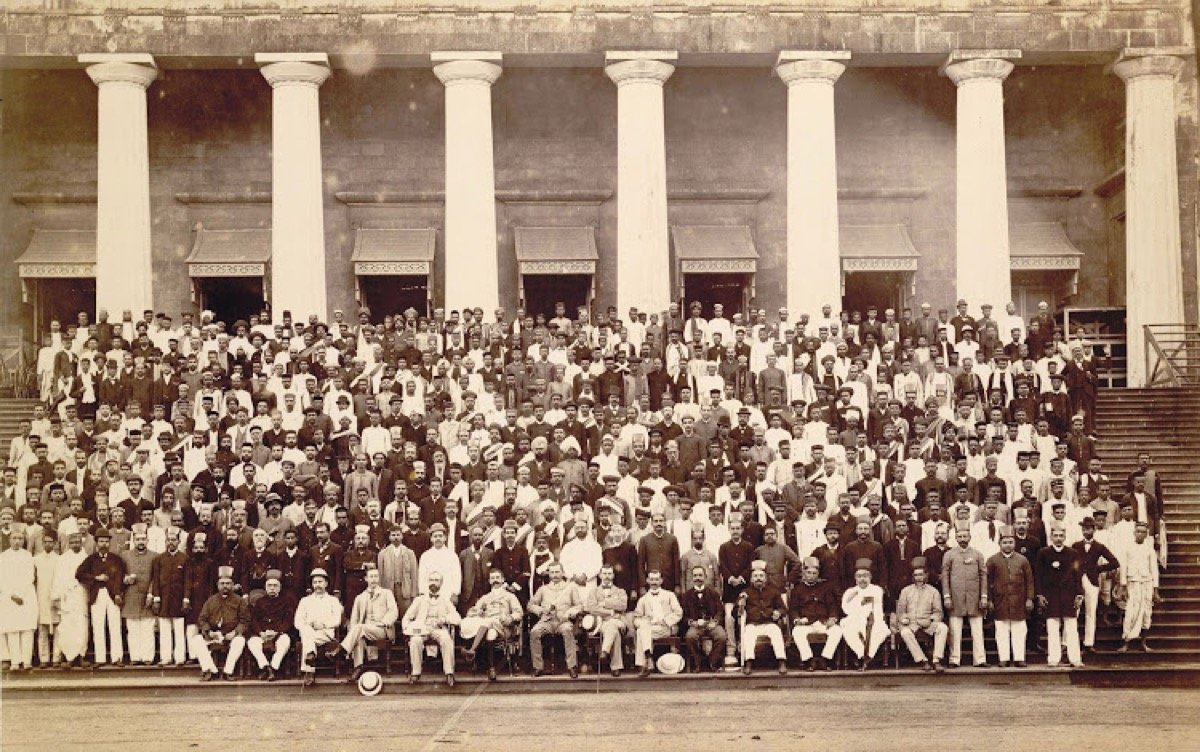
After several changes of owner, the English journalist Thomas Jewell Bennett and Frank Morris Coleman acquired the paper through a new joint-stock company, Bennett, Coleman and Co. Ltd. Coleman later drowned in the 1915 sinking of the SS Persia. The company name, now BCCL, has outlived every owner since. By then the business employed more than 800 people; in 1898 its staff posed on the Town Hall steps for its 60th birthday.
The Times of India Turning point
Editor Robert Knight bought out the Indian shareholders around 1860 and merged the paper with its rival, the Bombay Standard. In 1861 he changed the name from the Bombay Times and Standard to The Times of India. Knight also started what is described as India’s first news agency, wiring Times dispatches to papers across the country, and became the Indian agent for Reuters. He fought officials who tried to restrain the press, and gave a Bombay paper a national horizon.
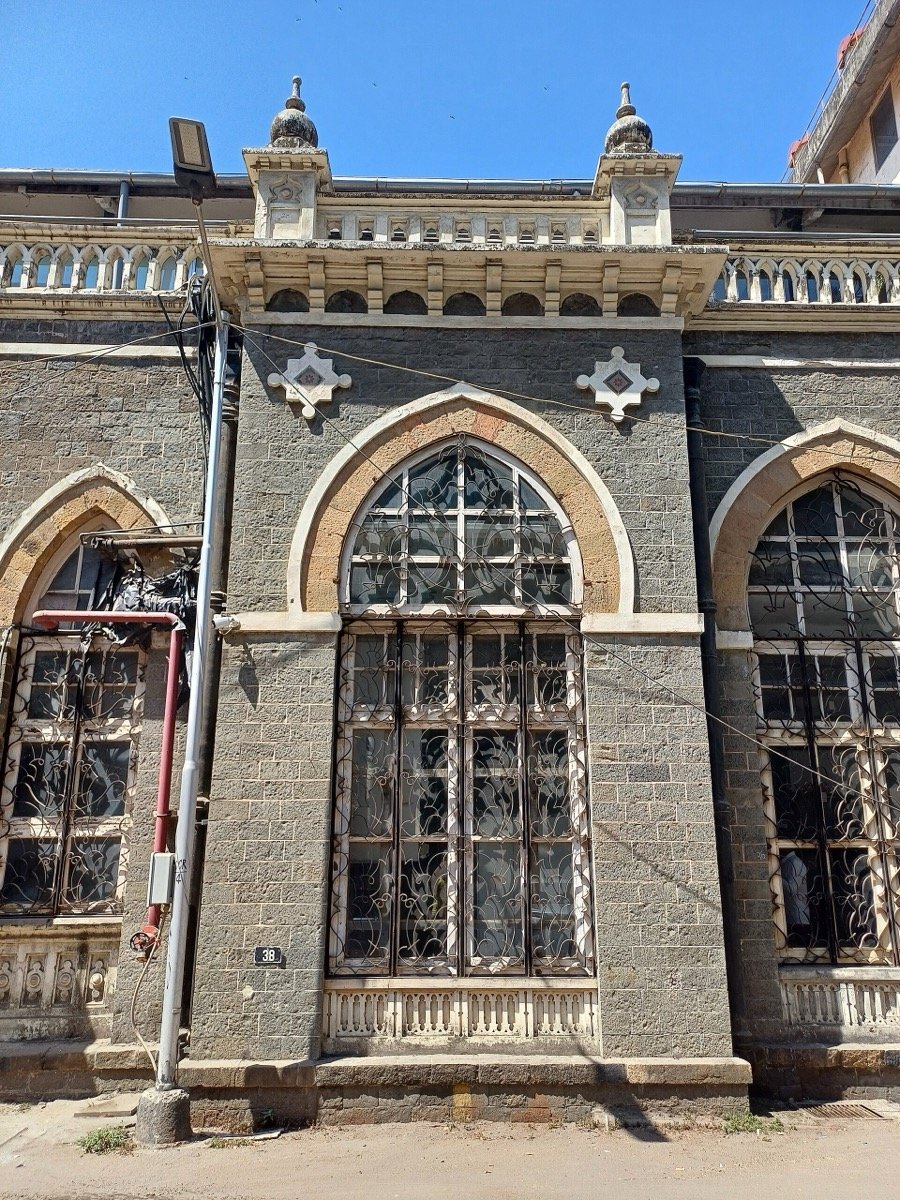
A daily paper Turning point
Under its second editor, the Scot George Buist, the Bombay Times became a daily in 1850. Buist was strongly pro-British. During the 1857 uprising a Parsi shareholder, Fardoonji Naoroji, pressed him to change the paper’s line; Buist refused, and after a shareholders’ meeting he was replaced by Robert Knight.
1838
The Bombay Times is born Turning point
The first issue of The Bombay Times and Journal of Commerce came out on 3 November 1838. It appeared twice a week, under the direction of the Marathi social reformer Raobahadur Narayan Dinanath Velkar, with news from Britain, Europe and the subcontinent for Bombay’s merchants and officials. Its first editor, J. E. Brennan, died the next year. Bombay already had papers, among them the Gujarati Bombay Samachar of 1822, still published today.
How Big Is The Times of India, Really?
The group’s own milestones and the audited figures, side by side.
Who owned it, where it printed, and what it was up against
Drag the year from 1838 to 2026. The explorer shows who controlled the paper, the India it was reporting on, its main rival, and what it had built by then. Chips in green are products and formats; the rest are editions.
Seven Owners, One Masthead
The brief this page started from jumps from 1946 to the Jain family. The real chain is longer, and includes seven years under the government.
| Period | Who controlled it | How control changed |
|---|---|---|
| 1838-c.1860 | Bombay shareholders, Indian and British | N. D. Velkar directing; editors Brennan, Buist |
| c.1860-1892 | Robert Knight and successors | Knight bought out Indian shareholders; several owners followed |
| 1892-1946 | Bennett, Coleman and Co. (British) | T. J. Bennett and F. M. Coleman’s joint-stock company |
| 1946-1950s | Ramkrishna Dalmia | Bought for about Rs 2 crore; Vivian Bose Commission found misused funds |
| 1950s-1969 | Sahu Shanti Prasad Jain (Dalmia’s son-in-law) | Entrusted with the company, kept it after Dalmia’s conviction |
| 1969-1976 | Government-appointed board | Bombay High Court interim order, 28 Aug 1969 |
| 1976-today | Sahu Jain family | Returned to Ashok Kumar Jain; Samir and Vineet Jain since; print with Samir Jain from 2023 |
The Times of India Playbook
Four ideas the paper used more than once.
Cut the price, grow the market
A fourfold cut from four annas to one in 1907, and Rs 2.30 to Rs 1.50 in Delhi in 1994. Both times, more copies meant more advertising, which paid for the cheaper paper.
National brand, local paper
Delhi in 1950, Ahmedabad in 1968, Chennai in 2008, Kolhapur in 2013. Each edition carried national news with its own city pages, which is how a Bombay paper became a national one.
Many titles, one company
Filmfare, Femina, The Economic Times, Bombay Times, Indian-language dailies, Times Internet. The company rarely relied on a single product.
Follow the reader
Online in 1996, an augmented-reality app in 2013, apps, video and social distribution since. The masthead stayed; the delivery kept changing.
Scrutiny and Criticism
The strategy that made The Times of India India’s largest English daily has had prominent critics. Journalists and media scholars argue that the 1990s changes subordinated editors to marketing, and that the group was first to institutionalise paid news in India through Medianet and private treaties, practices other media houses later copied. A 2010 Press Council subcommittee report criticised paid news, and The Caravan and The New Yorker documented cases in 2012 where coverage appeared to favour the group’s commercial partners.
The group has defended itself: it says paid content carries a disclosure, that its newsroom is independent of its equity deals, and that cheaper newspapers widened readership. In 2018 a Cobrapost sting showed group executives discussing a paid campaign; BCCL said the video was ‘doctored’ and ‘incomplete’ and that managing director Vineet Jain was running a reverse sting. The 2026 Kendzior story adds a new kind of scrutiny, about the accuracy of what is published at speed online. The paper has also long been praised: Lord Curzon called it ‘the leading paper in Asia’, the BBC ranked it among the world’s six best in 1991, and a 2019 Brand Trust Report rated it India’s most trusted English newspaper.
Circulation, Read Carefully
Copies, readers and company milestones are different measures. Here they are kept apart, with dates.
| Figure | What it measures | Source and date | How to read it |
|---|---|---|---|
| 3,000 a day | Circulation, 1890 | First Versions, citing TOI history | Before the 1907 price cut |
| 1m / 2m / 3m / 4m | Group’s milestones, 1996-2008 | TOI’s own 175-year history | Not independently audited |
| ‘Close to 5m’ | Circulation at 175 years, 2013 | TOI anniversary material | Company figure |
| 3,184,727 | Average copies a day, Jul-Dec 2016 | Audit Bureau of Circulations | Audited peak of the series |
| 1,837,731 | Average copies a day, Jul-Dec 2025 | ABC, via exchange4media | Latest audited figure we found |
| 42 million | Print readers | Times Group media kit, citing IRS 2019 Q4 | Readers, not copies; seven years old |
| Rs 10,209 cr | BCCL consolidated revenue, FY25 | Company filings, via exchange4media | Whole group, not the paper alone |
The Times of India is India’s largest English daily on every audited measure we found, by a wide margin. Two kinds of number get mixed up in most histories, including the brief this page started from. The group’s milestones, one million in 1996 rising to ‘close to five million’ in 2013, come from its own history and are not audited. The Audit Bureau of Circulations series is lower: 3.18 million copies a day at its 2016 peak, 1.84 million in late 2025. Readership surveys, such as the 42 million print readers the group cites from IRS 2019, count people, not copies, and should not be added to digital audiences measured another way.
1838 vs 2026: What Actually Changed
| Dimension | 1838 | 2026 |
|---|---|---|
| Name | The Bombay Times and Journal of Commerce | The Times of India |
| Frequency | Twice a week | Daily in print, continuous online |
| Readers | Bombay merchants and officials | About 1.84 million copies a day plus web and app audiences |
| Owner | A group of shareholders | Bennett, Coleman and Co., controlled by the Sahu Jain family |
| Revenue | Copy sales and notices | Advertising-led, across print, digital and events |
| Biggest risk | Getting news by ship in time | Keeping readers’ trust as AI and platforms reshape news |
Corrections and Clarifications
Claims in the earlier draft of this page and in the brief it was built from, checked against Wikipedia, The Caravan and afaqs, ABC data, India Post, exchange4media and Sarah Kendzior’s own account.
“1997: TimesofIndia.com launches”
Most accounts say TOI went online in 1996, the same year the group launched Indiatimes. We use 1996 and note that some timelines say 1997.
“1992: Rs 1.50 invitation price”
TOI’s own history says 1992. The Caravan, afaqs and an ICMR case study date the Delhi cut from Rs 2.30 to Rs 1.50 to 1994. We give both.
“1948: the Sahu Jain era”
We found no 1948 event. Dalmia entrusted the company to his son-in-law Shanti Prasad Jain; a court gave control to a government board in 1969, and the family regained it only in 1976.
Seven years under the government
The brief skips the 1969 Bombay High Court order, the D. K. Kunte board, the 1975 ‘D.E.M. O’Cracy’ obituary and the 1976 return to the Jains.
“Around 5 million circulation” (2013)
That is from TOI’s anniversary material. The audited ABC peak was 3.18 million in 2016, and the latest audited figure is 1.84 million (H2 2025).
The 1861 merger
The merger with the Bombay Standard came around 1859-60 and produced the Bombay Times and Standard; the rename to The Times of India followed in 1861.
PRGI ‘revised registration, 16 June 2026’
We could not open the Press Registrar record the brief cites, so it is not in the timeline. That the paper is published by BCCL is not in doubt.
What else the brief skipped
The Dalmia funding scandal, the 2010-2012 paid-news scrutiny, the 2016 audited peak, the 2023 group split, the 2025 ABC recovery and the 2026 Kendzior row. We added them.
What Comes Next
The Times of India’s history is a series of bets that the reader was moving: from twice a week to daily, from Bombay to Delhi, from policy pages to city life, from paper to screen. Most of those bets paid off, and the audited numbers show print steadying at about 1.8 million copies a day.
The next bet is different. Distribution is no longer scarce; attention and trust are. A paper that publishes thousands of web stories a day, some of them with automated help, is judged on whether each one is true. The 2026 Kendzior episode is a small story, but it is the kind that decides whether a 188-year-old masthead is worth more than a feed.
Explore More Timelines
People Also Ask
Frequently Asked Questions
The Bottom Line
The Times of India started in 1838 as a twice-weekly Bombay paper for merchants and took its national name in 1861. It passed from shareholders to Robert Knight, to Bennett, Coleman and Co., to Ramkrishna Dalmia, to a government-appointed board and finally to the Sahu Jain family. Delhi came in 1950, the price-and-supplement revolution in the 1990s, the website in 1996. On audited figures it is still India’s largest English daily, at about 1.84 million copies a day in late 2025, and in 2026 its biggest question is no longer reach, but trust.
Related AiTimeline Stories
⚠️ Editorial Note
Last updated 8 October 2026. Founding, ownership and editorial history are from Wikipedia’s entries on The Times of India, The Times Group and the Sahu Jain family; milestones labelled as the group’s own come from TOI’s 175-year history; the 1994 Delhi price cut from The Caravan via afaqs and an ICMR case study; Bombay Times from exchange4media; audited circulation from the Audit Bureau of Circulations and exchange4media; the stamp from India Post records; and the 2026 Kendzior episode from her newsletter. AiTimeline has no commercial relationship with the Times Group.
Sources & further reading
Every dated entry above was checked against these references. Last reviewed 8 October 2026.
- Wikipedia: The Times of India (history, ownership, Emergency, criticism)
- Wikipedia: The Times Group (Bennett, Coleman and Co.; 2023 split)
- afaqs: How Samir Jain created the modern Indian newspaper industry (The Caravan, 1994 Delhi price cut)
- exchange4media: Bombay Times and Mumbai's symphony, a 30-year partnership (Dec 2024)
- Audit Bureau of Circulations: Highest circulated publications, language wise (Jul-Dec 2016)
- exchange4media: Print circulation inches up 2% in H2 2025 (ABC)
- exchange4media: BCCL consolidated revenue rises over 4% in FY25
- Sarah Kendzior: I Wandered Lonely in The Cloud (15 Sep 2026)