Wolf Encounter: Exploring the Human-Wildlife Connection
Wolf encounters are rarely deadly: 26 deaths worldwide in 2002-20. How wolves went from first dogs to Bahraich's attacks, and what to do if you meet one.
Latest Story
A wolf encounter can be a few seconds of eye contact on a Norwegian hillside or a night attack in an Uttar Pradesh village. This page traces how humans and wolves went from partners to enemies to uneasy neighbours, from the first domesticated wolves to Bahraich’s Operation Bhediya, Europe’s 2025 downgrade of wolf protection and a Norwegian photographer’s account, published by Al Jazeera on 2 October 2026, of what people lose when they never meet a wild predator.
Two very different encounters frame the story. In late summer 2022, Lasse Huldt Pedersen waited near the Swedish border until a wolf appeared on the rocks above him and held his gaze for minutes. “A wolf in many ways acts like a dog but moves like a cat,” he told Al Jazeera. In 2024 and 2025, families in Bahraich lost children to wolves that had been pushed out of their riverside dens. Both are wolf encounters. Understanding why they are so different is the whole point of human–wildlife coexistence.
💡 Short Answer
Wolves rarely attack people: a global review counted 489 victims and 26 deaths between 2002 and 2020, most from rabid wolves. Risk rises where wolves lose wild prey and live among villages, as in Bahraich, Uttar Pradesh, where wolves killed at least 10 people in 2024. Wolves were humanity’s first domesticated animal, then hunted almost out of existence, and are now protected but contested. If you meet one: keep your distance, never feed it, do not run.
Wolf Encounters: Key Questions
The Human–Wolf Story in Nine Points
- First companion: dogs descend from ancient wolves domesticated at least 15,000 years ago.
- Then the enemy: farming made wolves livestock killers; bounties paid for 100,000+ in British India alone.
- Rare danger: 26 fatal attacks worldwide in 2002–2020; rabies explains most attacks.
- India is different: its wolves live in farmland, not wilderness, so encounters are frequent.
- Bahraich: at least 10 killed in 2024 and more in 2025, then a quiet 2026 after dens were protected.
- Indian wolf status: about 3,093 left, Vulnerable, possibly a separate species (IUCN 2025).
- Return of the wolf: Yellowstone 1995, Colorado 2023, about 20,000 in Europe.
- Backlash: the EU cut wolf protection in 2025; the US is weighing delisting in 2026.
- Coexistence works best with guardian dogs, night pens, habitat protection and fast compensation.
How Dangerous Is a Wolf Encounter?
The best global count, and what it leaves out.
Fear of wolves is ancient; the numbers behind it are modest. The 2021 NINA review, led by John Linnell, found 489 victims of wolf attacks worldwide over 19 years. Most of them, 380, were bitten by rabid wolves, which lose their normal caution. Predatory attacks, in which a healthy wolf treats a person as prey, accounted for 67 victims, overwhelmingly children, and were concentrated in places such as Iran, Turkey and India where wolves live among people and wild prey is scarce.
That last pattern explains India. Unlike Yellowstone’s wolves, which share wilderness with elk, Indian wolves live in farmland, river floodplains and scrub beside villages. When floods drown dens, grasslands are ploughed and wild prey disappears, a few packs learn to take goats, then dogs, then, rarely and catastrophically, children.
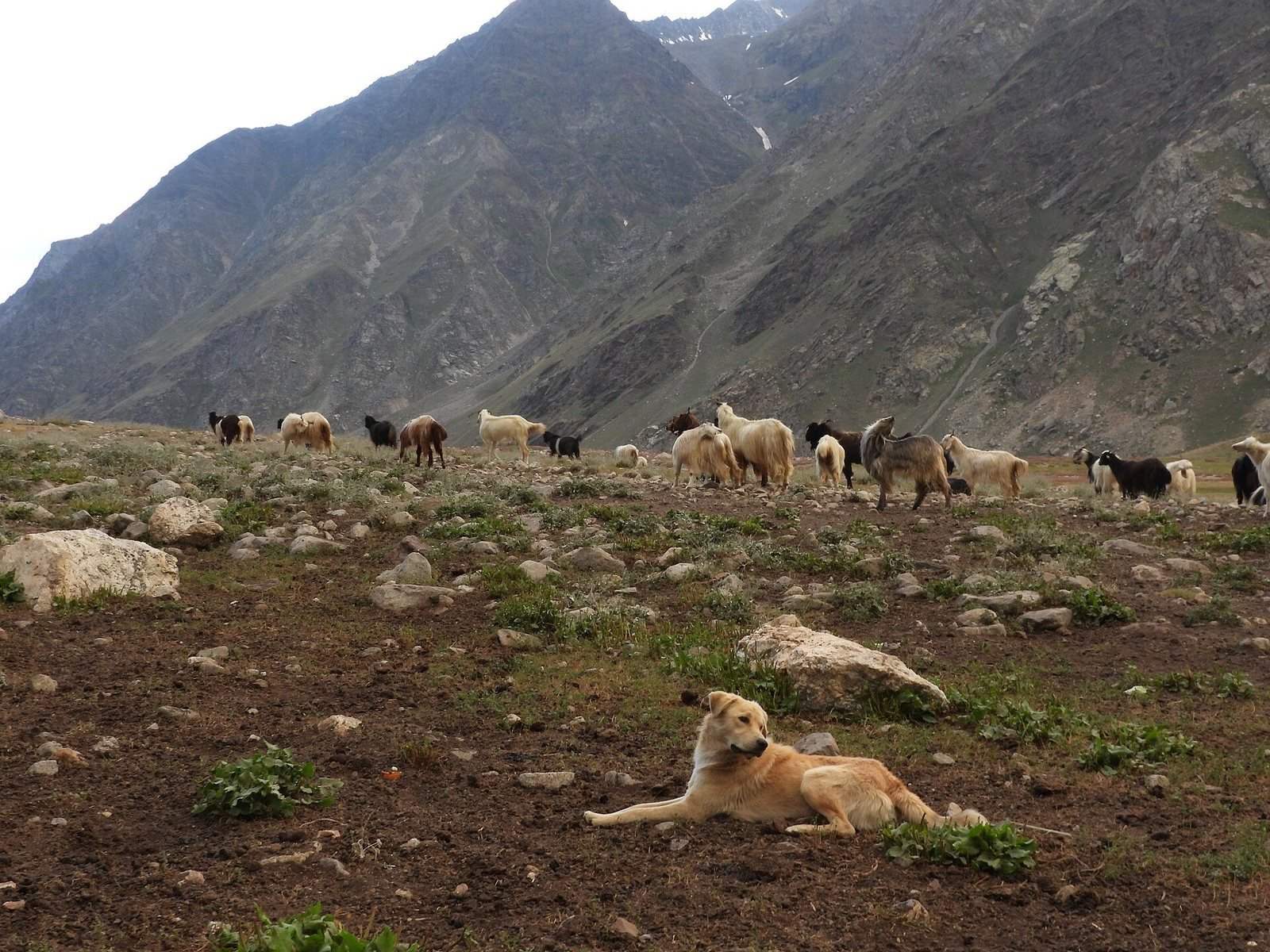
Pick what the wolf is doing to see what wildlife agencies generally advise.
General safety guidance compiled from wildlife-agency advice. Local forest or wildlife officials have the final word; in an emergency call local emergency services.
Choose a situation above
From First Friend to Feared Neighbour
The relationship in six eras.
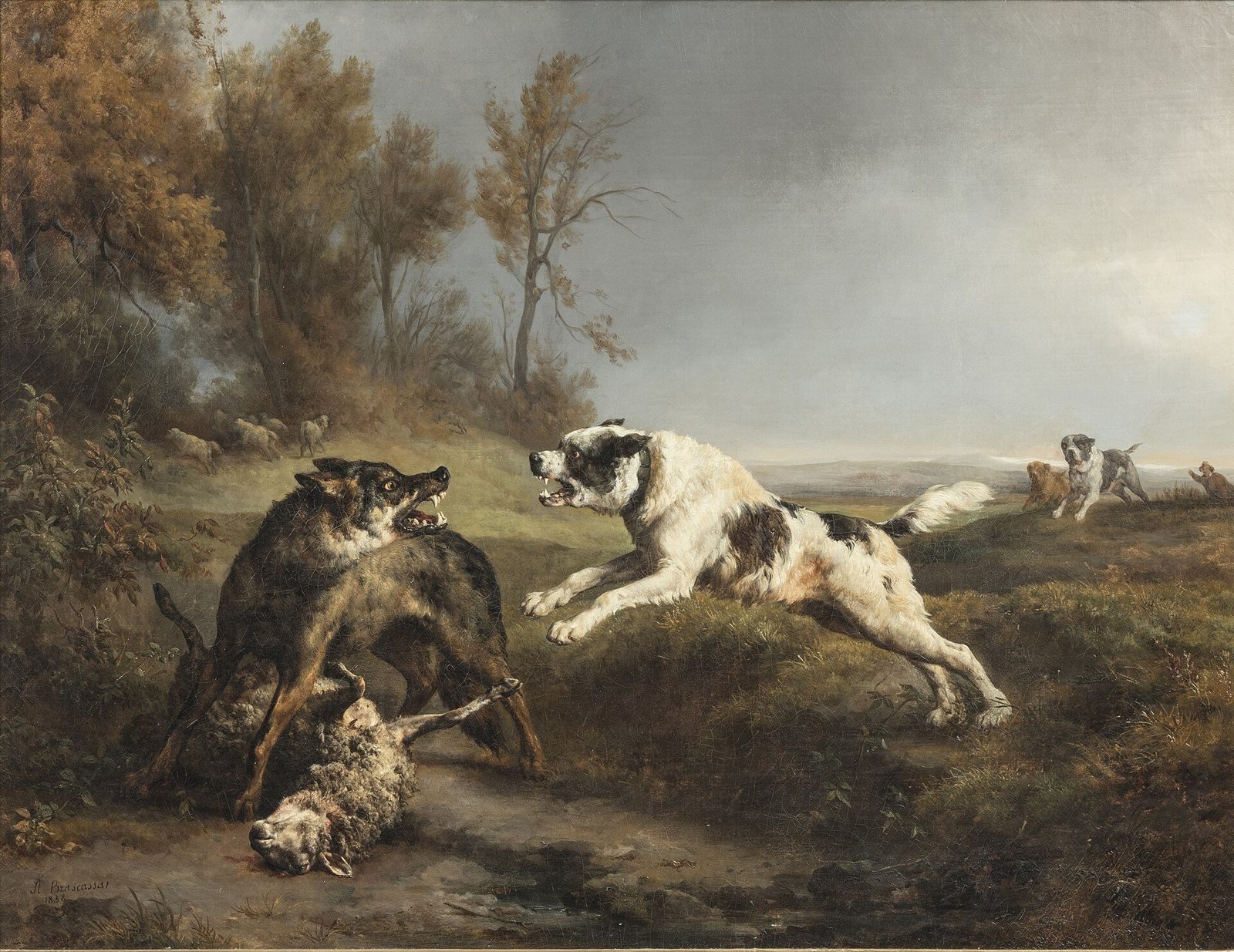
The wolf is the only large predator humans turned into family. Every dog carries that history. Yet once people kept sheep and goats, the same animal became the farmer’s rival. Fairy tales, bounties, poison and, in the 20th century, aerial shooting followed. Only from the 1970s did laws such as India’s Wildlife (Protection) Act and the US Endangered Species Act reverse the policy. Today wolves are protected on paper almost everywhere, and argued over almost everywhere they live.
Wolf Encounters and the Human–Wildlife Connection: The Full Timeline
Newest first, from the October 2026 Al Jazeera story back to the first domesticated wolves.
2026
“What humans have lost”: a photographer’s wolf Reported
Al Jazeera publishes Norwegian wildlife photographer Lasse Huldt Pedersen’s account of a wolf that appeared on a rocky rise above him in eastern Norway, near the Swedish border, in late summer 2022 and held his gaze for several minutes. “Nothing is more primal than staring into the eyes of a wild animal, especially the wolf,” he says. His argument: people who never meet wild predators lose part of how they understand nature.
Context: fewer than 100 wolves live in Norway, mostly along the Swedish border. They are listed as critically endangered nationally, yet the state still licenses annual culls to protect sheep.
2026
Trump orders a wolf delisting review Official
The order directs the Interior Secretary to decide whether gray wolves and Mexican wolves meet the criteria for delisting or downlisting under the Endangered Species Act, with a deadline in early December, and to prepare legislation. Conservation groups say wolves cause a small share of US livestock losses; ranching groups say federal protection leaves them unable to act.
Bahraich: a season without conflict Reported
Forest officials quoted by the Times of India say no human-wolf conflict has been reported in Bahraich this season, a year after attacks killed 14 people and critically injured about 30, mostly children. They credit protecting wolf dens along the Ghaghara and curbing activity that had pushed packs toward villages.
Why it matters: the district that became India’s byword for wolf attacks shows what changes when the habitat problem, not just the animal, is addressed.
2025
US House votes to delist gray wolves
The House passes a bill directing the Interior Department to reissue the 2020 rule delisting gray wolves nationwide and shielding it from court challenge. The Senate companion, S. 1306, has not passed.
IUCN assesses the Indian wolf on its own Official
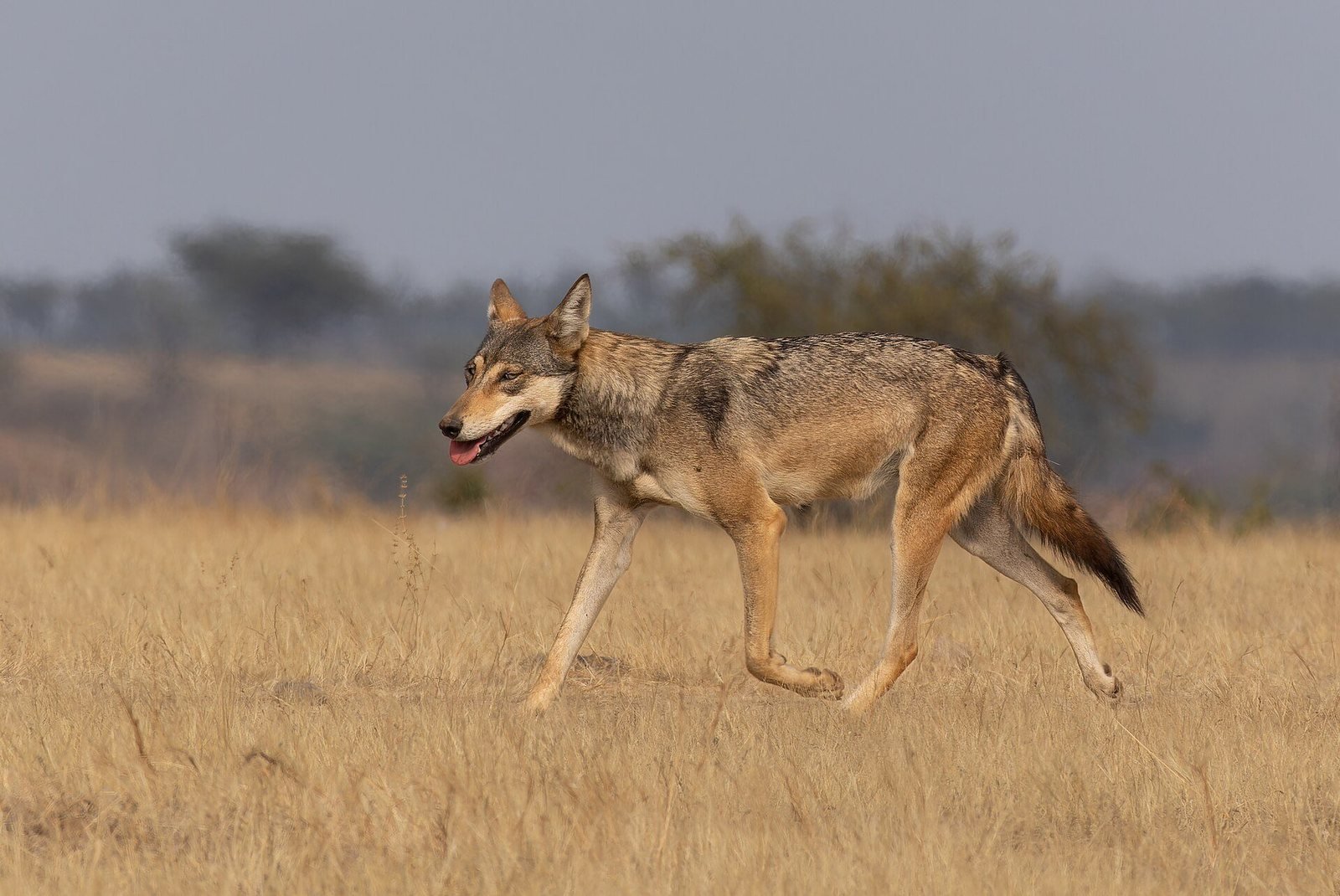
For the first time the IUCN Canid Specialist Group assesses the Indian wolf separately from other grey wolves, listing it as Vulnerable with an estimated 2,877 to 3,310 mature individuals (about 3,093) in India and Pakistan, and noting it may be a distinct species. Main threats: loss of grasslands, persecution, and hybridisation and disease from village dogs.
2025
Bahraich attacks resume; Operation Bhediya 2.0 Reported
Attacks begin again a short distance from where the 2024 wave ended. Six people are dead by 21 October, including an elderly couple, and two young children are killed in December. This time shooters are deployed with orders to kill; reports put the number of wolves dead at nine by January 2026.
2025
EU downgrades wolf protection Official
The amended Habitats Directive takes effect, moving the wolf from “strictly protected” to “protected”. It follows the Bern Convention change of 7 March 2025. Member states gain room to cull, but must still keep wolf populations in favourable conservation status.
2024
Bahraich and Operation Bhediya Official
Between March and September 2024, wolves kill at least 10 people, nine of them children, in some 50 villages of Mahsi tehsil, Bahraich, and injure more than 30. Most victims are taken at night from homes without doors or during power cuts. The state launches Operation Bhediya with thermal drones and camera traps: five wolves are captured (two die), and the sixth is killed by villagers on 6 October.
Why it matters: it is the worst wolf-attack cluster on record anywhere this century, and it happened in floodplain farmland, not wilderness.
Colorado brings wolves back by popular vote
Under a 2020 ballot measure, Colorado Parks and Wildlife releases five wolves from Oregon in Grand County on 18 December 2023, ten that month, the first planned return west of the Rockies’ Continental Divide since wolves were wiped out there in the 1940s. Livestock losses soon follow, and so do lawsuits.
How often do wolves attack people? A global count
The Norwegian Institute for Nature Research publishes an update of its landmark 2002 review: 489 victims worldwide in 2002–2020, of whom 380 were bitten by rabid wolves, 67 were victims of predatory attacks and 42 of provoked or defensive ones. 26 attacks were fatal: 12 in Turkey, 6 in Iran, 4 in India. In Europe and North America it found just 14 victims in 18 years.
Wolves return to Yellowstone Official
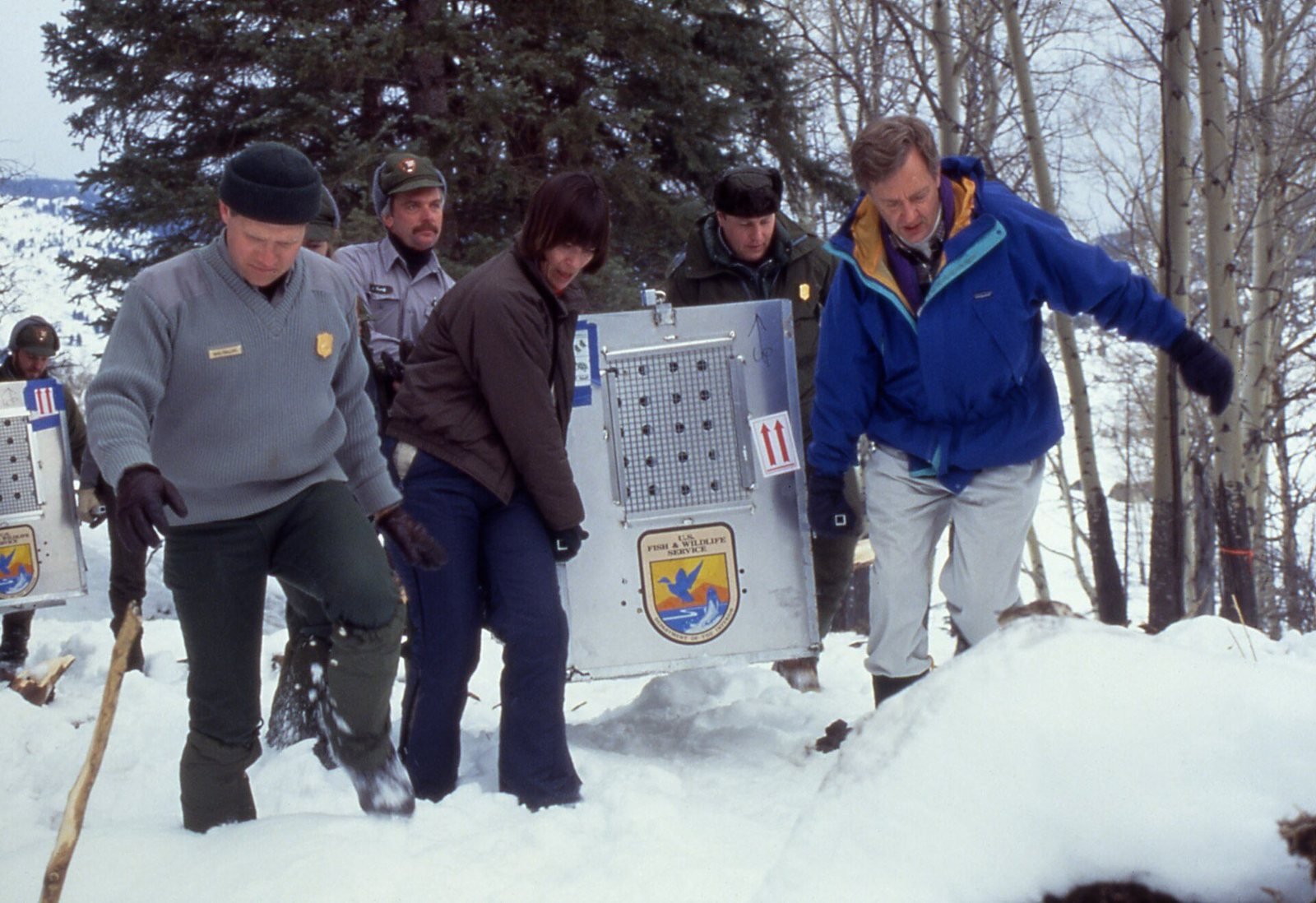
Fourteen wolves from Alberta are carried into Yellowstone in January 1995, followed by 17 from British Columbia in 1996 and 10 from Montana in 1997. Wolves had been missing since 1926. The population peaks at about 174 in 2003, then settles lower as elk numbers fall and disease hits pups.
What it showed: a predator can be restored, but its ecological effects are messier than the popular “wolves changed the rivers” story.
Child-lifting in eastern Uttar Pradesh
Wolves take dozens of children over several months; published counts range from about 30 to more than 40 killed. At least 13 wolves are killed in response. Biologists Y.V. Jhala and D.K. Sharma document the episode in 1997 and link it to poverty, unprotected homes, scarce wild prey and wolves living among villages.
The law turns: India and the US protect wolves
India places the wolf in Schedule I of the new Wildlife (Protection) Act, the highest protection. In the United States the Endangered Species Act follows in 1973, and gray wolf populations are listed from 1974. Extermination policy ends in law, though conflict does not.
Bounties in British India
Colonial authorities pay bounties for wolves, and the records add up to more than 100,000 killed. In 1876 the North-Western Provinces and Bihar pay for 2,825 wolves after 721 people are reported killed by wolves; in 1878, 2,600 wolves after 624 deaths. Historians warn that records are incomplete and fraud, such as passing off jackals, was common.
Yellowstone’s last wolves are killed
Park staff kill the last known wolf pack in Yellowstone, part of a federal campaign that removed wolves from almost all of the lower 48 states by the 1930s. For nearly 70 years the park had no breeding wolves.
years ago
Wolf becomes dog
Some ancient wolves begin living alongside human hunter-gatherers, and their descendants become dogs, the first animal people domesticated. The exact date and place are debated; a 2022 genomic study found dogs carry ancestry from more than one ancient wolf population.
The paradox: the same species that became humanity’s closest animal companion became, in farming societies, its most hated predator.
India’s Wolves: Ancient, Overlooked, Living Among Us
The Indian wolf is small, short-coated and built for heat. Genetic work since a 2004 study by Sharma, Maldonado, Jhala and Fleischer has shown it belongs to one of the oldest surviving wolf lineages, which is why the IUCN assessed it separately for the first time in 2025 and listed it as Vulnerable, with about 3,093 mature animals.
Most Indian wolves live outside tiger reserves and national parks, on land officially recorded as “wasteland”: grasslands, scrub and ravines that are being turned into farms, plantations and solar parks. That makes the Indian wolf a test of whether conservation can work on shared, unglamorous land. Village dogs add two more threats: hybridisation, which erodes the wolf’s genetic distinctiveness, and diseases such as rabies and distemper.
The Bahraich attacks show the cost when that land-sharing breaks down. Forest officials linked the 2024–25 waves to floods on the Ghaghara, sand mining and sugarcane spreading into wolf habitat. The quiet 2026 season, after dens were protected, suggests the fix lies in the landscape as much as in capturing wolves.
Three Landscapes, Three Kinds of Encounter
Why a wolf encounter in India is not the same as one in Norway or Yellowstone.
| Indian wolf | Norway | Yellowstone | |
|---|---|---|---|
| Range | Dry grassland, scrub, farmland of India and Pakistan | Forests along the Norway–Sweden border | Mountains, valleys and plains of the Rockies |
| Numbers | 2,877–3,310 mature (IUCN 2025) | Fewer than 100 in Norway | 41 released 1995–97; peak ~174 (2003) |
| Legal status | Schedule I, Wildlife (Protection) Act 1972 | Critically endangered nationally; licensed culls | Federally protected outside the Northern Rockies; delisting push |
| Main conflict | Sheep, goats; rare attacks on children | Free-ranging sheep in summer pastures | Cattle and sheep; hunting of elk |
| Typical encounter | A wolf crossing farmland at dusk | A rare glimpse in deep forest | Wolf-watchers with scopes on the road |
What Actually Reduces Conflict
The coexistence toolkit, from the Himalayas to the Rockies.
| Tool | What it is | Why it matters |
|---|---|---|
| Livestock guardian dogs | Large dogs raised with the flock that stay with it and warn off predators | Widely used from the Himalayas to the Rockies |
| Predator-proof night pens | Stone, mesh or thorn enclosures where animals sleep | Most losses happen at night |
| Electric and fladry fencing | Electrified wire or flagged lines around pastures | Works best for small, fixed areas |
| Shepherds and range riders | People who stay with herds and move them | Human presence deters wolves |
| Carcass and waste removal | Clearing dead livestock and dumps | Stops wolves learning to visit farms |
| Compensation | Payment for verified losses | Reduces retaliatory killing if fast and fair |
| Den and corridor protection | Keeping breeding sites and movement routes undisturbed | Credited for Bahraich’s quiet 2026 season |
| Targeted removal | Capturing or killing a specific problem wolf | A last resort, legal in most places |
No single method works everywhere. Guardian dogs suit roaming flocks; night pens suit village goats; corridor and den protection suits wolves that live in farmland. The most effective programmes pair prevention with quick, fair compensation, because a farmer who waits a year to be paid for a dead sheep is more likely to reach for poison.
How to Stay Safe During a Wolf Encounter
- Keep your distance. Watch from far away and never approach, follow or corner a wolf.
- Never feed wolves. Food teaches wolves to seek out people, which is how many dangerous encounters begin.
- Keep children and pets close. Hold small children’s hands or pick them up; keep dogs on a lead.
- Stand your ground. If a wolf approaches, stand tall, make noise and back away slowly. Do not run.
- Report and get care. Report bold or strange wolves to wildlife officials, and treat any bite as a rabies risk.
The Human–Wolf Story in Numbers
| Figure | What it is | Context |
|---|---|---|
| 489 | Wolf attack victims worldwide, 2002–2020 | NINA review, 2021 |
| 26 | Of them fatal | Turkey 12, Iran 6, India 4 |
| 380 | Bitten by rabid wolves | 78% of victims |
| ~3,093 | Indian wolves (2,877–3,310 mature) | IUCN 2025, Vulnerable |
| 10+ | Killed in Bahraich, Mar–Sep 2024 | Nine children, one woman |
| 6 | Wolves in the 2024 Bahraich pack | 5 captured, 1 killed by villagers |
| 100,000+ | Wolves paid for in British India, 1871–1916 | Records incomplete |
| 41 | Wolves released in Yellowstone, 1995–97 | From Alberta, BC and Montana |
| <100 | Wolves in Norway | Al Jazeera, Oct 2026 |
| ~20,000 | Wolves in Europe | Early-2020s estimate |
Corrections to Claims Circulating Online
“A 2021 viral essay, What Humans Have Lost”
An earlier AI-generated draft of this page described such an Indian essay. We found no trace of it. The phrase comes from Al Jazeera’s 2 October 2026 feature on Norwegian photographer Lasse Huldt Pedersen.
“100,000 wolves killed 1871–1890”
The commonly cited bounty total covers 1871–1916, and historians warn the records are incomplete and inflated by fraud.
“1996 DNA study proves Indian wolf distinct”
The key mitochondrial study was published in 2004; whole-genome work followed. Species status is still not formally settled.
“Fewer than 3,000 Indian wolves”
The IUCN’s 2025 estimate is 2,877 to 3,310 mature animals, about 3,093.
“2004: photography humanises the wolf”
No such turning point is documented. It was removed.
“Wolves alone changed Yellowstone’s rivers”
Wolves did affect elk, but scientists disagree on how much plant and river recovery they caused versus other predators, hunting and climate.
Did You Know?
- Bhediya: the Hindi word for wolf gave Uttar Pradesh’s 2024 operation its name.
- Night attacks: most Bahraich victims were taken from homes without doors or outdoors after dark, often during power cuts.
- Lone wanderers: young wolves can disperse hundreds of kilometres to find a mate and territory, which is how wolves recolonised much of western Europe on their own.
- Howling tactics: searchers in Bahraich played recorded wolf howls and used dolls dressed in children’s clothes, soaked in urine, as lures.
- Yellowstone’s gap: no breeding wolves lived in the park for nearly 70 years, from 1926 to 1995.
- Rabies first: in the global review, rabid wolves account for nearly four in five people bitten.
Quick Quiz: Wolves and People
1. What causes most recorded wolf attacks on people?
2. How many Indian wolves does the IUCN estimate remain?
3. When were wolves reintroduced to Yellowstone?
4. What should you do if a wolf approaches?
5. What was Operation Bhediya?
6. What did the EU change in 2025?
Explore More Timelines
People Also Ask
Frequently Asked Questions
The Bigger Picture
Pedersen’s point and Bahraich’s grief are not opposites. A wolf seen on a hillside can bring wonder; a wolf in a village after floods can bring fear and loss; a wolf killing sheep can bring anger. All of it is true at once. The places that cope best do not pretend wolves are harmless or treat every wolf as a villain. They keep wild prey and habitat intact, keep wolves wary of people, protect livestock and children at night, and pay farmers quickly when losses happen. The human–wolf relationship began with cooperation thousands of years ago. Its next chapter depends on whether people can share landscapes without turning every encounter into a conflict.
Related AiTimeline Stories
⚠️ Editorial Note
Last updated 3 October 2026. Items marked Official rest on primary records (IUCN assessment, EUR-Lex, the Federal Register, the US National Park Service or government operations); items marked Reported rely on news reports and are attributed. Bahraich casualty figures differ between sources and are given as minimums. Safety advice is general guidance compiled from wildlife agencies, not a substitute for local officials or medical care. This page replaces an earlier AI-generated draft that contained invented events; see the corrections section.
Sources & further reading
Every dated entry above was checked against these references. Last reviewed 3 October 2026.
- Al Jazeera: Wolf encounter, a photographer on what humans have lost (2 October 2026)
- Linnell et al., NINA Report 1944: Wolf attacks on humans, an update for 2002-2020 (2021)
- Insights on India: IUCN classifies the Indian wolf as Vulnerable and a potential distinct species (October 2025)
- Deccan Herald: Operation Bhediya concludes in Bahraich as last wolf is killed by villagers (October 2024)
- International Wolf Center: Wolf attacks down to nil in Bahraich after dens protected (June 2026)
- EUR-Lex: Directive (EU) 2025/1237 amending the Habitats Directive on the protection status of the wolf
- Federal Register: Executive Order 14425, Supporting America's Ranchers (10 September 2026)
- US National Park Service: Wolves in Yellowstone
- Colorado Parks and Wildlife: Bringing wolves back to Colorado