The Hindu History Timeline: From Weekly to National Paper
The Hindu from its 1878 Madras weekly and 1889 daily to the 1905 Kasturi purchase, its own aircraft, fax editions, Bofors, Rafale and today's digital newsroom.
Latest Story
The Hindu began on 20 September 1878 as an eight-page weekly in Madras, started by two teachers and four law students with one rupee and twelve annas of capital. It became a daily on 1 April 1889, was bought by lawyer S. Kasturi Ranga Iyengar in 1905, when circulation had fallen to about 800 copies, and became a morning paper in 1940. Then it did something unusual for a newspaper: it kept changing how the paper reached readers. It flew copies by air from 1947, bought its own aircraft in 1963, sent whole pages by cable in 1969 and by satellite in 1986, and put an edition online in the mid-1990s. This timeline follows how a Madras weekly became a national newspaper, and why its history is as much about delivery as about journalism. On 20 September 2026 it turned 148.
🧠 AI Overview Summary
The Hindu was founded in Madras on 20 September 1878 as a weekly by the “Triplicane Six”: teachers G. Subramania Iyer and M. Veeraraghavachariar and four law students. It became a tri-weekly in 1883 and a daily on 1 April 1889. Lawyer S. Kasturi Ranga Iyengar bought it on 1 April 1905, and his family’s company, Kasturi & Sons, still owns it. It became a morning daily on 7 November 1940, used its own aircraft for delivery from 1963, printed by facsimile from 1969 and went online in the mid-1990s. The group now publishes The Hindu, BusinessLine, Frontline, Sportstar and Hindu Tamil Thisai.
The Hindu: Key Questions
148 Years of The Hindu in Ten Lines
- It was a protest paper first: six young men started it in 1878 to defend India’s first Indian High Court judge in Madras from the colonial press.
- Weekly to daily took 11 years: tri-weekly in 1883, daily on 1 April 1889.
- It nearly faded: circulation fell to about 800 before Kasturi Ranga Iyengar bought it for ₹75,000 in 1905.
- One family has owned it for 121 years: the Kasturi family, through Kasturi & Sons.
- It invested in machines early: a 30,000-copy rotary press in 1921 and India’s first in-house teleprinter line in 1939.
- It became a morning paper for the war: 7 November 1940.
- Delivery was its edge: copies by air from 1947, its own aircraft from 1963, page facsimile from 1969, satellite pages from 1986.
- Outsiders noticed: The Times of London called it “a national voice with a southern accent” in 1965.
- Its biggest investigation was Bofors: document-backed reports in 1987–88 put pressure on Rajiv Gandhi’s government.
- Now it is paid digital: online since the mid-1990s, e-paper from 2006, apps from 2013, a paywall from 2019.
1878: Six Young Men and a Judge
A newspaper started to answer other newspapers.
In 1878, T. Muthuswamy Iyer was appointed to the bench of the Madras High Court, the first Indian to hold the post. The city’s English-language papers, run by and for the British community, attacked the appointment. A group of young men who met at the Triplicane Literary Society decided that Indians needed their own English paper to answer back.
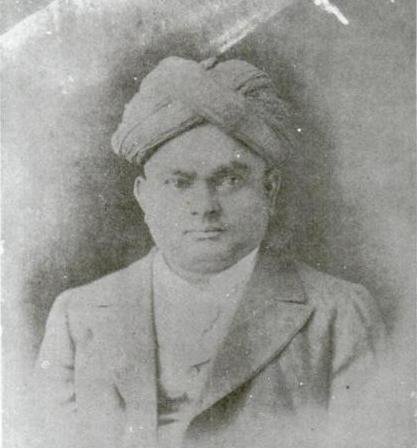
There were six of them. G. Subramania Iyer, a schoolteacher from Tanjore district, and M. Veeraraghavachariar, a lecturer at Pachaiyappa’s College, were the teachers. T.T. Rangachariar, P.V. Rangachariar, D. Kesava Rao Pantulu and N. Subba Rao Pantulu were law students. The group has been remembered ever since as the Triplicane Six.
The first issue came out on 20 September 1878: a weekly of eight pages in demi-quarto size. The Hindu Group’s own history says the founders put in “a rupee and three-quarters” as capital, which is one rupee and twelve annas in the money of the time. The four law students left once they were called to the Bar, and the paper was carried by Subramania Iyer as editor and Veeraraghavachariar as manager.
1883–1898: Weekly to Tri-Weekly to Daily
More issues, its own press, and a split between the founders.
The paper grew quickly. It became a tri-weekly in 1883, and on 3 December 1883 it moved to 100 Mount Road and set up its own printing works, the National Press. Owning the press meant the paper no longer depended on a job printer for deadlines, page count or print runs.
Politics gave it more to report. The Indian National Congress was founded in December 1885, and The Hindu welcomed it and covered it closely. On 1 April 1889, eleven years after launch, it became a daily, published in the evening. In October 1893 the page count rose to 12. On 15 September 1897 it printed a photograph of Bal Gangadhar Tilak, who had just been arrested for his writings. The group describes it as a stride at a time when photographs were rare in Indian newspapers.
The founders did not last together. The partnership between Subramania Iyer and Veeraraghavachariar was dissolved in October 1898. Iyer left to concentrate on his Tamil paper Swadesamitran, which he made a daily in 1899. Veeraraghavachariar became sole owner, and the paper’s energy, and its sales, began to fall.
1905: The Purchase That Saved It
A lawyer buys a struggling paper, and his family keeps it for 121 years.
By the early 1900s circulation was down to about 800 copies. On 1 April 1905, S. Kasturi Ranga Iyengar, a Kumbakonam-born lawyer who had been the paper’s legal adviser since 1895, bought The Hindu and its press from Veeraraghavachariar for ₹75,000. He became editor and proprietor. Two partners, C. Sankaran Nair and T. Rangachari, joined him and later withdrew.
He spent money on the paper. The page count rose to 18. In 1921 a rotary press able to print 30,000 copies of 24 pages was installed, and in 1923 a battery of composing machines followed. By then circulation had reached 17,000, about twenty times what he had bought. On 23 March 1923, Mahatma Gandhi visited the office to unveil Kasturi Ranga Iyengar’s portrait. Iyengar died later that year, and his son Kasturi Srinivasan and the family carried the paper on.
That purchase explains most of what followed. The Hindu has been owned and largely edited by one family ever since, through Kasturi & Sons, incorporated on 21 February 1940 and made a public limited company in 1959. The long continuity gave it the money to invest in presses and aircraft. It also produced public family disputes over who should edit it, in 2010–11 and again in 2013.
1928–1949: Seven Days, Morning Editions and Teleprinters
The paper takes its modern shape.
In its golden jubilee year, 1928, The Hindu brought in linotype machines and launched a Sunday tabloid, The Hindu Illustrated Weekly, at four annas. From 6 January 1929 it came out seven days a week. In 1933 it opened offices in London, Bombay and Calcutta, the first sign that it was thinking beyond the Madras Presidency.
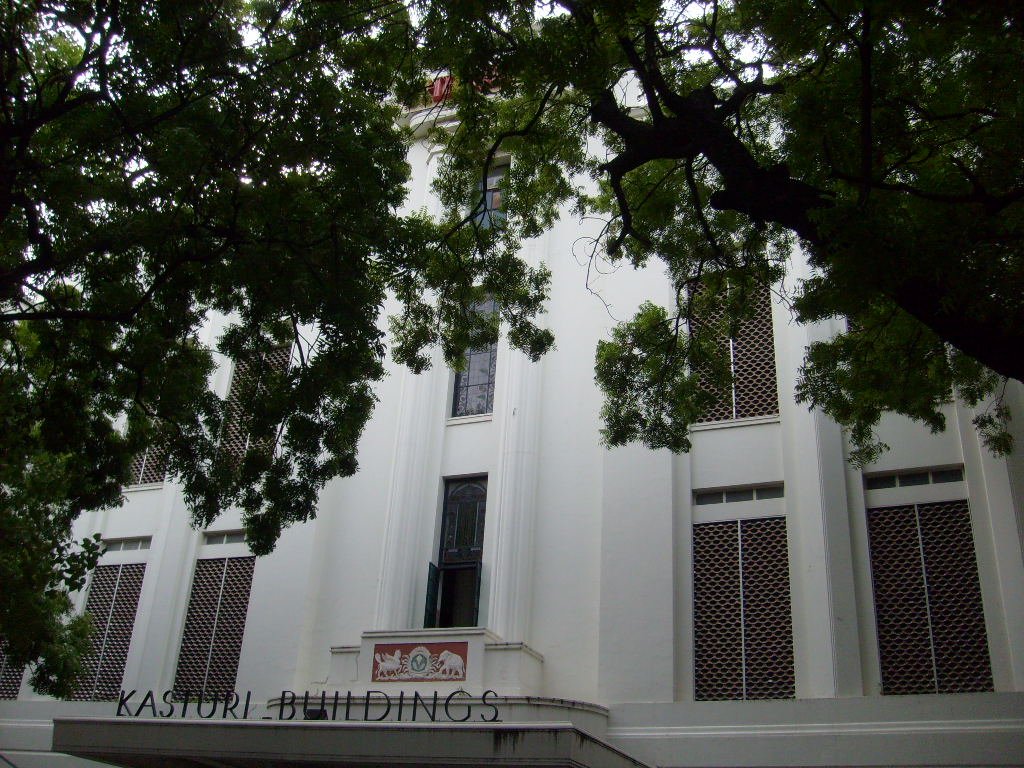
On 24 November 1939 the paper moved into Kasturi Buildings on Mount Road, where it still is. It became, by its own account, the first Indian newspaper with a P&T teleprinter line in its own office, so reports no longer had to be carried by bicycle messenger from the Telegraph Office. (The group’s chronology says the move came “a week before the outbreak of World War II”, but the war had begun in September 1939. The date of 24 November is the one to trust.)
The war changed the paper’s clock. On 7 November 1940 The Hindu became a morning daily, so that late-evening despatches from the fronts could reach readers at breakfast. The same year it first used spot colour, for advertisements. Colour for editorial pages and pictures would not come until 6 November 1999, 59 years later. In April 1949 it became the first Indian paper with teleprinter links between its own offices, Madras–Bombay and Delhi–Bombay.
1947–1986: Aircraft, Fax and Satellites
How the paper beat distance.
A newspaper printed in Madras was stale by the time a train got it to Coimbatore or Bangalore. The Hindu’s answer, over forty years, was to move the paper faster and then to stop moving paper at all.
It began sending copies by air on 11 April 1947. In 1962 it used a special Indian Airlines service to fly copies to three centres, and in 1963 it acquired an aircraft of its own for early-morning deliveries across a wider area. Few newspapers anywhere have run their own planes.
The bigger shift came on 27 July 1969. The Hindu started a Coimbatore edition printed from page images sent by facsimile from Madras over co-axial cable, which the group describes as a first in India. A Bangalore facsimile edition, its first outside Madras State, followed on 27 March 1970. Content was made in one place and printed close to the reader, the same idea behind every multi-city paper today. In 1986 The Hindu took it national with a Delhi edition whose pages were sent from Madras by satellite.
Recognition followed the reach. In 1965, The Times of London rated The Hindu one of the world’s ten best newspapers and called it “a national voice with a southern accent”. In 1968 it received the World Press Achievement Award.
How Fast Did the News Move?
Each step changed what “today’s paper” meant.
Which change let The Hindu print a same-day paper far from Madras without flying it there?
1975–2019: Bofors, the Emergency and Rafale
Moments when the paper was the story.
During the Emergency (June 1975 to March 1977), pre-censorship applied to every Indian newspaper, The Hindu included. It is not remembered for open defiance in the way The Indian Express is. The episode still shaped the paper’s later claims about independence from government.
The Hindu’s best-known investigation came a decade later. The Bofors scandal broke in April 1987, when Swedish Radio alleged that bribes had been paid to win a big Indian contract for 155 mm howitzers. Over the next months The Hindu published scores of original documents on the secret payments into Swiss bank accounts. The reporting was led by Chitra Subramaniam, a part-time correspondent in Geneva, with N. Ram in Madras. It was a serious embarrassment for Prime Minister Rajiv Gandhi, whose Congress lost the 1989 election, and Columbia Journalism School later featured the reporting in its centennial series of landmark stories.
Governments pushed back more than once. In 2003 the Tamil Nadu Assembly, under Chief Minister J. Jayalalithaa, moved against The Hindu’s editors for breach of privilege, and the Supreme Court stayed the action. In February 2019, The Hindu published reports by N. Ram, then chairman of its publishing group, defence ministry file notes on the Rafale fighter deal. The government told the Supreme Court the papers had been stolen and raised the Official Secrets Act. On 10 April 2019 the Court rejected the objection and allowed the documents to be considered, citing the freedom of the press.
1978–2026: A Group, a Website and a Paywall
From one paper to a family of publications on every screen.
The newspaper became a group gradually. Sport & Pastime launched on 10 September 1947. The Sportstar weekly followed on 15 July 1978, the paper’s centenary year, marked on 4 September 1978 with President N. Sanjiva Reddy. Frontline, a fortnightly, launched in November 1984, and The Hindu BusinessLine on 28 January 1994. On 7 December 1980 The Hindu moved from hot metal to computer-aided photocomposing, which the group calls a first for a mainline Indian paper.
The Hindu was one of the first Indian papers on the internet. Wikipedia and The Hindu’s own later reporting date thehindu.com to 1995. The group’s chronology instead says it started an online version in June 1996, as a weekly package of selected print stories. Either way, it was online in the mid-1990s. E-paper replicas followed on 10 September 2006, the same year it appointed K. Narayanan as Readers’ Editor.
The 2010s mixed expansion with a family fight. In July 2011, Siddharth Varadarajan became the first editor from outside the family. He resigned on 21 October 2013, when the owners decided to return editorial control to family members. The group launched its Tamil daily on 16 September 2013, now titled Hindu Tamil Thisai, and its first apps that year. The Hindu Centre for Politics and Public Policy, a group think tank, was inaugurated by President Pranab Mukherjee on 31 January 2013. A paywall came to all group titles in 2019, and Suresh Nambath became editor that year. On 15 August 2022, The Hindu began publishing Hindi translations of its editorials online, a first in its history.
~1.4 million
Copies circulated by The Hindu, per the group’s website. It was about 800 in 1905 and 17,000 in 1923.
21
Total printing centres listed by The Hindu Group. BusinessLine alone prints at 16.
35 million
Unique visitors across the group’s websites, per the group’s own figure.
| Year | Technology | What it changed |
|---|---|---|
| 1883 | Own press (National Press) | Control over deadlines and print runs |
| 1897 | Printed photograph | Pictures of news-makers in the paper |
| 1921 | Rotary press | 30,000 copies of 24 pages |
| 1939 | In-office teleprinter | No messengers from the Telegraph Office |
| 1947 | Air transport of copies | Same-day papers in distant cities |
| 1963 | Its own aircraft | Early-morning delivery over a wider area |
| 1969 | Facsimile over cable | Pages printed away from Madras |
| 1980 | Computer photocomposing | End of hot-metal type |
| 1986 | Satellite page transmission | A Delhi edition sent from Madras |
| 1995–96 | Website | Readers anywhere in the world |
| 1999 | Editorial colour | Colour news pictures |
| 2006 | E-paper | Print replica on screen |
| 2013 | Mobile apps | News on the phone |
| 2019 | Paywall | Readers pay for digital access |
The Hindu: The Complete Timeline
Newest first.
The Hindu Turns 148
The paper marks 148 years. The group lists 21 printing centres, about 1.4 million copies circulated and 35 million unique visitors across its websites.
Editorials in Hindi
For the first time, The Hindu publishes Hindi translations of its editorials on its website. A BusinessLine e-paper app follows the same month.
Rafale Documents and a Paywall
The Hindu publishes defence ministry notes on the Rafale deal. The government calls them stolen; the Supreme Court allows them to be considered. A paywall is introduced across group titles, and Suresh Nambath becomes editor.
Tamil Daily, Apps, and a Family Reset
The Hindu Centre for Politics and Public Policy is inaugurated. The group launches a Tamil daily, now Hindu Tamil Thisai, and its first apps. Siddharth Varadarajan resigns as family members take back editorial control.
First Editor From Outside the Family
N. Ram steps down and Siddharth Varadarajan becomes editor after a split board vote, the first non-family editor since 1905.
E-Paper and a Readers’ Editor
The Hindu appoints K. Narayanan as India’s first newspaper Readers’ Editor, an internal ombudsman. Subscription e-paper editions begin for Chennai, Hyderabad and Delhi.
125 Years, and a Privilege Fight
Prime Minister Atal Bihari Vajpayee presides over the 125th anniversary. The same year, the Tamil Nadu Assembly acts against the paper’s editors for breach of privilege, and the Supreme Court stays it.
The Hindu Goes Online
The Hindu becomes one of the first Indian newspapers on the internet. Sources differ on the date: 1995 for thehindu.com, June 1996 for a weekly online package.
BusinessLine Launches
The group launches The Hindu BusinessLine with full reporting and editing teams. It is now printed at 16 centres.
The Bofors Documents
Chitra Subramaniam and N. Ram publish documents on secret Bofors payments into Swiss accounts, shaping the national debate that hurt Rajiv Gandhi’s government.
Pages by Satellite to Delhi
A Delhi edition is launched with pages sent from Madras by satellite, taking the facsimile model national.
Frontline Launches
The group starts Frontline, a current-affairs fortnightly for longer reporting than a daily allows.
Computers Replace Hot Metal
Computer-aided photocomposing comes to the main section, a first for a mainline Indian paper. Existing staff are retrained.
Sportstar and the Centenary
The Sportstar weekly launches. President N. Sanjiva Reddy attends the centenary event in Madras.
The Emergency
Pre-censorship applies to all Indian newspapers, including The Hindu, for 21 months.
Facsimile Editions
Pages are sent by facsimile over co-axial cable from Madras to Coimbatore, then Bangalore, the first edition outside Madras State.
“A National Voice With a Southern Accent”
The Times rates The Hindu one of the world’s ten best newspapers. A World Press Achievement Award follows in 1968.
The Paper Buys an Aircraft
After using a special Indian Airlines service to three centres, The Hindu acquires its own aircraft for early-morning deliveries.
Kasturi & Sons Goes Public
Kasturi & Sons, incorporated as a private company in 1940, becomes a public limited company. Ownership stays with the family.
Air Delivery, Sport & Pastime, Teleprinter Links
Copies start travelling by air. Sport & Pastime launches as the first spin-off. Teleprinter links connect Madras, Bombay and Delhi offices.
A Morning Paper
The Hindu switches to morning publication to carry late war news. It also uses spot colour in advertisements for the first time.
Kasturi Buildings and a Teleprinter
The paper moves into Kasturi Buildings and becomes the first Indian newspaper with a P&T teleprinter line in its own office.
Sunday Edition, Seven Days, Three New Offices
The Hindu Illustrated Weekly launches on Sundays. The paper goes seven days a week, then opens offices in London, Bombay and Calcutta.
Rotary Press, 17,000 Copies, Gandhi’s Visit
A rotary press printing 30,000 copies of 24 pages is installed. Circulation reaches 17,000, and Gandhi unveils Kasturi Ranga Iyengar’s portrait at the office.
Kasturi Ranga Iyengar Buys the Paper
With circulation at about 800, the paper’s legal adviser buys it from Veeraraghavachariar and becomes editor and proprietor.
Tilak’s Photograph and the Founders Split
The Hindu prints a photograph of Bal Gangadhar Tilak after his arrest. The next year Subramania Iyer leaves and Veeraraghavachariar becomes sole owner.
The Hindu Becomes a Daily
Eleven years after launch, The Hindu becomes an evening daily. Pages rise to 12 in October 1893.
Tri-Weekly and the National Press
The paper goes tri-weekly and moves to 100 Mount Road, where it sets up its own National Press.
Six Young Men Launch a Weekly
The Triplicane Six launch The Hindu as an eight-page weekly, with one rupee and twelve annas in capital, to back T. Muthuswamy Iyer’s appointment to the High Court.
Quiz: How Well Do You Know The Hindu?
Tap a question to reveal the answer.
1. When was The Hindu founded?
2. Whose appointment prompted the founding?
3. When did The Hindu become a daily?
4. What did Kasturi Ranga Iyengar pay for the paper in 1905?
5. When did The Hindu become a morning paper?
6. What did The Hindu buy in 1963 to deliver papers?
7. Which scandal is The Hindu’s best-known investigation?
8. When did The Hindu launch BusinessLine?
Explore More Timelines
People Also Ask
Frequently Asked Questions
Related AiTimeline Stories
⚠️ Editorial Note
Dates come mainly from The Hindu Group’s own chronology, cross-checked with Wikipedia’s articles on The Hindu, G. Subramania Iyer and S. Kasturi Ranga Iyengar, and reporting on the 2011–13 editorship dispute, the Hindu Centre’s 2013 inauguration and the 2019 Rafale case. Where sources disagree, both are given: the website launch is dated 1995 or June 1996. The group’s chronology places the 1939 move “a week before” World War II, which does not fit the 24 November date; we use the date. Circulation and reach figures are the group’s own. This is editorial, AI-assisted content, not an official publication of The Hindu.
Sources & further reading
Every dated entry above was checked against these references. Last reviewed 26 September 2026.
- The Hindu Group -- Our Legacy (official chronology)
- The Hindu Group -- Publications and reach figures
- Wikipedia -- The Hindu
- Wikipedia -- G. Subramania Iyer
- Wikipedia -- S. Kasturi Ranga Iyengar
- President of India -- Inauguration of The Hindu Centre for Politics and Public Policy (2013)
- exchange4media -- Siddharth Varadarajan steps down as Editor of The Hindu (2013)
- The Leaflet -- Supreme Court on The Hindu's right to publish Rafale documents (2019)