Dinamalar at 75: How a Trivandrum Tamil Daily Became a Ten-Edition News Network
Dinamalar history, from its 1951 launch in Thiruvananthapuram to ten print editions, a 1999 website, a 2005 e-paper and a stamp for its 75th year in 2026.
Latest Story
On 6 September 1951 a Congressman from Nagercoil printed six pages of Tamil news in Thiruvananthapuram, the capital of a state where his own people were a minority. Seventy-five years later that paper prints ten editions across Tamil Nadu and Puducherry, runs a website, apps and an e-paper, and has a postage stamp in its name. This is the history of Dinamalar: a newspaper that began as a campaign for Kanyakumari, then repeatedly changed how it was made and delivered, from teleprinters and Periyar’s reformed script to offset presses, a 1999 website and a 2005 e-paper.
💡 Short Answer
Dinamalar is a Tamil daily founded by T. V. Ramasubbaiyer on 6 September 1951 in Thiruvananthapuram. It backed Kanyakumari’s 1956 merger with Madras State, moved to Tirunelveli in 1957 and added editions in Tiruchi (1966), Chennai (1979), Madurai (1980), Erode (1984), Puducherry (1991), Coimbatore (1992), Vellore (1993), Nagercoil (1996) and Salem (2000). It went online in 1999, launched an e-paper in 2005 and marked 75 years in September 2026 with an India Post stamp.
Dinamalar History: Key Questions
Dinamalar’s 75 Years in Ten Points
- A campaign paper: founded in 1951 partly to argue for Kanyakumari’s merger with Madras State, achieved in 1956.
- Moved with the border: operations shifted from Thiruvananthapuram to Tirunelveli in 1957.
- Ten editions in 43 years: Tiruchi 1966, Chennai 1979, Madurai 1980, Erode 1984, then five more by 2000.
- Script pioneer: printed Periyar’s simplified Tamil letters in 1977, before the state adopted them in 1978-79.
- Print technology: says it was the first Tamil daily on offset; computers and colour from 1983.
- Early online: a website from 1999 and an e-paper from 2005, built first for Tamils abroad.
- Family-run: owned by the founder’s sons through a partnership that, after disputes, divided editions among partners from 1999-2000.
- Scale: ABC certified about 6.9 lakh copies a day in Jan-Jun 2022; IRS 2017 counted 11.65 million readers.
- Not without controversy: cartoons, headlines and a 2018 sting have drawn protests and complaints.
- Platinum Jubilee: a stamp and a 111-front-page exhibition in September 2026.
The Dinamalar Timeline, 1908–2026
Newest first. Tags mark new editions, technology changes and turning points. Where Dinamalar is the only source for a claim, we say so.
Seventy-five years, a stamp and 111 front pages Turning point
On Saturday 5 September 2026, a day before the anniversary, Vice-President C. P. Radhakrishnan released a Rs 5 India Post stamp marking the Platinum Jubilee of Dinamalar at Valluvar Kottam in Chennai. He called the paper a ‘touchstone of truth’ and singled out Pattam, its general-knowledge publication for school students. DD India listed group editor Dr. R. Ramasubbu and publishers L. Aadhimoolam, Dr. L. Ramasubbu and Jayashree among those present.
An exhibition at the venue displayed the front-page headlines and editorials of 111 issues, from the 1951 first issue to Chandrayaan-3. Its last panel, according to Dinamalar’s own report, was the May 2026 victory of actor Vijay’s Tamilaga Vettri Kazhagam, which the paper described as ending 60 years of Dravidian-party rule. A newspaper that reported Annadurai’s DMK taking power in 1967 closed its jubilee on the next change of regime.
2026
The founder on screen, the archive in a museum Turning point
A half-hour documentary on T. V. Ramasubbaiyer aired on Tamil Janam TV on 25 May 2026, and in June old Dinamalar issues, including speeches by Jawaharlal Nehru and Rajendra Prasad and Independence Day and Deepavali specials, were shown at an antiques exhibition at the Government Museum in Egmore. Through the year the paper ran a ‘Pavala Vizha’ (jubilee) section of jubilee greetings from readers, advertisers and ministers.
A Padma Shri for the publisher Turning point
R. Lakshmipathy, the founder’s son who joined the paper in 1956 as an advertisement executive and rose to joint managing editor, received the Padma Shri in 2025 at the age of 89. He chaired the Audit Bureau of Circulations (1986-87), the Indian Newspaper Society (1992-93) and, for three terms, the Press Trust of India.
The editor-epigraphist dies Turning point
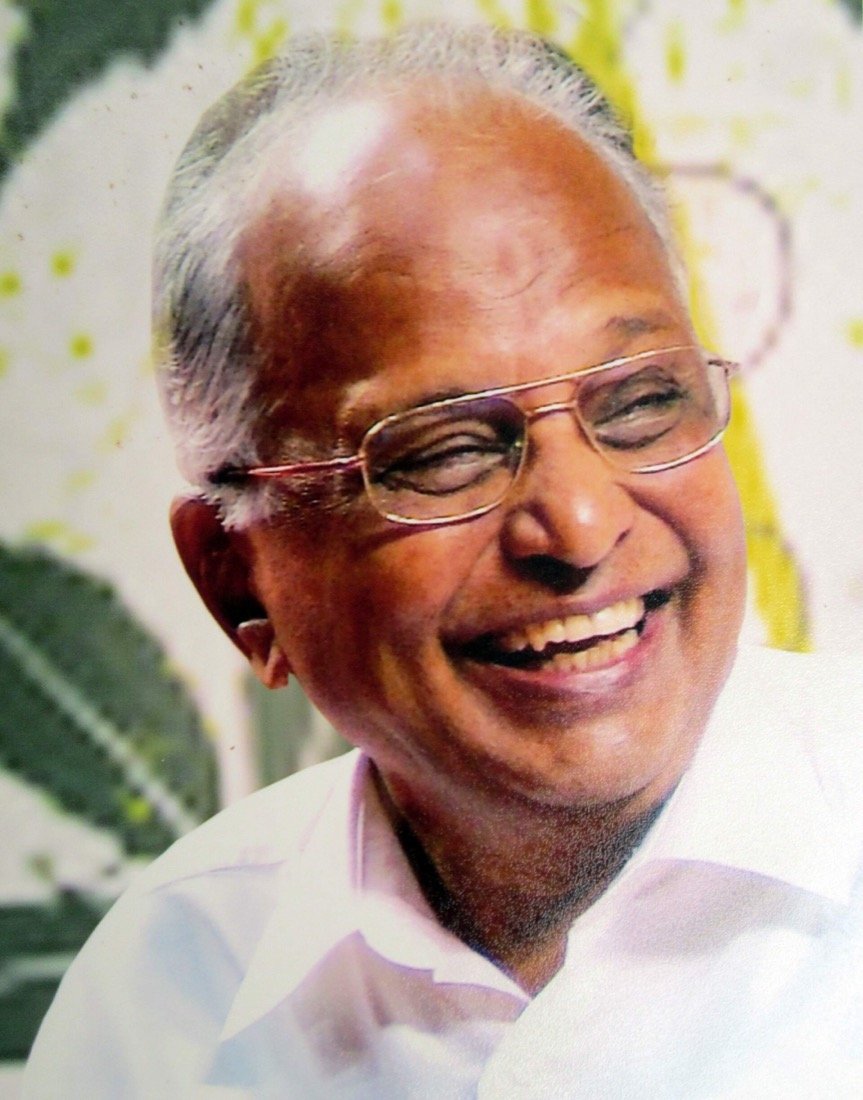
R. Krishnamurthy, the founder’s second son and editor since 1977, died in Chennai aged 88. Trained as a geologist, he became an authority on early Tamil scripts and coins: he published Sangam Age Tamil Coins, founded the Tamilnadu Numismatic Society in 1986 and was elected a Fellow of the Royal Numismatic Society in London in 1998. Tamil Wiki says he was succeeded as editor by K. Ramasubbu.
2023
A state loses its leaders, a country lands on the Moon Turning point
The jubilee exhibition picked out the front pages for the deaths of J. Jayalalithaa (December 2016) and M. Karunanidhi (August 2018), the two leaders who had dominated Tamil Nadu since MGR, as well as the 2020 COVID lockdown and the Chandrayaan-3 landing of August 2023. By then those stories reached most readers first through Dinamalar’s website, apps, video and social accounts, with the printed paper arriving the next morning.
The newspaper becomes an app Technology
Dinamalar moved from a website to apps for Android and iPhone and an iPaper app that reproduces each printed edition. The website now carries pages for all 38 districts of Tamil Nadu plus Puducherry and Bengaluru, video under Dinamalar TV, podcasts, cinema, astrology and its signature column Tea Kadai Bench. Publishing changed from once a day to continuous: a story is posted, updated, clipped as a short video and pushed as a notification before it is printed.
The founder on a stamp Turning point
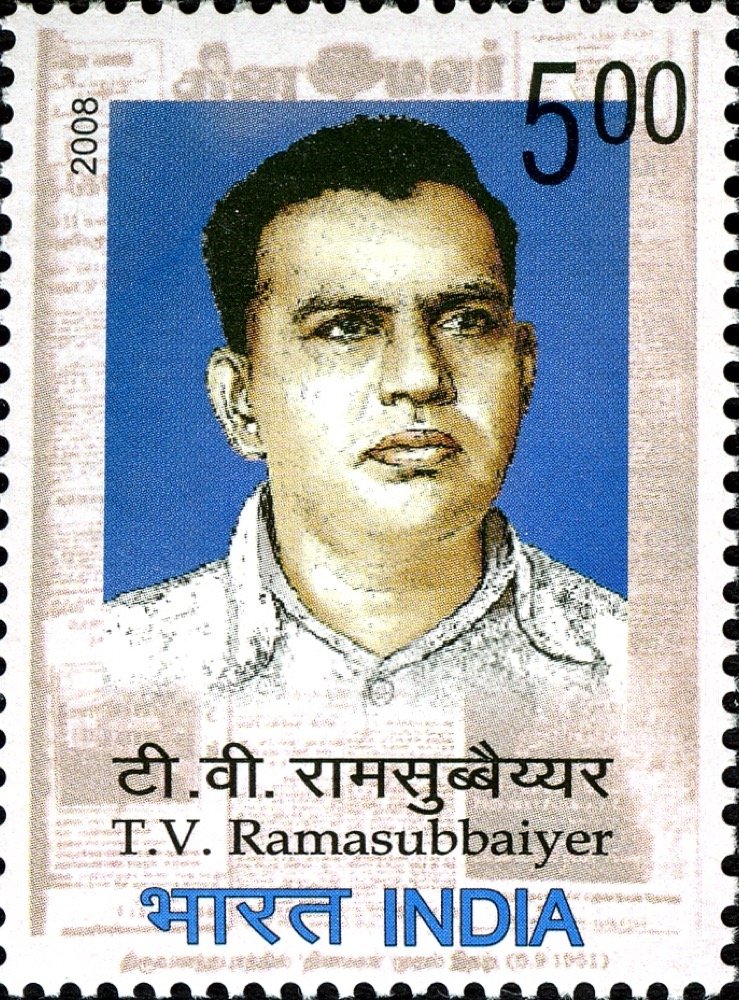
India Post issued a commemorative stamp on the birth centenary of T. V. Ramasubbaiyer, describing him as a freedom fighter, philanthropist and founder of a daily ‘whose impact on Tamil Nadu has been profound’. The same year, Dinamalar faced protests over a cartoon in its Computer Malar supplement (see Scrutiny below).
The printed page goes online: e-paper Technology
Dinamalar launched an e-paper, a page-by-page digital replica of the print edition, because, it said, many online readers still wanted the look and feel of the newspaper. A trade report at the time said the free service recorded 15,000 registrations in ten days. Dinamalar calls it the first Tamil e-paper. By its own figures it was printing about 5.82 lakh copies a day, up from about 3,000 in 1951.
Salem, the tenth edition Edition
The Salem edition completed the network of ten. It arrived during a family rift. A 2006 Madras High Court order records that Dinamalar was owned by a partnership of five partners, the founder’s sons, formed in 1961 and reconstituted in 1997; that suits between partners had been filed from 1999; and that from 1999-2000 the partners had agreed that each would look after specific editions. The masthead stayed the same across all ten.
Dinamalar goes online Technology
Dinamalar dates its website to 1999. It recruited about 40 Non-Resident Indian reporters in other countries to serve Tamils abroad, and listed Tamil associations overseas. It later sold an international edition through vending machines at airports and hotels, and offered SMS news and cricket scores. For the diaspora, a paper that once travelled by train could now be read the same morning in Singapore or Dubai.
1996
Puducherry, Coimbatore, Vellore, Nagercoil Edition
Four editions in five years took the paper to Puducherry, the western industrial belt, the north and back to Nagercoil, the founder’s home district. Dinamalar’s own list dates Nagercoil to 1996; Tamil Wiki gives 29 March 1999. Each edition printed locally, carrying its own district pages, which became the paper’s selling point against Chennai-centric rivals.
Erode opens; the founder dies Turning point
The Erode edition launched on 16 March 1984. Four months later, on 21 July 1984, T. V. Ramasubbaiyer died. Management passed to his sons, who already ran different parts of the business: R. Krishnamurthy as editor, R. Lakshmipathy on the commercial side. The year’s other front pages included the assassination of Indira Gandhi.
1983
Offset, colour and the Sunday magazine Technology
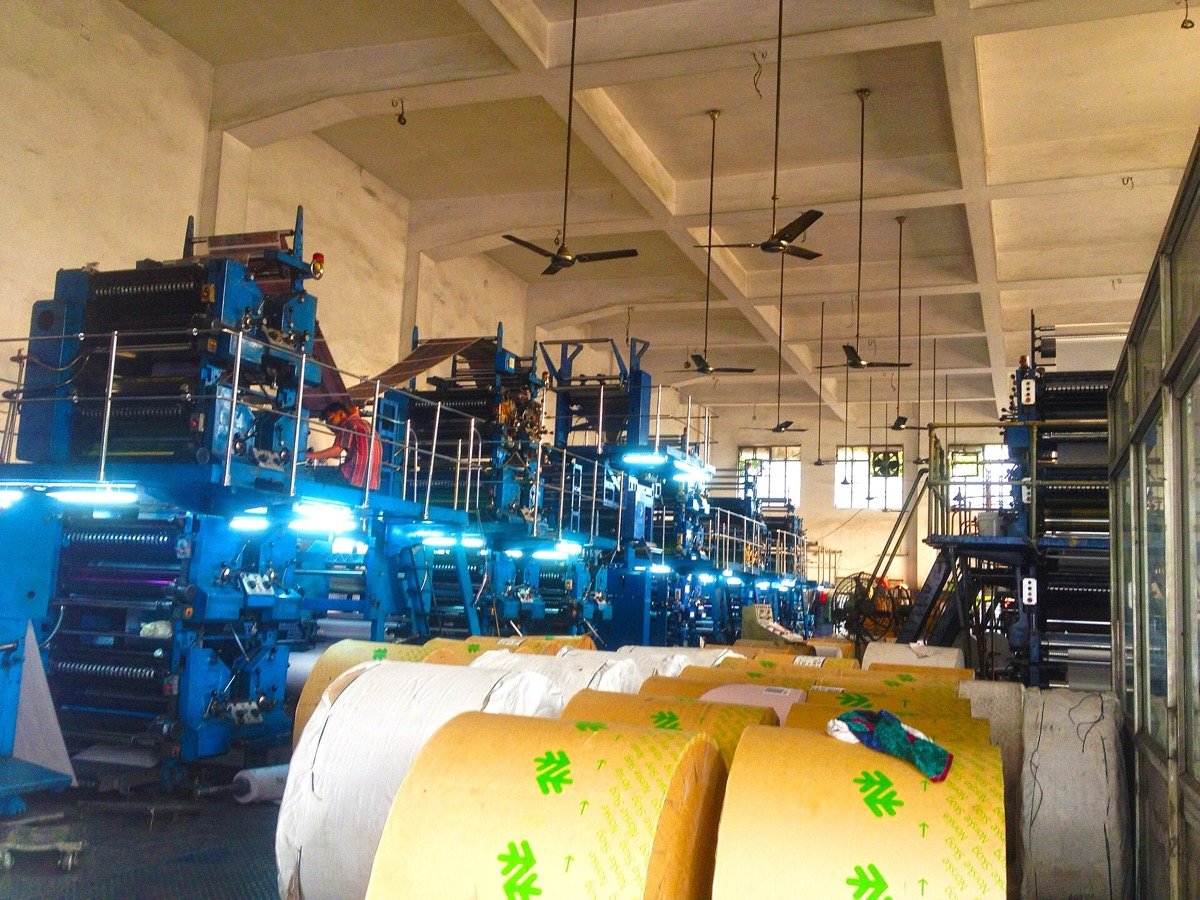
Dinamalar says it was the first Tamil daily to adopt offset printing and print in colour. Tamil Wiki dates offset to 1979 and computer typesetting and colour printing to 1983; a Madras Musings history gives 1981 for offset. On 4 April 1982 it launched Varamalar, a free 32-page Sunday magazine. Offset let the paper print sharper photographs, which became one of its trademarks.
Madurai Edition
The Madurai edition, Dinamalar’s fourth, gave it a southern hub between Tirunelveli and Tiruchi. Seven years later the paper’s front page would record the death of M. G. Ramachandran in December 1987.
Chennai, and a new headquarters Edition
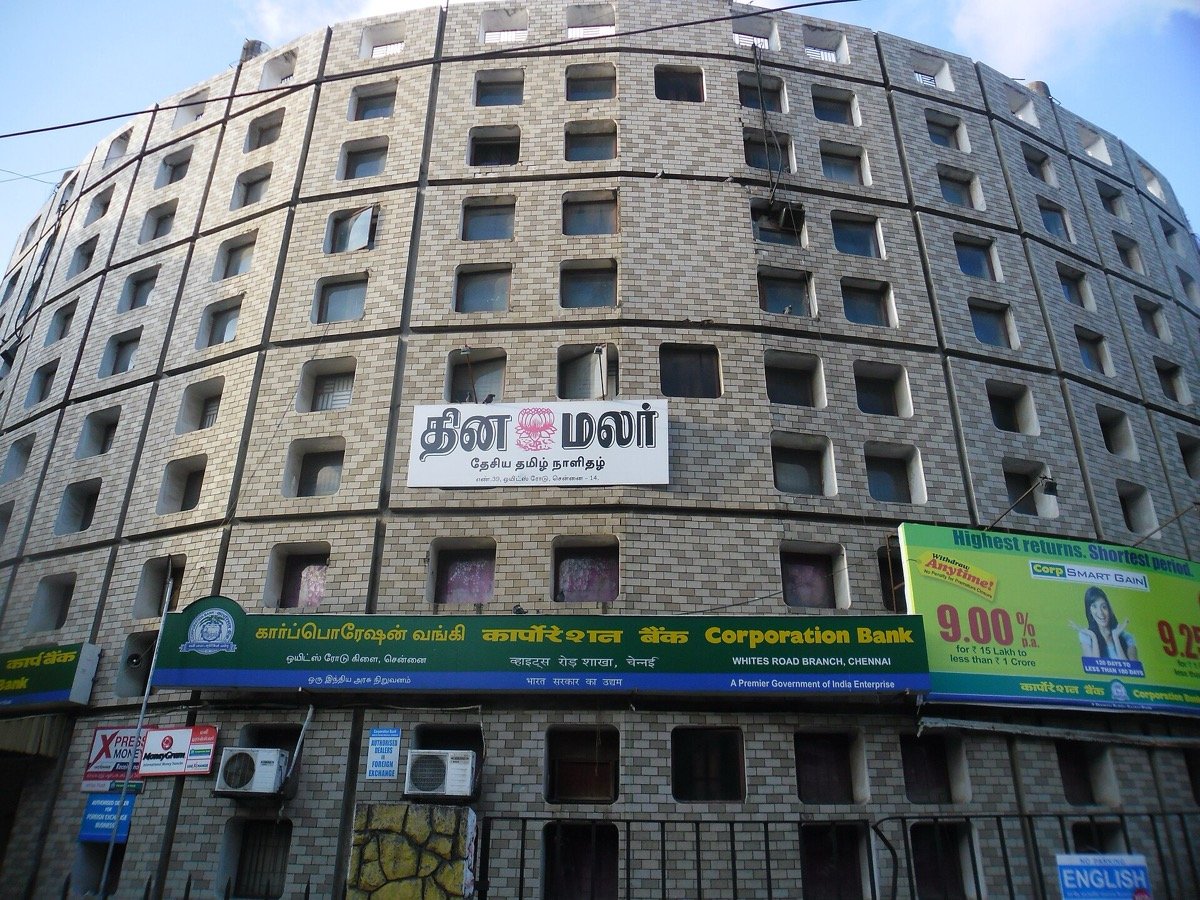
On 29 April 1979 Dinamalar launched in Madras (now Chennai), the state capital and the largest Tamil market. The head office moved there, to Whites Road. The paper could now combine state politics from the Secretariat with district news from its regional editions.
Periyar’s script, a year before the state Technology
Under its new editor R. Krishnamurthy, Dinamalar introduced the simplified Tamil letter forms proposed by Periyar E. V. Ramasamy in its Tiruchi edition. The Tamil Nadu government adopted most of the reform in 1978-79, for Periyar’s birth centenary, and other publications followed. Dinamalar’s account says MGR’s victory in 1977 also ended a decade in which the DMK government had cut off its state advertising.
1968
Squeezed by the state, closer to students Turning point
According to Dinamalar, the DMK government that took office in 1967 stopped state advertisements to the paper because of its coverage, a financial blow that lasted until 1977. In 1968 it began printing school final examination questions and answers as a supplement, the start of an education franchise that later included Kalvi Malar and Pattam.
Tiruchi Edition
The second edition opened in Tiruchirappalli, in the Kaveri delta. The 1960s front pages chosen for the 2026 exhibition included the anti-Hindi agitation, Annadurai’s arrest, Nehru’s death, Lal Bahadur Shastri’s short premiership and Indira Gandhi’s rise; 1969 brought Annadurai’s death and Karunanidhi’s first term as Chief Minister.
Tirunelveli, and the first teleprinter Edition
With Kanyakumari now in Madras State, Dinamalar moved its operations to Tirunelveli. Dinamalar dates this to 1957; a history in Madras Musings gives 1960. Its policy was ‘local news first’, and according to its own account Ramasubbaiyer brought Tirunelveli its first teleprinter so that national news no longer had to arrive by post or train.
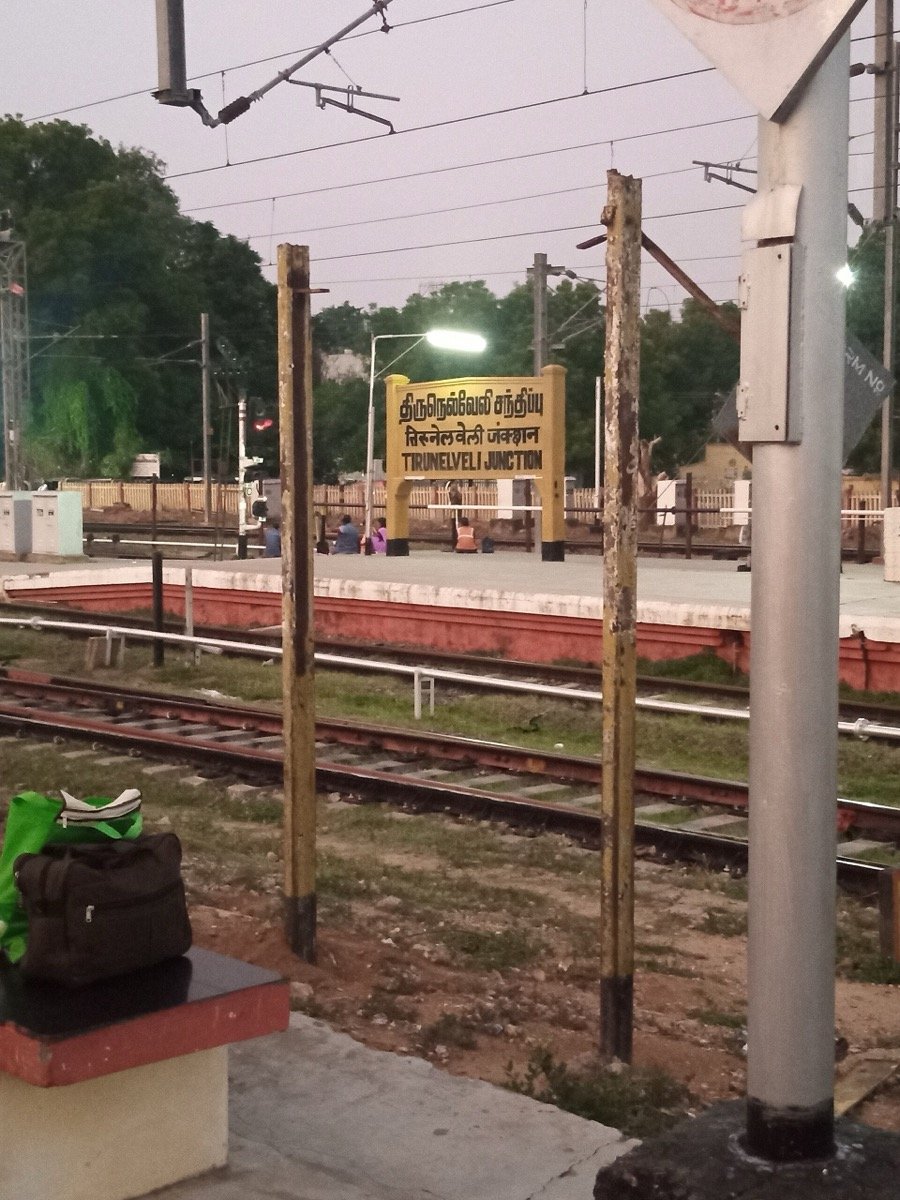
Kanyakumari joins Madras State Turning point
The States Reorganisation Act moved the Tamil-majority taluks of south Travancore, Agastheeswaram, Thovalai, Kalkulam and Vilavancode, into Madras State as Kanyakumari district. Dinamalar had campaigned for it, and says it faced a government advertising ban and police pressure in Travancore-Cochin. Its 1 November 1956 issue carried greetings in verse from Bharathidasan, the Namakkal poet V. Ramalingam Pillai and Yogi Suddhananda Bharati.
Six pages for one anna Turning point
T. V. Ramasubbaiyer, who had taken over a debt-ridden press with recommendation letters from K. Kamaraj and T. S. Chokkalingam, launched Dinamalar in the Travancore-Cochin capital. The first issue had six pages and cost one anna; the lead story was the legislature passing the Zamindari Abolition Bill, and Kavimani Desigavinayagam Pillai contributed a verse blessing the ‘daily flower’. The first editorial promised to serve the people without opposing any force working for their welfare. For its first year it did not publish on Sundays.
The founder Turning point
Thazhuvia Ramasubbaiyer was born in Nanjil Nadu, then part of Travancore. A Gandhian Congressman, he worked for the depressed classes and, by Dinamalar’s account, helped open 50 schools in three months under Travancore’s 1946 compulsory-education scheme. He later campaigned for two decades for the Tirunelveli-Nagercoil-Thiruvananthapuram railway line.
The Edition Network
From one press to ten printing centres.
| # | Edition | Launched | Managed by (1999-2000 arrangement, per 2006 court order) |
|---|---|---|---|
| 1 | Tirunelveli | 16 Apr 1957 (operations moved from Thiruvananthapuram) | One partner, with Nagercoil |
| 2 | Tiruchi | 15 Dec 1966 | One partner, with Vellore |
| 3 | Chennai | 29 Apr 1979 | R. Krishnamurthy and R. Lakshmipathy |
| 4 | Madurai | 26 Dec 1980 | R. Krishnamurthy and R. Lakshmipathy |
| 5 | Erode | 16 Mar 1984 | One partner, with Salem |
| 6 | Puducherry | 15 Apr 1991 | R. Krishnamurthy and R. Lakshmipathy |
| 7 | Coimbatore | 23 Dec 1992 | R. Krishnamurthy and R. Lakshmipathy |
| 8 | Vellore | 13 Dec 1993 | One partner, with Tiruchi |
| 9 | Nagercoil | 1996 (Dinamalar) / 29 Mar 1999 (Tamil Wiki) | One partner, with Tirunelveli |
| 10 | Salem | 29 Aug 2000 | One partner, with Erode |
Where could you buy it, and how did the news reach you?
Drag the year. The explorer shows which editions were printing, how the newsroom received news and how a reader outside Tamil Nadu could read the paper. Edition years follow Dinamalar’s own list.
How Many Copies?
Print, readership and digital reach are different measures. Here they are kept apart.
Why It Lasted: Four Forces
District pages first
‘Local news first’ was the founder’s rule in Tirunelveli. Ten printing centres let each region get its own pages, and the website now runs pages for all 38 districts.
Early adoption
Teleprinter, reformed script, offset, colour, computer typesetting, a 1999 website and a 2005 e-paper: each time, Dinamalar moved early.
A paper for every reader
Exam Q&A from 1968, Varamalar from 1982, then Siruvar Malar, Vivasaya Malar, Kalvi Malar and Pattam kept students, farmers and families buying.
Tamils abroad
The website began with about 40 NRI reporters. For Tamils in Singapore, the Gulf or North America, it replaced weeks-old mailed copies.
Then and Now
| Stage | Then | Now (2026) |
|---|---|---|
| Getting the news | Post and train; teleprinter in Tirunelveli from the late 1950s | Agency feeds, reporters filing from phones, district correspondents |
| Setting the page | Metal type; offset from 1979-81, computers from 1983 | Digital layout for print and web together |
| The alphabet | Traditional letter forms until 1977 | Simplified script, then Unicode Tamil |
| Reaching readers | One edition, six pages, one anna | Ten editions, website, iPaper, apps, video, podcasts |
| Reaching abroad | Mailed copies | Same-day web and e-paper since 1999-2005 |
| Publishing cycle | Once a day | Continuous: post, update, clip, notify, then print |
Who Runs Dinamalar: A Family Partnership
Dinamalar is not a listed company and has always been run by the founder’s family. A Madras High Court order of 18 September 2006 gives the clearest public account: the newspaper was owned by a partnership firm constituted in 1961, made up of five partners, the founder’s sons, each with an equal share after it was reconstituted on 23 March 1997. From 1999 partners filed suits against each other over management, advertising and a rival daily, and the matter reached the Supreme Court in 2000, which sent it back for trial.
The same order records the practical settlement: from 1999-2000 each partner looked after specific editions. Chennai, Madurai, Coimbatore and Puducherry were managed by R. Krishnamurthy and R. Lakshmipathy; the other six editions were split among the remaining partners. Readers see one masthead across all ten. The Media Ownership Monitor (2018) lists Professional Publications Pvt Ltd, held by Dr. R. Lakshmipathy and family, as the Chennai group’s publisher.
Scrutiny and Controversies
A 75-year archive includes complaints as well as scoops. Dinamalar describes itself as aligned to no party or religion.
State advertising cut off
By Dinamalar’s account, the DMK government stopped its advertisements over its coverage until MGR came to power.
Computer Malar cartoon
A cartoon in the supplement depicting the Prophet Muhammad led to protests by Muslim groups.
Report on actresses
A report naming film actresses led to a protest by the artistes’ association and the arrest of a senior sub-editor, released the next day after press bodies protested.
Cobrapost sting
Director L. Adimoolam was recorded speaking of his family’s RSS and BJP sympathies. Critics cite it; the paper maintains it is non-aligned.
Easter-bombing headline
A headline on the Sri Lanka attacks was seen as mocking Christians; Dinamalar published an explanation and expressed regret.
Defamation complaints
Columns such as Tea Kadai Bench have drawn defamation cases from officials, including one in Krishnagiri decided against the editor and publisher in 2019.
Corrections and Clarifications
Claims in the material this page was built from, checked against Dinamalar’s own pages, India Post, a 2006 court order and independent histories.
“MGR inaugurated the Erode edition”
We found no source for this. The Erode edition’s date, 16 March 1984, is confirmed; who inaugurated it is not, so we left it out.
“Photographic typesetting in 1984”
Sources give offset printing in 1979 (Tamil Wiki) or 1981 (Madras Musings), and computer typesetting and colour from 1983. We found nothing for 1984.
“A court judgment records the Salem edition in 2000”
The 2006 Madras High Court order lists the ten editions and how partners split them, but gives no launch dates. Salem’s date, 29 August 2000, comes from Dinamalar’s list and Tamil Wiki.
“Stamp released in September 2026”
It was released on Saturday 5 September 2026, the day before the anniversary, at Valluvar Kottam, Chennai.
Script reform “before the government”
Correct, and more precisely: Periyar’s letter forms appeared in the Tiruchi edition in 1977; the state adopted them in 1978-79.
Nagercoil and Tirunelveli dates
Dinamalar dates Nagercoil to 1996; Tamil Wiki says 29 March 1999. Dinamalar and Wikipedia date the Tirunelveli move to 1957; Madras Musings says 1960. We use Dinamalar’s dates and flag the conflicts.
Founder’s stamp “in 2011”
Dinamalar’s May 2026 report on the founder documentary says 2011. India Post issued the T. V. Ramasubbaiyer stamp on 21 December 2008.
“India’s first Tamil e-paper”
Dinamalar’s own description. Its 2005 launch is documented; whether it was the first we could not verify.
Ownership, numbers and scrutiny
The original material skipped the family partnership and its court cases, dated circulation figures, controversies, the 2021 death of editor R. Krishnamurthy and the 2026 exhibition’s final panel. We added them.
What Comes After 75?
Dinamalar’s problem in 1951 was distribution: how to get yesterday’s news to Nagercoil before it was stale. Its problem in 2026 is the opposite. News is everywhere instantly, and a Tamil reader can get it from television, WhatsApp forwards, YouTube and AI summaries before any paper is printed. What a 75-year-old daily can offer that a feed cannot is an archive, district-level reporting and a name readers can hold accountable, as the scrutiny above shows they do.
The paper’s history suggests it will keep changing the delivery rather than the product. The jubilee exhibition, which ended on a front page about Tamil Nadu’s first non-Dravidian government in six decades, made the case for the newspaper as a record: every issue a snapshot of what mattered to Tamil readers on one day.
Explore More Timelines
People Also Ask
Frequently Asked Questions
The Bottom Line
Dinamalar began in 1951 as one man’s six-page argument that Kanyakumari belonged with Tamil Nadu. It won that argument in 1956, followed the border to Tirunelveli, and spent the next half-century building ten printing centres, then moved early onto the web, e-paper and apps. Its front pages, 111 of which were shown in 2026, trace modern Tamil Nadu from Annadurai to Vijay. Its story is also a family business with divided editions and a paper that has had to answer for some of what it printed. Seventy-five years on, it is still printing.
Related AiTimeline Stories
⚠️ Editorial Note
Last updated 7 October 2026. Edition dates are from Dinamalar’s founder page and Tamil Wiki; ownership details from a Madras High Court order of 18 September 2006 and the Media Ownership Monitor; the 2026 stamp from DD India and India Post’s 2026 issue list; circulation from the Audit Bureau of Circulations (Jan-Jun 2022). Several early details, including the teleprinter, the advertising ban and the first issue’s contents, come only from Dinamalar’s own accounts and are attributed as such. AiTimeline has no commercial relationship with Dinamalar.
Sources & further reading
Every dated entry above was checked against these references. Last reviewed 7 October 2026.
- DD India: Vice President Radhakrishnan releases commemorative postage stamp marking Dinamalar's 75th anniversary (6 September 2026)
- Dinamalar: Founder T. V. Ramasubbaiyer and edition history
- Dinamalar: Platinum Jubilee exhibition of 111 front pages (6 September 2026, Tamil)
- Madras High Court: Dinamalar vs R. Krishnamurthy, R. Lakshmipathy and others (18 September 2006)
- Tamil Wiki: Dinamalar (edition dates and early history, Tamil)
- Media Ownership Monitor India: Dinamalar
- Madras Musings: Tamil journalism post-independence and its progress
- Dinamalar: Documentary on founder T. V. Ramasubbaiyer (25 May 2026, Tamil)