MySpace’s Downfall: How MySpace Lost to Facebook
MySpace's downfall, 2003-2026: News Corp's $580M deal, Facebook's News Feed, the 2008-09 crossovers, the $35M sale in 2011 and the 2026 relaunch plan.
Latest Story
In mid-2006 MySpace was the most visited website in the United States. Five years later News Corp sold it for about a sixteenth of what it had paid. MySpace’s downfall is often told as ‘messy pages lost to a clean design’, and that is part of it. But MySpace still had more American users than Facebook until May 2009. What it lost first was the layer underneath: where people’s real friends posted, every day. This is the timeline of how the network effect changed direction, with the 2026 epilogue most retellings miss.
💡 Short Answer
MySpace, launched in 2003, was the biggest social network of the mid-2000s and was bought by News Corp in 2005 as part of a USD 580 million deal. Facebook, launched in 2004, built around real identity, added the News Feed (2006) and an open developer platform (2007), and passed MySpace worldwide in April 2008 and in the US in May 2009. MySpace’s users moved, the network effect reversed, and News Corp sold it for about USD 35 million in June 2011. Its owners say in 2026 that they plan a relaunch.
MySpace vs Facebook: Key Questions
MySpace’s Downfall in Ten Points
- A real giant: most visited US website in 2006, 100 million accounts that August.
- The profile was the product: custom HTML, music players and the Top 8.
- Facebook started narrow: Harvard only in 2004, real names, standard pages.
- News Corp bought in 2005: about USD 580 million for parent Intermix Media.
- 2006 changed the game: News Feed on 5 September, open registration on 26 September.
- 2007 platform: Facebook let developers build inside it; MySpace followed with OpenSocial.
- Two crossovers: Facebook led worldwide from April 2008, in the US from May 2009.
- Turmoil: three leadership teams in 2009-10, then 47% of staff cut in January 2011.
- The sale: about USD 35 million to Specific Media, June 2011.
- Epilogue: 50 million songs lost in 2019; owners promise a relaunch in 2026.
The MySpace Timeline, 2003–2026
Newest first. Tags mark MySpace moves, Facebook moves and turning points.
The owners promise a comeback MySpace
In a new documentary titled simply Myspace, owners Tim and Chris Vanderhook said they plan to relaunch the site as an alternative to algorithm-driven, endless-scroll feeds. They were frank about the last attempt: “We lost a little over $150 million,” Chris Vanderhook said, and by the time they bought it the company “had been through four other sets of management and CEOs.” No date or design was announced. Co-founder Tom Anderson is not involved.
The other side of the ledger Facebook
Meta, Facebook’s parent since 2021, reported USD 60.8 billion of revenue for April-June 2026 and said an average of 3.6 billion people used at least one of its apps every day in June. For scale: at its 2008 peak, MySpace drew about 115 million visitors a month. The company MySpace once outranked now earns more in a week than News Corp paid for MySpace’s parent.
A site frozen in place MySpace
By the mid-2020s observers described Myspace as running in a kind of read-only state: much of the site still loaded, but images were broken, old songs would not play and its editorial section had not been updated since early 2022. The name still carried nostalgia; the product had stopped moving.
Twelve years of music disappear Turning point
Myspace confirmed that a server migration had lost music, photos and videos uploaded before about 2016, an estimated 50 million songs from 14 million artists. For a site whose last real claim was its music heritage, it was a devastating loss. The Internet Archive later published about 490,000 tracks recovered from an anonymous 2008-2010 backup. In November 2019 Meredith, which had inherited Myspace, handed it back to the Vanderhooks’ Viant Technology.
2018
Passed between owners MySpace
Time Inc. bought Viant, the ad-tech company that had grown out of Specific Media and owned Myspace, mainly for its advertising data. Months later, data from about 360 million old MySpace accounts, taken in an earlier breach, appeared for sale with weakly protected passwords. In 2018 Meredith Corporation bought Time Inc., and Myspace came along as a small part of the deal.
The ‘new Myspace’ MySpace
Specific Media rebuilt Myspace from scratch as a design-led music and entertainment network, with a horizontal-scrolling layout, an iOS app and Justin Timberlake as its public face. Early traffic spiked, with reported mobile visits of about 10.5 million in the first two weeks. It did not last. The Vanderhooks later said they lost a little over USD 150 million: “We really tried to modernize it, but it was a different company at that point.”
Sold for about USD 35 million Turning point
News Corp sold MySpace to Specific Media, an advertising-targeting firm run by Tim and Chris Vanderhook, for about USD 35 million in cash and stock, well below the roughly USD 100 million it had reportedly hoped for. Justin Timberlake took a stake. News Corp kept less than 5%. Set against the USD 580 million paid for MySpace’s parent in 2005, it became the internet’s best-known cautionary price tag.
Half the staff go MySpace
MySpace cut about 500 jobs, 47% of its workforce. Three months earlier it had relaunched as a ‘social entertainment’ destination for young people, built around music, games, TV and film, and even added a way to connect Facebook accounts. Chief executive Mike Jones said engagement had improved. News Corp was already exploring a sale.
A Facebook veteran leaves after ten months MySpace
Owen Van Natta, a former Facebook chief operating officer brought in to turn MySpace around, left after less than a year. Co-presidents Mike Jones and Jason Hirschhorn took over; Hirschhorn left a few months later. The churn mattered: a product in decline needed one long-term direction, and MySpace kept changing the people setting it.
Founders out, Facebook ahead in the US Turning point
In April News Corp replaced co-founder and CEO Chris DeWolfe with Owen Van Natta, and Tom Anderson stepped down as president. In May, comScore data showed Facebook passing MySpace in the United States for the first time, by a hair: 70.28 million monthly unique visitors to 70.26 million. Facebook’s US audience had nearly doubled in a year while MySpace’s fell 5%. In June MySpace cut its workforce from roughly 1,600 to about 1,000.
MySpace Music: the bet on what it did best MySpace
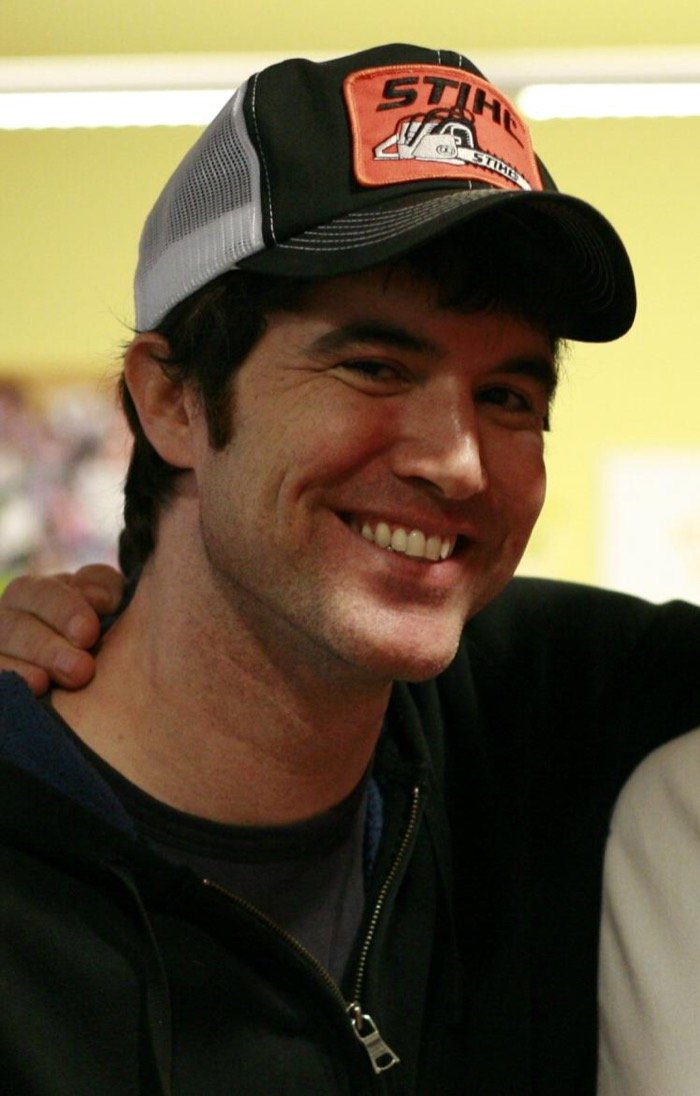
MySpace launched MySpace Music, a joint venture with the major record labels offering free streaming alongside downloads, ringtones, concert tickets and merchandise. It built on MySpace’s real strength: bands and fans. It also pulled the company further towards being an entertainment destination at the moment Facebook was becoming an everyday utility. MySpace’s revenue for 2008 was reported at around USD 800 million, its high point.
The social network moves into the phone Facebook
When Apple opened the App Store in July 2008, Facebook was there with an iPhone app. At the same time Facebook was translating itself into more than 15 languages with help from its own users, which drove much of its international growth. The next contest, mobile, was starting just as Facebook took the lead in the current one.
Facebook catches MySpace worldwide Turning point
comScore data showed Facebook drawing level with MySpace in worldwide monthly unique visitors in April 2008, at around 115 million each. The gap opened fast: by June Facebook had 132.1 million to MySpace’s 117.6 million, and by September 161.1 million to 117.9 million. MySpace grew just 3% in the year to June 2008; Facebook grew 153%. The catch: in the US, MySpace still led comfortably, 73.0 million to 41.4 million. It was a global milestone, not yet the end.
Facebook opens its platform Facebook
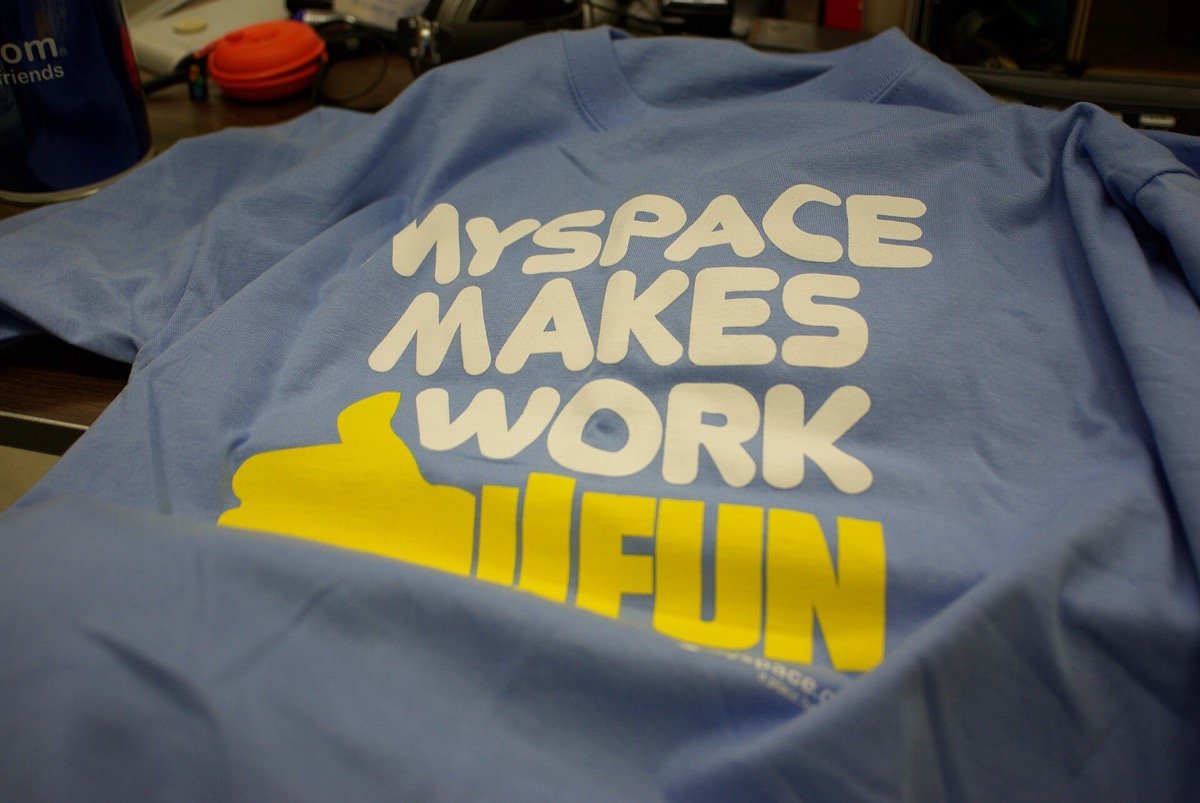
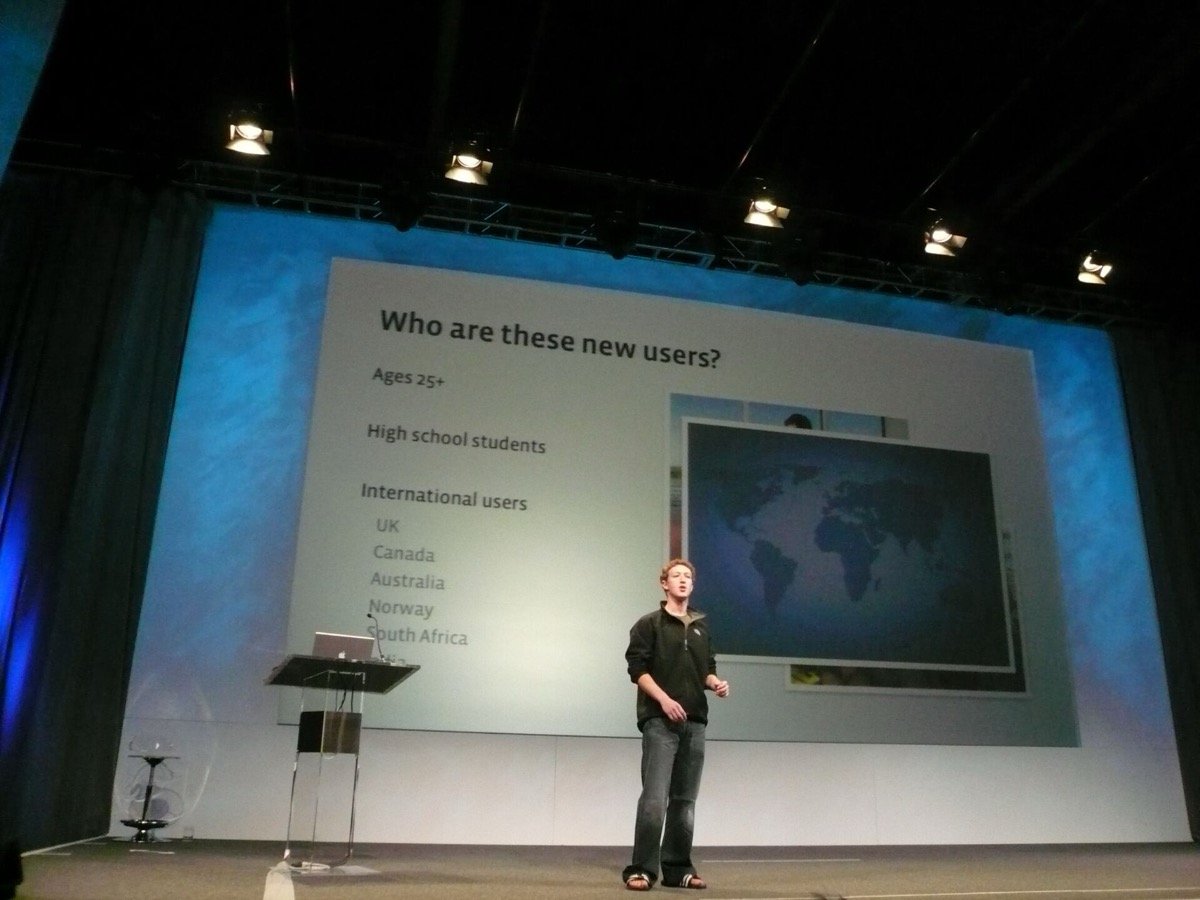
At its first f8 event, Facebook let outside developers build applications that ran inside the site and spread through users’ friend lists. Within months thousands of apps, games and quizzes gave people new reasons to log in every day. MySpace answered by joining Google’s OpenSocial standard in November 2007, but it had at times blocked third-party widgets in the past, and Facebook’s head start held.
News Feed, and Facebook opens to everyone Facebook
On 5 September Facebook launched the News Feed, a constantly updating stream of what friends were doing. Many users protested that it felt like surveillance; within days they were hooked. Three weeks later, on 26 September, Facebook opened registration to anyone 13 or older with a valid email address. A college network became a potential rival to MySpace for everyone.
MySpace at its height MySpace
MySpace passed Google search and Yahoo Mail to become the most visited website in the United States, and registered its 100 millionth account in August. That month Google agreed to pay a guaranteed USD 900 million over roughly three years to run search and search ads across MySpace and other Fox sites. It looked like proof the News Corp deal was a bargain. It also locked MySpace into traffic and advertising targets that made the pages heavier.
News Corp buys the parent Turning point
Rupert Murdoch’s News Corporation agreed to buy Intermix Media for about USD 580 million in cash. Intermix owned MySpace and a stable of other websites, and separately bought out the 47% of MySpace it did not already hold. MySpace, then with about 16 million monthly users, went into News Corp’s new Fox Interactive Media unit. It was one of the first big bets by a traditional media company on social networking.
TheFacebook launches at Harvard Facebook
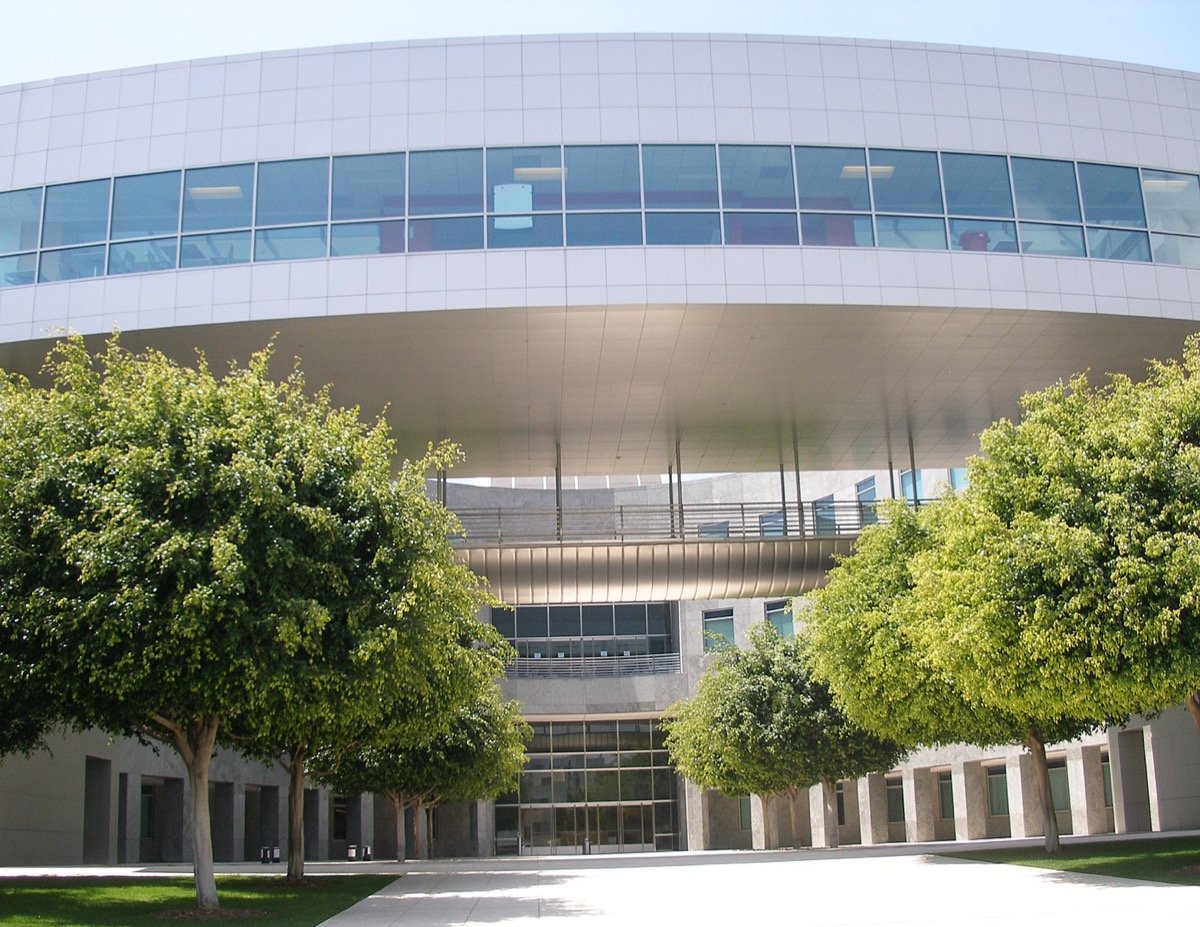
Mark Zuckerberg and fellow Harvard students launched TheFacebook on 4 February 2004, open only to people with a Harvard email address. It spread to other universities over the following months. Its constraint was its advantage: a profile linked to a real person at a real institution, inside a network of people who already knew each other.
MySpace launches MySpace
MySpace went live in August 2003, built quickly by a team at eUniverse, a Los Angeles internet-marketing company, led by Chris DeWolfe and Tom Anderson. It drew users from Friendster, which was struggling with outages and restrictions, and it did the opposite of restrict: users could rewrite their pages with HTML, add music players, glitter graphics and a ‘Top 8’ of friends. The profile itself was the product.
The Crossover, in Visitors
Facebook won the world first and America a year later.
Follow the Money
It is mid-2007. You run MySpace. Facebook has just opened its platform. What do you do?
You have the biggest social network in the US, News Corp’s backing, a USD 900 million Google deal and every band on the internet. Pick one move.
MySpace tried versions of almost all of these between 2007 and 2013. The problem was less the ideas than the timing, and doing them while users were already leaving.
Where did MySpace’s flywheel break first?
Each stage feeds the next. Tap the stage you think failed first.
Why MySpace Lost: Eight Problems That Fed Each Other
No single mistake. Each one made the next one worse.
Personas vs real people
Facebook began with verified college emails and real names. MySpace’s openness made it fun, and also full of spam, fake profiles and strangers.
Freedom became clutter
Custom layouts, autoplaying music and heavy widgets made pages slow and chaotic. Facebook’s uniform design felt calm by comparison.
Pages vs feeds
The News Feed brought friends’ activity to you. On MySpace you had to go and look, so there were fewer reasons to come back every day.
Developers went to Facebook
Facebook’s 2007 platform let apps spread through friend lists. MySpace had at times blocked outside widgets and joined OpenSocial six months later.
Media company tempo
Inside News Corp, MySpace answered to traffic and revenue targets, including the Google deal’s, which favoured page views and ads over product rebuilds.
Social, music, video, or all?
MySpace Music, video and celebrity content made the site broader just as Facebook narrowed in on connecting people who knew each other.
Churn at the top
Founders out in April 2009, a new CEO gone by February 2010, co-presidents after that. Every reset cost time the site did not have.
The flywheel reversed
Each friend who moved made Facebook more useful and MySpace less useful for those left behind. That loop runs as fast down as up.
MySpace vs Facebook, Side by Side
| Dimension | MySpace | |
|---|---|---|
| Launch | August 2003, open to all | February 2004, Harvard only |
| Identity | Pseudonyms and personas common | Real names, verified college emails at first |
| Profile | Fully customisable HTML, music player | Standard layout for everyone |
| Core loop | Visit friends’ pages | News Feed (Sep 2006) |
| Developers | Widgets tolerated, then OpenSocial (Nov 2007) | Facebook Platform (May 2007) |
| Strength | Music, bands, entertainment | Real-world social graph |
| Owner | News Corp, 2005-2011 | Independent, IPO May 2012 |
| Worldwide lead | Until April 2008 | From April 2008 |
| US lead | Until May 2009 | From May 2009 |
| 2026 | Largely static; relaunch promised | Meta: 3.6bn daily users across apps |
What MySpace Got Right
A fair account of MySpace’s downfall has to credit what it pioneered. It proved, at mass scale, that ordinary people wanted an online identity, a friend list and a public audience. It gave unsigned musicians a free home page, a player and a direct line to fans years before streaming: Arctic Monkeys, Lily Allen and Adele are among the acts whose early audiences were built there. And its free-form profiles were, for a generation of teenagers, a first lesson in HTML and self-expression online.
The Top 8, the profile song, the glitter backgrounds: much of what people now call ‘early internet nostalgia’ is MySpace. The product lost. The cultural footprint did not.
Could MySpace Have Won?
Possibly, with different decisions in 2006-2007: a feed earlier, a real-identity option, an open developer platform before Facebook’s, and less pressure to maximise page views. Some insiders and later analysts have argued that News Corp’s ownership, and the Google deal’s traffic targets, made those changes harder to ship.
But Facebook’s advantages were also structural. It started inside real communities, so its social graph was more valuable per user, and it reinvested in product rather than monetising early. Whether a different MySpace could have beaten it is a counterfactual, not a historical fact. What the record shows is that MySpace moved on most of these fronts only after users had started to leave.
The Numbers Behind the Downfall
Each figure with what it measures and where it comes from.
| Figure | What it measures | Source |
|---|---|---|
| ~USD 580m | News Corp’s price for Intermix Media (MySpace’s parent), Jul 2005 | News Corp / InformationWeek |
| ~16m | MySpace monthly users at the time of the deal | Contemporary reports |
| 100m | MySpace accounts registered, Aug 2006 | MySpace |
| USD 900m | Guaranteed Google search-ad payments, ~3 years from Aug 2006 | Google / News Corp |
| ~115m each | Worldwide monthly unique visitors, Apr 2008 | comScore |
| 161.1m vs 117.9m | Facebook vs MySpace worldwide, Sep 2008 | comScore via TechCrunch |
| 70.28m vs 70.26m | Facebook vs MySpace US, May 2009 | comScore via TechCrunch |
| ~500 / 47% | MySpace job cuts, Jan 2011 | The Next Web, CNN |
| ~USD 35m | Specific Media’s price for MySpace, Jun 2011 | NPR, News Corp |
| ~50m songs | Uploads lost in 2019 server migration | Myspace via MIT Technology Review |
| USD 150m+ | Vanderhooks’ losses on the 2013 relaunch, per owners | Documentary, 2026 |
| 3.6bn | Meta family daily active people, Jun 2026 | Meta Q2 2026 results |
Corrections and Clarifications
Claims in the earlier draft of this page and in the brief it was built from, checked against contemporary reporting.
“Founded by a team associated with Intermix Media”
In 2003 MySpace was built inside eUniverse. The company renamed itself Intermix Media in 2004, a year after launch.
“USD 580m to USD 35m, a 94% decline”
The arithmetic is right, but the 2005 price bought all of Intermix, including other websites, while the 2011 price bought MySpace alone, and News Corp kept a stake of under 5%. We show it as a headline comparison only.
“Facebook overtook MySpace in 2008”
Only worldwide (April 2008, comScore). In the United States MySpace stayed ahead until May 2009. Both crossovers are now in the timeline.
The brief’s rise-and-fall flow
It listed ‘Facebook overtakes MySpace’ before ‘News Corp acquisition’. The acquisition came first, in 2005; the overtaking in 2008-2009.
“MySpace remains a legacy music/social brand”
It lost about 50 million songs in a 2019 server migration and has been largely static since. In 2026 its owners said they plan a relaunch.
What the brief skipped
The USD 900m Google deal, MySpace Music (2008), the 2009-10 CEO changes, the 2009 and 2011 layoffs, the 2013 relaunch, the Time Inc. and Meredith years, the 2016 data leak, the 2019 music loss and the 2026 documentary. We added them.
“2010: the smartphone arrives”
Smartphones arrived earlier; the turning point for social apps was the App Store in July 2008, where Facebook had an iPhone app at launch.
“Facebook killed MySpace” or “copied it”
Neither. Facebook’s product and identity choices, and MySpace’s own decisions, shifted the network effect. We say that instead.
Explore More Timelines
People Also Ask
Frequently Asked Questions
The Real Lesson
MySpace didn’t lose because it had no users. It lost because the internet changed what a social network was. The winning product moved from ‘my page’ to ‘my network’, then to ‘my feed’, then to ‘my phone’. Facebook rode each shift; MySpace reached each one late.
The users didn’t disappear. They moved, and the network effect followed them. Two decades later, the owners of the site that taught the world to make friends online are betting that people tired of algorithmic feeds might want to move again.
Related AiTimeline Stories
⚠️ Editorial Note
Last updated 8 October 2026. Audience figures are comScore estimates as reported by TechCrunch and others in 2008-2009; deal values are headline figures from News Corp and contemporary reports (InformationWeek, NPR); staffing and relaunch details from The Next Web, Engadget and trade press; the 2019 music loss from Myspace’s statement as reported by MIT Technology Review; 2026 comments from the documentary Myspace as reported by Entrepreneur and Fox stations; Meta figures from its Q2 2026 results. The ‘could MySpace have won’ analysis is opinion, not fact. AiTimeline has no commercial relationship with Myspace, Viant, News Corp or Meta.
Sources & further reading
Every dated entry above was checked against these references. Last reviewed 8 October 2026.
- InformationWeek: News Corp. to acquire Intermix Media, owner of MySpace, for USD 580 million (Jul 2005)
- TechCrunch: Facebook widens the gap with MySpace internationally, comScore September 2008
- TechCrunch: Facebook finally catches up to MySpace in the US, comScore May 2009
- The Next Web: Confirmed, MySpace to slash 47% of its workforce (Jan 2011)
- NPR: News Corp takes huge loss selling MySpace for USD 35 million (Jun 2011)
- Engadget: MySpace relaunches with new design (Jan 2013)
- MIT Technology Review: Myspace has lost all the music uploaded during its first 12 years (Mar 2019)
- Entrepreneur: Myspace's owners say they're bringing it back, after losing USD 150 million trying (2026)