Meta’s AI Chips: Every MTIA Generation, From a 2020 Design to a Chip Every Six Months
Meta AI chips explained: every MTIA generation from the 2020 design to MTIA 300-500, Broadcom's 1 GW deal, the Iris chip and why Nvidia GPUs remain.
Latest Story
Meta’s AI chips, the MTIA family, began as a modest 25-watt accelerator for ranking Facebook and Instagram feeds and have become a roadmap of four generations in two years, built with Broadcom, made by TSMC, and backed by a commitment of more than 1 gigawatt. This page follows the programme from the Big Sur GPU servers of 2015 to the reported Iris production start in September 2026, including the parts the launch posts skip: a chip scrapped in 2022, a training chip reportedly dropped in 2026, and the far larger Nvidia and AMD orders running alongside.
💡 Short Answer
MTIA (Meta Training and Inference Accelerator) is Meta’s in-house AI chip family. Design began in 2020; MTIA v1 (7 nm) was announced in May 2023 and v2 (5 nm) in April 2024, both for recommendation inference. In March 2026 Meta unveiled MTIA 300, 400, 450 and 500, moving into training and generative-AI inference on a roughly six-month cadence. Broadcom co-develops the chips under a deal running to 2029, TSMC makes them, and Meta still buys millions of Nvidia and AMD GPUs.
Meta AI Chips: Key Questions
Meta’s Chip Programme in Ten Points
- Started in 2020, announced in May 2023, after an earlier inference chip was scrapped in 2022.
- Narrow first target: recommendation inference, Meta’s biggest and most predictable AI job.
- MTIA 200 (April 2024) tripled v1’s performance on key models and ran in 16 regions.
- March 2026 roadmap: MTIA 300, 400, 450, 500 within about two years.
- Inference first: 450 and 500 are built for serving GenAI, with HBM bandwidth up 4.5x from 300 to 500.
- Six-month cadence from reusable chiplets, against a typical one-to-two-year cycle.
- Broadcom to 2029: 1 GW+ initial commitment and a 2 nm accelerator.
- Not a GPU replacement: millions of Nvidia GPUs and 6 GW of AMD are on order too.
- Limits are real: the Olympus training chip was reportedly dropped in February 2026.
- Next test: whether Iris and MTIA 450 ramp on time in 2026–27.
Why a Social Media Company Designs Chips
Predictable workloads at enormous scale.
Every time someone opens Facebook or Instagram, recommendation models decide which posts, Reels and ads to show. Those models are unusual. Much of their size sits in huge embedding tables, lookup tables that can hold the large majority of a model’s parameters, and running them is dominated by memory access and moving data between chips rather than dense arithmetic. GPUs, designed for graphics and then for dense matrix maths, handle this, but not with ideal efficiency.
Meta has something few chip buyers have: a handful of workloads it knows in detail, running billions of times a day, for years. That makes specialisation worth it. A chip that does 20 percent more work per watt on one model family pays back quickly across hundreds of thousands of servers. Owning a chip line also gives Meta a second source when GPUs are scarce, and a better negotiating position when they are expensive.
The catch is everything around the chip: compilers, kernels, networking, racks, cooling and years of reliability. Meta’s answer has been to co-design the whole stack, from PyTorch down to the rack, and to start narrow.
🖥️ General-purpose GPU
- Built for thousands of customers
- Best for frontier model training
- Mature CUDA software ecosystem
- Bought at market price
- Supply set by the vendor
🧠 MTIA
- Built for Meta’s own models
- Best for ranking, ads, GenAI serving
- PyTorch, Triton, vLLM; Meta-built kernels
- Designed with Broadcom, made by TSMC
- A second source of compute
Pick a chip to see what it was built for, how it is made and where it stands.
Status as of 5 October 2026, from Meta’s own disclosures and named reports.
Choose a chip above
From One Chip to a Chip Every Six Months
Six generations, 2020 to 2027.
The first two MTIA chips each took years and served a single job, recommendation inference. The March 2026 roadmap is a different kind of plan: four chips in roughly 24 months, with MTIA 300 already in production for recommendation training, MTIA 400 through lab testing, and MTIA 450 and MTIA 500 aimed at mass deployment in 2027.
Meta says the speed comes from modular chiplets. Instead of designing one large die from scratch each time, it reuses compute, I/O and networking chiplets and recombines them, so a new generation can change memory, chiplet count or process without starting over. Reuters reported in July 2026 that an internal memo set the same six-month rhythm through 2027.
Meta AI Chips: The Full Timeline, 2015–2026
Newest first. Tags mark chips shipped, milestones, reported but unconfirmed events, and projects scrapped.
Iris due to enter production Reported
Reuters reported in July that Meta planned to start manufacturing a custom AI chip code-named Iris in September 2026. According to the memo, the chip cleared six weeks of testing without a major issue, and Meta intends to release a new chip roughly every six months through 2027 as part of a plan to double its data-centre capacity from about 7 gigawatts to 14 gigawatts in 2027.
What is not confirmed: Meta has not said publicly which MTIA number Iris is, and as of 5 October 2026 has made no announcement that volume production has begun.
2026
MTIA 300 and 400 detailed at Hot Chips Milestone
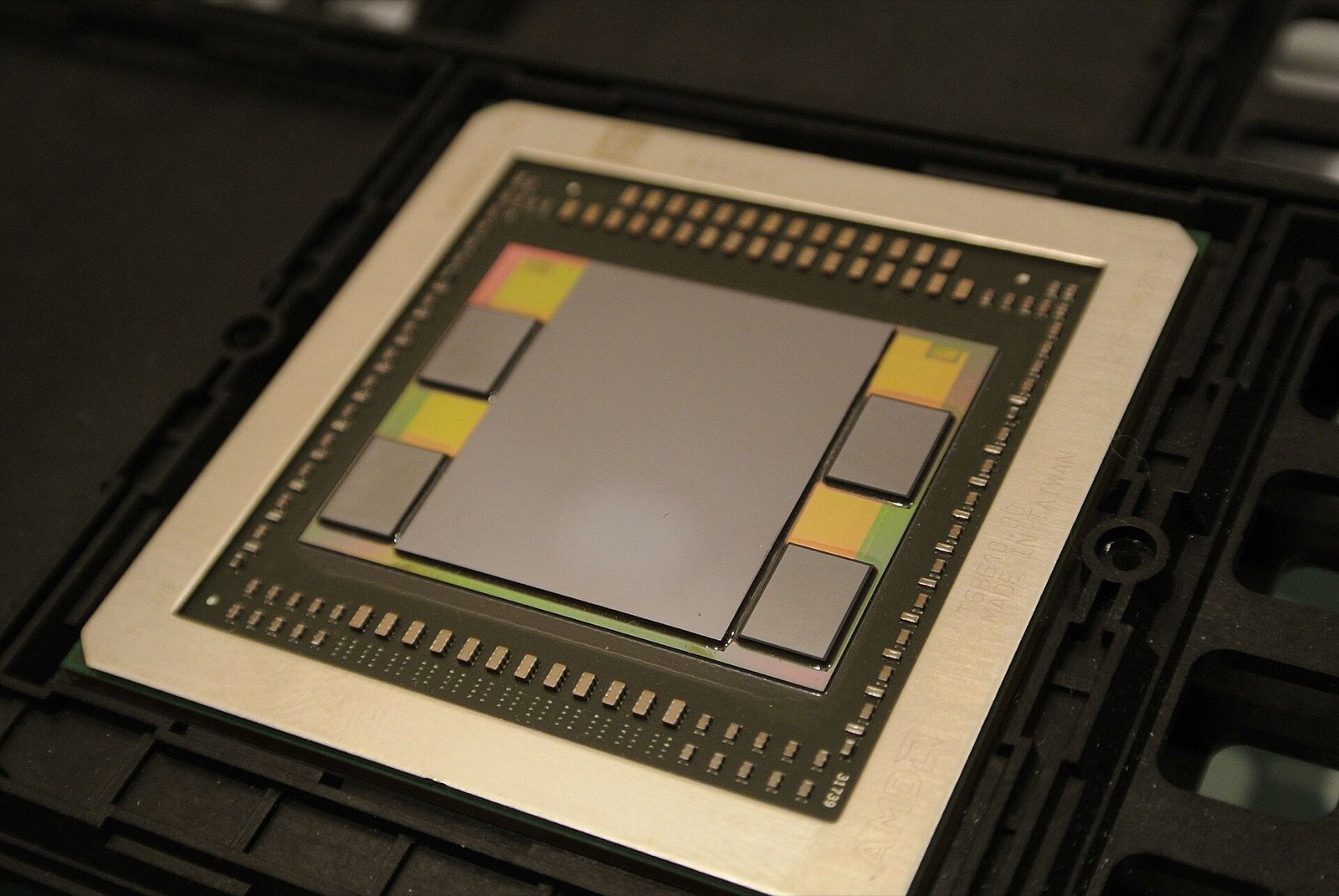
At the Hot Chips conference Meta engineers give the first technical detail on the new generation. MTIA 300 has 72 processing elements, 16 messaging elements and 216 GB of HBM3e, with a 3 nm compute die and a 5 nm I/O die; Meta says it matches GPUs on recommendation-model training at a competitive total cost of ownership.
MTIA 400 pairs two compute chiplets with eight HBM3e stacks (288 GB, roughly 9 TB/s) and about 12 petaflops of FP4. Meta calls it the first MTIA with raw performance competitive with leading commercial products. Seventy-two chips form one scale-up domain in a rack of 18 compute blades.
2026
Capex guided to $130–145 billion
Meta narrows its 2026 capital-expenditure outlook to $130 billion to $145 billion, citing higher component prices and data-centre costs for future capacity. Second-quarter capex alone is about $31 billion. Every MTIA rack that replaces a GPU rack for a given job is meant to lower that bill over time.
AWS Graviton: tens of millions of CPU cores Milestone
Meta signs a deal with Amazon Web Services to bring tens of millions of Graviton5 cores into its compute portfolio for CPU-heavy agentic-AI work such as orchestration, retrieval and code execution. Meta described agentic AI as becoming almost as big a CPU story as a GPU story.
2026
Broadcom: multi-gigawatt MTIA partnership Milestone
Meta and Broadcom extend their partnership to co-develop multiple MTIA generations through 2029, covering chip design, advanced packaging and Ethernet networking for AI clusters. The initial commitment is more than 1 gigawatt of custom silicon, described as the first phase of a multi-gigawatt rollout, and includes what the companies call the industry’s first 2 nm AI accelerator. Broadcom CEO Hock Tan leaves Meta’s board, where he had sat since 2024, to become an adviser on chip strategy.
2026
KernelEvolve: AI that tunes the chips’ code
Meta describes KernelEvolve, an AI agent that searches for faster low-level kernels across its mixed hardware. It reports a 60%+ inference-throughput gain on the Andromeda ads model running on Nvidia GPUs, and a 25%+ training-throughput gain for an ads model on MTIA. For a custom chip that has no public CUDA-style ecosystem, automated kernel writing is a way to close the software gap faster.
2026
Arm’s first chip, with Meta as first customer
Arm unveils the AGI CPU, the first data-centre processor it makes itself rather than licensing, and names Meta as co-developer and first customer on a multi-generation roadmap. The CPU sits beside accelerators in AI racks, handling the general-purpose work around them.
2026
Four MTIA chips in two years Milestone
Meta publishes a roadmap of four generations: MTIA 300 (in production, ranking and recommendation training), MTIA 400 (lab testing done, 400% more FP8 compute than 300, 72-chip scale-up domain), MTIA 450 (twice the HBM bandwidth of 400, GenAI inference, mass deployment early 2027) and MTIA 500 (another 50% bandwidth, up to 80% more HBM capacity, 2027). From 300 to 500, Meta says HBM bandwidth rises 4.5 times and compute 25 times.
It also renames its first two chips MTIA 100 and MTIA 200 and says hundreds of thousands of MTIA chips are in production. Modular chiplets let it ship a new generation roughly every six months.
Olympus training chip dropped Reported
The Information reports that Meta has scrapped Olympus, its most advanced in-house AI training chip, after design problems; later reports tie it to the team from Rivos. In the same weeks Meta is reported to have agreed a multibillion-dollar deal to rent Google TPUs. Broadcom’s Hock Tan responds that the MTIA roadmap is ‘alive and well’. Meta’s March roadmap shifts the emphasis to inference.
2026
Millions of Nvidia GPUs, 6 GW of AMD Milestone
On 17 February Meta signs a multiyear, multigenerational deal with Nvidia for millions of Blackwell and Rubin GPUs, Spectrum-X Ethernet and the first large Grace-only CPU deployment, with Vera CPUs possible from 2027. On 24 February AMD announces a 6-gigawatt agreement, starting with a custom MI450-based GPU in the second half of 2026; AMD gives Meta a performance-based warrant for up to 160 million shares.
Why it matters: these deals dwarf MTIA in near-term volume. They are the clearest sign that Meta’s chips are one part of a portfolio, not a replacement.
2025
Meta agrees to buy Rivos
Meta agrees to acquire Rivos, a start-up building RISC-V based AI accelerators, to deepen its chip-design bench. Rivos had been reported in talks to raise money at a $2 billion valuation; Meta did not disclose terms.
First in-house training chip in test Reported
Reuters reports that Meta has begun a small deployment of its first in-house training chip, made by TSMC after a successful tape-out, with plans to scale up if tests go well and to use in-house chips for training from 2026. It is the line of work that leads to MTIA 300.
2024
Next-generation MTIA (MTIA 200) Shipped
Meta unveils its second chip. It moves to TSMC 5 nm, runs at 1.35 GHz in 90 watts, and has 256 MB of on-chip SRAM and 128 GB of LPDDR5. Dense compute is 3.5 times v1 and sparse compute 7 times; Meta says it ‘more than doubles the compute and memory bandwidth’ of the previous solution and shows 3x the performance on four key recommendation models. It is already serving production models in 16 data-centre regions, 72 chips to a rack.
2024
‘Almost 600,000 H100 equivalents’
Mark Zuckerberg says Meta will have about 350,000 Nvidia H100 GPUs by the end of 2024, and compute equal to almost 600,000 H100s counting other hardware. While MTIA serves recommendations, generative-AI training runs on Nvidia.
2023
MTIA v1 announced (now MTIA 100) Shipped
At its AI Infra @Scale event Meta reveals MTIA v1, an inference accelerator for its deep-learning recommendation models, designed from 2020. It is a 7 nm chip with a grid of 64 processing elements built on RISC-V cores, 128 MB of on-chip SRAM and 64 GB of LPDDR5, delivering 102.4 TOPS at INT8 in 25 watts. Meta says it beats GPUs on performance per watt for low- and medium-complexity models. The same day it shows MSVP, an in-house video-transcoding chip, and a new AI-optimised data-centre design.
An earlier inference chip is scrapped Scrapped
According to Reuters, Meta abandons a planned rollout of an in-house inference chip after it underperforms in a small test, and orders billions of dollars of Nvidia GPUs instead. Moving from CPU-heavy servers to GPUs forces Meta to pause and redesign data centres for far more networking and liquid cooling. The setback is the background to MTIA’s cautious first target: recommendation inference only.
MTIA design begins
Meta’s silicon team starts designing a custom ASIC for its recommendation models, which by then account for a large share of its AI compute and run poorly on general CPUs. Meta later calls it the start of MTIA.
Big Sur: open AI server hardware
Facebook unveils Big Sur, an AI training server holding eight GPU cards, built with Nvidia’s Tesla M40 in mind, and contributes the design to the Open Compute Project it founded in 2011. It is Meta’s first public AI-hardware design; the chips inside are Nvidia’s.
MTIA Specs, Generation by Generation
What Meta has disclosed. Gaps are left blank rather than guessed.
| Chip | Announced | Process | Memory | Compute / power | Job |
|---|---|---|---|---|---|
| MTIA 100 (v1) | May 2023 | TSMC 7 nm | 128 MB SRAM, 64 GB LPDDR5 | 102.4 TOPS INT8, 25 W | Rec inference |
| MTIA 200 (v2) | Apr 2024 | TSMC 5 nm | 256 MB SRAM, 128 GB LPDDR5 | 354 TOPS INT8 dense, 90 W | Rec inference |
| MTIA 300 | Mar 2026 | 3 nm compute / 5 nm I/O | 216 GB HBM3e | Parity with GPUs on rec training (Meta) | Rec training |
| MTIA 400 | Mar 2026 | 3 nm chiplets | 288 GB HBM3e, ~9 TB/s | ~12 PFLOPS FP4; 400% FP8 over 300 | GenAI + rec |
| MTIA 450 | Mar 2026 | Not disclosed | HBM4, 2x bandwidth of 400 | +75% MX4 over 400 | GenAI inference |
| MTIA 500 | Mar 2026 | Not disclosed | +50% bandwidth, up to +80% capacity | +43% MX4 over 450 | GenAI inference |
Why GenAI Chips Are Memory Chips
When a large language model writes an answer, it generates one token at a time, and each token requires reading the model’s weights from memory. For most serving workloads the limit is not how many calculations the chip can do but how fast it can feed them. That is why Meta’s inference roadmap is described mostly in HBM, the stacked high-bandwidth memory sitting beside the compute die: MTIA 450 doubles MTIA 400’s bandwidth and MTIA 500 adds half again, with up to 80 percent more capacity.
Lower-precision number formats help too. MTIA 450 and 500 add hardware support for MX4 and MX8 microscaling formats, which pack more values into each byte moved. The trade-off is engineering: HBM is the most supply-constrained part of any AI chip in 2026, and Meta competes for it with Nvidia, AMD and Google.
The Portfolio: Nvidia, AMD, Google, Arm and AWS
MTIA is one line in a much larger order book.
| Supplier | What Meta gets | Announced | Role |
|---|---|---|---|
| Meta MTIA (with Broadcom, TSMC) | 1 GW+ initial, multi-GW planned; 2 nm chip | 14 Apr 2026 | Recommendation, ads, GenAI inference |
| Nvidia | Millions of Blackwell and Rubin GPUs; Grace and Vera CPUs; Spectrum-X | 17 Feb 2026 | Frontier training and inference |
| AMD | 6 GW of Instinct GPUs, custom MI450 first; Venice EPYC CPUs | 24 Feb 2026 | Training and inference |
| Rented TPUs (reported) | Feb 2026 | Model development | |
| Arm | AGI CPU, co-developed, multi-generation | 24 Mar 2026 | Host CPUs in AI racks |
| AWS | Tens of millions of Graviton5 cores | Apr 2026 | Agentic-AI CPU work |
The weeks before Meta published its MTIA roadmap were dominated by other people’s chips. On 17 February 2026 it signed with Nvidia for millions of Blackwell and Rubin GPUs and the first large Grace-only CPU deployment. On 24 February AMD announced a 6-gigawatt deal, with a warrant giving Meta up to 160 million AMD shares as shipments land. Meta was also reported to be renting Google TPUs. In March and April came CPU deals with Arm and AWS for the general-purpose and agentic work around the accelerators.
Read together, the deals say what MTIA is for. Frontier model training still runs mostly on GPUs. MTIA takes the high-volume, Meta-specific work, recommendations and ads today and GenAI serving from 2027, where Meta can beat merchant chips on cost. Meta’s 2026 capital-expenditure guidance of $130–145 billion is large enough to fund all of it at once.
The Setbacks: 2022 and Olympus
Custom silicon does not always work.
Meta’s chip history includes two public stumbles. In 2022, according to Reuters, an in-house inference chip underperformed in a small-scale test, and Meta cancelled its rollout and bought billions of dollars of Nvidia GPUs. The switch forced it to stop and redesign data centres for the far greater networking and cooling that GPUs need. MTIA v1, announced a year later, was deliberately limited to recommendation inference.
In February 2026 The Information reported that Meta had dropped Olympus, its most ambitious training chip, after design problems. Meta did not confirm it, Broadcom said the roadmap was ‘alive and well’, and two weeks later Meta published a roadmap centred on inference, with training limited to recommendation models on MTIA 300. The lesson Meta appears to have drawn is the one from 2022: compete where its workloads are distinctive, buy where they are not.
Software: The Part That Decides Whether the Chip Gets Used
A custom chip is only as useful as the code that runs on it. Nvidia’s CUDA has two decades of libraries and developer habit behind it. Meta’s answer is to meet engineers where they already work: MTIA is PyTorch-native, the framework Meta created, supports Triton kernels and the vLLM serving engine, and uses its own collective-communications library, HCCL, co-designed with MTIA 300’s networking chiplets. Racks follow Open Compute Project standards so MTIA slots in beside GPUs.
Meta is also using AI to write the low-level code. KernelEvolve, described in April 2026, searches for faster kernels across Nvidia, AMD, MTIA and CPUs, feeding chip-specific documentation to the model so it can target hardware no public model has seen. Meta reported a 60 percent-plus inference gain on an ads model on Nvidia GPUs and a 25 percent-plus training gain on MTIA.
Corrections to Claims Circulating Online
From the summary material this page was built from, and common in coverage.
“MTIA is born in 2023”
2023 is when Meta announced it. Design began in 2020, and an earlier in-house inference chip was scrapped in 2022.
The Olympus setback
Summaries skip the February 2026 report that Meta dropped its most advanced training chip, and its reported Google TPU rental.
“KernelEvolve: 60% gain”
The 60%+ ads-inference gain was on Nvidia GPUs. The MTIA figure Meta reported was a 25%+ training gain.
“Iris is MTIA v3”
Reuters reported Iris’s production plan from a memo. Meta has not said which MTIA number Iris is.
“Hundreds of thousands of H100s”
Zuckerberg’s January 2024 figure was about 350,000 H100s by end-2024, and almost 600,000 H100 equivalents of total compute.
MTIA vs the GPU orders
Missing from summaries: Nvidia’s millions of GPUs and AMD’s 6 GW, both signed weeks before the MTIA roadmap.
What to Watch in 2026–27
Iris in volume
Public confirmation from Meta that Iris is shipping, and which MTIA it is.
MTIA 400 racks live
The first MTIA deployed for GenAI, in 72-chip scale-up domains.
MTIA 450 mass deployment
The first chip built mainly to serve large language models.
MTIA 500 and 2 nm
Whether the six-month cadence holds, and when the Broadcom 2 nm accelerator appears.
Share of Meta AI on MTIA
How much Meta AI inference moves off GPUs; Meta has not published a figure.
HBM supply
Memory is the scarcest input for every AI chip; shortages would hit MTIA 450 and 500 first.
Did You Know?
- RISC-V inside: MTIA v1’s processing elements were built around RISC-V cores, and Meta later bought RISC-V chip start-up Rivos.
- Renamed chips: MTIA v1 and v2 became MTIA 100 and MTIA 200 in March 2026.
- 25 watts: the first MTIA used about as much power as a laptop charger.
- Video too: Meta also designs MSVP, a video-transcoding chip, announced the same day as MTIA v1.
- Broadcom on the board: Hock Tan sat on Meta’s board from 2024 until the April 2026 deal.
- Same club: Google (TPU), Amazon (Trainium, Inferentia) and Microsoft (Maia) also design their own AI chips.
Quick Quiz
1. When did design work on the first MTIA chip begin?
2. Who manufactures MTIA chips?
3. Which generation is in production for recommendation training?
4. What did MTIA 450 double over MTIA 400?
5. Where did KernelEvolve’s 60% ads-inference gain happen?
Explore More Timelines
People Also Ask
Frequently Asked Questions
Where Meta’s Chips Stand
Six years after design work began, MTIA is real infrastructure: hundreds of thousands of chips ranking feeds and ads, a training chip in production, a Broadcom contract to 2029 and a reported new chip in production at TSMC. It is also bounded. Meta’s largest model training still runs on Nvidia and AMD, an ambitious training chip was reportedly abandoned this year, and the biggest 2026 chip orders went to other companies.
The next year is the test of the March roadmap. If Iris ships in volume, MTIA 400 racks go live and MTIA 450 deploys in early 2027, Meta will have shown that a software company can turn out competitive AI silicon on a six-month rhythm. If the dates slip, the portfolio is built to absorb it.
Related AiTimeline Stories
⚠️ Editorial Note
Last updated 5 October 2026. Chip specifications and roadmap dates come from Meta’s own blog posts (May 2023, April 2024, March 2026) and its Hot Chips 2026 presentation as reported by The Register and ServeTheHome; partnership terms from Meta, Broadcom, AMD, Arm and AWS announcements. Events marked Reported (Iris, Olympus, the 2022 cancellation, the Google TPU rental) come from Reuters and The Information and have not been confirmed in full by Meta. Nothing here is investment advice.
Sources & further reading
Every dated entry above was checked against these references. Last reviewed 5 October 2026.
- Meta AI: Four MTIA Chips in Two Years: Scaling AI Experiences for Billions (11 Mar 2026)
- Meta AI: Our next-generation Meta Training and Inference Accelerator (10 Apr 2024)
- Meta AI: MTIA v1, Meta's first-generation AI inference accelerator (18 May 2023)
- SiliconANGLE: Meta doubles down on partnership with Broadcom, committing 1 gigawatt to custom AI processors (14 Apr 2026)
- DCD: Meta could start production of Iris AI chip in September (Reuters report, Jul 2026)
- The Register: Meta's new MTIA 400 chip at Hot Chips 2026 (26 Aug 2026)
- Engineering at Meta: KernelEvolve, how Meta's ranking engineer agent optimizes AI infrastructure (2 Apr 2026)
- AMD: AMD and Meta announce expanded strategic partnership to deploy 6 gigawatts of AMD GPUs (24 Feb 2026)