Nokia’s Fall: How Nokia Lost the Phone Revolution It Owned
Nokia's fall, 1998-2026: from 39% of world phone sales to Symbian's slide, the Windows Phone bet, the 2014 Microsoft sale and its second life in networks.
Latest Story
In 2008 Nokia sold about four in every ten mobile phones on the planet. Six years later it no longer made phones at all. Nokia’s fall is usually told as a company too slow for the iPhone, but Nokia’s sales and profits peaked after the iPhone launched, and it was selling smartphones with cameras, GPS and maps years before Apple. What it lost was control of the layer that mattered most once the phone became a platform: the software ecosystem. This is the timeline of how it happened, and what Nokia became instead.
💡 Short Answer
Nokia was the world’s biggest phone maker from 1998 to 2012, peaking at about 39% of global sales in 2008. After the iPhone (2007) and Android (2008), competition shifted from handsets to software ecosystems. Nokia’s Symbian platform lost ground, its 2011 switch to Microsoft’s Windows Phone did not catch up, and it sold its phone business to Microsoft in a deal that closed on 25 April 2014. Nokia survived as a telecom-network company.
Nokia’s Fall: Key Questions
Nokia’s Fall in Ten Points
- A real giant: world No. 1 from 1998; EUR 51.1bn sales in 2007; 468m phones in 2008.
- Not too slow to innovate: Nseries smartphones, Ovi services and maps came before or alongside the iPhone.
- The iPhone changed expectations; Android changed the economics, by letting every rival share one platform.
- Symbian’s slide: 46.9% of smartphone sales in 2009, 37.6% in 2010, near zero by 2013.
- The burning platform: Elop’s memo, then Windows Phone as primary platform on 11 Feb 2011.
- The gap: Symbian collapsed before Lumia grew; Lumia peaked at 8.8m a quarter.
- The crown passes: Samsung overtook Nokia in total phones in Q1 2012.
- The sale: EUR 3.79bn for the business plus EUR 1.65bn for patents; closed 25 April 2014.
- Microsoft’s loss too: USD 7.6bn write-down in 2015; Windows phones abandoned.
- Second life: networks, Alcatel-Lucent, Infinera, Nvidia’s USD 1bn stake, and AI data-centre demand in 2026.
The Nokia Timeline, 1865–2026
Newest first. Tags mark phones, platform moves and turning points.
The last box with a Nokia antenna goes Turning point
On 1 October 2026 US company Inseego completed its purchase of Nokia’s fixed wireless access business, the home and office 5G routers that were the closest thing Nokia still made to consumer hardware. About 250 people moved with it. The same day Nokia announced a sovereign satellite-communications partnership with Finland’s ICEYE for governments and defence users. Days later CEO Justin Hotard told CNBC that AI data-centre demand was still outrunning supply. Nokia is also closing almost all of its mainland China sites by the end of 2026, at an expected cost of about EUR 350 million.
An AI supplier, not a phone maker Platform
Nokia’s second-quarter 2026 report showed how completely the company had changed. Net sales rose 8% to EUR 4.82 billion, led by optical networks (+20%) and IP networks (+16%). Sales to AI and cloud customers more than doubled to EUR 446 million, and orders from them reached EUR 2.8 billion. Hotard called it the ‘AI supercycle’. For comparison, Nokia as a whole averaged more than EUR 12 billion of sales a quarter in 2007, mostly from phones.
The phone licence runs out Phones
The 10-year exclusive licence that let HMD Global sell Nokia-branded phones and tablets, signed in 2016, was due to expire in 2026. HMD had already stopped launching Nokia-branded smartphones and moved them to its own HMD brand; trade reports in 2025 said Nokia extended the licence for feature phones only. For the first time since the 1980s, there is no Nokia-branded smartphone in development.
Nvidia buys in Platform
Nvidia agreed to invest USD 1 billion in Nokia, buying 166.4 million new shares at USD 6.01 for a stake of about 2.9%, and to co-develop AI-RAN: mobile radio networks that run on Nvidia computing. T-Mobile US agreed to trial the technology from 2026. The chip company of the AI era was paying for a slice of the network company that used to make the world’s phones.
A new CEO, a new pitch Turning point
Justin Hotard, previously at Intel and Hewlett Packard Enterprise, succeeded Pekka Lundmark as CEO. Two months earlier Nokia had closed its USD 2.3 billion purchase of US optical-networking company Infinera, which made it a bigger supplier of the fibre links inside and between data centres. Hotard reorganised Nokia around network infrastructure and mobile infrastructure.
2017
Nokia phones return, as a licence Phones
Microsoft sold its feature-phone business to FIH Mobile (Foxconn) and HMD Global, a new Finnish company run by former Nokia staff, for USD 350 million. Nokia gave HMD a 10-year licence to the brand and received royalties, not profits. HMD launched Android-based Nokia phones such as the Nokia 6 in 2017 and a nostalgic remake of the 3310. The brand was back in shops, but the company behind it was not making phones.
2016
Building the network giant Platform
Nokia announced an all-share takeover of Alcatel-Lucent, valued at EUR 15.6 billion, which brought it Bell Labs and a big US carrier business. It took control in January 2016. To help pay for the pivot it sold HERE, the mapping unit it had kept from the Microsoft deal, to Audi, BMW and Daimler for about EUR 2.8 billion; the sale closed in December 2015. Nokia was now one of the world’s three big telecom-equipment makers.
Microsoft writes it off Turning point
Fifteen months after closing the deal, Microsoft took a USD 7.6 billion write-down tied to the Nokia phone business and announced 7,800 more job cuts, mostly in phone hardware. A year earlier it had announced about 18,000 cuts, most of them from the former Nokia unit. Microsoft’s Lumia line wound down over the next two years, and Windows phones were abandoned. The third ecosystem never arrived.
The Nokia phone era ends Turning point
Microsoft completed its purchase of Nokia’s Devices and Services business on 25 April 2014. About 25,000 employees moved across, and Stephen Elop became head of Microsoft’s devices group. In its filings Microsoft recorded a total purchase price of USD 9.4 billion, which included USD 1.5 billion of cash it acquired with the business and a USD 2.1 billion non-cash repurchase of Nokia convertible notes. The world’s former phone leader no longer owned a phone business.
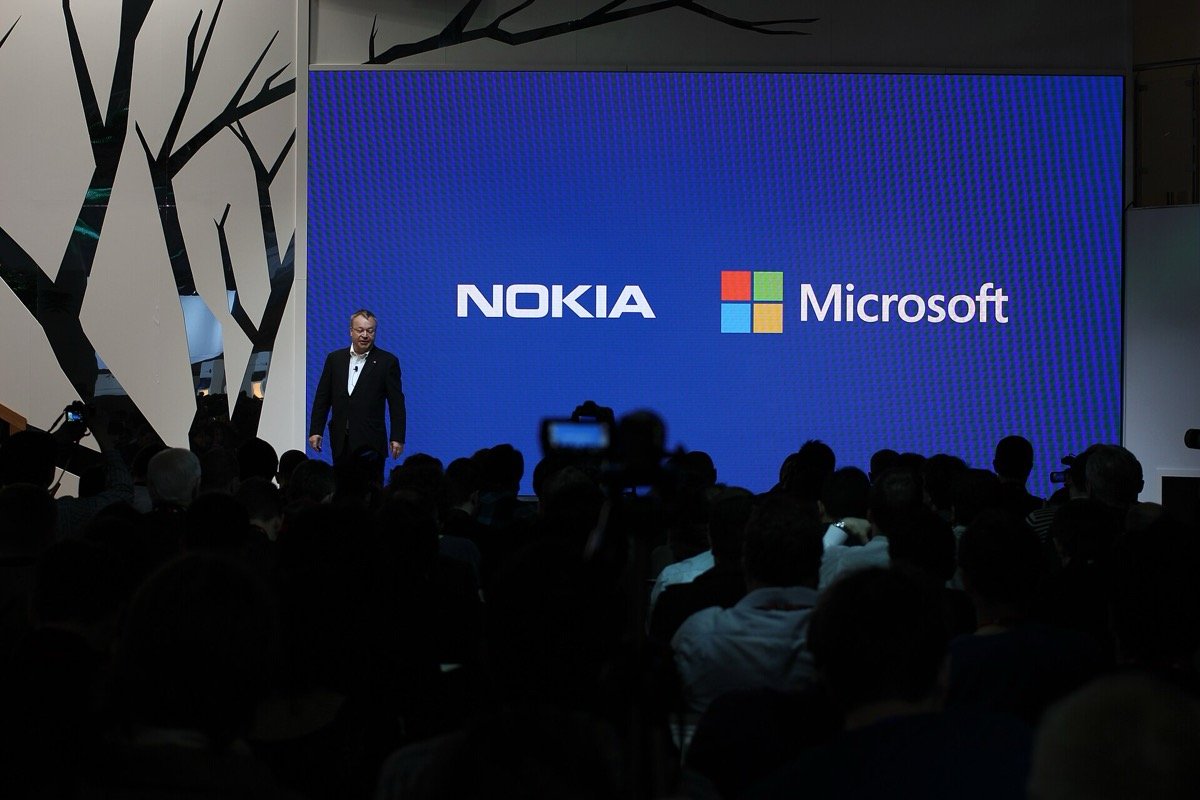
Nokia sells the phones Turning point
Nokia agreed to sell substantially all of its Devices and Services business to Microsoft. The headline EUR 5.44 billion was really two payments: EUR 3.79 billion for the business and EUR 1.65 billion for a 10-year licence to Nokia’s patents. Nokia kept its networks unit, HERE maps and the patents themselves. Elop stepped aside as CEO to lead the unit into Microsoft; Risto Siilasmaa became interim CEO.
Betting on networks instead Platform
Two months before the phone sale, Nokia agreed to buy Siemens’ half of Nokia Siemens Networks for EUR 1.7 billion. It is easy to miss in the story of the fall, but it is the hinge of what came next: Nokia was taking full ownership of the business that would become its future while preparing to sell the one that had defined its past.
2013
Symbian is gone, Lumia is not enough Phones
Nokia sold a record 7.4 million Lumia phones in the quarter, up from 5.6 million in Q1, and Symbian volumes were close to zero. The transition was complete, but the replacement was small: in the same quarter Apple sold 31.2 million iPhones and Samsung sold far more Android phones. Lumia peaked at 8.8 million in Q3 2013.
2012
Samsung takes the crown Turning point
In the first quarter of 2012 Samsung overtook Nokia as the world’s biggest seller of mobile phones of all kinds, analysts’ counts showed, ending the lead Nokia had held since 1998. Apple and Samsung had already passed it in smartphones in 2011. By Q3 2012 Nokia shipped just 6.3 million smart devices, down 63% in a year, of which 2.9 million were Lumias, as Symbian sales collapsed faster than Lumia grew.
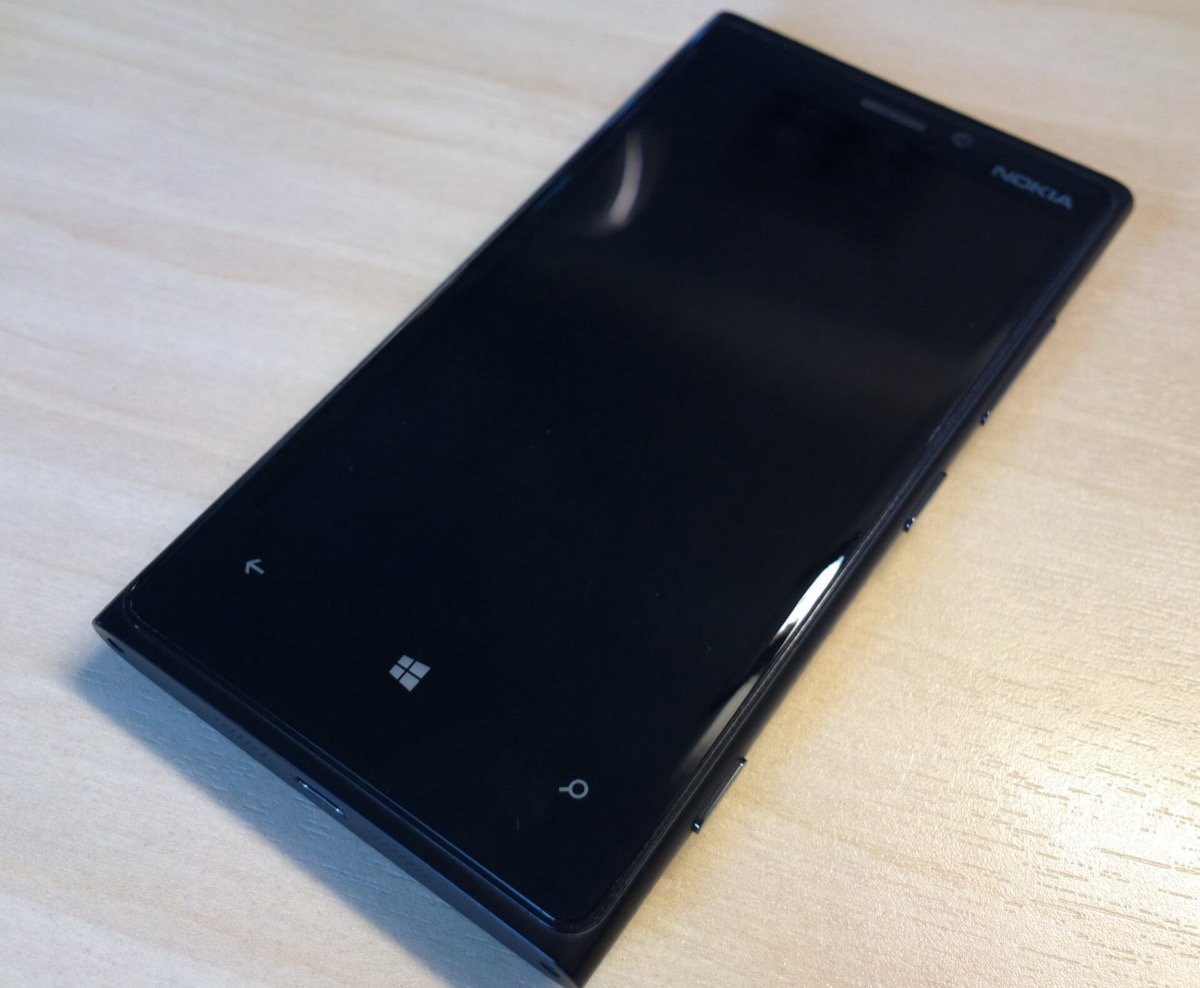
The Lumia 920 shows what Nokia could still do Phones
The Lumia 920 had optical image stabilisation, a high-brightness display and built-in wireless charging, and reviewers praised its camera and build. It ran Windows Phone 8, whose store Nokia said passed 125,000 apps by the end of 2012, up from about 50,000 a year earlier. That was progress, but iOS and Android each had several hundred thousand apps, and developers built for them first.
The first Lumia arrives Phones
Eight months after the Microsoft deal, Nokia unveiled the Lumia 800 and 710 at Nokia World in London. Earlier in 2011 it had launched the N9, a well-reviewed phone on its own MeeGo software, and then declined to continue the platform. Symbian development was handed to Accenture. For most of 2011 Nokia had a fading platform, a cancelled one and an unproven one.
The burning platform Turning point
Stephen Elop’s internal memo told staff Nokia was standing on a ‘burning platform’ and had to jump. On 11 February 2011 Nokia announced that Windows Phone would be its primary smartphone platform, with Microsoft’s Bing, Office and Xbox services and Nokia’s maps feeding the new phones. Nokia’s shares fell about 14% that day. Symbian was declared a ‘franchise platform’ to be run down.
An outsider in charge Turning point
Nokia’s board replaced Olli-Pekka Kallasvuo with Stephen Elop, head of Microsoft’s business division and the company’s first non-Finnish CEO. The same month Nokia shipped the N8, its first Symbian^3 touchscreen flagship, which had good hardware and a much-criticised software experience.
Android’s breakout year Platform
Gartner counted 67.2 million Android smartphones sold in 2010, up from 6.8 million in 2009, a jump from 3.9% to 22.7% of the market. Symbian still led with 111.6 million units, but its share had fallen from 46.9% to 37.6%. Android’s advantage was structural: Google did not need to build every phone, so Samsung, HTC, LG, Motorola and dozens of others all grew its user base at once.
Still huge, but slipping Phones
Nokia still sold about one in three mobile phones on Earth. When it redrew its market definition to count more phones from new low-cost entrants, it put its 2009 volume share at 34%, against 38% on the old measure. The headline share hid the problem: the profits and attention in the industry were moving to smartphones, where its share was falling.
Nokia buys Symbian; Android arrives Platform
Nokia completed its purchase of the Symbian Ltd shares it did not already own, aiming to give the software to a non-profit Symbian Foundation and make it open source. Two months earlier the first commercial Android phone, the HTC-built T-Mobile G1, had gone on sale in the US. Nokia’s first touchscreen Symbian phone, the 5800 XpressMusic, was announced the same autumn.
The peak Phones
Nokia shipped 468 million mobile devices in 2008 and estimated its global market share at about 39%. It led in almost every region, including India, where models such as the 1100 and 1110 were near-ubiquitous. Few companies have ever dominated a mass consumer market as completely.
Record year, and the iPhone Turning point
Nokia reported record 2007 net sales of EUR 51.1 billion and operating profit of about EUR 8.0 billion, and launched Ovi, its internet-services brand, with a music store, maps and N-Gage games. In January Apple had announced the iPhone, which went on sale in the US on 29 June 2007. It sold few units at first, but it changed what a smartphone meant: a large touchscreen, a real web browser and, from 2008, an app store open to outside developers.
2007
The phone as a computer Phones
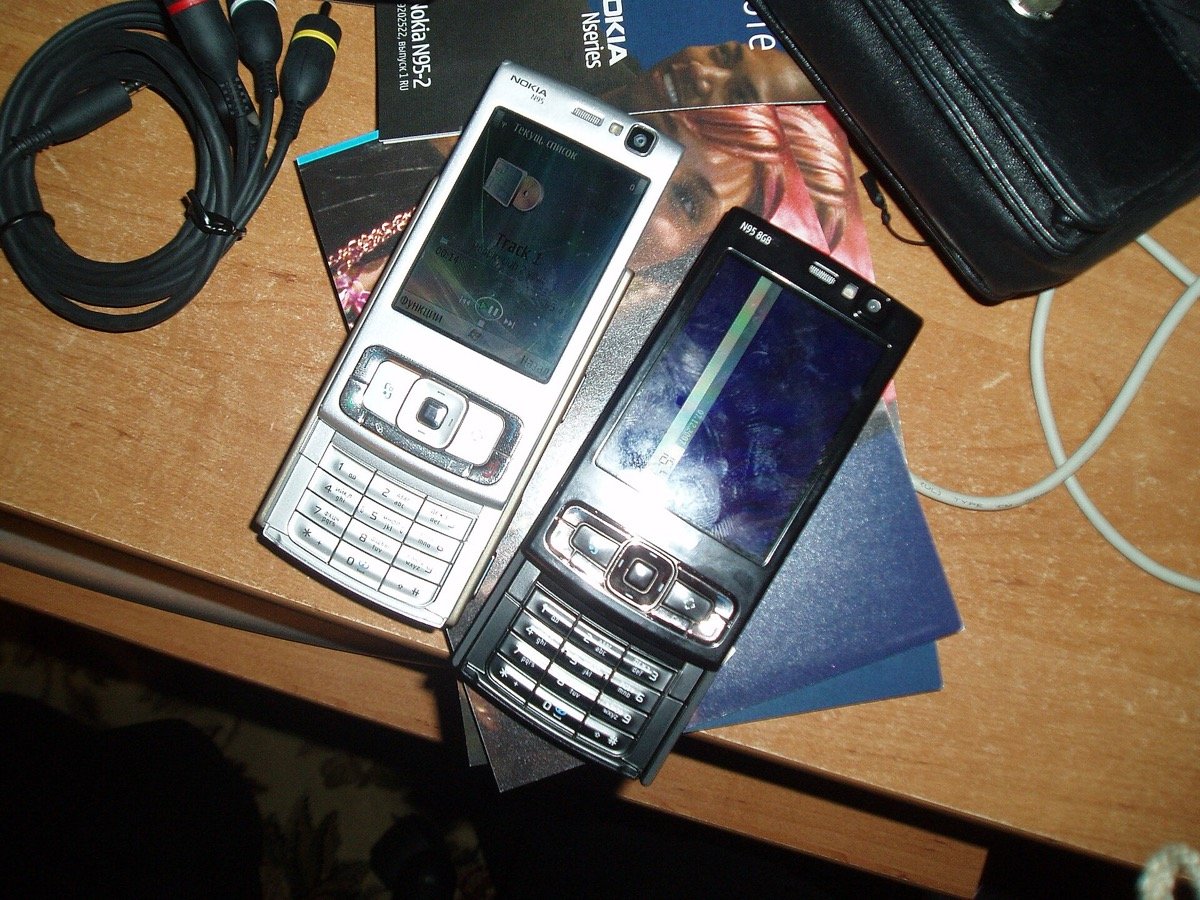
Nokia was not blind to convergence. Its Nseries phones, led by the N95 (announced September 2006, on sale in 2007), combined GPS navigation, a 5-megapixel camera, music, web browsing and 3G in one device. They ran Symbian S60 with physical keys and small screens, built for a world in which the operator, not an app store, decided what went on the phone.
Number one Phones
Nokia passed Motorola to become the world’s largest mobile-phone maker, a position it would hold for 14 years. Its formula was design, manufacturing scale, network know-how, global distribution and a trusted brand. In India, Nokia had already supplied the GSM network used for the country’s first mobile call on 31 July 1995.
All in on mobile Turning point
New CEO Jorma Ollila decided to focus the conglomerate on telecoms and sell its rubber, cable, TV and paper businesses. That November Nokia launched the 1011, the first mass-produced GSM handset. Within six years the company was the industry leader.
A pulp mill in Tampere Turning point
Mining engineer Fredrik Idestam set up a wood-pulp mill in Tampere, then a second near the town of Nokia, which gave the company its name. Over the next century it merged with rubber and cable makers and moved into electronics. Reinvention was in Nokia’s history long before it needed one in 2013.
The Year the Platform War Turned
Smartphone operating systems, share of sales.
Lumia: Growing, but Not Fast Enough
It is February 2011. You are Nokia’s CEO. Pick a strategy.
Symbian still leads global smartphone sales, but its share is falling fast. Android grew almost tenfold last year. Your board wants a decision this week.
The real Nokia problem wasn’t choosing one option. It was having very little time to make the right one.
Where did Nokia’s flywheel slow down?
Each stage feeds the next. Tap the stage where you think Nokia stalled.
Why Nokia Fell: Seven Problems Stacked Together
There was no single mistake. Each of these made the next one worse.
Symbian’s limits
Built for keypads and small screens, and hard for outside developers to write for. Modernising it for touch took years Nokia did not have.
Too big to turn fast
Competing internal platforms (S40, Symbian, Maemo/MeeGo) and a huge feature-phone business pulled engineering in different directions.
Developers followed users
App makers built for iOS and Android first. Fewer apps meant fewer buyers, which meant fewer developers: a flywheel running in reverse.
Android’s open model
Google did not need to build every phone. Samsung, HTC, LG, Motorola and Chinese makers all expanded Android’s base at once.
The Microsoft bet came late
By 2011 Apple and Android had momentum. Windows Phone started small and never escaped low single digits of global share.
The Osborne gap
Announcing Symbian’s end in February 2011, months before the first Lumia, gave buyers and operators a reason to stop buying Nokia smartphones.
Pressed from both ends
The iPhone took the premium end; cheap Android phones took the middle and, later, the feature-phone buyers Nokia relied on in India, Africa and China.
Too good at the old game
Hardware, scale, carrier relationships and manufacturing efficiency made Nokia No. 1, and mattered less once software decided the experience.
The Three-Way Battle
Control everything
Hardware, software, services and the App Store under one company. Result: the premium ecosystem and most of the industry’s profit.
Open the platform
Android free to manufacturers, Google services on top. Result: the mass-market ecosystem, roughly three in four smartphones today.
Control the device
Hardware first, with Symbian and then Windows Phone. Result: excellent phones without an ecosystem big enough to keep them.
What Nokia Got Right
A fair account of Nokia’s fall has to include what it saw early. It understood convergence: the N95 put navigation, a good camera, music and the web in one pocket device in 2007. It understood services, launching Ovi the same year. It invested in maps, buying Navteq in 2008, and HERE later sold for EUR 2.8 billion. It pushed mobile imaging further than anyone, from the PureView 808 to the Lumia 1020. And it kept the engineering base, in radio networks and patents, that let it survive as a company when its phone business did not.
The problem was strategic alignment, not talent. Nokia innovated inside the old definition of the mobile phone, while Apple and Google redefined the product.
What If Nokia Had Chosen Android?
It is the great counterfactual. Android in 2011 would have given Nokia Google’s services, a large and fast-growing app store, and no dependence on Microsoft’s roadmap. Its hardware, distribution and brand might have made it a strong Android maker, perhaps the strongest.
But it would have entered a field Samsung, HTC, LG and Motorola already crowded, competing on hardware and price while Google owned the ecosystem. Several of those makers later shrank or quit phones themselves. Android might have saved Nokia’s phone business; it might only have delayed the end. That is a counterfactual, not a historical fact.
The Shift, Era by Era
| Era | What won | Nokia’s position |
|---|---|---|
| 1990s | Hardware, GSM know-how, distribution | No. 1 from 1998 |
| 2000-2006 | Feature phones, early smartphones | Dominant; Symbian leads smartphones |
| 2007 | iPhone resets expectations | Record sales and profit |
| 2008-2010 | Android opens the platform to every maker | Symbian share falls 46.9% to 37.6% |
| 2011 | Ecosystems: apps, developers, services | Switches to Windows Phone |
| 2012-2013 | Scale of iOS and Android | Lumia grows, total sales fall |
| 2014 | Platform owners | Phone business sold to Microsoft |
| 2026 | AI data-centre networking | Network-equipment maker; AI and cloud sales +105% |
Nokia’s Second Life: Behind the Screen
When the phone business left, Nokia kept three things: Nokia Networks, the telecom-equipment unit it had just taken full control of from Siemens; HERE maps; and Nokia Technologies, its patent and licensing arm. It sold HERE in 2015, bought Alcatel-Lucent in 2016 and Infinera in 2025. Its patents are still licensed by most of the phone industry, which means Nokia earns money from smartphones without making them.
In India, Nokia supplied the GSM network for the country’s first mobile call in 1995 and is now a major supplier of 4G and 5G radio equipment to Indian operators. In 2026 its fastest-growing customers are not telecom operators at all, but the AI and cloud companies building data centres, which buy its optical and IP networking gear. The Nokia logo has largely left people’s pockets. It has not left the network those pockets connect to.
The Numbers Behind the Fall
Each figure with what it measures and where it comes from.
| Figure | What it measures | Source |
|---|---|---|
| EUR 51.1bn / EUR 8.0bn | Nokia net sales / operating profit, 2007 | Nokia annual results |
| 468m / ~39% | Devices shipped / estimated global share, 2008 | Nokia 2008 results |
| 34% (38% old basis) | Global device volume share, 2009 | Nokia, revised market definition, 2010 |
| 3.9% to 22.7% | Android share of smartphone sales, 2009 to 2010 | Gartner, Feb 2011 |
| 6.3m / 2.9m | Smart devices / Lumia shipped, Q3 2012 | Nokia Q3 2012 report |
| 7.4m | Lumia shipped, Q2 2013 (Symbian near zero) | Nokia Q2 2013 report |
| EUR 3.79bn + EUR 1.65bn | Business sale + patent licence, Sep 2013 | Microsoft 8-K |
| USD 9.4bn | Microsoft’s booked purchase price, incl. USD 1.5bn cash acquired | Microsoft 10-Q, 2014 |
| USD 7.6bn | Microsoft write-down, July 2015 | Microsoft, July 2015 |
| EUR 4.82bn | Nokia net sales, Q2 2026 | Nokia Q2 2026 report |
Corrections and Clarifications
Claims in the earlier draft of this page and in the brief it was built from, checked against company filings and contemporary reporting.
“Sold Devices & Services for EUR 5.44 billion”
The EUR 5.44 billion included EUR 1.65 billion for a 10-year patent licence. The business itself was EUR 3.79 billion, and Nokia kept the patents.
“Microsoft paid USD 9.4-9.5 billion”
Microsoft booked USD 9.4 billion, but that included USD 1.5 billion of cash it acquired and a USD 2.1 billion non-cash note repurchase. The cash paid was about USD 7.1 billion.
“Android 8% at end-2009, 27% at end-2010, per a Nokia presentation”
We could not find that slide. We use Gartner’s full-year figures instead: 3.9% in 2009 and 22.7% in 2010.
“HERE survived as one of Nokia’s businesses”
True in 2014, but Nokia sold HERE to Audi, BMW and Daimler in 2015 for about EUR 2.8 billion.
“HMD Global is Nokia’s brand licensee”
HMD’s 10-year licence from 2016 was due to end in 2026, and it had already moved its smartphones to the HMD brand. Reports say the feature-phone licence was extended.
“34% share in 2009”
Correct only under Nokia’s revised 2010 market definition, which counted more low-cost entrants. On the definition used at the time it was 38%.
What the brief skipped
Elop’s appointment (2010), Samsung overtaking Nokia (2012), the NSN buyout (2013), Microsoft’s 2014-15 job cuts and write-down, Alcatel-Lucent’s completion, Infinera, Nvidia’s stake, and the 2026 FWA sale and China exit. We added them.
“Android would have saved Nokia”
Presented here as a counterfactual only. There is no way to test it.
Explore More Timelines
People Also Ask
Frequently Asked Questions
The Real Lesson
Nokia didn’t lose because it forgot how to make phones. It lost because the phone stopped being the product. The product became the ecosystem: the operating system, the app store, the developers and the services that come with a phone. By the time Nokia committed fully to that shift, Apple and Google already had their flywheels turning.
The company that owned the phone revolution discovered that owning the phone was no longer enough. Twelve years after selling its handsets, it is selling the networks behind them, to the AI companies now changing the rules of another industry.
Related AiTimeline Stories
⚠️ Editorial Note
Last updated 7 October 2026. Nokia financial and volume figures are from Nokia’s annual and quarterly reports; deal terms from Microsoft’s SEC filings (8-K, September 2013; 10-Q, 2014); smartphone share from Gartner (February 2011); Lumia volumes from Nokia’s reports as covered by Engadget and others; 2025-26 events from Nokia, Inseego and trade press. The Android counterfactual is analysis, not fact. AiTimeline has no commercial relationship with Nokia, HMD, Microsoft, Apple or Google.
Sources & further reading
Every dated entry above was checked against these references. Last reviewed 7 October 2026.
- Microsoft 8-K (3 Sep 2013): Microsoft to acquire Nokia's Devices & Services business, EUR 3.79bn + EUR 1.65bn patent licence
- Microsoft Form 10-Q (2014): Nokia Devices and Services acquisition, USD 9.4bn total purchase price
- THE Journal: Gartner 2010 smartphone sales, Android 22.7%, Symbian 37.6% (Feb 2011)
- Engadget: Nokia Q2 2013, Lumia sales up to 7.4 million
- TechCrunch: Microsoft writes down USD 7.6bn of its Nokia acquisition, 7,800 layoffs (Jul 2015)
- Light Reading: Nvidia takes USD 1bn stake in Nokia (Oct 2025)
- Nokia: Corporation report for Q2 and half year 2026
- Nokia: Inseego completes acquisition of Nokia's fixed wireless access business (1 Oct 2026)