Nana Patekar: Tracing the Life and Legacy of a Cinematic Icon
Nana Patekar, who died on 8 October 2026 aged 75: from theatre and Gaman to Parinda, Krantiveer, Welcome and Natsamrat, with every award, role and date.
Latest Story
Nana Patekar, who died in Goa on 8 October 2026 aged 75, never looked like a Bollywood star and never tried to. A Marathi stage actor who started in films with Gaman in 1978, he won three National Film Awards in seven years, directed one film, went to Kashmir during the Kargil conflict, played a gangster so funny he became a meme, and in his sixties returned to the theatre role he was born for. This page follows his life film by film, with every role, award and date checked against contemporary reports, and records the controversy his obituaries could not leave out.
💡 Short Answer
Nana Patekar (born Vishwanath Patekar, 1 January 1951, Murud-Janjira) was a Hindi and Marathi actor, writer and director. After Marathi theatre and a debut in Gaman (1978), he won National Awards for Parinda (1989), Krantiveer (1994) and Agni Sakshi (1996), directed Prahaar (1991), and starred in Ab Tak Chhappan, Welcome and Natsamrat. He received the Padma Shri in 2013 and died of cardiac arrest in Goa on 8 October 2026.
Nana Patekar: Key Questions
Nana Patekar in Ten Points
- Origins: born Vishwanath Patekar on the Konkan coast in 1951; trained at the Sir J. J. Institute of Applied Art.
- Theatre first: Marathi stage work shaped his pauses, timing and voice.
- Debut: Gaman (1978), then a decade of supporting parts.
- Breakthrough: Anna Seth in Parinda (1989), his first National Award.
- Peak: Krantiveer (1994), National Award for Best Actor, and Agni Sakshi (1996), a third.
- Director: wrote, directed and starred in Prahaar (1991).
- Army link: trained with the Maratha Light Infantry; went to Kashmir during Kargil in 1999.
- Reinvention: encounter cop in Ab Tak Chhappan (2004), comic don in Welcome (2007).
- Back to the stage: Natsamrat (2016); Padma Shri 2013; Naam Foundation 2015.
- The end: died 8 October 2026 in Goa; a 2018 harassment allegation he denied was closed by a court in 2025 on time-limit grounds.
The Actor Who Never Needed to Look Like a Hero
Hindi cinema’s leading men were meant to be tall, fair, young and romantic. Nana Patekar was none of those things, and it did not matter. What audiences remember is a pause, a stare, a voice that drops to almost nothing and then explodes, and then silence again. For nearly five decades he played gangsters, policemen, soldiers, politicians, fathers, comedians and broken old men, and almost every one of them carried the same unsettling sense that anything could happen next.
He was a hero, a villain, a character actor, a director, a writer, a comedian and a theatre artist. Asked what he was, he usually gave the simplest answer: an actor.
Nana Patekar: The Life Timeline at a Glance
| Year | Milestone | Why it mattered |
|---|---|---|
| 1951 | Born Vishwanath Patekar, Murud-Janjira | Konkan-coast Marathi family |
| 1970s | Marathi theatre | Where his timing and voice were built |
| 1978 | Gaman | First film |
| 1988 | Salaam Bombay! | Oscar-nominated film, international notice |
| 1989 | Parinda | First National Award |
| 1991 | Prahaar | Writer-director debut; army training |
| 1994 | Krantiveer | National Award, Best Actor |
| 1996 | Agni Sakshi | Third National Award |
| 1999 | Kargil | Time with army units in Kashmir |
| 2004 | Ab Tak Chhappan | Defining police role |
| 2007 | Welcome | Comic reinvention |
| 2013 | Padma Shri | Presented 20 April |
| 2015 | Naam Foundation | Drought relief with Makarand Anaspure |
| 2016 | Natsamrat | Landmark Marathi role |
| 2018 | #MeToo allegation | Denied; complaint closed 2025 on time-limit grounds |
| 2026 | Dies, 8 October, aged 75 | State funeral near Pune |
Pick a film to see who he became, what to watch for, and what it won him.
The same actor, five men who have nothing in common.
Choose a film above
1951–1978: Vishwanath Becomes Nana
Vishwanath Patekar was born on 1 January 1951 in Murud-Janjira, a fishing town beside the sea fort of the same name in present-day Raigad district. His family’s fortunes collapsed when he was young, and he has described working odd jobs, painting signs and film posters, while still at school. He went on to study at the Sir J. J. Institute of Applied Art in Mumbai.
Art school led to the stage rather than the studio. Through the 1970s he worked in Marathi experimental and commercial theatre, where there are no retakes and no close-ups to rescue a weak moment. That discipline showed for the rest of his life: his dialogue sounded less like recitation and more like a man thinking aloud, and his characters could go quiet, erupt, and go quiet again in a single scene.
His film debut came with Muzaffar Ali’s Gaman in 1978, a drama about a migrant from Uttar Pradesh driving a taxi in Bombay. It was not a star launch, and he spent the next decade in supporting roles in Hindi and Marathi films, including Maaficha Sakshidar (1986), while staying on the stage.
1988–1989: Salaam Bombay! and Parinda
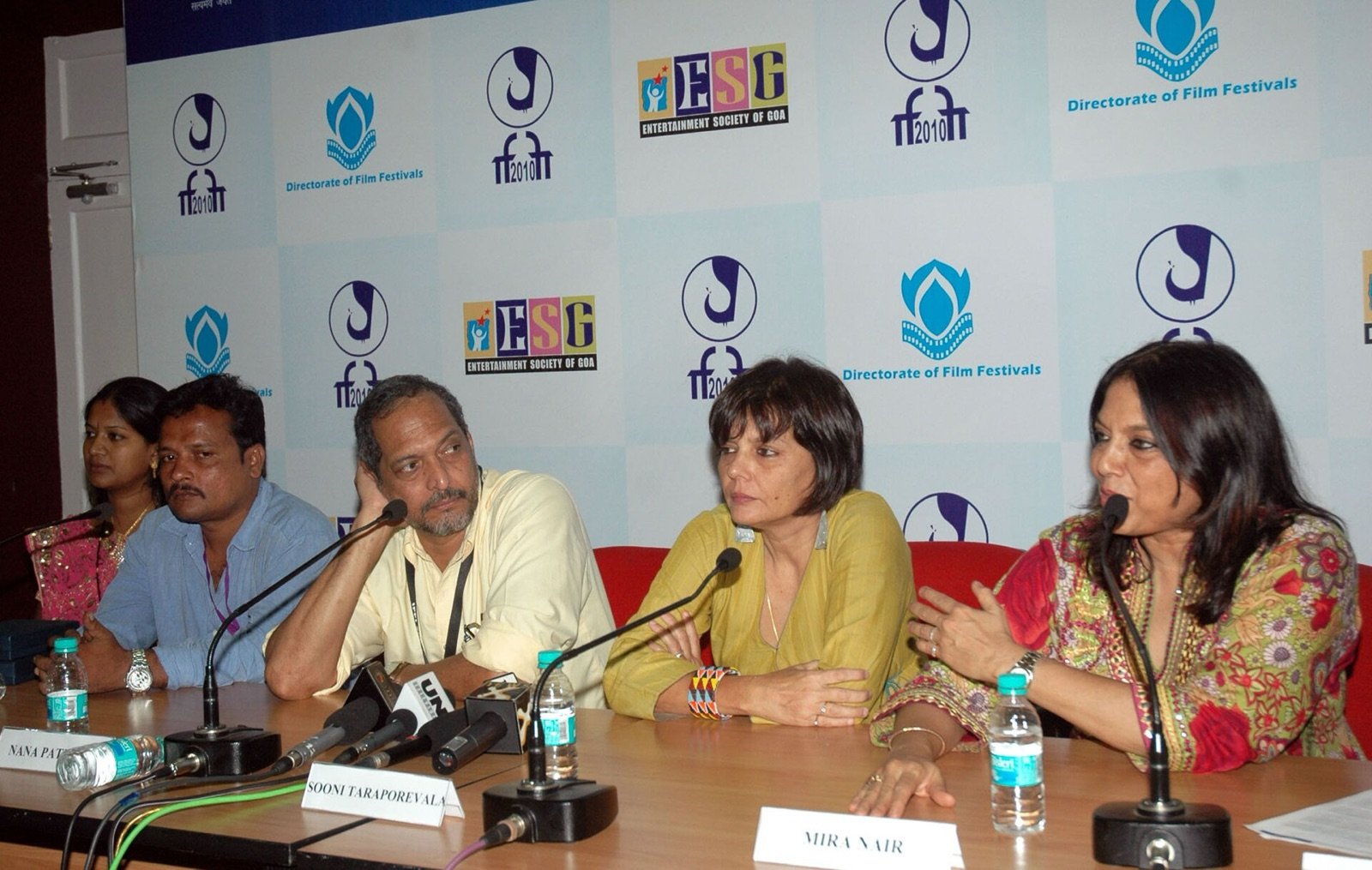
Mira Nair’s Salaam Bombay! (1988), about children living on the streets of Bombay, cast him as Baba, a pimp and drug dealer. The film was nominated for the Academy Award for Best Foreign Language Film and brought his face to festival audiences abroad.
A year later Vidhu Vinod Chopra’s Parinda changed his career. He played Anna Seth, an underworld boss whose fear of fire comes from watching his wife burn. Hindi film villains of the period announced themselves with laughs and threats; Anna barely raised his voice, and was frightening because he seemed real. The role won him the National Film Award for Best Supporting Actor and the Filmfare Award in the same category, and when Prime Minister Narendra Modi paid tribute in 2026, his line that “like a bird, he soared freely across the skies of cinema” was a nod to the film’s title.
1991–1996: Director, Rebel, Three National Awards
In 1991 he wrote and directed Prahaar: The Final Attack and played its lead, Major Pratap Chauhan, a commando instructor who returns to civilian life and finds it more corrupt than any battlefield. To prepare he trained with the Maratha Light Infantry, the beginning of a long association with the army. It remained the only film he directed.
Angaar (1992) brought a Filmfare Best Villain award. Then came Krantiveer (1994), Mehul Kumar’s film about Pratap Narayan Tilak, a wastrel who turns into a furious public voice against corruption and communal violence. Loud, angry and political, it became his biggest success as a lead and won him the National Film Award for Best Actor and the Filmfare Best Actor award.
In 1996 Agni Sakshi cast him as Vishwanath, an obsessive and abusive husband whose control slowly suffocates his wife. It earned his third National Award, again Best Supporting Actor. The same year he played a deaf father in Sanjay Leela Bhansali’s debut, Khamoshi: The Musical. Three National Awards in seven years, for a gangster, a rebel and a domestic abuser, is the clearest measure of his range.
The Patekar Formula
There was no official method, but his best performances share a rhythm.
Start quiet
Let the scene come to him. Many of his strongest moments begin almost inaudibly.
Let the character absorb
Eyes and stillness do the work while others talk.
Tighten the tension
A conversation becomes a confrontation, line by line.
Explode
The famous outbursts, fast, rhythmic and rough, never polished.
Return to stillness
The scene ends on a look, not a line. That unpredictability is what imitators miss.
Vulnerability
Behind most of the anger is pain, which is why audiences sided with men they should have feared.
1999: The Actor Goes to Kargil
In 1999, near the peak of his fame, Patekar put films aside during the Kargil conflict. Drawing on the Territorial Army association that followed his Prahaar training, he sought permission from the Defence Ministry, then led by George Fernandes, and went to Kashmir in August 1999. By his own account and later reporting he spent more than two weeks with army units, working at a base hospital and travelling with a quick-reaction team in areas including Kupwara and Dras. He later said he left weighing about 20 kg less than when he arrived.
The army stayed part of his public identity. He played soldiers and policemen through his career, spoke often about jawans and their families, and his ties to the forces were the first thing Maharashtra Chief Minister Devendra Fadnavis mentioned in 2026, calling him “a patriot and a social worker”.
2004–2010: The Cop, the Kidnapper, the Comedian, the Strategist
Ab Tak Chhappan (2004), directed by Shimit Amin for Ram Gopal Varma’s company, gave him Sadhu Agashe, a Mumbai encounter specialist with 56 killings. Agashe is efficient, cold, loyal to his men and completely at ease with what he does, and Patekar plays him without a single heroic flourish. Many critics rank it alongside Parinda as his finest screen work. A year later Prakash Jha’s Apaharan cast him as Tabrez Alam, a politician running a kidnapping trade in Bihar, and brought his second Filmfare Best Villain award.
Then the surprise. In Anees Bazmee’s Welcome (2007) he played Uday Shetty, a Dubai don desperate to marry his sister into a respectable family. The comedy worked because he did not change: the stare, the voice and the deadly seriousness were all still there, only now they produced laughter. The film was one of the year’s biggest hits, and a decade later “Control Uday, control” and his reaction shots became staples of Indian meme pages, introducing him to viewers born after Parinda.
In Prakash Jha’s Raajneeti (2010), a political drama that loosely reworks the Mahabharata, he played Brij Gopal, the calm adviser who steers Ranbir Kapoor’s character through a family war. Brij Gopal is the film’s Krishna, and Patekar plays him almost entirely in a low voice.
Every Landmark Role
| Film | Year | Character | Director |
|---|---|---|---|
| Gaman | 1978 | Debut role | Muzaffar Ali |
| Salaam Bombay! | 1988 | Baba | Mira Nair |
| Parinda | 1989 | Anna Seth | Vidhu Vinod Chopra |
| Prahaar | 1991 | Maj. Pratap Chauhan | Nana Patekar |
| Angaar | 1992 | Jahangir Khan | Shashilal K. Nair |
| Krantiveer | 1994 | Pratap Narayan Tilak | Mehul Kumar |
| Agni Sakshi | 1996 | Vishwanath | Partho Ghosh |
| Khamoshi: The Musical | 1996 | Joseph Braganza | Sanjay Leela Bhansali |
| Ab Tak Chhappan | 2004 | Sadhu Agashe | Shimit Amin |
| Apaharan | 2005 | Tabrez Alam | Prakash Jha |
| Taxi No. 9211 | 2006 | Raghav Shastri | Milan Luthria |
| Welcome | 2007 | Uday Shetty | Anees Bazmee |
| Raajneeti | 2010 | Brij Gopal | Prakash Jha |
| Natsamrat | 2016 | Ganpatrao Belwalkar | Mahesh Manjrekar |
| Kaala | 2018 | Hari Dada | Pa. Ranjith |
| The Vaccine War | 2023 | Dr Balram Bhargava | Vivek Agnihotri |
| O’Romeo | 2026 | Ismail Khan | Vishal Bhardwaj |
2013–2016: Padma Shri, Naam and Natsamrat
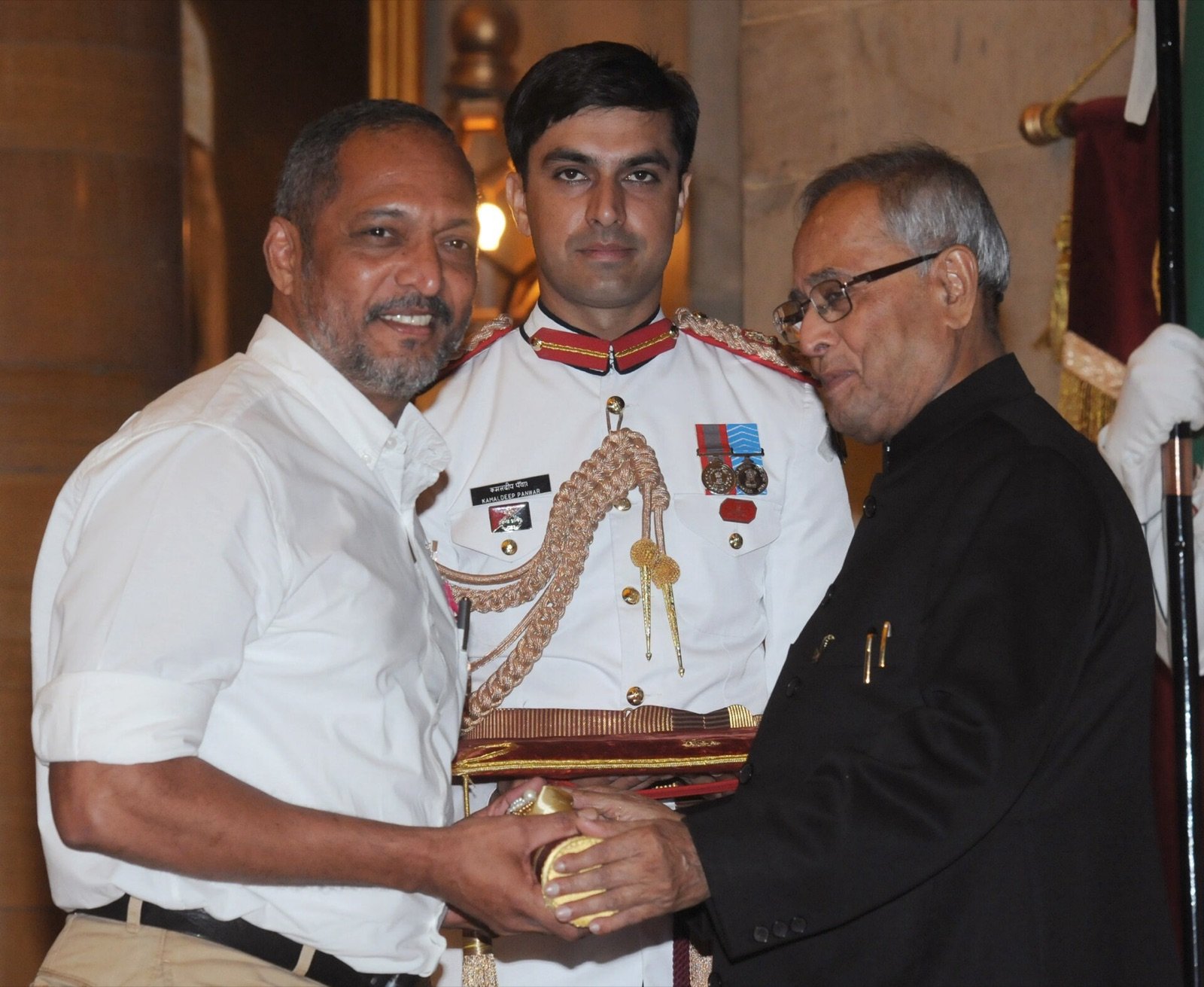
On 20 April 2013 President Pranab Mukherjee presented him the Padma Shri at Rashtrapati Bhavan. He also received Maharashtra’s Raj Kapoor award and, according to biographical accounts, gave the prize money to drought relief.
Drought became his cause. In September 2015 he and Marathi actor Makarand Anaspure founded the Naam Foundation, which began by handing money directly to the families of farmers in Marathwada and Vidarbha who had died by suicide and then moved into river desilting and water-storage work funded by public donations.
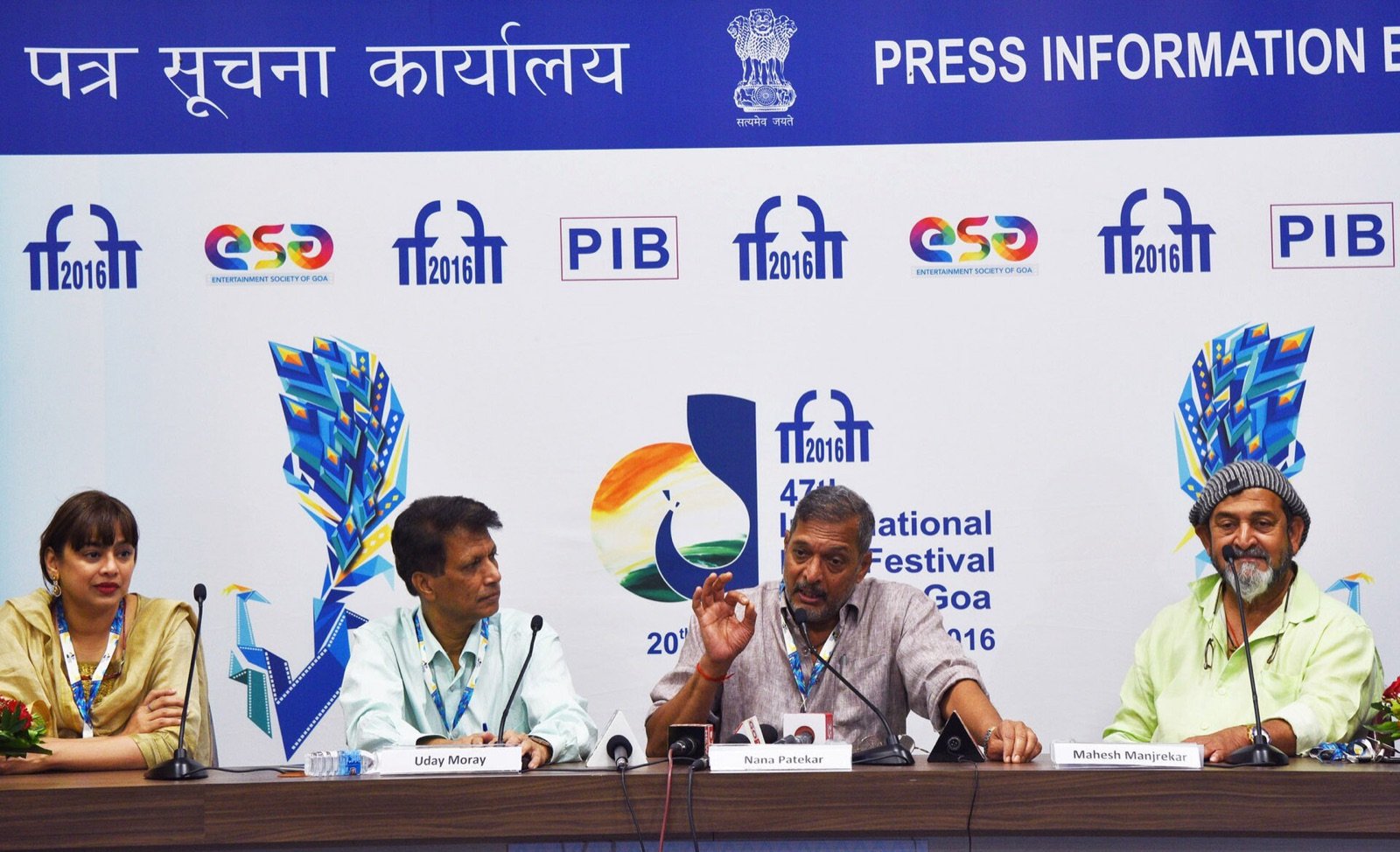
In January 2016 came Natsamrat, Mahesh Manjrekar’s film of V. V. Shirwadkar’s 1970 Marathi play. Patekar played Ganpatrao Belwalkar, a retired stage legend famous for Shakespeare in Marathi, who divides his wealth among his children and is gradually pushed out of their homes. It drew on everything he had: theatre, poetry, rage, age and memory. The film was one of the biggest Marathi hits of its time and won him Filmfare Marathi Best Actor, two years after he had won the same award for playing the doctor Prakash Amte.
The Awards Cabinet
He was recognised not for one type of role but for repeatedly changing type.
| Award | Film / year | Category |
|---|---|---|
| National Film Award | Parinda (1989) | Best Supporting Actor |
| National Film Award | Krantiveer (1994) | Best Actor |
| National Film Award | Agni Sakshi (1996) | Best Supporting Actor |
| Filmfare | Parinda | Best Supporting Actor |
| Filmfare | Angaar (1992) | Best Villain |
| Filmfare | Krantiveer | Best Actor |
| Filmfare | Apaharan (2005) | Best Villain |
| Filmfare Marathi | Dr. Prakash Baba Amte (2014) | Best Actor |
| Filmfare Marathi | Natsamrat (2016) | Best Actor |
| Padma Shri | 2013 | Arts |
2018: The Allegation
In September 2018, at the start of India’s #MeToo wave, actor Tanushree Dutta accused Patekar of harassing her during a song shoot for Horn ‘Ok’ Pleassss in 2008. He denied the allegation and sent her a legal notice. An FIR was registered at Oshiwara police station in October 2018; in June 2019 Mumbai police filed a B-summary report saying they had found no evidence to prosecute. In March 2025 a magistrate’s court declined to take cognisance of the complaint because it was filed about ten years after the alleged incident, beyond the legal limit, and said it therefore could not rule on the merits. The allegation was never tested at trial, and it is part of his public record.
2018–2026: The Last Chapter
His later films ranged widely: the soft-spoken villain Hari Dada opposite Rajinikanth in Pa. Ranjith’s Tamil film Kaala (2018); ICMR director-general Balram Bhargava in The Vaccine War (2023); an abandoned father with dementia in Vanvaas and a widower in the Marathi comedy Ole Aale (both 2024); the ensemble comedy Housefull 5 (2025); and intelligence officer Ismail Khan in Vishal Bhardwaj’s O’Romeo, released on 13 February 2026. He spent his last years largely in Goa.
8 October 2026: The Final Curtain
According to Outlook, Patekar messaged a friend at about 2:30 am on Thursday 8 October that he felt unwell. The friend found him sweating and losing consciousness at around 4 am, and he was taken to Manipal Hospital in Goa. Doctors tried to revive him for about 45 minutes; he was declared dead at around 5:30 am. The cause was reported as cardiac arrest. His body was taken to Goa Medical College for a post-mortem before being moved to Maharashtra.
Maharashtra Cultural Affairs Minister Ashish Shelar announced a state funeral, and the last rites were set for that afternoon at his farmhouse in Donaje village near Pune. Prime Minister Narendra Modi said few actors “possessed the intensity, individuality and unmistakable presence” he had. Defence Minister Rajnath Singh called it an irreparable loss; Akshay Kumar called it “the end of an era in Indian cinema”; Jr NTR spoke of “an unmistakable honesty and intensity in every character”. He is survived by his son, Malhar.
Nana Patekar: The Full Timeline, 1951–2026
Newest first. Tags mark awards, milestones, his directing credit and the 2018 allegation.
2026
The final curtain 2026
Patekar falls ill in the early hours at his home in Dona Paula, Goa; Outlook reports he messaged a friend at about 2:30 am that he felt unwell. He is taken to Manipal Hospital and declared dead at about 5:30 am after roughly 45 minutes of resuscitation. The reported cause is cardiac arrest. His son Malhar confirms the death.
Maharashtra announces full state honours, with cremation at his farmhouse in Donaje village near Pune, as he wished. Prime Minister Narendra Modi says few actors had his “intensity, individuality and unmistakable presence”; Defence Minister Rajnath Singh calls it an irreparable loss; Akshay Kumar calls it the end of an era.
2026
O’Romeo, the last major release
In Bhardwaj’s 1995-set Bombay gangster drama he plays Ismail Khan, an intelligence officer running a hitman as a covert asset. The film opens on Valentine’s weekend to mixed reviews and weak box office, but his scenes are among the most praised.
2025
Late-career range
He plays ICMR director-general Dr Balram Bhargava in The Vaccine War (2023), a widowed father in the Marathi comedy Ole Aale and an abandoned father with dementia in Vanvaas (both 2024), then rejoins Akshay Kumar for the ensemble comedy Housefull 5 (2025).
Court closes the 2018 complaint Allegation
A Mumbai magistrate declines to take cognisance of Tanushree Dutta’s 2018 complaint because it was filed about a decade after the alleged 2008 incident, beyond the legal time limit, and no application to condone the delay was made. The court says it therefore cannot examine the police B-summary on its merits either.
2018
The #MeToo allegation Allegation
Actor Tanushree Dutta alleges that Patekar harassed her during a song shoot for Horn ‘Ok’ Pleassss in 2008. He denies it and sends a legal notice. An FIR is registered in October 2018; in June 2019 Mumbai police file a B-summary report saying they found no evidence to prosecute. He steps away from Housefull 4 during the controversy.
Kaala, opposite Rajinikanth
As Hari Dada, a soft-spoken politician scheming to clear Dharavi, he gives the film its villain and reaches a large new audience in the south.
Natsamrat Milestone
Patekar plays the ageing stage titan of V. V. Shirwadkar’s 1970 play, a man who hands his wealth to his children and is pushed out of both their homes. The role, written for the stage and long associated with Marathi theatre greats such as Shriram Lagoo, brings his career back to where it started. The film is one of the highest-grossing Marathi releases of its time and wins him Filmfare Marathi Best Actor.
Naam Foundation
With fellow Marathi actor Makarand Anaspure he starts the Naam Foundation to help drought-hit farmers. The pair first travel through Marathwada handing cheques to families of farmers who had died by suicide, then raise public donations for desilting rivers and water storage.
Dr. Prakash Baba Amte
He plays the doctor and social worker Prakash Amte, who runs the Lok Biradari Prakalp hospital for tribal communities in Hemalkasa. It wins him the Filmfare Marathi award for Best Actor.
2013
Padma Shri Award
Named in the Republic Day 2013 list, he receives the Padma Shri for his contribution to the arts at an investiture ceremony in New Delhi.
Raajneeti
Prakash Jha’s political drama reworks the Mahabharata in a modern Indian state. Patekar’s Brij Gopal, the calm strategist who guides Ranbir Kapoor’s Samar, is the film’s Krishna figure.
Welcome: Uday Shetty Milestone
His don who keeps telling himself “Control Uday, control” makes Welcome one of the biggest hits of 2007. Fifteen years later the character is a fixture of Indian meme culture.
Apaharan Award
As Tabrez Alam, a Bihar politician who runs a kidnapping industry, he wins his second Filmfare Award for Best Villain.
Ab Tak Chhappan Milestone
Patekar plays Sadhu Agashe, a Mumbai encounter specialist with 56 killings to his name, drawn from the real police squads of the 1990s. Low-key and unsentimental, it is often rated his finest screen performance after Parinda.
Kargil
As the Kargil conflict winds down he secures permission to go to Kashmir and spends time with army units, helping at a base hospital and travelling with a quick-reaction team, according to his own and later press accounts. He later said he lost about 20 kg there.
Agni Sakshi and Khamoshi Award
In Agni Sakshi he plays Vishwanath, an obsessive, abusive husband; it brings his third National Award, Best Supporting Actor. The same year he plays Joseph, a deaf father, in Bhansali’s debut Khamoshi: The Musical.
Krantiveer Award
His angry everyman railing against corruption and communal violence becomes his biggest hit as a lead. National Award and Filmfare Award for Best Actor.
Angaar Award
His gangster Jahangir Khan wins him the Filmfare Award for Best Villain.
Prahaar: The Final Attack Director
His only film as director. To make the commando training believable he trains with the Maratha Light Infantry, the start of a lasting tie to the army. Madhuri Dixit appears without make-up in one of her least glamorous roles.
Parinda Award
As the pyrophobic gang boss Anna, he steals a film led by Jackie Shroff and Anil Kapoor. National Award and Filmfare Award for Best Supporting Actor.
Salaam Bombay!
He plays Baba, a pimp and drug dealer, in Mira Nair’s film about Bombay’s street children, which is nominated for the Oscar for Best Foreign Language Film.
Gaman
A small role in Muzaffar Ali’s drama about a migrant taxi driver begins a film career that runs alongside his Marathi stage work through the 1980s.
1951
Vishwanath Patekar is born
Born into a Marathi family on the Konkan coast. He later studies at the Sir J. J. Institute of Applied Art in Mumbai and is drawn into theatre in college.
Corrections to Claims Circulating Online
From the summary material this page was built from, checked against contemporary reports.
“Natsamrat: returns to Marathi cinema”
He never left. Marathi films ran through his career, from Maaficha Sakshidar (1986) to Deool (2011) and Dr. Prakash Baba Amte (2014).
“Brij Gopal, inspired by Indian political archetypes”
Raajneeti reworks the Mahabharata; Brij Gopal is its Krishna figure.
“Died after cardiac arrest at his residence”
He fell ill at home in Dona Paula but was declared dead at Manipal Hospital at about 5:30 am, after resuscitation attempts.
The 2018 allegation
Every major obituary covered it. He denied it; police filed a B-summary in 2019; a court closed the complaint on time-limit grounds in March 2025.
Nana Patekar vs the Traditional Bollywood Hero
| Traditional star image | Nana Patekar |
|---|---|
| Glamour | Character |
| Perfect looks | An expressive, lived-in face |
| Romantic hero | A complicated human being |
| Polished dialogue | Raw, rhythmic delivery |
| One signature genre | Gangster, cop, rebel, comedian, stage legend |
| Youth-driven stardom | Longevity built on roles |
Did You Know?
- Bird: parinda means bird, which is why Modi’s tribute compared him to one.
- Fifty-six: chhappan is 56, Sadhu Agashe’s encounter count.
- Lead and support: his National Awards span both categories, two supporting and one lead.
- One film as director: Prahaar (1991) was his only directing credit.
- Two Marathi Filmfares in a row: for playing a real doctor (Prakash Amte) and a fictional actor (Belwalkar).
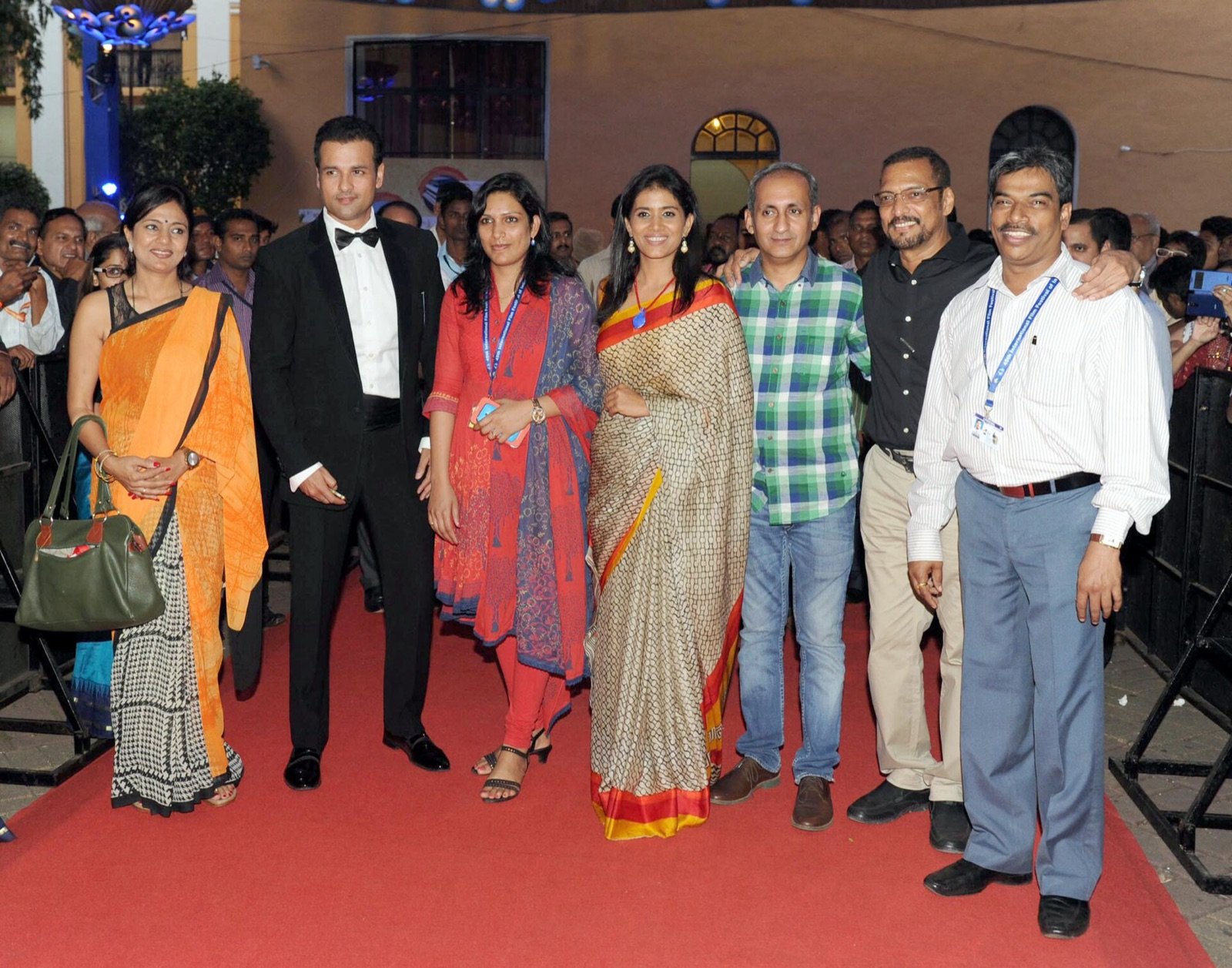
- Same festival, many years: Goa’s IFFI photographed him in 2010, 2014, 2016 and 2017; Goa became home.
The Five Films to Understand Him
Parinda
Watch for villainy without glamour.
Krantiveer
Watch for anger turning into political speech.
Ab Tak Chhappan
Watch for the morally compromised professional.
Welcome
Watch for comedy built from total seriousness.
Natsamrat
Watch for a theatre actor confronting age and loss.
Agni Sakshi
Watch for control as menace, the role that completed his National Award hat-trick.
Quiz: Can You Identify the Nana?
1. A gang boss terrified of fire. Which film?
2. An angry drifter who takes on corruption from a public stage.
3. A police officer with 56 encounter killings.
4. A gangster who keeps telling himself to stay calm.
5. A stage legend abandoned by his children.
Explore More Timelines
People Also Ask
Frequently Asked Questions
The Lasting Lesson
The easiest way to remember Nana Patekar is through his characters: Anna, Pratap, Sadhu Agashe, Uday Shetty, Ganpatrao Belwalkar. Different men, one actor. The deeper lesson is in the career. Character beat glamour, performance beat image, and a voice beat a face. He entered films as a theatre actor in 1978, and nearly half a century later his most celebrated late role was a theatre actor too.
He never needed to be a conventional star to be impossible to forget.
Related AiTimeline Stories
⚠️ Editorial Note
Last updated 8 October 2026. Details of Nana Patekar’s death and funeral are from same-day reports by Al Jazeera (citing PTI), Outlook, Business Today and India.com and may be revised. Film credits and awards are from published filmographies and award records. The 2018 allegation is reported as an allegation that he denied; its legal outcome is described as reported. Kargil details rely on his own and later press accounts.
Sources & further reading
Every dated entry above was checked against these references. Last reviewed 8 October 2026.
- Al Jazeera: Acclaimed Indian actor Nana Patekar dies aged 75 (8 Oct 2026)
- Outlook: Nana Patekar to be cremated with full state honours, last rites place and time
- Business Today: Nana Patekar dies at 75, PM Modi pays tribute
- India.com: State honours announced by Devendra Fadnavis
- Wikipedia: Nana Patekar (biography, awards, Territorial Army)
- Wikipedia: Nana Patekar filmography
- News Arena: Mumbai court dismisses MeToo case against Nana Patekar (Mar 2025)
- Wikimedia Commons: President presents Padma Shri to Nana Patekar, 20 April 2013