1983 World Cup: How India’s 66-1 Outsiders Beat the West Indies at Lord’s
1983 World Cup: how India, 66-1 outsiders, beat West Indies at Lord's. 183 v 140, Kapil Dev's 175* from 17/5, his Richards catch, every match and score.
Latest Story
On 25 June 1983 at Lord’s, India won the 1983 Cricket World Cup by defending 183 against a West Indies team that had won both previous tournaments, bowling them out for 140. India had arrived as 66-1 outsiders, with one World Cup win in two previous attempts. This page follows the campaign match by match, from the opening-day upset at Old Trafford through the 175 at Tunbridge Wells that nobody filmed, to Kapil Dev’s catch and Mohinder Amarnath’s 3 for 12, with the dates and scores checked against the scorecards.
💡 Short Answer
India won the 1983 World Cup in England, beating the two-time champions West Indies by 43 runs in the final at Lord’s on 25 June 1983: India 183 all out, West Indies 140 all out. Mohinder Amarnath (26 and 3 for 12) was Player of the Match, and captain Kapil Dev’s catch removed Viv Richards. India won six of eight matches, including a 175 not out by Kapil against Zimbabwe after being 17 for 5, and beat England in the semi-final.
1983 World Cup: Key Questions
The 1983 World Cup in Ten Points
- Outsiders: one World Cup win in two attempts before 1983; priced at 66-1.
- Opening shock, 9 June: beat the champions West Indies by 34 runs at Old Trafford.
- Two defeats: by Australia (162 runs, 13 June) and the West Indies (66 runs, 15 June).
- 17 for 5, 18 June: Kapil Dev 175* from 138 balls; India beat Zimbabwe by 31 runs.
- Never filmed: a BBC technicians’ strike kept cameras away from Tunbridge Wells.
- Through, 20 June: beat Australia by 118 runs to finish second in Group B.
- Semi-final, 22 June: England 213, India 217/4; Amarnath Player of the Match.
- Final, 25 June: India 183, West Indies 140; won by 43 runs.
- The turning points: Sandhu bowling Greenidge; Kapil catching Richards; Amarnath 3/12.
- The legacy: the 1987 World Cup moved to India and Pakistan, and cricket became India’s game.
Eight matches, six wins. Pick one to see the score, who made the difference, and where it left India.
Group B was played as a double round-robin; the top two reached the semi-finals.
Choose a match above
Group B Final Table
Four points per win; each side played the others twice.
| Group B | P | W | L | Pts | Run rate |
|---|---|---|---|---|---|
| West Indies | 6 | 5 | 1 | 20 | 4.31 |
| India | 6 | 4 | 2 | 16 | 3.87 |
| Australia | 6 | 2 | 4 | 8 | 3.81 |
| Zimbabwe | 6 | 1 | 5 | 4 | 3.49 |
The Final: 183 Defended at Lord’s
India were all out in the 55th over. West Indies needed 3.07 an over.
| Item | India v West Indies, Lord’s, 25 June 1983 |
|---|---|
| Toss | West Indies, chose to field |
| India | 183 all out (54.4 overs) |
| Top scorers | Srikkanth 38, Patil 27, Amarnath 26 |
| West Indies bowling | Roberts 3/32; Marshall, Holding, Gomes 2 each |
| West Indies | 140 all out (52 overs) |
| Top scorers | Richards 33, Dujon 25, Marshall 18 |
| India bowling | Amarnath 3/12, Madan Lal 3/31, Sandhu 2/32 |
| Key moments | Greenidge b Sandhu 1 (5/1); Richards c Kapil b Madan Lal 33 (57/3); 76/6 |
| Result | India won by 43 runs |
| Player of the Match | Mohinder Amarnath |
| Attendance | 24,609 |
Clive Lloyd won the toss and put India in. Against Andy Roberts, Joel Garner, Malcolm Marshall and Michael Holding, India lost Sunil Gavaskar for 2 and were never in control. Kris Srikkanth counter-attacked with 38, including a hook for six off Roberts, but no one passed 30 and India were all out for 183 in 54.4 overs. With 60 overs to chase, it looked like a formality.
It turned in the first hour of the chase. Balwinder Sandhu bowled Gordon Greenidge, who left a ball expecting it to swing away. Viv Richards then took 33 from 28 balls before mistiming a hook off Madan Lal; Kapil Dev ran back from mid-wicket, the ball over his shoulder, and held it. Madan Lal also had Haynes and Gomes caught, and West Indies were 76 for 6. Jeff Dujon and Malcolm Marshall added 43, and the match swung back towards the champions until Mohinder Amarnath bowled Dujon, had Marshall caught, and trapped Holding lbw. India’s 183 is still the lowest total defended in a men’s World Cup final.
Kapil Dev’s 175: The Innings Nobody Filmed
Tunbridge Wells, 18 June 1983. India needed to win their last two group games.
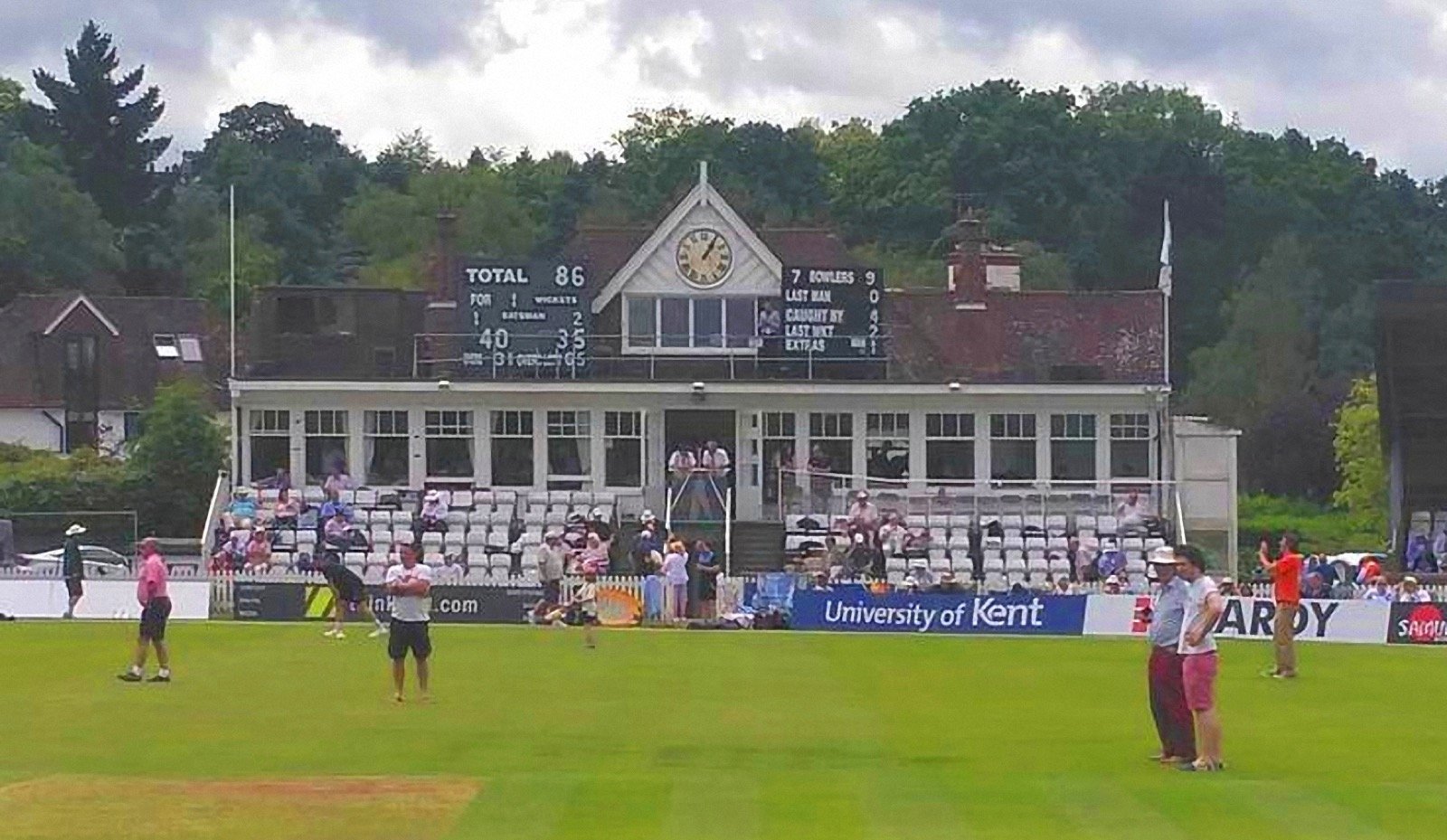
India arrived at the Nevill Ground having lost to Australia and the West Indies in successive matches. They needed to beat Zimbabwe and Australia. Zimbabwe’s medium-pacers, Peter Rawson and Kevin Curran, used a damp morning and India were 9 for 4 within the first few overs, with Gavaskar and Srikkanth out for ducks. When Yashpal Sharma fell, it was 17 for 5.
Kapil Dev, who reportedly had to be called from the dressing-room shower, came in at No. 6. He added 60 with Roger Binny and 62 with Madan Lal, then an unbroken 126 for the ninth wicket with Syed Kirmani, who made 24. Kapil finished on 175 not out from 138 balls, with 16 fours and 6 sixes. It beat Glenn Turner’s 171 not out as the highest ODI score, and India won by 31 runs.
BBC technicians were on strike that day, and the BBC, the only broadcaster, sent no cameras to Tunbridge Wells. There is no footage at all, which is why the innings lives in scorecards, a few photographs and the memories of a small crowd. It is also why so many retellings get the details wrong: the boundaries were 16 fours, not 22.
1983 World Cup: The Full Timeline, 1975–2026
Newest first. Tags mark wins, defeats, records and milestones.
43 years on: Tunbridge Wells and Lord’s remembered 2026
The 43rd anniversaries of the 175 and the final are marked across Indian media and by the surviving players. The scorecard detail that keeps being retold is the one with no footage behind it: 17 for 5 at Tunbridge Wells, turned into 266 for 8 by a captain batting at No. 6.
2026
India’s third T20 World Cup 2026
India beat New Zealand in the T20 World Cup final in Ahmedabad, becoming the first side to win that event three times and the first to defend it. Coverage of the win placed it at the end of a line that starts at Lord’s in 1983: India’s first world title, won when they were priced at 66-1.
83: the film
The Hindi film 83 retells the campaign, with Ranveer Singh as Kapil Dev and the 1983 players advising the cast. It recreates the Tunbridge Wells innings from photographs and memories, because there is no footage to copy. Yashpal Sharma, India’s top scorer in the opening win over the West Indies, had died that July.
2011
The second World Cup Milestone
Twenty-eight years after Lord’s, India win the World Cup again, at home. Sachin Tendulkar, who was ten in 1983 and has said the win made him want to play for India, is carried around the Wankhede by his teammates.
1987
Defending champions, at home
The next World Cup leaves England for the first time, co-hosted by India and Pakistan, a direct result of 1983. India top their group but lose the semi-final to England in Bombay. The Prudential era is over; the subcontinent era of cricket money has begun.
1983
India win the World Cup at Lord’s Milestone
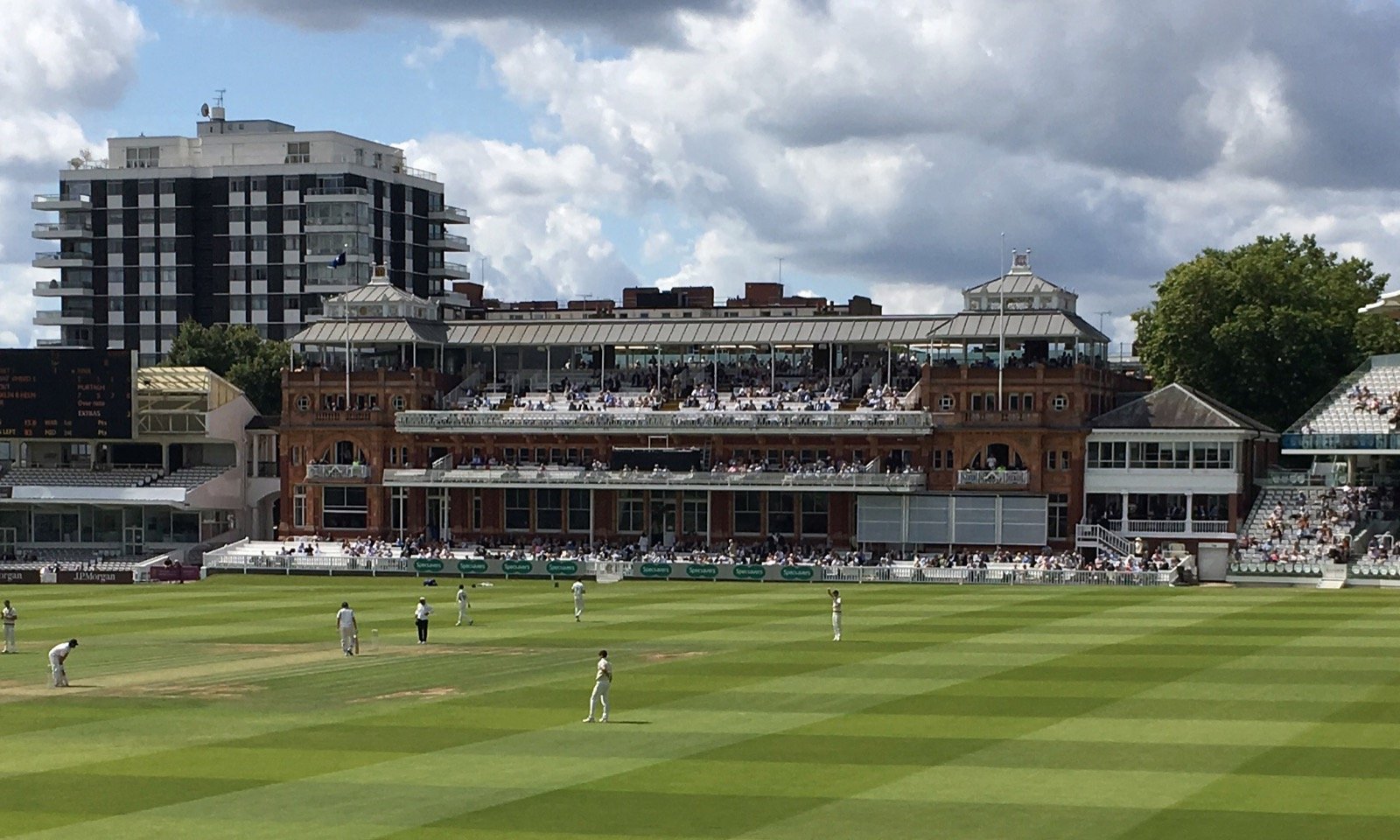
West Indies win the toss and bowl. Gavaskar goes for 2; Srikkanth hooks and pulls Andy Roberts to make 38, the top score; Amarnath (26) and Patil (27) add little more, and India are all out for 183.
Sandhu bowls Greenidge for 1 with a ball that comes back as he leaves it. Viv Richards races to 33 from 28 balls, then mistimes a hook off Madan Lal and Kapil Dev runs back to hold the catch. Madan Lal also removes Haynes and Gomes; West Indies fall to 76 for 6. Dujon and Marshall add 43, until Amarnath takes the last three wickets for 12 runs and traps Holding lbw. Amarnath is Player of the Match; Kapil lifts the Prudential Cup on the Pavilion balcony.
1983
Semi-final: England beaten by six wickets Won
England, the hosts and 1979 finalists, are restricted to 213; Graeme Fowler top-scores with 33, Kapil takes 3 for 35 and Amarnath 2 for 27. Amarnath (46) and Yashpal Sharma (61) build the chase and Sandeep Patil finishes it with 51 not out from 32 balls. India are in their first final. In the other semi-final West Indies beat Pakistan by eight wickets.
1983
Australia beaten by 118 runs Won
India bat first this time and make 247, then bowl Australia out for 129. Madan Lal and Roger Binny take four wickets each. With this win India finish second in Group B behind the West Indies and qualify for the semi-finals.
1983
Kapil Dev 175 not out, from 17 for 5 Record
Gavaskar and Srikkanth are out for ducks and India are 9 for 4, then 17 for 5, when Kapil Dev comes in. He adds 60 with Roger Binny, loses two more partners, then shares an unbroken 126 for the ninth wicket with Syed Kirmani (24 not out). Kapil finishes on 175 not out from 138 balls, with 16 fours and 6 sixes, the highest score in ODI history at the time. India win by 31 runs.
A BBC technicians’ strike means there are no cameras at the ground. The most famous Indian one-day innings was never filmed.
1983
West Indies take revenge Lost
Viv Richards makes 119 and the champions win easily. India have won two and lost two, and must win both remaining games against Zimbabwe and Australia.
1983
Thrashed by Australia Lost
Trevor Chappell makes 110 and medium-pacer Ken MacLeay takes 6 for 39. It is India’s heaviest defeat of the tournament, and the result that makes the rest of the group a must-win run.
1983
Zimbabwe beaten at Leicester Won
A routine win over the tournament’s only non-Test side, two days after Zimbabwe had beaten Australia. Madan Lal takes three wickets.
1983
The first shock: West Indies beaten Won
On the tournament’s opening day, Yashpal Sharma makes 89 and India post 262 for 8. Ravi Shastri and Roger Binny take three wickets each as the West Indies are bowled out for 228, their first defeat in World Cup cricket. The same day, Zimbabwe beat Australia by 13 runs at Trent Bridge.
66-1 outsiders arrive in England
India come to England with one World Cup win in six matches and are priced at 66-1. The format is two groups of four; each side plays the others twice, and the top two go through. Kapil Dev, 24, is captain; Gavaskar, the most famous player, is not.
Three games, three defeats Lost
India lose every match at the second World Cup, including to Sri Lanka, then an Associate side. West Indies retain the title, beating England by 92 runs in the final at Lord’s.
The first World Cup: a win over East Africa
India’s only win at the first World Cup is against East Africa. Against England, Gavaskar bats through the 60 overs for 36 not out, a symbol of how unready India were for one-day cricket. West Indies beat Australia in the final.
The Team Behind the Trophy
Medium pace and all-rounders, not stars.
| Player | Role | 1983 contribution |
|---|---|---|
| Kapil Dev | Captain, all-rounder | 303 runs, 12 wickets; 175* v Zimbabwe; Richards catch |
| Roger Binny | Medium pace | 18 wickets, the most in the tournament |
| Madan Lal | Medium pace | 17 wickets; Haynes, Richards, Gomes in the final |
| Mohinder Amarnath | All-rounder | Player of the Match in semi-final and final |
| Yashpal Sharma | Middle order | 89 v West Indies, 61 in the semi-final |
| Sandeep Patil | Middle order | 51* off 32 balls in the semi-final |
| Kris Srikkanth | Opener | 38 in the final, the match’s top score |
| Balwinder Sandhu | Swing bowler | Bowled Greenidge for 1 in the final |
| Syed Kirmani | Wicketkeeper | 24* in the 126 stand with Kapil |
| Sunil Gavaskar | Opener | The senior batter; a quiet tournament |
The 1983 side is remembered as Kapil Dev’s, but its bowling was built on medium pacers who suited English conditions: Roger Binny took 18 wickets, Madan Lal 17, and Amarnath and Sandhu took the key wickets in the knockouts. There were no genuinely fast bowlers in the squad. The batting was thin enough that India were bowled out in both the final and the defeat by Australia, and needed a lower-order rescue against Zimbabwe. What the team had was depth in all-rounders, a captain who led by doing, and a habit of winning the moments that mattered.
What 1983 Changed
Before 1983 India played one-day cricket reluctantly: Gavaskar’s 36 not out in 60 overs at the 1975 World Cup is the usual example. After 1983 the format mattered. The next World Cup, in 1987, left England for the first time and was co-hosted by India and Pakistan. Colour television, which had spread in India in 1982, carried the game further over the decade that followed.
The win also changed who wanted to play. Sachin Tendulkar was ten, and has said that watching the 1983 team made him want to play for India. Over the following four decades the BCCI became the richest board in the sport, the IPL arrived in 2008, and India won the World Cup again in 2011 and T20 World Cups in 2007, 2024 and 2026. None of that was inevitable in June 1983, when India were a 66-1 bet.
Corrections to Claims Circulating Online
From the summary material this page was built from, checked against the scorecards.
“11 June: lost to Australia; 13 June: beat Zimbabwe”
The other way round: Zimbabwe at Leicester on 11 June, Australia at Trent Bridge on 13 June.
“25 June: India lose to West Indies”
The group defeat at The Oval was on 15 June. 25 June was the final.
“Australia 129, India chased it down”
India batted first, made 247 and won by 118 runs at Chelmsford.
“22 June: Zimbabwe beat Australia”
Zimbabwe beat Australia by 13 runs on the opening day, 9 June, at Trent Bridge.
“Kapil hit 22 fours”
16 fours and 6 sixes. And the match was never recorded (BBC strike), not ‘recorded but lost’.
“Gooch top-scored with 46” in the semi-final
England’s top scorer was Graeme Fowler with 33. The 46 was Amarnath’s, for India.
Did You Know?
- West Indies’ first World Cup defeat was India’s opening match of 1983.
- Zimbabwe beat Australia on the same opening day, their first ever ODI.
- One squad member never played: Sunil Valson.
- Kapil’s 175 was the first ODI hundred by an Indian.
- The 126 stand with Kirmani stood as the ninth-wicket ODI record until 2010.
- Lowest defended total: no side has won a men’s World Cup final with less than 183.
Quick Quiz
1. What did India score in the final?
2. India were how many wickets down when Kapil came in at Tunbridge Wells?
3. Who bowled Gordon Greenidge in the final?
4. Who took the most wickets at the 1983 World Cup?
5. Why is there no video of Kapil’s 175?
Explore More Timelines
People Also Ask
Frequently Asked Questions
Forty-Three Years On
The scorecard of the final still looks too small: 183 plays 140. But the campaign behind it was a run of escapes, from a 162-run thrashing to 17 for 5 to 76 for 6, each one turned by a different player. Kapil Dev made the runs and took the catch; Amarnath, Madan Lal, Binny, Sandhu, Yashpal, Patil, Srikkanth and Kirmani supplied the rest.
Forty-three years later, with India now the centre of cricket’s money and three-time T20 champions, the 1983 side remains the reference point because it won without being expected to. That is the part of the story no later title can repeat.
Related AiTimeline Stories
⚠️ Editorial Note
Last updated 5 October 2026. Scores, dates, venues and figures come from the ESPNcricinfo scorecards and the Wisden Almanack report of the final; group standings and tournament statistics from the official records. The 66-1 odds and the account of the BBC strike are as widely reported. 2026 items are from dated news reports.
Sources & further reading
Every dated entry above was checked against these references. Last reviewed 5 October 2026.
- ESPNcricinfo: India v West Indies scorecard, Prudential World Cup final, Lord's, 25 Jun 1983
- Wisden Cricketers' Almanack: 1983 World Cup final, India v West Indies (match report)
- ESPNcricinfo: India v Zimbabwe scorecard, Tunbridge Wells, 18 Jun 1983 (Kapil Dev 175*)
- Wikipedia: 1983 Cricket World Cup (group results, semi-finals, statistics)
- Wikipedia: 1983 Cricket World Cup final
- Republic World: On this day 43 years ago, Kapil Dev's 175* (18 Jun 2026)
- Outlook India: From Kapil Dev's 1983 miracle to India's third T20 World Cup (Mar 2026)