Indian Cinema History: From Dadasaheb Phalke to Global Bollywood
Indian cinema history from Phalke's 1913 Raja Harishchandra and the 1931 talkie Alam Ara to the Naatu Naatu Oscar, Cannes 2024 and record box office.
Latest Story
In 1913 a Bombay printer named Dadasaheb Phalke released a silent film about a king who would not break his word, with a man playing the queen because no woman would act. In 2023 a Telugu song won an Oscar, in 2024 a Malayalam-Hindi film won at Cannes, and in 2025 Indian cinemas sold ₹13,395 crore of tickets, a record. This is Indian cinema history in order: the silent era, the talkies and studios, the golden age that was already travelling to Moscow and Cannes, the masala film, the diaspora boom, the rise of Telugu, Tamil, Malayalam and Kannada hits and the streaming era, with dates checked and the common “firsts” corrected.
💡 Short Answer
Indian cinema began when the Lumière brothers’ films were screened in Bombay on 7 July 1896. Dadasaheb Phalke released India’s first feature film, the silent Raja Harishchandra, on 3 May 1913, and Ardeshir Irani’s Alam Ara became the first talkie on 14 March 1931. Indian films won at Cannes as early as 1946, Mother India was Oscar-nominated in 1958, “Naatu Naatu” from RRR won the Oscar in 2023 and All We Imagine as Light won the Cannes Grand Prix in 2024. Bollywood is the Hindi industry; Telugu, Tamil, Malayalam, Kannada, Bengali and Marathi cinema are just as much part of the story.
Indian Cinema History: Key Questions
Indian Cinema in Ten Points
- 1896: Lumière films screened at Watson’s Hotel, Bombay, on 7 July.
- 1913: Phalke’s Raja Harishchandra, India’s first feature, released on 3 May.
- 1931: Alam Ara brings sound and songs; Tamil, Telugu, Bengali and Marathi talkies follow within a year.
- 1946–1958: Indian films win at Cannes and Mother India earns the first Oscar nomination, years before “Bollywood” existed as a word.
- 1975: Sholay and Deewaar: the masala film and the angry young man.
- 1983: Bhanu Athaiya becomes the first Indian to win an Oscar.
- 1990s: satellite TV, multiplexes and the overseas Indian audience change the money.
- 2016–2024: Dangal, Baahubali 2, RRR and Pushpa 2 make ‘pan-India’ films the norm.
- 2023–2024: Oscars for “Naatu Naatu” and The Elephant Whisperers; Cannes Grand Prix for Payal Kapadia.
- 2025–2026: record box office, ₹13,395 crore in 2025 and ₹6,398 crore in the first half of 2026.
Who Was Dadasaheb Phalke?
A printer, photographer and magician who taught himself to make films.
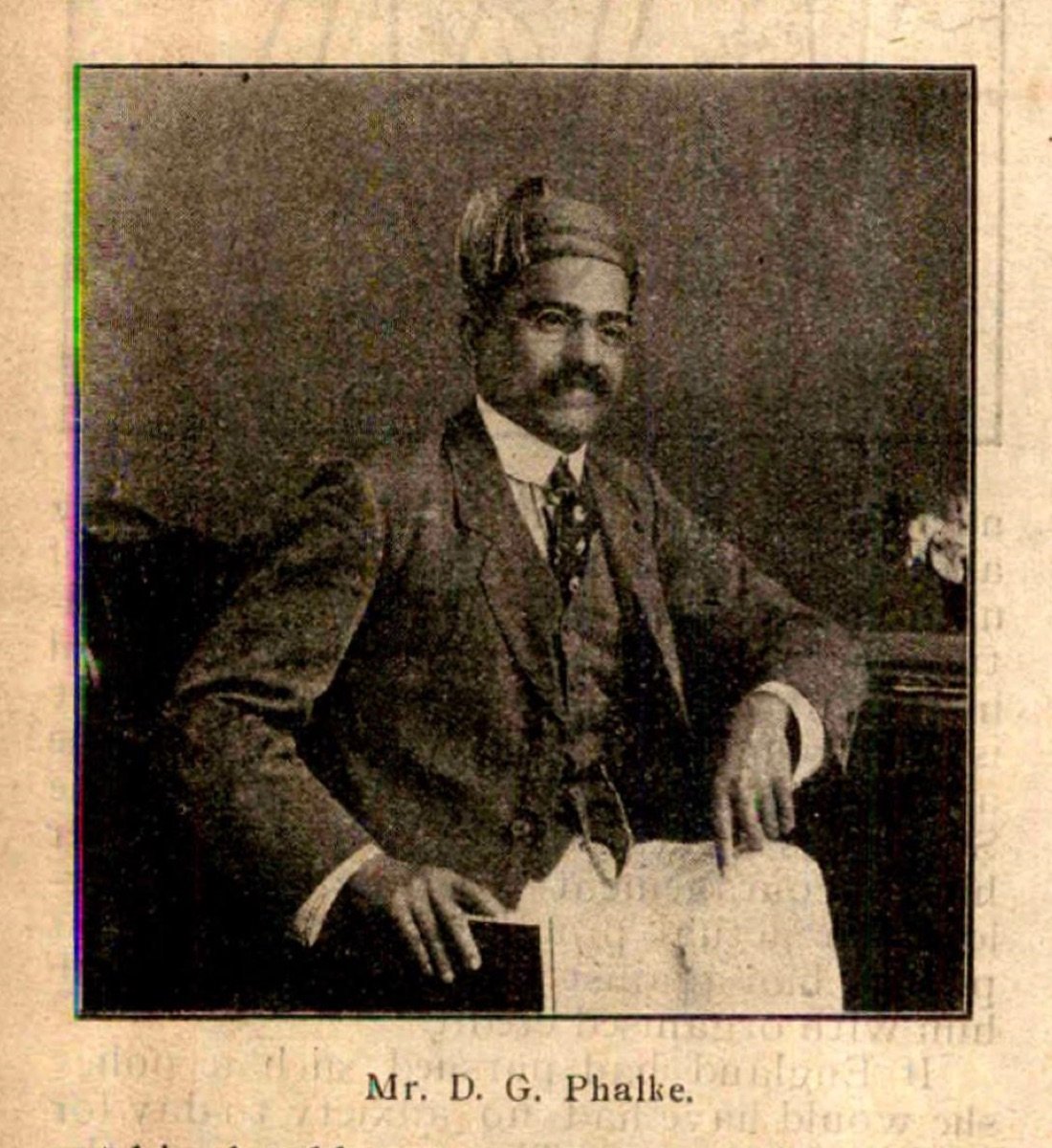
Dhundiraj Govind Phalke was born on 30 April 1870 in Trimbak, near Nashik. He trained at Bombay’s J.J. School of Art and at the Kala Bhavan in Baroda, then worked as a photographer, a draughtsman for the Archaeological Survey of India and a printer, including a spell with the painter Raja Ravi Varma’s press. Around 1910 he watched The Life of Christ in a Bombay cinema and resolved to put Indian gods and heroes on screen.
He pawned his wife Saraswati’s jewellery, among other things, to raise money, travelled to London in 1912 to buy a Williamson camera and film stock, and shot Raja Harishchandra in his own house and garden. Saraswatibai helped process the film. After its success he made Mohini Bhasmasur (1913), with the first women on the Indian screen, Durgabai Kamat and her daughter Kamlabai Gokhale, then Lanka Dahan (1917) and Shri Krishna Janma (1918). He founded Hindustan Film Company in 1918. Sound ended his career: his only talkie, Gangavataran (1937), failed, and he died in Nashik on 16 February 1944.
The Indian Cinema Timeline, 1896–2026
Newest first. Tags mark firsts, global recognition, box-office records and turning points. Box-office figures are from Ormax Media and trade reports and are labelled.
2026
Anant Nag gets the Phalke Award Turning point
Veteran actor Anant Nag, whose career runs from the Kannada film Sankalpa (1973) and Shyam Benegal’s Hindi debut Ankur (1974) to the KGF era, received the Dadasaheb Phalke Award for 2024 at the 72nd National Film Awards on 22 September 2026, according to Variety and India TV. The award, instituted in 1969 for Phalke’s birth centenary, now regularly honours artists from outside Hindi cinema: the previous recipient was Malayalam star Mohanlal.
2026
A record first half Box office
Ormax Media counted ₹6,398 crore of box office in January–June 2026, 10% more than a year earlier and the best first half since the pandemic. Footfalls rose 5% to 37.8 crore, ending three years of decline. Hindi’s share jumped from 39% to 44%, largely thanks to Aditya Dhar’s spy sequel Dhurandhar: The Revenge, released in March, which earned about a fifth of the half-year’s takings. By 5 May its worldwide gross stood at about ₹1,790 crore, passing Baahubali 2 to become the second-highest-grossing Indian film behind Dangal, according to trade figures reported by The Week.
Kapadia judges at Cannes Global stage
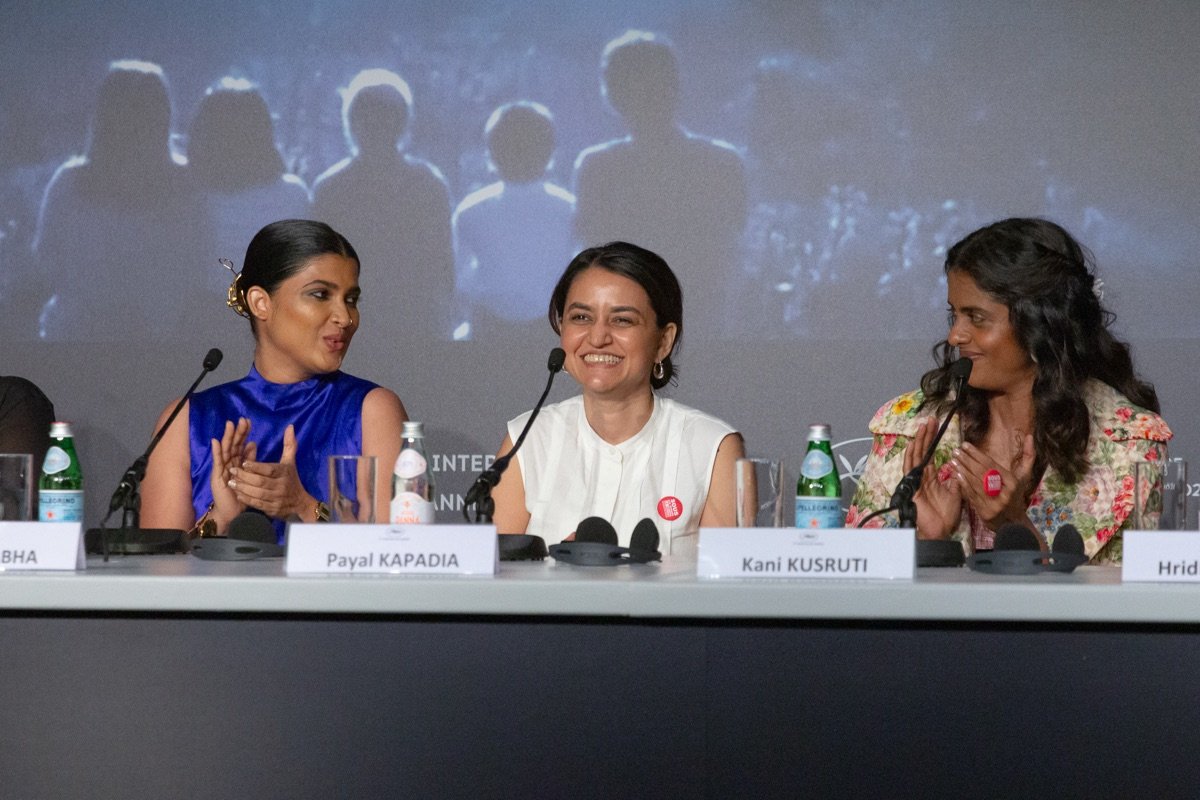
Two years after winning the Grand Prix, Payal Kapadia returned to Cannes as jury president of the 65th Critics’ Week (Semaine de la Critique). Indian films were thin on the ground in the festival’s main sections in 2026; the presence was in the jury room and the student strand, where the Film and Television Institute of India had a short selected.
2026
Homebound misses the final five Global stage
Neeraj Ghaywan’s Homebound, about two village friends chasing police jobs, premiered at Cannes in 2025 and was India’s official entry for Best International Feature. It made the Academy’s 15-film shortlist in December 2025, a rare step for an Indian film, but was left out of the nominations announced on 22 January 2026. India’s last nomination in the category remains Lagaan, in 2002.
The biggest year yet Box office
Indian cinemas grossed ₹13,395 crore in 2025, the first year above ₹13,000 crore, beating 2023’s ₹12,226 crore. Hindi films had their best year ever at ₹5,504 crore. The top earner was Dhurandhar (December 2025) at ₹950 crore in India, a record for a Hindi film, followed by the Kannada film Kantara: Chapter 1 and the Hindi historical Chhaava, each above ₹500 crore. The catch: footfalls fell 6% to 83.2 crore. Indians spent more at the cinema, but fewer of them went.
2024
Grand Prix at Cannes Global stage
Payal Kapadia’s All We Imagine as Light, about two Malayali nurses sharing a Mumbai flat, won the Grand Prix, Cannes’ second-highest prize. It was the first Indian film in the main competition in 30 years, since Shaji N. Karun’s Swaham (1994). The same festival gave Anasuya Sengupta the Best Actress prize in the Un Certain Regard section for The Shameless, the first Indian to win an acting award there. Neither film was a Bollywood production. Both were made with European co-producers, the route most Indian art-house films now take to the world.
Pushpa 2 leads a dubbed year Box office
Allu Arjun’s Telugu action sequel Pushpa 2: The Rule grossed ₹1,403 crore in India, per Ormax, much of it from its Hindi-dubbed version. Overall 2024 takings slipped to ₹11,833 crore, and Ormax found that 31% of the Hindi-language box office came from dubbed South Indian films. The language of a film no longer decided its market.
2023
“Naatu Naatu” wins the Oscar First
“Naatu Naatu” from S. S. Rajamouli’s Telugu epic RRR became the first song from an Indian film to win an Academy Award, after winning the Golden Globe in January. Composer M. M. Keeravaani and lyricist Chandrabose accepted the award. The same night The Elephant Whisperers, produced by Guneet Monga and directed by Kartiki Gonsalves, won Best Documentary Short: India’s first two Oscars for Indian productions, on one evening.
2022
RRR goes global Global stage
Rajamouli’s RRR, a fictional friendship between two real revolutionaries, opened in March 2022 and found its Western audience months later on streaming, through fan screenings and through clips of its dance number shared online. It showed that a regional-language Indian film could become a global event without an English remake or a Hollywood partner. India’s official Oscar entry that year was a different film, Chhello Show; RRR’s distributors campaigned separately.
2021
Cinemas close, streaming opens Turning point
The pandemic shut India’s cinemas for most of 2020. Producers sent finished films straight to streaming: Shoojit Sircar’s Gulabo Sitabo, starring Amitabh Bachchan, premiered on Amazon Prime Video in June 2020, followed by dozens more. Viewers sampled films in other Indian languages with subtitles at home, including Malayalam and Tamil dramas they would never have found in a local cinema. That habit later helped dubbed and subtitled South Indian films fill Hindi-belt theatres.
2017
Dangal and Baahubali 2 Box office
Two films reset the ceiling. Aamir Khan’s wrestling drama Dangal became the highest-grossing Indian film, at about ₹2,000 crore worldwide, after a 2017 release in China earned more than its Indian run. Rajamouli’s Telugu epic Baahubali 2: The Conclusion earned about ₹1,788 crore, much of it from its Hindi version, proving that a South Indian film could dominate the Hindi market. The phrase “pan-India film” entered the trade press.
2009
Indian Oscars on a British film Global stage
Danny Boyle’s Slumdog Millionaire, a British film shot in Mumbai, won eight Oscars, including Best Original Score and Song for A. R. Rahman, Sound Mixing for Resul Pookutty and a shared song award for lyricist Gulzar. It put Indian film talent on the biggest stage, but under a foreign banner, a distinction that made the 2023 wins for Indian productions matter more.
2002
Lagaan at the Oscars Global stage
Ashutosh Gowariker’s Lagaan (2001), about villagers who bet their taxes on a cricket match against British officers, became the third Indian film nominated for Best Foreign Language Film, after Mother India and Salaam Bombay!. It lost to Bosnia’s No Man’s Land. No Indian film has been nominated in the category since.
1998
Multiplexes and industry status Turning point
PVR Anupam in Delhi’s Saket opened in June 1997 as India’s first multiplex, with smaller screens and higher prices than the old single-screen halls. In May 1998 the government granted film production industry status, which over the next few years let producers borrow from banks rather than private financiers. Multiplexes made room for smaller urban films; bank money and corporate studios made the business more formal.
1995
DDLJ and the overseas Indian Box office
Aditya Chopra’s Dilwale Dulhania Le Jayenge, about a London-raised couple who win their families’ blessing in Punjab, ran continuously at Mumbai’s Maratha Mandir cinema for more than 1,000 weeks. With Hum Aapke Hain Koun..! (1994) and Kuch Kuch Hota Hai (1998), it built a template of family romance aimed squarely at Indians in Britain, North America and the Gulf, who were becoming a lucrative overseas market.
1992
Liberalisation and satellite TV Turning point
The 1991 reforms and the arrival of satellite television changed how films earned money. Channels such as Zee TV (1992) needed films and film songs to fill airtime, so satellite and music rights became major revenue lines next to ticket sales. Overseas distribution expanded with the economy.
1983
The first Indian Oscar winner First
Costume designer Bhanu Athaiya, who had dressed Hindi films since the 1950s, shared the Oscar for Best Costume Design for Richard Attenborough’s Gandhi, becoming the first Indian to win an Academy Award. In 1992, weeks before his death, Satyajit Ray received an honorary Oscar for lifetime achievement, presented to him in his Calcutta hospital bed.
Video, colour TV and piracy Turning point
Colour television arrived with the 1982 Asian Games, and VCRs spread through homes and roadside ‘video parlours’. Doordarshan’s weekly Hindi film and its song show Chitrahaar became national rituals. Pirated cassettes cut into ticket sales and many single-screen cinemas struggled, but home video extended a film’s life long after its run.
1975
Sholay and the angry young man Turning point
The screenwriting duo Salim–Javed and actor Amitabh Bachchan created the ‘angry young man’ in Zanjeer (1973) and Deewaar (1975): a hero who fought a corrupt system on his own terms. Ramesh Sippy’s Sholay, released on Independence Day 1975, mixed action, comedy, romance and music into the template later called the masala film. Its dialogues are still quoted, and painted on trucks and rickshaws, half a century later. Telugu and Tamil cinema built their own mass-hero traditions in the same years.

The Phalke Award is created First
The government instituted the Dadasaheb Phalke Award in 1969, 100 years after Phalke’s birth, as India’s highest honour for lifetime contribution to cinema. The first recipient was Devika Rani, the star and co-founder of Bombay Talkies. The Film Institute of India in Pune, now FTII, had opened in 1960 and was starting to train a new generation of directors, cinematographers and actors who would lead the parallel cinema movement of the 1970s.
Mother India at the Oscars Global stage
Mehboob Khan’s Mother India (1957), with Nargis as a village woman who raises her sons through debt, flood and famine, became the first Indian film nominated for the Academy Award for Best Foreign Language Film. It lost to Federico Fellini’s Nights of Cabiria at the ceremony on 26 March 1958, by a single vote according to widely repeated accounts. It remains one of the defining films of post-independence Hindi cinema.
1956
Pather Panchali Global stage
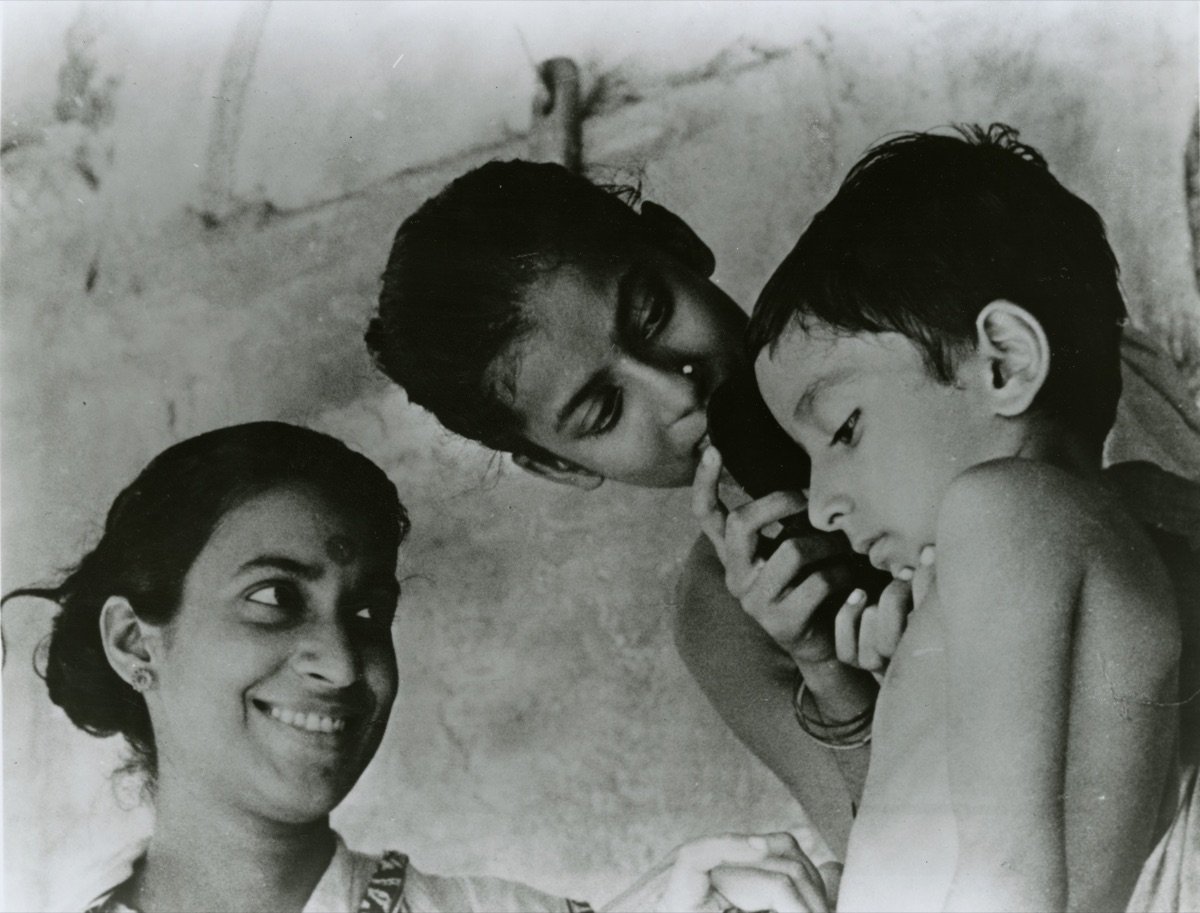
Satyajit Ray’s first film, Pather Panchali, about a poor Brahmin family in a Bengal village, was finished with money from the West Bengal government and released in 1955. At Cannes in 1956 it won a special prize as the ‘Best Human Document’. Ray’s Apu trilogy made him the most celebrated Indian director abroad, and showed the world an Indian cinema without songs or stars.
1954
Awaara conquers the USSR Global stage
Indian films went global decades before the word ‘Bollywood’. Raj Kapoor’s Awaara (1951), with Nargis, became a phenomenon in the Soviet Union after its 1954 release there, and its song “Awaara Hoon” was sung from Moscow to Ankara. Bimal Roy’s Do Bigha Zamin (1953), about a farmer forced to pull a rickshaw in Calcutta, won the Prix International at Cannes in 1954.
Neecha Nagar wins at the first Cannes First
At the very first Cannes festival in 1946, Chetan Anand’s Neecha Nagar, a social drama about the rich polluting the water of the poor, shared the festival’s top award, the Grand Prix du Festival International du Film, with ten other films. The year before independence, an Indian film was already among the festival’s winners. It is still the only time an Indian film has shared Cannes’ top prize.
First colour film: Kisan Kanya First
Ardeshir Irani, who had made the first talkie six years earlier, also produced India’s first colour feature, Kisan Kanya (1937), using the Cinecolor process. Colour stayed expensive: most Indian films were black and white until the late 1950s and the 1960s, when Technicolor and Eastmancolor epics such as Mughal-e-Azam’s colour sequences (1960) became a selling point.
1934
The studio era Turning point
Talkies needed sound stages, recording equipment and salaried staff. Prabhat Film Company (Kolhapur, later Pune), New Theatres in Calcutta and Bombay Talkies, founded by Himanshu Rai and Devika Rani, became the first great studios. In Madras, studios grew around Tamil and Telugu talkies. Each centre developed its own style from its own literature, theatre and music.
1931
Alam Ara: India’s first talkie First
Ardeshir Irani’s Alam Ara opened at the Majestic Cinema in Bombay on 14 March 1931, with Master Vithal and Zubeida, and drew such crowds that police were called to control them. It had seven songs; Wazir Mohammed Khan’s “De De Khuda Ke Naam Par” is counted as the first Indian film song. Sound made language decisive: the Tamil-Telugu Kalidas followed on 31 October 1931, the Bengali Jamai Sasthi the same year, and the Telugu Bhakta Prahlada and Marathi Ayodhyecha Raja in 1932. No complete print of Alam Ara survives.
1913
Raja Harishchandra First
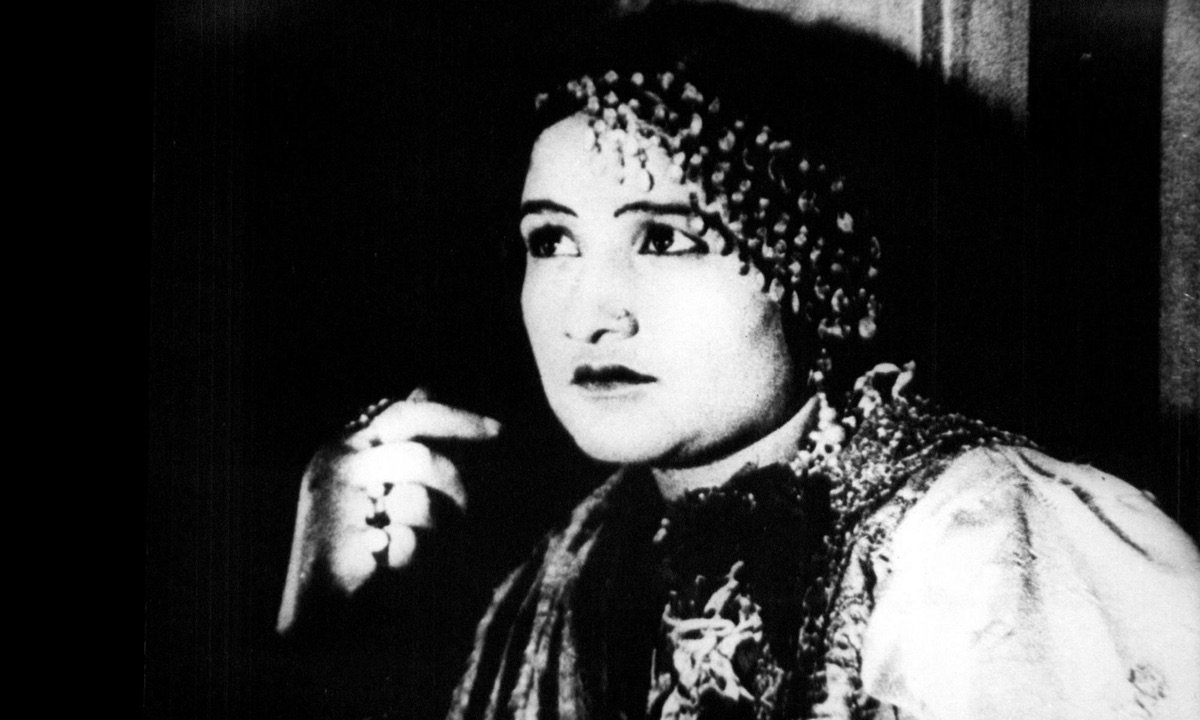
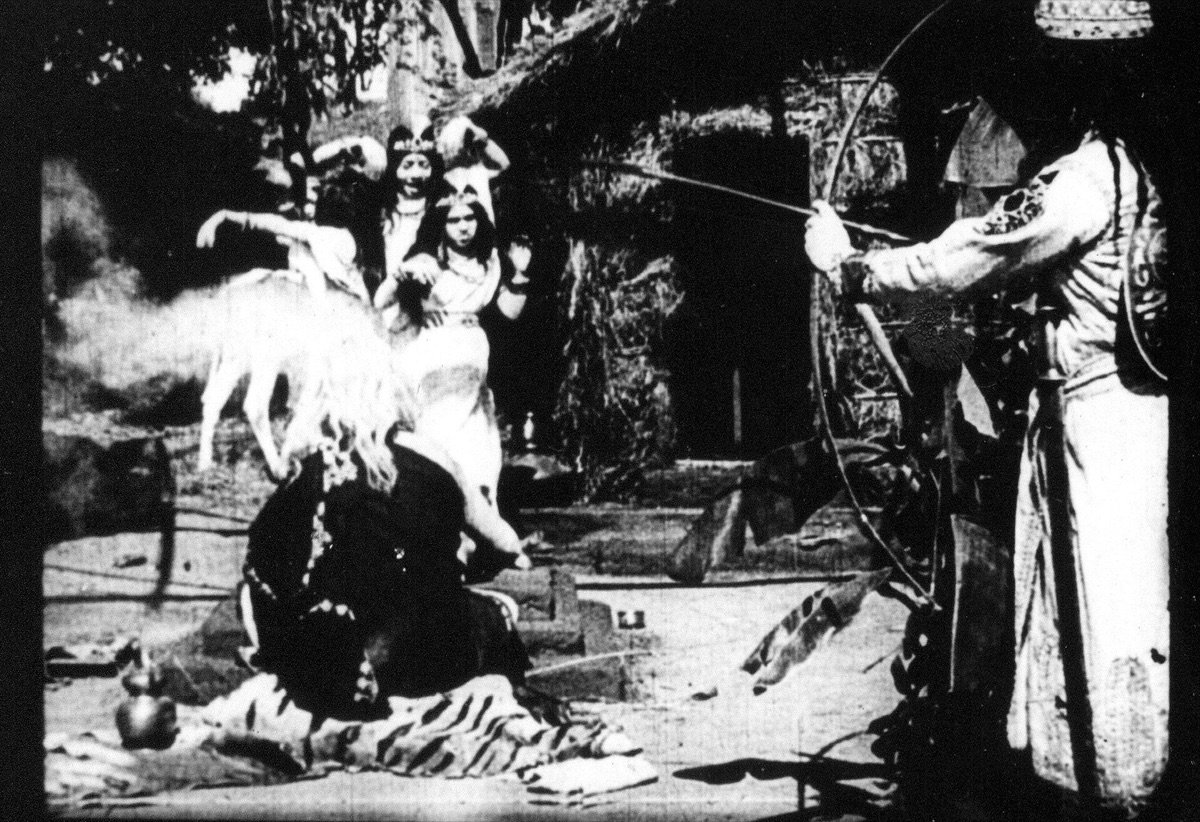
Dhundiraj Govind Phalke, a printer and photographer, decided to make Indian films after watching The Life of Christ in Bombay around 1910. He went to London to buy a camera, then wrote, directed, shot and edited Raja Harishchandra, the story of a king who sacrifices everything rather than break his word. It was shown to invited guests at the Olympia Theatre on 21 April 1913 and opened to the public at the Coronation Cinematograph on 3 May 1913. No woman would act, so a man, Anna Salunke, played Queen Taramati. Dadasaheb Torne’s Shree Pundalik (1912) has a rival claim, but it was a filmed stage play shot by a British cameraman.
1896
Moving pictures reach Bombay First
Six months after their first public show in Paris, the Lumière brothers’ agent screened six short films at Watson’s Hotel in Bombay on 7 July 1896, including Arrival of a Train. Tickets cost a rupee. The shows soon moved to the Novelty Theatre, and within a few years Indian photographers such as Harishchandra Sakharam Bhatwadekar were filming wrestling matches and public events. Feature films took another 17 years.
Pick a year and see what an Indian film-goer could watch, and how
Drag from 1896 to 2026. Rose chips are technologies and platforms; gold chips are landmark films.
Bollywood Is One of Seven Big Industries
“Bollywood” means Hindi films made in Mumbai. Indian cinema is a network of language industries, each with its own first talkie.
| Industry | Main centre | First talkie | Recent landmark | Known for |
|---|---|---|---|---|
| Hindi (Bollywood) | Mumbai | Alam Ara, 1931 | Dhurandhar films, 2025–26 | Stars, music, the largest box-office share (41% in 2025) |
| Telugu | Hyderabad | Bhakta Prahlada, 1932 | Baahubali 2, RRR, Pushpa 2 | Large-scale spectacle; pan-India dubbed hits |
| Tamil | Chennai | Kalidas, 1931 | Coolie, 2025 | Star culture, political cinema, music |
| Malayalam | Kochi | Balan, 1938 | All We Imagine as Light (partly), 2024 | Writing, realism, low-budget hits |
| Kannada | Bengaluru | Sati Sulochana, 1934 | Kantara: Chapter 1, 2025 | Folklore epics; KGF franchise |
| Bengali | Kolkata | Jamai Sasthi, 1931 | Satyajit Ray’s legacy | Literary adaptation, art cinema |
| Marathi | Mumbai, Pune | Ayodhyecha Raja, 1932 | 4% share, H1 2026 (post-pandemic high) | Phalke’s language; theatre-rooted stories |
The lines between these industries have blurred. Directors, actors and technicians move between them, big films are now released in four or five dubbed versions, and the most successful Hindi releases of 2024 included dubbed Telugu films. Ormax counted 31% of the Hindi-language box office in 2024 coming from dubbed South Indian films. In 2025 South Indian languages together took 44% of the national box office, against Hindi’s 41%. Other industries, from Bhojpuri, Punjabi, Gujarati and Odia to Assamese and Konkani, make hundreds more films a year for their own audiences.
The Box Office, Charted
India’s total ticket sales in recent years, and the films at the top.
Indian cinema’s firsts, with the fine print
Many “firsts” get repeated loosely. Pick one to see the answer, and the catch.
Indian Cinema’s Global Record
The main wins and nominations at Cannes and the Oscars. Global recognition started long before the 2020s.
| Year | Where | Film or person | Result |
|---|---|---|---|
| 1946 | Cannes | Neecha Nagar | Shared Grand Prix (then the top award) |
| 1954 | Cannes | Do Bigha Zamin | Prix International |
| 1956 | Cannes | Pather Panchali | Best Human Document |
| 1958 | Oscars | Mother India | Nominated, Foreign Language Film |
| 1983 | Oscars | Bhanu Athaiya (Gandhi) | Won, Costume Design |
| 1989 | Oscars | Salaam Bombay! | Nominated, Foreign Language Film |
| 1992 | Oscars | Satyajit Ray | Honorary award |
| 2002 | Oscars | Lagaan | Nominated, Foreign Language Film |
| 2009 | Oscars | Rahman, Pookutty, Gulzar (Slumdog Millionaire) | Won: Score, Song, Sound Mixing |
| 2023 | Oscars | “Naatu Naatu”; The Elephant Whisperers | Won: Original Song; Documentary Short |
| 2024 | Cannes | All We Imagine as Light; Anasuya Sengupta | Grand Prix; Best Actress, Un Certain Regard |
| 2026 | Oscars | Homebound | Shortlisted, not nominated |
Why Indian Films Travel
Five routes that took Indian cinema abroad, in roughly the order they opened.
Songs that outlive films
From “Awaara Hoon” in the Soviet Union to “Naatu Naatu” on social media, film songs reach audiences who never see the film. A dance clip can now introduce a film abroad before it is released.
Festivals
Cannes, Venice and Berlin have been the route for Ray, Ghatak’s admirers, Mira Nair and Payal Kapadia. Festival films now usually need European co-producers, as All We Imagine as Light had.
The overseas Indian audience
Indians in the UK, US, Canada, the Gulf and Australia give big releases a guaranteed first weekend abroad. DDLJ-era films were written partly for them.
Streaming and dubbing
Subtitles and dubbed tracks on global platforms let viewers find Indian films in their own language, and let Indian viewers find films from other Indian states. RRR’s Western fan base grew on streaming.
New markets
Dangal’s China run showed how large a single foreign market could be. Few films have repeated it, but it changed what producers believe is possible.
Corrections and Clarifications
Claims in the brief this page was built from, checked against Wikipedia, the Academy, Cannes records, PIB, Ormax Media and trade reports.
“Mother India nominated for the 1957 awards cycle”
The film is from 1957; the nomination came at the 30th Academy Awards, held on 26 March 1958, where it lost to Nights of Cabiria.
“2023: Naatu Naatu from RRR wins an Academy Award”
Correct, but RRR was not India’s official entry (that was Chhello Show). And it was not the only Indian win that night: The Elephant Whisperers won Best Documentary Short.
“First full-length indigenous feature”
Most historians agree, but Shree Pundalik (1912) has a rival claim. We explain why it is usually excluded. Phalke’s film was previewed on 21 April and released on 3 May 1913.
Global recognition before the 1990s
The brief dates international reach to the diaspora era. Neecha Nagar shared Cannes’ top prize in 1946, Awaara was a Soviet sensation from 1954 and Bhanu Athaiya won an Oscar in 1983.
Cannes 2024 “Grand Prix”
Today’s Grand Prix is Cannes’ second prize. The 1946 Grand Prix that Neecha Nagar shared was the top award of its time. Both are wins; they are different prizes.
No numbers, nothing after 2024
We added Ormax box-office data (record ₹13,395 crore in 2025, ₹6,398 crore in H1 2026), Dhurandhar: The Revenge passing Baahubali 2, Homebound’s Oscar shortlist and Anant Nag’s Phalke Award.
Earlier draft of this page
An earlier draft said Alam Ara premiered at the “Arcade Theatre”. It opened at the Majestic Cinema, Bombay.
What Comes Next
Indian cinema enters 2027 with record ticket revenue but fewer tickets sold than before the pandemic, which means higher prices and a box office that depends on a handful of very large films. Ormax’s mid-year forecast puts 2026 on course for ₹15,000 crore. The pan-India model of one film in five languages is now standard, and Hindi cinema has regained ground after two years in which dubbed South Indian films led.
The open questions are the ones the industry has faced since Phalke: how to pay for ambitious films, how to reach audiences beyond one language, and how to preserve its own past. Most silent-era Indian films are lost, including all but fragments of Phalke’s work and the whole of Alam Ara. AI tools for dubbing, de-ageing and visual effects promise cheaper ways to cross languages; they also raise new questions about actors’ voices, faces and rights.
Explore More Timelines
People Also Ask
Frequently Asked Questions
The Bottom Line
Indian cinema began with imported shorts in Bombay in 1896 and with Dadasaheb Phalke’s Raja Harishchandra in 1913. Sound in 1931 split it into language industries, each with its own studios, stars and music. It was winning abroad by 1946 and earned its first Oscar nomination in 1958. Since then it has added the masala film, the diaspora blockbuster, the pan-India hit and an Oscar-winning song, and in 2025 it sold a record ₹13,395 crore of tickets. Bollywood is the largest single part of that story, but not the whole of it.
Related AiTimeline Stories
⚠️ Editorial Note
Last updated 11 October 2026. Early history is from Wikipedia’s entries on Dadasaheb Phalke, Raja Harishchandra, Alam Ara and the Cannes and Academy Awards lists of Indian winners; award results are cross-checked with the Academy’s ceremony records and PIB; box-office data is from Ormax Media’s annual and half-year reports; worldwide grosses are trade figures reported by The Week and are approximate; the Phalke Award 2026 is from Variety and India TV. AiTimeline has no commercial relationship with any film studio, distributor or awards body.
Sources & further reading
Every dated entry above was checked against these references. Last reviewed 11 October 2026.
- Raja Harishchandra (1913 film)
- Dadasaheb Phalke
- Alam Ara
- The 95th Academy Awards, 2023
- India's historic show at Cannes: Payal Kapadia wins Grand Prix for All We Imagine as Light
- List of Indian winners and nominees at the Cannes Film Festival
- The Ormax Box Office Report 2025
- The India Box Office Report: Jan-Jun 2026
- Dhurandhar: The Revenge worldwide total nears Rs 1,800 crore
- Oscars 2026: India's official entry Homebound misses final nomination list
- Dadasaheb Phalke Award