ChatGPT Launch Anniversary: Google’s Code Red and the AI Race
ChatGPT launched on 30 Nov 2022 and Google declared a Code Red. The full AI race timeline: Bard, Gemini, OpenAI's own code red and 1.2B users by 2026.
Latest Story
On 30 November 2022, OpenAI released ChatGPT as a free research preview. It looked like a simple chatbot, but it could explain, draft, code and hold a conversation, and it crossed one million users in five days. Three weeks later, reports that Google had declared a Code Red showed how seriously the company that defined search took the threat. What followed was the fastest product race in recent tech history: Bard, GPT-4, Gemini, AI Overviews, and, in December 2025, a code red of OpenAI’s own. This timeline follows that race from the 2017 research that made it possible to ChatGPT’s fourth anniversary.
💡 Short Answer
OpenAI launched ChatGPT on 30 November 2022, and it reached one million users in five days. On 21 December 2022 The New York Times reported that Google had declared a ‘code red’. Google answered with Bard in February 2023, Gemini in December 2023, and AI Overviews in Search in 2024. On 1 December 2025 OpenAI declared its own code red after Gemini 3. By late 2026 ChatGPT reported 1.2 billion weekly users and the Gemini app over one billion monthly users.
ChatGPT Launch Anniversary: Key Questions
Four Years of the ChatGPT Era in Ten Points
- Google’s research, OpenAI’s product: the 2017 Transformer came from Google; ChatGPT turned it into a mass product.
- Record start: one million users in five days, an estimated 100 million monthly users in about two months.
- The alarm: Google’s ‘code red’ was reported on 21 December 2022, not announced.
- A costly stumble: a factual error in Bard’s first demo coincided with a fall of about $100 billion in Alphabet’s value.
- Microsoft’s role: its OpenAI investment and the new Bing made the threat to Search concrete.
- Gemini: announced 6 December 2023; Bard took the name on 8 February 2024.
- Search changed: AI Overviews (2024) and AI Mode (2025) brought chatbot answers into Google Search.
- Roles reversed: OpenAI declared its own code red on 1 December 2025 after Gemini 3.
- Both past a billion: ChatGPT 1.2 billion weekly users; Gemini app over one billion monthly.
- Google Search still grew: revenue up 17% to $63.27 billion in Q2 2026.
ChatGPT and Google’s Code Red at a Glance
Fifteen dates that define the race. Scroll sideways on a phone.
| Milestone | Date | Why it mattered |
|---|---|---|
| Transformer paper | June 2017 | Google research that underpins GPT and Gemini |
| ChatGPT launches | 30 Nov 2022 | Conversational AI reaches the public |
| One million users | 5 Dec 2022 | Demand far exceeds expectations |
| Google’s reported Code Red | 21 Dec 2022 | Competitive alarm over Search |
| ChatGPT Plus | 1 Feb 2023 | OpenAI starts a subscription business |
| Bard announced | 6 Feb 2023 | Google’s public chatbot response |
| New Bing with OpenAI tech | 7 Feb 2023 | Microsoft takes the fight to Search |
| GPT-4 | 14 Mar 2023 | Race shifts to model capability |
| Gemini announced | 6 Dec 2023 | Google’s new multimodal model family |
| Bard becomes Gemini | 8 Feb 2024 | One brand for model and assistant |
| AI Overviews in US Search | 14 May 2024 | Search itself starts answering |
| OpenAI’s own code red | 1 Dec 2025 | Roles reverse after Gemini 3 |
| Gemini app: 1 billion monthly users | 11 Aug 2026 | Google catches up on reach |
| ChatGPT: 1.2 billion weekly users | 29 Sep 2026 | Largest weekly AI audience |
| ChatGPT’s fourth anniversary | 30 Nov 2026 | Next milestone |
The Timeline: From ChatGPT’s Launch to the Billion-User Race
Newest first, from the fourth anniversary back to 2017. Tags mark OpenAI, Google, the head-to-head race, research, antitrust and India.
2026
ChatGPT turns four Race
ChatGPT’s fourth anniversary falls on 30 November 2026. The landscape it created looks nothing like the one it entered: OpenAI reports more than a billion weekly users, Google more than a billion monthly users for the Gemini app, and both have rebuilt their products around AI assistants that can search, reason and act.
2026
GPT-6 and ‘Intelligent UI’ reach ChatGPT OpenAI
OpenAI brought its GPT-6 models to ChatGPT with a feature it called Intelligent UI: answers that combine text, visuals and interactive elements, from side-by-side comparisons and diagrams to calculators and simple games built inside the conversation. GPT-6 can also start answering while it is still reasoning, adding to the response as it goes.
It is the clearest sign yet of where the contest has moved: from who has a chatbot to who can turn a question into a finished, usable result.
2026
ChatGPT reaches 1.2 billion weekly users OpenAI
Addressing developers, OpenAI described ChatGPT as a shared surface where people and agents work together and said developers could reach its ‘1.2B weekly users’. The figure was a third higher than seven months earlier. The original research preview had needed five days to reach one million.
2026
Gemini app passes one billion monthly users Google
Google said the Gemini app had crossed one billion monthly active users, making it the fastest-growing product in the company’s history. In July, reporting second-quarter results, Alphabet had cited 950 million, alongside ‘Google Search & other’ revenue of $63.27 billion, up 17% from a year earlier.
Three and a half years after the Code Red, Google could point to both a chatbot audience comparable to ChatGPT’s and a search business that was still growing.
2026
Google I/O 2026: Gemini 3.5 and a new search box Google
At I/O, Google launched Gemini 3.5 Flash, which it said beat Gemini 3.1 Pro on coding, agentic and multimodal benchmarks at Flash prices, and introduced Gemini Omni models that generate video. It also showed a redesigned AI search box that accepts images, files, video and Chrome tabs. Gemini 3.5 Pro was promised for the following month but had not reached general availability by mid-August.
2026
GPT-5.5 released OpenAI
OpenAI released GPT-5.5, with Thinking and Pro versions for paying subscribers and a faster Instant model as ChatGPT’s default. The cadence of releases, roughly every few months on both sides, had become part of the competition.
2026
900 million weekly users and a record funding round OpenAI
OpenAI reported 900 million weekly users and 50 million paying subscribers as it announced a funding round of $110 billion, with Amazon, Nvidia and SoftBank as the largest investors. The subscription tier launched in February 2023 had become a mass-market product.
2026
Ads arrive in ChatGPT OpenAI
OpenAI began showing labelled ‘sponsored’ products below some ChatGPT answers for logged-in US adults on the Free and Go plans. It said ads would not influence answers, conversations would not be sold to advertisers, and ads would not appear for under-18s or next to sensitive topics such as health and politics.
The move was significant for the Google story: ChatGPT was now competing not only for queries but for the advertising budgets that pay for Search.
2026
Apple picks Gemini to power the new Siri Google
In a joint statement, Apple and Google said the next generation of Apple Foundation Models would be based on Gemini and Google’s cloud technology. Apple said it had determined that Google’s AI provided ‘the most capable foundation’. ChatGPT had been integrated into Apple Intelligence since late 2024; the new deal put Gemini at the centre of Siri.
2025
OpenAI declares its own ‘code red’ Race
Three years after Google’s alarm, the roles reversed. In an internal memo first reported by The Information, Sam Altman told OpenAI staff that ‘we are at a critical time for ChatGPT’ and called a code red to improve the product, delaying other work including advertising. The trigger was Google’s Gemini 3, released two weeks earlier, which led several benchmarks.
OpenAI released GPT-5.2 on 11 December 2025. ChatGPT still had far more weekly users than Gemini had monthly users, but the gap was closing.
2025
Gemini 3 launches Google
Google released Gemini 3 directly into the Gemini app and, for the first time on launch day, into AI Mode in Search. The model’s reception, strong across reasoning, coding and multimodal tests, is what prompted OpenAI’s internal alarm two weeks later.
2025
The race comes to India India
India became a front line. Reliance Jio and Google announced a free 18-month Google AI Pro offer for eligible Jio users, and days later OpenAI made its ChatGPT Go plan free for a year to users in India who signed up during a promotion. The aim on both sides was the same: win the habit of a very large, young, mobile-first audience early.
2025
800 million weekly users and apps inside ChatGPT OpenAI
OpenAI reported 800 million weekly users and let developers build apps that run inside ChatGPT. Two weeks later it launched ChatGPT Atlas, a web browser built around the assistant, a direct move onto ground long held by Google Chrome.
2025
Judge cites AI chatbots in Google remedies ruling Antitrust
A year after finding that Google had illegally maintained a search monopoly, Judge Amit Mehta declined the US government’s request to force a sale of Chrome. He pointed in part to the rise of generative AI as a new competitive force in search, while barring Google from exclusive distribution contracts and requiring it to share some search data with qualified rivals.
2025
GPT-5 becomes ChatGPT’s default OpenAI
OpenAI launched GPT-5, combining fast responses and deeper reasoning behind one model choice and making it available to free users. It reported about 700 million weekly users at the time.
2025
AI Mode comes to US Search Google
Google opened AI Mode, a chatbot-style search tab powered by Gemini, to all users in the US and reported 400 million monthly users for the Gemini app. Search itself was being rebuilt in the image of the chatbot that had threatened it.
2024
ChatGPT search and Gemini 2.0 Race
OpenAI added real-time web search with linked sources to ChatGPT, rolling it out to all users by early 2025. Google answered in December with Gemini 2.0, pitched as a model for agents that can take actions. The products were converging: chatbots were adding search, and search was adding chat.
2024
Google ruled a search monopolist Antitrust
In a landmark antitrust ruling, Judge Mehta found that Google had illegally maintained a monopoly in general search and search text advertising, largely through payments to be the default search engine on browsers and phones. AI chatbots were still a small share of searches, but they would become central to the remedies argument.
2024
GPT-4o and AI Overviews, a day apart Race
OpenAI showed GPT-4o, a faster ‘omni’ model with natural real-time voice, the day before Google I/O. At I/O, Google rolled out AI Overviews, AI-written summaries above search results, across the US. Within days, screenshots of odd answers, including a suggestion to add glue to pizza sauce, spread online, and Google said it had made more than a dozen technical fixes.
2024
Bard becomes Gemini Google
Google retired the Bard name and gave its assistant the same name as its model family. It launched a Gemini app and a paid tier, Gemini Advanced, running Gemini Ultra 1.0. Weeks later, on 22 February, it paused Gemini’s image generation of people after historically inaccurate images drew criticism, a reminder that the rush to ship carried risks.
2023
Google announces Gemini Google
Google DeepMind introduced Gemini, a family of models designed from the start to handle text, code, images, audio and video, in three sizes for data centres down to phones. A promotional video drew criticism when Google acknowledged it had been edited and did not show real-time interaction. The model nonetheless became the foundation of Google’s response.
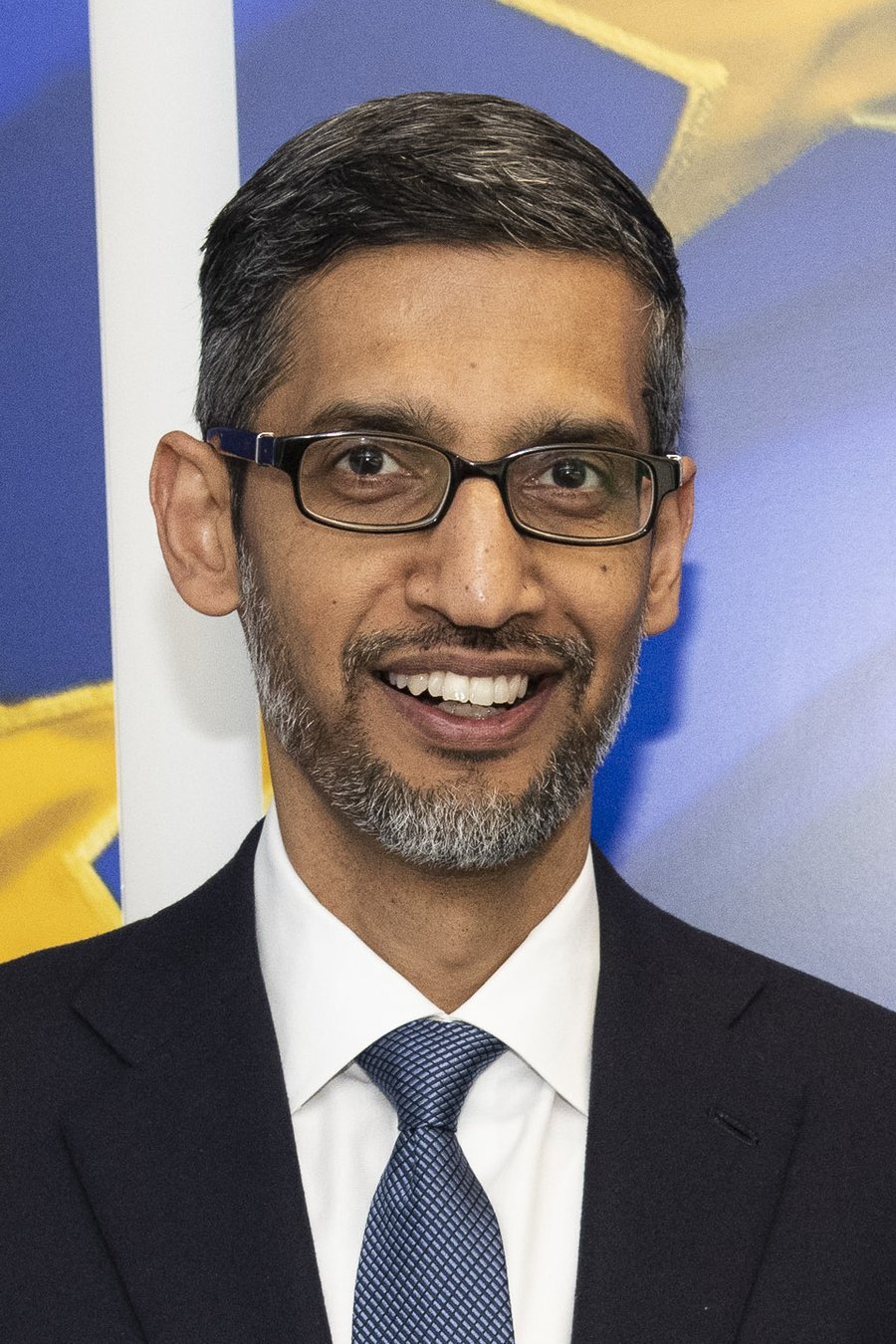
OpenAI’s first DevDay, and a boardroom crisis OpenAI
A year after launch, OpenAI reported 100 million weekly users and announced custom GPTs. Eleven days later its board removed Sam Altman as chief executive, saying he had not been consistently candid. After most staff threatened to leave and Microsoft offered to hire them, he returned within five days under a new board.
2023
Google I/O: PaLM 2 and AI in Search Google
Google’s 2023 developer conference was devoted to AI. It announced PaLM 2, moved Bard onto it, dropped the waitlist and previewed the Search Generative Experience, the experiment that became AI Overviews. In April it had merged its two AI labs, Google Brain and DeepMind, into Google DeepMind.
2023
GPT-4 launches; Bard opens a week later Race
OpenAI announced GPT-4, reporting large gains on professional and academic exams, with image input initially limited to a partner. A week later Google opened Bard to the public in the US and UK through a waitlist, describing it as an experiment that could make mistakes.
2023
Bard announced, Bing strikes, a $100 billion stumble Race
Google announced Bard, an experimental chatbot built on a lighter version of LaMDA. A day later, Microsoft unveiled a new Bing with a chat assistant built on OpenAI models. Then Bard’s own promotional example went wrong: it said the James Webb Space Telescope took the first picture of an exoplanet, which a ground-based telescope had done in 2004. Alphabet lost roughly $100 billion in market value on 8 February.
2023
ChatGPT Plus: the experiment starts charging OpenAI
OpenAI introduced ChatGPT Plus, its first paid consumer tier. By then analysts at UBS estimated that ChatGPT had reached about 100 million monthly users in January, roughly two months after launch, faster than any consumer app before it.

Microsoft doubles down; Google calls its founders back Race
Microsoft announced a new multi-year, multibillion-dollar investment in OpenAI, reported at about $10 billion. At Google, The New York Times reported that founders Larry Page and Sergey Brin, long removed from day-to-day work, had been brought in to review AI plans. The same month Alphabet announced 12,000 job cuts while saying it would sharpen its focus on AI.
2022
Google’s ‘Code Red’ Google
The New York Times reported that Google management had declared a ‘code red’ in response to ChatGPT. Sundar Pichai took part in meetings on AI strategy and redirected work across several groups. The worry was not only that a chatbot could answer questions, but that direct answers could reduce the clicks on search ads that funded the company.
Google had the research and a conversational model of its own. Its hesitation, over accuracy, bias and reputation, now looked like a competitive risk.
2022
One million users in five days OpenAI
Demand far outran OpenAI’s expectations. Users shared screenshots of essays, code, poems and explanations, and the service frequently showed an ‘at capacity’ message. For comparison, Instagram had taken about two and a half months to reach one million users.
2022
OpenAI launches ChatGPT OpenAI
OpenAI released ChatGPT, a model it said could ‘answer followup questions, admit its mistakes, challenge incorrect premises, and reject inappropriate requests’. The underlying technology was not new, but the interface was: anyone could hold a conversation with a large language model in a browser, free.
OpenAI listed limitations from the start, including that it ‘sometimes writes plausible-sounding but incorrect or nonsensical answers’.

2022
Google’s chatbot that stayed in the lab Research
Google showed LaMDA, a model for open-ended dialogue, at I/O 2021 and later offered limited demos through its AI Test Kitchen app. Public attention came mostly from a Google engineer’s claim in June 2022 that LaMDA was sentient, which Google rejected. The company kept the chatbot away from a general release.
2020
OpenAI builds the GPT series Research
OpenAI applied the Transformer to large-scale ‘generative pre-training’. GPT-2 was initially withheld in full over misuse concerns. GPT-3, with 175 billion parameters, was offered to developers through an API in 2020 and later fine-tuned into the instruction-following models behind ChatGPT.
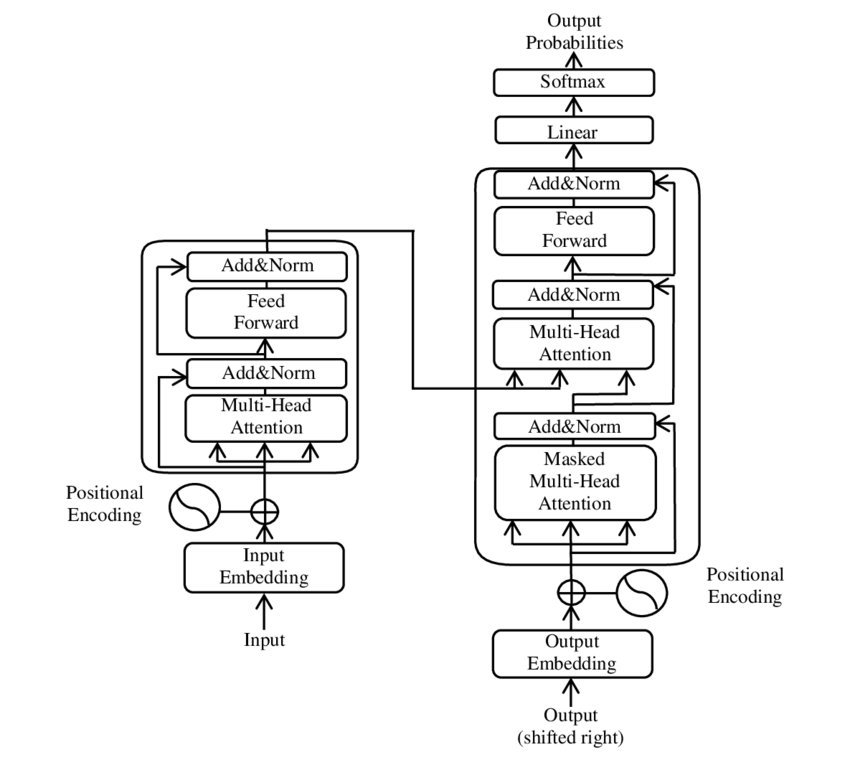
Google invents the Transformer Research
Google researchers published the paper that introduced the Transformer, an architecture that uses attention to model relationships between words across a whole sequence at once. It became the foundation for nearly every large language model, including OpenAI’s GPT series and Google’s own Gemini.
Two Code Reds, Three Years Apart
The same alarm, sounded by each side when the other pulled ahead.
Google, December 2022 vs OpenAI, December 2025
Trigger: ChatGPT’s viral launch. Fear: direct answers draining search queries and ad clicks. Response: Bard, PaLM 2, Google DeepMind, Gemini, AI in Search.
Trigger: Gemini 3’s strong benchmarks and Gemini’s user growth. Fear: losing ChatGPT’s lead. Response: GPT-5.2, faster and more personal ChatGPT, other projects paused.
How Big Did ChatGPT and Gemini Get?
Company-reported users. OpenAI counts weekly users; Google counts monthly users of the Gemini app.
| Date reported | ChatGPT (weekly) | Gemini app (monthly) |
|---|---|---|
| Dec 2022 | 1 million (total users) | – |
| Nov 2023 | 100 million | – |
| Aug 2024 | 200 million | – |
| Dec 2024 | 300 million | – |
| Feb 2025 | 400 million | – |
| May 2025 | – | 400 million |
| Aug 2025 | 700 million | 450 million (Jul) |
| Oct 2025 | 800 million | 650 million |
| Feb 2026 | 900 million | 750 million (Q4 2025) |
| May–Aug 2026 | – | 900m+ (May), 1 billion (Aug) |
| Sep 2026 | 1.2 billion | – |
The Model Race, Year by Year
Main consumer launches on each side. Scroll sideways on a phone.
| Year | OpenAI / ChatGPT | Google / Gemini |
|---|---|---|
| 2022 | ChatGPT (GPT-3.5), 30 Nov | LaMDA kept internal; Code Red, Dec |
| 2023 | ChatGPT Plus, GPT-4, custom GPTs, GPT-4 Turbo | Bard (LaMDA, then PaLM 2), Google DeepMind formed, Gemini 1.0 |
| 2024 | GPT-4o, o1 reasoning models, ChatGPT search | Gemini app and Advanced, Gemini 1.5 long context, AI Overviews, Gemini 2.0 |
| 2025 | GPT-4.5, GPT-5, Apps in ChatGPT, Atlas browser, GPT-5.2 | Gemini 2.5, AI Mode, Gemini 3 |
| 2026 | Ads test, GPT-5.5, GPT-6 with Intelligent UI | Siri deal, Gemini 3.5 Flash, Omni, 1 billion app users |
Pick a front. Who is ahead in October 2026?
A dated snapshot, not a ranking. Each verdict uses figures the companies themselves reported and will change as new numbers arrive.
Why Did ChatGPT Trigger Such a Strong Response?
1. It changed how people looked for information
Search gives you links to investigate. ChatGPT gave a single conversational answer that could be refined with follow-up questions. For many tasks, from explaining a concept to drafting an email, that was simply faster.
2. It made AI tangible
Language models had been improving for years, mostly out of public view. A chat box let students, workers, developers and businesses test them directly, and share the results.
3. It opened new battlegrounds
Search, office software, phones, browsers, coding tools and, by 2026, advertising all became places where the two companies compete.
4. It raised the question of who pays
OpenAI built subscriptions first and added ads in 2026. Google had to fit generative answers into an ad-funded search business without undermining it.
5. It exposed the risks
Hallucinations, bias, privacy, copyright and over-reliance became public debates. Bard’s first demo, Gemini’s image controversy and the early AI Overviews showed that shipping fast had a cost.
Did ChatGPT Put Google Search at Risk?
The threat was real. The collapse that some predicted in 2023 has not happened.
ChatGPT created the first credible challenge to the traditional search experience in two decades, but the Code Red story should not be read as proof that Google was beaten. Google had the research, the computing infrastructure and, above all, the distribution. Its answer was to change Search rather than defend it: AI Overviews put generated summaries above the links, AI Mode added a full conversational tab, and Gemini models now run inside both.
The financial evidence so far favours Google’s resilience. ‘Google Search & other’ revenue grew 17% year on year to $63.27 billion in the second quarter of 2026. In the US antitrust case, Judge Mehta found in 2024 that Google held an illegal monopoly, yet in September 2025 he declined to order a sale of Chrome partly because generative AI had become a new competitive force.
What did change is expectations. People now expect software to explain, summarise, create and act, not only retrieve documents. Publishers worry that AI answers reduce clicks to their sites, and both companies are now competing for the same thing: to be the place where a question becomes an answer, and increasingly a finished task.
Pick a date. Where was the AI race?
Enter any date from 30 November 2022 onwards, such as your first ChatGPT conversation. The calculator shows ChatGPT’s age on that day, the latest milestone from this timeline, and the countdown to its next birthday.
Who’s Who in the ChatGPT–Google Story
Sam Altman
Announced ChatGPT’s first million users; briefly removed by OpenAI’s board in November 2023; issued OpenAI’s own code red in December 2025.
Sundar Pichai
Led Google’s response, announced Bard in February 2023 and oversaw the shift of Search and Android to Gemini.
Demis Hassabis
Has led the combined lab since April 2023, responsible for the Gemini models.
Satya Nadella
Backed OpenAI with billions and launched the new Bing in February 2023, sharpening the pressure on Google.
‘Attention Is All You Need’
The 2017 Google paper that introduced the Transformer, the ‘T’ in GPT.
Amit Mehta
Ruled Google a search monopolist in 2024 and cited generative AI in his 2025 remedies decision.
Explore More Timelines
People Also Ask
Frequently Asked Questions
The Legacy: A New Interface for the Internet
ChatGPT’s launch did not end Google’s dominance, and it did not settle which assistant would lead. It did force the whole technology industry to respond to a new expectation: that people could deal with information through conversation. Google’s Code Red became a defining episode because it captured that shift as it happened, a research preview from a far smaller company pushing one of the world’s largest businesses to move faster than it wanted to.
Four years on, the story is not simply OpenAI versus Google. It is the move from a web organised around links and apps to one shaped by AI assistants that answer, create and increasingly complete tasks, and the race between two companies that each, at some point, had to sound the alarm.
Related AiTimeline Stories
⚠️ Editorial Note
This article draws on announcements from OpenAI and Google, Alphabet’s quarterly results, US court rulings, and contemporaneous reporting by The New York Times, Fortune, TechCrunch, The Verge and others. ‘Code red’ in both 2022 and 2025 refers to internal memos as reported by the press, not public company statements. User numbers are as reported by each company; OpenAI reports weekly users and Google monthly users, so they are not directly comparable. Benchmark leadership changes often and is described here only as reported at the time. Last checked 15 October 2026.
Sources & further reading
Every dated entry above was checked against these references. Last reviewed 15 October 2026.
- Introducing ChatGPT
- A New Chat Bot Is a 'Code Red' for Google's Search Business
- Rise of ChatGPT spikes concern in Google management to issue code red
- Introducing ChatGPT Plus
- An important next step on our AI journey (Bard announcement)
- GPT-4
- Introducing Gemini: our largest and most capable AI model
- Bard becomes Gemini: Try Ultra 1.0 and a new mobile app today
- Sam Altman declares 'code red' as Google's Gemini surges
- ChatGPT reaches 900M weekly active users
- Google's Gemini app hits 1 billion monthly active users
- OpenAI brings GPT-6 to ChatGPT and debuts Intelligent UI
- Alphabet Q2 2026 results (Form 8-K, Exhibit 99.1)
- Attention Is All You Need