Syrian Civil War Timeline: Key Turning Points From the 2011 Uprising to Assad’s Fall and Beyond
Syrian Civil War timeline: the 2011 uprising, ISIS, Russia's intervention, Assad's fall in December 2024 and Syria's fragile transition into 2026.
Latest Story
Syria’s war began with schoolboys’ graffiti in Daraa in March 2011 and ended, as a war against Bashar al-Assad, with an 11-day offensive that sent him fleeing to Moscow on 8 December 2024. In between, the country became a battlefield for ISIS, Russia, Iran, Hezbollah, Türkiye, Israel and the United States. This Syrian Civil War timeline runs newest first, from the 2026 transition, the SDF’s dissolution and Assad’s death sentence in absentia, back through each turning point to the first protests.
💡 Short Answer
The Syrian Civil War began with protests in March 2011 that Assad’s forces met with gunfire. It became a multi-sided war: ISIS declared a caliphate in 2014, Russia intervened in 2015, and Assad regained most cities by 2018. An HTS-led offensive toppled him on 8 December 2024. Ahmed al-Sharaa became transitional president in January 2025. In 2026 the Kurdish-led SDF was absorbed into the state, a transitional parliament first met on 12 July, and Assad was sentenced to death in absentia.
Syrian Civil War: Key Questions
The Syrian War in Ten Points
- Peaceful start: the war began as a protest movement in Daraa in March 2011.
- Militarised fast: defectors formed the Free Syrian Army in July 2011; by 2012 it was a nationwide war.
- Chemical weapons: the 2013 Ghouta sarin attack became the war’s defining crime.
- ISIS: declared a caliphate in 2014 and lost its last territory at Baghouz in March 2019.
- Russia saved Assad: its 2015 intervention turned the tide, culminating in Aleppo in 2016.
- Frozen for years: the 2020 Idlib ceasefire froze front lines until 2024.
- Sudden collapse: an 11-day HTS-led offensive ended Assad’s rule on 8 December 2024.
- Flawed transition: massacres on the coast and in Suwayda in 2025 tested the new order.
- 2026 milestones: SDF dissolved, parliament sat, Assad sentenced, terrorism listing lifted.
- Huge cost: hundreds of thousands killed, 13 million+ displaced, $216 billion+ to rebuild.
The Syrian Civil War Timeline: Latest Turning Points First
Newest first. Tags mark politics, battles, ISIS, foreign powers, and atrocities and justice. Use the filter to follow one thread.
Follow one thread of the war: the politics, the battles, ISIS, the foreign powers, or the atrocities and the search for justice.
–
Reconstruction money starts to move Foreign powers
The money is arriving into a still-insecure country. September 2026 brought protests over fuel price rises, reported to be the largest since Assad’s fall, a deadly gun attack on a bus in Homs, and repeated sabotage of oil and gas pipelines.
2026
US drops Syria from its terrorism blacklist Foreign powers
It removed one of the last big legal barriers to foreign investment and lending. Together with the 2025 repeal of the Caesar Act, it marked a complete reversal of Washington’s Assad-era sanctions policy within 21 months of his fall.
2026
The SDF dissolves into the Syrian state Politics
It closed the last large internal front of the war, 17 months after the first integration deal. Damascus took over Qamishli airport and the north-eastern oil fields, and a Kurdish governor was appointed in Hasakah in February. Unresolved: the women’s YPJ units, which the all-male army will not absorb, and how far Kurdish self-rule survives. Abdi said in October: “We will not take a step backward.”
2026
Assad sentenced to death in absentia Atrocity & justice
It was the first public verdict against the man who ruled Syria for 24 years; he lives in exile in Moscow. On 24 August the former Grand Mufti, Ahmad Badreddin Hassoun, was sentenced to life. Rights groups welcomed accountability but questioned trials in absentia and the death penalty, and noted that abuses committed since 2024 have yet to see comparable trials.
2026
Deal ends Russia’s military bases Foreign powers
Russia’s two Mediterranean outposts were the main reason it had intervened in 2015. Damascus had cancelled the 49-year Tartus lease in January 2025 but kept talking to Moscow, and al-Sharaa visited Putin in October 2025 and again in January 2026. The deal keeps a relationship without a Russian military presence.
2026
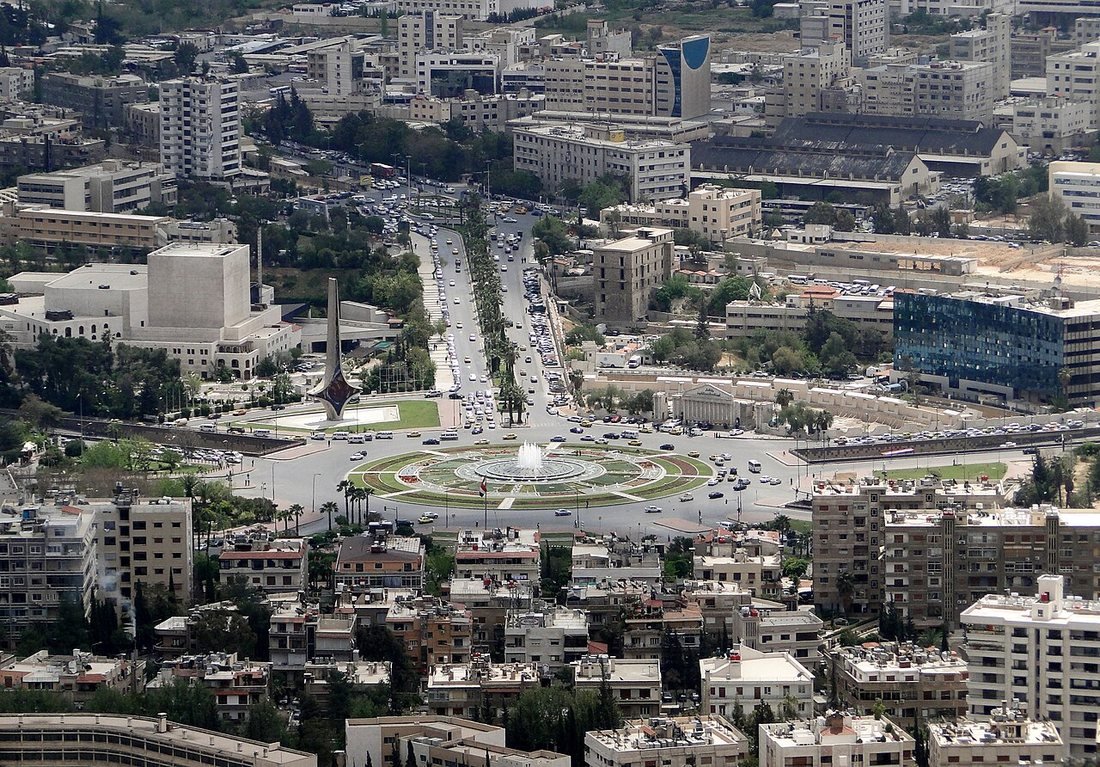
Transitional parliament holds its first session Politics
A first session pencilled in for about 8 June did not happen, because delayed votes in Raqqa (17 March) and Hasakah and Kobani (24 May) had to be held first. Two-thirds of members were chosen by indirect electoral colleges, not a popular vote, and one-third were appointed, which critics say limits its independence. On 7 July French President Emmanuel Macron became the first major Western leader to visit al-Sharaa in Damascus; explosions in the city during his visit wounded at least 18 people.
2026
US forces hand over bases Foreign powers
The pullback followed the government’s takeover of the north-east and Syria’s entry into the anti-ISIS coalition. ISIS kept attacking soldiers in Raqqa, Mayadin and Manbij, and about 120 ISIS detainees escaped from a prison in al-Shaddadah during fighting on 19 January.
2026
Damascus takes the north-east; SDF agrees to merge Battle
The 30 January deal, brokered with US envoy Tom Barrack, handed Raqqa and Deir ez-Zor to the government, moved Interior Ministry forces into Hasakah and Qamishli, and set out individual vetting of SDF fighters for the army and police. It was the most significant battlefield change since December 2024.
Caesar Act repealed Foreign powers
The 2019 Caesar Act, named after the defector who smuggled out tens of thousands of photographs of tortured detainees, had blocked investment in Syria. On 13 December two US soldiers and an interpreter were killed near Palmyra by a gunman, and US forces struck more than 70 ISIS targets a week later.
2025
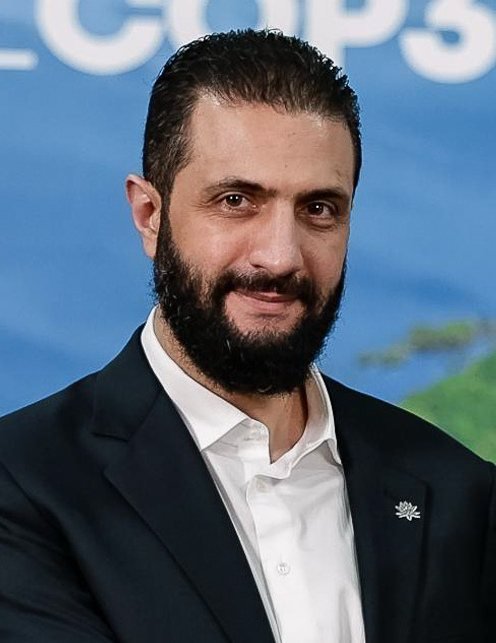
Al-Sharaa at the White House; Syria joins the anti-ISIS coalition Foreign powers
Less than a year earlier al-Sharaa had a $10 million US bounty on his head, lifted in December 2024. In September 2025 he became the first Syrian leader to address the UN General Assembly since 1967.
2025
Indirect elections for a transitional parliament Politics
The government said a full popular vote was impossible without a census and with millions displaced. Women won only a small share of the elected seats, and minorities complained of under-representation, questions that carried into the assembly’s first session in July 2026.
2025
Suwayda bloodshed and Israeli strikes on Damascus Battle
Monitors reported well over 1,000 deaths, many of them Druze and Bedouin civilians, and documented executions by several sides. Israel said it acted to protect the Druze. The province remained under Druze militias aligned with spiritual leader Hikmat al-Hijri, and clashes recurred in August 2026.
2025
Trump meets al-Sharaa; sanctions start to fall Foreign powers
On 22 June a suicide bomber killed 25 worshippers at the Mar Elias Greek Orthodox church in Damascus, the deadliest attack on Christians of the transition, which the government blamed on ISIS.
2025
SDF deal, constitutional declaration and a new government Politics
The declaration keeps Islamic jurisprudence as a main source of law, requires the president to be Muslim and concentrates power in the presidency. The government included a Christian, a Druze, an Alawite and a Kurdish minister, but critics said the core security ministries stayed with former HTS figures.
2025
Massacres of Alawites on the coast Atrocity & justice
Most of the dead were Alawite civilians in Latakia, Tartus and Baniyas. The national inquiry, reporting on 22 July, did not describe the killings as systematic; the UN Commission of Inquiry found systematic patterns, including executions and looting. It was the worst violence of the transition and the biggest test of al-Sharaa’s promise to protect minorities.
2025
Ahmed al-Sharaa named transitional president Politics
Al-Sharaa, known as Abu Mohammed al-Jolani as head of Jabhat al-Nusra and HTS, had broken with al-Qaeda in 2016 and recast himself as a national leader. A National Dialogue Conference followed in February.
2024
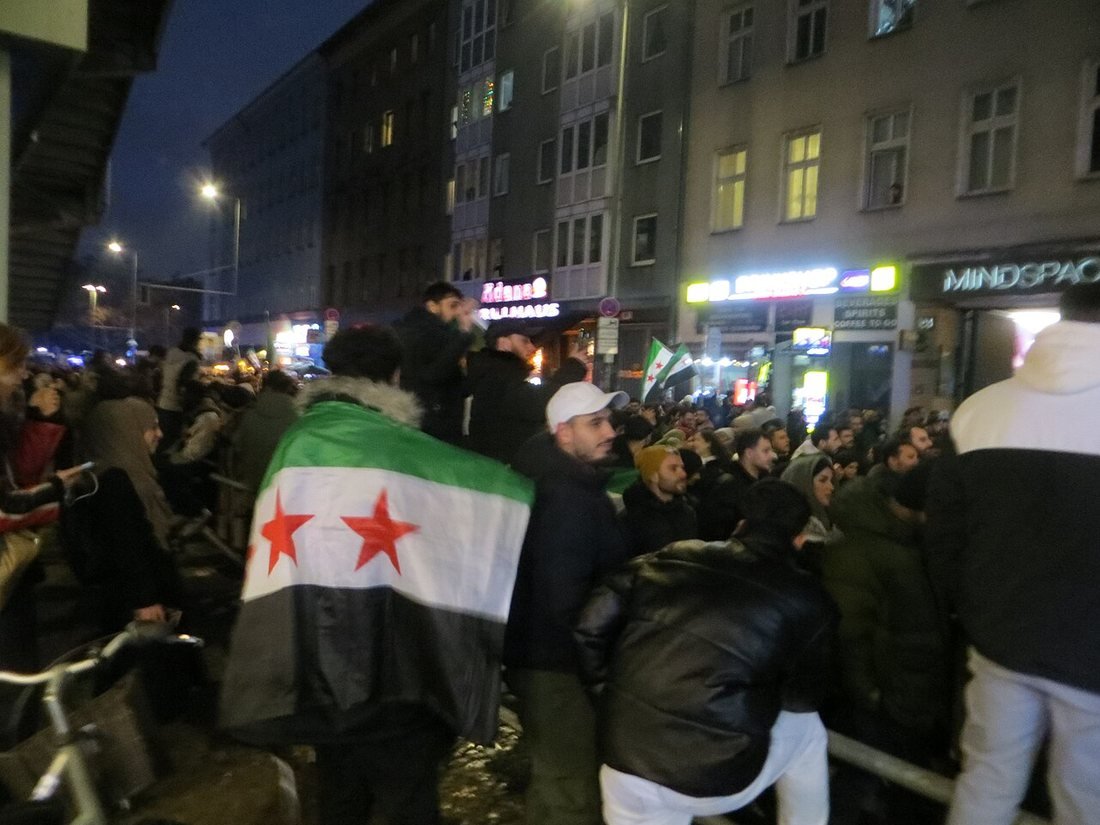
Assad flees; the regime collapses Battle
Fifty-three years of rule by Hafez and Bashar al-Assad ended in a night. Russia was absorbed by Ukraine, Iran and Hezbollah had been battered by Israel in 2024, and the army melted away. The world saw the scale of the regime’s prisons as detainees walked out, and families began searching for the missing, estimated by rights groups at more than 100,000.
7 Dec 2024
Eleven days that toppled Assad Battle
The offensive began the day a ceasefire took effect in Lebanon between Israel and Hezbollah. Government lines collapsed faster than almost anyone expected; Turkish-backed factions attacked the SDF in the north at the same time.
Earthquake and a return to the Arab League Foreign powers
Arab states traded engagement for promises on refugees and the Captagon trade, which had made Syria a narco-state. Little was delivered. Front lines were largely frozen, which made Assad’s sudden fall a year later all the more striking.
Idlib ceasefire, Caesar sanctions and Assad’s fourth term Foreign powers
The ceasefire came after a government offensive displaced nearly a million people and killed dozens of Turkish soldiers in February 2020. It froze the north-west for almost five years, which is where HTS built the state and army that later marched on Damascus.
ISIS loses its last territory; Turkey moves in ISIS
Tens of thousands of ISIS family members were moved to the al-Hol camp, which held more than 60,000 people at its peak and stayed a security and humanitarian problem until it was emptied in 2026.
Assad retakes Ghouta and the south Battle
Evacuation deals moved tens of thousands of fighters and civilians to Idlib on green buses. The OPCW later attributed the Douma chlorine attack to the Syrian air force. By the end of 2018 Assad held all the main cities.
Khan Shaykhun, Astana zones and the fall of Raqqa ISIS
A UN-OPCW mechanism blamed the government for Khan Shaykhun. Raqqa, ISIS’s de facto capital since 2014, was left mostly in ruins after a four-month battle backed by US air power.
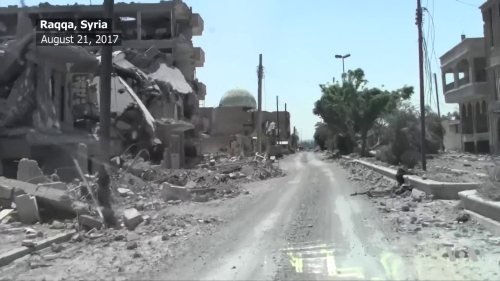
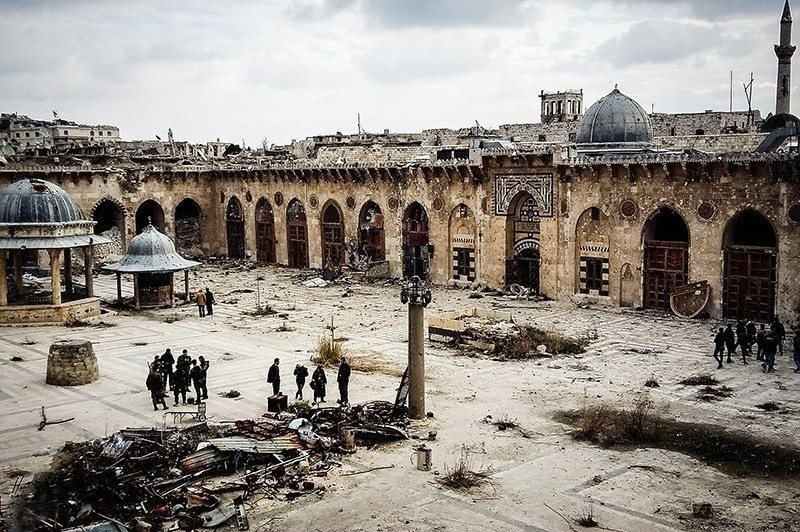
Government retakes eastern Aleppo Battle
Syria’s largest city had been divided since 2012. Its fall was the rebels’ biggest defeat and showed what Russian air power had changed. Turkey had entered northern Syria in August with Operation Euphrates Shield against ISIS and the Kurdish YPG.
2015
Russia intervenes Foreign powers
Assad had lost Idlib and Palmyra that spring and his army was overstretched. Russian air power stopped the slide and turned the war. In January 2015 Kurdish forces, backed by US strikes, had driven ISIS out of Kobani, the start of the US partnership that became the SDF.
ISIS declares a caliphate ISIS
ISIS enslaved Yazidis, beheaded hostages and drew tens of thousands of foreign fighters. The coalition’s focus on ISIS, not Assad, shaped Western policy for the rest of the war.
2013
Sarin attack on Ghouta Atrocity & justice
A UN team confirmed sarin but was not mandated to say who fired it; the US, UK, France and Human Rights Watch blamed the government, which denied it. President Obama stepped back from strikes after the deal. On the 2026 anniversary, Syria applied to join the international partnership against chemical-weapons impunity.
Hezbollah joins the fight; Raqqa falls to rebels Foreign powers
Hezbollah’s open entry made the war regional. Raqqa soon fell from mainstream rebels to ISIS, which made it its capital in 2014.
Uprising becomes full-scale war Battle
Kofi Annan’s six-point peace plan collapsed, and he resigned as envoy in August. The Geneva Communiqué remained the basis of UN peace efforts for a decade, but its main idea, a negotiated transition, never happened.
2011
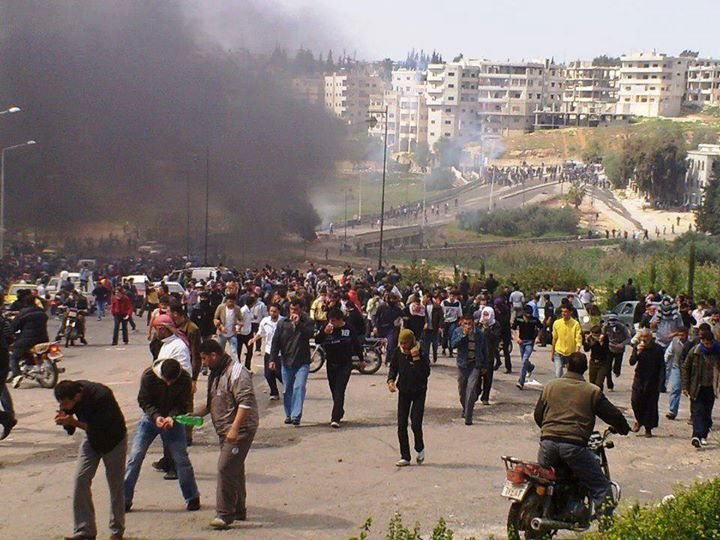
Protests begin in Daraa Politics
Protesters first demanded reform and dignity, then the fall of the regime. Assad blamed foreign conspiracy and released jihadist prisoners while jailing peaceful activists. By the end of the year the UN put the death toll at more than 5,000.
The Main Turning Points at a Glance
| Year | Turning point | Why it mattered |
|---|---|---|
| 2026 | SDF dissolved; parliament sits; Assad sentenced; US terrorism listing lifted | The last big internal front closed and Syria rejoined the international system |
| 2025 | Al-Sharaa president; constitutional declaration; coastal and Suwayda violence | A new order, and its first failures to protect minorities |
| 2024 | Eleven-day offensive; Assad flees on 8 December | 53 years of Assad-family rule ended |
| 2023 | Earthquake; Arab League readmission | Regional isolation of Assad eased |
| 2020 | Idlib ceasefire; Caesar sanctions | Front lines froze for almost five years |
| 2019 | Baghouz; Turkey’s Peace Spring; Baghdadi killed | ISIS lost its last territory |
| 2018 | Ghouta, Afrin and the south retaken | Assad held every major city |
| 2017 | Raqqa falls; Astana zones; Khan Shaykhun | ISIS’s capital lost; chemical attacks drew US strikes |
| 2016 | Eastern Aleppo falls | The rebels’ biggest defeat |
| 2015 | Russian intervention | Saved Assad from likely defeat |
| 2014 | ISIS caliphate; US-led air strikes | The war became a global security crisis |
| 2013 | Ghouta sarin attack; Hezbollah at Qusayr | Chemical weapons and regional war |
| 2012 | Houla; Damascus bombing; battle for Aleppo | Full-scale war |
| 2011 | Daraa protests; Free Syrian Army; Arab League suspension | The uprising began |
Who Fought, and Where They Stand Now
The war was never two-sided. Here is each major actor’s role and position as of October 2026.
| Actor | Role in the war | Position in October 2026 |
|---|---|---|
| Assad government | Ruled until 8 Dec 2024 with Russian, Iranian and Hezbollah backing | Collapsed; Assad in Moscow, sentenced to death in absentia |
| HTS / al-Sharaa | Jabhat al-Nusra successor; ran Idlib; led the 2024 offensive | Dissolved into the state; al-Sharaa transitional president |
| SDF (Kurdish-led) | US partner against ISIS; ran the north-east | Integrated and dissolved, August 2026 |
| ISIS | Caliphate 2014–2019; insurgent cells after | Still attacking; Syria now in the anti-ISIS coalition |
| Russia | Air power from 2015; bases at Hmeimim and Tartus | Bases converted under August 2026 deal; hosts Assad |
| Iran and Hezbollah | Advisers, militias and fighters for Assad | Expelled; Syria intercepts arms bound for Hezbollah |
| Türkiye | Backed rebels; operations against ISIS and Kurdish forces from 2016 | Closest ally of Damascus; major investor |
| United States | Anti-ISIS coalition; partner of the SDF | Sanctions lifted; most bases handed over in 2026 |
| Israel | Strikes on Iranian and Hezbollah targets | Holds Golan buffer zone; strikes continue; talks reported |
The Human Cost
The UN human rights office counted 306,887 civilians killed between March 2011 and March 2021, about one in every 70 Syrians alive before the war; counts that include fighters run to around half a million. More than 100,000 people are still missing, most of them taken into Assad-era detention. At the peak, more than 13 million people, over half the pre-war population, had fled abroad or been displaced inside Syria.
Assad’s fall opened the way home for some. UNHCR recorded 1,795,641 refugee returns and just over 2 million internally displaced people returning between December 2024 and 3 September 2026. Most refugees remain abroad, and returns depend on housing, mine clearance, jobs, services and safety.
Four Phases of the War
Uprising to insurgency
Protests, crackdown and defections; rebels take much of the north and east; ISIS rises from the chaos.
Foreign powers decide
Russia rescues Assad, the US-backed SDF destroys the caliphate, and Türkiye carves out zones in the north.
Frozen conflict
Ceasefires, sanctions, a Captagon economy and slow Arab normalisation, until the regime’s sudden collapse.
Transition
New leaders, new sanctions relief and the SDF’s merger, alongside sectarian killings and contested legitimacy.
What Happens Next?
Inclusive governance: whether a partly appointed parliament and a powerful presidency can win the trust of Alawites, Druze, Kurds and Christians. Security: whether former factions, now in one army, obey one chain of command, and whether ISIS can be contained. Suwayda and the Kurds: whether the SDF merger holds and the Druze south can be brought back peacefully. Accountability: whether justice reaches abuses after 2024 as well as before. Money: whether World Bank and Gulf funding can rebuild power, water and housing. Neighbours: whether Israeli strikes and the Golan buffer zone give way to a security arrangement.
Explore More Timelines
People Also Ask
Frequently Asked Questions
Conclusion: A Historic Break, an Unfinished Peace
Syria’s war passed through many turning points: a crackdown that turned protest into rebellion, chemical attacks, a caliphate, a Russian rescue, and a frozen conflict that ended in eleven days. Assad’s fall closed one chapter; 2026 closed another, with the SDF’s merger and the first sitting of a new parliament.
But changing who governs Syria has not by itself settled the questions the war opened: who belongs, who holds power, and who answers for the killing. How those are answered will decide whether the transition becomes a lasting peace.
Related AiTimeline Stories
⚠️ Editorial Note
This is a selected timeline of major turning points, not a full account of every faction or battle. Casualty and displacement figures vary by source; we cite the UN human rights office and UNHCR and label estimates. Responsibility for attacks is attributed to the bodies that assigned it. Events in 2026 are compiled from news reports and official statements and are current to 19 October 2026. The December 2024 fall of Assad’s government is distinct from the security, political and humanitarian crises that followed.
Sources & further reading
Every dated entry above was checked against these references. Last reviewed 19 October 2026.
- Syria's new parliament holds first session since Assad's ouster
- Syria's Kurdish-led SDF dissolves as part of integration with Damascus
- Damascus court sentences Bashar al-Assad and eight others to death
- US removes Syria from state sponsor of terrorism list
- Syria says it reached deal with Moscow on fate of Russian bases
- Factbox: full terms of ceasefire, integration agreement between Syrian government and SDF
- Syrian army takes over al-Tanf base after US exit
- More than 1,400 killed in sectarian violence in coastal Syria, report finds
- Nearly 1.8 mln Syrian refugees return home since December 2024: UNHCR
- Syria: 306,000 civilians were killed over 10 years of conflict
- The Syrian civil war: Timeline, UK aid and statistics
- Syria in 2026: Interim government and Kurdish integration
- How it happened: two seismic weeks that toppled Syria's government
- Syrian Arab Republic