Qatar Blockade 2017: Timeline of the Diplomatic Crisis
Qatar blockade timeline from the June 2017 rupture and 13 demands to the Al-Ula deal of January 2021, and where Gulf ties stand in 2026 after the Iran war.
Latest Story
On 5 June 2017 Saudi Arabia, the United Arab Emirates, Bahrain and Egypt cut diplomatic ties with Qatar, closed their airspace to its planes and sealed its only land border. The Qatar blockade split the Gulf for 1,310 days, separated families and forced a small, gas-rich state to rebuild its supply lines from scratch. It ended with the Al-Ula Declaration on 5 January 2021 without Qatar meeting the 13 demands made of it. This Qatar blockade 2017 timeline traces how the crisis began, how it escalated and how it was resolved, and follows where Gulf relations stand in 2026, after Iran’s missiles hit Qatar and a new rift opened between Riyadh and Abu Dhabi.
💡 Short Answer
The Qatar blockade was a diplomatic and economic rupture imposed on Qatar by Saudi Arabia, the UAE, Bahrain and Egypt from 5 June 2017. They accused Qatar of supporting terrorism and of close ties with Iran, which Qatar denied. They issued 13 demands, including closing Al Jazeera. Qatar refused, and the crisis ended with the Al-Ula Declaration on 5 January 2021, after 1,310 days.
Qatar Blockade 2017: Key Questions
The Qatar Crisis in Ten Points
- Deep roots: Saudi Arabia, the UAE and Bahrain had already withdrawn their ambassadors from Doha in 2014.
- The trigger: a hack of the Qatar News Agency on 24 May 2017 published remarks attributed to the Emir that Qatar said were fake.
- The rupture: four states cut ties and closed borders, airspace and ports on 5 June 2017.
- Human cost: Gulf citizens had 14 days to leave, splitting hundreds of mixed families.
- The ultimatum: 13 demands on 22 June 2017, including closing Al Jazeera; Qatar refused.
- Adaptation: Qatar built new routes through Oman and Turkey and expanded local food production.
- Legal wins and losses: the ICJ backed Qatar on airspace in 2020 but rejected its case against the UAE in 2021.
- The end: the Al-Ula Declaration on 5 January 2021, after 1,310 days and Kuwaiti mediation.
- Slow repair: Bahrain restored ties in April 2023, and the UAE reopened its embassy in June 2023.
- 2026 twist: Saudi Arabia and Qatar are now close partners, while Riyadh and Abu Dhabi have fallen out.
Qatar Blockade Timeline: From the 2014 Rift to 2026
Newest first. Tags mark the background, escalation, effects on people, diplomacy, legal cases, the repair and the Gulf in 2026.
2026
The GCC meets in Manama, with Qatar at the table Gulf in 2026
Qatar took part in the 168th session of the Gulf Cooperation Council’s Ministerial Council in Manama, the capital of Bahrain, the last of the four states to restore relations with Doha. Days earlier the GCC said a GCC-EU summit planned for Riyadh on 24 October would move to a later date. Nine years after the crisis began, Qatar sits in every GCC forum; the open divisions in the bloc now run elsewhere.
2026
The Emir speaks of ‘exceptional events’ Gulf in 2026
Sheikh Tamim bin Hamad Al Thani told the Shura Council that Qatar and the region had faced exceptional events and that the security of GCC states was non-negotiable. He said Qatar would emerge stronger, called for more effort to secure shipping through the Strait of Hormuz and to protect energy infrastructure, and set out plans to grow industries beyond LNG. It echoed the self-reliance message of the blockade years.
2026
Saudi Arabia and Qatar in a new grouping, without the UAE Gulf in 2026
Foreign ministers of Saudi Arabia, Qatar, Turkey, Egypt and Pakistan met in Cairo, in a grouping that Foreign Policy described as a new Saudi-led axis focused on Iran and on Israel’s military expansion. Three of its members, Saudi Arabia, Egypt and Qatar, were on opposite sides in 2017, and Turkey was Qatar’s main military backer then. The UAE, which led the 2017 campaign with Saudi Arabia, was absent.
2026
Iranian missiles hit Ras Laffan Gulf in 2026
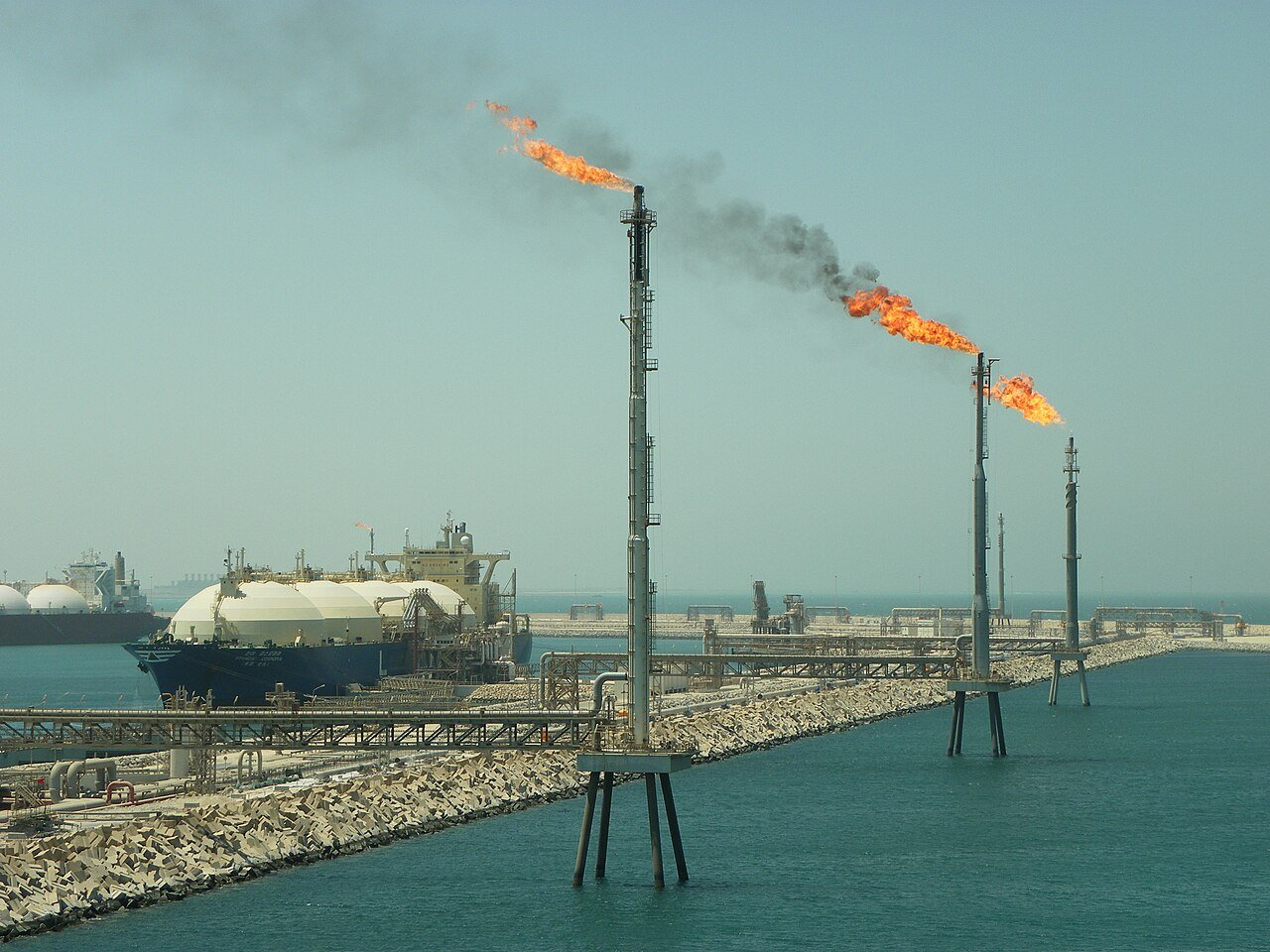
Iranian missiles struck Ras Laffan Industrial City, the heart of Qatar’s gas industry, damaging two LNG trains and a gas-to-liquids plant. QatarEnergy said 12.8 million tonnes a year of LNG production would be offline for three to five years, and on 24 March declared force majeure on some long-term contracts with buyers in Italy, Belgium, South Korea and China. Qatar declared Iran’s military and security attachés persona non grata on 19 March, but did not cut relations, which had been one of the 13 demands.
2026
The Iran war reaches Qatar Gulf in 2026
After the United States and Israel attacked Iran, Iran fired missiles and drones at Gulf states that host US forces, including Qatar. QatarEnergy halted LNG production at Ras Laffan on 2 March after a drone attack. The crisis tested Gulf solidarity in a very different way from 2017: this time the GCC states faced a common threat, and Qatar acted as a mediator between Washington and Tehran.
2025
A new Gulf rift, between Riyadh and Abu Dhabi Gulf in 2026
Saudi-led coalition aircraft struck what Riyadh said was a UAE-linked weapons shipment for the Southern Transitional Council near the Yemeni port of Mukalla, and the UAE said it would withdraw its remaining forces from Yemen. The two leaders of the 2017 campaign were now openly at odds. On 1 January 2026 Sheikh Tamim phoned both Crown Prince Mohammed bin Salman and President Mohamed bin Zayed.
2025
A high-speed railway from Riyadh to Doha Repair
At a meeting attended by Sheikh Tamim and Crown Prince Mohammed bin Salman, the two countries agreed to build an electric high-speed railway via Hofuf and Dammam, linking King Salman International and Hamad International airports. They said it would carry more than 10 million passengers a year and be finished in about six years. Bilateral trade, they said, reached $930.3 million in 2024, up 634% on 2021. In 2017 the same border was closed to every truck.
2025
Israel strikes Doha; the region rallies to Qatar Gulf in 2026
An Israeli air strike targeted Hamas political leaders meeting in Doha to discuss a US ceasefire proposal. Reports said five Hamas members and a Qatari security officer were killed, while senior leaders survived. Qatar hosted an emergency Arab-Islamic summit on 14–15 September. Saudi Arabia, the UAE, Bahrain and Egypt, which had accused Qatar of supporting extremists in 2017, condemned the attack on its territory.
2025
Iran fires at Al Udeid Gulf in 2026
Iran fired missiles at Al Udeid Air Base, the largest US base in the Middle East, after US strikes on its nuclear sites. Qatari and US Patriot batteries intercepted them. The base had been a reason Washington pressed both sides to settle in 2017; in 2025 it made Qatar a target.
2023
The UAE and Qatar reopen embassies Repair
The two countries had restored relations on paper in January 2021, but their embassies stayed closed until June 2023. The reopening came during a broader easing of Gulf rivalries, three months after Saudi Arabia and Iran agreed to restore their own relations.
2023
Bahrain, the last holdout, restores ties Repair
Qatar and Bahrain agreed to restore diplomatic relations ‘in accordance with the principles of the UN Charter’. Their relationship had been the hardest to repair because of older disputes over their maritime border and the detention of fishermen. Bahrain was the last of the four states to restore relations.
2022
Mohammed bin Salman attends the World Cup opening in Doha Repair
The Saudi Crown Prince watched the opening match beside Sheikh Tamim, an image that would have been impossible in 2018. Qatar’s World Cup preparations had continued throughout the blockade, using new supply routes for construction materials.
2021
The ICJ rejects Qatar’s case against the UAE Legal
Qatar had argued that the UAE’s expulsion of Qatari citizens and other measures amounted to discrimination on the basis of national origin. The International Court of Justice ruled that ‘national origin’ in the convention did not cover current nationality, so it had no jurisdiction. The ruling came a month after Al-Ula.
2021
Egypt and Qatar restore relations Repair
Egypt, which had cut ties largely over Qatar’s support for the Muslim Brotherhood, agreed with Qatar to resume diplomatic relations within weeks of Al-Ula. The two later became partners in mediating between Israel and Hamas in Gaza.
2021
The Al-Ula Declaration ends the crisis Repair
Sheikh Tamim landed in Al-Ula and was greeted on the tarmac by Crown Prince Mohammed bin Salman with an embrace. The declaration reaffirmed Gulf solidarity, stability and non-interference in each other’s affairs. US envoy Jared Kushner attended. The text did not mention the 13 demands, and Qatar agreed to suspend its legal cases at the ICJ, ICAO and the WTO.
2021
Saudi Arabia agrees to reopen its border and airspace Repair
Kuwait’s foreign minister, Sheikh Ahmad Nasser Al-Mohammad Al-Sabah, announced on state television that Saudi Arabia would reopen its border, airspace and sea routes to Qatar. It was the practical end of the blockade, the day before the formal declaration.
2020
Kuwait announces ‘fruitful’ talks Diplomacy
Kuwait said the parties had held fruitful discussions towards a final agreement. Kuwait’s long-time mediator, Emir Sheikh Sabah Al-Ahmad Al-Jaber Al-Sabah, had died on 29 September 2020; his successor kept up the effort, with support from the outgoing US administration.
2020
The ICJ backs Qatar on the airspace dispute Legal
The four states had appealed against a June 2018 decision of the ICAO Council that it could hear Qatar’s complaint about the airspace closures. The International Court of Justice rejected the appeal unanimously and held that the ICAO Council had jurisdiction, a legal win for Qatar.
2019
A football thaw and a summit invitation Diplomacy
The three Gulf states reversed an initial decision to boycott the 24th Arabian Gulf Cup in Doha, and their teams played there; Bahrain won the final against Saudi Arabia. Qatar sent its prime minister to the GCC summit in Riyadh. Hopes of a deal rose, but talks stalled in early 2020.
2018
The legal battle widens Legal
Qatar accused the UAE of discriminating against Qatari citizens, and the ICJ ordered the UAE to allow separated families to reunite and students to finish their studies. At ICAO, the Council rejected the four states’ objections to its jurisdiction over the airspace dispute, and they appealed to the ICJ on 4 July 2018.
2017
Qatar takes the airspace closures to ICAO Legal
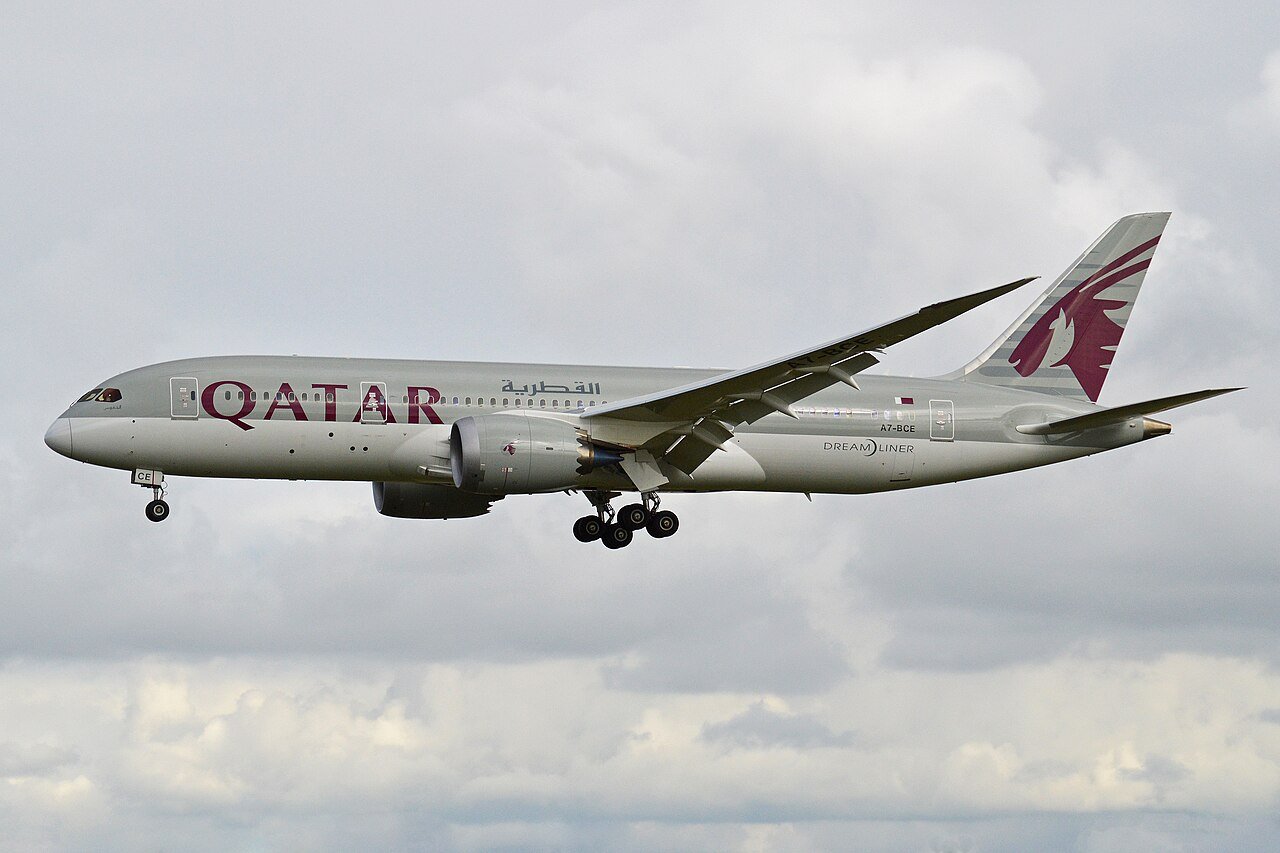
Qatar asked the ICAO Council to rule that the closure of airspace to Qatar-registered aircraft breached the international aviation treaty. ICAO had already approved emergency routes over international waters in the summer of 2017 so Qatari flights could keep operating.
2017
A phone call raises hopes, then dashes them Diplomacy
The two leaders spoke and agreed to appoint envoys. Hours later Saudi Arabia suspended any dialogue, accusing the Qatar News Agency of distorting the call by reporting that it had been arranged at Washington’s request. The episode showed how deep the mistrust ran.
2017
The four states reduce their demands to six principles Diplomacy
The four states’ envoys set out six broad principles, including commitments to combat extremism and terrorism, end acts of provocation and incitement, and not interfere in other states’ internal affairs. They said Qatar should accept them as a basis for talks, though they later said the original demands still stood.
2017
Qatar and the US sign a counter-terrorism agreement Diplomacy
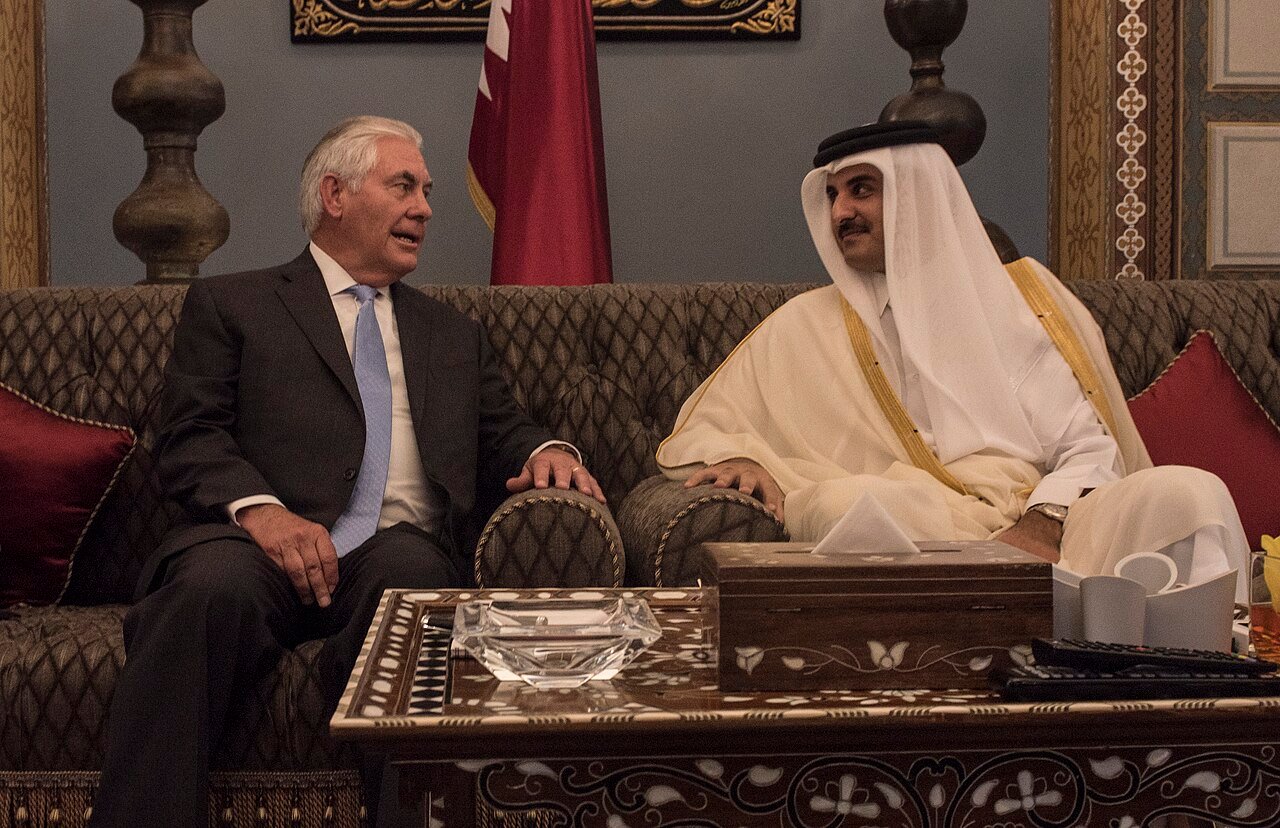
Secretary of State Rex Tillerson signed the agreement with Qatar’s foreign minister, Sheikh Mohammed bin Abdulrahman Al Thani, and called Qatar’s position reasonable. The four states said the agreement was not enough. It gave Qatar a way to show cooperation on the issue at the heart of the accusations against it.
2017
Qatar replies; the four states call it negative Diplomacy
Qatar sent its written reply to Kuwait’s Emir and said the demands were not about fighting terrorism but about limiting its sovereignty. Meeting in Cairo on 5 July, the foreign ministers of the four states said the reply was negative and that the boycott would stay in place, without announcing new sanctions.
2017
The 13 demands Escalation
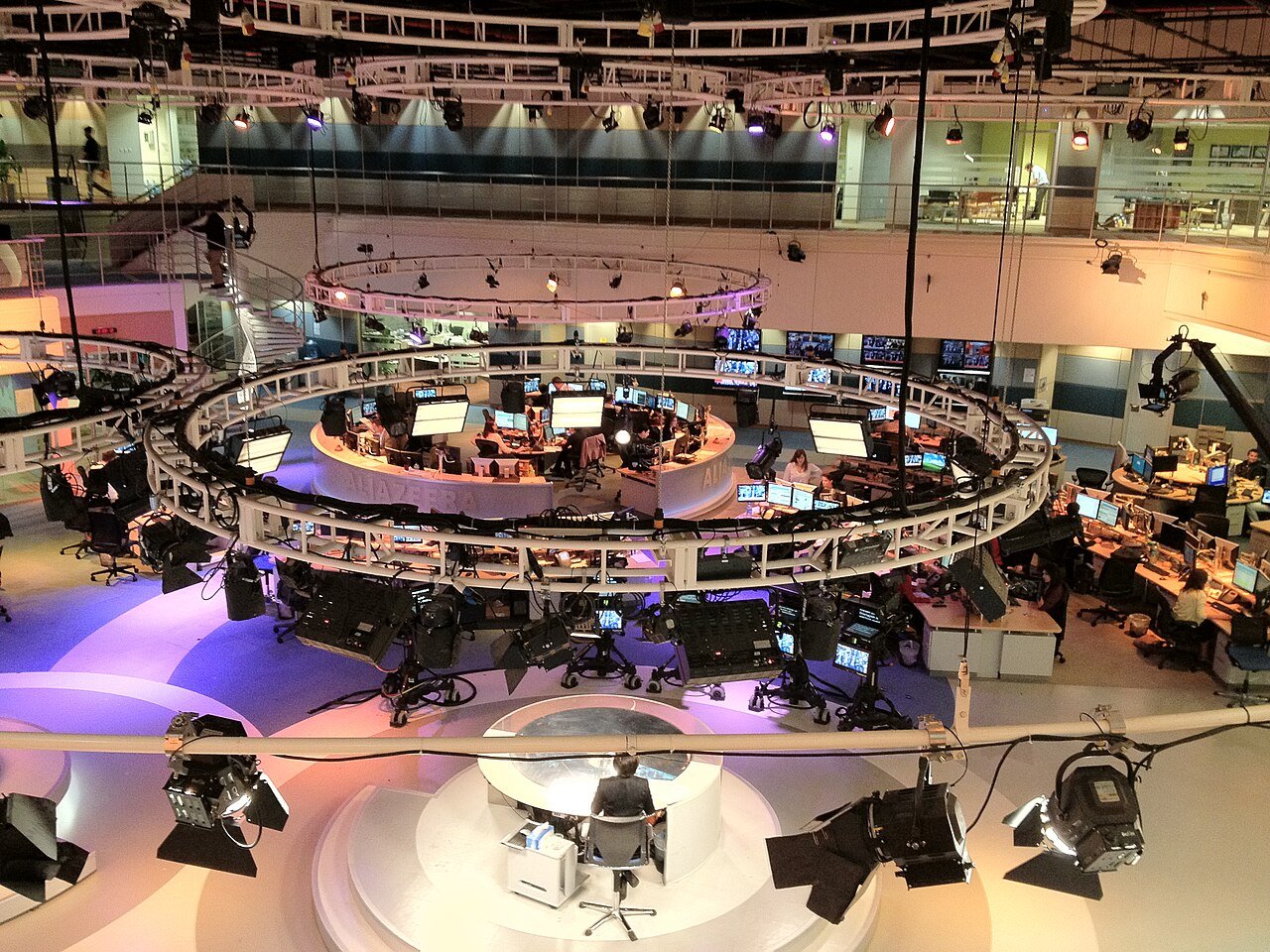
The list required Qatar to close Al Jazeera and other outlets, curb ties with Iran, close the Turkish military base, cut links with groups including the Muslim Brotherhood, Hezbollah and al-Qaeda, hand over wanted people, pay compensation, align its policies with its neighbours and accept monthly, then yearly, compliance checks for ten years. Qatar’s foreign minister said it was designed to be rejected.
2017
The deadline for families to leave People
Saudi Arabia, the UAE and Bahrain ordered Qatari citizens to leave within 14 days and told their own citizens to leave Qatar. Human Rights Watch later documented spouses, parents and children separated, 11 Qatari students removed from UAE universities and patients cut off from medical care. The three states later set up hotlines for mixed families, but HRW found few people got permission to travel.
2017
A terror list and a cyberattack on Al Jazeera Escalation
The four states published a joint list of people and groups they said were linked to Qatar and to terrorism. Al Jazeera said its platforms were under a sustained cyberattack. On 9 June Tillerson called for an easing of the blockade, and minutes later President Trump said Qatar had historically funded terrorism at a very high level.
2017
Turkey and Iran step in Escalation
Turkey’s parliament fast-tracked a law allowing troops to be deployed to its base in Qatar, and Turkey and Iran began sending food by air and sea. Iran opened its airspace to Qatar Airways, which lost access to its neighbours’ skies. Qatar’s stock market fell 7.3% on the first day of trading after the rupture.
2017
Four states cut ties with Qatar Escalation
In the space of about half an hour, Bahrain, Saudi Arabia and the UAE cut diplomatic relations, and Egypt followed later that day. They closed their airspace to Qatari aircraft and their ports to Qatari ships, and Saudi Arabia closed the Abu Samra-Salwa crossing, Qatar’s only land border. Gulf citizens were given 14 days to leave. The four states accused Qatar of supporting terrorism; Qatar called the move unjustified and baseless.
2017
The Qatar News Agency is hacked Background
The remarks praised Iran and Hamas and criticised Gulf policy. Qatar said within hours that its news agency had been hacked, but Saudi and Emirati channels broadcast them repeatedly and blocked Al Jazeera. In July 2017 The Washington Post reported that US intelligence officials believed the UAE had arranged the hack. The UAE denied it.
2014
The first rupture: ambassadors withdrawn Background
The three states said Qatar had failed to honour a GCC security agreement, citing its support for the Muslim Brotherhood after the 2011 Arab Spring and Al Jazeera’s coverage of Egypt. The ambassadors returned in November 2014 after Qatar made commitments under the Riyadh agreements. In 2017 the four states said Qatar had broken those commitments.
2013
Sheikh Tamim becomes Emir Background
The new Emir kept the independent foreign policy of his father’s era: close ties with Turkey, working relations with Iran, with which Qatar shares the world’s largest natural gas field, and support for Islamist movements that Riyadh, Abu Dhabi and Cairo saw as a threat.
Pick a demand to see what the four states asked for in June 2017, how Qatar answered, and what had happened to it by 2026.
Wording summarised from the list published on 23 June 2017. Status is based on public records; the Al-Ula Declaration of January 2021 did not say whether any demand had been met or dropped.
Of the 13 demands, none was publicly met in full. The crisis ended because the political calculations of the four states changed, not because Qatar changed course.
Who Cut Ties With Qatar in 2017?
Four states led the boycott; several others followed or downgraded relations.
| Country | Action in June 2017 | Restored |
|---|---|---|
| Bahrain | Cut ties (first, 5 June) | April 2023 |
| Saudi Arabia | Cut ties; closed land border, airspace, ports | January 2021 |
| United Arab Emirates | Cut ties; closed airspace and ports | January 2021 (embassies June 2023) |
| Egypt | Cut ties; closed airspace | January 2021 |
| Yemen (recognised government) | Cut ties | Later restored |
| Maldives | Cut ties | Later restored |
| Libya (eastern-based authorities) | Cut ties | — |
| Mauritania, Comoros | Cut ties | Later restored |
| Jordan, Djibouti | Downgraded relations | Later restored |
| Kuwait, Oman | Stayed neutral; Kuwait mediated | Never cut |
Why Did the Qatar Blockade Happen?
The four states gave three main reasons. First, they said Qatar supported terrorist and extremist groups, from al-Qaeda affiliates in Syria to the Muslim Brotherhood, which Egypt, Saudi Arabia and the UAE had designated a terrorist organisation. Second, they objected to Qatar’s relations with Iran, Saudi Arabia’s main regional rival. Third, they accused Qatar of interfering in their affairs, above all through Al Jazeera, whose coverage of the 2011 Arab Spring and of Egypt’s 2013 coup they saw as hostile.
Qatar rejected each charge. It said it fought terrorism alongside the United States, that its ties with Iran were a necessity because the two share the world’s largest gas field, and that Al Jazeera was editorially independent. In Doha’s view, the real dispute was about whether a small state could pursue a foreign policy independent of its larger neighbours.
Timing mattered too. The rupture came two weeks after President Trump’s visit to Riyadh in May 2017, where he called for a united front against Iran, and the four states appear to have expected Washington’s support. The QNA hack on 24 May gave them a public trigger, but Qatar and its supporters argued that the campaign against it had been planned in advance.
Terrorism and extremism
Claims that Qatar funded or hosted extremist groups. Qatar denied it and signed a US counter-terrorism financing agreement in July 2017.
Iran
Objections to Qatar’s ties with Tehran. Qatar shares the North Field/South Pars gas reservoir with Iran.
Media and interference
Anger at Al Jazeera and other Qatari-funded outlets, and at Qatar’s backing for the Muslim Brotherhood after 2011.
Sovereignty
An attempt by larger neighbours to dictate its foreign policy, its media and its alliances.
How Did the Blockade Affect Qatar?
The first shock was to supplies. Before June 2017 a large share of Qatar’s food, including fresh dairy products, came across the Saudi border by truck. Within days Qatar was flying in food, opening shipping routes through Omani ports and Turkey, and leaning on Hamad Port, which had begun operating only months earlier. Shoppers cleared shelves in the first days, but supplies held. Over the next three years Qatar built up local dairy and vegetable production and large strategic reserves.
The second shock was to people. Families with members from more than one Gulf country were split by the 14-day order to leave, students lost places at universities, and pilgrims and patients faced new barriers. Qatar Airways lost 18 destinations in its neighbours and had to reroute flights through Iranian airspace and narrow corridors over the Gulf.
The economy took a hit but did not collapse. The stock market fell sharply in the first days, the government injected large sums to support banks as Gulf deposits were withdrawn, and some prices rose. Qatar’s gas exports, which go by sea, were not affected, and its sovereign wealth gave it room to absorb the costs.
| Measure | Figure | Source |
|---|---|---|
| Length of the crisis | 1,310 days (5 Jun 2017–5 Jan 2021) | Calculated |
| Demands issued | 13, with a 10-day deadline | List of 23 Jun 2017 |
| People and groups on the four states’ terror list | 59 individuals, 12 organisations | 8 Jun 2017 |
| Saudis, Bahrainis and Emiratis living in Qatar | 8,254 / 2,349 / 784 | Human Rights Watch |
| Qataris living in those three countries | 1,927 | Human Rights Watch |
| Separated-family cases recorded by 1 July 2017 | 480 | Qatar’s National Human Rights Committee, via HRW |
| Fall in Qatar’s stock market, first day | 7.3% | Market data, 5 Jun 2017 |
| Days until Bahrain restored ties | 2,137 | Calculated |
| Saudi-Qatar trade, 2024 | $930.3 million, up 634% on 2021 | Saudi and Qatari statement, Dec 2025 |
| LNG capacity lost to Iranian strikes, 2026 | About 17% (12.8 million tonnes a year) | QatarEnergy |
- Transport: airspace closures forced longer routes, and the only land border was shut for three and a half years.
- Food: new suppliers from Turkey, Iran, Oman and further away, and a push for local production.
- Families: mixed Gulf families were separated, and some students and patients lost access to their studies or care.
- Gulf unity: the GCC was paralysed on many joint issues, with Kuwait and Oman trying to hold it together.
- Foreign policy: Qatar grew closer to Turkey and kept working relations with Iran, the opposite of what the four states wanted.
The Legal Battles Over the Blockade
Qatar fought the crisis in international courts and organisations as well as through diplomacy.
| Date | Forum | Case | Outcome |
|---|---|---|---|
| Jul 2017 | WTO | Qatar requests consultations with the UAE, Saudi Arabia and Bahrain over trade measures | Suspended after Al-Ula |
| 30 Oct 2017 | ICAO Council | Qatar’s complaint over airspace closures, under Article 84 of the Chicago Convention | Council claims jurisdiction, 29 Jun 2018 |
| 11 Jun 2018 | ICJ | Qatar v. UAE, race discrimination convention | Provisional measures 23 Jul 2018; no jurisdiction, 4 Feb 2021 |
| 4 Jul 2018 | ICJ | Four states appeal against the ICAO Council decision | Rejected unanimously, 14 Jul 2020 |
| Jan 2021 | All forums | Al-Ula Declaration | Qatar agrees to suspend its cases |
What Ended the Qatar Diplomatic Crisis?
Several things changed at once in 2020. The crisis had become costly for everyone and was blocking Gulf cooperation during the COVID-19 pandemic. Saudi Arabia wanted a fresh start with the incoming US administration of President Joe Biden, which was expected to be more critical of Riyadh. Kuwait kept pushing, and the outgoing Trump administration wanted a diplomatic success before leaving office, sending Jared Kushner to the region.
The result was a deal largely between Riyadh and Doha. Saudi Arabia agreed on 4 January 2021 to reopen its border and airspace, and the next day the Al-Ula Declaration reaffirmed Gulf solidarity and non-interference. Qatar suspended its legal cases. The UAE, Bahrain and Egypt signed but moved more slowly, and the declaration left the original grievances unsettled. It ended the crisis without deciding who had been right.
Gulf Relations in 2026: How the Map Has Changed
Nine years after the blockade began, the alignments of 2017 have been turned upside down. Saudi Arabia and Qatar are close partners, building a high-speed railway between their capitals and sitting together in a new informal grouping with Turkey, Egypt and Pakistan that met in Cairo in June 2026. The UAE, Riyadh’s closest ally in 2017, is outside that group, after an open rift with Saudi Arabia over Yemen in late 2025 and differences over Sudan.
Qatar itself has faced bigger threats than its neighbours’ boycott. Israel struck Hamas leaders in Doha in September 2025, and in 2026 Iran, the country Qatar was told to distance itself from, fired missiles at it and damaged its gas industry at Ras Laffan. In both cases the GCC states, including the former boycotting states, condemned the attacks. Qatar has kept its role as a mediator, and in October 2026 its Emir told the Shura Council that Gulf security was non-negotiable.
Pick a country to compare its break with Qatar, the repair after Al-Ula and where relations stand in October 2026.
Each of the four states repaired relations at its own pace. Dates are from official statements and contemporary reports.
Lessons From the Qatar Blockade
- Pressure has limits: economic and diplomatic isolation did not force a wealthy state to change its core policies.
- Interdependence cuts both ways: the crisis disrupted trade, families and cooperation for the boycotting states too.
- Mediation matters: Kuwait’s patient go-between role kept channels open for three and a half years.
- Information is a weapon: a hacked news agency and duelling satellite channels helped turn a dispute into a rupture.
- Resilience is built in advance: Qatar’s ports, reserves and suppliers became policy priorities, and helped it absorb the 2026 shocks.
- Alliances shift fast: the partners of 2017 are rivals in 2026, and the target of 2017 is a mediator.
Explore More Timelines
People Also Ask
Frequently Asked Questions
Conclusion: A Rupture That Reshaped the Gulf
The Qatar blockade began as an attempt by four states to force a neighbour to change its foreign policy, its media and its alliances. For 1,310 days it disrupted travel, trade and families and split the Gulf Cooperation Council. It ended at Al-Ula in January 2021 with Qatar’s policies largely intact and the original grievances unresolved, and it took until 2023 for every embassy to reopen.
The larger lesson is that neighbours can impose real costs on one another, but lasting stability depends on dialogue and a settlement both sides can live with. In 2026, with Iran’s missiles and new rivalries testing the Gulf, the states that once isolated Qatar are standing with it, a reminder of how quickly regional alignments can change.
Related AiTimeline Stories
⚠️ Editorial Note
This timeline draws on official statements from the Qatari Government Communications Office, the GCC and the UN Secretary-General’s spokesperson, judgments of the International Court of Justice, a Human Rights Watch report of July 2017, and reporting by Al Jazeera, Reuters, the Associated Press, Foreign Policy and Gulf newspapers. The crisis remains politically contested: the four states describe their measures as a boycott, and Qatar and many media describe them as a blockade. Accusations by either side are presented as claims. Al Jazeera is funded by the Qatari state and was itself a party to the dispute.
Sources & further reading
Every dated entry above was checked against these references. Last reviewed 18 October 2026.
- GCC Crisis: Timeline
- Qatar-Gulf rift: Key moments of the ongoing crisis
- Qatar: Isolation Causing Rights Abuses
- Statement attributable to the Spokesperson for the Secretary-General on the Al-Ula Declaration
- The Al-Ula Declaration
- Appeal relating to the Jurisdiction of the ICAO Council under Article 84 of the Chicago Convention (Bahrain, Egypt, Saudi Arabia and UAE v. Qatar)
- UAE, Qatar concurrently reopen embassies
- Qatar and Bahrain re-establish relations
- Saudi Arabia, Qatar sign agreement for high-speed electric rail link
- QatarEnergy declares force majeure on some LNG contracts due to Iran war
- The Middle East Has a New Saudi-Led Axis With Qatar, Turkey, Pakistan, and Egypt—but Not the UAE
- Emir says Qatar has shown resilience in the face of 'exceptional events'