← AiTimeline Home

Technology · Crypto · 2009–2026

Bitcoin Halving Price History: What Happened Every Cycle

📅 Updated 20 October 2026📖 16 milestones₿ Latest: about $82,000 on 19 October
Advertisement
In short

Bitcoin halvings cut the reward miners receive for new blocks. From about $12 in 2012 to a $126,198 record in 2025 and about $82,000 in October 2026, here

Advertisement

Latest Story

The Bitcoin halving price history covers four events, in 2012, 2016, 2020 and 2024, each of which cut the reward miners receive for a new block in half. Each was followed by a different mix of rally, speculation and crash. This timeline runs newest first, from this month’s price back to the 2009 genesis block, and separates halvings, cycle peaks, crashes and market-structure changes, each with its numbers.

Advertisement
Advertisement

💡 Short Answer

After each of Bitcoin’s four halvings the price reached a new high within about 12 to 18 months, but the gains shrank from about 95x to about 2x, and each rally ended in a deep fall. The record is $126,198 on 6 October 2025. On 19 October 2026 Bitcoin traded near $82,000. The next halving is expected around 2028.

⚡ Bitcoin Halvings: Quick Facts
Halvings so far4 (2012, 2016, 2020, 2024)
Current reward3.125 BTC per block
Record price$126,198 (6 Oct 2025)
Price, 19 Oct 2026About $82,000
Next halvingAbout 2028
Supply cap21 million BTC
⚡ Quick Answers — AI Overview Ready

Bitcoin Halvings: Key Questions

What did Bitcoin do after each halving?
It rose to a new high within 12 to 18 months each time: about $12 to $1,150 after 2012, $650 to $19,800 after 2016, $8,600 to $68,800 after 2020 and $64,000 to $126,198 after 2024. Every rally was followed by a large fall.
What was the price at each halving?
Roughly $12 on 28 November 2012, $650 on 9 July 2016, $8,600 on 11 May 2020 and $64,000 on 20 April 2024 (UTC). The figures are rounded and differ by a few percent between exchanges and timestamps.
Are halving returns shrinking?
So far, yes: about 95x, 30x, 8x and about 2x from the halving price to the peak. A bigger market, anticipation and ETF access are likely reasons, but four data points are too few to call it a rule.
When is the next halving?
Around 2028 at block 1,050,000, when the reward falls from 3.125 to 1.5625 BTC. The exact date depends on how fast blocks are mined.
📚 Key Takeaways

Bitcoin Halvings in Ten Points

  • Four halvings: 2012, 2016, 2020 and 2024 cut the reward from 50 BTC to 3.125 BTC.
  • New highs: each was followed by a record within 366 to 548 days.
  • Shrinking multiples: about 95x, 30x, 8x and about 2x from halving price to peak.
  • Deep falls: peak-to-trough drops of about 85%, more than 80% and about 77% followed the first three peaks.
  • 2024 was different: a record came before the halving, helped by US spot ETFs.
  • Record: $126,198 on 6 October 2025, 534 days after the halving.
  • Now: about $82,000 on 19 October 2026, around 35% below the record.
  • Not the only driver: rates, liquidity, leverage and confidence shocks such as Mt. Gox and FTX mattered too.
  • Supply cap: 21 million BTC; halvings slow new issuance but do not remove coins.
  • Next: about 2028 at block 1,050,000, reward 1.5625 BTC.
Advertisement

Bitcoin Halving Price Timeline, Latest First

Each entry is tagged and ends with why it matters. Use the filter to isolate the four halvings.

🎯 Interactive: Filter the Timeline

Halvings, peaks, crashes or market structure? Filter the Bitcoin timeline by type.

–

Advertisement
19 Oct
2026

Bitcoin trades near $82,000, about 35% below its record Crash or shock

About $82,012 on 19 Oct (Yahoo Finance)Record $126,198.07 on 6 Oct 2025Spot ETFs: second weekly net outflow of about $228.6 million (reported)

Market reports on 19 October 2026 put Bitcoin around $82,000 to $82,800 depending on the source and time. That is about 35% below the all-time high, a smaller fall than the 77% to 85% drawdowns that followed the 2013, 2017 and 2021 peaks, and the fourth cycle has not yet been completed.

Why it matters: The 2024 cycle has so far had a smaller peak and a smaller drawdown than any previous one.

Bitcoin slips below $70,000 in the post-peak slide Crash or shock

Fell below $70,000 around 5 Feb 2026 (market reports)Down about 45% from the record at the time

Market reports said Bitcoin dropped below $70,000 in early February 2026, months after the October 2025 record. Analysts described it as a bear phase and debated where the cycle low would form. Forecasts range widely, which shows how little a four-point halving pattern can say about the bottom.

Why it matters: Past halving cycles also ended in bear markets, but their timing and depth differed each time.
6 Oct
2025

Bitcoin reaches a record $126,198 Cycle peak

$126,198.07 (Yahoo Finance)534 days after the April 2024 halvingAbout 1.97x the halving-day price

Bitcoin set its all-time high about 17 months after the fourth halving, in the same 526 to 548-day window as the 2017 and 2021 peaks. The roughly doubling from the halving price was the smallest multiple of any cycle. After the peak, prices fell back through 2026.

Why it matters: The timing matched the earlier cycles but the size of the gain did not.
20 Apr
2024

Fourth halving: reward falls to 3.125 BTC Halving

Block 840,000, about 00:09 UTC 20 Apr (19 Apr in US time)Reward 6.25 to 3.125 BTCAbout $64,000

The halving arrived in a market that already held US spot Bitcoin ETFs and had already set a new record in March. Many analysts said some of the supply effect was priced in before the event. After the halving Bitcoin traded in a range for months before the 2025 rally.

Why it matters: For the first time, the previous record was broken before the halving, not after it.
14 Mar
2024

Bitcoin sets a record before the halving Cycle peak

About $73,800About 5 weeks before the halvingPrevious record: about $68,800 in Nov 2021

Strong inflows into the new spot ETFs helped Bitcoin clear its November 2021 high in March 2024. The record before a halving broke the pattern of earlier cycles and led analysts to ask whether the four-year cycle was changing.

Why it matters: A record ahead of the halving suggested investors were pricing the event early.
11 Jan
2024

US spot Bitcoin ETFs begin trading Market structure

SEC approval 10 Jan 2024Trading from 11 JanRegulated exposure via brokerage accounts

The US Securities and Exchange Commission approved the first spot Bitcoin exchange-traded products, letting investors hold Bitcoin exposure without a crypto exchange account. It changed who buys Bitcoin and how quickly flows can reverse, which is a major difference from the 2012, 2016 and 2020 cycles.

Why it matters: Institutional access is one of the main reasons the fourth cycle is hard to compare with the first three.

FTX collapses; Bitcoin falls to about $15,500 Crash or shock

FTX filed for bankruptcy 11 Nov 2022Low about $15,500About 77% below the 2021 record

The failure of FTX, one of the largest exchanges, followed a year of tighter monetary policy and other crypto failures. Bitcoin fell about 77% from its November 2021 peak. The episode shows how confidence shocks inside the industry can overwhelm the supply effect of a halving.

Why it matters: A halving cannot protect Bitcoin from a collapse in market confidence.
10 Nov
2021

Bitcoin reaches about $68,800 Cycle peak

About $68,800548 days after the May 2020 halvingAbout 8x the halving-day price

The third-cycle peak followed pandemic-era stimulus, company treasury purchases and a surge in retail and leveraged speculation. It came about 18 months after the halving and was roughly eight times the halving-day price.

Why it matters: The multiple fell from roughly 30x in the previous cycle to about 8x.
11 May
2020

Third halving: reward falls to 6.25 BTC Halving

Block 630,000Reward 12.5 to 6.25 BTCAbout $8,600 (sources: $8,580 to $8,740)

The halving came two months after the March 2020 pandemic crash, with Bitcoin recovering sharply from lows of about $4,000. Bitcoin crossed $20,000 in December 2020 and kept climbing into 2021.

Why it matters: The economic backdrop, not just the supply cut, shaped the rally that followed.

Bitcoin falls to about $3,200 Crash or shock

Low about $3,200 in Dec 2018More than 80% below the Dec 2017 peak

The 2018 bear market ended the ICO boom. Prices fell for most of the year and the drop of more than 80% is a reference point for drawdowns in later cycles.

Why it matters: The second cycle ended in a deeper loss than any later cycle so far.
17 Dec
2017

Bitcoin approaches $20,000 Cycle peak

About $19,800526 days after the July 2016 halvingAbout 30x the halving-day price

The 2017 rally coincided with mainstream media attention, rising retail participation and the ICO boom, in which projects raised money by selling tokens. It came about 17 months after the halving and was followed by the 2018 crash.

Why it matters: Growing demand can amplify a supply cut, and speculation can then push prices beyond what holds.
9 Jul
2016

Second halving: reward falls to 12.5 BTC Halving

Block 420,000Reward 25 to 12.5 BTCAbout $650 (sources: $649 to $663)

Bitcoin was a larger and more established market than in 2012 but still small. It did not rise in a straight line after the halving. It moved sideways and volatile before gaining momentum in 2017.

Why it matters: The months after a halving can be volatile before any big rally begins.
28 Feb
2014

Mt. Gox files for bankruptcy protection Crash or shock

Then the largest Bitcoin exchangeFiled in Japan on 28 Feb 2014Bitcoin fell for much of 2014 and into 2015

The collapse of the exchange hit confidence after the 2013 rally, and the long decline that followed took the price down roughly 85% from its late-2013 peak by early 2015.

Why it matters: The first cycle ended with a loss of faith in the market’s plumbing, not just a price fall.
29 Nov
2013

Bitcoin peaks at roughly $1,150 to $1,180 Cycle peak

About $1,150 to $1,180 depending on exchange366 days after the 2012 halvingAbout 95x the halving-day price

The largest percentage rally of the four cycles started from a tiny base. Bitcoin was worth about $12 at the halving, and trading volume and market value were minuscule next to later cycles, so modest inflows moved the price enormously. Mining also changed in 2013 as the first commercial ASIC machines, such as Avalon’s, began to replace graphics-card mining, as in the chip shown here.

Why it matters: The 95x multiple reflects a very small starting market and is not a template for later cycles.
Close-up of a black Avalon A3233 mining chip with gold lettering on a white background
An Avalon A3233 Bitcoin mining ASIC chip, 2014. Photo: ngzhang, CC BY-SA 3.0, via Wikimedia Commons.
28 Nov
2012

First halving: reward falls from 50 to 25 BTC Halving

Block 210,000Reward 50 to 25 BTCAbout $12 (sources: $12.24 to $12.35)

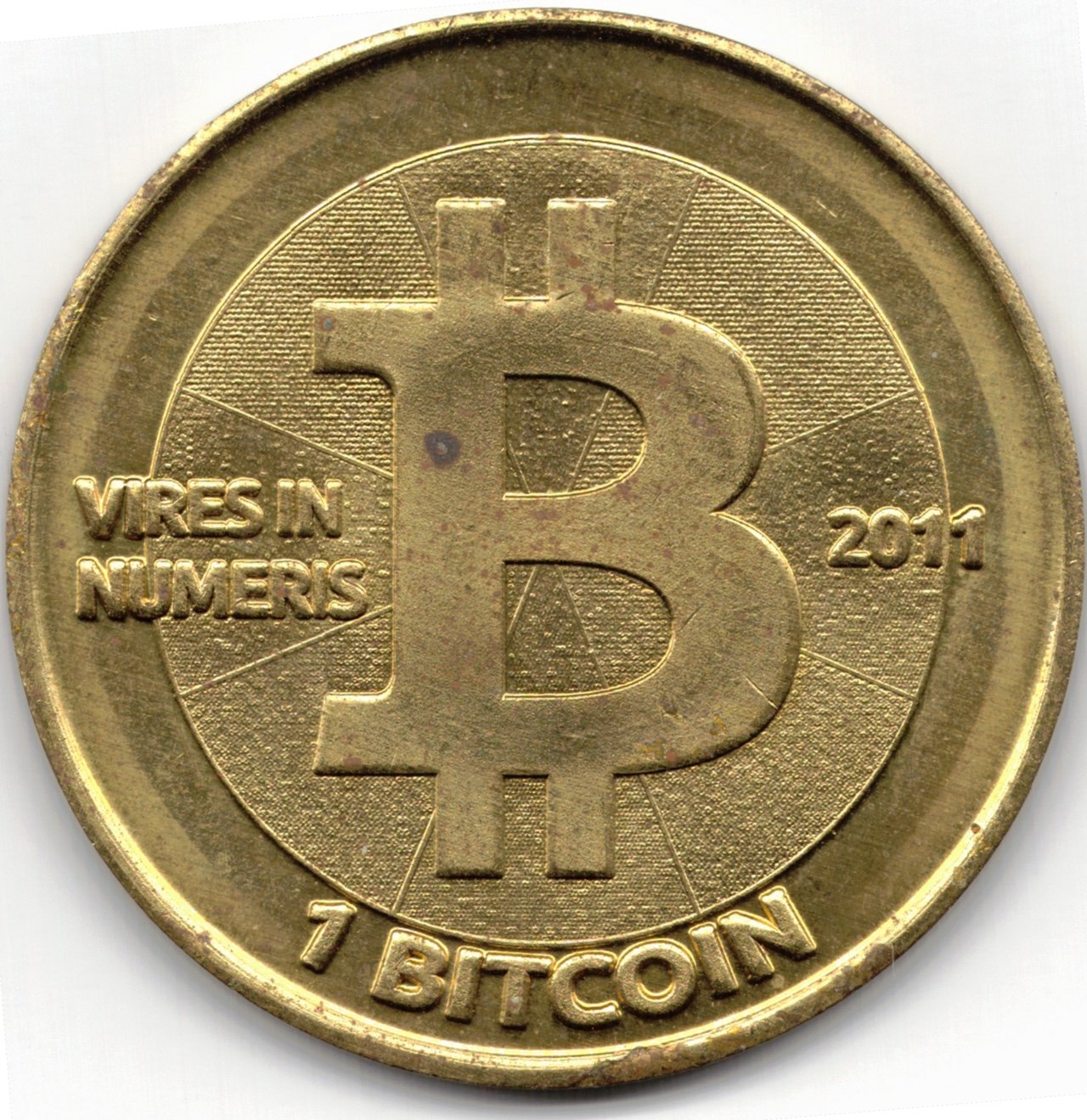
Bitcoin was a niche asset with limited exchanges and little public awareness. Physical collectible tokens, such as the 2011 Casascius coin shown here, were part of the early culture around it. The halving was the first test of the schedule coded into the protocol.
Why it matters: The first halving proved the issuance schedule works as coded.
Brass-coloured 2011 Casascius physical bitcoin token with a large B symbol and the words Vires in Numeris
A 2011 Casascius physical 1 bitcoin token, from the period before the first halving. Photo: Tiberiandusk, CC BY-SA 4.0, via Wikimedia Commons.
3 Jan
2009

Genesis block: reward set at 50 BTC Market structure

Block 0 mined by Satoshi NakamotoInitial reward 50 BTCHalving every 210,000 blocksCap 21 million

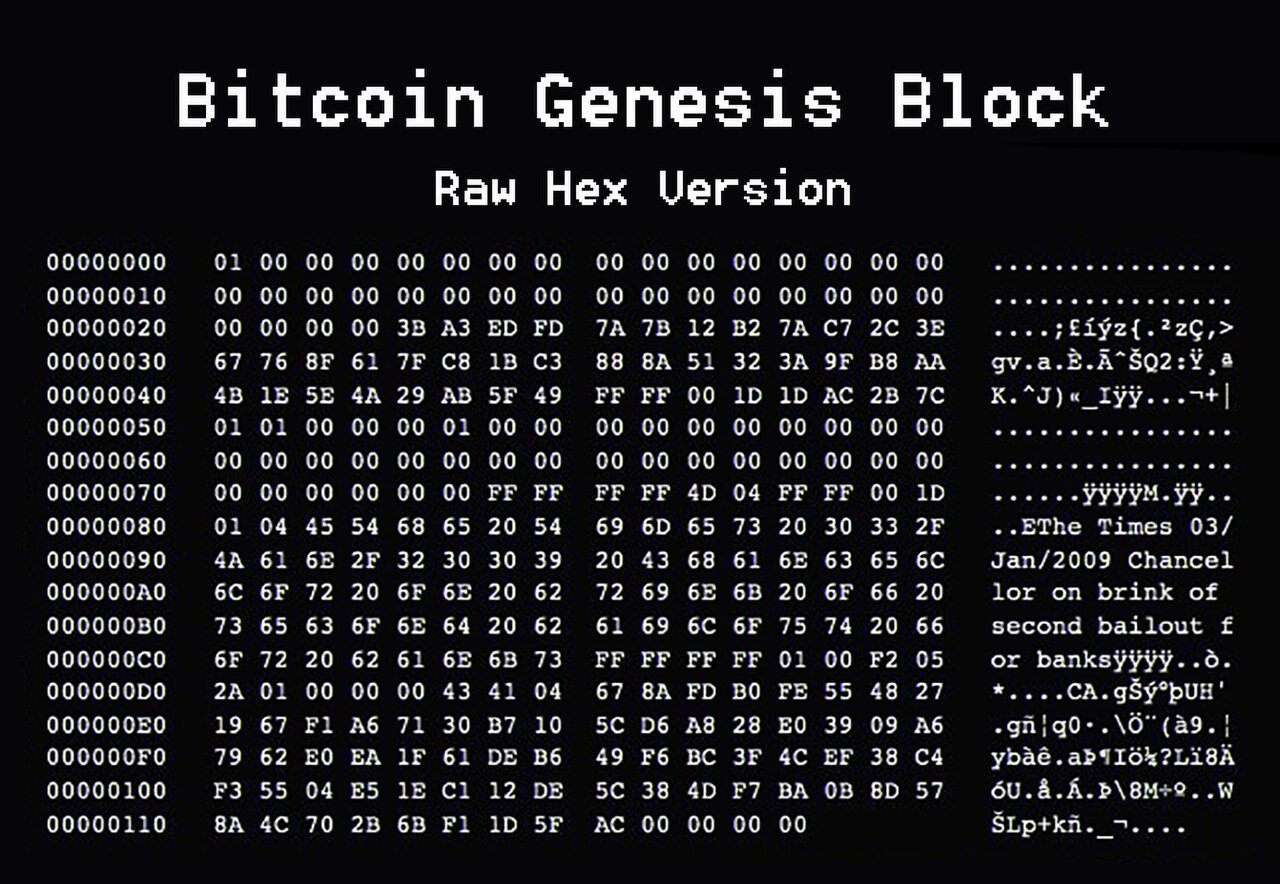
The first block embedded a headline from The Times of 3 January 2009 about bank bailouts. The software set the halving interval and the 21 million cap, so the issuance schedule was fixed years before the first halving.
Why it matters: The halving is a protocol rule set at launch, not a decision made at the time.
Raw hexadecimal dump of Bitcoin's genesis block with the text of a Times newspaper headline in the right-hand column
The raw hex of Bitcoin’s genesis block, mined 3 January 2009, with the embedded Times headline. Image: Satoshi Nakamoto, public domain, via Wikimedia Commons.
Advertisement

How Big Was Each Cycle?

Halving-day price to cycle peak, as a multipleLog scale: each tick is 10x. Rounded reference prices.2012 cycleabout 95xAbout $12 to about $1,1502016 cycleabout 30xAbout $650 to about $19,8002020 cycleabout 8xAbout $8,600 to about $68,8002024 cycleabout 2xAbout $64,000 to $126,198 (so far)Sources: CoinGecko, Coinbase Institutional, Yahoo Finance and historical market summaries. Peaks differ slightly between exchanges.
Each cycle’s gain from the halving-day price to the peak has been smaller than the last. The fourth cycle’s peak so far is about 2x, and four data points do not make a law.

Bitcoin Halving Dates, Rewards and Prices

Block heights and rewards are protocol facts. Prices are rounded reference values.

HalvingBlockReward afterApprox. price at halvingCycle peak
28 Nov 2012210,00025 BTC$12About $1,150 to $1,180 (Nov 2013)
9 Jul 2016420,00012.5 BTC$650About $19,800 (Dec 2017)
11 May 2020630,0006.25 BTC$8,600About $68,800 (Nov 2021)
20 Apr 2024 UTC840,0003.125 BTC$64,000$126,198 (6 Oct 2025)
About 20281,050,0001.5625 BTCTo be seenTo be seen

Four Cycles Compared

Timing, multiple and drawdown for each halving cycle.

CycleHalving to peakMultiplePeak to troughWhat ended it
2012-2014366 daysAbout 95xAbout 85% by early 2015Mt. Gox collapse, long bear market
2016-2018526 daysAbout 30xMore than 80% (to about $3,200)End of the ICO boom
2020-2022548 daysAbout 8xAbout 77% (to about $15,500)Tighter policy, FTX collapse
2024-534 daysAbout 2xAbout 35% so far (19 Oct 2026)Cycle not complete

Latest Numbers at a Glance

MeasureFigureSource and caveat
Bitcoin, 19 Oct 2026About $82,000Yahoo Finance opening $82,012; Fortune $82,441; varies by source and time
All-time high$126,198.07, 6 Oct 2025Yahoo Finance; other providers quote about $126,000 to $126,200
Below the recordAbout 35%Calculated from the two figures above
Block reward3.125 BTCSince 20 Apr 2024 UTC, block 840,000
Next halvingAbout 2028Block 1,050,000; reward falls to 1.5625 BTC
Maximum supply21 million BTCProtocol rule; final coins expected about 2140

Why Do Bitcoin Halvings Matter?

1. Lower new supply. Before the first halving, miners received 50 BTC per block. After the fourth the reward is 3.125 BTC. At about ten minutes per block, new coins enter circulation more slowly, but coins that already exist are unaffected.

2. Demand still sets the price. A smaller flow of new coins can support prices if demand holds or grows. If demand falls, holders sell or financial conditions worsen, the price can fall after a halving, as it did in 2018 and 2022.

3. Markets anticipate. The date is known years ahead, so buyers can move early. In 2024 the record came about five weeks before the event, and the post-halving period was a range, not a straight climb.

4. Other forces can dominate. Pandemic stimulus, interest-rate rises, leverage and the failures of Mt. Gox and FTX each moved the price more than a halving did in their periods.

What Happens to Miners After a Halving?

Revenue falls first. Unless the price or transaction fees rise, the block subsidy in dollars is cut in half overnight.

Profitability varies. It depends on electricity cost, hardware efficiency, capital costs, network difficulty and competition. The 2013 shift from graphics cards to ASICs, such as the Avalon chip pictured above, shows how the industry has repeatedly reinvented itself.

Some leave, some gain share. Less efficient operators may switch off or sell coins; efficient operators can gain share. A halving does not guarantee that miners leave the network.

The next halving is expected around 2028. Questions worth tracking: whether demand from individuals and institutions is growing or fading, whether liquidity favours risk assets, whether Bitcoin has already risen in anticipation, whether miners stay profitable with a 1.5625 BTC reward, and whether regulation or market failures change access and confidence. These matter more than assuming a four-year pattern must repeat.

Who and What Shaped the Bitcoin Cycles

Roles as described in public sources. Naming an institution here is not a finding of fault.

Creator

Satoshi Nakamoto

Pseudonymous author of the 2008 white paper who mined the genesis block on 3 January 2009 and set the halving schedule.

Miners

Bitcoin miners

Validate transactions and earn the block reward plus fees; halvings cut the subsidy part of that income.

Exchanges

Mt. Gox and FTX

Two large exchange failures, in 2014 and 2022, that ended bull cycles and hurt confidence.

Regulator

US Securities and Exchange Commission

Approved US spot Bitcoin exchange-traded products in January 2024.

Funds

Spot Bitcoin ETFs

Regulated funds that hold Bitcoin and trade like shares; flows have become a market driver.

Network

Bitcoin nodes

Enforce the consensus rules, including the 21 million cap and the 210,000-block halving interval.

Advertisement

Explore More Timelines

People Also Ask

What happens when Bitcoin halves?
The reward miners receive per block is cut in half, so new bitcoin enters circulation more slowly. It does not change the 21 million cap or remove existing coins.
Does the Bitcoin price go up after a halving?
After all four halvings Bitcoin reached a new high within about 12 to 18 months, but with deep drawdowns in between, and in 2024 the record came before the halving.
How much was Bitcoin at the 2020 halving?
About $8,600 on 11 May 2020, when the reward fell from 12.5 to 6.25 BTC.
Is the next Bitcoin halving in 2028?
Yes, it is expected around 2028 at block 1,050,000, cutting the reward from 3.125 to 1.5625 BTC. The date depends on block speed.
What is Bitcoin’s price now?
About $82,000 on 19 October 2026, around 35% below the record of $126,198 set on 6 October 2025. Check a live source before acting.

Frequently Asked Questions

When was the first Bitcoin halving?
The first halving took place on 28 November 2012 at block 210,000, cutting the block reward from 50 BTC to 25 BTC. Bitcoin traded at roughly $12 around that day. The price peaked at about $1,150 to $1,180 in late November 2013, depending on the exchange.
How many Bitcoin halvings have there been?
Four by October 2026: 28 November 2012, 9 July 2016, 11 May 2020 and 20 April 2024 (UTC; 19 April in US time zones). The reward went from 50 BTC to 25, 12.5, 6.25 and now 3.125 BTC per block. The fifth halving is expected around 2028 at block 1,050,000.
What was Bitcoin’s price at each halving?
Roughly $12 in November 2012, $650 in July 2016, $8,600 in May 2020 and $64,000 in April 2024. These are rounded reference prices. Exchange, timestamp and whether you use the daily close or the price at the block can shift each figure by a few percent.
Does Bitcoin always go up after a halving?
No. Every halving so far was followed, within roughly 12 to 18 months, by a new all-time high, but the path was uneven and each rally ended in a deep drawdown. Four events are too small a sample to call a rule, and the 2024 cycle had set a record before the halving itself.
What was Bitcoin’s price during the 2024 halving?
About $64,000. Block 840,000 was mined at about 00:09 UTC on 20 April 2024, which was the evening of 19 April in US time zones. Bitcoin had already set a record of about $73,800 in March 2024, before the halving.
What is Bitcoin’s all-time high?
$126,198.07, reached on 6 October 2025, according to Yahoo Finance. On 19 October 2026 Bitcoin traded at about $82,000, roughly 35% below that record. Other data providers quote slightly different intraday highs, about $126,000 to $126,200.
Why are Bitcoin halving returns getting smaller?
The market is far larger, so the same percentage move needs far more money. Investors also anticipate halvings, institutional products such as spot ETFs changed who buys, and interest rates and liquidity can outweigh the supply effect. The pattern is an observation from four data points, not a law.
When is the next Bitcoin halving?
Around 2028, when the reward is scheduled to fall from 3.125 BTC to 1.5625 BTC at block 1,050,000. The exact date depends on how quickly miners find blocks, so it moves by days or weeks as hash rate changes.
What happens to Bitcoin miners after a halving?
Their block subsidy is cut in half. Unless the price or transaction fees rise, miners earn fewer dollars for the same work. Operators with cheap power and efficient machines tend to survive; high-cost miners may switch off or sell coins.
What is the Bitcoin block reward?
It is the new bitcoin the protocol creates for the miner of each block, plus transaction fees. It started at 50 BTC in 2009 and has halved every 210,000 blocks, about every four years. Since 20 April 2024 it has been 3.125 BTC per block.
What is the maximum supply of Bitcoin?
21 million coins, set by the protocol rules. Each halving slows new issuance, and the last fraction of a coin is expected to be mined around the year 2140. Halvings do not remove coins that already exist.
How long does a Bitcoin halving take to happen?
The protocol targets one block roughly every ten minutes, so 210,000 blocks take about four years. The difficulty adjusts every 2,016 blocks to keep that pace, which is why dates drift: 2012, 2016, 2020 and 2024 are not exactly four years apart.
Did the 2012 halving cause the 2013 rally?
It coincided with it, but the record does not prove cause. Bitcoin was a tiny market of a few million dollars of daily volume, so modest new demand moved the price enormously. Other events in 2013, such as growing press attention, also mattered, and the rally ended in the 2014 Mt. Gox collapse.
What caused the 2017 Bitcoin peak?
Retail speculation, mainstream media attention and the initial coin offering boom drove Bitcoin to about $19,800 in December 2017. The price then fell more than 80% to about $3,200 in December 2018, a reminder that a post-halving rally can end in a long bear market.
What happened to Bitcoin after the 2020 halving?
Bitcoin rose from about $8,600 to about $68,800 on 10 November 2021, about 548 days later. Pandemic-era monetary stimulus, company treasury buying and retail speculation all contributed. In 2022 tighter monetary policy and the collapse of FTX took it to about $15,500.
How did spot Bitcoin ETFs change the cycle?
US spot Bitcoin ETFs began trading on 11 January 2024 after SEC approval, giving investors regulated exposure through brokerage accounts. Bitcoin set a record in March 2024, before the halving, for the first time in its history. The ETF era also means flows can reverse quickly, as recent weekly outflows show.
Is the four-year cycle still valid?
Opinions differ and it is too early to settle. The peak came 534 days after the 2024 halving, close to the 526 and 548 days of the previous two cycles, which supports the pattern. But returns were far smaller, and a pattern based on four data points can break.
How far has Bitcoin fallen from its 2025 peak?
About 35% as of 19 October 2026, when it traded near $82,000 against the $126,198 record. Press reports said it dipped below $70,000 in February 2026. Earlier cycles saw peak-to-trough falls of roughly 77% to 85%, so the drop so far is smaller in percentage terms.
Who created the halving schedule?
Satoshi Nakamoto wrote the issuance schedule into Bitcoin’s software, with the first block mined on 3 January 2009. The 50 BTC initial reward and the 210,000-block halving interval are part of the consensus rules that every node enforces, so changing them would require network-wide agreement.
Can I predict the Bitcoin price from the halving date?
Not reliably. The halving date is known years ahead, so markets can price it in. Price also depends on interest rates, liquidity, regulation, leverage and investor sentiment. Treat the history as context, not as a trading signal.
Why do different sites show different halving prices?
Bitcoin trades on many exchanges at once, prices are quoted as daily closes, averages or intraday highs, and the halving happens at a block time rather than at a market close. That is why figures such as $64,000 and $12 are labelled approximate here.
What was Bitcoin’s price when it began?
Bitcoin had no market price in 2009. The first block was mined on 3 January 2009 and early exchange trading began in 2010, at cents per coin. By the first halving in November 2012 it had reached about $12.
Is this page investment advice?
No. It is a dated record of halvings, prices and events with sources. Prices change every minute, and past returns do not predict future returns. Check live data and speak to a qualified adviser before making any investment decision.

Related AiTimeline Stories

⚠️ Editorial Note

This page is a dated record, not investment advice or a price quote. Historical prices and cycle peaks are approximate and vary by exchange, timestamp and method (intraday high, daily close or average). Bitcoin’s price changes every minute and past performance does not predict future results. The 20 April 2024 UTC halving date and the 19 October 2026 price were checked against block-time and market reports; the brief’s 19 April date is the US-time-zone date.

Advertisement
States Reorganisation Act History: How India’s Map Evolved Tariff Walls and Trade Bridges: The Hidden Forces Reshaping Global Trade
→
Next Article