Operation Blue Star: The 1984 Golden Temple Assault and Its Aftermath
Operation Blue Star explained: causes, the June 1984 Golden Temple assault, disputed casualty figures, Indira Gandhi's assassination and Punjab's legacy.
Latest Story
Operation Blue Star was the Indian Army operation of June 1984 to remove armed militants led by Jarnail Singh Bhindranwale from the Golden Temple complex in Amritsar. The main assault took place on the night of 5–6 June, when thousands of pilgrims were also inside. It killed Bhindranwale and others, left the Akal Takht severely damaged, and was followed by Indira Gandhi’s assassination on 31 October 1984 and mass violence against Sikhs in Delhi. This timeline runs from Punjab’s reorganisation in 1966 to the 2026 anniversary, and it keeps documented decisions, disputed figures and later claims apart. For related history see the States Reorganisation Act, the Emergency of 1975–77, the anti-Hindi agitation in Tamil Nadu and the 1984 anti-Sikh riots.
💡 Short Answer
Operation Blue Star was the June 1984 Army assault on the Golden Temple complex in Amritsar, ordered by Prime Minister Indira Gandhi to remove armed militants led by Bhindranwale. The main attack began on the night of 5 June; Bhindranwale was killed, the Akal Takht was badly damaged, and the death toll is disputed, with figures from 575 to several thousand.
Operation Blue Star: Key Questions
Operation Blue Star in Ten Points
- The operation: a ground assault on the night of 5–6 June 1984, with tanks used against the Akal Takht.
- The setting: 3 June was Guru Arjan’s martyrdom day, so thousands of pilgrims were inside.
- The restrictions: a curfew, communications cut and the press barred from Punjab.
- The toll: 554 + 83 (Army), 575 (UK-cited), up to 3,000 or more (other estimates).
- The warnings: the Army says it announced them; a 2017 court found no evidence.
- The advice: Britain advised in February 1984; the 2014 review found limited impact.
- The after-effects: Operation Woodrose, mutinies by Sikh soldiers, and a contested Akal Takht rebuild.
- The assassination: Indira Gandhi on 31 October 1984, by two Sikh bodyguards.
- The separate toll: Delhi’s November 1984 killings, officially 2,733, are not a Blue Star figure.
- The caution: figures and motives are contested; this page attributes each one.
Operation Blue Star Timeline, Latest First
Each entry is tagged by stage and ends with why it matters. Use the filter to isolate the road to 1984, the operation, the aftermath or the legacy.
The road to 1984, the operation, the aftermath or the legacy? Filter the Operation Blue Star timeline by stage.
–
Sajjan Kumar dies; courts have revisited the November 1984 killings since 2018 Legacy, 1992–2026
ETV Bharat reports that former Congress MP Sajjan Kumar died at Safdarjung Hospital in Delhi on 20 August 2026 while serving two life sentences: one from the Delhi High Court on 17 December 2018 in the Raj Nagar–Palam Colony case, and one for the Saraswati Vihar killings of Jaswant Singh and his son Tarundeep Singh. He was convicted in that case on 12 February 2025 and sentenced to life on 25 February 2025 (ETV Bharat; IANS). The same report says he was acquitted in the Janakpuri–Vikaspuri case on 22 January 2026. On 25 August 2026 the Delhi High Court said his appeal in the Saraswati Vihar case “would abate” (Deccan Chronicle).
These cases concern the killings of Sikhs in Delhi on and after 1 November 1984, not the military operation in June. The article’s own age figure (80) differs from the hospital’s (84), and no official cause of death was given. For the wider record see AiTimeline’s timeline of the 1984 anti-Sikh riots.
The 42nd anniversary is marked at the Akal Takht Legacy, 1992–2026
ETV Bharat reports large gatherings at Sri Akal Takht Sahib and the wider Golden Temple complex, with ceremonies for those who died in June 1984. Akal Takht Jathedar Kuldeep Singh Gargaj issued a message urging Punjabis abroad to return and preserve their heritage. During the bhog ceremony some members of Sikh organisations raised slogans and carried posters of Jarnail Singh Bhindranwale; the report says the atmosphere stayed peaceful. Several organisations, including Dal Khalsa, called an Amritsar bandh and markets such as Hall Bazaar stayed closed (ETV Bharat).
Speakers at the gathering, including Shiromani Akali Dal (Amritsar) president Simranjit Singh Mann, called for Sikh unity and for the release of Sikh prisoners who have completed their sentences. Sikh opinion on the slogans and on Bhindranwale himself is not uniform.
P. Chidambaram calls the operation “the wrong way” Legacy, 1992–2026
Speaking at a session on journalist Harinder Baweja’s memoir, Congress leader P. Chidambaram said there was a way to retrieve the Golden Temple and capture the militants, “but Operation Blue Star was the wrong way and I agree that Mrs Gandhi paid with her life for the mistake”. He added that the mistake was “cumulative”, a decision of the Army, intelligence, police and civil defence, and that Indira Gandhi should not be blamed alone (DT Next / PTI).
He contrasted it with Operation Black Thunder a few years later, when the Army was kept out. In the same session Baweja said Indira Gandhi “mixed religion with politics”; Chidambaram doubted the claim that Gandhi “created” Bhindranwale. The remarks are one politician’s assessment, not a government finding.
The 40th anniversary meets a new parliamentary moment Legacy, 1992–2026
On the 40th anniversary activists from several groups, including Simranjit Singh Mann’s party and Dal Khalsa, raised pro-Khalistan slogans at the Akal Takht and carried photographs of the damaged building and of Bhindranwale; security was tightened (News Arena). Akal Takht Jathedar Giani Raghbir Singh declared Bhindranwale and others killed in 1984 “martyrs” and urged two newly elected independent MPs to raise the release of “Bandhi Singhs”, Sikh prisoners who have completed their terms.
The two MPs were Amritpal Singh (Khadoor Sahib) and Sarabjeet Singh Khalsa (Faridkot), the son of Beant Singh, one of Indira Gandhi’s assassins. Not all Sikhs share these political positions; the slogans were raised by particular groups.
A court finds no evidence that civilians were warned Legacy, 1992–2026
The Indian Express notes that in 2017 a sessions court in Amritsar ruled there was no evidence of the loudspeaker warnings the Army says it gave before the attack (The Indian Express). Wikipedia dates the ruling to April 2017, by Judge Gurbir Singh, who wrote that there was no written record of any public announcement asking people to leave and that the events underlined “human rights violations by troops”. The case concerned 40 Sikhs held in Jodhpur after the operation, who were awarded ₹4 lakh each (Wikipedia).
In June 2018, when the Centre appealed against the award, Punjab Chief Minister Amarinder Singh said the state would pay the whole amount if the Centre did not pay its 50 per cent share (Business Standard / ANI). The ruling concerned those detainees and civilians’ warnings; it did not decide the wider casualty count. The Army maintains it made announcements.
2014
The UK publishes its review of British advice before the operation Legacy, 1992–2026
After two documents released at the National Archives raised concerns on 13 January 2014, the Prime Minister asked the Cabinet Secretary to investigate. Hague told the Commons that a single British military adviser travelled to India between 8 and 17 February 1984 to advise Indian intelligence and the Special Group on contingency plans, including ground reconnaissance. The adviser said a military operation should be a last resort and recommended surprise and helicopter-borne forces to reduce casualties (GOV.UK).
The report concluded that the assistance was “purely advisory, limited” and given at an early stage; that the June operation, which took place between 5 and 7 June, was a ground assault “without the element of surprise, and without a helicopter-borne element”; that it found no link to defence sales; and that the UK received no advance warning. Hague also cited Lt Gen Brar’s statement of 15 January that “no one helped us in our planning”, and Gandhi–Thatcher letters of 14 and 29 June 1984. In the same statement he gave “official Indian government figures” of 575 dead and noted reports of “as many as 3,000”.
Evidence of early advice is not evidence of British participation in the assault, and the Cabinet Secretary was not asked to investigate the operation itself.
The insurgency wanes, years after the operation Legacy, 1992–2026
Wikipedia’s account says that after Punjab was ruled from Delhi under President’s Rule between 1987 and 1991, elections in 1992 had poor turnout and brought a new Congress government that gave Punjab Police chief K. P. S. Gill a free hand. By 1993 the insurgency had “petered out”, with the last major incident the assassination of Chief Minister Beant Singh in 1995 (Wikipedia). Others link the decline to the election loss of separatist sympathisers and to a policy of rapprochement.
The Indian Express quotes Gill himself on the operation: “possibly the single most significant act of political overreaction and military incompetence that gave a lease of life to a movement that could easily have been ended in the mid-1980s” (The Indian Express). The counter-insurgency years also drew serious allegations of human-rights abuses, which are contested.
Black Thunder II clears the complex without the Army Aftermath, 1984–88
Operation Black Thunder II began on 9 May 1988 and ended with the militants’ surrender on 18 May. Wikipedia says it was run by the Union Home Ministry, planned since early 1988, and that the National Security Guards rehearsed on a model of the Golden Temple built in the Aravallis (Wikipedia). Chidambaram later pointed to Black Thunder as the way “by keeping the Army out” (DT Next / PTI).
After 1984 the government also demolished hundreds of houses around the complex to create a security corridor called “Galiara”, opened as a public park in June 1988 (Wikipedia).
General Vaidya is assassinated in Pune Aftermath, 1984–88
Arun Shridhar Vaidya, Chief of the Army Staff when the operation was launched, was shot dead in Pune on 10 August 1986 by Harjinder Singh Jinda and Sukhdev Singh Sukha, for his role in Operation Blue Star (Wikipedia). Both were later sentenced to death and hanged in 1992 (Wikipedia).
Black Thunder I: the complex is reoccupied and retaken Aftermath, 1984–88
In 1986 militants again occupied the temple compound for about three months. On 30 April about 300 National Security Guard commandos and 700 Border Security Force personnel entered under Punjab police chief K. P. S. Gill and detained about 200 militants (Wikipedia). Wikipedia’s Blue Star article notes that almost all of the major militant leaders escaped, and that independence was declared by a Sarbat Khalsa in 1986 (Wikipedia).
Sikh groups demolish the government-backed Akal Takht rebuild Aftermath, 1984–88
Wikipedia’s Akal Takht article says the structure had been rebuilt twice: first after the operation, under a government-sponsored effort led by Baba Santa Singh, and again in 1986. The first rebuild was demolished in January 1986 after resolutions passed by a Sarbat Khalsa; Bhindranwale’s successor at the Damdami Taksal, Baba Thakur Singh, is credited with the demolition and the community-funded rebuild. Santa Singh was excommunicated by the Akal Takht clergy (Wikipedia).
Institutions such as the Damdami Taksal had objected that Sikhs should not accept government money to rebuild the Takht. The dispute was about who had the authority to rebuild, not only about construction.
1985
Harchand Singh Longowal is assassinated Aftermath, 1984–88
Less than a month after signing the accord, Longowal was shot dead on 20 August 1985 at a gurdwara in Sherpur village, about 90 km from Patiala, by Gyan Singh Leel and Jarnail Singh Halvara. Wikipedia says he was killed by Sikhs opposed to the agreement (Wikipedia).
1985
Rajiv Gandhi and Longowal sign the Punjab accord Aftermath, 1984–88
Prime Minister Rajiv Gandhi and Akali Dal president Longowal signed an agreement under which the government accepted the Akali Dal’s demands and the party agreed to end its agitation. Wikipedia says several orthodox Sikh leaders opposed it, including Gurcharan Singh Tohra and Prakash Singh Badal, and that in Haryana protesters objected to the terms on Chandigarh, territory to be transferred, and the Ravi–Beas waters (Wikipedia). Wikipedia’s table of the accord’s provisions lists compensation for those killed after 1 August 1982; extending the Mishra Commission’s inquiry to Bokaro and Kanpur; rehabilitating discharged soldiers; withdrawing AFSPA notifications in Punjab; giving Chandigarh to Punjab in return for Hindi-speaking villages going to Haryana (transfer set for 26 January 1986, which never took place); referring the Centre–state part of the Anandpur Sahib Resolution to the Sarkaria Commission; and a tribunal on Ravi–Beas waters. The original text on the cited link was unavailable, so these provisions are as summarised by Wikipedia.
Wikipedia’s Blue Star article adds that in August 1985 about 900 of the 2,606 soldiers captured after the June 1984 mutinies were rehabilitated as part of the accord (Wikipedia).
4 Nov 1984
Indira Gandhi is assassinated; Sikhs are attacked in Delhi Aftermath, 1984–88
Indira Gandhi was shot at about 9:30 am on 31 October 1984 at her Safdarjung Road residence by two of her Sikh bodyguards, Beant Singh and Satwant Singh (Wikipedia). The Indian Express says they blamed her for the attack on the Golden Temple. Her assassination was followed by four days of killing of Sikhs in Delhi and violence in other states including Bihar, Madhya Pradesh, Uttar Pradesh and Haryana (Sciences Po).
Keep the figures apart. Sciences Po records that the first official estimate for Delhi was 325 killed (reported by Hindustan Times on 11 November 1984) and that three years later the official toll was said to be 2,733; it puts the Delhi deaths at “nearly 3,000”. Those are deaths of Sikhs in November 1984. They are not part of any June 1984 casualty count, and they should not be added to or compared loosely with it.
Responsibility for the November killings was examined by commissions and later by courts for decades; see AiTimeline’s timeline of the 1984 anti-Sikh riots.
Operation Woodrose spreads the Army into the countryside Aftermath, 1984–88
Wikipedia describes Operation Woodrose as the Army’s sweep of Punjab’s villages in the months after Blue Star, aimed at preventing widespread protest. All prominent Akali Dal leaders were arrested and the All India Sikh Students Federation was banned. Thousands of Sikhs, mostly young men, were reportedly detained for interrogation, and former detainees alleged torture; critics say it fuelled recruitment to militancy (Wikipedia).
The extent of abuses is disputed and documentation is thinner than for the Golden Temple assault itself; the allegations are given here as reported.
1984
A government-backed rebuild of the Akal Takht is endorsed Aftermath, 1984–88
Wikipedia says Union Home Minister Buta Singh asked many Sikh groups to take on the Akal Takht’s kar seva (volunteer service), but all refused while government forces remained in the shrine’s premises. Baba Santa Singh of the Budha Dal agreed, and a gathering on 11 August 1984 endorsed his role; critics, including the Damdami Taksal, objected to taking government money (Wikipedia).
1984
Indira Gandhi speaks in the Lok Sabha on the White Paper Aftermath, 1984–88
The Parliament of India’s digital library lists Prime Minister Indira Gandhi’s speech in the discussion on the White Paper on the Punjab agitation, dated 25 July 1984, in the Seventh Lok Sabha (session XV) (eParlib, Parliament of India). The speech exists only as a scanned document, and AiTimeline has confirmed its date and subject, not its contents, so no quotation is given.
It belongs beside the White Paper itself as the government’s stated case, and, like the White Paper, it presents one side of a contested record.
1984
The government publishes its White Paper Aftermath, 1984–88
Wikipedia says the government released its White Paper on the Punjab agitation on 10 July 1984. Critics called it “Operation Whitewash”, arguing it blamed the Akalis, underreported casualties and made unsubstantiated insinuations of foreign involvement (Wikipedia). Separately, Sciences Po cites “official accounts” of 493 civilian deaths and 83 Army casualties (Sciences Po).
The White Paper is the government’s own account and a primary source for its stated reasons; it is best read beside the independent accounts below.
1984
Bhindranwale is found dead and the last positions are cleared The operation, June 1984
Wikipedia says the fighting ended at about 1 am on 7 June, when troops entered the Akal Takht and found the bodies of Bhindranwale, Maj Gen Shabeg Singh and AISSF president Amrik Singh. A few holdouts in the Ramgarhia Bunga continued until about 10 June (Wikipedia). The Indian Express says the last remaining militants “either surrendered or were killed by June 10” (The Indian Express). Hague’s statement dates the operation to 5–7 June (GOV.UK). Sources therefore give different end dates depending on what they count.
The Indian Express adds that Bhindranwale’s death “made him an almost mythological figure” in some ways, quoting Tavleen Singh’s remark that the myth may prove “more powerful than the man”.
1984
The Sikh Reference Library burns The operation, June 1984
Wikipedia reports that around noon on 7 June the Sikh Reference Library was set on fire. It held hundreds of original manuscripts and artefacts, and library staff said at least 13,000 books had vanished before the fire; the SGPC later corresponded with the government about their return. Wikipedia also cites Maj Gen J. S. Jamwal, who commanded the 15th Infantry Division, as having ordered an anti-tank shell fired at the Akal Takht that was “misdirected” and hit the library, which is one account of how the fire started (Wikipedia). Sciences Po also records the library’s destruction (Sciences Po).
Accounts differ on cause; the loss of the collection itself is widely reported and remains a distinct grievance.
Sikh soldiers mutiny in several garrisons The operation, June 1984
Wikipedia says that on 7 June 600 soldiers of the 9th Battalion, Sikh Regiment, mutinied at Sri Ganganagar, and that at the Sikh Regimental Centre in Ramgarh, 1,461 soldiers, most of them recruits, stormed the armoury and set out for Amritsar. Across several incidents, 55 mutineers were killed and 2,606 captured, and some were court-martialled (Wikipedia).
1984
Tanks reach the Akal Takht; Bhindranwale is among the dead The operation, June 1984
The Indian Express says the Army’s early light-weapon attacks failed against fortified positions, but “once tanks were brought in, they proved to be extremely effective”. By dawn on 6 June the main defences had been “largely neutralised”. Around 11 am some 25 militants rushed out of the building and most were shot. Troops then entered the Akal Takht, “now in ruins”, and found Bhindranwale dead, reportedly among “about 40 corpses” (The Indian Express).
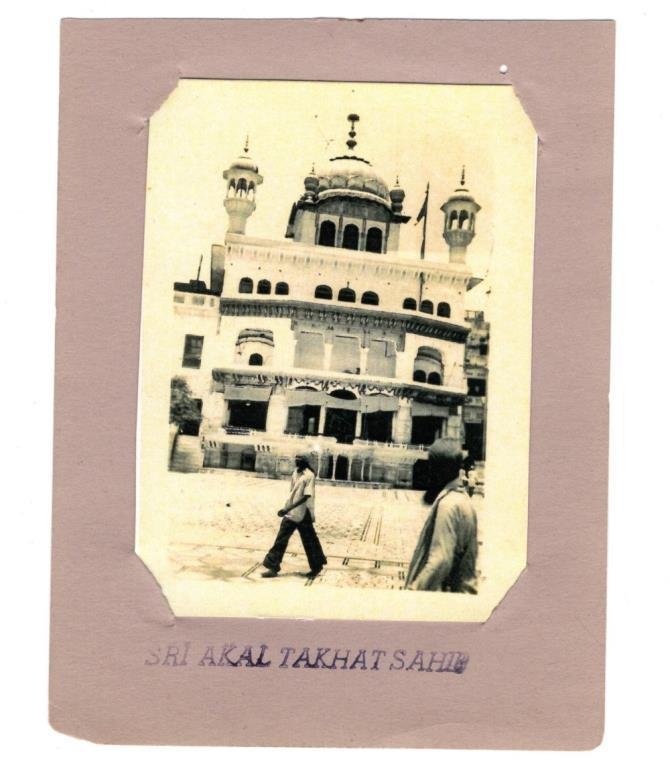
Wikipedia says tanks received clearance to fire their main guns at around 7:30 am after Brigadier A. K. Dewan reported heavy casualties and asked for them, and that about 20 shells were fired at the Akal Takht. It also reports Maj Gen Shabeg Singh’s death on 6 June (Wikipedia). The image shows the Akal Takht around 1910, long before the damage and the later rebuilds.
1984
The main assault begins on the night of 5 June The operation, June 1984
Wikipedia says that from about 7 pm the Border Security Force and CRPF attacked Hotel Temple View and Brahm Boota Akhara on the complex’s fringes. Late in the evening commanders ordered a simultaneous assault: 10 Guards, 1 Para Commandos and the Special Frontier Force at the main entrance, and 26 Madras and 9 Kumaon from the south. It describes heavy Army casualties and repeated failed attempts to reach the pool’s edge (Wikipedia).
Hague’s statement says the operation was a ground assault “without the element of surprise, and without a helicopter-borne element” (GOV.UK). Wikipedia says survivor accounts date the shelling to early 4 June while the Army dates the assault to 5 June; AiTimeline reports both.
1984
A curfew, a blackout and thousands of pilgrims inside The operation, June 1984
Wikipedia says 3 June was the martyrdom day of Guru Arjan, and the SGPC estimated 10,000–15,000 pilgrims had come, along with about 1,300 Akali workers. A curfew was imposed, communications were suspended and the press was cut off; journalists, including The Times reporter Michael Hamlyn, were bused to the Haryana border. Those inside could not leave after 10 pm on 3 June. The commander, Maj Gen Brar, told troops: “The action is not against the Sikhs or the Sikh religion; it is against terrorism” (Wikipedia).
The Indian Express records that the Army says it made loudspeaker announcements, and that a 2017 court found no evidence of them (The Indian Express). The blackout also limited independent reporting, which is why the casualty record is uncertain.
1984
Firing around the complex; the Army takes over Amritsar The operation, June 1984
Wikipedia reports eyewitness accounts that CRPF fired at the complex on 1 June, from about 12:40 pm to 8:40 pm, and that the Harmandir Sahib sustained 34 bullet marks; one witness says eight pilgrims died. It notes the Army’s own account dates its assault to 5 June. By 2 June the Army was sealing the border, taking over from paramilitaries and suspending rail, road and air services; the press was gagged (Wikipedia). Wikipedia dates the operation to 1–10 June; other accounts date it to 5–7 June.
1984
Talks fail and the order is given The road to 1984
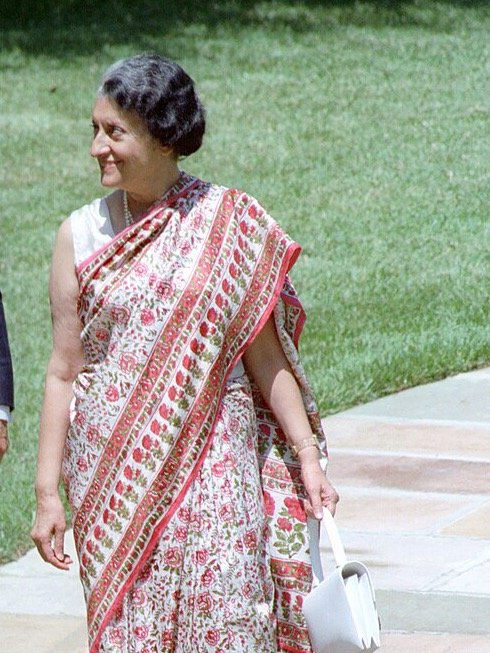
Wikipedia says that on 26 May SGPC president Gurcharan Singh Tohra told the government he had failed to persuade Bhindranwale to settle peacefully. Indira Gandhi then approved the operation on the recommendation of Army chief Arun Shridhar Vaidya, apparently led to believe there would be no civilian casualties. Maj Gen Brar was summoned from Meerut on 31 May to command it, with Lt Gen K. Sundarji, GOC Western Command, planning and coordinating (Wikipedia).
Official accounts cite escalating violence and the Punjab Governor’s request for Army help. Later assessments disagree on whether alternatives were exhausted, and Chidambaram’s 2025 remarks are one such assessment.
A British adviser, a covert plan and failed talks The road to 1984
Between 8 and 17 February 1984 a single British military adviser travelled to India to advise on contingency plans, as the 2014 review later established (GOV.UK). Wikipedia reports that in January the Research and Analysis Wing prepared a covert plan, Operation Sundown, to abduct Bhindranwale with special forces, but it was never carried out after Indira Gandhi rejected it, and that a team led by Narasimha Rao tried unsuccessfully to persuade him to leave (Wikipedia).
Lt Gen J. S. Aurora, who visited in December 1983 and again in February 1984, later attributed the professional fortifications to work between March and June under Maj Gen Shabeg Singh, a dismissed former Army officer who had joined Bhindranwale. The Hague report likewise says the defences were more extensive by June than in February.
Bhindranwale moves into the Akal Takht The road to 1984
Wikipedia says that on 15 December 1983 Babbar Khalsa members asked Bhindranwale to leave Guru Nanak Niwas. SGPC president Gurcharan Singh Tohra then allowed him to base himself in the Akal Takht; the temple’s high priest protested that no Guru or leader had ever lived in the Takht (Wikipedia). It also says Bhindranwale and Longowal’s relationship weakened through 1984, and that Longowal feared for his own safety.
Violence rises, DIG Atwal is shot, President’s Rule is imposed The road to 1984
Punjab Police Deputy Inspector General A. S. Atwal was shot dead on the steps of the Darbar Sahib complex on 25 April 1983; the killing was never solved, and different parties blamed militants and the state’s own politics (Wikipedia). President’s Rule was imposed in Punjab on 6 October 1983 (Wikipedia). Wikipedia notes that Bhindranwale and Longowal parted ways in December.
1982
The Dharam Yudh Morcha begins The road to 1984
The Akali Dal launched the Dharam Yudh Morcha on 4 August 1982, in partnership with Bhindranwale, to press demands based on the Anandpur Sahib Resolution (Wikipedia). On 19 July 1982, at Longowal’s invitation, Bhindranwale and about 200 armed followers had taken up residence in Guru Nanak Niwas inside the complex (Wikipedia).
The Akali political campaign and the armed groups around Bhindranwale were related, not identical, and the Akali leadership later lost control of the agitation.
1978
The Sikh–Nirankari clash in Amritsar The road to 1984
Sixteen people, 13 Sikhs and three Nirankari followers, were killed in violence on 13 April 1978 when members of the Akhand Kirtani Jatha and Damdami Taksal protested a Sant Nirankari convention. Wikipedia calls it a starting point in the events that led to Operation Blue Star (Wikipedia). It did not cause the operation by itself; it was one part of a longer chain.
Punjab is reorganised; the Anandpur Sahib Resolution follows The road to 1984
After years of the Punjabi Suba movement, the Punjab Reorganisation Act of 1 November 1966 created the present, Sikh-majority state (Wikipedia); the wider story is in AiTimeline’s States Reorganisation Act timeline. In 1973 the Akali Dal adopted the Anandpur Sahib Resolution demanding greater autonomy, which the Centre rejected; Sciences Po says Delhi again rejected the demands in 1978 after the Emergency (Sciences Po). See also India’s Emergency (1975–77).
Longowal said the Sikhs had no designs to get away from India and wanted to live within it “as Sikhs”; Indira Gandhi viewed the resolution as a secessionist document (Wikipedia).
The Numbers: What Each Figure Counts
Casualty figures from different sources, with what each one measures. November 1984 is listed separately.
| Figure | What it says | What it counts, and where it comes from |
|---|---|---|
| Army’s initial figures, June 1984 | 554 militants and civilians dead; 83 troops dead (4 officers, 79 soldiers); 236 troops wounded | Army figures as reported by The Indian Express. Troops and others are counted separately |
| UK statement, 4 Feb 2014 | “Official Indian government figures estimate that 575 people died”; other reports “as many as 3,000” | GOV.UK (William Hague). AiTimeline could not reconcile 575 with 554 + 83 = 637 |
| Sciences Po summary | 493 civilian deaths and 83 Army casualties, per “official accounts” | Sciences Po notes eyewitnesses and scholars question the figure |
| Associated Press dispatch, June 1984 | At least 1,200 dead: about 780 militants and civilians and 400 troops | Brahma Chellaney’s report as summarised by Wikipedia; the government disputed it and dropped charges in Sept 1985 |
| Khushwant Singh | “Upwards of 5,000 people, a majority of them pilgrims” | A writer’s estimate quoted on Wikipedia, not a count |
| Delhi, Nov 1984: first official estimate | 325 killed (including 46 Hindus) | Hindustan Times, 11 Nov 1984, via Sciences Po. Not a Blue Star figure |
| Delhi, Nov 1984: later official toll | 2,733; “nearly 3,000” | Sciences Po. Killings of Sikhs after Indira Gandhi’s assassination, a separate event |
The Story at a Glance
Dates from the sources listed below.
| Date | Event | Detail |
|---|---|---|
| 13 Apr 1978 | Sikh–Nirankari clash | 16 killed in Amritsar |
| 4 Aug 1982 | Dharam Yudh Morcha begins | Akali Dal agitation |
| 25 Apr 1983 | DIG Atwal shot | Darbar Sahib steps |
| 6 Oct 1983 | President’s Rule | Punjab ruled from Delhi |
| 15 Dec 1983 | Bhindranwale moves into Akal Takht | Tohra permits |
| 8–17 Feb 1984 | British adviser visits India | Contingency planning advice |
| 26–31 May 1984 | Talks fail; order given | Brar summoned 31 May |
| 1–2 Jun 1984 | Firing; Army takes over Amritsar | Accounts differ |
| 3–4 Jun 1984 | Curfew and blackout | Pilgrims inside |
| 5–6 Jun 1984 | Main assault | Night of 5 June |
| 6 Jun 1984 | Tanks; Akal Takht reached | Bhindranwale among dead |
| 7–10 Jun 1984 | Final clearing | Holdouts until about 10 June |
| 10 Jul 1984 | White Paper | Government account |
| 25 Jul 1984 | PM speaks in Lok Sabha | Debate on the White Paper |
| 31 Oct 1984 | Indira Gandhi assassinated | Followed by Nov violence |
| 24 Jul 1985 | Rajiv–Longowal Accord | Longowal killed 20 Aug |
| Jan 1986 | Rebuilt Akal Takht demolished | By Sikh groups |
| 30 Apr 1986 | Black Thunder I | About 200 detained |
| 9–18 May 1988 | Black Thunder II | Army kept out |
| 1992–95 | Insurgency wanes | Beant Singh killed 1995 |
| 4 Feb 2014 | UK review published | Advice only, limited impact |
| 11 Oct 2025 | Chidambaram remarks | “The wrong way” |
| 6 Jun 2026 | 42nd anniversary | Akal Takht gathering |
What Is Settled, What Is Disputed
A status for each major claim, based on the sources AiTimeline could read.
| Claim | Status | Basis |
|---|---|---|
| Armed militants had fortified the complex | Established | Hague: by June forces were larger and fortifications more extensive than in February. The scale of weaponry is disputed |
| Thousands of pilgrims were inside on 3 June | Established | SGPC estimate of 10,000–15,000, per Wikipedia; numbers vary |
| Tanks were used against the Akal Takht | Established | The Indian Express; Wikipedia |
| The Army warned civilians before the attack | Disputed | The Army says it did; a 2017 Amritsar court found no evidence |
| British forces took part in the assault | Not supported | Hague: advice only, early, and of limited impact; no evidence of UK involvement |
| A British adviser visited in February 1984 | Established | Hague, 4 Feb 2014: one adviser, 8–17 February |
| The total death toll is known | Unresolved | Figures range from 575 to several thousand and count different groups |
| A government “Third Agency” smuggled weapons in | Alleged | A Surya magazine report citing RAW sources, per Wikipedia; not officially confirmed |
| The Army had no alternative to a ground assault | Contested | Gill and Chidambaram say it was an error; Brar defended it as necessary |
| The Sikh Reference Library was burned | Established; cause disputed | Wikipedia; Sciences Po. Accounts differ on how the fire started |
Why Operation Blue Star Still Matters
A sacred site. The Golden Temple is central to Sikh religious life. Using military force there, and damaging the Akal Takht and the Sikh Reference Library, is remembered by many Sikhs as a religious and historical trauma, and each 6 June is marked at the Akal Takht.
Civilians and the record. Thousands of pilgrims were inside, the press was barred, and the main accounts come from the Army, survivors, officials and later researchers. That is why the toll is uncertain and why a 2017 court asked whether warnings were given.
Federalism and autonomy. The conflict grew from demands over Punjab’s powers, which began with the 1966 reorganisation and the 1973 Anandpur Sahib Resolution. For how India drew its states, see the States Reorganisation Act timeline; for another dispute over the Centre’s power, see the anti-Hindi agitation in Tamil Nadu.
Emergency politics. Sciences Po records that the Centre again rejected Akali demands in 1978, after the Emergency; see India’s Emergency (1975–77) for the wider political context.
Accountability. The decision, the tactics and the Army’s conduct were later questioned by officers, a police chief and a former home minister. Separately, the November 1984 killings of Sikhs went through commissions and courts for decades; see the 1984 anti-Sikh riots timeline.
| Term | Meaning | Why it matters here |
|---|---|---|
| Harmandir Sahib | The Golden Temple, the central Sikh shrine in Amritsar | The wider complex was the site of the operation |
| Akal Takht | The seat of Sikh temporal authority, opposite the Harmandir Sahib | Heavily damaged; its rebuilding was disputed |
| SGPC | Shiromani Gurdwara Prabandhak Committee, which manages major gurdwaras | Its president Tohra allowed Bhindranwale into the Akal Takht |
| Dharam Yudh Morcha | The Akali Dal agitation launched on 4 Aug 1982 | The political campaign inside which the armed groups sheltered |
| Anandpur Sahib Resolution | The 1973 Akali Dal demand for greater autonomy | Gandhi viewed it as secessionist; Longowal said it was not |
| Sarbat Khalsa | A gathering of Sikh representatives | Used in 1984 and 1986 to decide on the rebuild |
| Kar seva | Voluntary community service, including building work | Who performs it at the Akal Takht was central to the 1986 dispute |
| Operation Woodrose | The Army sweep of Punjab’s countryside after Blue Star | Reported detentions and alleged abuses |
| White Paper | The government’s official account, 10 July 1984 | A primary source for the official version only |
Who Is Who in the Story
Indira Gandhi
Approved the operation on the Army chief’s recommendation; assassinated on 31 October 1984.
Jarnail Singh Bhindranwale
Head of the Damdami Taksal; moved into the Golden Temple complex in 1982 and the Akal Takht in 1983; killed in June 1984.
Maj Gen Shabeg Singh
Joined Bhindranwale and is credited with the complex’s fortification; killed on 6 June 1984.
Maj Gen Kuldip Singh Brar
Commanded the operation on the ground; denied any British role in planning or execution.
Gen Arun Shridhar Vaidya
Recommended the operation; assassinated in Pune on 10 August 1986.
Harchand Singh Longowal
Akali Dal president who signed the 1985 accord; assassinated on 20 August 1985.
Gurcharan Singh Tohra
Allowed Bhindranwale to base himself in the Akal Takht; told the government on 26 May 1984 that talks had failed.
Rajiv Gandhi
Signed the Punjab accord with Longowal on 24 July 1985.
William Hague
Presented the UK Cabinet Secretary’s report on British advice on 4 February 2014.
The Popular Story vs the Record
| Popular version | What the record shows |
|---|---|
| The Golden Temple was destroyed | The complex stood. The Akal Takht was badly damaged, the Sikh Reference Library burned, and the Harmandir Sahib took bullet marks |
| It was a one-night operation | The main assault was the night of 5–6 June, but sources date the operation from 1 June to about 7–10 June |
| Britain planned or carried out the assault | A British adviser gave limited advice in February 1984; the 2014 review found it had limited impact |
| 575 is the established death toll | It is the figure the UK statement attributed to official Indian estimates; others range far higher |
| The November 1984 killings were part of Blue Star | They were a separate episode of mass violence against Sikh civilians after Indira Gandhi’s assassination |
| All Sikhs supported Bhindranwale | Sikh opinion was divided; Longowal and other Akali leaders were not aligned with him, and many Sikhs opposed his methods |
| The operation ended militancy | The insurgency continued until the mid-1990s |
| The Army was the only side that used force | Militants fired from fortified positions; accounts also record heavy Army casualties and later allegations about Army conduct |
Explore More Timelines
People Also Ask
Frequently Asked Questions
Related AiTimeline Stories
⚠️ Editorial Note
Last updated 22 October 2026. This is a contested subject, so casualty figures are attributed to their sources and not added together, and the June 1984 operation is kept separate from the November 1984 killings of Sikh civilians. Armed militants are distinguished from pilgrims and from the wider Sikh community, which held diverse views. Corrections to the draft brief: the UK statement was made on 4 February 2014 by Foreign Secretary William Hague on the Cabinet Secretary’s report; the main phase ended around 7 June, not 6 June, with last holdouts until about 10 June; the “1986” entry on the Akal Takht was replaced with sourced dates; Indira Gandhi’s Lok Sabha speech of 25 July 1984 is confirmed in Parliament’s eParlib (date and subject only, from a scanned document) and added beside the 10 July 1984 White Paper; the IDSA link returned a 404 and was dropped. Added: the 2017 court ruling, the mutinies, Operation Woodrose, Black Thunder, General Vaidya’s assassination, P. Chidambaram’s October 2025 remarks, the 2024 and 2026 anniversaries, and the 2018–2026 Sajjan Kumar cases. The Rajiv–Longowal Accord’s provisions are taken from Wikipedia’s summary because the linked text was unavailable. Much of the day-by-day detail rests on Wikipedia’s summary of eyewitness and Army accounts, and is marked as such. Verify before republishing.
Sources & further reading
Every dated entry above was checked against these references. Last reviewed 22 October 2026.
- Statement on the Indian Operation at Sri Harmandir Sahib in 1984 (William Hague, 4 February 2014)
- What led up to Operation Blue Star and what happened
- The Anti-Sikh Pogrom of October 31 to November 4, 1984, in New Delhi
- Operation Blue Star
- Akal Takht
- Operation Blue Star a mistake, Indira Gandhi paid for it with her life: Chidambaram
- Op Blue Star 40 yrs: pro-Khalistan slogans raised
- Large gathering marks 42nd anniversary of Operation Blue Star at Akal Takht
- Prime Minister Indira Gandhi: Discussion Re. White Paper on Punjab Agitation (Lok Sabha, 25 July 1984)