The Mundhra Scandal: The ₹1.26 Crore LIC Deal That Shook Nehru’s Government
How the 1957 Mundhra scandal over LIC share purchases led to the Chagla Commission, Feroze Gandhi's Lok Sabha attack and Krishnamachari's resignation.
Latest Story
The Mundhra scandal of 1957–58 began when the Life Insurance Corporation of India, set up only a year earlier, bought ₹1.26 crore of shares in six troubled companies linked to Calcutta businessman Haridas Mundhra. Congress MP Feroze Gandhi, Prime Minister Nehru’s son-in-law, pressed the matter in the Lok Sabha; a public inquiry by Justice M. C. Chagla followed, and Finance Minister T. T. Krishnamachari resigned on 18 February 1958. This timeline runs from LIC’s creation in 1956 to the October 2025 allegations that revived the comparison, and it keeps findings, disputes and allegations apart. For related history see how India nationalised its banks and the Emergency of 1975–77.
💡 Short Answer
The Mundhra scandal was the 1957–58 controversy over LIC’s purchase of about ₹1.26 crore of shares in six companies linked to Haridas Mundhra. The deal bypassed LIC’s investment committee. Feroze Gandhi’s parliamentary attack led to the Chagla Commission, which found the deal helped Mundhra, and Finance Minister T. T. Krishnamachari resigned on 18 February 1958.
Mundhra Scandal: Key Questions
The Mundhra Scandal in Ten Points
- The deal: ₹1,26,86,100 of shares in six Mundhra firms, 24–25 June 1957.
- The process: private, on closing prices after a weekend, with LIC’s investment committee told afterwards.
- The totals: about ₹1.56 crore across all 1957 purchases; do not mix it with ₹1.26 crore.
- The exposure: The Statesman on 3 August 1957, then questions on 4 September and 29 November.
- The speech: Feroze Gandhi on 16 December 1957 said he held letters between the minister and the finance secretary.
- The inquiry: Chagla’s open hearings lasted 24 days.
- The finding: the aim was to help Mundhra, not to steady the market.
- The resignation: 18 February 1958, with the minister disputing the findings.
- The aftermath: the Bose board and UPSC review overturned the officials’ punishments.
- The caution: the commission was an inquiry, not a criminal court.
Mundhra Scandal Timeline, Latest First
Each entry is tagged by stage and ends with why it matters. Use the filter to isolate the deal, the parliamentary fight, the fallout or the legacy.
The deal, the parliamentary fight, the fallout or the legacy? Filter the Mundhra scandal timeline by stage.
–
A newspaper report revives the Mundhra comparison Legacy, 1962–2025
On 24 October 2025 The Washington Post reported, citing internal documents, that Indian officials had drafted a plan to steer about Rs 33,000 crore (about $3.9 billion) of LIC money into Adani group companies; outlets quoted slightly different figures. LIC called the report “false, baseless and far from truth” and said it decides its investments independently, after due diligence and under board-approved policy (Business Today). Congress demanded a Public Accounts Committee probe and said policyholders’ savings had been “systematically misused” (The Tribune).
A Moneylife column published the same week set the episode beside 1957, calling Mundhra a precedent (Moneylife). The comparison is the columnist’s, not a finding. AiTimeline found no court ruling or official inquiry confirming the 2025 allegations, and LIC’s denial is on the record.
A new book re-examines India’s first big financial scandals Legacy, 1962–2025
Scroll published an excerpt from Bhaswar Mukherjee’s The Founding Fathers of Fraud: Independent India’s First Scandals that Rocked the Nation. It reconstructs the June 1957 sequence step by step and notes that both the Chagla Commission and the later Bose board found the statements of those involved conflicting, so “the entire truth hadn’t been revealed” (Scroll).
That caution matters for every figure and motive on this page: the broad shape of the scandal is well documented, but who decided what, and why, was disputed by the people involved.
Haridas Mundhra dies Legacy, 1962–2025
Wikipedia records that Mundhra died on 6 January 2018 (Wikipedia). He is often described as the forerunner of later market manipulators such as Harshad Mehta, though that comparison is commentary, not a legal finding.
The finance minister returns Legacy, 1962–2025
Krishnamachari was re-elected in 1962, returned to the Cabinet as a minister without portfolio, and was finance minister again from 1964 to 1966 (Wikipedia). Gfiles notes that Nehru rehabilitated him in 1962 after the resignation (Gfiles India).
His return shows that the 1958 resignation was a political consequence, not a bar to office, and he maintained throughout that he had not personally ordered the purchase.
Officials’ punishments are recommended, then overturned Fallout, 1958–59
Gfiles reports that an inquiry under the All-India Services (Discipline and Appeal) Rules recommended the removal of Finance Secretary H. M. Patel and the compulsory retirement of LIC chairman K. R. Kamath. The Union Public Service Commission overturned both, exonerating Patel and recommending only a censure for Kamath (Gfiles India). Other accounts say Patel and Kamath also resigned their posts after the Chagla report; the exact order of events is not settled in the sources AiTimeline could read.
The UPSC also found no ground to infer that Mundhra’s political donations placed the government “under any obligation” to do the deal. The Bose board’s own report was reported to have never been published, which is why accounts differ.
Mundhra is convicted Fallout, 1958–59
Mundhra was arrested at his suite at the Claridges hotel in Delhi and sent to prison (Wikipedia). Live History India says he was convicted of fraud and sentenced to 22 years, and was released after about three years (Live History India); The Logical Indian also reports a 22-year term (The Logical Indian).
AiTimeline could not find the court record, so the charge, the court and the date are not stated here. Treat the 22-year and three-year figures as secondary-source claims.
Justice Vivian Bose is asked to examine the officials Fallout, 1958–59
In May 1958 Supreme Court judge Vivian Bose was appointed to chair a board of inquiry into the ‘Mundhra scandal’, after the Chagla report had implicated finance ministry officials (Supreme Court Observer).
Live History India reports that the Bose board disclosed that Mundhra had donated Rs 1.5 lakh to the Uttar Pradesh Congress and Rs 1 lakh to the central Congress party on the eve of the 1957 elections (Live History India). Gfiles puts the donations at Rs 2.5 lakh in total and says the board saw the LIC deal as a probable quid pro quo; the UPSC later disagreed (Gfiles India).
1958
Krishnamachari resigns as finance minister Fallout, 1958–59
T. T. Krishnamachari resigned on 18 February 1958 after the Chagla report (Wikipedia; Gfiles India). Wikipedia calls him the first minister in free India to resign over a scandal. The Chagla report had held that, constitutionally, the minister was responsible for the actions of his secretary, even though Krishnamachari had tried to put the decision on Patel.
The resignation is not proof that he personally ordered the purchase, and he disputed the findings against him. Gfiles adds that Nehru continued to defend him during and after the affair and even criticised the commission.
Date correction: the draft brief placed the resignation on 12 February. The sources AiTimeline could read give 18 February; a Nehru Archive letter dated 12 February could not be opened, so it is not relied on.
The Chagla report finds the deal was for Mundhra’s benefit Fallout, 1958–59
Chagla concluded that the only visible aim of the purchase was to help Mundhra and his brokers through their own difficulties at LIC’s expense, not to steady the Calcutta market. He called Mundhra a “financial adventurer” with “a flamboyant personality”, and said the finance ministry knew this (Live History India; Gfiles India).
He also found that the shares were bought on the closing quotations of 24 June, after a weekend, when prices of the Mundhra shares had risen sharply; between the deal and 16 January 1958, the shares of the Mundhra companies had lost far more value than blue chips such as Tata Iron and Steel. On the blame, he wrote that the minister blamed the secretary, the secretary blamed the minister and a colleague, and each of the others gave mutually contradictory versions of the same events.
The commission was an inquiry, not a criminal court. The draft brief said the report was presented on 13 February, but AiTimeline could not confirm that date from a readable source.
Chagla takes the case in public Parliament & the inquiry
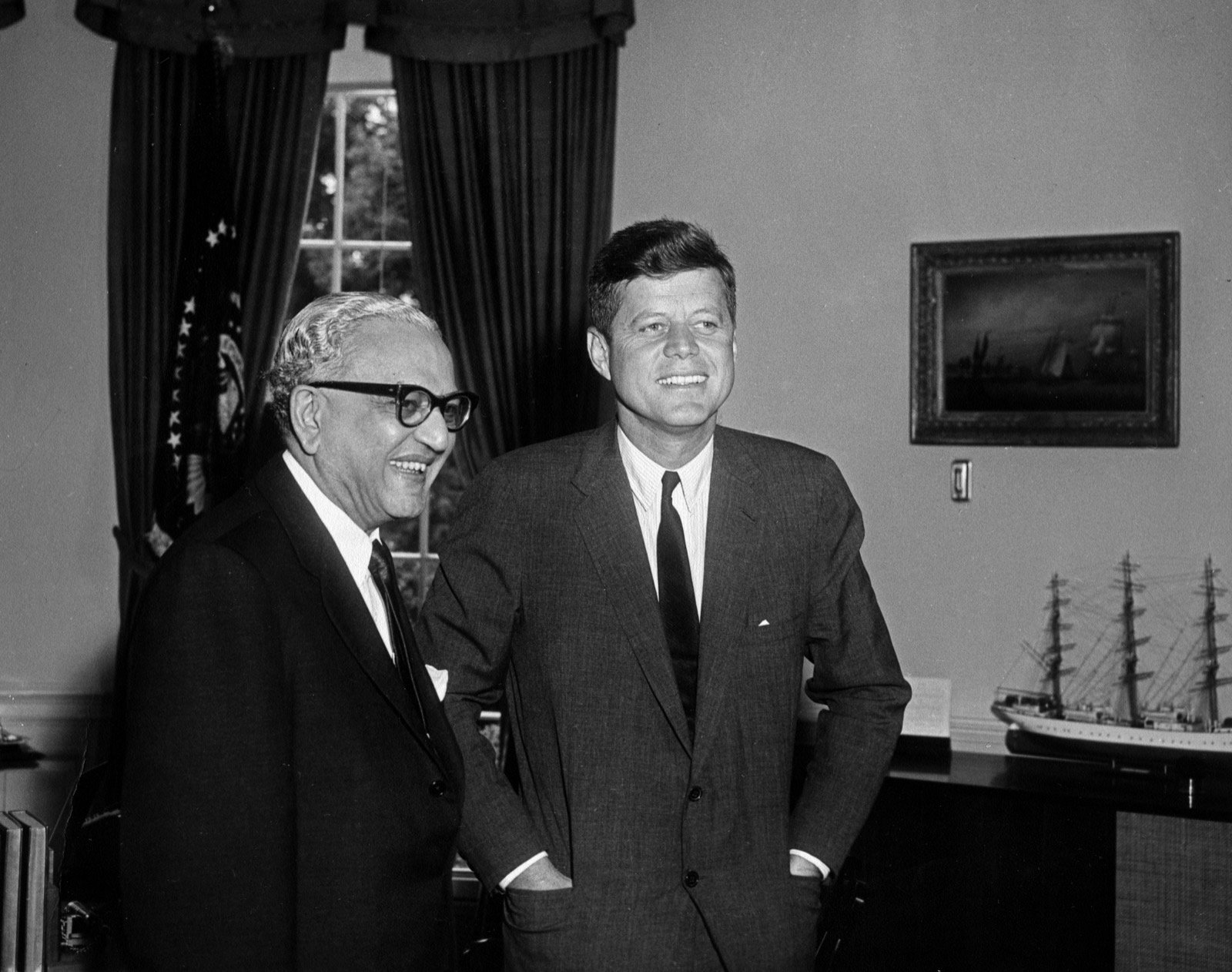
Nehru appointed Mohammedali Currim Chagla, then Chief Justice of the Bombay High Court, as a one-man commission (Wikipedia). Chagla insisted on open hearings, saying the public was entitled to know on what evidence the decision was based; large crowds attended and the hearings finished in 24 days (The Logical Indian).
In his autobiography, as quoted by Gfiles, Chagla said Home Minister Govind Ballabh Pant asked him to take the job at a dinner and that Krishnamachari, who walked in, did not seem to welcome the idea (Gfiles India). Wikipedia’s Mundhra page calls Chagla “retired”; he was in fact serving as Chief Justice until 1958. The draft brief’s date of 7 January for the appointment could not be verified.
1957
Feroze Gandhi tells the Lok Sabha he has the letters Parliament & the inquiry
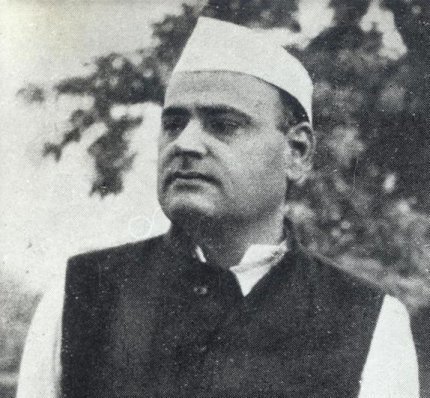
In a special debate Feroze Gandhi, a Congress MP and Nehru’s son-in-law, attacked Krishnamachari’s statement. Asked for evidence beyond press reports, he said he held confidential correspondence between Krishnamachari and Finance Secretary H. M. Patel and was ready to table it (Live History India). Nehru praised the “majesty of Parliament” and agreed to an inquiry.
Wikipedia quotes his line that Parliament “must exercise vigilance and control over the biggest and most powerful financial institution it has created” (Wikipedia). Gandhi had earlier helped expose the Dalmia insurance fraud that led to LIC’s creation, which is why he saw it as a “child of Parliament”.
1957
A second question, and a minister caught out Parliament & the inquiry
Ram Subhag Singh asked again, this time with more material. Deputy Finance Minister Bali Ram Bhagat acknowledged that in June 1957 LIC had bought shares worth Rs 12.69 million (about Rs 1.27 crore) in firms linked to Mundhra (Gfiles India). Feroze Gandhi’s supplementary questions then pressed on who had decided.
Bhagat said the decision came from LIC’s investment committee and that the government had no hand in it. According to Gfiles, the Chagla Commission later found he had given false information. The brief’s account of this date is accurate, but it is the second question, not the first.
1957
Nehru writes that Mundhra’s reputation “is not good” The deal, 1955–57
Acting as finance minister in Krishnamachari’s absence, Nehru was shown papers on Mundhra and noted: “So far as I know, the reputation of this gentleman is not good” (Gfiles India). This was three months after the main LIC purchase and before the scandal broke in Parliament.
The brief cites a Nehru Archive page for a note on the Mundhra group dated this day; that page returned an access error to AiTimeline, so the quotation here rests on Gfiles.
1957
A written reply that says very little Parliament & the inquiry
Ram Subhag Singh asked about The Statesman’s report that LIC had put over Rs 1 crore into a private enterprise headquartered in Kanpur. Bhagat answered that LIC had not invested Rs 1 crore in any single such enterprise. That was technically true, because the money had gone into several companies, and as the question was unstarred no supplementary was allowed (Live History India).
1957
The Statesman reports the investment The deal, 1955–57
The scandal came to light when The Statesman carried a report on LIC’s investments in Mundhra’s companies (Live History India). It was this report that Singh quoted in Parliament a month later.
1957
LIC buys Rs 1,26,86,100 of Mundhra shares The deal, 1955–57
LIC bought shares worth Rs 1,26,86,100 in six Mundhra-linked companies (Richardson & Cruddas, Jessop, Smith Stanistreet, Osler Lamps, Agnelo Brothers and British India Corporation) (Live History India; Wikipedia). The deal bypassed LIC’s investment committee, which was told afterwards, and was done as a private transaction rather than on the market.
Gfiles reports that the contracts were fixed on the closing quotations of 24 June, a Monday after a weekend when both stock exchanges had been shut, and that prices of the Mundhra shares had risen by between 20 and 41 per cent in that time. Scroll says the 25 June deal was the biggest single investment LIC had made up to then (Scroll).
Two figures, two scopes. The Rs 1.26 crore figure is the June 1957 deal. Scroll’s excerpt says LIC’s total investment in Mundhra firms across all purchases was about Rs 156 lakh (Rs 1.56 crore), including earlier and later buys. The two are not interchangeable.
1957
A letter on Saturday, a meeting on Sunday The deal, 1955–57
Mundhra met Finance Secretary Patel on 21 June and wrote on 22 June asking LIC to buy Rs 80 lakh of his shares and a further Rs 30–40 lakh from the market, plus a Rs 1 crore loan. His listed liabilities were about Rs 5.25 crore against unencumbered assets of Rs 1.55 crore. Patel and LIC chairman K. R. Kamath met him on Sunday 23 June and agreed to buy shares of three companies for about Rs 1 crore (Scroll).
Krishnamachari approved Patel discussing the matter with LIC but warned about news of Mundhra’s spurious scrips. What he knew and approved became the central dispute at the Chagla and Bose inquiries.
A blue-chip precedent without committee approval The deal, 1955–57
After the stock market slump that followed his budget, Krishnamachari had LIC buy shares of Tata Iron and Steel, Indian Iron and Steel and Associated Cement in mid-May 1957. These were made at the government’s behest and, like the later Mundhra deal, without the prior approval of LIC’s investment committee, which ratified them afterwards (Scroll).
Those companies were profitable blue chips; the excerpt says using that precedent to justify Mundhra’s shares was incorrect.
An earlier Jessop purchase at above-market prices The deal, 1955–57
Scroll’s excerpt says LIC had earlier bought 50,000 Jessop shares directly from Mundhra at prices above the market without the investment committee’s advice, apparently at H. M. Patel’s behest. Then-finance minister C. D. Deshmukh had clearly proscribed involvement with Mundhra companies (Scroll). In September 1957 LIC made four more purchases through brokers.
Warnings from the ministry and the Reserve Bank The deal, 1955–57
As commerce minister, Krishnamachari wrote to Finance Minister C. D. Deshmukh in August 1955 that it was strange Mundhra “can do what he likes” despite the Companies Act. In February and March 1956 the RBI Governor, B. Rama Rau, wrote to Patel about Mundhra’s foreign-exchange breaches and takeover tactics, enclosing a secret RBI report on manipulations in his associated companies (Gfiles India). In 1956 the Bombay Stock Exchange also indicted him for selling forged shares (Wikipedia).
Mundhra’s method, as Gfiles describes it, was to buy shares, pledge them to banks, and use the loans for the next takeover. By May 1957 he had borrowed Rs 156 million from banks, and some banks later found duplicate share certificates.
1956
Parliament creates LIC The deal, 1955–57
Parliament passed the Life Insurance Corporation Act on 19 June 1956, nationalising 245 insurers. Feroze Gandhi’s earlier exposure of the Dalmia group’s misuse of insurance funds had helped lead to nationalisation, and he regarded LIC as a child of Parliament (Wikipedia). LIC’s investment committee, an advisory body of seven members, began functioning in September 1956 (Scroll).
Two Figures, Two Scopes: ₹1.26 Crore and ₹1.56 Crore
The numbers that recur in accounts of the Mundhra scandal and what each one measures.
| Figure | Amount | What it measures and where it comes from |
|---|---|---|
| Main deal, 24–25 Jun 1957 | ₹1,26,86,100 (about ₹1.26 crore) | LIC’s purchase of shares in six Mundhra-linked companies. Live History India, The Logical Indian |
| Same deal, other renderings | ₹12.69 million; ₹12.4 million | Gfiles India (Bhagat’s 29 Nov 1957 reply); Wikipedia. Rounding and sourcing differ slightly |
| All LIC purchases from Mundhra firms | About ₹156 lakh (₹1.56 crore) | Includes the Mar–Apr, June and September 1957 buys. Scroll excerpt of Mukherjee’s book |
| Mundhra’s bank borrowings, May 1957 | ₹156 million (₹15.6 crore) | Gfiles India, citing RBI material. Not the LIC figure; the similar digits are a coincidence |
| Mundhra’s listed liabilities, 22 Jun 1957 | About ₹5.25 crore | Against unencumbered assets of ₹1.55 crore. Scroll excerpt |
| Reported political donations | ₹2.5 lakh in total | ₹1.5 lakh to UP Congress and ₹1 lakh to the central party. Live History India, Gfiles |
| Chagla hearings | 24 days | Public hearings. Wikipedia, The Logical Indian |
| Reported sentence | 22 years; about 3 served | Secondary sources only; court record not found. Live History India |
The Inquiries Compared
Four bodies examined the matter; only one was a criminal court.
| Body | When | Question and head | What it found or led to |
|---|---|---|---|
| Chagla Commission | Jan–Feb 1958 | Was the LIC deal proper? M. C. Chagla, Chief Justice of Bombay | Deal helped Mundhra, not the market; minister constitutionally responsible; Krishnamachari resigned 18 Feb |
| Bose board of enquiry | From May 1958 | Conduct of officials. Justice Vivian Bose of the Supreme Court | Reported to recommend removing Patel and retiring Kamath; noted Mundhra’s donations; report reportedly unpublished |
| Union Public Service Commission | After the Bose board | Review of the recommended punishments | Overturned both; exonerated Patel, recommended censure for Kamath; no ground to infer obligation from donations |
| Criminal courts | Date not confirmed | Mundhra’s own offences | 22-year sentence reported; about three years served per Live History India |
What Was Proved, What Was Alleged
A status for each major claim, based on the sources AiTimeline could read.
| Claim | Status | Basis |
|---|---|---|
| LIC bought ₹1.26 crore of shares in six Mundhra firms on 24–25 Jun 1957 | Established | Chagla findings as reported; consistent across sources |
| The investment committee was bypassed and told afterwards | Established | Wikipedia, Scroll excerpt |
| The deal was meant to steady the Calcutta market | Rejected | Chagla: ordinary investors had lost interest in the shares |
| Krishnamachari personally ordered the purchase | Disputed | He denied it; Chagla held him constitutionally responsible; versions conflicted |
| Mundhra’s donations bought the deal | Alleged | Bose board inference as reported; UPSC found no ground for it |
| Nehru knew of the deal beforehand | Not shown | Sources show his 19 Sep 1957 note on Mundhra’s reputation, after the deal |
| LIC lost money on the shares | Reported | Chagla price comparison to 16 Jan 1958; Wikipedia says most was lost |
| LIC’s 2025 Adani investments repeat Mundhra | Allegation, denied | Washington Post report, 24 Oct 2025; LIC denies; no finding |
The Story at a Glance
Dates and figures from the sources listed below.
| Date | Event | Detail |
|---|---|---|
| 19 Jun 1956 | LIC Act passed | 245 insurers nationalised |
| Mar–Apr 1957 | First Jessop purchase | 50,000 shares above market |
| Mid-May 1957 | LIC buys blue chips | TISCO, IISCO, ACC without committee |
| 21–23 Jun 1957 | Mundhra approaches Patel | Sunday meeting 23 Jun |
| 24–25 Jun 1957 | Main deal | ₹1,26,86,100, six companies |
| 3 Aug 1957 | The Statesman report | Scandal first reported |
| 4 Sep 1957 | First Lok Sabha question | Vague written reply |
| 19 Sep 1957 | Nehru’s note on Mundhra | “Reputation is not good” |
| 29 Nov 1957 | Second question | Bhagat admits June purchases |
| 16 Dec 1957 | Feroze Gandhi’s speech | Inquiry ordered |
| Jan 1958 | Chagla hearings | 24 days, in public |
| Feb 1958 | Chagla report | Exact tabling date unconfirmed |
| 18 Feb 1958 | Krishnamachari resigns | Finance Minister |
| May 1958 | Bose board appointed | Officials’ conduct |
| 1962–66 | Krishnamachari returns | Finance minister 1964–66 |
| 6 Jan 2018 | Mundhra dies | Per Wikipedia |
| 24 Oct 2025 | LIC–Adani report | Allegation, denied |
Why the Mundhra Scandal Mattered
Public money, public scrutiny. LIC held policyholders’ savings, and the case asked whether such a body could be steered by the government to help a private businessman. Parliament’s role was central: Feroze Gandhi called LIC a creation of Parliament that Parliament must watch.
Ministerial responsibility. The commission held that Krishnamachari answered for his secretary’s actions even though he said he had not ordered the deal. That principle, and its limits, is the case’s main legacy. For another judgement on proof and responsibility, see the Bofors scandal.
A ruling-party MP as the prosecutor. The most unusual feature was that the attack came from inside the governing party, and from the prime minister’s own family. The Emergency that Feroze Gandhi’s wife, Indira, later imposed is a different story; see the Emergency timeline.
A template for later cases. Commentators have compared Mundhra with later market and banking cases; see the bad loans crisis and India’s market crashes. Those comparisons are commentary, not findings.
Funding and influence. Reports of Mundhra’s donations to the Congress, whether or not they caused the deal, are an early example of the questions later raised about electoral bonds.
| Term | Meaning | Why it matters here |
|---|---|---|
| LIC | Life Insurance Corporation of India, created by the 1956 Act | Held policyholders’ money; its funds were used in the deal |
| Investment committee | Seven-member advisory body of officials and outside experts | Bypassed, then told afterwards |
| Commission of inquiry | A judge-led fact-finding body, not a criminal court | The Chagla Commission’s findings are not convictions |
| Ministerial responsibility | A minister answers to Parliament for the department’s acts | The basis for Krishnamachari’s resignation |
| Unstarred question | A written question with no oral supplementaries | Allowed the first reply to stay vague |
| Scrip | A share certificate | Mundhra pledged duplicate scrips; LIC asked him to replace any spurious ones |
| Quid pro quo | A favour exchanged for another | The Bose board suspected one; the UPSC found no ground for it |
Who Is Who in the Story
Haridas Mundhra
Calcutta stock speculator whose six troubled companies LIC bought into; later arrested at the Claridges hotel in Delhi.
Feroze Gandhi
Rae Bareli MP and Nehru’s son-in-law; his 16 December 1957 speech forced the inquiry.
Ram Subhag Singh
Bihar MP whose 4 September and 29 November 1957 questions opened the issue in the Lok Sabha.
Jawaharlal Nehru
Ordered the Chagla Commission; kept supporting his finance minister, per Gfiles.
T. T. Krishnamachari
Resigned 18 February 1958; denied personally ordering the purchase; back as finance minister 1964–66.
H. M. Patel
Met Mundhra and LIC’s chairman; the Bose board recommended his removal, which the UPSC overturned.
K. R. Kamath
Attended the 23 June 1957 meeting; the UPSC recommended only a censure.
M. C. Chagla
Bombay Chief Justice who held open hearings and reported within weeks.
Vivian Bose
Supreme Court judge appointed in May 1958 to examine officials’ conduct.
The Popular Story vs the Record
| Popular version | What the record shows |
|---|---|
| Mundhra got ₹1.56 crore from LIC in one deal | The June 1957 deal was about ₹1.26 crore. ₹1.56 crore is the estimated total of all LIC purchases from his firms |
| Feroze Gandhi was an opposition MP | He was a Congress MP from Rae Bareli, Nehru’s son-in-law, attacking his own party’s government |
| Krishnamachari was convicted | No. The Chagla Commission was an inquiry; he resigned on 18 Feb 1958 and disputed parts of the findings |
| He resigned on 12 February | The sources AiTimeline could read give 18 February 1958 |
| Chagla was a retired judge | He was serving as Chief Justice of the Bombay High Court until 1958 |
| It was independent India’s first scandal | Live History India calls it the biggest financial scam of its time, “although not its first” |
| Mundhra served 22 years | A 22-year sentence is reported, but Live History India says he was released after about three years |
| The case ended with the resignation | The Bose board and UPSC review followed, and the officials’ punishments were overturned |
Explore More Timelines
People Also Ask
Frequently Asked Questions
Related AiTimeline Stories
⚠️ Editorial Note
Last updated 22 October 2026. The figures ₹1.26 crore (the June 1957 deal) and ₹1.56 crore (all 1957 purchases) describe different scopes and are kept apart. The Chagla Commission was an inquiry, not a criminal court; findings about process are separated from disputed claims about intent. Corrections to the draft brief: the resignation was on 18 February 1958 (not 12 February); the Nehru Archive and Lok Sabha pages cited for 12–19 February, 19 September and 20 December 1957 could not be opened, so the 13 February report date, the 12 February acceptance letter and the 20 December Cabinet figures (shares at ₹4 against a quotation of about ₹2.50) are not stated; the 29 November 1957 question was Ram Subhag Singh’s second, after a first on 4 September; the 7 January appointment date is unverified; and the Bose board, UPSC review, Mundhra’s reported conviction, the 3 August 1957 Statesman report and the October 2025 LIC–Adani allegations were added. Mundhra’s sentence rests on secondary sources, and the 2025 allegations are unproven and denied by LIC. Verify before republishing.
Sources & further reading
Every dated entry above was checked against these references. Last reviewed 22 October 2026.
- LIC-Mundhra Scam: Independent India's First Mega Financial Scandal
- How the 1958 Mundhra scam exposed the nexus between LIC, the bureaucracy and rogue businessmen (Bhaswar Mukherjee excerpt)
- From Raj to Rafale 5: The Mundhra case
- Haridas Mundhra
- T. T. Krishnamachari
- M. C. Chagla
- Vivian Bose
- Independent India's First Big Financial Scam: Mundhra Scandal
- From Mundhra to Mundra: Recounting a 7-decades-old Tale
- LIC responds to Washington Post report on alleged $3.9 billion Adani investment plan
- Savings of LIC's 30 crore policyholders 'systematically misused' to benefit Adani: Congress