Anti-Hindi Agitation in Tamil Nadu: A Timeline of Language, Identity and Resistance
Explore the history of Tamil Nadu's anti-Hindi agitations, from the 1937 protests and 1965 student uprising to today's language-policy debates.
Latest Story
The anti-Hindi agitation in Tamil Nadu is a series of protests, from 1937 to today’s court and funding disputes, against making Hindi compulsory or privileged over Tamil and English. Its peak was the student-led uprising of January–March 1965. The movement’s demand is against compulsion, not against anyone choosing to learn Hindi. This timeline runs from the 1937 school order to the Supreme Court hearing of 17 September 2026 and the October 2026 signboard row, and it keeps court records and statutes apart from contested claims. For related history see how India’s states were redrawn on linguistic lines and the Emergency of 1975–77.
💡 Short Answer
The anti-Hindi agitation in Tamil Nadu began in 1937 and peaked in 1965, when students rose against fears that Hindi would replace English in Union administration. Official estimates put deaths near 70. The DMK won power in 1967, the state adopted a Tamil-and-English policy in 1968, and the dispute now runs through the National Education Policy, funding and Supreme Court hearings.
Anti-Hindi Agitation in Tamil Nadu: Key Questions
The Movement in Ten Points
- Start: 1937–38, when the Madras government made Hindi compulsory in 125 schools.
- First victory: compulsory Hindi was made optional on 21 February 1940.
- Constitution: Hindi and English are official languages; no national language is named.
- The worry: the 1963 Act said English “may” continue, not “shall”.
- 1965: student-led unrest, with about 70 deaths by official estimate and no agreed figure.
- Resolution: Shastri’s 11 February 1965 assurance and the 1967 amendment.
- Politics: the DMK won in 1967 and Kamaraj lost his seat to a student leader.
- Policy: the Assembly adopted Tamil-and-English schooling on 23 January 1968.
- Today: NEP 2020, funding, Navodaya schools and signage keep the argument alive.
- Distinction: the demand is against compulsion, not against learning Hindi.
Anti-Hindi Agitation in Tamil Nadu: Timeline, Latest First
Each entry is tagged by theme and ends with why it matters. Use the filter to isolate the early agitations, the language laws, the 1960s uprising or the policy disputes since 1986.
Early agitations, language laws, the 1960s uprising or today’s policy disputes? Filter the timeline by theme.
–
A Hindi line on a highway signboard becomes a political row Policy disputes 1986–2026
A state-highway signboard on the Sathankulam–Nazareth road (SH-93) in Thoothukudi district carried Hindi lettering directly after Tamil. Reports on 2 October 2026 said the board was replaced with a Tamil-and-English version and that an assistant divisional engineer and an assistant engineer of the Highways Department were suspended, with departmental proceedings begun (The News Minute, DT Next).
DMK president M. K. Stalin, now a former chief minister, accused the TVK government of testing the waters on Hindi imposition. Public Works Minister Aadhav Arjuna said an inquiry found the three-language board was installed through negligence and that a higher-level inquiry continued. A day later the department also answered a viral photo of another Hindi board near Vadipatti in Madurai district.
This is a signage dispute, not a school-policy decision, and the facts of how the board was approved are still being inquired into.
The Supreme Court asks Tamil Nadu to rethink its stand on Hindi and Navodaya schools Policy disputes 1986–2026
On 17 September 2026 the Supreme Court declined Tamil Nadu’s plea to recall its December 2025 direction to identify land for Jawahar Navodaya Vidyalayas (JNVs) in each district, and gave the state three more months. Justice B. V. Nagarathna said it could not be that Hindi would not be taught on Tamil Nadu soil, and the bench asked state and Union representatives to hold talks, with the next listing reported for 14 December. The bench also noted the state could raise a two-language condition in those talks (India Today, 19 Sep 2026).
On 18 September School Education Minister Rajmohan Arumugam said the TVK government would keep the two-language policy and withhold land, adding that the remarks were an opinion during a hearing, not a final order and that the state was not against Hindi. Leader of the Opposition Udhayanidhi Stalin of the DMK welcomed the stand, so the ruling party and its main rival were on the same side.
The JNVs are centrally funded residential schools that follow a three-language formula. Tamil Nadu is the only state without them, a result of the 1986 dispute below.
A new, non-Dravidian-party government takes office Policy disputes 1986–2026
Actor-turned-politician C. Joseph Vijay was sworn in as chief minister on 10 May 2026 after his party, the Tamilaga Vettri Kazhagam (TVK), won 108 of the 234 seats and secured the support of 120 MLAs, ending nearly 60 years of DMK and AIADMK rule (Wikipedia).
The change of government did not change the language position. By September the TVK minister for school education was defending the two-language policy in the Supreme Court dispute above.
CBSE’s three-language framework is called “linguistic imposition” Policy disputes 1986–2026
The CBSE’s NEP-aligned curriculum for 2026–27 makes students from Class 6 study three languages, at least two of them Indian. Then Chief Minister Stalin called it “a calculated and deeply concerning attempt at linguistic imposition”, arguing that in southern states it would in practice mean Hindi. Union Education Minister Dharmendra Pradhan replied on 4 April that the National Education Policy 2020 is “a manifesto for linguistic liberation” (Scroll).
The two sides framed the same rule differently. Supporters say it widens choice, since the third language need not be Hindi. Critics note that in many places Hindi is the language schools find easiest to staff.
“Kartavya Dwar” and the railway station signboards Policy disputes 1986–2026
Southern Railway’s divisional office in Tiruchirappalli put up an entrance arch named “Kartavya Dwar” in Hindi, with Tamil and English versions. Stalin, then chief minister, criticised the “one language, three scripts” practice, DMK workers blackened the English plaque, and Southern Railway removed the name, reports dated 5 March said, “respecting public sentiments” (Madhyamam).
On 11 March, the day Prime Minister Narendra Modi visited Tamil Nadu, May 17 Movement members painted over Hindi on new station boards at Chennai Park that gave Hindi the central position. One activist, Siva Dileepan, jumped in front of a train shouting “Long live Tamil, down with Hindi” and was reported to be under treatment (The Wire). Wikipedia’s account says he died; AiTimeline could not confirm that and does not state it.
NEP, PM SHRI and withheld Samagra Shiksha funds Policy disputes 1986–2026
Tamil Nadu declined to sign the PM SHRI memorandum, which it said tied it to the National Education Policy 2020 and its three-language framework. A February 2025 parliamentary reply showed that no Samagra Shiksha funds had been released to Kerala, West Bengal and Tamil Nadu up to 31 January 2025. In May 2025 Tamil Nadu filed an original suit under Article 131, putting its 2024–25 central share at about Rs 2,151.59 crore and total arrears at Rs 2,291.30 crore (The South First).
The Union government says it has not withheld funds in full: it told Parliament that Rs 713.99 crore of the central share was released under the RTE component and that Tamil Nadu is the one state that has not signed the PM SHRI MoU. Both sides’ figures are claims in a pending case.
The Assembly passes a resolution against Hindi imposition Policy disputes 1986–2026
On 18 October 2022 the Assembly adopted a resolution urging the Union government not to implement recommendations of the Parliamentary Committee on Official Language, chaired by Home Minister Amit Shah, whose report went to the President on 9 September 2022. Stalin said the report proposed Hindi as the medium of instruction in technical and other Union institutions, including Kendriya Vidyalayas, and linked some jobs to Hindi study. BJP members walked out (The News Minute).
The resolution invoked Annadurai’s two-language policy, Nehru’s assurances and the English-and-Hindi arrangement secured in 1968.
NEP 2020 is approved and Tamil Nadu says it will keep two languages Policy disputes 1986–2026
The Union Cabinet approved the National Education Policy 2020 on 29 July 2020. Chief Minister Edappadi Palaniswami, an AIADMK leader, said Tamil Nadu would stay with its two-language policy and cited the 1968 and 1986 resolutions (The News Minute).
The policy says no language will be imposed, while the three-language formula remains its framework. Tamil Nadu’s objection is to how the rule operates, not just its wording.
A draft education policy makes Hindi mandatory, then is revised within days Policy disputes 1986–2026
A draft National Education Policy released in 2019 would have made Hindi mandatory in middle school in non-Hindi-speaking states. After objections led by the DMK and AIADMK, the human resource development ministry revised the draft on 3 June 2019 to let students pick another regional language as the third language (The Wire).
The ministry said the draft was only a draft. The episode shows how quickly a clause on language can reach Chennai and be reversed.
Hindi on government social-media accounts Policy disputes 1986–2026
In 2014 the Home Ministry told officials with official accounts on social networking sites to use Hindi, or Hindi and English with priority to Hindi. Tamil Nadu Chief Minister J. Jayalalithaa said the direction was against the letter and spirit of the Official Languages Act and asked the Prime Minister to modify it so that English was used. Wikipedia’s account says the protests kept English in official use (Wikipedia).
Navodaya schools: the 1986 agitation Policy disputes 1986–2026
The National Policy on Education 1986 led to the Jawahar Navodaya Vidyalaya scheme, whose schools use a three-language formula. The DMK, then in opposition, said Hindi would be compulsory and announced an agitation. On 13 November 1986 the Assembly, under the AIADMK government of M. G. Ramachandran, unanimously asked for repeal of Part XVII of the Constitution and English as the Union’s sole official language.
On 17 November DMK members burned Part XVII. According to Wikipedia’s account, about 20,000 DMK members including M. Karunanidhi were arrested, Karunanidhi was sentenced to ten weeks of rigorous imprisonment, and 21 people died by self-immolation; Rajiv Gandhi assured Tamil Nadu MPs that Hindi would not be imposed, and Navodaya schools were not opened in the state (Wikipedia). Accounts of casualty numbers vary, so check contemporary reporting before quoting them.
The Assembly adopts the two-language policy DMK & the 1960s
A new wave of student protests began on 19 December 1967 and turned violent two days later. On 23 January 1968, after a three-day debate, the Assembly passed a resolution under Chief Minister C. N. Annadurai to scrap the three-language formula, teach only Tamil and English in schools and drop Hindi commands in the NCC, and it urged the Union to treat all Eighth Schedule languages equally (Wikipedia).
Five days earlier, on 18 January 1968, Parliament had adopted an Official Language Resolution that promoted the three-language approach nationally, which is why Tamil Nadu and the Union have followed different school models since.
Parliament guarantees English as long as non-Hindi states want it Constitution & language laws
The 1967 amendment to the Official Languages Act was passed in December 1967 and received presidential assent on 8 January 1968. It removed the vague “may” wording that the DMK had challenged in 1963, so that English would remain in official use until the legislature of every non-Hindi state and each House of Parliament chose to end it (Wikipedia).
Writers describe the result as a “virtual indefinite” bilingual arrangement. The 1965 protests, then, are usually credited with making this guarantee possible.
DMK wins, Congress loses, and a student defeats Kamaraj DMK & the 1960s
The DMK defeated the Congress in the 1967 Madras State election and Annadurai became chief minister. The result owed much to the language issue but not to it alone. In Virudhunagar, student leader P. Seenivasan defeated K. Kamaraj, then the Congress president, with large numbers of students campaigning for him (Wikipedia; The Indian Express).
The Congress has not formed a government in the state on its own since. Madras State was renamed Tamil Nadu in January 1969.
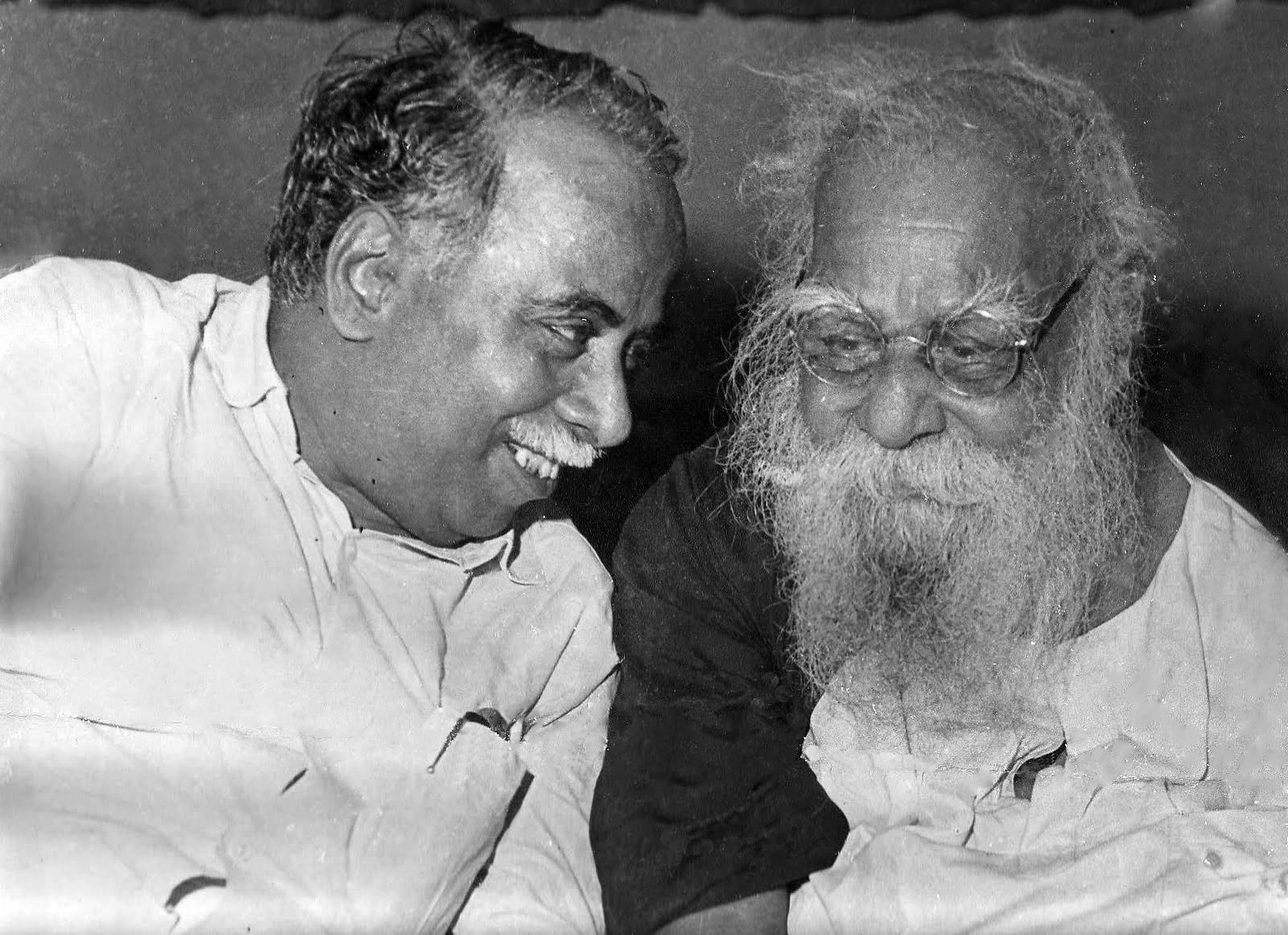
Shastri’s assurance ends the crisis DMK & the 1960s
On 11 February 1965 two Union ministers from Madras State, C. Subramaniam and O. V. Alagesan, resigned over the language policy. President Sarvepalli Radhakrishnan declined to accept Prime Minister Lal Bahadur Shastri’s recommendation to accept the resignations, and Shastri broadcast on All India Radio the same day, promising to honour Nehru’s assurances and saying English would continue for Centre–state communication and that the civil services examination would stay in English.
The students’ council postponed the agitation on 12 February, the two ministers withdrew their resignations on 16 February, cases against student leaders were withdrawn on 7 March, and the Anti-Hindi Agitation Council dropped the agitation on 14 March (Wikipedia). Some earlier summaries describe the ministers as having only threatened to resign; accounts say they did resign and later withdrew.
The 1965 student uprising DMK & the 1960s
The Constitution’s 15-year transition period ended on 26 January 1965. Annadurai had called for a day of mourning on 26 January, advanced to 25 January, and he was taken into preventive custody with about 3,000 DMK members. On 25 January a clash between students and Congress workers in Madurai became a riot that spread across the state. On 26 January about 50,000 students marched from Napier Park to Fort St George in Madras to petition the chief minister.
The Congress government of M. Bhaktavatsalam treated the protests as a law-and-order problem and called in paramilitary forces. Classes were suspended on 28 January. Police firing, arson, two police deaths and self-immolations followed. About 70 deaths is the commonly cited official estimate and unofficial figures run as high as 500; damage was put at Rs 1 crore (Wikipedia; The Indian Express). No single death toll is agreed.
The first “language martyr” and a three-language proposal DMK & the 1960s
On 25 January 1964 a DMK member named Chinnasamy burned himself to death in Tiruchirappalli to protest the “imposition of Hindi”, and the DMK counts him as the first martyr of the second phase of the struggle. Nehru died in May 1964 and Lal Bahadur Shastri became Prime Minister, which deepened fears that the earlier assurances would not be honoured. On 7 March 1964 Chief Minister Bhaktavatsalam recommended the three-language formula in the Assembly, and student support for the agitation grew (Wikipedia).
The Official Languages Act: “may” or “shall”? Constitution & language laws
The Official Languages Act, 1963 allowed English to continue in addition to Hindi after 1965. The DMK, led in Parliament by Annadurai, objected that Section 3 said English “may” continue, not “shall”, and feared “may” could later be read as “may not”. Nehru said on 22 April that “may” meant “shall” here, but the Bill passed on 27 April without change.
In November 1963 Annadurai was arrested with about 500 DMK members for burning part of the Constitution at an anti-Hindi conference and was sentenced to six months in prison. The same month the DMK dropped its demand for a separate Dravida Nadu after the 16th Amendment, but its Hindi stance hardened (Wikipedia).
Nehru’s assurance to non-Hindi speakers Constitution & language laws
The Pant Committee recommended in February 1959 that Hindi be the primary official language. On 7 August 1959 Prime Minister Jawaharlal Nehru told the Lok Sabha that there must be no imposition and that he would keep English as an “associate, additional language” for an indefinite period, with the decision left to non-Hindi speakers. In 1960 President Rajendra Prasad issued orders acting on the Pant Committee’s recommendations, and Nehru said they did not contradict his assurance (Wikipedia).
Pant is reported to have said that what he achieved in two years the Prime Minister undid in two minutes.
Kallakudi to Dalmiapuram: an early DMK protest DMK & the 1960s
In July 1953 the newly formed DMK protested the renaming of Kallakudi as Dalmiapuram, which it saw as a sign of northern commercial dominance. On 15 July M. Karunanidhi and others erased the Hindi name from the station board and lay on the tracks. Two DMK members died in the clash with police and Karunanidhi was among those arrested (Wikipedia).
The Constitution sets a 15-year transition and avoids the term “national language” Constitution & language laws
Part XVII was settled in 1949 in the Munshi–Ayyangar compromise. Article 343 made Hindi in the Devanagari script the official language of the Union, with English continuing for 15 years, and Article 344 provided a commission after five years. The Constitution does not declare Hindi a national language.
Members from Madras, including T. T. Krishnamachari, warned against a Centre that would enslave those who did not speak its language, and the Kher Commission of 1955–56 recommended steps to replace English with Hindi (Wikipedia).
Compulsory Hindi again, and another reversal Early agitations
After independence the Congress government of Madras under O. P. Ramaswamy Reddiar made Hindi compulsory from the 1948–49 school year and set a minimum Hindi qualification for promotion. Periyar’s Dravidar Kazhagam launched a new agitation, with an all-party conference on 17 July 1948; Periyar and Annadurai were arrested on 27 August, and a compromise ended the agitation on 26 December 1948. Hindi teaching became optional from 1950 (Wikipedia).
Compulsory Hindi is withdrawn Early agitations
The Congress ministry resigned on 29 October 1939 over India’s entry into the Second World War, and the province came under the Governor’s rule. Periyar suspended the agitation on 31 October and asked for the order to be withdrawn. On 21 February 1940 Governor Erskine issued a press communique making Hindi teaching optional (Wikipedia).
Deaths in custody and mass arrests Early agitations
Two protesters, Natarajan and Thalamuthu, died in police custody. In all 1,198 people were arrested, of whom 1,179 were convicted, including 73 women and 32 children who accompanied their mothers to prison. Periyar was sentenced to a year of rigorous imprisonment but released on 22 May 1939 on medical grounds, Annadurai was jailed for four months, and on 7 June 1939 all those arrested were released (Wikipedia).
Hindi becomes compulsory in 125 schools, and statewide protests begin Early agitations
On 21 April 1938 Chief Minister C. Rajagopalachari’s government issued an order making Hindi compulsory in 125 secondary schools. Periyar and the Justice Party led by A. T. Panneerselvam opposed it, backed by Tamil scholars such as Maraimalai Adigal and Somasundara Bharathiar. The campaign used fasts, picketing, processions and conferences, set aside anti-Hindi days on 1 July and 3 December 1938, and drew many women, including at a Tamil Nadu Women’s Conference on 13 November 1938 (Wikipedia; The News Minute).
Accounts also note that some of the agitation carried anti-Brahmin themes, which was a point of dispute even then.
Rajaji’s government announces Hindi teaching Early agitations
After the Congress won the 1937 elections, C. Rajagopalachari became chief minister on 14 July and on 11 August announced his intention to introduce Hindi teaching in secondary schools. Tamil Saivite scholars were among the first to oppose it, at a conference in December 1937, and the opposition grew into a wider campaign (Wikipedia).
Hindi propagation was not itself new in the region: Mahatma Gandhi had founded the Dakshin Bharat Hindi Prachar Sabha in Madras in 1918.
The Major Waves Compared
Trigger, scale and outcome of each phase. Figures are as reported in the sources below and are not uniform.
| Wave | Trigger | Scale (as reported) | Outcome |
|---|---|---|---|
| 1937–40 | Compulsory Hindi in 125 Madras schools (Rajaji govt) | 1,198 arrested; two deaths in custody | Hindi made optional, 21 Feb 1940 |
| 1948–50 | Compulsory Hindi from 1948–49 (Reddiar govt) | Leaders arrested; compromise 26 Dec 1948 | Hindi optional from 1950 |
| 1963–65 | Official Languages Act; end of 15-year period on 26 Jan 1965 | About 70 deaths (official); up to about 500 (unofficial) | Shastri’s assurance, 11 Feb 1965; 1967 amendment |
| 1967–68 | Fear that the three-language formula would stay | Protests from 19 Dec 1967; violence on 21 Dec | Two-language resolution, 23 Jan 1968 |
| 1986 | Navodaya Vidyalayas under the National Policy on Education | About 20,000 arrests; casualty figures vary | No Navodaya schools in the state |
| 2019–26 | Draft NEP, NEP 2020, CBSE rule, funding row, signage | Court cases, resolutions, protests | Unresolved; Supreme Court talks pending |
What the Laws Actually Said
The constitutional and statutory steps, from the 1950 transition to the 2020 education policy.
| Instrument | What it says about language | Why Tamil Nadu cared |
|---|---|---|
| Constitution, Part XVII (1950) | Hindi (Devanagari) is the Union official language; English continues 15 years; no national language named | Set the 26 Jan 1965 deadline |
| Nehru’s assurance (7 Aug 1959) | English as an “associate, additional language” for an indefinite period | A promise, not yet a law |
| Official Languages Act, 1963 | English “may” continue in addition to Hindi after 1965 | DMK feared “may” meant “may not” |
| Shastri’s broadcast (11 Feb 1965) | English for Centre–state communication; civil services exam in English | Ended the 1965 crisis |
| Official Languages (Amendment) Act (assent 8 Jan 1968) | English stays until every non-Hindi state legislature and both Houses resolve otherwise | Turned the assurance into law |
| Tamil Nadu Assembly resolution (23 Jan 1968) | Schools teach Tamil and English only | Created the state’s two-language policy |
| National Education Policy 2020 | Three-language formula with no language imposed; states choose | State objects to how the rule works in practice |
Opposing Compulsion Is Not Opposing Hindi
The distinction. The movement’s central demand is that Hindi should not be compulsory in schools or a barrier to central jobs, and that Tamil should not be subordinated in its own region. It has not generally argued that individuals should be stopped from learning Hindi.
Voluntary learning exists. The Dakshin Bharat Hindi Prachar Sabha was founded by Mahatma Gandhi in Madras in 1918, and Hindi is learned there through private tuition, institutional courses and in schools that follow other boards.
What supporters of Hindi say. Supporters argue that a common language can help national integration and that the imposition charge is exaggerated. The Union government describes the NEP as multilingual and choice-based.
What critics say. Critics point out that in practice Hindi is often the easiest third language for schools to offer, and that central jobs or funding can make an apparent choice into a requirement.
The same events are described differently by the two sides, and this timeline reports both. See also the Constituent Assembly debates where the compromise on official languages was made.
The Story at a Glance
Dates and figures from the sources listed below.
| Date | Event | Detail |
|---|---|---|
| 11 Aug 1937 | Rajaji announces Hindi teaching | First phase begins |
| 21 Apr 1938 | Hindi compulsory in 125 schools | Periyar and Justice Party oppose |
| 21 Feb 1940 | Compulsory Hindi withdrawn | Governor Erskine’s communique |
| 26 Dec 1948 | Compromise ends second agitation | Hindi optional from 1950 |
| 26 Jan 1950 | Constitution in force | 15-year transition for English |
| 7 Aug 1959 | Nehru’s assurance | English as associate language |
| 27 Apr 1963 | Official Languages Act passed | “may” vs “shall” |
| 25 Jan 1965 | Madurai riot, statewide unrest | About 70 deaths (official) |
| 11 Feb 1965 | Shastri’s broadcast | English to continue |
| Mar 1967 | DMK wins; Annadurai chief minister | Congress out |
| 8 Jan 1968 | Official Languages (Amendment) Act assent | English guaranteed |
| 23 Jan 1968 | Two-language resolution | Tamil and English only |
| 17 Nov 1986 | DMK burns Part XVII | Navodaya dispute |
| 3 Jun 2019 | Draft NEP language clause revised | Mandatory Hindi dropped |
| 18 Oct 2022 | Assembly resolution | Against Parliamentary committee report |
| 17 Sep 2026 | Supreme Court Navodaya hearing | Three months to identify land |
| 2 Oct 2026 | Highway signboard row | Two officials suspended |
Why Did the Anti-Hindi Agitation in Tamil Nadu Happen?
Protecting Tamil. Tamil has a long literary and cultural history, and campaigners wanted policy to protect its place in schools and public life.
Equal access to jobs. Making Hindi essential for central jobs or examinations would give native Hindi speakers an advantage over others.
Regional autonomy. The agitations challenged the idea that a uniform national policy should override state preferences, so the dispute became a test of Union–state relations; see also the delimitation freeze for another federal fault line.
English as a link language. Many leaders saw English as a neutral language that disadvantaged no region. Annadurai argued that continued English would “distribute advantages or disadvantages evenly” between Hindi and non-Hindi speakers.
Political mobilisation. The movement strengthened the Dravidian parties; see how another Tamil daily grew alongside it in the Dinamalar story.
| Term | Meaning | Why it matters here |
|---|---|---|
| Official language | A language the law authorises for government work | Hindi and English are official languages of the Union |
| National language | A language declared to represent the nation | The Constitution names none |
| Three-language formula | Mother tongue/regional language, another language and English in schools | Tamil Nadu does not follow it |
| Two-language policy | Tamil and English only | Adopted 23 Jan 1968 |
| Part XVII | The Constitution’s chapter on official languages | Burned by the DMK in 1963 and 1986 |
| Associate language | Nehru’s 1959 term for English alongside Hindi | Basis of the 1963 and 1967 laws |
| Navodaya Vidyalaya | Centrally funded residential school | Follows three languages; none in Tamil Nadu |
| PM SHRI | Union scheme to upgrade schools | Tamil Nadu has not signed the MoU |
Who Is Who in the Story
C. Rajagopalachari
Announced Hindi teaching on 11 Aug 1937 and issued the 21 Apr 1938 order for 125 schools.
E. V. Ramasamy (Periyar)
Led the 1938 and 1948 campaigns; imprisoned in 1938–39.
C. N. Annadurai
Opposed the 1963 Act, called the 1965 day of mourning and moved the 1968 two-language resolution.
Jawaharlal Nehru
Gave the 1959 assurance on English and piloted the 1963 Act.
Lal Bahadur Shastri
Ended the 1965 crisis with an All India Radio broadcast on 11 Feb 1965.
M. Bhaktavatsalam
Congress chief minister in 1965; treated protests as law and order.
K. Kamaraj
Congress president who lost Virudhunagar to student leader P. Seenivasan in 1967.
M. Karunanidhi
Erased the Hindi name at Dalmiapuram in 1953; jailed after the 1986 protest.
The Popular Story vs the Record
| Popular version | What the record shows |
|---|---|
| Hindi is India’s national language | The Constitution names no national language; Hindi and English are both Union official languages |
| Tamil Nadu bans Hindi | No. It does not make Hindi compulsory in state schools, but people can learn it voluntarily |
| The movement is against Hindi speakers | Its stated demand is against compulsion and privilege, not against people or individual learning |
| 1965 was a DMK protest | Students, parties and other groups took part, and demands were not identical |
| The 1965 toll was exactly 70 | About 70 is the commonly cited official estimate; unofficial counts run as high as about 500 |
| It was always non-violent | Many protests were peaceful, but 1965 saw arson, police firing and self-immolations |
| The row is over | The same issues now appear in education funding, courts and signage |
The Movement in Numbers
| Measure | Figure | Source and caveat |
|---|---|---|
| Schools covered by 1938 order | 125 secondary schools | Wikipedia, citing the government order |
| Arrests, 1937–40 | 1,198 (1,179 convicted) | Wikipedia; includes 73 women |
| Deaths in 1965 | About 70 (official) | Unofficial reports up to about 500 |
| Students marching on 26 Jan 1965 | About 50,000 | Wikipedia |
| Property damage, 1965 | Rs 1 crore (10 million) | Wikipedia |
| Arrests, Nov 1986 | About 20,000 | Wikipedia; casualties vary |
| TVK seats, 2026 | 108 of 234 | Majority mark 118 |
| Samagra Shiksha 2024–25 share claimed | Rs 2,151.59 crore | Tamil Nadu’s suit; Union disputes |
What Changed Because of the Agitations
English stayed in the Union. The 1967 amendment gave English a legal guarantee alongside Hindi.
Tamil Nadu kept two languages. The policy has run since 1968 under every government.
Dravidian parties gained strength. The DMK’s 1967 victory was a turning point.
Language became a federal issue. Education funding, schools and signage now carry the same argument.
Explore More Timelines
People Also Ask
Frequently Asked Questions
Related AiTimeline Stories
⚠️ Editorial Note
Last updated 22 October 2026. “Hindi imposition” is the protesters’ description and framing; supporters of Hindi promotion describe the same policies as multilingualism. The 1965 toll varies by source and is not presented as settled. Corrections to the draft brief: the government in 2026 is now led by TVK chief minister C. Joseph Vijay (sworn in 10 May 2026), with M. K. Stalin the former chief minister; the Union ministers Subramaniam and Alagesan resigned on 11 February 1965 and withdrew on 16 February, rather than only threatening to resign; the Supreme Court hearing was on 17 September 2026 and refused to recall a December 2025 direction; and the 1967 amendment, the 1964 self-immolation, the 1986 Assembly resolution, the March 2026 railway-signage protests and the May 2026 change of government were added. The NDTV page on the October 2026 signboard could not be opened, so that entry rests on The News Minute and DT Next. The 1986 figures and several 1960s details are taken from Wikipedia’s account and should be checked against contemporary reporting before quoting. Siva Dileepan was reported under treatment in March 2026; a later claim that he died could not be confirmed. Verify pending proceedings before republishing.
Sources & further reading
Every dated entry above was checked against these references. Last reviewed 22 October 2026.
- Anti-Hindi agitations of Tamil Nadu (overview with dated events)
- The history of anti-Hindi imposition movements in Tamil Nadu
- Explained: the 1965 anti-Hindi agitation and its political impact
- Official Languages Act, 1963
- TN govt firm on 2-language policy after SC asks for mindset change on Hindi (19 Sep 2026)
- Two Tamil Nadu officials suspended over Hindi on state highway signboard (2 Oct 2026)
- New CBSE curriculum is 'calculated attempt at linguistic imposition', alleges Stalin (Apr 2026)
- Tamil Nadu moves Supreme Court over withheld Samagra Shiksha funds
- Tamil Nadu Assembly passes resolution against imposition of Hindi (Oct 2022)
- From Chinnasamy to Chennai Park: Tamil Nadu resists Hindi imposition (Mar 2026)
- National Education Policy amended: mandatory Hindi omitted (Jun 2019)
- C. Joseph Vijay ministry (sworn in 10 May 2026)