India’s Emergency (1975–77): 21 Months That Tested Democracy
India's Emergency ran 25 June 1975 to 21 March 1977. See the timeline: Indira Gandhi's decision, arrests, censorship, the 1977 election and reforms.
Latest Story
On the night of 25 June 1975, President Fakhruddin Ali Ahmed proclaimed a national Emergency on the advice of Prime Minister Indira Gandhi, citing “internal disturbance” under Article 352. For 21 months civil liberties were curtailed, opposition leaders were detained and newspapers faced censorship, until Congress lost the March 1977 election. This Emergency in India 1975–77 timeline runs from the 1974 protests to the 2024–26 anniversary debates, and it keeps court rulings and official findings apart from historians’ interpretations. Related reading: Constitution Day and the Constituent Assembly debates and India’s delimitation freeze.
💡 Short Answer
India’s Emergency ran from 25 June 1975 to 21 March 1977. Indira Gandhi’s government proclaimed it under Article 352 after the Allahabad High Court voided her 1971 election and as protests grew. Opposition leaders were detained, newspapers were censored and the 42nd Amendment expanded central power. Congress lost the March 1977 election, and the 44th Amendment later added safeguards.
The Emergency in India: Key Questions
The Emergency in Ten Points
- Dates: 25 June 1975 to 21 March 1977.
- Legal basis: Article 352, citing “internal disturbance”.
- Trigger context: the 12 June 1975 Allahabad verdict, a 24 June conditional stay and mass protests.
- Process: the President signed first; the Cabinet ratified at about 6 a.m. on 26 June.
- Detention: nearly 35,000 under MISA, with total estimates near 110,800.
- Press: pre-censorship from 26 June 1975; The Indian Express ran a blank editorial on 28 June.
- Courts: ADM Jabalpur went 4–1 against habeas corpus in April 1976 and was repudiated in 2017.
- Sterilisation: over 1.07 crore procedures in two years; counts are not a count of forced ones.
- Election: Congress fell to 154 seats; Indira Gandhi lost Rae Bareli.
- Safeguards: the 44th Amendment (assent 30 April 1979) made another Emergency harder.
The Emergency Timeline, Latest First
Each entry is tagged by theme and ends with why it matters. Use the filter to isolate the road to the Emergency, the period itself, the courts, the 1977 election or the 2024–26 legacy.
Road to Emergency, rule, courts, the 1977 election or today’s debate? Filter the timeline by theme.
–
The 51st anniversary: the Emergency is still a live political argument 2024–26 legacy
On 25 June 2026, the 51st anniversary of the proclamation, Prime Minister Narendra Modi said in a post on X that the Emergency was “a direct assault on our Constitution”, citing the suspension of civil liberties, curbs on freedom of expression and the arrest of political leaders, journalists and social workers (Business Standard, PTI report). He added that the Constitution embodies the aspirations, rights and duties of 140 crore Indians.
The same report notes that the government observes 25 June as ‘Samvidhan Hatya Diwas’. It also lists a new Class 9 NCERT chapter on the Emergency among related stories, which AiTimeline has not checked. The day is now an annual government observance, and every anniversary revives the dispute over whether it is mainly a lesson in constitutional safeguards or a partisan weapon.
2025
Fifty years on: Cabinet resolution, silence and a Preamble row 2024–26 legacy
On 25 June 2025 the Union Cabinet adopted a resolution marking 50 years since the proclamation. It honoured those who resisted, said the Constitution was subverted and federalism undermined, and the Cabinet observed two minutes of silence (PM India release). The government announced a year-long programme of events from that date, and Congress called the observance an eyewash.
The next day, on 26 June 2025, RSS general secretary Dattatreya Hosabale said the words “socialist” and “secular”, added to the Preamble during the Emergency, should be reviewed. Congress, the Left and Kerala’s chief minister attacked the remark. No formal government or parliamentary step to change the Preamble followed in the sources AiTimeline checked.
2024
Lok Sabha resolution, Samvidhaan Hatya Diwas and the Supreme Court on the Preamble 2024–26 legacy
On 26 June 2024, at the first sitting of the new Lok Sabha, Speaker Om Birla read a resolution condemning the Emergency and asked members to observe two minutes of silence. Congress members protested that the resolution was not on the agenda and should not have come from the Chair. On 12 July 2024 Home Minister Amit Shah announced a gazette notification declaring 25 June as ‘Samvidhaan Hatya Diwas’, an annual day to remember those who suffered (Tribune report).
On 25 November 2024 a Supreme Court bench of Chief Justice Sanjiv Khanna and Justice Sanjay Kumar dismissed petitions challenging the insertion of “socialist” and “secular” into the Preamble by the 42nd Amendment, holding that Parliament’s power under Article 368 extends to the Preamble and that a challenge after nearly 44 years had no justification (LiveLaw, SCC Online).
The Supreme Court expressly overrules ADM Jabalpur in the privacy judgment Courts & Constitution
In the nine-judge right-to-privacy judgment, the lead opinion by Justice D. Y. Chandrachud, for himself and three other judges (Chief Justice Khehar and Justices Agrawal and Nazeer), said the judgments of all four majority judges in ADM Jabalpur “are seriously flawed” and that “neither life nor liberty are bounties conferred by the state” (para 119). It then held that “ADM Jabalpur must be and is accordingly overruled” (para 121). Justice Sanjay Kishan Kaul agreed in his separate opinion that the case should be expressly overruled (judgment PDF).
The Court also recorded (para 122) that I. R. Coelho had earlier said ADM Jabalpur stood impliedly overruled by later decisions. This is an official court finding, not a historian’s opinion, and it is the clearest statement that the 1976 reasoning no longer stands.
The 43rd and 44th Amendments rebuild the safeguards Courts & Constitution
The Janata government repealed several of the 42nd Amendment’s changes through the 43rd Amendment (1977) and the 44th Amendment. Parliament passed the 44th in December 1978; it received the President’s assent on 30 April 1979, and its main provisions were brought into force from June 1979 by notification. AiTimeline’s draft brief said “enacted in 1978”; the assent and commencement came in 1979.
The 44th replaced “internal disturbance” with “armed rebellion” as a ground for a national Emergency, required the Cabinet’s written advice to the President, and provided that the rights under Articles 20 and 21 cannot be suspended during an Emergency. It also removed the right to property from the list of fundamental rights.
Aug 1978
The Shah Commission investigates Emergency excesses Election & aftermath
The Janata government appointed the Shah Commission of Inquiry on 28 May 1977 under the Commissions of Inquiry Act, 1952, headed by former Chief Justice J. C. Shah. It examined detentions, censorship, forced sterilisation, demolitions and the conduct of officials. Its final report was tabled in Parliament on 31 August 1978 (Ashoka University archive).
The Commission’s findings are official findings, but Indira Gandhi and Congress rejected the inquiry as political, and she declined to answer its questions. Read it as a record of what was found, not as a final verdict on every claim.
1977
The Emergency is withdrawn and the Janata government is sworn in Election & aftermath
The national Emergency was formally revoked on 21 March 1977. Morarji Desai, who had been detained on the first night, was sworn in as prime minister on 24 March, heading the first government at the Centre not formed by Congress.
The transition went ahead without incident, which many historians cite as evidence that the electoral system survived intact. For fuller accounts see the Indian Express explainer on the first non-Congress government.
1977
Voters reject the Emergency government Election & aftermath
Voting ran from 16 to 20 March 1977. Congress won 154 seats, down by about 200 from 1971, and lost almost every seat in the northern Hindi belt. Indira Gandhi lost Rae Bareli to Raj Narain, whose petition had unseated her in 1975, by more than 55,000 votes, and Sanjay Gandhi lost Amethi. The Janata Party and its allies won a majority of their own; counts of the Janata alliance vary between about 295 and 298 seats depending on how allies are classed (Wikipedia, Indian Express).
Congress did far better in the south, where the sterilisation drive had been less intense. Historians argue about how much of the result was a reaction to coercion, how much to censorship and how much to the opposition’s unity, and these effects cannot be separated cleanly.
1977
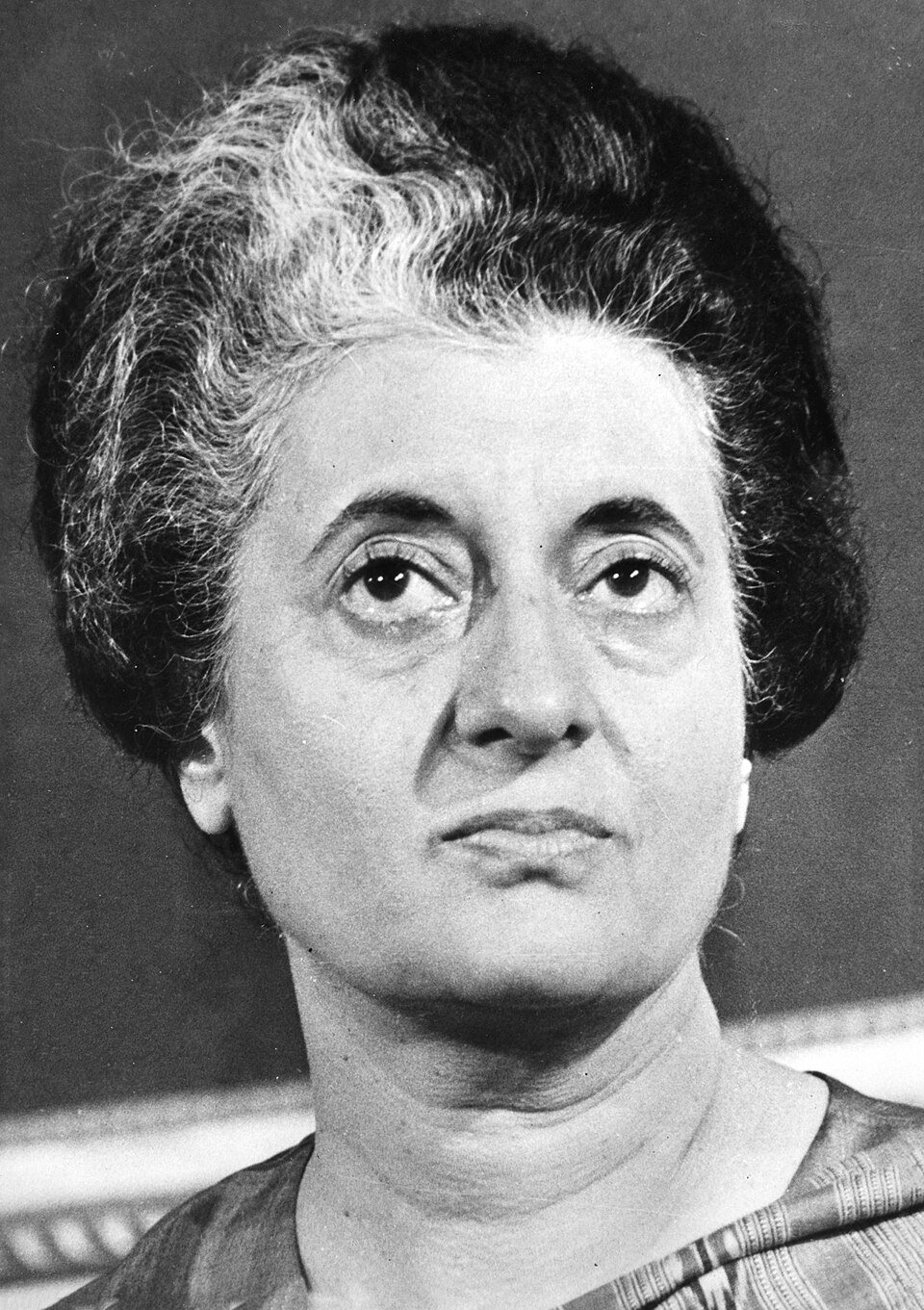
Indira Gandhi announces elections and releases prisoners Election & aftermath
On 18 January 1977 Indira Gandhi announced that elections would be held in March and that political prisoners would be released. Press censorship was eased and opposition parties began merging into the Janata Party. Why she called the vote remains debated: some accounts point to intelligence assessments that she would win, others to the fact that the Lok Sabha’s already-extended term was due to expire in March 1977.
The sitting Lok Sabha’s five-year term had been extended by one year in 1976 under Emergency powers, so an election could not be put off much longer. Treat any single explanation as an interpretation.
Mar 1977
Compulsory sterilisation and slum clearance Emergency rule
Population control became a central Emergency campaign, and Sanjay Gandhi, who held no government post, became closely identified with it from September 1976. A 19 August 2025 Lok Sabha reply, using Shah Commission data, records 26,24,755 sterilisations in 1975–76 (about 26.25 lakh) and 81,32,209 in 1976–77 (about 81.32 lakh), a total of about 1.07 crore, against government targets of 24.85 lakh and 42.56 lakh for the two years, about 67.4 lakh in all (Lok Sabha unstarred question 4156). The PIB factsheet gives 26.42 lakh for 1975–76 (PIB); AiTimeline uses the Lok Sabha annexure figure, which can be checked state by state, and notes that both give a two-year total of about 1.07 crore.
State officials were given targets, and reports describe pressure on government employees, teachers and villagers, with services and salaries tied to sterilisation certificates. The same reply says 548 complaints of sterilisation of unmarried persons and 1,774 cases of death linked to sterilisation were reported to the Shah Commission; these are complaints received, not findings of cause. The counts are of procedures, not of forced ones, and no clean national count of coerced procedures exists.
1976
The 42nd Amendment expands the Union’s power Courts & Constitution
The Constitution (42nd Amendment) Act passed the Lok Sabha on 2 November 1976 and the Rajya Sabha on 10 November. It received assent on 18 December 1976 and came into force on 3 January 1977 (Wikipedia). It added the words “socialist”, “secular” and “integrity” to the Preamble, inserted the Fundamental Duties, gave Directive Principles priority over some Fundamental Rights, limited judicial review and extended the term of the Lok Sabha and state assemblies from five to six years.
It is often called a “mini-Constitution”. Parts were struck down earlier, in Minerva Mills (1980), and the 43rd and 44th Amendments reversed others. The Preamble words and the Fundamental Duties remain in force.
Turkman Gate: demolitions and a police firing in Delhi Emergency rule
Slum-clearance and family-planning drives in Delhi in 1976 reached the Turkman Gate area in April. Bulldozers first arrived on 13 April 1976, and on 19 April residents resisted, clashes followed and police opened fire. The Shah Commission’s second interim report, dated 26 April 1978, examined the episode in detail (report on archive.org).
The death toll is documented only as a range. Delhi Police named six dead, and the Commission concluded the firing caused “at least six deaths” (paras 14.116, 14.164). The assistant sub-inspector in charge of the police post told the Commission eight people had died (para 14.119), and a fact-finding committee noted a possible seventh death it could not establish (para 14.117). A witness told the Commission at least 20 had died (para 14.120). Some later accounts give figures as high as 400, without documents in the sources AiTimeline checked, and a 2015 Hindustan Times report says there is no official account of the number. AiTimeline therefore gives the documented minimum of six and the range, not a single total.
1976
ADM Jabalpur: the Supreme Court upholds detention without recourse Courts & Constitution
On 28 April 1976 a five-judge Supreme Court bench held, by 4–1, that while the presidential order suspending Article 21 was in force a detained person could not seek a writ of habeas corpus to challenge detention. Justice H. R. Khanna dissented, writing that the State had no power to deprive a person of life or liberty without the authority of law. He was later passed over for Chief Justice and resigned in January 1977.
The judgment is widely treated as the Court’s lowest point on personal liberty. The 44th Amendment and the 2017 Puttaswamy judgment, listed above, both reject its logic.
Mass detention and press censorship Emergency rule
Opposition politicians, activists and critics were held under the Maintenance of Internal Security Act (MISA) and the Defence and Internal Security of India Rules. The PIB factsheet, citing the Shah Commission, says nearly 35,000 people were held under MISA (PIB); Wikipedia’s infobox adds about 75,800 detained under the DISIR rules for a total near 110,800. Treat the larger total as an estimate, since counts differ (Wikipedia).
Newspapers were put under pre-censorship, with officials approving copy before publication. On 28 June 1975 The Indian Express carried a blank editorial in its Delhi edition in protest, and other papers followed with symbolic gestures. Many editors and journalists were detained, and the press largely complied or was pressured to.
1975
The Supreme Court strikes down the 39th Amendment clause but upholds her election Courts & Constitution
After the High Court verdict, Parliament passed the 39th Amendment in August 1975, placing the election of the Prime Minister beyond the reach of the courts. On 7 November 1975 the Supreme Court, in Indira Nehru Gandhi v. Raj Narain, struck down that clause as violating the basic structure of the Constitution, but it set aside the High Court’s order and upheld her election by applying election-law changes made after the verdict.
The ruling is often cited both ways: as the Court holding a line on basic structure during the Emergency, and as the Court rescuing the Prime Minister on narrower grounds. Both statements are accurate descriptions of different parts of the judgment.
1975
The 20-point programme is announced Emergency rule
On 1 July 1975 Indira Gandhi announced a 20-point economic programme covering land reform, rural debt, minimum wages, tax evasion and price control. The government argued that the Emergency gave it the discipline to implement it; trains ran on time and prices briefly eased in some accounts.
Supporters saw the Emergency as a period of efficiency, while critics replied that implementation was uneven and that public scrutiny of it was banned. Both claims are consistent with the record, which is why assessments differ.
1975
The Cabinet is told after the fact; Indira Gandhi addresses the nation Road to Emergency
The proclamation had been prepared and signed before the Union Cabinet met. The Cabinet was informed and ratified it at about 6 a.m. on 26 June 1975, and Indira Gandhi then went on All India Radio to say that an Emergency had been declared, adding that there was “nothing to panic about”.
Her government said extraordinary measures were needed to protect stability. Opposition leaders and later official inquiries argued the decision concentrated power in the executive and shut down dissent. The facts of the sequence, signature first and Cabinet afterwards, are not in dispute.
1975
President Fakhruddin Ali Ahmed proclaims the Emergency Road to Emergency
On the advice of Prime Minister Indira Gandhi, President Fakhruddin Ali Ahmed signed the proclamation of a national Emergency under Article 352 on the night of 25 June 1975, citing “internal disturbance”. Earlier that evening Jayaprakash Narayan had addressed a large rally at Delhi’s Ramlila Maidan. In the first hours opposition leaders including JP and Morarji Desai were arrested, under preventive-detention powers (Indian Express explainer).
This was India’s third national Emergency, after those of 1962 (China) and 1971 (Pakistan), and the first declared on grounds other than external war. The 44th Amendment later replaced “internal disturbance” with “armed rebellion”.
1975
Supreme Court grants Indira Gandhi a conditional stay Road to Emergency
Justice V. R. Krishna Iyer, sitting as the vacation judge, granted a conditional stay of the Allahabad judgment on 24 June 1975. Indira Gandhi could continue as prime minister while her appeal was heard, but she could not vote in Parliament or draw a member’s salary. Some accounts describe this as upholding the High Court’s finding in part, but the order was a conditional stay, not a final decision on the appeal.
The opposition took the partial relief as a reason to press for her resignation. The Emergency was proclaimed the next night.
1975
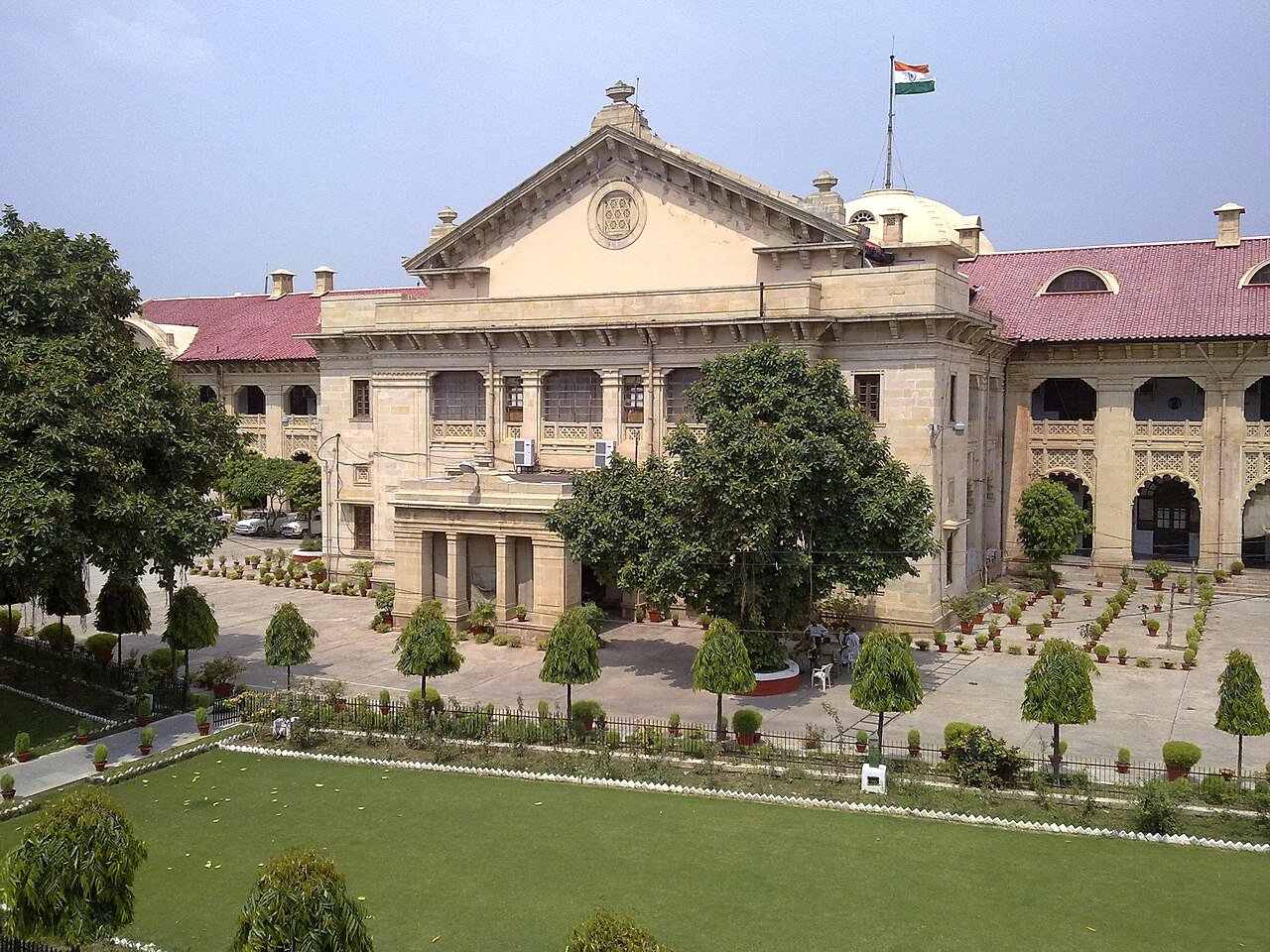
Allahabad High Court voids Indira Gandhi’s 1971 election Road to Emergency
On 12 June 1975 Justice Jagmohanlal Sinha of the Allahabad High Court found Indira Gandhi guilty of electoral malpractice in her 1971 Rae Bareli contest, in a petition filed by her defeated rival Raj Narain. The grounds were narrow: using government officer Yashpal Kapoor for her campaign before his resignation took effect, and using state officials to build rostrums and supply electricity. The court set aside her election and barred her from elected office for six years; more serious charges such as bribery were dropped.
The same day, Congress lost the Gujarat assembly election to the Janata Front. AiTimeline does not claim the verdict caused the Emergency: the decision was the government’s own, taken under the Constitution, after a conditional Supreme Court stay and rising protest. The verdict is part of the immediate legal context.
Jun 1975
Gujarat, Bihar and JP’s “Total Revolution” Road to Emergency
Student-led protests over prices, corruption and college fees in Gujarat (the Navnirman movement, early 1974) forced the state government out and spread to Bihar. In Patna on 5 June 1974, Jayaprakash Narayan, known as JP, called for “Total Revolution”, a peaceful movement for political and social change. A railway strike in May 1974 and high inflation added to the pressure.
These movements are the political background, not the legal cause. Whether they amounted to the “internal disturbance” the proclamation cited is exactly what Indira Gandhi’s critics dispute and her defenders affirm.
How the 1977 Election Changed Parliament
The Sterilisation Drive in Numbers
Reported procedures per year. Not every procedure was forced, and no clean count of forced ones exists.
What the 44th Amendment Changed
The constitutional rules on a national Emergency before, during and after.
| Question | Before 1975 | During the Emergency | After the 44th Amendment (1979) |
|---|---|---|---|
| Ground for a national Emergency | War, external aggression or internal disturbance | Proclamation cited “internal disturbance” | War, external aggression or armed rebellion |
| Cabinet role | Not required in writing | Cabinet ratified after the President signed | President acts only on the Cabinet’s written advice |
| Parliament’s approval | Within two months | Obtained within the deadline | Within one month, by a special majority |
| Articles 20 and 21 (life, liberty) | Could be suspended in practice | Courts access suspended; ADM Jabalpur upheld it | Cannot be suspended during an Emergency |
| Ending an Emergency | By the President | Ended by the Prime Minister’s advice, 21 Mar 1977 | Lok Sabha can revoke by resolution; one-tenth of members can force a sitting |
| Lok Sabha term | Five years | 42nd Amendment made it six; sitting term extended one year | Restored to five years |
The Story at a Glance
Dates and figures from the PIB, the Indian Express, court judgments and the sources listed below.
| Date | Event | Detail |
|---|---|---|
| 1974 | Navnirman and Bihar movements | JP calls for Total Revolution on 5 June |
| 12 Jun 1975 | Allahabad High Court verdict | Raj Narain petition; election set aside |
| 24 Jun 1975 | Supreme Court conditional stay | PM stays, no voting |
| 25–26 Jun 1975 | Emergency proclaimed | Article 352; arrests; Cabinet ratifies |
| 1 Jul 1975 | 20-point programme | Economic agenda |
| 7 Nov 1975 | Indira Nehru Gandhi v. Raj Narain | 39th Amendment clause struck; election upheld |
| 28 Apr 1976 | ADM Jabalpur | 4–1 against habeas corpus |
| 19 Apr 1976 | Turkman Gate firing | At least 6 deaths found; toll disputed |
| 18 Dec 1976 | 42nd Amendment assent | In force 3 Jan 1977 |
| 18 Jan 1977 | Elections announced | Prisoners to be released |
| 16–20 Mar 1977 | General election | Congress 154 seats |
| 21–24 Mar 1977 | Emergency lifted; Desai sworn in | First non-Congress government |
| 28 May 1977 | Shah Commission appointed | Final report 31 Aug 1978 |
| 30 Apr 1979 | 44th Amendment assent | Passed Dec 1978 |
| 24 Aug 2017 | Puttaswamy judgment | ADM Jabalpur repudiated |
| 25 Nov 2024 | Supreme Court on the Preamble | Socialist, secular challenge dismissed |
Why Did Indira Gandhi Declare the Emergency?
The election judgment. The Allahabad High Court ruling of 12 June 1975 placed her seat and position in jeopardy, though the Supreme Court granted a conditional stay on 24 June.
Mass protests. Movements led by Jayaprakash Narayan, from Gujarat and Bihar in 1974 to the Ramlila Maidan rally on 25 June, mobilised people against the government.
Economic difficulties. Inflation, unemployment concerns and shortages fed public dissatisfaction.
The government’s stated rationale. It argued that internal disturbance threatened stability and justified extraordinary measures. Critics replied that the decision concentrated power in the executive and silenced opposition.
These explanations overlap. The government’s justification should not be confused with the consequences that followed. For official records see the PIB factsheet and the Indian Express explainer; for later constitutional debate see electoral bonds and the Supreme Court.
How the Emergency Affected Ordinary Indians
Freedom of expression. Newspapers faced censorship and public criticism of the government became harder; see The Statesman’s history and PTI’s history.
Political participation. Leaders and activists were detained, weakening organised resistance.
Personal liberty. Preventive detention and the suspension of access to courts limited ways to challenge state action.
Family planning and housing. Coercive sterilisation and slum clearance caused serious harm and fear, concentrated among the poor.
The effects varied by region and community, and the period changed how many Indians saw the relationship between state power and individual rights.
| Term | Meaning | Why it matters here |
|---|---|---|
| Article 352 | Constitutional provision for a national Emergency | Used on 25 June 1975 |
| Internal disturbance | Pre-1979 ground for Emergency alongside war and external aggression | Replaced by “armed rebellion” |
| MISA | Maintenance of Internal Security Act, 1971, allowing preventive detention | Nearly 35,000 held under it (PIB, Shah Commission) |
| Habeas corpus | A writ demanding that a detainee be produced before a court | Denied in ADM Jabalpur |
| Pre-censorship | Officials approve copy before a newspaper prints it | Imposed from 26 June 1975 |
| 42nd Amendment | 1976 “mini-Constitution” changing the Preamble, rights and the Union’s powers | Partly reversed in 1977–79 |
| Shah Commission | Inquiry into Emergency excesses, 1977–78 | The main official account |
| Samvidhaan Hatya Diwas | 25 June observance notified in 2024 | Government commemoration; Congress disputes it |
Who Is Who in the Story
Indira Gandhi
Advised the proclamation, led the government throughout and called the 1977 election.
Fakhruddin Ali Ahmed
Signed the proclamation on 25 June 1975 on the Prime Minister’s advice.
Jayaprakash Narayan
Led the “Total Revolution” movement; detained on the first night.
Raj Narain
Brought the election petition and later defeated Indira Gandhi at Rae Bareli.
Justice Jagmohanlal Sinha
Delivered the 12 June 1975 Allahabad verdict.
Justice H. R. Khanna
Dissented in ADM Jabalpur; later passed over and resigned.
Sanjay Gandhi
Held no government post but led the sterilisation and clearance drives and lost Amethi in 1977.
Morarji Desai
Detained in June 1975; sworn in as prime minister on 24 March 1977.
The Popular Story vs the Record
| Popular version | What the record shows |
|---|---|
| The court verdict forced the Emergency | It was one pressure. The decision was the government’s own, taken after a conditional Supreme Court stay and rising protest |
| The Cabinet decided it | The proclamation was signed first; the Cabinet ratified it about 6 a.m. on 26 June |
| The Supreme Court always stood by the government | In ADM Jabalpur it did, 4–1; on 7 Nov 1975 it also struck down a clause shielding her election |
| Every sterilisation was forced | The 1.07 crore figure is procedures; coercion is documented widely but there is no clean count of forced ones |
| The opposition won because of the sterilisation drive alone | Historians cite censorship, detention and opposition unity too; the effects cannot be cleanly separated |
| Nothing like it can happen again | The 44th Amendment makes it harder, not impossible |
The Emergency in Numbers
| Measure | Figure | Source and caveat |
|---|---|---|
| Duration | About 21 months | 25 Jun 1975 to 21 Mar 1977 |
| Detained under MISA | Nearly 35,000 | PIB citing the Shah Commission |
| Detained in total | About 110,800 (est.) | Wikipedia infobox; contested |
| Sterilisations 1975–77 | About 1.07 crore | Lok Sabha reply, 19 Aug 2025 (annexure) |
| Deaths linked to sterilisation | 1,774 complaints | Reported to the Shah Commission; not verified findings |
| Congress seats 1971 to 1977 | 352 to 154 | Election Commission records via Wikipedia |
| Lok Sabha polling | 16–20 Mar 1977 | Indian Express |
| Seat margin, Rae Bareli | More than 55,000 | Raj Narain won |
| Lok Sabha vote on 42nd Amendment | 2 Nov 1976 | In force 3 Jan 1977 |
Explore More Timelines
People Also Ask
Frequently Asked Questions
Related AiTimeline Stories
⚠️ Editorial Note
Last updated 22 October 2026. The Emergency was a constitutional proclamation followed by political, legal and administrative actions, and this page separates the declaration from the detention, censorship, sterilisation and constitutional changes that followed. Official findings (court judgments, the Shah Commission, the PIB) are kept apart from historians’ interpretations. Sterilisation totals come from a 2025 Lok Sabha annexure citing the Shah Commission (the PIB gives a slightly different 1975-76 figure) and are procedure counts, not a verified count of forced procedures, and detention totals are estimates. Corrections to the draft brief: the 44th Amendment passed in December 1978 but received assent on 30 April 1979; the 24 June 1975 Supreme Court order was a conditional stay; and the 7 November 1975 ruling in Indira Nehru Gandhi v. Raj Narain was added. The Turkman Gate toll is given as a documented range (at least six found by the Shah Commission; claims of 20 or more are witness statements), not a single figure. The 25 June 2026 entry is based on the Business Standard (PTI) report, which AiTimeline opened directly.
Sources & further reading
Every dated entry above was checked against these references. Last reviewed 22 October 2026.
- PIB factsheet: The Emergency in India
- Indian Express: Explained, the story of the Emergency
- Indian Express: first non-Congress government after the Emergency
- Archives of Contemporary India: Shah Commission papers
- Shah Commission of Inquiry, Interim Report II (26 Apr 1978)
- Justice K. S. Puttaswamy v. Union of India (2017)
- Lok Sabha unstarred question 4156: Emergency sterilisation targets
- Union Cabinet resolution on 50 years of the Emergency
- Emergency was direct assault on Indian Constitution, democracy: PM Modi
- Government to observe 25 June as Samvidhaan Hatya Diwas
- Supreme Court dismisses pleas on Socialist and Secular in Preamble
- The Emergency (India)