The 2G Spectrum Scam: The ₹1.76 Lakh Crore Estimate, 122 Cancelled Licences and the 2017 Acquittals
The 2G spectrum scam from the 2008 licences and CAG's Rs 1.76 lakh crore estimate to the 2017 acquittals, the 2012 cancellation and the CBI appeal.
Latest Story
The 2G spectrum scam is the popular name for the controversy over India’s 2008 allocation of 122 second-generation telecom licences. The Comptroller and Auditor General’s notional loss estimate of about ₹1.76 lakh crore turned it into a national crisis; the Supreme Court cancelled all 122 licences on 2 February 2012; and a special CBI court acquitted every accused, including A. Raja and Kanimozhi, on 21 December 2017. The CBI’s appeal was admitted by the Delhi High Court on 22 March 2024; as of February 2026 arguments had not begun, and no later ruling was found. This timeline keeps the audit estimate, the Supreme Court ruling, the acquittals and the appeal apart. For related history see India’s spectrum auctions, the Mundhra scandal and bank nationalisation.
💡 Short Answer
The 2G spectrum scam refers to the 2008 grant of 122 telecom licences on a first-come, first-served basis at 2001 prices. The CAG estimated a notional loss of about ₹1.76 lakh crore. The Supreme Court cancelled the licences in 2012, but a special CBI court acquitted all accused in December 2017. The CBI appeal was admitted in March 2024; arguments had not begun as of February 2026, and no ruling was found.
2G Spectrum Scam: Key Questions
The 2G Spectrum Scam in Ten Points
- The allocation: 122 licences in 2008, first-come, first-served, at 2001-era prices.
- The estimate: ₹1,76,645 crore, a CAG notional figure on a 3G benchmark, tabled 16 November 2010.
- The resignation: A. Raja quit on 14 November 2010 and was arrested on 2 February 2011.
- The ruling: the Supreme Court cancelled all 122 licences on 2 February 2012.
- The trial: charges were framed on 22 October 2011; the trial began on 11 November 2011.
- The verdict: all accused were acquitted on 21 December 2017 in a 1,552-page judgment.
- The ED case: a separate money-laundering chargesheet (25 April 2014) also ended in acquittal.
- The appeals: filed 19–20 March 2018; the CBI appeal was admitted on 22 March 2024.
- The status: arguments had not begun as of February 2026; the acquittals stand for now.
- The caution: audit estimate, court ruling and criminal verdict are three different things.
2G Spectrum Scam Timeline, Latest First
Each entry is tagged by stage and ends with why it matters. Use the filter to isolate the allocation, the audit, the Supreme Court or the trial and appeal.
Allocation, audit, Supreme Court or trial and appeal? Filter the 2G spectrum scam timeline by stage.
–
Appeal still pending: listed 13 times since admission, arguments not begun (as of Feb 2026) Trial, acquittal & appeal, 2011–26
The latest detailed account AiTimeline could read is Hindustan Times of 28 February 2026 (Hindustan Times). It reports that the CBI appeal had been listed 13 times since March 2024 before six different benches, that arguments had not yet begun, and that the ED’s separate plea for leave to appeal, filed in 2018, was still pending and not admitted. The CBI’s counsel told the court in August 2024 that more than 18 trunks of documents had to be scanned for the paper book; one judge recused himself on 26 September 2024. On 12 February 2026 the appeals, listed before Justice Swarana Kanta Sharma, were adjourned to 19 May 2026.
AiTimeline found no report of what happened on 19 May 2026 or later, and could not query the court’s own case-status system, so the position after that date is unconfirmed. Until an appeal is decided, the legal position is the 2017 one: every accused was acquitted at trial.
2024
Delhi High Court admits the CBI’s appeal against the acquittals Trial, acquittal & appeal, 2011–26
After reserving its order on 14 March 2024 “after six years and 125 listings” (Bar & Bench), the Delhi High Court on 22 March 2024 granted the CBI leave to appeal. Justice Dinesh Kumar Sharma said: “Leave to appeal is allowed and an appeal is admitted as an appeal for hearing,” and reports said the trial judgment needed re-examination of the evidence (DT Next; Business Standard). Reports differ on the first listing after admission (20 May in some, 28 May in others).
The order did not set aside any acquittal. It decided only that the appeal deserved a full hearing. The case involves A. Raja, Kanimozhi and 15 others, 17 accused in all.
– Jan 2021
A new judge, and the CBI argues again Trial, acquittal & appeal, 2011–26
Justice Brijesh Sethi, who had been hearing the appeals, retired on 30 November 2020. On 1 December Justice Yogesh Khanna fixed 13–15 January 2021 for hearing, and the CBI had to argue afresh (DT Next). When it did, on 14 January 2021, the video-conference hearing ended early on connectivity problems, and the CBI’s counsel said about 6,500 pages of final arguments from the trial were missing from the digital records given to him (The Tribune).
Supreme Court refuses Loop Telecom a refund of its entry fee Supreme Court & fallout, 2012–22
Ten years after the cancellation, the Supreme Court rejected Loop Telecom’s petition for a refund of ₹1,454.94 crore in entry fees paid for licences that the 2012 ruling had quashed (Wikipedia, which cites the court record; the page gives 3 and 4 March in different places).
2018
ED and CBI file appeals in the Delhi High Court Trial, acquittal & appeal, 2011–26
The Enforcement Directorate filed its appeal on 19 March 2018 and the CBI followed on 20 March (The Tribune; Hindustan Times). The CBI argued that the trial judge had ignored reliable evidence. The two agencies pursued separate cases: the CBI’s concerned the licence allocation, and the ED’s concerned alleged money laundering through Kalaignar TV.
An appeal against an acquittal is a normal legal step. It does not presume the accused are guilty.
2017
Special CBI court acquits all accused Trial, acquittal & appeal, 2011–26
Special Judge O. P. Saini acquitted A. Raja, Kanimozhi and the other accused. He said he had sat in open court on every working day for about seven years waiting for admissible evidence and none came, and that “public perception has no place in judicial proceedings” (Udayavani; Business Today). Business Standard counted 17 acquitted (Business Standard); the CBI said it would appeal (The Quint).
The ruling covered the criminal charges before that court. It did not undo the Supreme Court’s separate 2012 decision that the licence process was unlawful, and it did not endorse the policy as good administration.
ED chargesheet in the money-laundering case Trial, acquittal & appeal, 2011–26
On 25 April 2014 the ED filed a money-laundering chargesheet against 19 accused, ten individuals and nine companies, including A. Raja, Kanimozhi and Dayalu Ammal. It alleged that ₹200 crore paid to Kalaignar TV was “not genuine” and was a bribe for telecom licences (Business Today). The special court took cognisance in May 2014, and the accused were granted bail in August (Madhyamam).
This case ran alongside the CBI trial. It ended in the same acquittals in December 2017.
Presidential reference, then a weak auction Supreme Court & fallout, 2012–22
After the ruling, the government sent a Presidential reference to the Supreme Court on 12 April 2012 asking whether auction was the only permissible way to allot all natural resources (PRS Legislative Research). The Constitution Bench later held that auction was not a constitutional requirement for every resource, while spectrum was left to be auctioned. A re-auction of the cancelled spectrum followed in November 2012; AiTimeline covers the sales and their results in its spectrum auctions timeline.
– May 2012
Bail for Kanimozhi and Raja Trial, acquittal & appeal, 2011–26
Kanimozhi was arrested on 20 May 2011 and granted bail on 28 November 2011 after 188 days in custody. A. Raja applied for bail on 9 May 2012 and was granted it on 15 May, after about 15 months in custody (Wikipedia). Bail is not a ruling on whether the charges are true.
2012
Supreme Court cancels all 122 licences Supreme Court & fallout, 2012–22
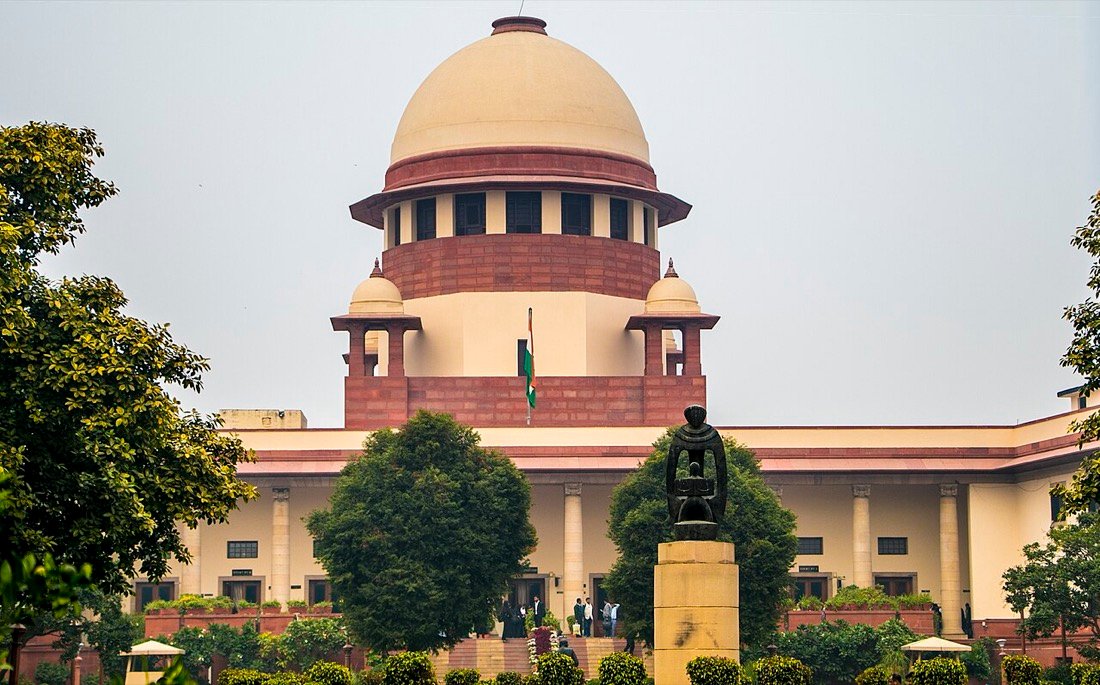
The Supreme Court held the 2008 first-come, first-served allocation arbitrary and unconstitutional and quashed all 122 licences granted from 10 January 2008. It imposed fines of ₹5 crore each on Unitech Wireless, Swan Telecom and Tata Teleservices and ₹50 lakh each on Loop Telecom, S Tel, Allianz Infratech and Sistema Shyam (Wikipedia). Review petitions were dismissed on 4 April 2012, apart from a partial review sought by the government.
This was a ruling on the legality of the process, in public-interest litigation. It was not a criminal conviction of anyone.
Charges framed and trial begins Trial, acquittal & appeal, 2011–26
On 22 October 2011 the special CBI court found prima facie evidence to try 17 accused, and the trial began on 11 November 2011 (Wikipedia). By 11 November 2012, 77 of 154 prosecution witnesses had been examined. A chargesheet records allegations; the trial is where they are tested.
Three CBI chargesheets Audit & arrests, 2009–11
The CBI filed its first chargesheet on 2 April 2011, a second on 25 April and a third on 12 December 2011, which named Essar and Loop Telecom figures (Wikipedia). The prosecution alleged that selected firms were favoured in the licence process and that the exchequer suffered as a result.
2011
A. Raja is arrested Audit & arrests, 2009–11
The CBI arrested the former telecom minister along with Siddharth Behura, his former telecom secretary, and R. K. Chandolia, his former private secretary (Wikipedia). Executives of Swan, Unitech and the Reliance group were arrested in the following months. Kanimozhi was arrested on 20 May 2011.
2010
CAG report tabled: the ₹1.76 lakh crore estimate Audit & arrests, 2009–11
The Comptroller and Auditor General’s performance audit of the allocation of 2G spectrum was tabled in Parliament on 16 November 2010 (CAG). The CAG put the presumptive loss on the 2007–08 allocations (122 licences plus 35 dual-technology approvals) at ₹1,76,645 crore, using the price discovered in the 2010 3G auction as its benchmark (Business Today). The government rejected the figure as baseless and erroneous, and the CAG defended it.
It was not a finding that money was stolen, and no court has adopted it as a measure of loss. The draft brief gives 10 November as the date; that is when the report is reported to have been submitted, and 16 November is the tabling date.
2010
A. Raja resigns as Telecom Minister Audit & arrests, 2009–11
Raja resigned amid growing pressure in Parliament and the press (Wikipedia). Kapil Sibal was given charge of the Telecom Ministry the next day. The resignation was a political consequence of the allegations, not a legal finding.
2009
CBI registers a case Audit & arrests, 2009–11
The CBI registered a case on the allocation of 2G licences by the Department of Telecommunications and began examining the application process, eligibility and the order in which licences were issued. The CBI registered it against unknown DoT officers and unknown private persons or companies under the IPC and Prevention of Corruption Act, following a Central Vigilance Commission direction (Deccan Herald).
Swan and Unitech sell stakes at far higher valuations Allocation, 2007–09
Swan Telecom paid about ₹1,537 crore for its licences and sold 45% to Etisalat for about ₹4,200 crore. Unitech Wireless paid about ₹1,661 crore and sold 60% to Telenor for about ₹6,200 crore. Tata Teleservices sold 26% to NTT DoCoMo at an enterprise value of about ₹50,269 crore (Wikipedia). Critics used these deals to argue that the licences were underpriced. Figures are approximate and rounded from the source.
2008
122 licences issued, first-come, first-served Allocation, 2007–09
On 10 January 2008 the Department of Telecommunications issued Letters of Intent on a first-come, first-served basis, with payments due within hours. Over 2008 a total of 122 licences were granted at 2001-era prices, to firms including Swan Telecom and Unitech Wireless (Wikipedia). Critics said that changing the cut-off and the timing of the announcement favoured some applicants; the Supreme Court later agreed that the process was arbitrary. The criminal court did not find the charges proved.
2007
Prime Minister Manmohan Singh writes to A. Raja Allocation, 2007–09
Prime Minister Manmohan Singh wrote to the telecom minister on 2 November 2007 urging a transparent method such as auction where legally and technically feasible, and a revised entry fee, since the existing fee dated from 2001 (Business Today, reporting the CAG). The CAG said the minister rejected many of the suggestions. A witness account reported by Deccan Herald describes letters running in both directions that day. The exchange is part of the record on process; it is not proof of criminal conduct by anyone.
Applications flood in and the cut-off is moved Allocation, 2007–09
The Department of Telecommunications received 575 applications for unified access service licences from 46 companies, and the cut-off date was advanced from 1 October to 25 September 2007 (Wikipedia). Mobile telephony was growing fast, so licences were commercially valuable and the criteria mattered.
The Numbers Behind the 2G Spectrum Scam
Each figure measures something different; only some were tested in court.
| Figure | Amount | What it measures and where it comes from |
|---|---|---|
| CAG notional loss, widely quoted | ₹1,76,645 crore (about ₹1.76 lakh crore) | Presumptive loss on 122 licences and 35 dual-technology approvals, benchmarked to 3G auction prices; rejected by the government. Not a finding of theft. Business Today |
| CBI’s own alleged loss | ₹30,984 crore | Figure the CBI later alleged, as reported by Hindustan Times, Feb 2026. Not adopted by the trial court |
| Complaints filed, Sep 2010 | ₹70,000 crore | Petitioners’ allegation of the scale of the scam, 13 Sep 2010. Wikipedia |
| Alleged bribe to the minister | ₹3,000 crore (alleged) | An allegation reported in chronologies, never established in court. Wikipedia |
| Kalaignar TV payment | ₹200 crore | The ED alleged this was a bribe routed through a company; the court acquitted all accused. Business Today |
| Swan Telecom licence fee and resale | About ₹1,537 crore paid; 45% sold for about ₹4,200 crore | Stake sold to Etisalat. Wikipedia |
| Unitech Wireless licence fee and resale | About ₹1,661 crore paid; 60% sold for about ₹6,200 crore | Stake sold to Telenor. Wikipedia |
| Supreme Court fines, 2 Feb 2012 | ₹5 crore each (3 firms); ₹50 lakh each (4 firms) | Unitech Wireless, Swan, Tata Teleservices; Loop, S Tel, Allianz Infratech, Sistema Shyam. Wikipedia |
| Loop Telecom refund refused | ₹1,454.94 crore | Entry fee on cancelled licences; refused Mar 2022. Wikipedia |
Five Proceedings, Five Different Questions
The audit, the Supreme Court, two criminal cases and the appeal each answered a different question.
| Proceeding | When | Question asked | Outcome |
|---|---|---|---|
| CAG audit | Tabled 16 Nov 2010 | Was the allocation fair and revenue maximised? | Criticised the process; offered loss scenarios, including the ~₹1.76 lakh crore one. Not a court finding |
| Supreme Court (PIL) | 2 Feb 2012 | Was the first-come, first-served allocation lawful? | Arbitrary and unconstitutional; 122 licences cancelled; fines imposed |
| Special CBI court: CBI case | 21 Dec 2017 | Were the accused guilty of the alleged offences? | All accused acquitted; charges not proved |
| Special CBI court: ED case | 21 Dec 2017 | Was money laundered through Kalaignar TV? | All accused acquitted |
| Delhi High Court: appeals | Admitted 22 Mar 2024 | Should the acquittals be re-examined? | CBI appeal admitted for hearing; no later ruling found |
What Was Proved, What Was Alleged
A status for each major claim, based on the sources AiTimeline could read.
| Claim | Status | Basis |
|---|---|---|
| 122 licences were issued in 2008 at 2001-era prices on a first-come, first-served basis | Established | Consistent across the Supreme Court ruling and chronologies |
| The allocation process was arbitrary and unconstitutional | Held by the Supreme Court | 2 Feb 2012 judgment, civil/PIL side |
| The government lost ₹1.76 lakh crore | Estimate, disputed | CAG scenario on a pricing benchmark; no court adopted it as a loss figure |
| A. Raja took bribes for the licences | Not proved | Acquitted by the special court on 21 Dec 2017; appeal pending |
| ₹200 crore to Kalaignar TV was a bribe | Not proved | ED allegation; all accused acquitted in the money-laundering case |
| The licence process had no safeguards | Debated | Supreme Court found it arbitrary; defence said policy was followed |
| The acquittals have been overturned | No | Appeal admitted 22 Mar 2024; no ruling found |
| Licence holders got their fees back | No | Loop Telecom refund refused, Mar 2022 |
The Story at a Glance
Dates and figures from the sources listed below.
| Date | Event | Detail |
|---|---|---|
| 25 Sep 2007 | Cut-off moved | 575 applications, 46 companies |
| 2 Nov 2007 | PM writes to Raja | Fairness and transparency |
| 10 Jan 2008 | Letters of intent issued | First-come, first-served |
| 2008–09 | Stake sales | Swan to Etisalat, Unitech to Telenor |
| 21 Oct 2009 | CBI registers case | Per standard chronologies |
| 14 Nov 2010 | Raja resigns | Telecom Minister |
| 16 Nov 2010 | CAG report tabled | Dated 8 Nov 2010 |
| 2 Feb 2011 | Raja arrested | With Behura and Chandolia |
| 2 Apr 2011 | First CBI chargesheet | Two more followed |
| 22 Oct 2011 | Charges framed | 17 accused |
| 11 Nov 2011 | Trial begins | Special CBI court |
| 2 Feb 2012 | Licences cancelled | 122 licences, Supreme Court |
| 25 Apr 2014 | ED chargesheet | 19 accused |
| 21 Dec 2017 | All accused acquitted | Judge O. P. Saini |
| 19–20 Mar 2018 | ED and CBI appeal | Delhi High Court |
| 22 Mar 2024 | CBI appeal admitted | Justice Dinesh Kumar Sharma |
Why the 2G Spectrum Scam Mattered
A public resource, a disputed price. Spectrum is scarce and publicly owned. The case turned on whether giving it out first-come, first-served at 2001 prices was fair. The Supreme Court said it was not, and spectrum has been sold by auction since; see the spectrum auctions timeline.
Estimates are not verdicts. The ₹1.76 lakh crore figure shaped a political era, yet no court adopted it. The gap between the audit number and the criminal outcome is the case’s central lesson.
Process and guilt are separate. A licence process can be unlawful while individuals are not criminally liable. The same distinction runs through the Bofors case and, earlier, the Mundhra scandal, where a minister resigned after an inquiry rather than a conviction.
The state and the market. From bank nationalisation to telecom licensing, India’s financial and public institutions have repeatedly been tested on how they allocate public resources. For the credit side of that story see the bad loans crisis.
| Term | Meaning | Why it matters here |
|---|---|---|
| 2G spectrum | Radio frequencies for second-generation mobile services | The scarce public resource whose allocation was disputed |
| UAS licence | Unified access service licence to run telecom services | What the 122 firms received in 2008 |
| First-come, first-served | Allocation in order of meeting conditions, not by auction | The method the Supreme Court held arbitrary |
| Presumptive loss | Estimated revenue the state might have earned under another method | The nature of the CAG ₹1.76 lakh crore figure |
| Leave to appeal | Court permission to challenge an acquittal | What the High Court granted on 22 Mar 2024 |
| PIL | Public interest litigation | How the Supreme Court took up the licence question |
| Money laundering | Concealing the proceeds of a crime, under the PMLA | The ED’s separate charge over Kalaignar TV |
Who Is Who in the Story
A. Raja
Principal accused; resigned 14 Nov 2010, arrested 2 Feb 2011, acquitted 21 Dec 2017.
Kanimozhi
Accused in the CBI and ED cases; 188 days in custody; acquitted 21 Dec 2017.
Manmohan Singh
His 2 Nov 2007 letter to Raja entered the public debate on process.
Vinod Rai
The CAG when the audit was prepared and tabled in November 2010.
O. P. Saini
Delivered the 1,552-page acquittal judgment on 21 Dec 2017.
G. S. Singhvi and A. K. Ganguly
Cancelled 122 licences on 2 Feb 2012.
Dinesh Kumar Sharma
Admitted the CBI appeal on 22 Mar 2024.
CBI and ED
The CBI probed the allocation; the ED probed alleged laundering through Kalaignar TV.
The Popular Story vs the Record
| Popular version | What the record shows |
|---|---|
| ₹1.76 lakh crore was stolen | It is a CAG estimate of notional loss on one pricing benchmark. No court found that amount stolen or lost |
| The CAG report came out on 10 November 2010 | The report is dated 8 November and was tabled in Parliament on 16 November; reports give 10 November as submission |
| A. Raja was convicted | No. He was acquitted on 21 December 2017; the CBI appeal was only admitted in March 2024 |
| The Supreme Court convicted the accused | No. On 2 Feb 2012 it cancelled 122 licences as arbitrary and unconstitutional; it did not try the accused |
| The High Court overturned the acquittal | No. It granted leave to appeal on 22 March 2024, nothing more |
| The case ended in 2017 | The CBI and ED appealed in March 2018 and the CBI appeal was admitted in 2024 |
| Acquittal proves the policy was sound | The Supreme Court’s process finding stands independently of the criminal acquittal |
| One case covers everything | The CAG audit, the Supreme Court PIL, the CBI case and the ED case are separate proceedings with separate outcomes |
Explore More Timelines
People Also Ask
Frequently Asked Questions
Related AiTimeline Stories
⚠️ Editorial Note
Last updated 22 October 2026. Describe individual acts as allegations unless a court has established them. The CAG estimate, the Supreme Court’s licence ruling, the 2017 acquittals and the pending appeal are kept distinct. Appeal status: taken from Hindustan Times of 28 February 2026 (13 listings since March 2024, six benches, no arguments, adjourned to 19 May 2026; the ED leave plea unadmitted). That article gives the verdict date as 17 December 2017; every other source gives 21 December, which this page uses. What happened on 19 May 2026 or later could not be found, and the High Court’s case-status system was not queried. Corrections to the draft brief: the CAG report was tabled on 16 November 2010 (dated 8 November; reports give 10 November as submission); the first CBI chargesheet was 2 April 2011, the trial began 11 November 2011, and the High Court listing after admission is reported as both 20 and 28 May 2024. The brief’s CAG and Supreme Court Observer links return 404 and were replaced. The 2 November 2007 letter and 21 October 2009 FIR were confirmed against CAG-based and chronology reports; the CAG PDFs themselves could not be opened. Verify before republishing.
Sources & further reading
Every dated entry above was checked against these references. Last reviewed 22 October 2026.
- 2G spectrum case
- CAG: Performance audit of 2G spectrum allocation, Union Government (Report No. 19 of 2010-11)
- 2G spectrum case: six years later, Delhi High Court admits CBI appeal against acquittal of A Raja
- 2G spectrum allocation case: Delhi HC admits CBI's appeal against acquittal of A Raja, Kanimozhi, others
- Delhi HC admits CBI's appeal challenging acquittals in 2G scam case
- 2G spectrum verdict: Scam lost in thin air
- Religiously sat for 7 years, no evidence came: Special CBI judge
- A Raja, Kanimozhi among 17 acquitted in 2G case for lack of evidence
- ED chargesheets A Raja, Kanimozhi, 17 others
- 2G: ED moves HC against acquittal of Raja, Kanimozhi
- 2G scam: CBI commences fresh arguments in HC in appeal against acquittals
- What the Presidential reference in the 2G case means
- Kejriwal acquittal: Challenge may spark 2G case back into life
- CAG indicts Raja in 2G scam, says ignored PM's advice
- Chronology: telecom scam