India Graduate Jobs Timeline 2026: Why BA, B.Sc & B.Com Degrees Aren’t Leading to Enough Jobs
India's graduate jobs timeline: BA, B.Sc & B.Com enrolment, graduate unemployment, the skills gap, NITI Aayog's 2026 reforms and apprenticeships explained.
Latest Story
For millions of Indian families the path has long looked straightforward: Class 12, then college, then a degree, then a job. But the walk from graduation to suitable employment has turned out to be far more complicated than that sequence suggests. India has dramatically expanded access to higher education over the past four decades, yet employers, policymakers and graduates themselves keep describing the same disconnect — between what a BA, B.Sc or B.Com certifies on paper and what a workplace actually needs on day one. In August 2026, NITI Aayog put that debate back at the centre of national policy with a report titled “Reimagining Skilling for Viksit Bharat@2047,” which found that just 8.25% of India’s graduates work in roles aligned with their qualifications. The more useful question this timeline asks is not whether these degrees have value — it is how India makes the journey from degree to productive work, work better.
🧠 AI Overview Summary
NITI Aayog’s August 2026 report finds that only 8.25% of India’s graduates work in jobs matching their qualifications (Economic Survey 2024–25), while 13% of all graduates and 20.4% of graduate women are unemployed (PLFS 2023–24) — both well above the 3.2% national rate. More than 2 crore of India’s 3.4 crore undergraduates study BA, B.Sc or B.Com. The problem isn’t that these degrees are worthless; it’s that curricula, practical experience, apprenticeships and job creation haven’t kept pace with enrolment.
India’s Graduate Jobs Crisis: Key Questions
India’s Degree-to-Job Gap at a Glance
- 8.25% is about qualification match, not employment. It measures graduates in roles aligned to their degree — the other 91.75% includes people working in different fields, self-employed, studying further or genuinely unemployed.
- Graduate unemployment (13%) is real and higher than the national rate (3.2%). Both figures come from the same PLFS 2023–24 survey, so they are directly comparable.
- Women graduates face a steeper problem: 20.4% unemployment, plus documented barriers around mobility, safety, caregiving and flexible-work availability.
- Enrolment is concentrated in three streams. More than 2 of India’s 3.4 crore undergraduates study BA, B.Sc or B.Com (AISHE 2021–22), with BA alone accounting for 1.13 crore.
- The gap is curriculum and experience, not just “skills.” 80% of higher-education students cite lack of practical experience and industry exposure as a major pain point, per NITI Aayog’s 2026 survey data.
- NEP 2020 set a target the system hasn’t met. It called for 50% of learners to have vocational exposure by 2025; fewer than 1 in 12 secondary schools currently offer vocational subjects.
- Apprenticeship-embedded and work-integrated degrees exist but remain small. AICTE has notified frameworks (AEDP), but NITI Aayog itself says adoption is “limited relative to the size of the higher education system.”
- Government-job preparation is a symptom, not the whole story. A specific example: 1.86 crore applications for 55,000 Indian Railways posts between November 2024 and July 2025.
- Skilling adds a measurable but modest income gap. A BCG survey cited by NITI Aayog found generic-degree graduates with skilling start at ₹29,000/month versus ₹22,000/month without — a real but limited-sample finding.
- The fix NITI Aayog proposes is structural, not individual. Portable credentials (NCrF), a Digital Skills Passport, apprenticeships-for-all and industry-linked degrees — most still early-stage, not yet delivered at scale.
Six Turning Points in India’s Graduate Jobs Story
Ordering reflects editorial judgement of significance to the degree-to-job gap specifically, not a ranking of importance to the economy overall.
Policy Report
Reform
Sector Shift
Policy
Official Data
In Progress
The India Graduate Jobs Timeline
Reverse-chronological (newest first). Each entry separates confirmed official data from NITI Aayog’s recommendations, which are proposals, not implemented policy.
NITI Aayog Publishes “Reimagining Skilling for Viksit Bharat@2047”
What happened: NITI Aayog’s Skill Development, Labour and Employment vertical released a report diagnosing India’s skilling architecture and proposing five core reforms and four system enablers. It cites the Economic Survey 2024–25 for the 8.25% qualification-match figure and PLFS 2023–24 for the 13%/20.4%/3.2% unemployment figures.
Why it matters: This is the first time these specific figures have been assembled into one government document explicitly about BA, B.Sc and B.Com outcomes, alongside a proposed reform architecture running through 2047.
PLFS Data Confirms a Persistent Graduate-Unemployment Gap
Official data: The Periodic Labour Force Survey 2023–24 recorded overall unemployment at 3.2% of the labour force, but 13% among graduates and 20.4% among graduate women — a gap NITI Aayog highlights as evidence that a degree alone does not guarantee absorption into the workforce at the rate school-leavers or non-graduates experience.
Context: The Economic Survey 2024–25 (Ministry of Finance) separately found that only 8.25% of graduates work in roles matching their qualification — a distinct measure from the unemployment rate, and one this timeline treats carefully rather than conflating with joblessness.
National Education Policy 2020 Sets Vocational-Integration Targets
Policy (confirmed): NEP 2020 called for multidisciplinary, flexible higher education with multiple entry-exit options, credit portability via the Academic Bank of Credits, and vocational integration across all education institutions by 2030 — including a target that 50% of learners have exposure to vocational education by 2025, rising to all students by 2030.
Reality (2026): NITI Aayog’s own 2026 assessment finds fewer than 1 in 12 secondary schools currently offer vocational subjects — well short of the 2025 target. This is a genuine implementation gap, not a reason to call the policy a failure outright; the 2030 deadline has not yet passed.
Industry Employability Surveys Put a Number on the Gap
What the reports found: Annual employability surveys such as the India Skills Report began flagging that a large share of India’s graduates needed additional training before they were considered employable by industry, with communication, analytical reasoning and digital skills cited repeatedly as gaps — independent industry research, not an official government statistic.
Why it’s here: These annual surveys shifted the public conversation from “are there enough jobs” to “are graduates prepared for the jobs that exist” — a framing NITI Aayog’s 2026 report builds on directly.
Census 2011 Documents the Scale of Educated Joblessness
Official data: Census 2011 recorded millions of graduation and post-graduation degree holders across India as unemployed or marginally employed, with the burden falling disproportionately on graduates from smaller towns and tier-2/tier-3 cities — an early, large-scale data point that the volume of degree-holders was growing faster than absorption into matching roles.
The IT and Services Boom Rewards Technical Degrees
What happened: India’s IT and IT-enabled services sector expanded rapidly through the 2000s, anchored in tech hubs like Bengaluru and Hyderabad. Recruitment concentrated heavily on engineering and technical graduates, while BA, B.Sc and B.Com holders had comparatively fewer direct pathways into the sector’s fastest-growing, best-paid entry-level roles.
Legacy: This period entrenched engineering as the default aspirational choice for many middle-class Indian families — a perception NITI Aayog’s 2026 report says persists, even though the report explicitly does not treat general degrees as without value.
Economic Liberalisation Reshapes What Employers Want
What happened: India’s 1991 liberalisation opened domestic markets to global competition and foreign investment, sparking growth in IT, finance and corporate services. It also exposed how much university syllabi had lagged behind changing employer expectations, as private employers began favouring technical, professional and business-specific qualifications over undifferentiated arts and science degrees.
National Policy on Education Widens Access to College
What happened: The National Policy on Education, 1986, prioritised widening access to higher education across towns and rural districts, fuelling the establishment of affiliated colleges offering BA, B.Sc and B.Com degrees nationwide. Enrolment expanded steadily in the decades that followed, dramatically increasing access to a college education for first-generation learners.
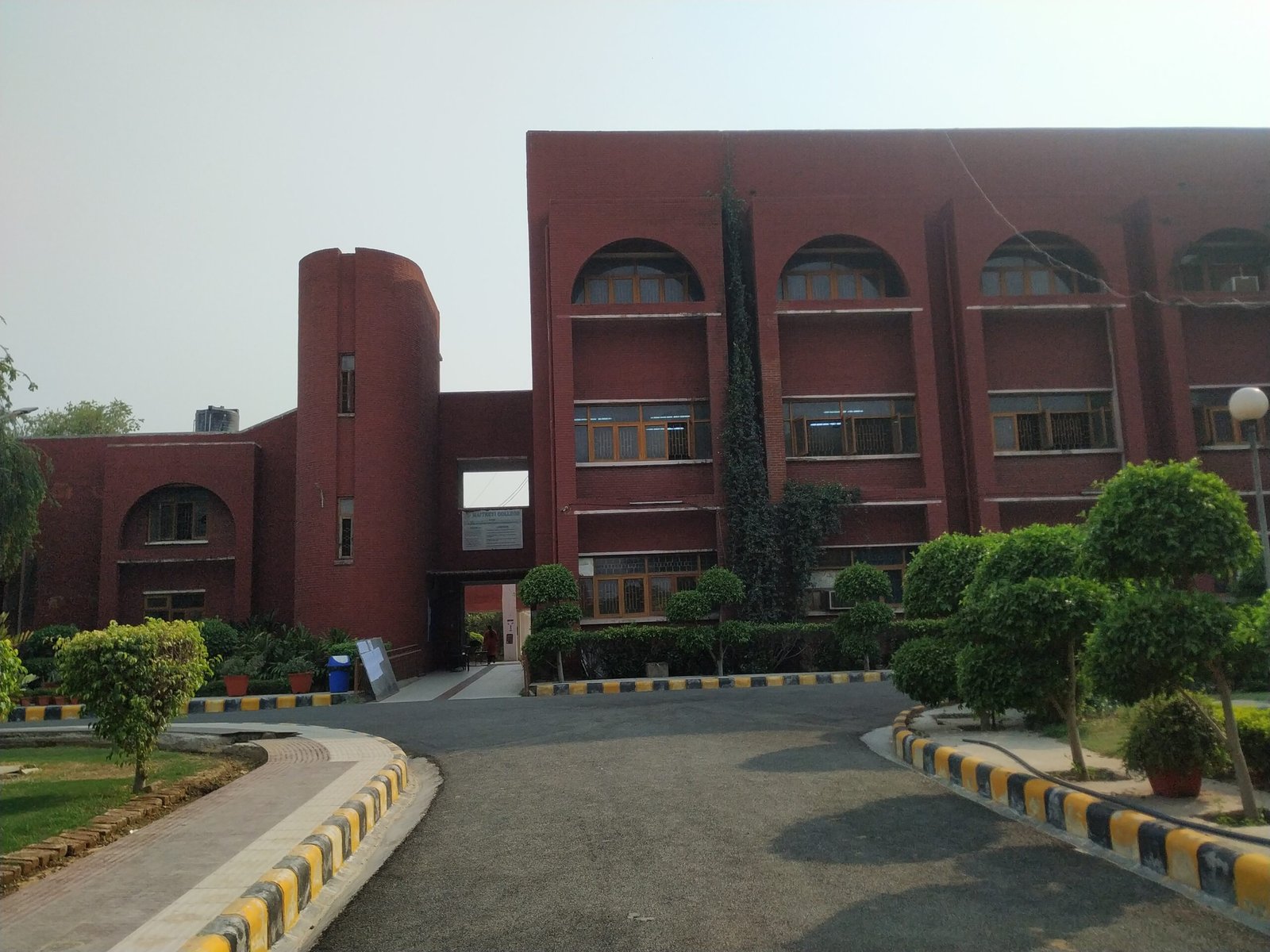
University of Delhi South Campus, which hosts several of India’s general-degree colleges. Photo: Ravi Dwivedi / Wikimedia Commons (CC BY-SA 4.0).
What BA, B.Sc and B.Com Actually Prepare Graduates For
Each is an umbrella covering very different subjects. Treating every BA graduate, or every B.Com graduate, as identical misreads the data.
BA: A Wide Umbrella, Not One Skill Set
A Bachelor of Arts covers English, economics, history, political science, psychology, sociology, geography and languages — degrees with very different analytical content and, in practice, very different career pathways. Depending on subject and complementary skills, BA graduates move into communications, content, research, public administration, sales, human resources, education, media and the social sector — none of these guaranteed, all of them real. AISHE 2021–22 recorded 1.13 crore students enrolled in BA programmes alone, making it India’s single largest undergraduate stream.
B.Sc: Subject Matters More Than the Label
A Bachelor of Science spans physics, chemistry, mathematics, statistics, computer science, biology, biotechnology and environmental science — fields with meaningfully different job markets. A statistics or computer-science B.Sc graduate faces a different employer landscape than one in botany or geology. Lumping all B.Sc holders together, as some employability surveys implicitly do, obscures more than it reveals about actual outcomes.
B.Com: Beyond Traditional Accounting
A Bachelor of Commerce prepares graduates chiefly for accounting, taxation, banking, financial operations, audit, insurance, sales and business operations. NITI Aayog’s 2026 report specifically points to applied specialisations — such as B.Com in analytics — as one direction for modernising the degree, alongside complementary skills in spreadsheets, accounting software, data analysis and ERP systems where the job actually requires them.
| Stream | UG Enrolment (AISHE 2021–22) | Example Career Families | Complementary Skills Employers Ask For |
|---|---|---|---|
| BA | 1.13 crore | Communications, public admin, education, media, social sector, sales | Business writing, digital/data basics, spoken English where relevant |
| B.Sc | Varies by subject; combined with BA/B.Com >2 crore | Lab/technical roles, data analysis, healthcare-adjacent, teaching, IT-enabled services | Domain-specific software, data literacy, applied lab or field experience |
| B.Com | Combined with BA/B.Sc >2 crore | Accounting, banking, audit, insurance, business operations, sales | Accounting software, spreadsheets, ERP, basic financial analysis |
| B.Tech / B.E. | Distinct stream, not part of the >2 crore figure above | Engineering, software, core technical roles | Domain engineering skills, project/internship experience |
Note: AISHE 2021–22 reports BA enrolment separately at 1.13 crore; the combined BA+B.Sc+B.Com figure exceeds 2 of the 3.4 crore total undergraduate students nationally. Precise separate B.Sc and B.Com counts were not itemised in the NITI Aayog report cited here.
What Does the 8.25% Figure Actually Mean?
NITI Aayog’s report, citing the Economic Survey 2024–25 (Ministry of Finance), states that only 8.25% of graduates are employed in roles aligned to their qualifications. This is the single most misquoted number in this entire debate, so it is worth being precise about what it does not say.
✓ What 8.25% Measures
- The share of graduates working in a job that matches their field of study.
- Sourced from the Economic Survey 2024–25, Ministry of Finance.
- A measure of qualification alignment, not of overall employment.
○ What the Other 91.75% Includes
- Graduates working successfully in a different field from their degree.
- Self-employed, gig, or informal-sector workers.
- Graduates preparing for competitive exams or studying further.
- Graduates who are genuinely unemployed (measured separately, at 13%, by PLFS).
⚠️ Why This Distinction Matters
A history graduate who builds a successful career in marketing is, statistically, a qualification mismatch. She is not unemployed, and by most reasonable measures she is not a policy failure. Treating “8.25% job-matched” as if it meant “91.75% jobless” misreads the data and, ultimately, understates how many different, legitimate paths a general degree can lead to.
Unemployment, Underemployment and Qualification Mismatch Are Not the Same
Unemployment
Someone able and willing to work, actively seeking a job, who cannot find one — measured by PLFS at 13% for all graduates and 20.4% for graduate women, versus 3.2% nationally.
Underemployment
Someone working, but in a role that uses less of their capacity, hours, or qualification than they could productively offer — a real but harder-to-measure phenomenon, distinct from being jobless.
Qualification Mismatch
Someone working in a role that doesn’t align with their degree — the 8.25% figure’s inverse. This can reflect a genuine problem, or simply a graduate who found a good career outside their original field of study.
Don’t Collapse Them
Headlines that merge these three distinct measures into one number — usually the scariest one — are the single biggest source of misinformation in this debate. This article reports them separately throughout.
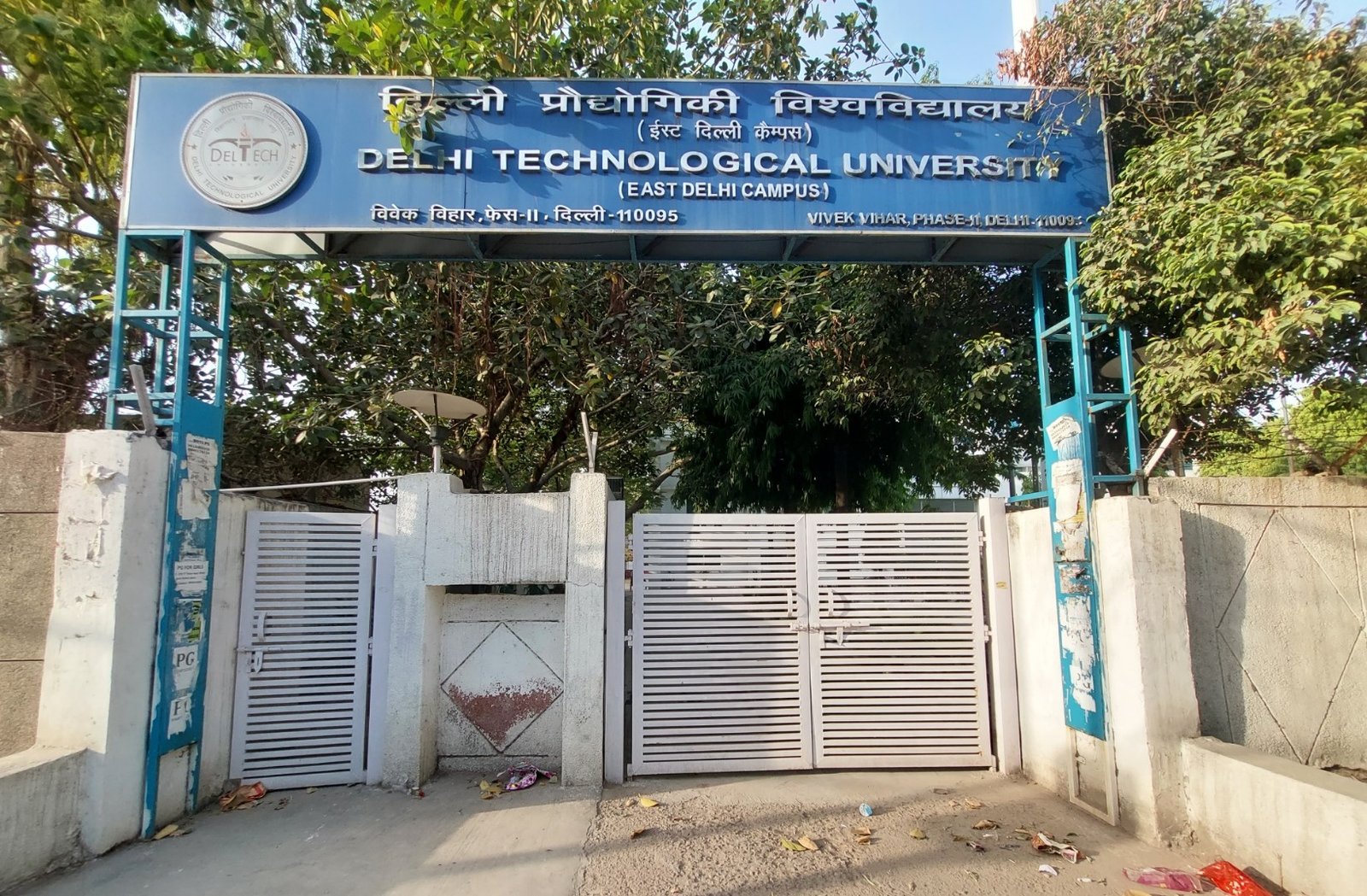
Delhi Technological University’s East Delhi campus. Engineering degrees followed a different labour-market trajectory to BA/B.Sc/B.Com after the 2000s IT boom. Photo: Raunakhgnis / Wikimedia Commons (CC0).
What Does “Skills Gap” Actually Mean?
“Skills gap” gets used loosely, so NITI Aayog’s own 2026 data is worth being specific about. 80% of higher-education students cite a lack of practical experience and industry exposure as a major pain point; separately, 47% of formal workers identify missing prior work experience or internships as their top barrier to finding a new job. Both are from the report’s own learner and worker surveys, not a single generic complaint about “skills.”
A skills gap can mean weak technical skills, weak communication, low digital literacy, limited problem-solving practice, unfamiliarity with workplace behaviour, or — most often, per this data — simply too little hands-on experience before the first job. It should not be used to wave away the structural half of the problem: even a perfectly skilled graduate cannot get a job that doesn’t exist. NITI Aayog’s report treats curriculum reform and job creation as parallel, not substitute, priorities.
Why So Many Graduates Prepare for Government Jobs
NITI Aayog’s report notes that many students pursue BA, B.Sc and B.Com primarily to remain eligible for government jobs — degrees are often a minimum eligibility requirement for competitive exams, not necessarily the graduate’s main course of study interest. Government roles offer job security, defined career progression and social status that many private-sector entry-level roles, especially informal ones, do not.
One specific, verifiable example the report cites: 1.86 crore applications for just 55,000 posts in Indian Railways recruitment between November 2024 and July 2025 (Press Information Bureau, 9 July 2025). This is a real, sourced figure about one recruitment cycle at one organisation — not a general national ratio, and it should not be read as “1.86 crore people are unemployed.” Many applicants already hold other jobs and apply for government posts as a parallel, long-term goal.
📈 The Competitive-Exam Pathway, Simplified
- Graduation (BA / B.Sc / B.Com, often chosen partly for exam eligibility)
- Preparation for SSC, banking, railways, state PSC, UPSC or other exams
- Multiple attempts are common, sometimes over several years
- Outcome: government employment, continued preparation, or a shift to another career path
Why Women Graduates Face a Different Employment Problem
At 20.4%, graduate women’s unemployment is more than one-and-a-half times the 13% rate for graduates overall. NITI Aayog’s report goes beyond the unemployment number to document specific constraints: in its learner surveys, 75% of women preferred training or work within a 5-km radius of home, and 68% preferred part-time formats — evidence of real mobility, safety and caregiving constraints shaping women’s labour-market choices, not a lack of ambition or qualification.
⚖️ Documented Constraints on Women Graduates
- Mobility & safety: preference for opportunities close to home, per NITI Aayog’s survey data.
- Caregiving responsibilities: a recurring theme in the report’s qualitative findings.
- Flexible-work availability: demand for part-time and hybrid formats often exceeds supply.
- Not universal: these constraints affect many women graduates, not every individual woman graduate.
Is AI Making the Graduate Jobs Problem Worse?
NITI Aayog’s report flags that workers in factory lines, shops and clerical roles face few structured reskilling opportunities as automation and AI adoption reshape tasks — and that many recognise this risk late, for lack of a clear, practical reskilling pathway. This is a real and uneven pressure, concentrated in certain task types (routine data entry, first-line customer support, some back-office processing) rather than a blanket threat to all entry-level jobs.
The more useful framing NITI Aayog implies, and this timeline endorses, is that AI changes which skills are in demand rather than simply deleting graduate jobs outright. “Learn AI” on its own is not career advice — what matters is domain knowledge combined with AI-tool literacy, data interpretation, verification skills and real project experience, applied to a specific field. For a deeper look at how generative AI is reshaping hiring more broadly, see AiTimeline’s timeline on how AI is changing entry-level hiring and career paths.
Degree vs Skills Is the Wrong Question
Framing this as “degrees versus skills” flattens a genuinely multi-factor problem. Employment outcomes for a BA, B.Sc or B.Com graduate depend on the degree itself, complementary skills, practical experience, local labour demand, network and information access, and geography — all at once. A degree remains a real requirement (and a real signal of foundational knowledge) for many occupations; skills alone, without any credential or experience, do not guarantee a job either. NITI Aayog’s reform agenda targets the connections between these factors — industry-linked curricula, apprenticeships, portable credit — rather than treating any one of them as the whole answer.
What Is NITI Aayog Actually Proposing?
Separating what already exists from what the August 2026 report recommends.
Reform 1: General Employability Skills From Grade 6
NITI Aayog proposes General Employability and Entrepreneurship Skills (GEES) as a separate subject from Grade 6 through Grade 12, covering communication, functional English, digital basics, financial literacy, teamwork and problem-solving — alongside sector-specific “Kaushal Tracks” from Grade 9 for students who want deeper vocational exposure. This is a recommendation for future curricula, not yet a nationwide requirement.
Reform 2: Industry-Linked Higher Education
For BA, B.Sc and B.Com specifically, the report recommends moving toward applied, industry-aligned specialisations (its own examples: B.A. Hospitality, B.Com Analytics, B.Sc Applied Technology), delivered through public-private partnerships, work-integrated formats and Apprenticeship Embedded Degree Programmes (AEDP). AEDP has already been notified by AICTE, but NITI Aayog’s own report states adoption “remains limited relative to the size of the higher education system” — an early-stage framework, not a mandate.
Reform 3 & 4: Outcome-Linked Skilling and “Apprenticeship for All”
The report wants skilling programmes measured by placement, wage improvement and retention rather than enrolment numbers alone, and proposes a unified State Apprenticeship Platform to make apprenticeship and internship opportunities mainstream rather than niche. Both are proposed systems, not yet operating at national scale.
Reform 5: Continuous Guidance
Recognising that many students and workers simply don’t know what training or jobs are available, NITI Aayog proposes structured “pathway clinics,” community counselling hubs, and digital tools (named in the report as MyGuide, Skill Sure and Skill Scout), alongside grassroots perception campaigns such as Hunar Utsav, whose message is deliberately blunt: “Degree nahin, hunar chahiye” (“Not a degree, you need a skill”).
Two System Enablers, Explained
What Can India Learn From Germany’s Apprenticeship System?
NITI Aayog’s report specifically references Germany, where students are assigned from Grade 6 to one of three school types — Realschule (academic), Hauptschule (vocational) and Gymnasium (integrated) — with mobility between tracks enabled through transition years and exams. At the upper-secondary level, a dual apprenticeship system becomes the core pathway: students split time between an employer contract and part-time classroom learning, graduating with real, paid work experience baked into their qualification.
NITI Aayog treats this as an international precedent to adapt, not a template to copy wholesale — Germany’s system reflects decades of employer-education coordination that India’s proposed AEDP and work-integrated degree models are only beginning to build. The report also notes that German employees are entitled to paid educational leave to pursue further training, a policy lever India’s outcome-based financing proposals gesture toward but haven’t yet implemented.
What Employers Are Actually Looking For
Beyond subject knowledge, NITI Aayog’s worker and employer data repeatedly surface the same few categories: communication, basic digital literacy, problem-solving, teamwork and prior work exposure — specifically, demonstrable experience through internships, projects or apprenticeships, which 80% of higher-education students say they lack. These requirements vary significantly by occupation, employer and sector; there is no single universal checklist.
What Can a College Student Do Before Graduating?
- Identify two or three realistic target occupations connected to your subject or interests.
- Read real job descriptions for those roles — not just the job title, the actual listed requirements.
- Note the skills that keep recurring across those listings.
- Build one project relevant to a target role, even a small one, before graduating.
- Seek any internship or apprenticeship exposure available through college or NAPS/NATS-linked programmes.
- Learn the specific digital tools your target field actually uses, not a generic list.
- Keep a simple portfolio or CV documenting real work, however small.
- Use college placement cells and alumni networks actively, not passively.
- Practise communication and interview skills deliberately — NITI Aayog’s own data flags this as a common weak point.
- Keep more than one pathway open: private-sector roles, competitive exams, further study and self-employment are not mutually exclusive at the application stage.
None of this guarantees a job. It reflects, directly, the gaps NITI Aayog’s own survey data identifies as most common among Indian graduates today.
What Should Parents Look at Beyond the Degree Name?
Curriculum content, faculty quality, internship and apprenticeship tie-ups, placement-cell transparency, cost relative to household income, location and industry proximity, alumni outcomes, accreditation, and — not least — the student’s own interest in the subject. “Choose a technical stream instead of arts” is not, on its own, sound advice; a strong BA programme with real industry exposure can outperform a weak technical programme without it, and vice versa.
A Word of Caution on Placement Statistics
College “placement rate” claims can use very different denominators. Before trusting one, ask: how many students were eligible to be placed, how many actually participated in the placement process, how many received offers, what was the median (not just the highest) salary, in what roles, and how many were unique students rather than repeat offers counted twice. A single highest-package headline is not a representative outcome for the batch.
Myth vs Reality
- Myth: Only 8.25% of graduates have jobs. — Reality: 8.25% work in roles matching their qualification; the rest include other-field employment, self-employment, further study and, separately, 13% who are genuinely unemployed.
- Myth: BA, B.Sc and B.Com have no value. — Reality: Outcomes depend heavily on subject, institution, skills and experience, per AISHE and NITI Aayog’s own analysis.
- Myth: Learning to code or use AI guarantees a job. — Reality: No single skill guarantees employment; NITI Aayog’s reforms target curriculum, experience and job creation together.
- Myth: Every graduate needs a technical career. — Reality: India also needs educators, managers, communicators, researchers, sales professionals and finance workers — roles BA, B.Sc and B.Com graduates already fill.
Explore Related Timelines
India’s Problem Isn’t Too Many Degrees. It’s the Broken Bridge From Education to Work.
India’s graduate employment challenge cannot be reduced to the claim that BA, B.Sc or B.Com degrees are “useless.” Millions of students choose these programmes for different reasons, in different subjects, at different institutions, and go on to very different careers — some closely matched to their degree, many not, and the great majority not unemployed.
The more important problem is the bridge between education and work. Students need clearer information about real career outcomes, not just placement-brochure headlines. Colleges need stronger, more structured links with employers and more genuine opportunities for practical learning — the 80% of students citing a lack of practical experience is the clearest single data point in this entire report. Employers need better ways to recognise skills and potential beyond a credential alone. And policymakers need to address employability and the availability of enough productive jobs, together, not as substitutes for one another.
NITI Aayog’s 2026 recommendations point toward apprenticeships, work-integrated degrees, portable credentials and skills-first hiring. By the report’s own account, most of this is early-stage: AEDP adoption is limited, NCrF implementation is nascent, and the Digital Skills Passport is still a proposal built on existing but disconnected digital infrastructure. Whether these reforms materially improve graduate outcomes will depend entirely on implementation over the coming years — the next chapter this timeline will track as it happens.
⚠️ Editorial & Sources Note
This article separates official government statistics (PLFS/MoSPI, AISHE/Ministry of Education, Economic Survey/Ministry of Finance), NITI Aayog’s own report and recommendations, and industry research (such as BCG’s survey data cited within the NITI Aayog report), and it flags every recommendation that is not yet implemented policy. Figures reflect the sources and reference periods stated inline; always reconfirm against the latest official release for time-sensitive decisions. For primary detail, consult NITI Aayog, MoSPI/PLFS, AISHE and the Ministry of Skill Development and Entrepreneurship directly. This is not career or financial advice.
Explore More Timelines
People Also Ask
Frequently Asked Questions
Sources & further reading
Every dated entry above was checked against these references. Last reviewed 11 October 2026.
- NITI Aayog - Reimagining Skilling for Viksit Bharat@2047 (18 August 2026)
- Economic Survey 2024-25 - Ministry of Finance, Government of India
- Periodic Labour Force Survey (PLFS) 2023-24 - Ministry of Statistics and Programme Implementation (MoSPI)
- All India Survey on Higher Education (AISHE) 2021-22 - Ministry of Education, Government of India
- AICTE Guidelines for Apprenticeship Embedded Degree/Diploma Programme (AEDP)
- University Grants Commission - National Credit Framework (NCrF)