Union Budget India: What Was Promised, What Was Spent (1991–2026)
India's Union Budgets from 1991 to 2026-27 checked against actual spending: deficit targets met, capex short of allocation, jobs schemes behind target.
Latest Story
Every February the Union Budget announces how much the Centre plans to spend, borrow and tax. The harder question comes later: was it spent, and did it work? This page follows India’s Budgets from the 1991 crisis to the 2026–27 Budget, and checks the promises against the government’s own Revised Estimates and Actuals. The short version: deficit targets have mostly been met, capital spending has grown five-fold since 2014–15 but fallen short of its Budget figure in each of the last three full years, and the 2024 jobs schemes are well behind their headline numbers.
💡 Short Answer
The Union Budget is the Centre’s annual statement of planned receipts and spending. To judge delivery, compare the Budget Estimate with the Actual. Recent record: the fiscal deficit fell from 9.2% of GDP in 2020–21 to 4.4% in 2025–26, meeting a 2021 promise. Capital spending reached ₹10.52 lakh crore in 2024–25 and about ₹10.69 lakh crore in 2025–26, below the ₹11.11 and ₹11.21 lakh crore allocated. The 2026–27 Budget plans ₹12.22 lakh crore of capex and a 4.3% deficit.
Union Budget India: Key Questions
India’s Budgets, Promise vs Delivery, in Ten Points
- Read three numbers: Budget Estimate, Revised Estimate and Actual. Headlines usually quote only the first.
- 1991: reserves for two weeks of imports; the Budget and industrial policy changed the rules of the economy.
- 1993 report card: inflation down from 17% to below 7%, growth recovering from 1.2%.
- COVID: 2020–21 deficit planned at 3.5%, actual 9.2% (not the often-quoted 9.5%).
- Deficit promise kept: below 4.5% by 2025–26 was promised in 2021; 4.4% was delivered.
- Capex grew five-fold from about ₹2 lakh crore in 2014–15, but was short of its Budget figure in each of the last three full years.
- Effective capex slipped too: ₹15.48 lakh crore planned for 2025–26, ₹14.04 lakh crore revised.
- Jobs schemes lag: about 29,700 internships joined against a 1 crore goal; the jobs incentive took a year to launch.
- Tax: no income tax up to ₹12 lakh from 2025–26, GST cut to two main rates in 2025, a new Income Tax Act in 2026.
- 2026–27: ₹12.22 lakh crore capex and a 4.3% deficit, with oil prices testing the target.
Budget Estimate, Revised Estimate, Actual: How to Read a Budget
An announcement is not spending, and spending is not an outcome.
The Budget Finance Minister reads in February contains three columns for each line. The Budget Estimate (BE) is the plan for the coming year. The Revised Estimate (RE) is the government’s updated view of the year that is about to end. The Actuals, for the year before that, are what was really spent and collected. Provisional actuals arrive from the Controller General of Accounts at the end of May, and the audited figures later.
So a promise made in the 2024 Budget can be checked properly only in the 2026 Budget papers or in the CGA’s May 2025 accounts. That lag is why most coverage stops at the announcement. It is also why the capital-spending figures that dominate Budget headlines, ₹11.11 lakh crore in 2024, ₹11.21 lakh crore in 2025, ₹12.22 lakh crore in 2026, are allocations, not results.
Even Actuals are only the middle of the chain. Money spent on a highway becomes useful only when the road opens; a tax cut matters only if households spend or invest it. This page sticks to what can be measured from official records: what was promised, what was spent, and what was physically delivered where the government reports it.
📝 What a Budget can promise
- An allocation (BE)
- A tax rate or rebate
- A new scheme or mission
- A deficit or debt target
- A change in rules
✅ What delivery looks like
- Actual spending (CGA)
- Tax actually collected or forgone
- Beneficiaries actually enrolled
- Deficit actually reached
- Assets completed, jobs filled
Pick a year to see what the Budget promised for capital spending, what was revised, and what was actually spent.
Central capital expenditure in ₹ lakh crore, from the Union Budget’s own tables and the Controller General of Accounts.
Choose a year above
1991: The Budget That Changed the Rules
A balance-of-payments crisis, and a Budget whose biggest delivery cost almost nothing.
When Manmohan Singh rose to present the 1991–92 Budget on 24 July 1991, he described an economy at the edge. The fiscal deficit was ‘more than 8 per cent of GDP’, internal public debt about 55 percent of GDP, and foreign-exchange reserves ‘in the range of Rs. 2500 crores’, enough to ‘finance imports for a mere fortnight’. Inflation had reached double digits. The rupee had already been devalued earlier in July and gold pledged to raise emergency loans.
The Budget cut customs duties, began trimming subsidies and set out fiscal correction over several years. The same day the government released the new industrial policy, which abolished licensing for most industries and opened the door to foreign investment. The point, Singh argued, was not one year’s arithmetic but a change in how the economy worked: from control to competition.
“No power on earth can stop an idea whose time has come. I suggest to this august House that the emergence of India as a major economic power in the world happens to be one such idea.”
Manmohan Singh, Budget speech, 24 July 1991 (quoting Victor Hugo)
Did it deliver? Two years later, in the 1993–94 speech, Singh could report that inflation had come down from a peak of 17 percent in August 1991 to below 7 percent, international confidence was restored and growth was recovering from 1.2 percent in 1991–92. He also warned that the fiscal correction was unfinished, and it stayed unfinished: it took the FRBM Act of 2003 to put deficit targets into law.
Union Budget India: The Full Timeline, 1947–2026
Newest first. Tags show whether the promise in each entry was delivered, by the government’s own figures.
Five months into 2026–27: capex on pace, deficit under pressure In progress
Controller General of Accounts data released on 30 September 2026 show the Centre spent about ₹5.10 lakh crore on capital account in April–August, about 42 percent of the year’s ₹12.22 lakh crore and 18 percent more than a year earlier. The fiscal deficit reached ₹7.10 lakh crore, 41.9 percent of the full-year target.
The risk sits on the other side of the ledger. Oil prices have stayed high since the 2026 West Asia war, raising fertiliser and fuel costs. ICRA estimates the deficit could overshoot by ₹90,000 crore to ₹1 lakh crore and Bank of Baroda has modelled 4.7 to 4.8 percent of GDP in a stress case; the government says it still aims for 4.3 percent.
PM Internship Scheme: about 29,700 joined Short of target
Across three pilot rounds from October 2024 to August 2026, companies made tens of thousands of offers but only about 29,700 candidates joined, according to figures reported on 29 September 2026: about 8,760 in round one, 7,300 in round two and 14,620 in round three. The scheme announced in the July 2024 Budget aimed at 1 crore internships in five years.
Why it matters: it is the clearest gap between a headline promise and delivery in the 2024 jobs package. Low stipends, distance from home and short durations were the reasons most often cited for candidates turning offers down.
2026
2025–26 closes: deficit target met, capex short Partly
Provisional accounts for 2025–26 show the fiscal deficit at about ₹15.19 lakh crore, under the revised ₹15.58 lakh crore and equal to 4.4 percent of GDP, the target set in 2021. Capital spending came in at about ₹10.69 lakh crore, below both the Budget figure of ₹11.21 lakh crore and the revised ₹10.96 lakh crore. Tighter revenue spending and higher miscellaneous capital receipts did much of the work.
2026
The Income Tax Act, 2025 takes effect Delivered
A rewrite of the 1961 law, announced for review in the July 2024 Budget and passed in August 2025, comes into force. It shortens and renumbers the Act and replaces ‘previous year’ and ‘assessment year’ with a single ‘tax year’. Rates are broadly unchanged; the promise was simpler law, not lower tax.
2026
Budget 2026–27: ₹12.22 lakh crore capex, 4.3% deficit Record
Nirmala Sitharaman presents her ninth consecutive Budget, on a Sunday. Total spending is ₹53.47 lakh crore. Capital expenditure rises to ₹12.22 lakh crore and effective capital expenditure to ₹17.15 lakh crore, about 4.4 percent of GDP. The fiscal deficit is set at 4.3 percent and central debt at 55.6 percent of GDP, down from 56.1 percent. Gross market borrowing is ₹17.2 lakh crore.
The speech is organised around three ‘kartavya’ (duties): growth, capacity and inclusion. New lines include an Infrastructure Risk Guarantee Fund, ₹40,000 crore for electronics components and a ₹10,000 crore SME Growth Fund. The 16th Finance Commission’s 41 percent share of taxes for states is retained.
The number to watch: interest payments are budgeted at about ₹14.04 lakh crore, more than direct capital spending.
2025
GST 2.0: two main rates, 5% and 18% Delivered
Eight years after launch, most goods move to two main GST rates, 5 and 18 percent, replacing the 12 and 28 percent slabs for most items, with a 40 percent rate for a short list of sin and luxury goods. Many household goods, small cars and appliances get cheaper. This was announced outside the Budget, but it is the biggest indirect-tax change since 2017.
2025
Jobs incentive launches as PM-VBRY In progress
The Employment Linked Incentive announced in the July 2024 Budget is approved on 1 July 2025 as the Pradhan Mantri Viksit Bharat Rozgar Yojana and starts on 1 August 2025. First-time employees registered with EPFO get one month’s wage up to ₹15,000 in two instalments; employers get up to ₹3,000 a month for each additional hire. Incentive payments began in 2026. It took a year from Budget speech to launch.
2025
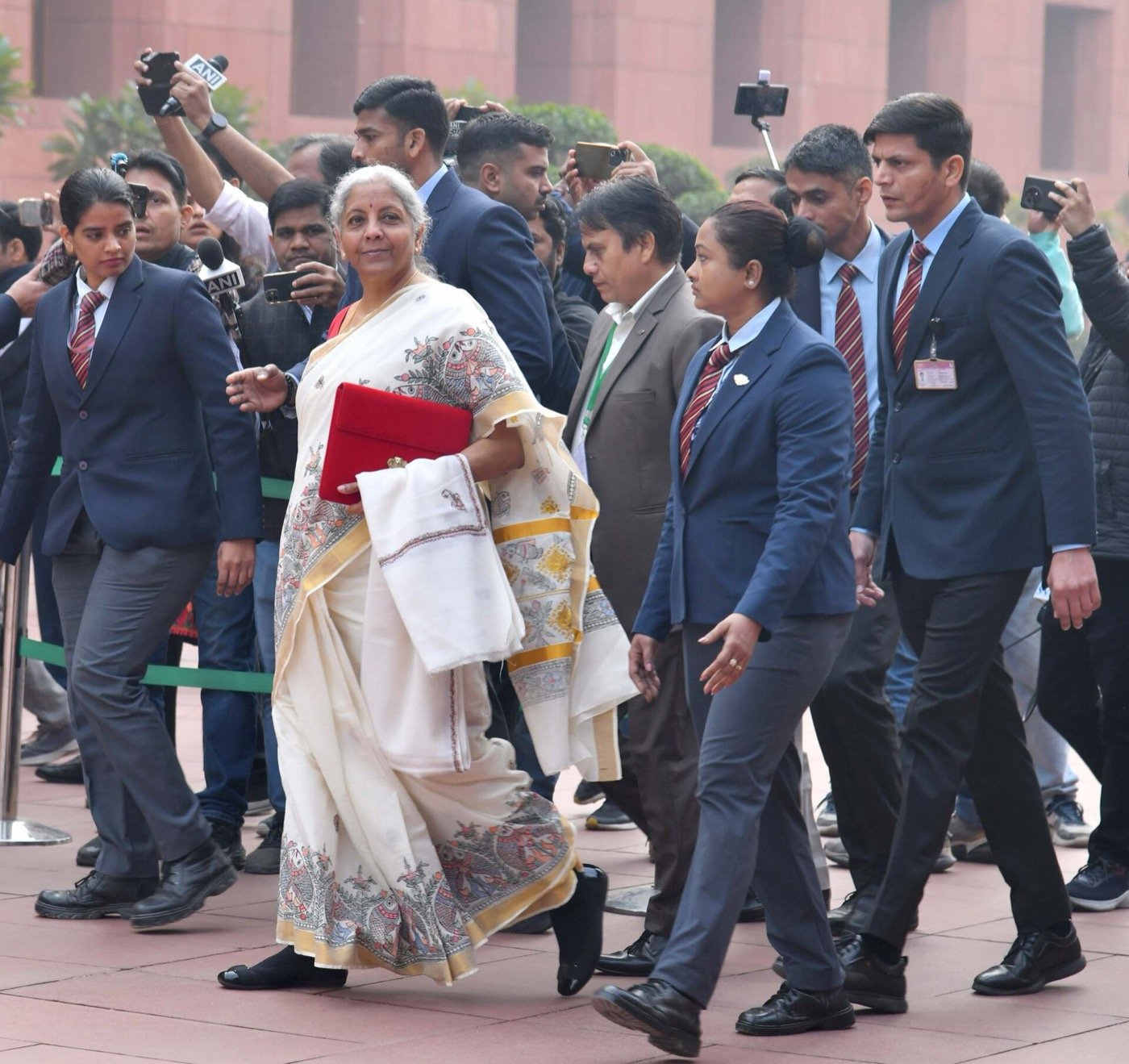
Budget 2025–26: no tax up to ₹12 lakh Partly
The new tax regime’s rebate is raised so that income up to ₹12 lakh a year pays no income tax (₹12.75 lakh for salaried taxpayers), at an estimated cost of about ₹1 lakh crore. Capital expenditure is set at ₹11.21 lakh crore and the deficit at 4.4 percent. The government also adopts a new anchor: central debt of 50±1 percent of GDP by 2030–31.
Delivery: the deficit target was met exactly. Capital spending finished at about ₹10.69 lakh crore, roughly ₹52,000 crore short of the allocation.
2024
Budget 2024–25: ₹11.11 lakh crore capex and a jobs package Partly
The first full Budget of the third Modi government sets capital expenditure at ₹11.11 lakh crore (3.4 percent of GDP), the deficit at 4.9 percent and offers states ₹1.5 lakh crore in 50-year interest-free loans for capital projects. A five-scheme employment and skilling package worth ₹2 lakh crore aims at 4.1 crore young people over five years, including internships for 1 crore. A review of the Income Tax Act is announced.
Delivery: the deficit came in better than planned, at 4.8 percent. Capital spending was cut to ₹10.18 lakh crore in the revised estimate and finished at ₹10.52 lakh crore, about ₹59,000 crore below the Budget figure; election-season delays in the first quarter were the main reason.
2023
Budget 2023–24: capex crosses ₹10 lakh crore Delivered
Capital expenditure is raised by a third to ₹10 lakh crore, about 3.3 percent of GDP. The new income-tax regime becomes the default, with a rebate up to ₹7 lakh. The deficit is set at 5.9 percent.
Delivery: capex finished at ₹9.49 lakh crore and the deficit at 5.6 percent, better than planned.
2022
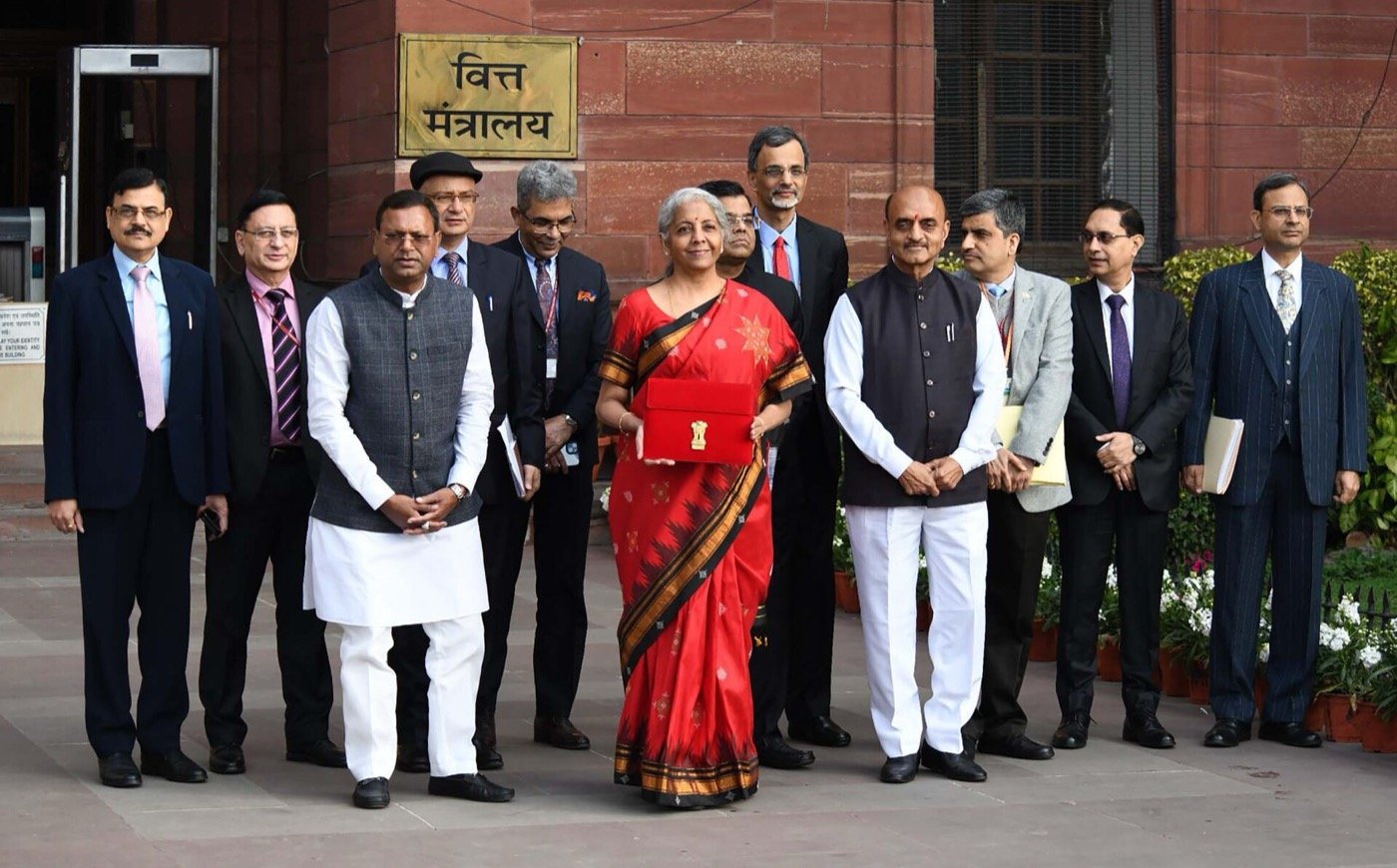
Budget 2022–23: PM Gati Shakti and ₹7.5 lakh crore capex Delivered
Capital spending is set at ₹7.50 lakh crore and infrastructure planning is organised around the PM Gati Shakti national master plan for roads, railways, ports, airports, mass transport, waterways and logistics. The deficit is set at 6.4 percent.
Delivery: capex ₹7.40 lakh crore; deficit 6.4 percent, on target.
2021
Budget 2021–22: the capex pivot and a five-year glide path Delivered
Coming out of the pandemic, the government chooses capital spending over consumption support: capex is set at ₹5.54 lakh crore. It publishes the full deficit, bringing off-budget food-subsidy borrowing on to the books, and promises to bring the deficit below 4.5 percent of GDP by 2025–26. The speech is read from a tablet for the first time.
Delivery: capex beat the plan at ₹5.93 lakh crore, and the five-year glide path was met in 2025–26 at 4.4 percent.
AatmaNirbhar Bharat: the ₹20 lakh crore headline
The Prime Minister announces a ₹20 lakh crore package, about 10 percent of GDP, followed by five days of details: credit guarantees for small businesses, free food grain, liquidity for lenders, agricultural and labour reforms. The government later put all its pandemic packages together at ₹29.87 lakh crore. Much of the headline was RBI liquidity, loans and existing schemes; the direct cost to the Budget was a fraction of it.
Why it matters: a package total is not spending. That distinction is the whole point of reading BE, RE and Actuals.
2020
Budget 2020–21: planned 3.5%, finished at 9.2% Short of target
Sitharaman’s speech, at about two hours and forty minutes, is the longest in India’s history. It plans a fiscal deficit of 3.5 percent and introduces the optional new income-tax regime. Within weeks the pandemic and lockdown upend the year. The revised estimate in February 2021 is 9.5 percent; the final actual is 9.2 percent of GDP.
2019
Corporate tax cut to 22%, outside the Budget
Weeks after her first Budget, Sitharaman cuts the base corporate tax rate to 22 percent for companies that give up exemptions, and to 15 percent for new manufacturing companies, by ordinance. The government estimated the annual revenue cost at ₹1.45 lakh crore. It is a reminder that some of the largest fiscal decisions are taken between Budgets.
2019
The briefcase becomes a bahi-khata
India’s first full-time woman Finance Minister carries the Budget papers in a red cloth bahi-khata, a traditional ledger, instead of the leather briefcase. Indira Gandhi had presented the 1970 Budget while holding the finance portfolio as Prime Minister.
2017
GST replaces a web of indirect taxes Delivered
The Goods and Services Tax replaces central excise, service tax, state VAT, entry tax and other levies with one structure, launched at a midnight session of Parliament. The first years are hard: four main slabs, filing problems on the GST Network, and refund delays for exporters. Rates and rules are revised repeatedly, culminating in the 2025 overhaul.
2017
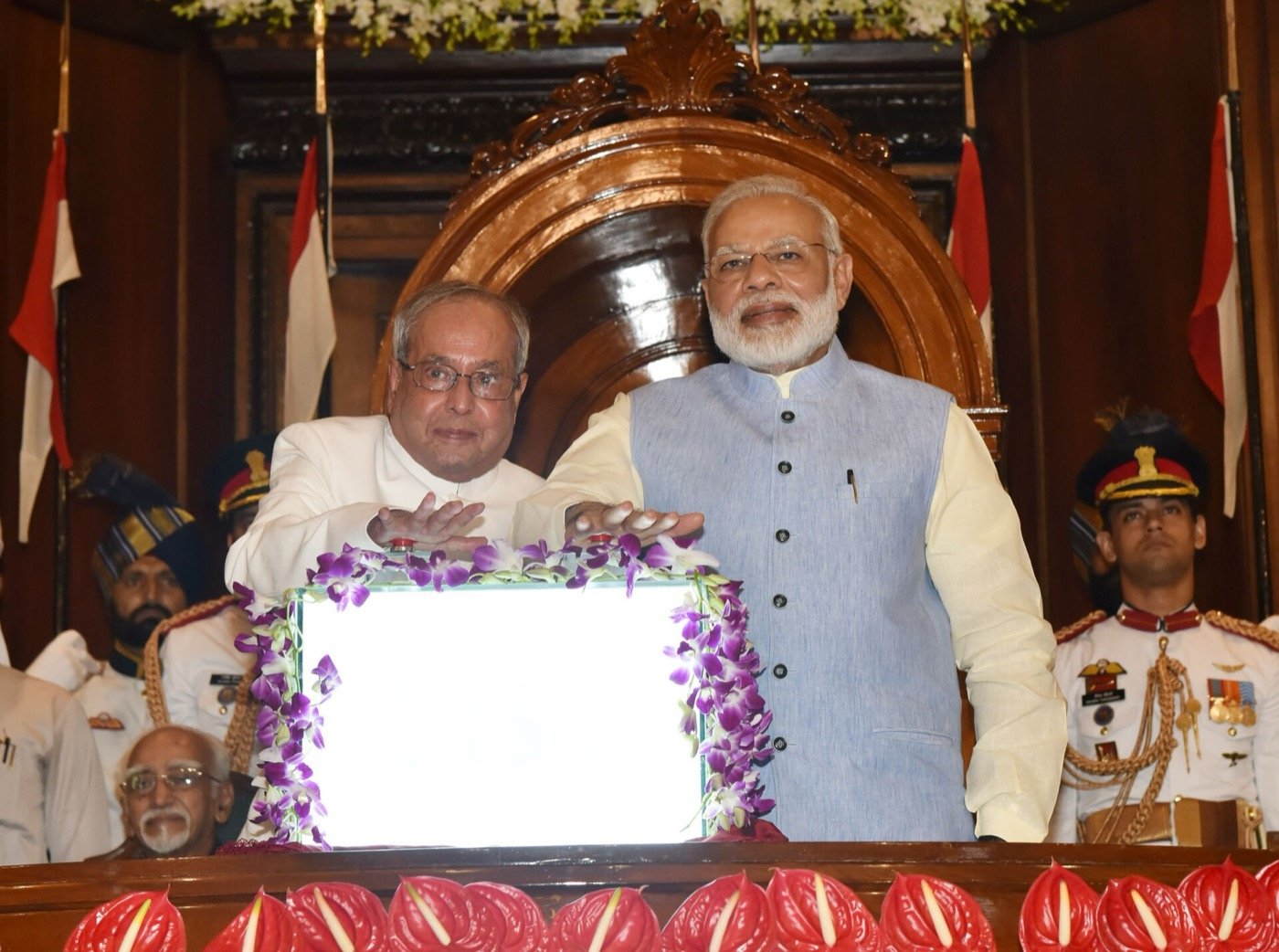
The Budget moves to 1 February and absorbs the railways
Arun Jaitley presents the first Budget on 1 February so Parliament can pass it before the financial year begins. The separate Railway Budget, presented since 1924, is merged into it, and the old Plan and non-Plan classification of spending is dropped.
2005
States switch to VAT Delivered
Most states replace their sales taxes with a value-added tax, giving credit for tax already paid on inputs. It is the groundwork for the national GST twelve years later.
The FRBM Act puts deficit targets into law
Parliament passes the FRBM Act, which obliges the Centre to cut its deficits along a stated path and to explain departures from it. The targets are suspended or reset several times, after the 2008 crisis and again during COVID, but the Act still frames every Budget’s fiscal statements.
1999
Budget time moves from 5 pm to 11 am
The Budget was read at 5 pm, a hangover from the days when the timing suited London. Yashwant Sinha moves it to 11 am.
1997
The ‘dream Budget’
Chidambaram cuts the top personal income-tax rate from 40 to 30 percent and lowers corporate tax, betting that lower rates would bring better compliance. It becomes a reference point for the argument that tax cuts can widen the base.
1993
The first report card on 1991 Delivered
Presenting the 1993–94 Budget, Manmohan Singh tells Parliament the ‘sense of crisis is now behind us’. Annual inflation has fallen from a peak of 17 percent in August 1991 to below 7 percent, international confidence is restored, and growth, which had fallen to 1.2 percent in 1991–92, is expected to be about 4 percent in 1992–93. He warns that the fiscal correction is unfinished.
1991
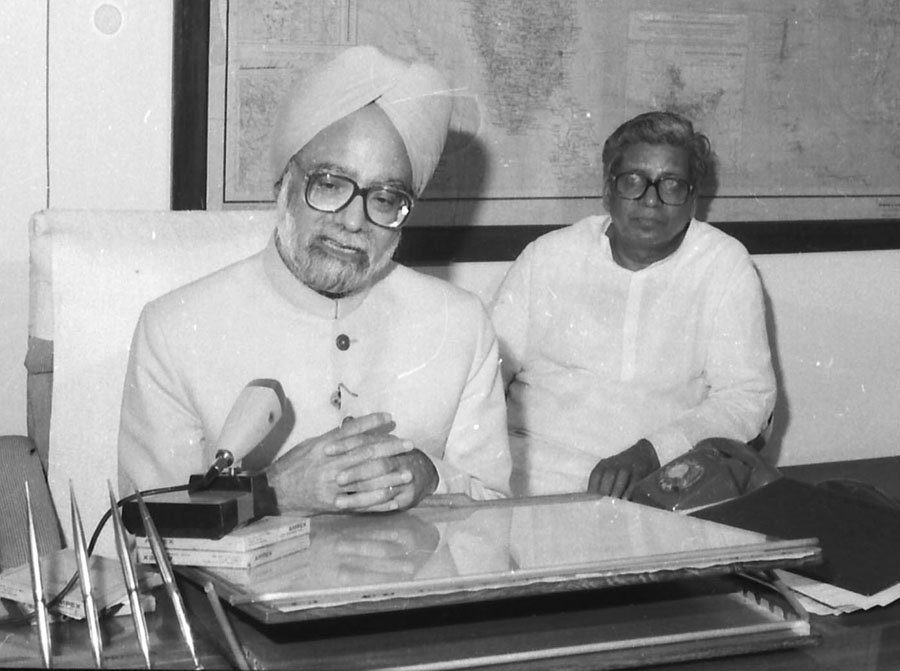
Manmohan Singh’s Budget opens the economy Delivered
Weeks after the rupee is devalued and gold is pledged abroad, Manmohan Singh tells Parliament that foreign-exchange reserves of about ₹2,500 crore would pay for a mere fortnight of imports, the fiscal deficit is above 8 percent of GDP, and inflation is in double digits. The Budget cuts customs duties, starts fiscal correction and arrives the same day as the new industrial policy that scraps most licensing.
Why it matters: the biggest delivery was a change in rules rather than spending. He closed with Victor Hugo: ‘no power on earth can stop an idea whose time has come.’
1947
Independent India’s first Budget
The first Finance Minister presents a Budget for the period to 31 March 1948, dominated by defence and the costs of Partition. The first Budget of British India had been presented by James Wilson in April 1860.
Capital Spending: Promised vs Spent
The infrastructure bet in one chart.
Two things are true at once. Central capital spending has risen from about ₹2 lakh crore in 2014–15, by the Budget speech’s own count, to more than ₹10 lakh crore a year: a real, measurable build-out of roads, railways and defence assets. And the headline allocation has overstated what was spent in each of the last three full years, by between ₹51,000 crore and ₹59,000 crore a year.
The gap is bigger once states are included. Grants to states for capital assets were budgeted at ₹4.27 lakh crore in 2025–26 and revised to ₹3.08 lakh crore, pulling effective capital expenditure down from ₹15.48 to ₹14.04 lakh crore. Much of India’s infrastructure is built by states, so this is where the delivery chain from Centre to project is weakest.
The Deficit: From 9.2% to 4.4%
The fiscal deficit is the record on which recent Budgets have delivered most consistently. In February 2021 the government set out a path to below 4.5 percent of GDP by 2025–26, and it has met or beaten its deficit target in every year since. The 2026–27 Budget switches the main anchor to debt: 50±1 percent of GDP by 2030–31, from 55.6 percent now.
The cost of past borrowing is visible in one line. Interest payments are budgeted at about ₹14.04 lakh crore in 2026–27, more than the Centre’s direct capital spending and about a quarter of total expenditure. Every point of debt-to-GDP cut frees money for something else, which is the government’s case for consolidation.
BE vs RE vs Actual, 2020–21 to 2026–27
Capex in ₹ lakh crore; deficit as % of GDP.
| Year | Capex BE | Capex RE | Capex Actual | Deficit planned | Deficit actual |
|---|---|---|---|---|---|
| 2020–21 | 4.12 | 4.39 | 4.26 | 3.5% | 9.2% |
| 2021–22 | 5.54 | 6.03 | 5.93 | 6.8% | 6.7% |
| 2022–23 | 7.50 | 7.28 | 7.40 | 6.4% | 6.4% |
| 2023–24 | 10.00 | 9.50 | 9.49 | 5.9% | 5.6% |
| 2024–25 | 11.11 | 10.18 | 10.52 | 4.9% | 4.8% |
| 2025–26 | 11.21 | 10.96 | ~10.69 (prov.) | 4.4% | 4.4% (prov.) |
| 2026–27 | 12.22 | – | 5.10 (Apr–Aug) | 4.3% | 41.9% of target used by Aug |
Promise Scorecard: Ten Budget Commitments Checked
Status is based on official accounts or the government’s own reported numbers.
| Promise | Made | What happened | Status |
|---|---|---|---|
| Deficit below 4.5% of GDP by 2025–26 | Feb 2021 | 4.4% in 2025–26 | Delivered |
| Open the economy, cut licensing and duties | Jul 1991 | Licence raj largely dismantled; crisis over by 1993 | Delivered |
| One national GST | Rolled out Jul 2017 | Live; rates simplified in Sep 2025 | Delivered, slowly |
| ₹11.11 lakh cr capex | Jul 2024 | ₹10.52 lakh cr spent | Partly |
| ₹11.21 lakh cr capex | Feb 2025 | ~₹10.69 lakh cr spent (provisional) | Partly |
| Internships for 1 crore youth in 5 years | Jul 2024 | ~29,700 joined in two years of pilots | Far short so far |
| Jobs incentive (ELI) | Jul 2024 | Launched Aug 2025 as PM-VBRY; payouts began 2026 | In progress |
| New Income Tax Act | Jul 2024 (review) | In force 1 Apr 2026 | Delivered |
| No tax up to ₹12 lakh | Feb 2025 | Applied from 2025–26 | Delivered |
| Debt 50±1% of GDP by 2030–31 | Feb 2025 | 55.6% in BE 2026–27 | In progress |
Where Delivery Is Hardest: Jobs
The July 2024 Budget made employment its centrepiece: five schemes, ₹2 lakh crore, 4.1 crore young people over five years. Two years on, the evidence is mixed. The PM Internship Scheme pilot has run three rounds; about 29,700 people have joined, a long way from a five-year goal of 1 crore. Offers were often turned down because of location, short duration and a stipend of ₹5,000 a month.
The Employment Linked Incentive took a year to design and was launched in August 2025 as the Pradhan Mantri Viksit Bharat Rozgar Yojana, with ₹99,446 crore and a target of 3.5 crore jobs in two years. Because the money is paid after six and twelve months of employment, its real test is whether the new EPFO registrations it rewards are jobs that would not have existed anyway, something enrolment figures alone cannot show.
Tax Promises: Mostly Delivered, With a Cost
Tax measures are the easiest Budget promises to check because they take effect on a fixed date. The 2025–26 Budget’s ₹12 lakh zero-tax threshold applied from April 2025. The Income Tax Act, 2025, a promise of the July 2024 Budget, came into force on 1 April 2026. GST, first promised in Budget speeches in the mid-2000s, took until July 2017 to start and until September 2025 to reach a simpler two-rate structure.
The harder question is impact. The government expected the 2025 tax relief to lift consumption; tax relief and GST cuts also cost revenue, and in 2025–26 net tax receipts came in about 2 percent below target. With oil prices high in 2026, analysts list those revenue losses among the pressures on this year’s 4.3 percent deficit.
The Five-Question Budget Test
Use it on any Budget headline.
Allocation
Is the number a Budget Estimate, a multi-year total or a package figure that includes loans and guarantees?
Revision
Check the next year’s Revised Estimate. Cuts at RE stage are the first sign a promise is slipping.
Actual spending
Find the CGA provisional accounts or the Actuals column two Budgets later.
Physical delivery
Kilometres built, homes completed, people enrolled, as reported by the ministry or the CAG.
Outcome
Did logistics costs, jobs, incomes or private investment move? This is where the Budget is one cause among many.
Call it
Delivered, partly delivered, in progress or short. A whole Budget is rarely one verdict.
Corrections to Claims Circulating Online
From the summary material this page was built from, and common in coverage.
“2020–21 deficit: 9.5% of GDP”
9.5% was the February 2021 revised estimate. The actual was 9.2%.
“CapEx reached ₹11.11 lakh crore in 2024”
That was the Budget allocation. Actual 2024–25 capex was ₹10.52 lakh crore.
“CapEx rose to ₹11.21 lakh crore in 2025”
Allocation again. Provisional actual: about ₹10.69 lakh crore.
“A ₹20 lakh crore stimulus”
Mostly guarantees, RBI liquidity and existing schemes; the direct Budget cost was much smaller.
“Internships for 1 crore youth”
The target, not the result: about 29,700 joined in three pilot rounds to August 2026.
2025–2026
Summaries ending at the Budget speech miss GST 2.0, the new Income Tax Act, the 2025–26 outcome and the oil-price pressure on 4.3%.
Did You Know?
- 5 pm to 11 am: the Budget was read in the evening until 1999.
- Railway Budget: presented separately from 1924 to 2016.
- Longest speech: about 2 hours 40 minutes, on 1 February 2020.
- From briefcase to tablet: a red bahi-khata in 2019, a tablet in its red cover from 2021.
- Nine in a row: Nirmala Sitharaman’s 2026 Budget was her ninth consecutive one.
- Sunday Budget: 1 February 2026 fell on a Sunday, and Parliament sat.
Quick Quiz: Promise or Delivery?
1. What was the actual 2020–21 fiscal deficit?
2. How much capital expenditure was actually spent in 2024–25?
3. Since when has the Budget been presented on 1 February?
4. Which is bigger in the 2026–27 Budget?
5. In 1991, how long would India’s reserves have paid for imports?
Explore More Timelines
People Also Ask
Frequently Asked Questions
What the Record Shows
Read against its own accounts, India’s recent Budget record is more specific than either celebration or criticism suggests. Deficit promises have been kept. Tax changes happened on schedule. Capital spending has grown enormously, yet each of the last three Budgets promised more than was spent. The schemes that depend on employers and young people choosing to take part have moved slowest.
That is the useful lesson of 1991 as well. The Budget that mattered most did not win on its spending figures; it changed rules, and the results showed up over years. For 2026–27, the numbers to check are the capex actual next May, the deficit under oil-price pressure, and whether the jobs schemes start to show enrolments that match their promises.
Related AiTimeline Stories
⚠️ Editorial Note
Last updated 5 October 2026. Budget Estimates, Revised Estimates and Actuals come from the Union Budget’s ‘Budget at a Glance’ tables and Budget speeches on indiabudget.gov.in; in-year and provisional figures from the Controller General of Accounts as reported. 2025–26 actuals are provisional and may be revised. Internship and jobs-scheme numbers are as reported in September 2026. Analysts’ deficit projections are estimates, not official figures. Nothing here is tax or investment advice.
Sources & further reading
Every dated entry above was checked against these references. Last reviewed 5 October 2026.
- Union Budget 2026-27: Budget speech (1 Feb 2026) - capex, fiscal deficit 4.3%, debt 55.6%
- Union Budget 2026-27: Budget at a Glance - BE/RE/Actuals, effective capex, interest payments
- Budget 1991-92: Manmohan Singh's Budget speech (24 Jul 1991)
- Budget 1993-94: Budget speech - inflation and growth after the 1991 reforms
- Union Budget 2021-22: Budget speech - capex pivot and deficit glide path
- Union Budget 2024-25: Budget speech - Rs 11.11 lakh crore capex, employment package
- Controller General of Accounts: provisional accounts 2024-25
- Business Standard: Centre's fiscal deficit at 41.9% of FY27 target at Aug-end (30 Sep 2026)
- Business Standard: PM Internship Scheme - only 20% of offers convert to joins (29 Sep 2026)