Lehman Brothers Collapse: The Weekend That Broke Wall Street
How Lehman Brothers collapsed on 15 September 2008 after a failed weekend rescue, and how it set off the AIG bailout, a money-fund run and a global panic.
Latest Story
On Friday 12 September 2008, Lehman Brothers was still trading. By Monday morning it was bankrupt. The Lehman Brothers collapse was the largest bankruptcy filing in US history, and it came after a weekend in which the most powerful people in American finance tried, and failed, to find someone to buy a 158-year-old firm whose assets nobody could value with confidence. This is what happened that weekend, how the firm got there, why Washington let it fail and rescued AIG a day later, and what is still being paid out to creditors in 2026.
💡 Short Answer
Lehman Brothers filed for Chapter 11 on 15 September 2008 after weekend rescue talks at the Federal Reserve Bank of New York failed. It listed about $639 billion of assets and $613 billion of debts. Bank of America chose Merrill Lynch, a Barclays deal was blocked by a UK shareholder-vote rule, and the US refused public money. Within days AIG was rescued, money-market funds suffered a run and global credit froze.
Lehman Brothers Collapse: Key Questions
The Lehman Collapse in Ten Points
- The filing: Chapter 11 on 15 September 2008, about $639bn of assets.
- The weekend: talks at the New York Fed from Friday 12 to Sunday 14 September found no buyer.
- Bank of America: walked away and bought Merrill Lynch instead.
- Barclays: blocked by a UK rule requiring a shareholder vote on a trading guarantee.
- Leverage: 31.7x gross in February 2008; small losses could erase its capital.
- Funding: long-term, illiquid assets were financed with short-term money.
- Repo 105: about $50bn moved off the books at quarter-end, found by the examiner.
- Contagion: AIG rescue and a money-fund run within 24 hours.
- Not the cause: the recession began in December 2007; Lehman turned crisis into panic.
- Still open: ~$129.5bn paid out by 2026; London arm closed in October 2025.
Lehman Brothers Collapse at a Glance
| Date | What happened | Why it mattered |
|---|---|---|
| 1850 | Lehman Brothers founded, Montgomery, Alabama | Start of a 158-year firm |
| 2006 | US house prices peak | The base of the boom starts to give way |
| Aug 2007 | BNP Paribas freezes funds; credit markets seize | Mortgage risk becomes a funding problem |
| 16 Mar 2008 | Bear Stearns sold to JPMorgan with Fed help | Proof that funding can vanish in days |
| Jun 2008 | Lehman loses $2.8bn, raises $6bn | Capital patched, confidence not |
| 7 Sep 2008 | Fannie Mae and Freddie Mac seized | Government steps into housing finance |
| 9–10 Sep 2008 | Korean talks stall; $3.9bn loss | Shares and funding collapse |
| 12–14 Sep 2008 | Weekend talks at the New York Fed | No buyer without public support |
| 15 Sep 2008 | Lehman files for Chapter 11 | Largest US bankruptcy |
| 16 Sep 2008 | AIG rescue; Reserve Primary breaks the buck | Contagion beyond Wall Street |
| 25 Sep 2008 | Washington Mutual seized | Largest US bank failure |
| 3 Oct 2008 | TARP becomes law | System-wide rescue begins |
| Jun 2009 | Recession ends | Recovery starts, slowly |
| Jul 2010 | Dodd-Frank signed | New rules for failing giants |
| 2025–26 | LBIE closes; LBHI 32nd payout | The estate is still winding down |
Pick a day to see who was in the room, what was on the table and what broke.
Friday evening to Tuesday night, 12–16 September 2008.
Choose a day above
1850–2006: From Cotton Store to Wall Street Giant
Lehman began as a dry-goods store opened by Henry Lehman, a Bavarian immigrant, in Montgomery, Alabama, in 1844. With his brothers Emanuel and Mayer it became Lehman Brothers by 1850, and cotton trading pulled it into commodities and then to New York, where it helped found the New York Cotton Exchange. Over the following century it became an investment bank, underwriting companies from retailers to airlines.
In 1984 Lehman was bought by Shearson/American Express. It was spun off again in 1994 with Richard Fuld as chief executive. Over the next 14 years Fuld built it into a powerhouse in bonds, mortgages and commercial real estate. By 2007 Lehman was the fourth-largest US investment bank, a leading underwriter of mortgage-backed securities, and the owner of its own mortgage lenders.
That business model carried a structural weakness. Like other broker-dealers, Lehman financed much of a very large balance sheet with short-term borrowing, much of it overnight repo secured on its securities. Its assets could take months or years to sell; its lenders could ask for their cash back the next morning.
The Housing Boom That Built the Fuel
US home prices more than doubled between 1998 and 2006, and household mortgage debt rose from 61% of GDP to 97%, according to Federal Reserve History. Lenders extended credit to weaker borrowers, often with low teaser rates, because rising prices meant a struggling borrower could refinance or sell.
Those loans were pooled and sold as mortgage-backed securities, then repackaged again into more complex products. In theory that spread risk. In practice it spread uncertainty: when defaults rose, nobody could be sure which bank, fund or insurer held the losses. The chain ran borrower, lender, mortgage pool, security, investor, and every link could be leveraged.
Once prices peaked in 2006, the cycle reversed. Falling prices raised defaults, defaults cut the value of mortgage securities, lenders tightened credit, and tighter credit pushed prices down further.
2007: The First Cracks
New Century Financial, one of the biggest subprime lenders, filed for bankruptcy on 2 April 2007. In August Lehman shut its own subprime lender, BNC Mortgage. On 9 August 2007 BNP Paribas froze three funds because it could not value their US subprime holdings, and interbank funding markets seized. Central banks pumped in liquidity. Lehman kept growing: it bought into commercial real estate, including a large share of the $22 billion Archstone apartment deal in October 2007, near the top of the market.
March 2008: Bear Stearns Shows How Fast It Can Happen
Bear Stearns, smaller than Lehman but built the same way, told the Fed on Thursday 13 March 2008 that it would not have enough cash to open the next day. Over the weekend JPMorgan Chase agreed to buy it for $2 a share, later raised to $10, with the New York Fed financing about $29 billion of Bear’s mortgage assets. The Fed also opened lending to investment banks for the first time since the 1930s.
Two lessons reached the market. An investment bank can lose its funding in days. And the authorities will arrange a rescue. Lehman, the next most exposed, was assumed to be covered by the second lesson. It turned out to need the first.
June–August 2008: Lehman Fights for Time
On 9 June Lehman pre-announced a second-quarter loss of about $2.8 billion, its first as a public company, and raised $6 billion of new capital. Its own filings showed how stretched it was: total assets of about $786 billion against roughly $25 billion of equity at the end of February 2008, gross leverage of 31.7 times. By 31 May it had shrunk the balance sheet to about $639 billion, leverage of 24.3 times.
Short sellers, including hedge-fund manager David Einhorn, argued Lehman’s real-estate valuations were too optimistic. Fuld looked for a strategic investor, including the Korea Development Bank, but rejected terms he considered too low.
Equity left after the fall, on $100bn of assets.
The Real Problem Was Liquidity, Not Just Bad Mortgages
Hard-to-value holdings
Commercial real estate, mortgage securities and private loans whose prices fell and whose true value was disputed.
Thin capital
About $1 of equity for every $30 of assets in early 2008, so a small fall in values had a large effect on solvency.
Short-term money
Overnight repo and commercial paper could be withdrawn, or require more collateral, at any time.
The trigger
When lenders, clearing banks and clients doubted Lehman, they demanded collateral or left. That run, not an accounting loss, ended the firm.
Repo 105: Making the Balance Sheet Look Smaller
A repo is a short-term loan secured on securities: hand over bonds for cash today, buy them back tomorrow. Normally both sides stay on the books. Lehman’s Repo 105 trades, which used collateral worth 105% of the cash received and relied on a legal opinion from a UK law firm, were booked as sales. Assets left the balance sheet just before quarter-end and came back days later.
The court-appointed examiner, Anton Valukas, published his report in March 2010. He found Lehman moved about $38.6 billion off its books at the end of 2007, $49.1 billion at the end of the first quarter of 2008 and $50.4 billion at the end of the second, without telling investors, and that the purpose was to report lower leverage. He found colorable claims against Fuld and other executives and against auditor Ernst & Young.
The nuance matters. Repo 105 did not cause the losses. It made a highly leveraged firm look less leveraged at reporting dates. The failure itself came from falling asset values, leverage, funding dependence and lost confidence.
Source: Valukas examiner report (2010). Net leverage excludes some low-risk assets; gross leverage was higher, 31.7x in February 2008.
September 2008: The Week Everything Accelerated
On Sunday 7 September, the government placed Fannie Mae and Freddie Mac into conservatorship. On Tuesday 9 September, reports that Korea Development Bank had put talks on hold sent Lehman shares down 45% to $7.79. On Wednesday 10 September, Lehman brought forward its results: a $3.9 billion third-quarter loss, a plan to spin off its commercial real estate and a sale of part of its asset-management arm. Rating agencies warned of downgrades, which would trigger collateral calls. JPMorgan, Lehman’s main clearing bank, demanded billions more in collateral. By Thursday, clients were moving their business elsewhere.
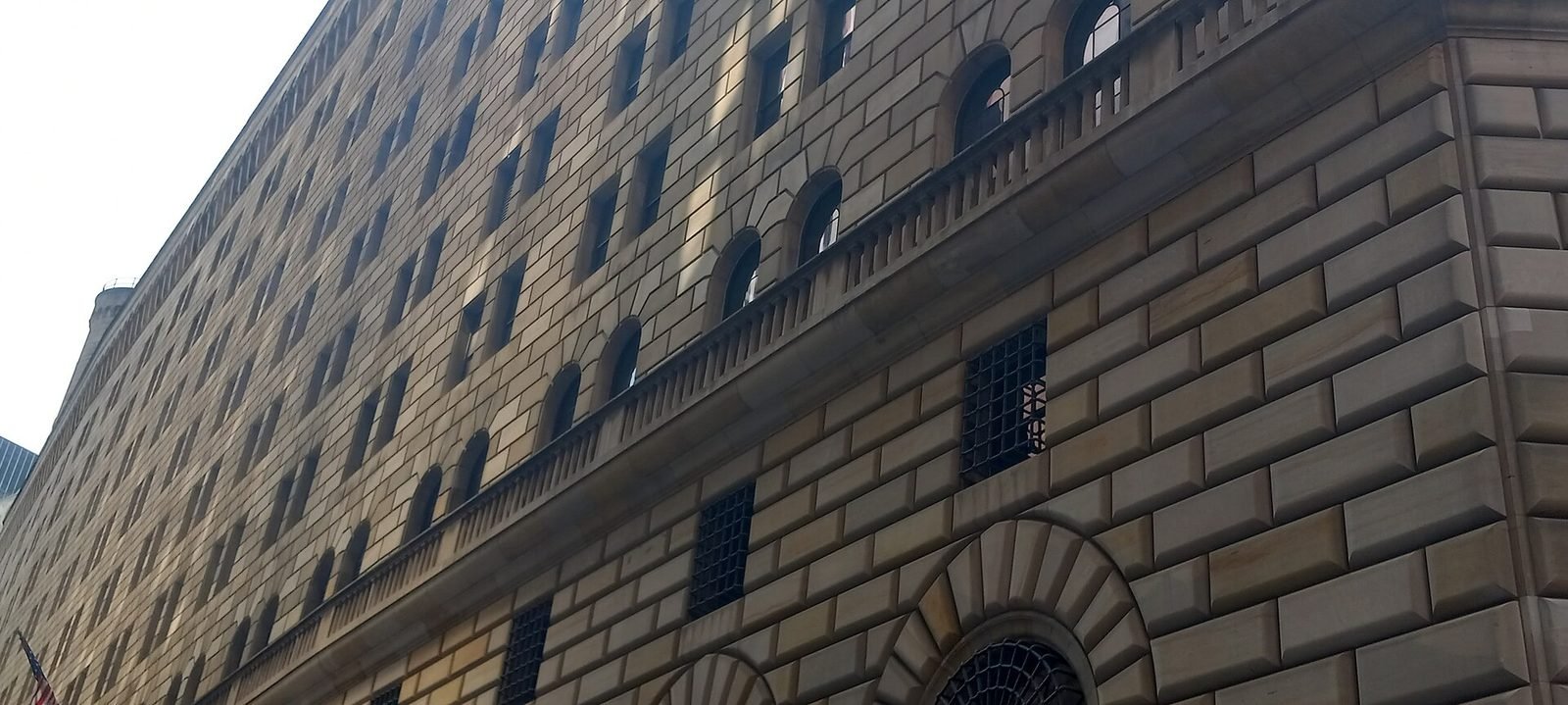
Inside the Lehman Weekend
Friday 12 September. At 6pm Henry Paulson, Timothy Geithner and Christopher Cox met the heads of the biggest Wall Street firms at the New York Fed’s fortress on Liberty Street. The message was blunt: there would be no public money; the industry would have to help finance a private sale. Bank of America and Barclays were the bidders.
Saturday 13 September. Bankers split into teams, one to study Lehman’s real estate and another to think about what would happen if it failed. Both bidders wanted to leave the worst assets behind, and the other banks discussed putting up money for a vehicle to hold them. Bank of America, meanwhile, was quietly talking to Merrill Lynch, whose chief John Thain could see that Merrill might be next.
Sunday 14 September. Barclays was ready, but needed to guarantee Lehman’s trading obligations from Monday until the deal closed. Under UK listing rules that guarantee needed a Barclays shareholder vote, which would take weeks. The Financial Services Authority would not waive it, and Chancellor Alistair Darling would not override it. Bank of America announced it would buy Merrill Lynch for about $50 billion. The Fed widened the collateral it would take from dealers. Lehman was told to file before Asia opened.
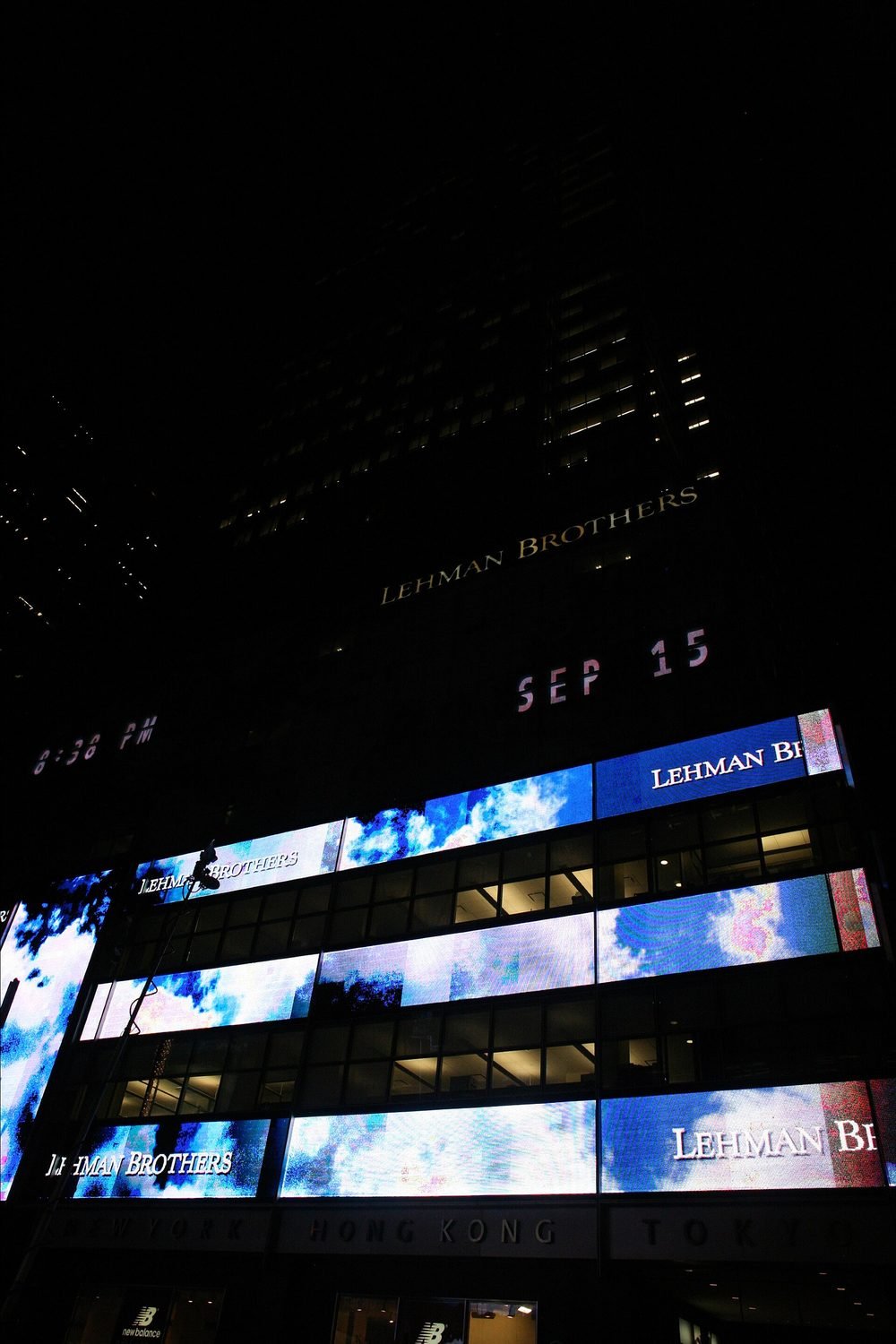
Monday 15 September. Lehman Brothers Holdings filed at about 1:45am. Its US broker-dealer kept operating with Fed support so it could be sold. The Dow fell 504 points. Lehman shares closed around 21 cents.
Why Lehman’s Failure Was Different
Most bankruptcies hurt a company’s owners, lenders and workers. Lehman’s creditors were themselves banks, hedge funds, money-market funds, insurers, pension funds and companies around the world, and it was counterparty to roughly 930,000 derivatives contracts. Hedge funds that had left assets with Lehman’s London arm found them frozen in administration. Every institution had to ask the same question: how much will I get back, and who else is exposed? Until that was answered, many stopped lending to anyone.
That is how a corporate bankruptcy becomes a systemic liquidity crisis.
Tuesday 16 September: AIG and the Money-Market Shock
American International Group had sold credit default swaps protecting banks against mortgage losses. Downgrades meant it had to post collateral it did not have. On Tuesday evening the Fed agreed to lend it up to $85 billion in return for a 79.9% stake. One day after letting Lehman fail, Washington rescued an insurer.
The same day, the Reserve Primary Fund, a $62.5 billion money-market fund holding $785 million of Lehman commercial paper, cut its share price to 97 cents. It had “broken the buck”. Investors who thought money funds were as good as cash pulled about $300 billion from prime funds that week, according to the SEC. Funds stopped buying commercial paper, the market that companies use to pay wages and suppliers. On 19 September Treasury guaranteed money-fund shares and the Fed opened a facility to buy their asset-backed paper.
Profitable does not necessarily mean liquid. That distinction is what the world learned in September 2008.
Why Didn’t the Government Rescue Lehman?
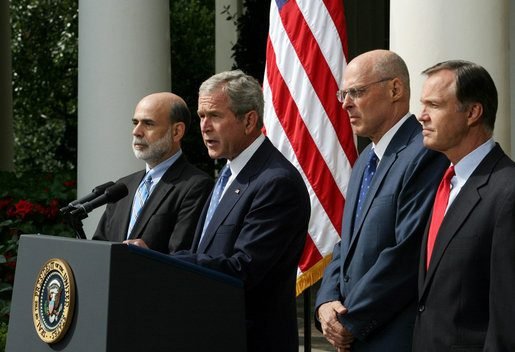
It is still the most argued-over decision of the crisis. Paulson had been criticised over Bear Stearns and Fannie and Freddie, and said publicly there would be no taxpayer money for Lehman. Bernanke later told Congress and the Financial Crisis Inquiry Commission that the Fed could lend only against adequate collateral, that Lehman’s hole was too large, and that there was therefore no legal way to save it without a buyer.
Critics disagree. Economist Laurence Ball, in a 2018 book, argued Lehman had enough collateral for a Fed liquidity loan and that the decision was mainly political. What is not disputed is the sequence of outcomes: Bear Stearns was sold with help, Lehman went bankrupt, and AIG was rescued, all within six months. Markets were left to guess what “too big to fail” meant.
| Institution | What happened in 2008 | Signal to markets |
|---|---|---|
| Bear Stearns | Sold to JPMorgan with Fed financing, March | Big firms get rescued |
| Lehman Brothers | Chapter 11, 15 September | Not every firm gets rescued |
| Merrill Lynch | Sold to Bank of America, agreed 14 September | Consolidate before you fail |
| AIG | Fed loan up to $85bn, 16 September | Some failures are too dangerous |
| Washington Mutual | Seized and sold to JPMorgan, 25 September | Depositors run too |
| Goldman Sachs, Morgan Stanley | Became bank holding companies, 21 September | The investment-bank model ends |
The Shock Goes Global
Foreign banks had borrowed heavily in dollars to buy US assets. As dollar funding dried up, the Fed on 18 September expanded swap lines with other central banks by $180 billion, and later made them unlimited for the largest. In early October the UK announced a bank recapitalisation plan, Ireland guaranteed its banks’ debts, and central banks cut rates in a coordinated move. Lehman’s collapse also hit investors far from Wall Street: thousands of retail savers in Hong Kong and Singapore had bought Lehman-linked “minibonds”.
October 2008: The Rescue Changes Scale
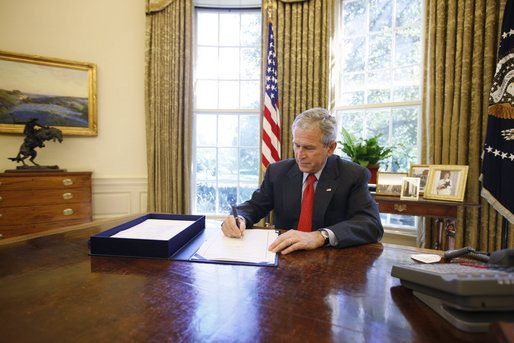
The September panic forced governments to move from saving individual institutions to stabilising the whole system. The House rejected the first bailout bill on 29 September, and the Dow fell 778 points. A revised Emergency Economic Stabilization Act passed and was signed on 3 October, creating the $700 billion Troubled Asset Relief Program. By mid-October Treasury was using it to buy stakes in the largest banks. The objective was no longer “save this bank”. It was “stop the financial system from freezing”.
Was Lehman the Cause of the Financial Crisis?
No. The US recession had begun in December 2007, nine months earlier, and the Federal Reserve traces the crisis to the housing boom, mortgage expansion, securitisation and falling prices. Lehman was the amplifier. The housing collapse was the fire, leverage was the fuel, and Lehman’s bankruptcy was the moment the fire jumped between buildings.
Lehman by the Numbers
| Measure | Figure | Source |
|---|---|---|
| Assets on bankruptcy petition | ~$639bn (31 May 2008) | Chapter 11 petition |
| Debts on petition | ~$613bn | Chapter 11 petition |
| Gross leverage, Feb 2008 | 31.7x | Lehman 10-Q |
| Gross leverage, May 2008 | 24.3x | Lehman 10-Q |
| Repo 105 at Q2 2008 quarter-end | ~$50.4bn | Valukas report |
| Q3 2008 loss (announced 10 Sep) | $3.9bn | Lehman release |
| Employees | ~25,000 | Company filings |
| Claims filed | ~70,000, over $1.2tn | LBHI estate |
| Paid to creditors by 2026 | ~$129.5bn | LBHI estate |
| LBHI senior unsecured recovery | 46.82% (Apr 2026) | Indenture trustee notice |
The Human Cost
The recession ran from December 2007 to June 2009. Real GDP fell 4.3%, unemployment doubled to 10% by October 2009, household net worth fell from about $69 trillion to $55 trillion, and millions of families faced foreclosure. Around 25,000 Lehman employees lost their jobs or moved to Barclays and Nomura, many holding company shares that were now worthless.
| Measure | Change | Period |
|---|---|---|
| US real GDP | −4.3% | Peak to trough, 2007–09 |
| Unemployment rate | ~5% to 10% | Dec 2007 to Oct 2009 |
| Household and nonprofit net worth | ~$69tn to $55tn | 2007 to 2009 |
| S&P 500 | −57% | Oct 2007 to Mar 2009 |
| US home prices | Down more than a fifth | Q1 2007 to Q2 2011 |
| Prime money funds | ~$300bn withdrawn | Week of 15 Sep 2008 |
After the Fall: Barclays, Nomura and a 17-Year Wind-Down
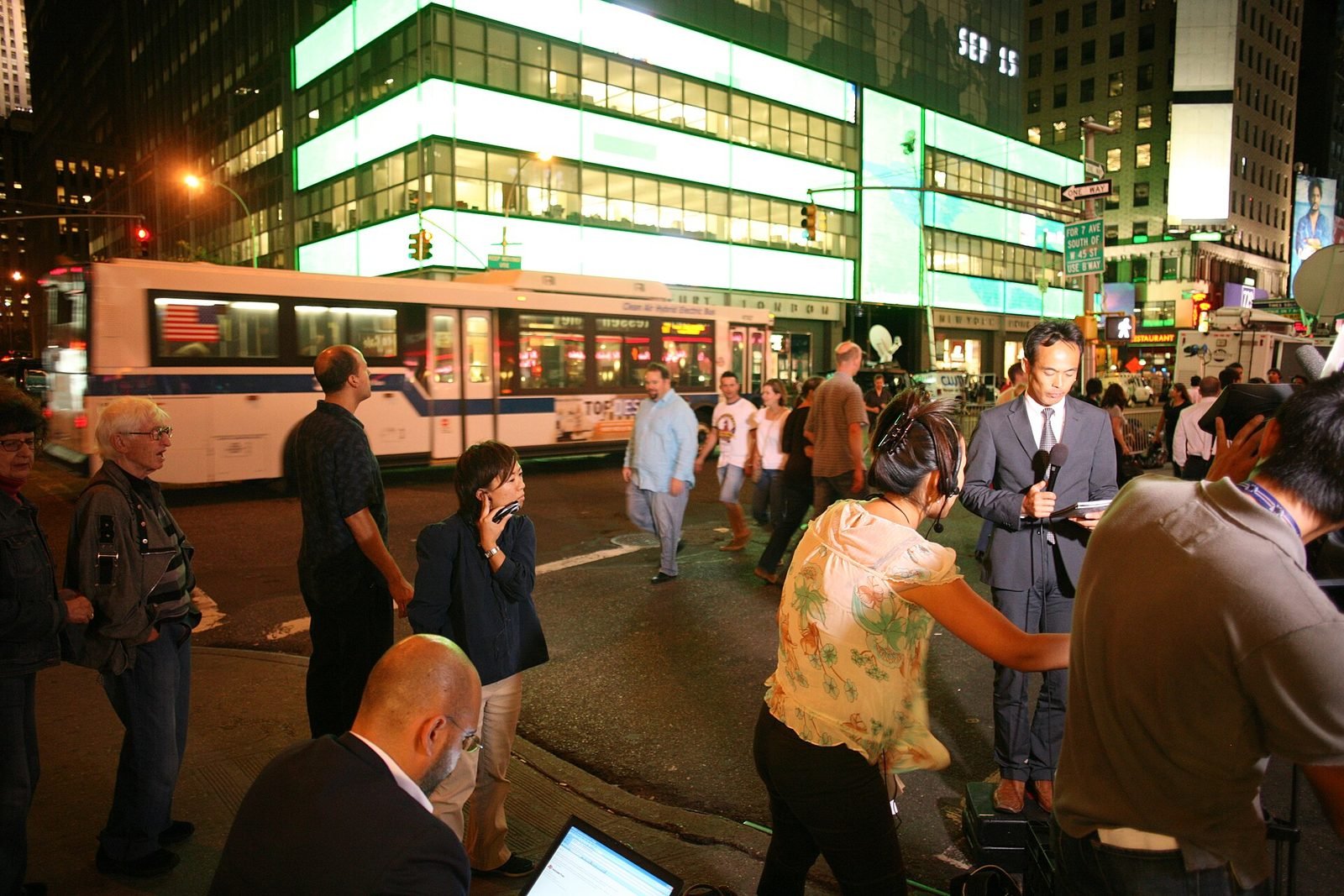
Barclays agreed on 16 September to buy Lehman’s North American investment banking and trading business for about $250 million, plus $1.5 billion for the Seventh Avenue headquarters and two data centres; Judge James Peck approved the sale in the early hours of 20 September. Nomura bought the Asia-Pacific business and much of the European equities and investment-banking franchise. The asset manager Neuberger Berman was sold to its managers in 2009.
Lehman’s plan took effect on 6 March 2012. Roughly 70,000 claims for more than $1.2 trillion were whittled down to about $195 billion of allowed claims. By 2026 the estates had distributed about $129.5 billion. The 32nd distribution, on 2 April 2026, took parent-company senior noteholders to 46.82% of their claims; ten affiliate estates paid creditors in full with interest. In London, Lehman Brothers International (Europe) recovered enough to pay all creditors in full with statutory interest, and the High Court formally ended its administration on 8 October 2025. In New York, the parent’s case remains open, with its plan trust extended to December 2029.
Lehman’s Collapse Changed Banking Rules
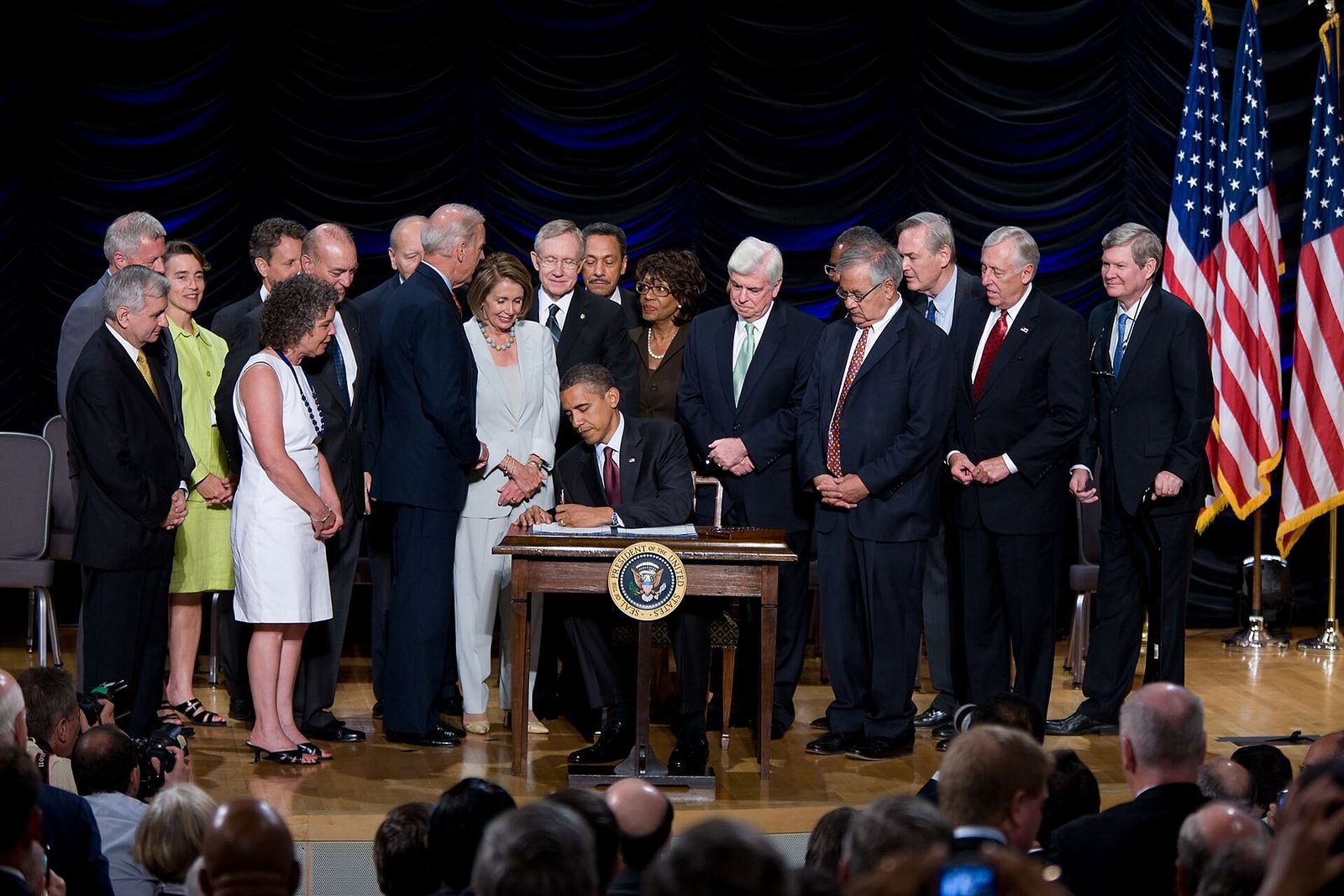
The Dodd-Frank Wall Street Reform and Consumer Protection Act, signed on 21 July 2010, created the Financial Stability Oversight Council, required the largest firms to write “living wills”, introduced annual stress tests, pushed swaps into clearing houses, and gave regulators an Orderly Liquidation Authority to wind down a failing giant without a Lehman-style weekend. Internationally, Basel III raised capital requirements and added a liquidity coverage ratio so banks hold enough liquid assets to survive a 30-day run. The SEC reformed money-market funds in 2010, 2014 and 2023, including a floating share price for institutional prime funds.
The idea behind all of it: a firm can be privately owned but publicly important, and its failure should not have to be improvised over a weekend.
Why Lehman Still Matters in 2026
Every time leverage builds in a corner of finance that relies on short-term money, someone asks whether it is “another Lehman”. In 2026 the question has centred on private credit, a market of roughly $1.8 trillion. On 19 February 2026 Blue Owl stopped quarterly redemptions in one of its retail private-credit funds and sold $1.4 billion of loans to raise cash; asset-manager shares fell and some commentators compared the moment to August 2007. Others point out that private-credit funds are mostly financed by long-term investors rather than overnight repo, so losses would hit investors rather than trigger a bank-style run. Which view proves right is not yet known. The pattern to watch is the one Lehman made famous: leverage, complexity, interconnection and illiquidity.
Lehman Brothers Collapse: The Full Timeline, 1850–2026
Newest first. Tags mark turning points, rescues, failures and new laws.
2026
32nd payout, case still open 2025–26
Lehman Brothers Holdings makes its 32nd distribution, about $18.7 million to senior noteholders, taking their cumulative recovery to 46.82% of allowed claims. Across all estates about $129.5 billion has been paid out. Twenty-two of the 23 Chapter 11 cases are closed; the parent’s is the last.
2026
“Lehman moment” talk returns 2025–26
Blue Owl stops quarterly redemptions in one retail private-credit fund and sells $1.4 billion of loans to raise cash; asset-manager shares fall. Commentators ask whether this is a canary like August 2007. Others argue that losses for fund investors are not the same as a run on a leveraged bank. Lehman is the reference point either way.
2025
London closes its Lehman chapter 2025–26
After 17 years, the High Court ends the administration of Lehman Brothers International (Europe). The estate recovered enough to repay creditors in full with statutory interest, a sharp contrast with the panic of 2008, when clients feared their assets were frozen indefinitely.
2012
Lehman exits Chapter 11
Lehman’s liquidation plan takes effect after 3½ years. The estate starts paying creditors who had filed about 70,000 claims totalling more than $1.2 trillion. Professional fees for the case run past $2 billion.
2010
Dodd-Frank signed Law
President Obama signs the Dodd-Frank Act. Title II creates a regime to wind down a failing giant financial firm outside ordinary bankruptcy, a direct answer to the Lehman weekend.
2010
Examiner exposes Repo 105
Court-appointed examiner Anton Valukas finds Lehman used “Repo 105” transactions to move about $50 billion off its balance sheet at the end of the second quarter of 2008, without disclosure. He finds colorable claims against senior executives and auditor Ernst & Young; no criminal charges follow.
Recession ends
The US recession that began in December 2007 ends, the longest since the Second World War. The S&P 500 had bottomed on 9 March 2009, about 57% below its October 2007 peak.
2008
TARP becomes law Rescue
Four days after the House first rejected the bill and the Dow fell 778 points, Congress passes a revised version and President Bush signs it. Within weeks the money is being used to inject capital directly into banks.
2008
Washington Mutual seized Failure
After a $16.7 billion deposit run, regulators close WaMu and sell its banking business to JPMorgan Chase. The failure shows the panic has reached ordinary depositors.
2008
The last investment banks change shape
With funding under pressure, the two remaining large independent investment banks convert, gaining permanent access to Fed lending in exchange for tighter supervision. The standalone Wall Street investment bank model is over.
2008
Money funds guaranteed Rescue
Treasury offers a temporary guarantee for money-market fund shares and the Fed opens a facility to buy asset-backed commercial paper from them. That evening the administration unveils plans for a broad bailout.
2008
AIG rescued, money funds break Rescue
The Fed agrees to lend AIG up to $85 billion for a 79.9% stake. The same day the $62.5 billion Reserve Primary Fund, holding $785 million of Lehman paper, “breaks the buck”. In the week about $300 billion flees prime money funds.
2008
Lehman files for Chapter 11 Failure
Lehman Brothers Holdings files in the Southern District of New York, the largest bankruptcy in US history. Staff carry out boxes on Seventh Avenue, the Dow falls 504 points, and the stock closes at about 21 cents.
2008
Sunday: the deals collapse Turning point
Barclays needed to guarantee Lehman’s trading until its shareholders could vote; the UK’s FSA would not waive the vote. Bank of America instead agrees to buy Merrill Lynch for about $50 billion. The Fed widens its collateral rules for dealers, and Lehman is told to file.
2008
Friday and Saturday at the New York Fed Turning point
Treasury Secretary Henry Paulson, New York Fed President Timothy Geithner and SEC Chairman Christopher Cox tell bank chiefs there will be no public money for Lehman and ask them to help finance a private sale. Teams pore over Lehman’s real-estate book.
2008
A $3.9 billion loss
Lehman reports a $3.9 billion quarterly loss, and plans to spin off its commercial real estate and sell part of its asset-management arm. Markets are not reassured.
2008
Korean talks stall, shares crash
Reports that state-run Korea Development Bank has put investment talks on hold send Lehman shares down 45% in one day. Counterparties start demanding more collateral.
2008
Fannie Mae and Freddie Mac taken over Rescue
The government seizes the two mortgage giants, which back or own about half of US home loans. It shows Washington will rescue some institutions, raising expectations for Lehman.
2008
First loss as a public company
Lehman pre-announces a second-quarter loss of about $2.8 billion and raises $6 billion of new capital. Short sellers argue its real-estate marks are too high.
2008
Bear Stearns rescued Rescue
Bear Stearns runs out of liquidity in days and is sold to JPMorgan Chase with New York Fed support. The Fed opens its Primary Dealer Credit Facility the same day, giving Lehman a lifeline too.
2007
Credit markets crack
BNP Paribas suspends withdrawals from funds exposed to US subprime securities, saying it cannot value them. Interbank funding tightens and central banks inject liquidity.
2007
New Century goes bankrupt
One of the largest subprime lenders files for bankruptcy as defaults rise. Lehman, a big mortgage originator and securitiser itself, closes its subprime unit BNC Mortgage in August 2007.
US housing peaks
Mortgage debt has risen from 61% to 97% of GDP since 1998. When prices stop rising, borrowers can no longer refinance their way out of trouble.
Independent again
After a decade inside Shearson/American Express, Lehman is listed as an independent firm. Under Fuld it grows into a leading bond, mortgage and real-estate house.
Lehman Brothers is born
Henry Lehman’s dry-goods store, opened in 1844, becomes Lehman Brothers once Emanuel and Mayer join. Cotton trading leads the firm to New York and, over the next century, into investment banking.
Corrections to Claims Circulating Online
From the draft this page was built from, checked against Fed, SEC, court and estate records.
“A 5% fall takes $4bn of equity to $0”
On $100bn of assets, a 5% fall removes $5bn, leaving equity at minus $1bn. At 25x leverage a 4% fall is enough to wipe the equity out. The calculator above shows the arithmetic.
“More than $400bn withdrawn from prime money funds”
The SEC’s figure is about $300bn, 14% of assets, in the week of 15 September 2008. Larger totals count longer periods, so this page uses the SEC number.
“Barclays needed shareholder approval for the deal”
The sticking point was a guarantee of Lehman’s trading until closing, which needed a vote under UK rules. The FSA would not waive it. Barclays then bought Lehman’s US business out of bankruptcy days later.
“The Fed had no legal basis to save Lehman”
That is the Fed’s and Bernanke’s account. Economists including Laurence Ball argue the Fed could have lent against Lehman’s collateral. We present both.
“Founded in 1850 as a cotton business”
Henry Lehman opened a dry-goods store in Montgomery in 1844; the Lehman Brothers name dates from 1850, and cotton trading grew from the store.
The story did not end in 2010
About $129.5bn has been paid to creditors, London’s LBIE closed after paying in full on 8 October 2025, and the parent’s case is still open in 2026.
What Lehman Taught the World
- Liquidity can kill faster than insolvency: a firm with assets can still fail if it cannot raise cash today.
- Leverage hides fragility: it magnifies returns on the way up and losses on the way down.
- Complexity breeds suspicion: if nobody knows who holds the losses, everyone stops lending.
- Contagion needs no geography: a mortgage in California hit savers in Hong Kong and hedge funds in London.
- Confidence is an asset: it is not on the balance sheet, but when it goes, everything else follows.
- Rules for failure matter: the absence of a plan for a failing giant turned one weekend into a global panic.
Quiz: How Well Do You Know the Lehman Weekend?
1. Which bank bought Merrill Lynch on the Lehman weekend?
2. What stopped the Barclays rescue?
3. How much did Lehman move off its balance sheet with Repo 105 in Q2 2008?
4. What price did the Reserve Primary Fund fall to?
5. Which Lehman estate closed in October 2025 after paying creditors in full?
Explore More Timelines
People Also Ask
Frequently Asked Questions
Final Takeaway
Lehman Brothers did not disappear because one mortgage went bad. It disappeared because a financial system built on leverage, short-term funding and confidence lost all three at once. On Friday Lehman needed a buyer. On Saturday Wall Street searched for one. On Sunday the rescue failed. On Monday Lehman filed for bankruptcy, and the damage moved outward: AIG, money-market funds, commercial paper, banks, businesses, households.
A financial crisis becomes systemic when nobody knows where the losses are, and everyone wants cash at the same time. Eighteen years later, Lehman’s creditors are still being paid, and that lesson is still being tested.
Related AiTimeline Stories
⚠️ Editorial Note
Last updated 8 October 2026. Event dates and figures are from Federal Reserve History, SEC testimony and filings, the Lehman Chapter 11 petition and examiner’s report, and the LBHI estate’s 2026 distribution notices. Accounts of the weekend negotiations draw on participants’ memoirs and contemporaneous reporting and may differ in detail. This article is historical analysis, not investment advice.
Sources & further reading
Every dated entry above was checked against these references. Last reviewed 8 October 2026.
- Federal Reserve History: The Great Recession and Its Aftermath
- Federal Reserve History: The Great Recession, 2007-2009
- SEC: Testimony of Chairman Mary Schapiro on money market fund reform (June 2012)
- Wikipedia: Bankruptcy of Lehman Brothers (incl. Valukas examiner report)
- Wilmington Trust: Notice of 32nd distribution to LBHI senior noteholders (April 2026)
- Epiq: Lehman Brothers Holdings Inc. Chapter 11 case information
- Octus: Lehman Brothers Europe closes 17-year chapter as court ends administration (Oct 2025)
- CNN Money: Lehman suffers nearly $4 billion loss (10 Sep 2008)
- Alternative Credit Investor: Blue Owl gates retail private credit fund (19 Feb 2026)