Lebanon Financial Collapse: How the Currency Lost 98% of Its Value
Lebanon financial collapse timeline: how the pound fell from 1,507.5 to 89,500 per dollar, losing 98%, from the 2019 bank freeze and 2020 default to 2026.
Latest Story
Lebanon was once known as a regional banking centre. Then, from late 2019, its banks stopped paying out depositors’ dollars, the government defaulted, and the pound fell from 1,507.5 to the dollar to about 89,500, losing more than 98% of its value. Lebanon’s financial collapse did not come from one bad decision but from years of borrowing, a peg that needed endless inflows and a political system that could not agree who should take the losses. This timeline dates every stage, from the 1997 peg to the gap law, the 2026 war and the October 2026 IMF talks.
💡 Short Answer
Lebanon’s financial collapse began in 2019, when dollar inflows dried up and banks, which had lent most deposits to the central bank and the state, froze withdrawals. Protests began on 17 October 2019, Lebanon defaulted on its Eurobonds on 7 March 2020, and the pound fell from its 1,507.5 peg to a low of about 140,000 per dollar in March 2023 before stabilising at about 89,500, a loss of more than 98%. The economy shrank by about 40%. In 2026 depositors are still waiting for a law to repay them.
Lebanon’s Financial Collapse: Key Questions
Lebanon’s Collapse in Ten Points
- The peg: 1,507.5 pounds per dollar from December 1997, funded by constant dollar inflows.
- The weak point: banks lent most deposits to the central bank and the government.
- The trigger: inflows slowed from 2018; protests erupted on 17 October 2019.
- The freeze: banks restricted withdrawals from late 2019 without any capital-controls law.
- The default: Lebanon stopped paying its roughly $30 billion of Eurobonds on 7 March 2020.
- The shocks: COVID-19 and the Beirut port explosion of 4 August 2020 deepened the slump.
- The fall: the pound hit about 140,000 per dollar in March 2023 and has held near 89,500 since mid-2023.
- The cost: output down about 40%, inflation of 171.2% in 2022, and losses of about $70–83 billion.
- The reforms: bank secrecy eased and a bank resolution law passed in 2025; the gap law is still pending.
- 2026: renewed war, a projected 6.4% contraction and IMF talks that the central bank hopes to settle by year-end.
The Timeline: From the Peg to the Gap Law
Newest first. Tags mark the collapse, politics, reform steps and the 2025–26 chapter.
2026
Central bank expects an IMF deal on depositors by year-end 2025–26
Souaid said the central bank owes the banking sector about $79 billion, of which about a third is disputed because of irregularities, leaving roughly $50 billion that could be repaid. ‘The last thing we want to do is to go through a second default,’ he said, preferring a smaller but certain offer to depositors.
2026
Lebanon’s leaders take the case to Washington 2025–26
On 1 October the IMF said Lebanon still needed an acceptable financial gap law, a 2027 budget, a medium-term fiscal framework and governance reforms before any new agreement. President Joseph Aoun had asked the Constitutional Council to review one of the August amendments to the bank resolution law, on the central bank’s powers.
2026
World Bank: war reverses the recovery 2025–26
The 2025 rebound, the strongest since 2019, was built on consumption, tourism and investment. The March 2026 escalation hit all three. The World Bank estimated that growth in 2026 would be 10.4 percentage points lower than without the conflict, and warned that public debt remained unsustainable with no restructuring talks under way.
2026
Parliament amends the bank resolution law Reform
The amendments responded to IMF objections to the 2025 law, which decides which banks are recapitalised, merged or liquidated. But the law cannot work fully until the financial gap law decides how the losses are shared.
2026
War returns, and elections are postponed Politics
The fighting, paused by a ceasefire in April and a truce in June, displaced over a million people and destroyed homes and infrastructure again, little more than a year after the previous war. The May 2026 parliamentary election was postponed to 2028.
2026
World Bank sees a fragile rebound 2025–26
For the first time since the collapse, the World Bank described a recovery, driven by remittances, wages increasingly paid in dollars, tourism and construction. It later revised 2025 growth up to 4.2%. Its forecast of 4% growth in 2026 did not survive the war that began five weeks later.
2025
Cabinet approves the financial gap law Reform
Six years after deposits were frozen, a government finally put a loss-sharing plan to parliament. Balances above $100,000 would be converted into instruments repayable over 10, 15 or 20 years depending on size, and the state would pledge about $10 billion in Treasury bills to the central bank. Banks, the Lebanese Forces and Hezbollah opposed it, and the IMF demanded substantial amendments.
Riad Salameh released on record bail Politics
The former governor had spent a year in custody after his arrest in Beirut in September 2024. It was the highest bail in Lebanese judicial history; the investigations continue.
2025
Bank resolution law passes Reform
Lebanon’s banks had stayed open for six years without recognising their losses, a situation critics called ‘zombie banks’. The law gave the state tools to deal with them, although the IMF later sought changes that parliament made in August 2026.
2025
Banking secrecy eased Reform
Lebanon’s banking secrecy, in place since 1956, had long been part of its appeal as a financial centre and an obstacle to investigating the crisis. The amendment let investigators trace transactions over the decade that included the collapse.
2025
Karim Souaid becomes central bank governor Reform
Souaid, an asset manager, inherited a central bank with large unresolved losses, a stable pound and a long list of IMF requirements. Two weeks earlier an IMF mission had said Lebanon’s economy remained severely depressed and that stabilising measures were not enough.
2025
The cost of the 2024 war: $14 billion Collapse
The conflict between Israel and Hezbollah that began in October 2023 and escalated in September 2024 ended in a ceasefire on 27 November 2024. It added a reconstruction bill that Lebanon could not finance on its own.
2025
A president at last Politics
The presidency had been empty since Michel Aoun’s term ended on 31 October 2022, leaving a caretaker government unable to pass the IMF reforms. The new leadership promised to restructure the banks and repay depositors.
2024
Lebanon is placed on the FATF grey list Collapse
The listing reflected the growth of a cash-based economy after the banks failed. It made international payments and correspondent banking harder for a country that depends on money sent home by Lebanese abroad.
2024
Former governor Riad Salameh is arrested Politics
Salameh had led the central bank for 30 years and was once celebrated for keeping the peg. He had faced investigations in several European countries. His arrest was the first major legal action in Lebanon against a senior figure from the crisis.
2024
89,500 becomes the official rate Reform
Twelve months after moving the official rate from 1,507.5 to 15,000, the central bank aligned it with the market. The decision ended most of the multiple-rate system, although old dollar deposits remained frozen.
2023
Salameh leaves and the pound stabilises Reform
The new leadership refused to lend to the government or print pounds to buy dollars. With the budget balanced, public salaries partly paid in dollars and the economy run largely in cash dollars, the market rate settled at about 89,500, where it has stayed into 2026.
2023
IMF: economy down 40%, currency down 98% Collapse
The IMF warned that without reforms Lebanon faced a never-ending crisis. It said the economy had contracted by about 40% since 2019 and that the lira had lost 98% of its value.
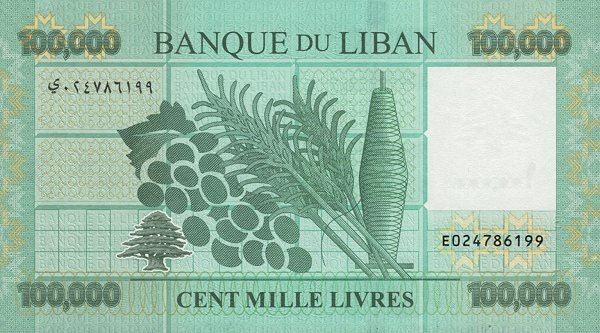
The parallel rate hits about 140,000 Collapse
The pound had been about 60,000 per dollar in January. In a few weeks it more than halved again, as banks went on strike and confidence collapsed. Supermarkets began pricing goods in dollars, a practice later formally allowed.
2023
World Bank: more than 98% of value lost Collapse
The report, titled ‘Normalization of Crisis Is No Road to Stabilization’, said the pound had lost more than 98% of its pre-crisis value by February 2023 and that Sayrafa had generated about $2.5 billion in arbitrage profits while burning reserves.
2023
The official rate is moved from 1,507.5 to 15,000 Collapse
The ten-fold devaluation of the official rate was still far from the market. It changed how some fees, taxes and bank withdrawals were calculated, but Lebanon continued to run several exchange rates at once.
2022
The presidency falls vacant Politics
Parliament failed to elect a president in a dozen sessions. Without a full government, the laws the IMF required stalled.
2022
IMF staff-level agreement Reform
The deal required Lebanon to restructure its banks, deal with the central bank’s losses, ease banking secrecy, pass a budget, unify exchange rates and restructure its debt. It offered a path out of the crisis, but four years later most of the conditions were still being worked on.
Fuel queues, blackouts and the end of subsidies Collapse
The central bank had spent its reserves subsidising imports of fuel, wheat and medicine at the old rate. As the money ran out, shortages led to long fuel queues and power cuts across the country, and the parallel rate passed 20,000 pounds per dollar by the summer.
2020
The government resigns Politics
Diab’s government had produced a recovery plan in April 2020 that put large losses on the banks and the central bank, but it was opposed by the banks and parliament. Talks with the IMF stalled.
2020
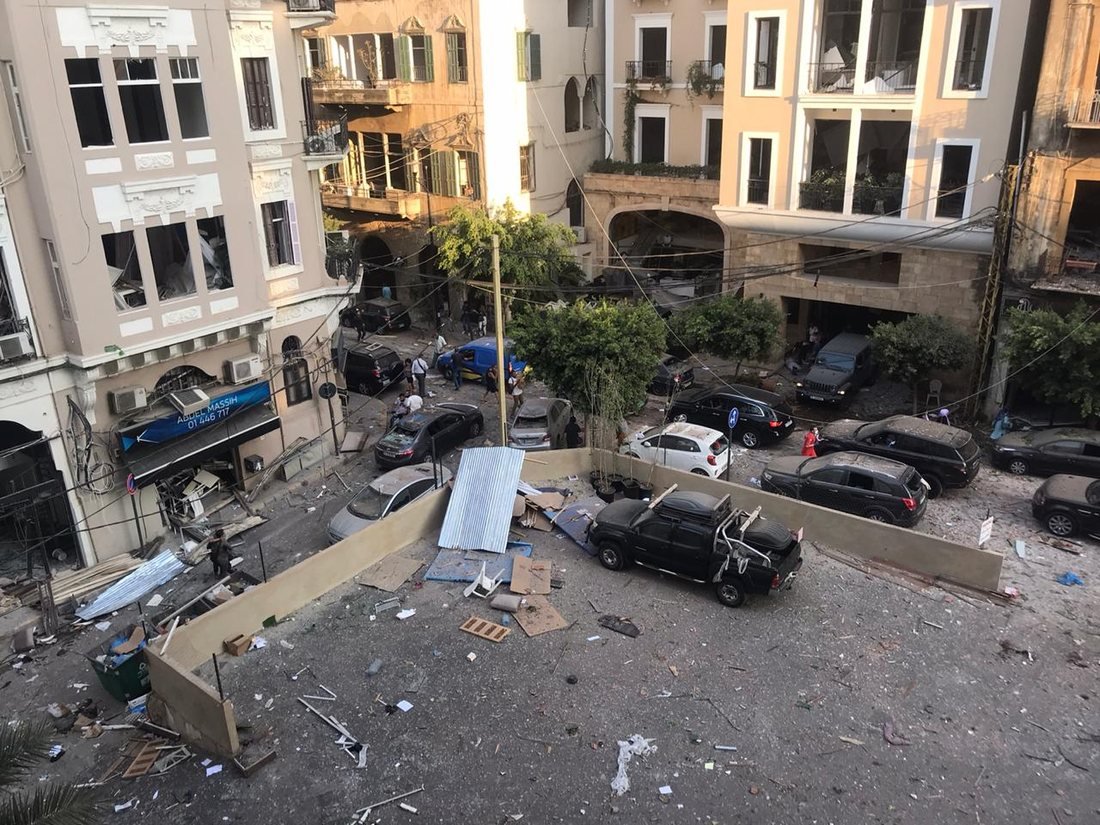
The Beirut port explosion Collapse
The blast devastated the port, through which most of Lebanon’s imports passed, and neighbourhoods across central Beirut. It struck an economy already shrinking at a record pace, and became a symbol of the state negligence many Lebanese blamed for the financial collapse.
COVID-19 hits a collapsing economy Collapse
The pandemic did not cause the crisis, but it removed tourism and remittance income at the worst moment. By the summer of 2020 the parallel rate had reached about 8,000 pounds per dollar.
2020
Lebanon defaults for the first time Collapse
Diab said Lebanon’s debt had become larger than the country could bear and that its reserves were needed to import food and medicine. The decision ended Lebanon’s record of always paying its debts, even during the 1975–1990 civil war.
–2020
Banks freeze deposits without a law Collapse
Depositors queued for small weekly allowances and some held up bank branches to get their own savings. The informal rules let well-connected people move money abroad while ordinary savers were blocked, a grievance that still shapes the debate on who should bear the losses.
2019
Prime Minister Saad Hariri resigns Politics
The resignation left Lebanon without a government able to act as banks reopened on 1 November with restrictions. Confidence, the only thing holding the system together, was gone.
2019
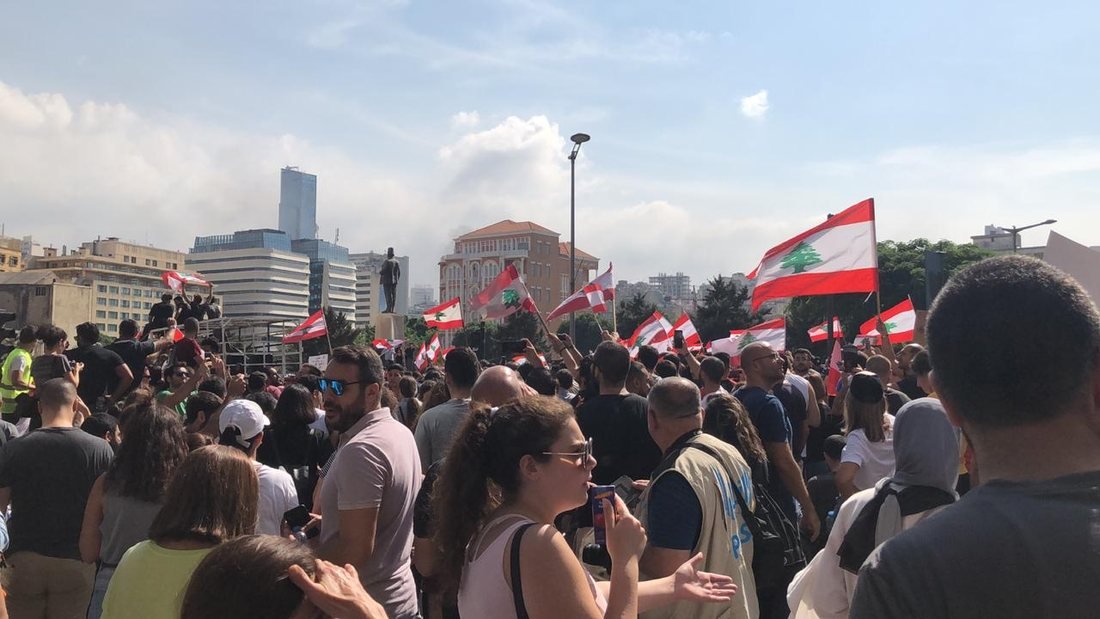
The protests begin Politics
The tax was withdrawn within hours, but the protests grew into a movement against the whole political class. Dollar shortages had already appeared that summer, and a parallel exchange rate had opened up above the peg.
2019
Financial engineering buys time Collapse
To keep dollars coming in, the central bank paid banks generous returns on swaps and deposits, which banks passed on to depositors as high interest rates. Critics later compared the scheme to a Ponzi structure because it needed ever more new money to pay existing obligations. When inflows slowed, it could not continue.
The pound is pegged at 1,507.5 Reform
After the hyperinflation of the 1980s and the end of the civil war, the peg brought stability and confidence. It also depended on a constant flow of dollars, from the diaspora, Gulf investors and tourism, to finance large trade and budget deficits.
Enter an amount in Lebanese pounds and pick a date to see its value in US dollars, and how much was lost against the old peg.
The default, 1,507,500 pounds, was worth exactly $1,000 at the peg. Rates after 2019 are approximate market rates, rounded.
–
The Fall of the Pound in One Chart
Lebanon’s Many Exchange Rates
For four years the value of a dollar depended on where it was and what it was used for.
| Rate | Pounds per $ | Used for | Period |
|---|---|---|---|
| Official peg | 1,507.5 | Everything, then official transactions and some imports | December 1997 to January 2023 |
| Bank withdrawal rate | 3,900, then 8,000, then 15,000 | Withdrawing frozen dollar deposits in pounds | 2020 to 2023 |
| Sayrafa platform | Set by the central bank, below the market | Dollar sales to banks, importers and salaries | May 2021 to mid-2023 |
| Parallel (market) rate | About 2,000 to about 140,000 | Cash trades, most prices | Late 2019 to mid-2023 |
| New official rate | 15,000 | Official accounting, some fees and taxes | From 1 February 2023 |
| Unified rate | 89,500 | Market, central bank balance sheet and bank accounts | Market from mid-2023; official from 31 January 2024 |
Why Did Lebanon’s Currency Collapse?
Unsustainable public debt
Decades of deficits left public debt above 150% of GDP by 2019, much of it owed to Lebanese banks and the central bank.
A peg that needed inflows
Lebanon imported far more than it exported. The gap was covered by diaspora deposits and investment, attracted by high interest rates. When they stopped, the peg could not hold.
Banks tied to the state
Banks placed most of their dollars with the central bank, which spent them defending the peg and funding the state. Depositors’ money was no longer there to withdraw.
Political paralysis
Caretaker governments, a 26-month presidential vacancy and resistance from powerful interests delayed any plan to share the losses for six years.
Repeated shocks
The default, COVID-19, the port explosion and wars in 2024 and 2026 each made recovery harder, though none caused the underlying weakness.
Nobody would take the loss
Banks, the central bank, the state and large depositors each argued others should bear the gap. The World Bank called the result a deliberate depression.
What Does a 98% Currency Loss Actually Mean?
A 98% fall against the dollar means each pound buys about 2% of the dollars it once did. A teacher earning 3 million pounds a month took home about $2,000 at the peg. At 89,500 the same salary is worth about $34. Pensions, savings in pounds and insurance policies lost almost all their value, and many public salaries were eventually raised several times and partly paid in dollars.
The fall did not hit everyone equally. Families receiving fresh dollars from relatives abroad, or businesses earning in dollars, were protected. People who had their savings in banks faced a different problem: their dollars still existed on paper, but they could only take out small amounts, and for years only in pounds at rates far below the market. Lebanon became a cash economy, with the World Bank estimating dollar cash transactions at about $9.9 billion, or 45.7% of GDP, in 2022.
Lebanon’s Crisis by the Numbers
| Indicator | Before the crisis | At the worst | Latest |
|---|---|---|---|
| Pounds per US dollar | 1,507.5 | About 140,000 (March 2023) | About 89,500 |
| GDP (US dollars) | About $55 billion (2018) | About $33 billion (2020 estimate) | Growth of 4.2% in 2025 |
| Real GDP change | – | About −40% cumulative to 2022 | −6.4% forecast for 2026 |
| Inflation | Low single digits | 171.2% average in 2022; 270% y-o-y in April 2023 | About 17.5% expected by end-2026 |
| Central bank FX reserves | – | Two-thirds lost by 2023 (IMF) | – |
| Eurobonds | Always paid | About $30 billion in default since March 2020 | Still in default |
Frozen Deposits and the Financial Gap Law
The ‘financial gap’ is the hole between what Lebanese banks owe depositors and what they actually hold, estimated at about $70 billion to $83 billion. Most of it sits in the central bank, which used banks’ dollars to defend the peg and lend to the state. Deciding who absorbs that hole, the banks’ shareholders, the central bank, the state or large depositors, has been the central political fight of the crisis.
The draft law approved by the cabinet on 27 December 2025 protects small savers first: deposits of up to $100,000 would be repaid in full over four years, covering about 85% of depositors. Larger balances would be converted into long-term instruments. In October 2026 central bank governor Karim Souaid said the IMF wanted clarity on how much liquidity the system really had, and that he expected agreement on the law’s principles by the end of 2026, with a parliamentary vote by mid-2027.
Enter a frozen pre-crisis dollar deposit to see which tier of the December 2025 draft law it falls into.
Based on the draft approved by the cabinet on 27 December 2025. It has not been passed by parliament, the IMF has asked for substantial changes, and eligibility rules may change.
Reform Tracker: What the IMF Asked For, and What Lebanon Has Done
Measured against the April 2022 staff-level agreement and the IMF’s October 2026 statement.
| IMF requirement (2022) | Status, October 2026 |
|---|---|
| Ease banking secrecy | Done: amended 24 April 2025, records back to 2015 |
| Bank resolution law | Done: passed 31 July 2025, amended 12 August 2026; one amendment referred to the Constitutional Council |
| Plan for bank losses and deposits (financial gap law) | Not done: cabinet draft of 27 December 2025; IMF wants substantial amendments; target mid-2027 |
| Unify exchange rates | Largely done: 89,500 official from 2024 |
| Credible budgets | Fiscal deficit eliminated (IMF, 2025); a 2027 budget and medium-term framework still required |
| Audit and restructure the central bank | In progress: Alvarez & Marsal forensic audit delivered in 2023; liabilities to banks about $79 billion, a third disputed |
| Restructure Eurobond debt | Not started: no talks with bondholders, according to the World Bank (2026) |
| Capital-controls law | Never passed; informal bank limits remain |
2025–2026: Reforms at Last, Then War Again
2025 was the first year in which Lebanon’s state worked properly since the crash. A president and a reformist government took office in January, a new central bank governor in March, and parliament eased banking secrecy and passed a bank resolution law. With tourism back and the pound stable, the economy grew 4.2%, the strongest since 2019.
The war that began on 2 March 2026 undid much of that. More than a million people were displaced, elections were postponed to 2028, and the World Bank now expects the economy to shrink by 6.4% in 2026. Yet the reform process has continued: parliament amended the bank resolution law in August, Prime Minister Nawaf Salam took Lebanon’s case to the IMF in Washington in September, and the central bank says agreement on repaying depositors is within reach.
Lessons From Lebanon
- A peg is only as strong as its inflows: fixed rates financed by borrowing can break suddenly.
- Bank deposits are not cash: when banks lend deposits to an insolvent state, savers share the risk.
- Delay is expensive: without a loss-sharing plan, the cost fell on ordinary savers through inflation and haircuts.
- Stability is not recovery: the pound has been steady since 2023, but the banks remain broken.
- Shocks compound: a weak state struggles to respond to pandemics, explosions and wars.
- Trust is the real currency: once depositors lose faith in the system, restoring it takes years.
Explore More Timelines
People Also Ask
Frequently Asked Questions
Conclusion: The Currency Was the Symptom
The pound’s loss of more than 98% of its value is the most visible sign of Lebanon’s collapse, but the cause lay deeper: years of borrowing, a banking system tied to the state, dependence on foreign inflows and leaders unwilling to share the losses. When confidence broke in 2019, the system could not absorb the shock.
Lebanon has shown that a currency can be stabilised without the crisis ending. Recovery depends on passing a credible financial gap law, restructuring the banks and the debt, and restoring the trust of depositors who have waited since 2019, now in a country hit by war again.
Related AiTimeline Stories
⚠️ Editorial Note
This timeline draws on IMF press releases and the 2023 Article IV consultation, World Bank Lebanon Economic Monitors and damage assessments, Banque du Liban circulars, and reporting by Bloomberg, The National, L’Orient Today, Arab News, Al Jazeera and Carnegie. Exchange rates after 2019 other than official ones are approximate market rates as reported at the time. The financial gap law is a draft and may change. This article is general information, not financial or legal advice; depositors should consult a qualified adviser. AiTimeline has no commercial relationship with any Lebanese bank or authority.
Sources & further reading
Every dated entry above was checked against these references. Last reviewed 18 October 2026.
- IMF Executive Board Concludes 2023 Article IV Consultation with Lebanon
- IMF Reaches Staff-Level Agreement on Economic Policies with Lebanon for a Four-Year Extended Fund Facility
- IMF Staff Concludes Visit to Lebanon (March 2025)
- Lebanon: Normalization of Crisis Is No Road to Stabilization
- Lebanon Sinking into One of the Most Severe Global Crises Episodes
- Lebanon's Recovery and Reconstruction Needs Estimated at US$11 Billion
- Lebanon: Economic Rebound Marks Cautious Recovery amidst Progress on Reforms
- World Bank projects war-hit Lebanon's economy to contract by 6.4 percent
- Lebanon approves financial gap draft law despite opposition from Hezbollah and Lebanese Forces
- Unpacking Lebanon's Gap Law
- IMF to assess potential changes to Lebanon's bank resolution law
- Lebanon Sees Breakthrough With IMF Soon on Depositor Repayments
- Lebanon's Parliament Extends Its Term Under Fire
- Monetary Policy and Financial Developments