Countries in Space: Who Has Sent People Beyond Earth, From Gagarin to Gaganyaan
Countries in space: 55 nationalities that have flown since Gagarin, the 3 that launch their own crews, and India's path from Rakesh Sharma to Gaganyaan.
Latest Story
The list of countries in space has grown from two Cold War rivals in 1961 to 55 nationalities by mid-2025, but the list of countries that can put a person in orbit on their own has grown by only one. The Soviet Union and the United States did it in 1961; China did it in 2003. Everyone else, India included, has flown on someone else’s spacecraft: Soviet Soyuz capsules, the US Space Shuttle, and since 2021, private rockets. This is the full record, year by year, with corrections to the most common claims.
💡 Short Answer
Citizens of 55 countries had flown in space by June 2025, starting with the Soviet Union’s Yuri Gagarin on 12 April 1961. Only three countries have launched people on their own rockets: the Soviet Union/Russia, the United States and China. India’s Rakesh Sharma flew on a Soviet Soyuz in 1984; India’s own Gaganyaan crewed flight is planned for 2027.
Countries in Space: Key Questions
Human Spaceflight Nations in Ten Points
- 55 nationalities had flown by June 2025; Hong Kong, a Chinese territory, followed in 2026.
- Only three launch their own crews: the USSR/Russia (1961), the US (1961) and China (2003).
- Soyuz was the great equaliser: 28 countries’ first flyers rode Soviet or Russian rockets.
- Interkosmos flew nine Soviet-bloc countries’ first cosmonauts in 1978–81, then partners from France to Afghanistan.
- The Shuttle carried 12 countries’ first astronauts, from West Germany in 1983 to Sweden in 2006.
- Private flights added 13 nationalities between 2021 and mid-2025, eight of them suborbital only.
- India was 14th, with Rakesh Sharma in 1984; Shukla was the first Indian on the ISS in 2025.
- Thotakura counts: he made Shukla the third Indian citizen in space, not the second.
- Gaganyaan could make India the fourth country to launch its own crew; the crewed flight is now 2027.
- China takes guests next: a Pakistani astronaut is training for Tiangong.
Three Ways a Country Can ‘Send’ Someone to Space
Why the answer can be 3, 47 or 56.
Launch their own crews
A home-built spacecraft, a human-rated rocket, mission control and recovery. The Soviet Union/Russia, the United States and China. India hopes to join with Gaganyaan.
Fly national astronauts on a partner’s vehicle
Government-selected astronauts on Soyuz, the Shuttle or Dragon: Canada, Japan, Europe’s ESA states, India in 1984 and 2025, the UAE, Turkey.
A citizen buys or wins a seat
Private flyers with no national programme behind them: Egypt, Pakistan, the Bahamas, Panama, New Zealand, Nigeria and others, mostly on suborbital flights.
What changes the count
Whether suborbital flights count (8 countries), whether the USSR and Russia or the two Germanys are separate, how dual citizens are filed, and whether territories like Hong Kong appear.
The most widely used list, based on nationality at launch, reaches 55 by June 2025. A stricter version that merges historical states and files dual citizens under one country counted 47 in April 2026. Remove the suborbital-only countries and the orbital total is in the mid-40s. None of these numbers is wrong; they answer slightly different questions. The figure that does not move is three.
The boundary of space matters too. The Fédération Aéronautique Internationale uses 100 km, the Kármán line; the United States awards astronaut wings above 50 miles (about 80 km). Blue Origin’s New Shepard crosses 100 km; Virgin Galactic’s spaceplane flies between the two lines, which is why some lists treat its passengers differently.
Pick a country to see who flew first, on whose spacecraft, and what it counts as.
Status as of 6 October 2026.
Choose a country above
Six Decades of New Arrivals
Two waves: Cold War partnerships in the 1980s, private flights in the 2020s.
The 1980s were the first boom: 14 new nationalities, most of them Soviet allies flown under Interkosmos, plus NASA’s first foreign payload specialists. The 1990s and 2000s added Western Europe, the post-Soviet states, and the first people to buy Soyuz seats. The 2010s were the quietest decade, with only Denmark, Kazakhstan and the UAE. Then private rockets brought a second boom, matching the 1980s with 14 newcomers in just four and a half years.
Countries in Space: The Full Timeline, 1961–2026
Newest first. Tags show whether the flight used the country’s own rocket, a partner’s, a commercial seat, or a suborbital hop.
Pakistan readies China’s first foreign astronaut Planned
Two Pakistan Air Force pilots have trained in Beijing for a short stay on China’s Tiangong station, under an agreement the countries reached in 2019. Pakistani media reported in late September that the final choice was expected in mid-to-late October. When one flies, China will be giving a seat to a foreign national for the first time, a role the Soviet Union played from 1978.
Why it matters: Pakistan is already on the list (Namira Salim, 2023), so this adds no new country, but it adds a third national provider of rides.
Gaganyaan G1: India’s uncrewed test Planned
ISRO is preparing G1, the first orbital test of the Gaganyaan crew module, carrying the half-humanoid robot Vyommitra. ISRO chairman V. Narayanan said in June 2026 that G1 was expected in the fourth quarter of 2026, after a crew-module air-drop test on 10 April and Vyommitra’s integration from 28 April. The first crewed flight has slipped to 2027.
The goal: up to three astronauts in a roughly 400-km orbit for up to three days, then a safe return. Success would make India the fourth country to launch its own crew.
2026
Hong Kong’s first space traveller Milestone
Lai Ka-ying, a 43-year-old Hong Kong police superintendent with a doctorate in computer science, launches on Shenzhou 23 as a payload specialist with commander Zhu Yangzhu and Zhang Zhiyuan. The crew dock at Tiangong on 25 May.
How lists count it: Hong Kong is a Special Administrative Region of China and Lai is a Chinese citizen, so she does not add a new country. Some lists show her under Hong Kong anyway.
2026
Artemis II: a Canadian goes around the Moon
NASA’s Artemis II launches on 1 April 2026 with Reid Wiseman, Victor Glover, Christina Koch and Canada’s Jeremy Hansen, flies around the Moon and splashes down in the Pacific off San Diego. Hansen becomes the first person who is not American to leave low Earth orbit.
2025
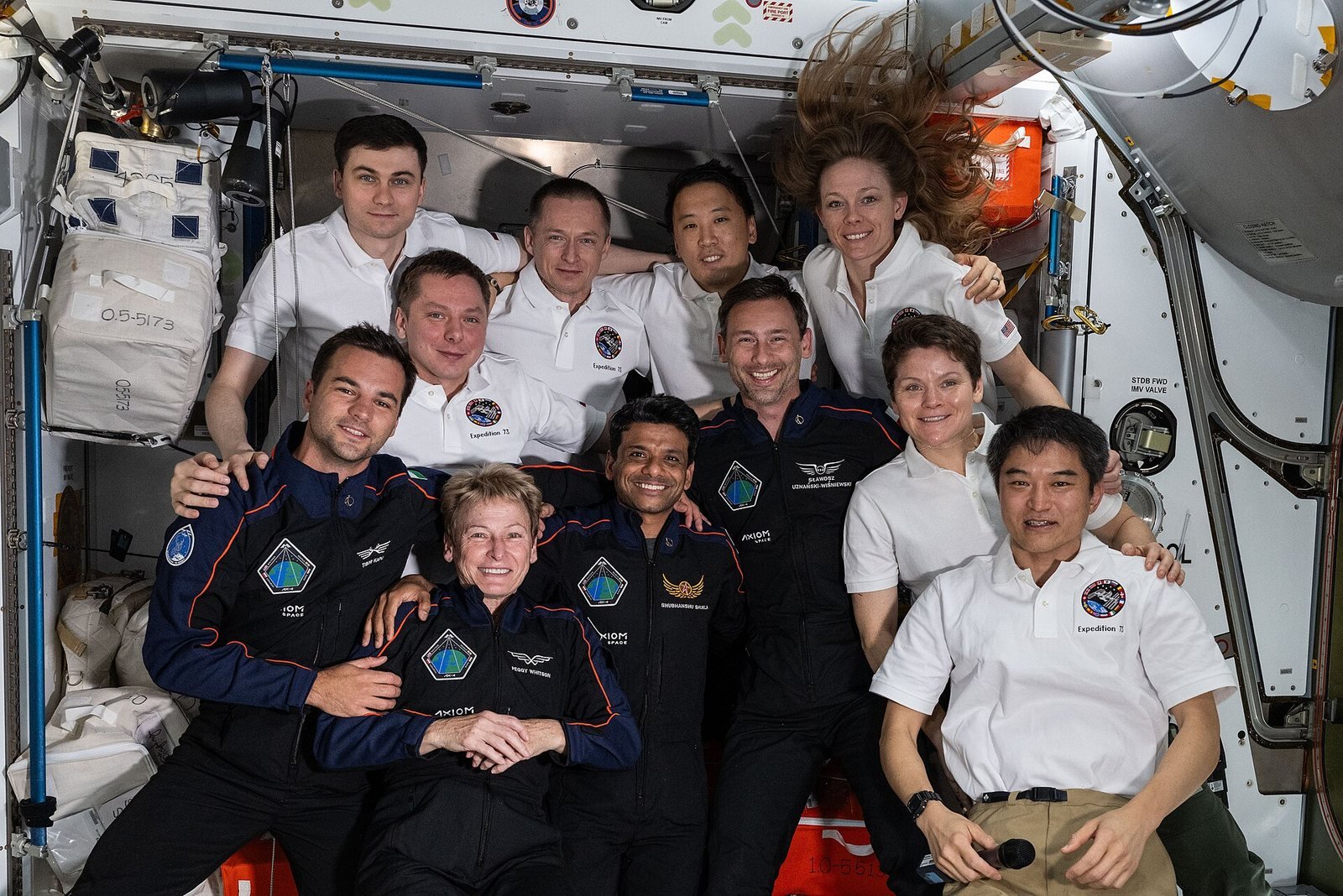
Shubhanshu Shukla reaches the ISS Partner ride
Indian Air Force Group Captain Shubhanshu Shukla pilots Axiom Mission 4, launched from Kennedy Space Center on 25 June with Peggy Whitson, Poland’s Sławosz Uznański-Wiśniewski and Hungary’s Tibor Kapu. He becomes the first Indian on the ISS and the second in orbit, 41 years after Rakesh Sharma. NASA called it a 20-day spaceflight; splashdown is on 15 July.
Correction: he was not the second Indian citizen in space. Counting suborbital flights he was the third, after Gopichand Thotakura on Blue Origin in May 2024.
2025
Six new nationalities in three months Commercial
On 1 April the private Fram2 mission makes the first crewed polar orbit. Its commander, Jannicke Mikkelsen, is Norway’s first astronaut; its financier Chun Wang, Chinese-born with Maltese and St Kitts citizenship, flies under the Malta flag. Blue Origin then flies the Bahamas’ Aisha Bowe (14 April), Panama’s Jaime Alemán and New Zealand’s Mark Rocket (31 May), and Nigeria’s Owolabi Salis (29 June).
The result: the standard nationality list reaches 55 by the end of June 2025.
Turkey and Belarus join; the first Indian tourist Commercial
Alper Gezeravcı flies to the ISS on Axiom Mission 3, a SpaceX Dragon flight, as Turkey’s first astronaut. Two months later Marina Vasilevskaya becomes Belarus’s first on Soyuz MS-25. On 19 May entrepreneur Gopichand Thotakura rides Blue Origin’s NS-25, the first Indian space tourist and the second Indian citizen above the Kármán line.
Egypt, Portugal, Antigua, Pakistan Suborbital
On 4 August 2022 Blue Origin’s NS-22 carries Sara Sabry, Egypt’s first, and Mário Ferreira, Portugal’s first. In 2023 Virgin Galactic flies Keisha Schahaff and Anastatia Mayers of Antigua and Barbuda (10 August) and Namira Salim of Pakistan (6 October). All four countries reach space only on suborbital hops lasting minutes.
Private spaceflight opens a new door Commercial
Virgin Galactic and Blue Origin fly their founders in July, and SpaceX’s Inspiration4 puts the first all-civilian crew in orbit. In October Blue Origin’s NS-18 carries Chris Boshuizen, counted as Australia’s first; Australian-born Paul Scully-Power and Andy Thomas had flown earlier as US citizens.
2019
The UAE’s first astronaut Partner ride
Hazza Al Mansouri flies to the ISS on a Russian Soyuz for an eight-day mission, the first astronaut from the Arabian Peninsula since 1985. The UAE later flew Sultan Al Neyadi for six months on a SpaceX Crew Dragon in 2023.
Brazil, Malaysia, South Korea Partner ride
Paid or bartered Russian Soyuz seats fly Marcos Pontes of Brazil (30 March 2006), Sheikh Muszaphar Shukor of Malaysia (10 October 2007) and Yi So-yeon of South Korea (8 April 2008). In between, Iranian-American Anousheh Ansari becomes the first Iranian-born woman in space as a Soyuz tourist.
2003
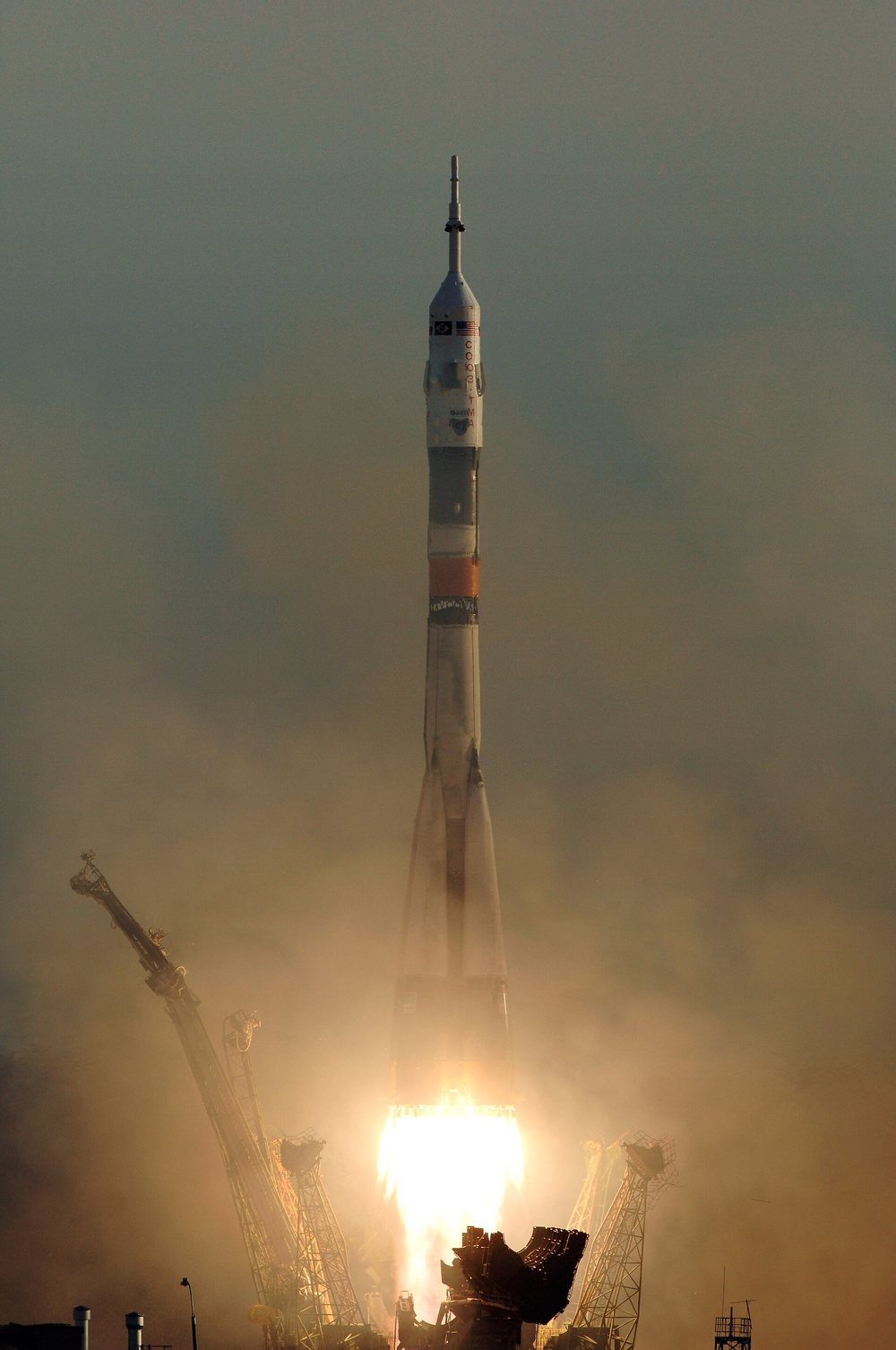
China launches its own astronaut Own rocket
Yang Liwei orbits Earth 14 times in about 21 hours. China becomes the third country to launch a person on its own spacecraft and rocket, 42 years after the first two. Its programme later builds the Tiangong station, completed in 2022.
Why it matters: every other new nationality on this page flew on someone else’s vehicle.
The ISS era begins
The first ISS module, Russia’s Zarya, launches on 20 November 1998. Continuous crews start in November 2000. The station turns the five partner agencies into the main route to orbit for European, Japanese and Canadian astronauts, and later for private Axiom crews.
Europe fills in, the USSR breaks up Partner ride
Austria’s Franz Viehböck flies on Soyuz in October 1991. Belgium (1992), Italy and Switzerland (both on STS-46, 1992), Ukraine (1997) and Spain (1998) fly on the Shuttle; Slovakia’s Ivan Bella on Soyuz in 1999. In March 1992 Aleksandr Kaleri and Aleksandr Viktorenko become the first to launch as citizens of the new Russia.
Correction: France was not part of this wave. Jean-Loup Chrétien flew in 1982.
Japan and the UK buy in Commercial
Japanese broadcaster TBS pays for journalist Toyohiro Akiyama to fly to Mir on Soyuz TM-11. Five months later chemist Helen Sharman becomes Britain’s first on Soyuz TM-12, through Project Juno, a private British consortium, not the government. Both are early examples of seats being sold.
1985
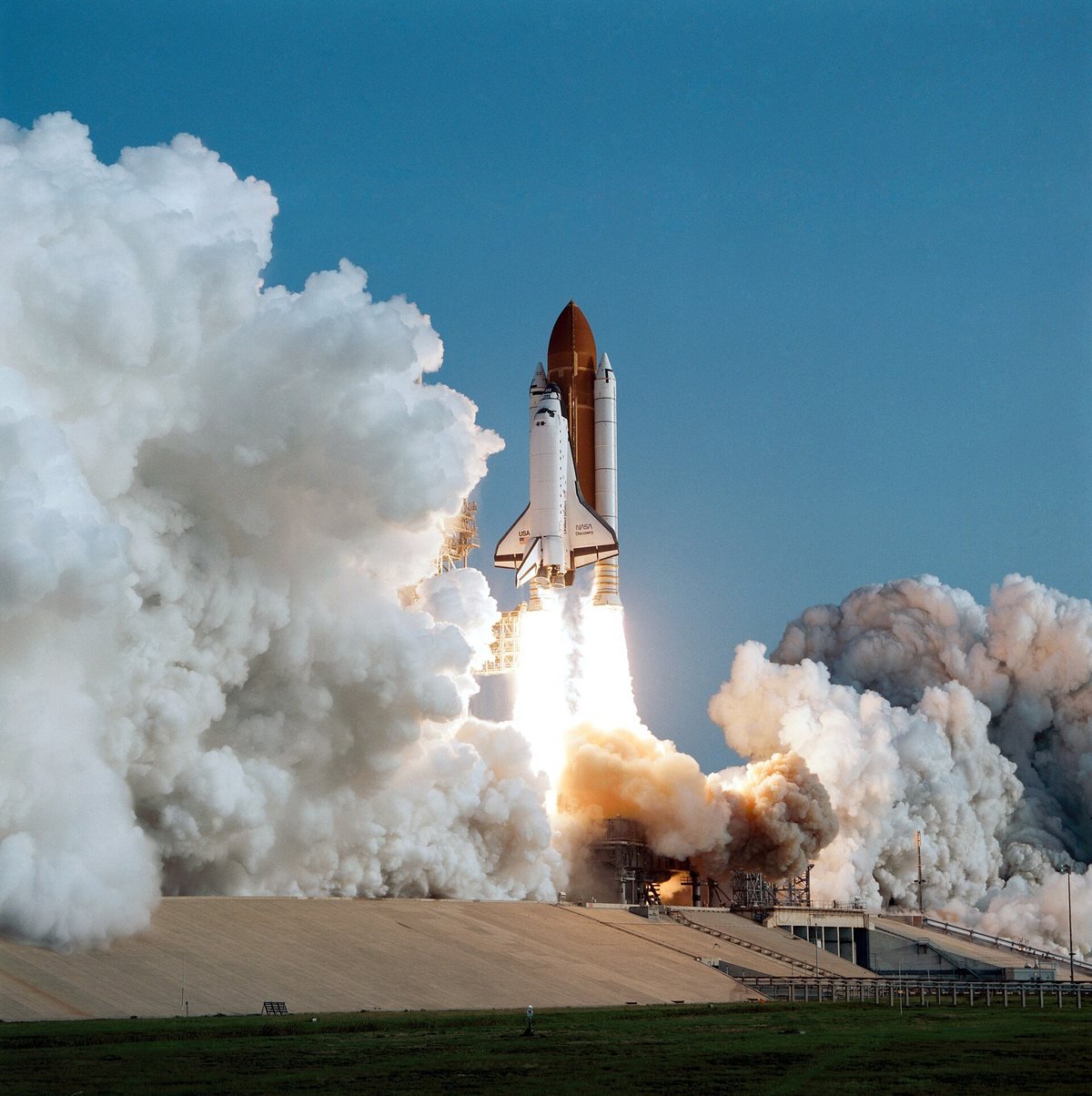
The first Arab in space Partner ride
Saudi prince Sultan bin Salman flies as a payload specialist on Space Shuttle Discovery, which deploys the Arabsat-1B satellite. 1985 also brings the Netherlands’ Wubbo Ockels and Mexico’s Rodolfo Neri Vela on the Shuttle.
1984
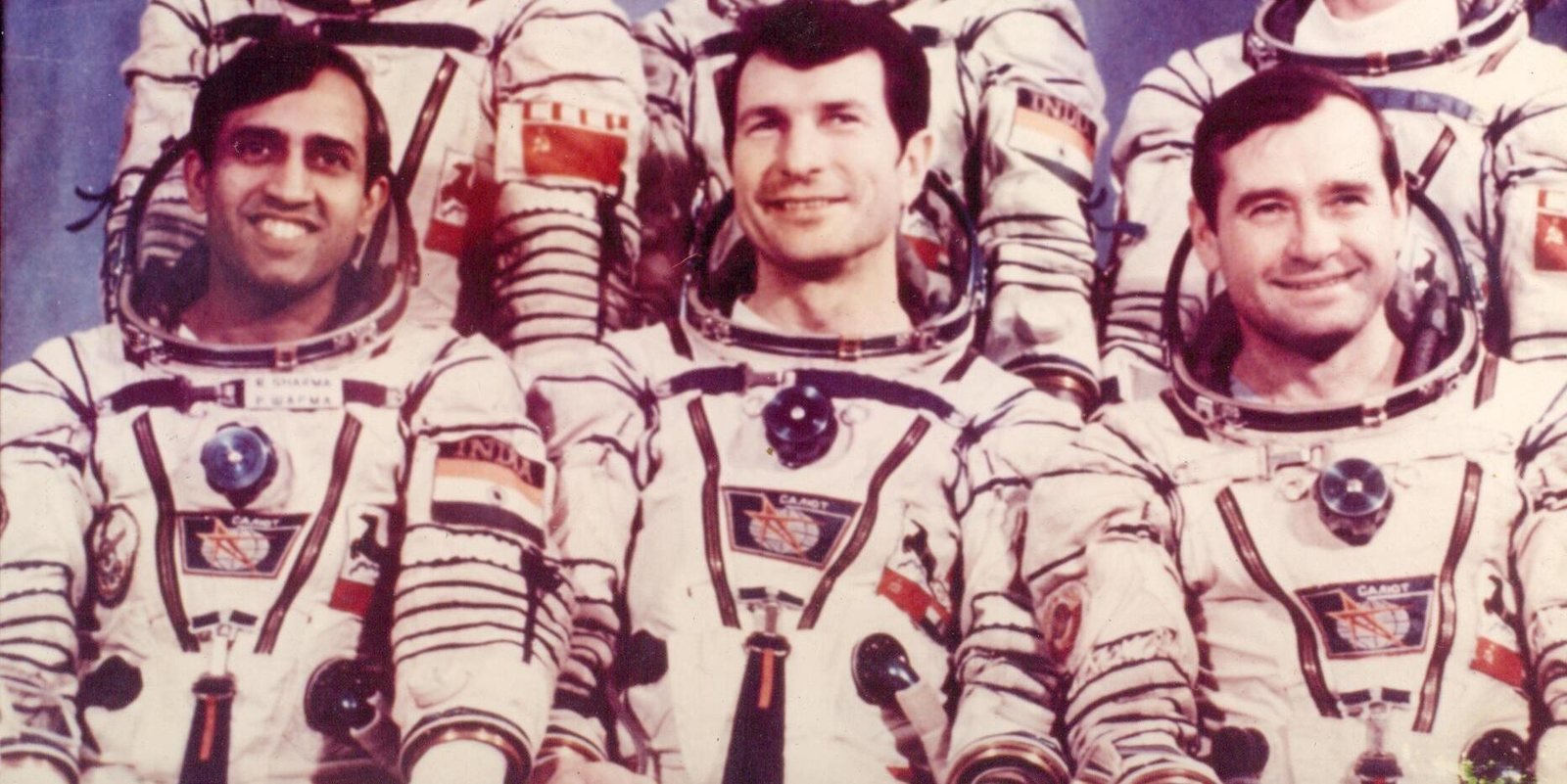
Rakesh Sharma: India in orbit Partner ride
Indian Air Force Squadron Leader Rakesh Sharma launches from Baikonur with Yury Malyshev and Gennady Strekalov and works aboard Salyut 7, including Earth-observation and yoga experiments. Asked by Prime Minister Indira Gandhi how India looked from space, he replied ‘Saare Jahan Se Achcha’. India is the 14th nationality in space.
Canada’s Marc Garneau follows on 5 October 1984, aboard the Shuttle.
1983
The Shuttle starts carrying foreigners Partner ride
West German physicist Ulf Merbold becomes the first non-American on a NASA flight, flying the first Spacelab mission. Over the next 15 years the Shuttle carries the first astronauts of twelve countries.
Correction: Merbold was West Germany’s first, not Germany’s. East Germany’s Sigmund Jähn flew in 1978.
Interkosmos opens Soyuz to allies Partner ride
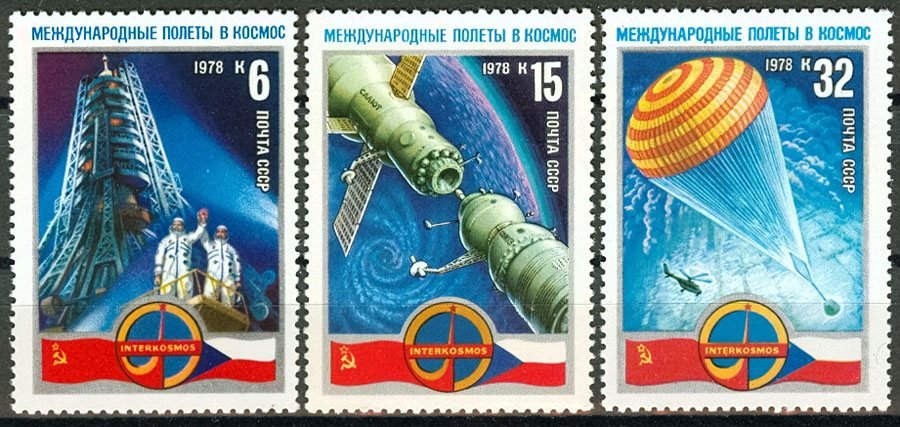
On 2 March 1978 Czechoslovakia’s Vladimír Remek launches on Soyuz 28, the first person in space from neither superpower. Poland’s Mirosław Hermaszewski (June) and East Germany’s Sigmund Jähn (August) follow, then Bulgaria (1979), Hungary, Vietnam and Cuba (1980), Mongolia and Romania (1981) and France (Jean-Loup Chrétien, June 1982).
Two superpowers, three firsts Own rocket
Yuri Gagarin completes one orbit on Vostok 1 in about 108 minutes. Twenty-three days later Alan Shepard makes a 15-minute suborbital flight on Freedom 7. Gherman Titov spends a full day in orbit in August 1961; John Glenn becomes the first American in orbit on 20 February 1962.
Correction: Glenn’s flight came nine months after Shepard’s, not 23 days.
All 55 Countries and Their First Space Travellers
In order of first flight, by nationality at launch. Swipe sideways on mobile.
| # | Country | First space traveller | Launch (UTC) | Flight | Vehicle |
|---|---|---|---|---|---|
| 1 | Soviet Union | Yuri Gagarin | 12 Apr 1961 | Vostok 1 | Own |
| 2 | United States | Alan Shepard | 5 May 1961 | Freedom 7 | Own (suborbital) |
| 3 | Czechoslovakia | Vladimír Remek | 2 Mar 1978 | Soyuz 28 | Soviet |
| 4 | Poland | Mirosław Hermaszewski | 27 Jun 1978 | Soyuz 30 | Soviet |
| 5 | East Germany | Sigmund Jähn | 26 Aug 1978 | Soyuz 31 | Soviet |
| 6 | Bulgaria | Georgi Ivanov | 10 Apr 1979 | Soyuz 33 | Soviet |
| 7 | Hungary | Bertalan Farkas | 26 May 1980 | Soyuz 36 | Soviet |
| 8 | Vietnam | Phạm Tuân | 23 Jul 1980 | Soyuz 37 | Soviet |
| 9 | Cuba | Arnaldo Tamayo Méndez | 18 Sep 1980 | Soyuz 38 | Soviet |
| 10 | Mongolia | Jügderdemidiin Gürragchaa | 22 Mar 1981 | Soyuz 39 | Soviet |
| 11 | Romania | Dumitru Prunariu | 14 May 1981 | Soyuz 40 | Soviet |
| 12 | France | Jean-Loup Chrétien | 24 Jun 1982 | Soyuz T-6 | Soviet |
| 13 | West Germany | Ulf Merbold | 28 Nov 1983 | STS-9 | Shuttle |
| 14 | India | Rakesh Sharma | 3 Apr 1984 | Soyuz T-11 | Soviet |
| 15 | Canada | Marc Garneau | 5 Oct 1984 | STS-41-G | Shuttle |
| 16 | Saudi Arabia | Sultan bin Salman Al Saud | 17 Jun 1985 | STS-51-G | Shuttle |
| 17 | Netherlands | Wubbo Ockels | 30 Oct 1985 | STS-61-A | Shuttle |
| 18 | Mexico | Rodolfo Neri Vela | 26 Nov 1985 | STS-61-B | Shuttle |
| 19 | Syria | Muhammed Faris | 22 Jul 1987 | Soyuz TM-3 | Soviet |
| 20 | Afghanistan | Abdul Ahad Mohmand | 29 Aug 1988 | Soyuz TM-6 | Soviet |
| 21 | Japan | Toyohiro Akiyama | 2 Dec 1990 | Soyuz TM-11 | Soviet |
| 22 | United Kingdom | Helen Sharman | 18 May 1991 | Soyuz TM-12 | Soviet |
| 23 | Austria | Franz Viehböck | 2 Oct 1991 | Soyuz TM-13 | Soviet |
| 24 | Russia | A. Kaleri, A. Viktorenko | 17 Mar 1992 | Soyuz TM-14 | Own |
| 25 | Belgium | Dirk Frimout | 24 Mar 1992 | STS-45 | Shuttle |
| 26 | Italy | Franco Malerba | 31 Jul 1992 | STS-46 | Shuttle |
| 27 | Switzerland | Claude Nicollier | 31 Jul 1992 | STS-46 | Shuttle |
| 28 | Ukraine | Leonid Kadenyuk | 19 Nov 1997 | STS-87 | Shuttle |
| 29 | Spain | Pedro Duque | 29 Oct 1998 | STS-95 | Shuttle |
| 30 | Slovakia | Ivan Bella | 20 Feb 1999 | Soyuz TM-29 | Russian |
| 31 | South Africa | Mark Shuttleworth | 25 Apr 2002 | Soyuz TM-34 | Russian (paid) |
| 32 | Israel | Ilan Ramon | 16 Jan 2003 | STS-107 | Shuttle |
| 33 | China | Yang Liwei | 15 Oct 2003 | Shenzhou 5 | Own |
| 34 | Brazil | Marcos Pontes | 30 Mar 2006 | Soyuz TMA-8 | Russian |
| 35 | Iran | Anousheh Ansari (US-Iranian) | 18 Sep 2006 | Soyuz TMA-9 | Russian (paid) |
| 36 | Sweden | Christer Fuglesang | 10 Dec 2006 | STS-116 | Shuttle |
| 37 | Malaysia | Sheikh Muszaphar Shukor | 10 Oct 2007 | Soyuz TMA-11 | Russian |
| 38 | South Korea | Yi So-yeon | 8 Apr 2008 | Soyuz TMA-12 | Russian |
| 39 | Denmark | Andreas Mogensen | 2 Sep 2015 | Soyuz TMA-18M | Russian |
| 40 | Kazakhstan | Aidyn Aimbetov | 2 Sep 2015 | Soyuz TMA-18M | Russian |
| 41 | UAE | Hazza Al Mansouri | 25 Sep 2019 | Soyuz MS-15 | Russian |
| 42 | Australia | Chris Boshuizen | 13 Oct 2021 | Blue Origin NS-18 | Private (suborbital) |
| 43 | Portugal | Mário Ferreira | 4 Aug 2022 | Blue Origin NS-22 | Private (suborbital) |
| 44 | Egypt | Sara Sabry | 4 Aug 2022 | Blue Origin NS-22 | Private (suborbital) |
| 45 | Antigua and Barbuda | K. Schahaff, A. Mayers | 10 Aug 2023 | Galactic 02 | Private (suborbital) |
| 46 | Pakistan | Namira Salim | 6 Oct 2023 | Galactic 04 | Private (suborbital) |
| 47 | Turkey | Alper Gezeravcı | 18 Jan 2024 | Axiom Mission 3 | Private (orbital) |
| 48 | Belarus | Marina Vasilevskaya | 23 Mar 2024 | Soyuz MS-25 | Russian |
| 49 | Norway | Jannicke Mikkelsen | 1 Apr 2025 | Fram2 | Private (orbital) |
| 50 | Malta | Chun Wang | 1 Apr 2025 | Fram2 | Private (orbital) |
| 51 | Saint Kitts and Nevis | Chun Wang (dual citizen) | 1 Apr 2025 | Fram2 | Private (orbital) |
| 52 | The Bahamas | Aisha Bowe | 14 Apr 2025 | Blue Origin NS-31 | Private (suborbital) |
| 53 | Panama | Jaime Alemán | 31 May 2025 | Blue Origin NS-32 | Private (suborbital) |
| 54 | New Zealand | Mark Rocket | 31 May 2025 | Blue Origin NS-32 | Private (suborbital) |
| 55 | Nigeria | Owolabi Salis | 29 Jun 2025 | Blue Origin NS-33 | Private (suborbital) |
| — | Hong Kong (China) | Lai Ka-ying | 24 May 2026 | Shenzhou 23 | Chinese (territory, not a new country) |
Two names often seen on online lists are missing because they do not belong. Puerto Rico’s astronauts, such as Joseph Acaba, flew as US citizens, and no list records a first flyer for Singapore. Several pioneers counted for the United States were born elsewhere: Kalpana Chawla (India), Franklin Chang-Díaz (Costa Rica) and Andy Thomas (Australia) among them.
The Three Countries That Launch Their Own Crews
And the one trying to become the fourth.
| Country | First crewed launch | Spacecraft | Current crew vehicle | Own station |
|---|---|---|---|---|
| Soviet Union / Russia | 12 Apr 1961, Gagarin | Vostok 1 | Soyuz MS | Salyut, Mir; ISS partner |
| United States | 5 May 1961, Shepard | Freedom 7 (Mercury) | SpaceX Crew Dragon, Orion; Boeing Starliner | Skylab; ISS partner |
| China | 15 Oct 2003, Yang Liwei | Shenzhou 5 | Shenzhou; Mengzhou in development | Tiangong (since 2021) |
| India (aiming to be fourth) | Not yet: G1 uncrewed targeted Q4 2026, crewed 2027 | Gaganyaan | Under test | Bharatiya Antariksh Station planned |
Launching a person is harder than launching a satellite. It needs a rocket rated for crew, a capsule that keeps people alive and brings them back through re-entry, an escape system for launch failures, recovery forces and years of uncrewed tests. The Soviet Union and the United States built theirs in a race; China took from 1992, when Project 921 was approved, to 2003. India approved Gaganyaan in December 2018 and is still testing.
India’s Place on the List
Three Indian citizens in space, and a fourth step to come.
| Person | Year | Flight | Type | Counted for |
|---|---|---|---|---|
| Rakesh Sharma | 1984 | Soyuz T-11 / Salyut 7 | Orbital, government | India |
| Kalpana Chawla | 1997, 2003 | STS-87, STS-107 | Orbital, NASA | United States (Indian-born) |
| Sunita Williams | 2006 onwards | Shuttle, Soyuz, Starliner | Orbital, NASA | United States (Indian-origin) |
| Gopichand Thotakura | 2024 | Blue Origin NS-25 | Suborbital, private | India |
| Shubhanshu Shukla | 2025 | Axiom Mission 4 / ISS | Orbital, ISRO-sponsored | India |
India entered the list as its 14th nationality on 3 April 1984. Its next citizen in space came 40 years later, when pilot and entrepreneur Gopichand Thotakura rode Blue Origin’s New Shepard on 19 May 2024. Group Captain Shubhanshu Shukla followed in 2025, the first Indian on the ISS and the first ISRO-selected astronaut to fly since Sharma; he is also one of the four Gaganyaan astronaut-designates.
Gaganyaan is the step that would move India from Tier 2 to Tier 1. ISRO’s stated aim is to carry a crew of up to three to a roughly 400-km orbit for up to three days and bring them back safely, on a human-rated LVM3. The uncrewed G1 flight with the robot Vyommitra was targeted for the fourth quarter of 2026, after several slips from 2025; the crewed flight is now expected in 2027, with the Bharatiya Antariksh Station planned to follow.
Corrections to Claims Circulating Online
From the summary material this page was built from, and common in coverage.
“Glenn orbited 23 days after Shepard”
Shepard flew 23 days after Gagarin. Glenn’s first US orbit was on 20 February 1962, nine months later.
“Germany’s first: Ulf Merbold”
Merbold (1983) was West Germany’s first. East Germany’s Sigmund Jähn flew in August 1978.
“France joined in the 1990s”
Jean-Loup Chrétien flew on Soyuz T-6 in June 1982. The 1990s European wave was Austria, Belgium, Italy, Switzerland and Spain.
“Shukla: second Indian citizen in space”
Second in orbit and first on the ISS, but third overall: Gopichand Thotakura flew Blue Origin’s NS-25 in May 2024.
Puerto Rico and Singapore
Puerto Rican astronauts fly as US citizens, and no first flyer is recorded for Singapore. Norway, Kazakhstan and Belarus were missing instead.
Helen Sharman’s flight
Not a UK government partnership: Project Juno was a private consortium, flown with Soviet backing. Shukla’s Ax-4 mission was in 2025, not 2026.
What to Watch Next
Pakistan’s Tiangong pick
China names which of two Pakistani pilots will be its first foreign astronaut.
Gaganyaan G1
India’s first uncrewed orbital test of the crew module, with Vyommitra.
India’s first crew
If it flies, India becomes the fourth country to launch its own astronauts.
New private nationalities
Every Blue Origin and Axiom manifest can add a country; 13 have come this way since 2021.
Artemis landings
Later Artemis missions are planned to land crews on the Moon, with seats offered to partner astronauts.
ISS retirement
The station is due to be deorbited around 2030, shifting guest flights to private stations and Tiangong.
Did You Know?
- One flight, two countries: Chun Wang, who financed Fram2, holds Maltese and St Kitts citizenship, so his flight added both.
- Two firsts on one Shuttle: Italy’s Franco Malerba and Switzerland’s Claude Nicollier flew together on STS-46 in 1992.
- Born on Earth, counted elsewhere: Anousheh Ansari, Iran’s first, was a US-Iranian tourist barred from wearing Iranian symbols.
- Eight women first: only eight countries were first represented by a woman, beginning with Helen Sharman in 1991.
- Left in orbit as Soviets: Sergei Krikalev launched as a Soviet citizen in 1991 and landed as a Russian one.
- Moon club: until Canada’s Jeremy Hansen on Artemis II in 2026, only Americans had flown beyond low Earth orbit.
Quick Quiz
1. Who was the first person in space from neither superpower?
2. How many countries have launched people on their own rockets?
3. When did John Glenn become the first American in orbit?
4. Who was Germany’s first person in space?
5. Which spacecraft took Shubhanshu Shukla to the ISS?
Explore More Timelines
People Also Ask
Frequently Asked Questions
The Bottom Line
Getting a citizen into space and launching one are different achievements. The first has been done by 55 nationalities through partnership, purchase and, lately, private enterprise. The second has been done by three countries in 65 years. The space age began as a two-nation race and became one of the most international things humans do, but the keys to the launch pad are still held by very few.
India is the country most likely to change that next. It has the rocket, the capsule in testing and astronauts with flight experience. If Gaganyaan flies a crew in 2027, the shortest list in human spaceflight will grow for the first time since 2003.
Related AiTimeline Stories
⚠️ Editorial Note
Last updated 6 October 2026. The country list follows the widely used nationality-at-launch timeline (55 entries to June 2025), checked against NASA, ISRO and mission records; Norway’s first flyer is given as Jannicke Mikkelsen (Fram2), its first astronaut with Norwegian citizenship. Counts vary with the definition of space, the treatment of historical states and dual citizenship. Planned dates for Gaganyaan and China’s Pakistani astronaut are official or reported targets, not confirmed launches.
Sources & further reading
Every dated entry above was checked against these references. Last reviewed 6 October 2026.
- NASA: April 1961, First Human Entered Space (Gagarin, Vostok 1)
- Wikipedia: Timeline of space travel by nationality (55 countries to June 2025)
- NASA: Fourth NASA-enabled private flight to Space Station completes safely (Axiom Mission 4, Jul 2025)
- ISRO: Gaganyaan, India's human spaceflight programme
- Space.com: India delays first Gaganyaan astronaut launch to 2027
- The Standard (Hong Kong): Shenzhou-23 launches, HK's first astronaut Lai Ka-ying (May 2026)
- Business Standard: Gopi Thotakura becomes first Indian to go to space as a tourist (May 2024)
- NASA: Artemis Accords (76 signatories, Sep 2026)