Trace the full history of HTET — Haryana Teacher Eligibility Test — from its 2010 launch to the 2026 answer key controversy. A complete timeline.
HTET History: Haryana Teacher Eligibility Test Timeline
HTET Haryana Teacher Eligibility Test
HTET (Haryana Teacher Eligibility Test) is a state-level teacher certification exam conducted by the Board of School Education Haryana (BSEH) to qualify candidates for PRT, TGT, and PGT teaching posts across Haryana’s government schools. It is trending in 2026 after Congress alleged large-scale irregularities in the Level 3 (PGT) exam and demanded a re-test; BSEH rejected the claims, declared the final result and answer key on 5 August 2026, and proceeded to biometric verification of qualified candidates.
Few exams carry the weight of HTET in Haryana — a single score that can make or break a teaching career for lakhs of aspirants from Ambala to Sirsa. Since the Supreme Court of India made teacher eligibility tests mandatory in 2010, HTET has lurched through cancellations, paper leaks, court orders, and now fresh allegations of irregularities in 2026. What began as a straightforward compliance exercise has become one of the most contested credentialing processes in north India. This is its story, told event by event.

Right to Education Act 2009 Makes Teacher Eligibility Tests Mandatory Across India
The Right of Children to Free and Compulsory Education Act, 2009 — popularly known as the RTE Act — mandated free and compulsory education for children aged 6 to 14. A critical clause required all states to ensure that only qualified and trained teachers were appointed to government schools. This set the legislative foundation for state-level teacher eligibility tests, including what would become HTET.
- ▸RTE Act received Presidential assent on 26 August 2009, coming into force on 1 April 2010.
- ▸The Act prohibited unqualified teachers from being appointed in government schools, creating demand for a standardised eligibility filter.
- ▸States were given two years to comply with teacher qualification norms, triggering a wave of state TET frameworks.
NCTE Issues August 2010 Guidelines Mandating State-Level Teacher Eligibility Tests
On 23 August 2010, the National Council for Teacher Education (NCTE) issued a notification specifying that passing a Teacher Eligibility Test (TET) was a minimum qualification for appointment as a teacher for Classes 1 through 8. States were directed to conduct their own TETs aligned to NCTE-prescribed syllabi. Haryana, like all states, was now obligated to design and conduct its own examination — directly triggering the creation of HTET.
- ▸NCTE notification of 23 August 2010 specified minimum marks: 60% for general category candidates to qualify TET.
- ▸States were given flexibility to set their own exam structure within the NCTE framework.
- ▸The notification explicitly covered both government and government-aided school appointments.

Board of School Education Haryana Conducts Inaugural HTET Examination
The Board of School Education Haryana (BSEH), headquartered in Bhiwani, conducted the first HTET examination in 2011, covering Level 1 (PRT) and Level 2 (TGT) as mandated by NCTE guidelines. Hundreds of thousands of candidates across Haryana — many of them B.Ed. and D.El.Ed. graduates who had waited years for a standardised qualifying route — appeared for the maiden test. The exam was conducted at centres spread across all districts of Haryana.
- ▸The inaugural HTET covered two levels: Level 1 for primary teachers (Classes 1–5) and Level 2 for upper primary teachers (Classes 6–8).
- ▸BSEH Bhiwani served as the nodal authority, setting question papers, conducting centres, and declaring results.
- ▸Lakhs of B.Ed. graduates registered, reflecting pent-up demand for a formal teacher qualification route in Haryana.

HTET Expands to Level 3, Including PGT Posts for Senior Secondary Classes
In response to pressure from post-graduate teacher aspirants and a state government push to standardise all teacher recruitment tiers, BSEH introduced Level 3 of HTET targeting PGT (Post Graduate Teacher) candidates for Classes 9 and 12. This expansion was significant because no national equivalent (CTET) covered PGT posts, making HTET the sole qualifying gateway for senior secondary teaching jobs across Haryana’s government school network.
- ▸Level 3 HTET covered subject-specific papers for PGT posts including Hindi, English, Mathematics, Science, and Social Studies.
- ▸The addition meant HTET now spanned all three tiers of school education — primary, upper primary, and secondary.
- ▸Registration numbers surged as postgraduate degree holders entered the exam ecosystem for the first time.

HTET 2014 Paper Leak Triggers Cancellation and Demands for Independent Inquiry
In 2014, allegations of a question paper leak before the HTET examination surfaced across multiple districts, forcing BSEH to cancel and reschedule sections of the test. The episode exposed systemic weaknesses in exam logistics — from printing security to distribution chain management — and drew sharp criticism from teacher unions and opposition parties. The Haryana government faced calls for an independent Special Investigation Team (SIT) inquiry.
- ▸Question papers reportedly circulated on mobile phones hours before the scheduled exam in several Haryana districts.
- ▸BSEH ordered a re-examination for affected centres, causing months of delay in result declaration.
- ▸The incident prompted BSEH to review its paper printing and distribution protocols for subsequent cycles.
Haryana Government Extends HTET Certificate Validity to Lifetime for All Qualified Candidates
In a candidate-friendly policy shift, the Haryana government announced that HTET qualifying certificates would be valid for a lifetime, replacing the earlier limited-validity norm. The move came after sustained lobbying by teacher associations who argued that qualified candidates were losing eligibility between slow recruitment cycles. As of 2017, a candidate who clears HTET need not reappear purely due to certificate expiry.
- ▸The lifetime validity notification brought Haryana in line with several other states and the CTET framework.
- ▸Tens of thousands of previously qualified candidates who had let their certificates lapse were directly benefited.
- ▸Teacher unions in Haryana credited sustained protests outside Chandigarh for forcing the policy reversal.
BSEH Moves HTET Application Process Fully Online via htet.eapplynow.com
BSEH launched the dedicated online portal htet.eapplynow.com to handle HTET registrations, admit card downloads, answer key releases, and result declarations — consolidating the entire exam lifecycle on a single digital platform. The shift eliminated the chaos of offline form submission queues at district education offices and reduced intermediary corruption in the application process. It also enabled real-time tracking of registration numbers, helping BSEH scale centre allocation efficiently.
- ▸htet.eapplynow.com became the sole authorised portal for all HTET-related processes, including fee payment via net banking and UPI.
- ▸First fully online HTET cycle saw over 3 lakh applications processed without physical form submission.
- ▸Online answer key release enabled candidates to raise objections digitally within a specified window — a transparency measure.

COVID-19 Forces HTET 2020-21 Postponements, Stranding Lakhs of Aspirants
The COVID-19 pandemic severely disrupted HTET cycles in 2020 and 2021. Scheduled examinations were postponed multiple times as Haryana imposed lockdowns and restricted mass gatherings. When HTET was finally conducted in December 2021 under strict SOPs — including mandatory masks, sanitisation at entry, and reduced seating density per hall — it was one of the largest exams held in India post the second wave, with over 5 lakh candidates appearing across the state.
- ▸HTET December 2021 was conducted across approximately 1,800 exam centres in all 22 districts of Haryana.
- ▸BSEH implemented COVID-19 protocols including staggered entry times and thermal screening at gates.
- ▸The pandemic backlog meant some candidates had waited nearly two years to sit the exam, intensifying competition.

Haryana Enacts Stringent Anti-Cheating Law Targeting Competitive Exam Malpractice
Following a series of exam irregularity scandals across Haryana — affecting not just HTET but also HSSC and HCS recruitment — the Haryana government enacted legislation providing for stringent penalties including imprisonment and heavy fines for paper leaks, impersonation, and use of unfair means in competitive examinations. The law was specifically designed to deter organised gangs that had turned exam fraud into a commercial enterprise in the state.
- ▸The law prescribed imprisonment of up to 10 years and fines of up to ₹10 lakh for proven paper leak offences.
- ▸Candidates found using unfair means faced a ban from all Haryana government exams for a specified period.
- ▸The legislation was among the toughest exam-fraud laws at the state level in India at the time of enactment.

HTET 2024 Conducted in December with Record Online Registrations Amid Tight Security
BSEH conducted the HTET December 2024 cycle under enhanced security protocols, deploying flying squads, CCTV surveillance at all centres, and real-time observer reporting to curb malpractice. Registration numbers reached a new high, reflecting the backlog of aspirants who had accumulated since the pandemic disruptions and slow government recruitment pace. The exam was conducted across multiple shifts for Level 1, 2, and 3 to manage candidate volumes.
- ▸BSEH deployed district-level observers and surprise inspection teams at over 2,000 exam centres across Haryana.
- ▸Biometric attendance was piloted at select centres to counter impersonation attempts.
- ▸The answer key for HTET 2024 was released on htet.eapplynow.com with a structured objection window for candidates.
HTET 2026 Answer Key Released; Congress Alleges Large-Scale Irregularities and Demands Re-Test
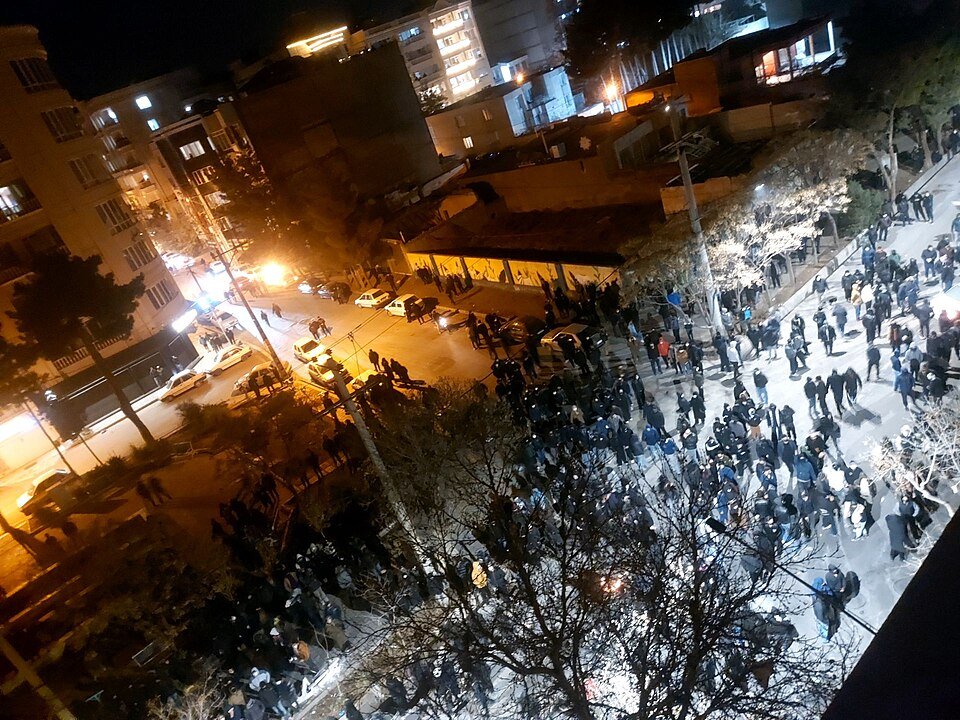
The Board of School Education Haryana released the HTET 2026 answer key on the official portal htet.eapplynow.com, opening a formal window for candidate objections. The release was overshadowed by Rajya Sabha MP and Congress leader Randeep Singh Surjewala, who alleged large-scale irregularities in the Level 3 (PGT) exam held on 4 July 2026 — including a paper leak, broken seals on question packets, mismatched OMR sheets, and printing errors such as English PGT candidates briefly receiving Economics papers. He demanded cancellation, a fresh test, and an FIR against BSEH officials, as reported 22 July 2026, per The Tribune.
- ▸HTET 2026 answer key was made available for download at htet.eapplynow.com with a specified deadline to raise objections.
- ▸Congress alleged a missing passage for questions 141–150, an incorrect Hindi translation of “urine” as “wine”, and wrong question numbering in the Commerce paper.
- ▸BSEH rejected the allegations, stating the exam was conducted in a “fair, transparent and secure manner”, per Careers360’s 22 July 2026 report.
BSEH Declares HTET 2026 Final Result Without Re-Test, Opens Biometric Verification
BSEH released the HTET 2026 final answer key and result on 5 August 2026 at bseh.org.in and htet.eapplynow.com, proceeding without the re-test Congress had demanded over the Level 3 (PGT) irregularity allegations. Scorecards were made available for download alongside a list of disqualified candidates, and BSEH scheduled biometric verification for qualified candidates from 10 to 12 August 2026, as reported by Business Standard on 6 August 2026.
- ▸Final result and answer key released 5 August 2026, roughly a month after the 4-5 July 2026 exam.
- ▸Biometric verification of qualified candidates ran 10-12 August 2026 at designated centres.
- ▸No FIR or independent inquiry into the Level 3 exam had been ordered as of the result’s declaration.
What Happens Next?
From a compliance footnote in the RTE Act to a battleground for lakhs of Haryana’s teaching aspirants, the journey of HTET — the Haryana Teacher Eligibility Test — is inseparable from the state’s fraught relationship with public sector recruitment. Every decade brought a new crisis: paper leaks in 2014, pandemic shutdowns in 2020-21, and now irregularity allegations in the 2026 PGT exam that echo grievances stretching back fifteen years. BSEH rejected the allegations and declared the final result on 5 August 2026 without ordering a re-test, moving straight to biometric verification of qualified candidates. What to watch next: whether Congress’s FIR and independent-inquiry demands go anywhere, any court intervention, and whether Haryana moves towards computer-based testing to finally break the cycle of malpractice that has shadowed HTET since its inception.
Frequently Asked Questions
HTET stands for Haryana Teacher Eligibility Test. It is conducted by the Board of School Education Haryana (BSEH), Bhiwani. The exam certifies candidates at three levels: Level 1 (PRT, Classes 1–5), Level 2 (TGT, Classes 6–8), and Level 3 (PGT, Classes 9–12). A passing certificate is mandatory for appointment to government teaching posts in Haryana.
HTET was first introduced in 2011, following the Right of Children to Free and Compulsory Education (RTE) Act 2009 and the NCTE guidelines of 2010 that made teacher eligibility tests compulsory across India. The Board of School Education Haryana (BSEH) conducted the inaugural examination to align Haryana with the national framework for teacher recruitment standards.
Congress leader Randeep Singh Surjewala alleged large-scale irregularities in the HTET 2026 Level 3 (PGT) exam — including a paper leak, broken seals, mismatched OMR sheets, and printing errors — and demanded a re-test, FIR, and action against BSEH officials. BSEH rejected the claims as unfounded and, on 5 August 2026, declared the final result without ordering a re-test.
As of current BSEH rules, an HTET qualifying certificate is valid for a lifetime. This was a significant policy improvement from earlier norms, where the certificate had a limited validity period. The lifetime validity was introduced to give long-term certainty to qualified teachers waiting for government recruitment cycles in Haryana.
CTET (Central Teacher Eligibility Test) is conducted by CBSE for central government school appointments (Kendriya Vidyalayas, Navodaya Vidyalayas). HTET is state-specific and mandatory for Haryana government school posts. Both cover similar syllabi at Levels 1 and 2, but HTET Level 3 (PGT) has no CTET equivalent. Passing CTET does not exempt a candidate from HTET.
Sources & References
- Board of School Education Haryana (BSEH) — Official Site
- HTET Official Portal — htet.eapplynow.com
- NCTE — National Council for Teacher Education
- Wikipedia: Right of Children to Free and Compulsory Education Act
- The Hindu — Education Coverage
- The Tribune — Congress Alleges Irregularities in HTET, Demands Re-Test
- Business Standard — BSEH Haryana HTET Result 2026 Out
Explore More Timelines
Sources & further reading
Every dated entry above was checked against these references. Last reviewed 15 September 2026.