Reliance Industries: India’s Largest Company Timeline
Reliance Industries history from Dhirubhai Ambani's 1958 trading firm to Jamnagar, retail, Jio, the 2026 Jio IPO filing and ₹11.76 lakh crore revenue.
Latest Story
In 1958 Reliance was a one-room trading business in Mumbai. In FY2025–26 it reported ₹11.76 lakh crore of revenue, 524 million Jio subscribers and more than 20,000 stores. This Reliance Industries history follows every stage in between: the Naroda mill, the 1977 IPO, Jamnagar, the 2005 family split, retail, Jio, the 2020 fundraising and the bet on new energy and AI. Figures are checked against Reliance’s own results filings.
💡 Short Answer
Reliance Industries grew from Dhirubhai Ambani’s 1958 trading firm by repeatedly moving into the next, bigger business: textiles in 1966, polyester in the 1980s, petrochemicals in 1991, refining at Jamnagar in 1999–2000, retail in 2006, Jio in 2016 and new energy from 2021. In FY2025–26 it reported gross revenue of ₹11,75,919 crore, the highest of any Indian company.
Reliance Industries: Key Questions
The Reliance Story in Ten Points
- Trader first: Reliance began in 1958 as a commodity trading firm, not a manufacturer.
- Capital from the public: the 1977 IPO, oversubscribed seven times, made small investors part of the growth model.
- Backward integration: fabric (1966), polyester yarn (1980s), petrochemicals (1991), crude refining (1999–2000).
- Jamnagar: now the world’s largest refining complex at a single site, about 1.4 million barrels a day.
- Succession and split: Dhirubhai died in July 2002; his sons divided the group in 2005.
- Consumers: retail from 2006, now 20,160 stores; Jio from 2016, now 524.4 million users.
- 2020 turning point: ₹1.68 lakh crore raised in 58 days, from Facebook, Google and others and a rights issue.
- The profit mix has flipped: Jio’s digital business now earns more EBITDA than oil to chemicals.
- Next bet: ₹75,000 crore committed to new energy in 2021, and AI compute at Jamnagar from 2026.
- Still to come: the Jio IPO, cleared by SEBI on 28 August 2026, with dates not yet set.
Is Reliance Really India’s Largest Company?
The answer depends on what you measure.
“Largest company” can mean revenue, market value, profit, assets or people. Reliance itself uses a careful phrase: India’s largest private-sector corporation. On the two measures most people mean, revenue and market capitalisation, it ranked first in 2026. On some others, it does not.
| Measure | Reliance’s position | Evidence |
|---|---|---|
| Revenue | Largest in India | ₹11.76 lakh crore gross revenue, FY26 |
| Market capitalisation | Largest listed Indian company | About ₹16 lakh crore at ₹1,197.60 (28 Sep 2026) |
| Profit | Among the very highest | ₹95,610 crore PAT, FY26; large banks come close |
| Customers | Among the largest | 524M Jio users; 387M retail customers |
| Employees | Not the largest | IT services firms and state-owned banks employ more |
Market value moves every day. Reliance crossed ₹20 lakh crore in February 2024; after oil-price swings in 2026 its shares closed at ₹1,197.60 on 28 September 2026, a market value of roughly ₹16 lakh crore on the post-bonus share count, and still the highest of any listed Indian company.
Jamnagar has just started. You have one big bet to make. Which one?
It is 2000. Reliance is a polyester and petrochemicals company with a brand-new refinery. Mobile phones are rare, organised retail is tiny and solar power is expensive.
Tap A, B, C or D.
What Reliance actually did
Choose an option, then tap Reveal.
The Full Reliance Industries Timeline, 1958 to 2026
Newest first. Entries tagged 2026 cover this year.
Jio IPO cleared, date awaited2026
SEBI issues its observations on Jio Platforms’ draft prospectus on 28 August 2026, clearing the way for what is expected to be one of India’s largest IPOs. The price band and dates are still to be announced. On 17 July Reliance reported first-quarter FY27 revenue of ₹3,11,850 crore, up about 25%, while profit fell because the year-ago quarter included a one-off gain from selling listed investments.
2026
49th AGM: Jio files for its IPO2026
Jio Platforms files its draft red herring prospectus with SEBI for a fresh issue of up to 27 crore shares, with no sale by existing shareholders. At the AGM Mukesh Ambani says the first 120 MW of AI compute capacity at Jamnagar, run on Reliance’s own solar power, will be commissioned by the end of 2026, and that nearly 1 GW of HJT solar modules has been produced.
2026
Record year: ₹11.76 lakh crore2026
Reliance reports FY2025–26 gross revenue of ₹11,75,919 crore (US$124 billion), EBITDA of ₹2,07,911 crore and profit after tax of ₹95,610 crore. Jio ends the year with 524.4 million subscribers, 268 million of them on 5G; Reliance Retail with 20,160 stores. Capital spending for the year is ₹1,44,271 crore.
Jio IPO promised, AI arm launched
Mukesh Ambani says Jio will aim to list in the first half of 2026 and announces Reliance Intelligence, a new AI subsidiary, with partnerships with Google and Meta. In May 2025 Anant Ambani had become an executive director.
2024
JioStar is born
Reliance and Disney complete the merger of Viacom18’s media and JioCinema businesses into Star India, valued at ₹70,352 crore (about US$8.5 billion). Reliance controls 63.16%, Disney 36.84%. The venture, later called JioStar, owns Star, Colors and JioHotstar. The same autumn Reliance issues one bonus share for every share held.
2024
First ₹20 lakh crore company
Reliance becomes the first Indian company to cross ₹20 lakh crore in market capitalisation. The market is now valuing Reliance less as a refiner and more as a consumer and digital group with a refinery attached.
Jio Financial spun off, next generation on the board
The NCLT sanctions the demerger of Reliance’s financial services arm on 28 June. Shareholders get one Jio Financial Services share per Reliance share, and JFS lists on 21 August; it later forms a joint venture with BlackRock for asset management. On 28 August the board names Isha, Akash and Anant Ambani as non-executive directors as Nita Ambani steps down.
Jio True 5G
After spending ₹88,078 crore in the August 2022 spectrum auction, Jio starts True 5G in beta in four cities in October. Reliance built a standalone 5G core instead of layering 5G on the 4G network. In June 2022 Akash Ambani had become chairman of Reliance Jio Infocomm.
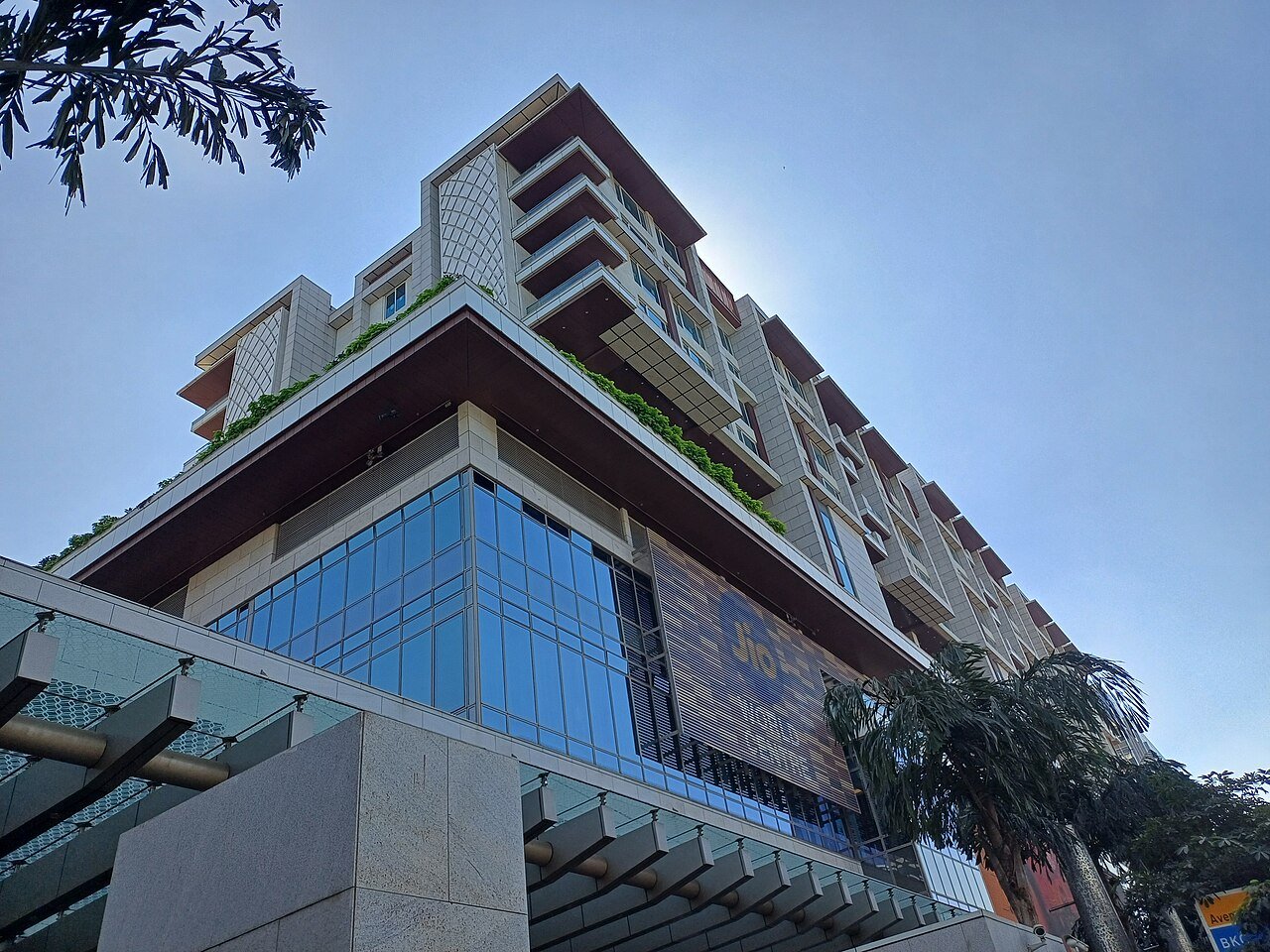
₹75,000 crore for New Energy
At its AGM Reliance commits ₹60,000 crore to four giga factories for solar modules, batteries, electrolysers and fuel cells at the Dhirubhai Ambani Green Energy Giga Complex in Jamnagar, plus ₹15,000 crore for the value chain. It targets 100 GW of renewable energy by 2030. Jamnagar, which made Reliance a refiner, is to make it a clean-energy manufacturer.
₹1.68 lakh crore in 58 days
During the pandemic Jio Platforms sells minority stakes to 13 investors, led by Facebook (₹43,574 crore for 9.99%) and Google (₹33,737 crore for 7.73%), raising about ₹1.52 lakh crore. With a ₹53,124 crore rights issue, Reliance declares itself net debt free on 19 June. In July it sets a target of net carbon zero by 2035, and in September becomes the first Indian company worth US$200 billion. Reliance Retail raises about ₹47,265 crore from investors including Silver Lake and KKR.
Jio Platforms is created
Reliance moves Jio and its digital businesses into a new holding company, Jio Platforms, incorporated on 15 November 2019. The structure lets outside investors buy into Jio without buying into the refinery. Jio passes 300 million subscribers by March 2019, and at the August AGM Reliance announces a cloud alliance with Microsoft.
100 million in 170 days
Jio reaches 100 million subscribers about 170 days after launch, helped by months of free data and calls. Rivals cut prices, several smaller operators exit or merge, and Reliance says India goes from about 155th to first in the world for mobile data consumption.
2016
Jio launches
Reliance Jio starts commercial 4G services on a network built for data from the start, with voice carried over it. Data prices collapse across the industry. The spectrum came from Infotel Broadband, a little-known company Reliance bought in 2010 after it won pan-India broadband wireless spectrum.
Infotel and Reliance Foundation
Reliance buys a controlling stake in Infotel Broadband Services, the only company to win broadband wireless spectrum across all of India in that year’s auction. The purchase, barely noticed outside the telecom industry, becomes Reliance Jio. The same year Reliance Foundation, chaired by Nita Ambani, is established.
Export refinery and KG-D6 gas
Reliance Petroleum’s export-oriented refinery next to the original Jamnagar plant starts in December 2008 and is merged into Reliance in 2009, making Jamnagar the world’s largest refining complex at one site. Gas from the KG-D6 deepwater block starts flowing in April 2009.
Reliance Fresh, Hyderabad
The first Reliance Fresh store opens in Hyderabad. Reliance Retail expands into grocery, electronics (Reliance Digital), fashion (Trends) and later online (JioMart, AJIO). For the first time Reliance sells directly to shoppers, not to other businesses.
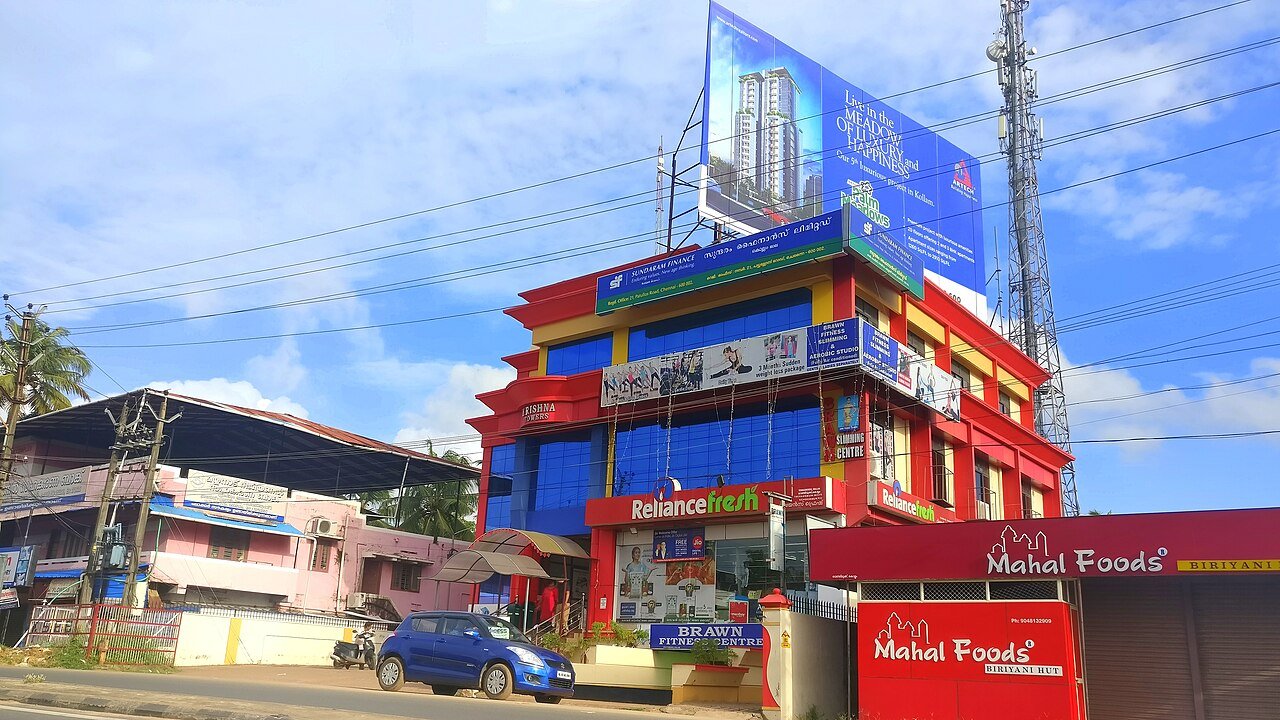
The Ambani brothers split the group
After three years of public dispute following their father’s death, Mukesh and Anil Ambani divide the group in a settlement announced by their mother Kokilaben Ambani on 18 June. Mukesh keeps Reliance Industries and IPCL; the telecom, power, financial services and natural resources businesses go to Anil and are demerged into separate listed companies. RIL shareholders get shares in each.
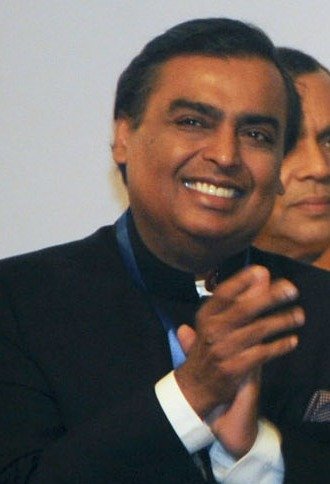
Fortune Global 500
Reliance becomes the first Indian private-sector company in the Fortune Global 500, the ranking of the world’s largest companies by revenue.
Dhirubhai dies; gas, telecom and IPCL
Dhirubhai Ambani dies on 6 July, aged 69; Mukesh becomes chairman and Anil vice-chairman. In October Reliance announces a large gas discovery in the KG-D6 block. It buys the government’s controlling stake in IPCL, merges Reliance Petroleum into RIL, and on 28 December, Dhirubhai’s birth anniversary, launches Reliance India Mobile with the slogan Kar lo duniya mutthi mein.
Jamnagar: the refinery built in 36 months
The Jamnagar refinery on the Gulf of Kutch starts up in 1999, and Reliance dates the integrated refining and petrochemicals complex to 2000. It calls it the world’s largest grassroots refinery, built in about 36 months. Reliance now controls the chain from crude oil to polyester.
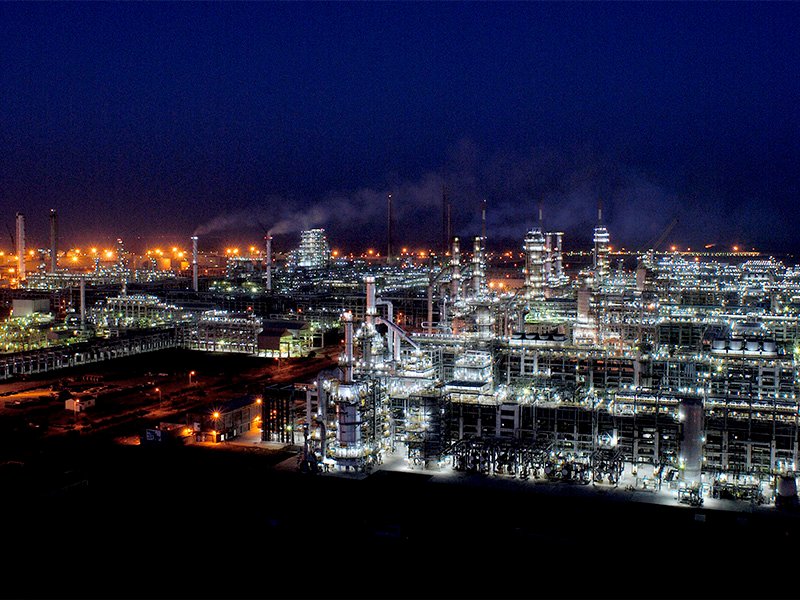
Hazira
The Hazira petrochemicals plant near Surat starts production, making Reliance one of the world’s largest integrated polyester producers. The same year India begins liberalising its economy, opening industries Reliance would later enter.
Patalganga polyester
Reliance builds its polyester filament yarn plant at Patalganga, near Mumbai, so it can make the fibre its mills weave. In 1985 the company changes its name from Reliance Textile Industries to Reliance Industries.
The IPO that created an equity cult
Reliance Textile Industries goes public. Reliance says the issue was oversubscribed seven times. Dhirubhai courted small investors in towns across India, held giant shareholder meetings and paid regular dividends, turning shareholders into a source of capital and a political constituency.
Naroda mill
Reliance sets up a textile mill at Naroda, near Ahmedabad, making synthetic fabrics. Its Vimal brand, sold through franchised shops, makes the name known in households. The listed company is incorporated on 8 May 1973.
A trader in Mumbai
After returning from Aden in 1957, Dhirubhai Ambani starts Reliance Commercial Corporation in Mumbai, trading yarn, spices and other commodities from a small office. There is no factory yet, only a trader’s understanding of what Indian buyers want and what imports cost.
Which business changed the company? Tap a stage.
Each move solved a problem the previous business created, and each one paid for the next.
Five Eras of Reliance
| Era | Big bet | What changed |
|---|---|---|
| 1958–1990 | Textiles and polyester | Trading house becomes a manufacturer and integrates upstream |
| 1991–2005 | Petrochemicals and refining | Hazira and Jamnagar make Reliance an energy company |
| 2006–2019 | Retail and Jio | First direct relationship with hundreds of millions of consumers |
| 2020–2024 | Platforms and capital | Stake sales, JioStar and Jio Financial create separately valued businesses |
| 2021–today | New energy and AI | Giga factories and AI compute at Jamnagar |
Reliance by the Numbers, FY2025–26
From the results released on 24 April 2026.
| FY2025–26 | Figure | Note |
|---|---|---|
| Gross revenue | ₹11,75,919 crore | +9.8% |
| EBITDA | ₹2,07,911 crore | +13.4% |
| Profit after tax | ₹95,610 crore | +18.3% |
| Capital expenditure | ₹1,44,271 crore | excl. spectrum |
| Net debt (31 Mar 2026) | ₹1,24,717 crore | 0.60x EBITDA |
| Jio subscribers | 524.4 million | 268M on 5G |
| Retail stores | 20,160 | 78.3M sq ft |
| Retail registered customers | 387 million | 1.93B transactions |
| JioStar revenue | ₹34,917 crore | per June 2026 AGM |
The two charts tell different stories. By revenue, Reliance is still a refiner: oil to chemicals brings in more than retail and digital combined. By EBITDA, Jio is now the biggest engine, because selling data carries far higher margins than selling diesel. That shift is why a Jio listing matters so much to Reliance shareholders.
Jio: The Business That Changed Reliance’s Image
Jio did not start in 2016. It started with a 2010 purchase of Infotel Broadband, which had won broadband wireless spectrum across India. Reliance then spent six years building a data-only 4G network before offering it free. The price war that followed pushed rivals into mergers and exits and made mobile data cheap for hundreds of millions of Indians.
In 2020, Jio Platforms sold about a third of itself to Facebook, Google and eleven financial and technology investors. Six years later it filed to list. A separate AiTimeline tracker follows the Jio IPO in detail.
Retail: From One Store to 20,160
Reliance Retail started with fresh produce in Hyderabad in 2006 and now spans grocery (Smart Bazaar), electronics (Reliance Digital), fashion (Trends, AJIO), pharmacy and online orders through JioMart. In FY2025–26 it reported ₹3,71,085 crore of segment revenue and ₹27,034 crore of EBITDA. Hyper-local orders from more than 3,100 stores grew more than four times in the year.
New Energy: From Molecules to Electrons
The biggest change since Jamnagar, on the same site.
What Reliance has committed
Net carbon zero by 2035 (announced July 2020). ₹75,000 crore for four giga factories and the value chain (June 2021). A target of 100 GW of renewable energy by 2030. The Dhirubhai Ambani Green Energy Giga Complex covers about 5,000 acres in Jamnagar.
What it reported by mid-2026
Nearly 1 GW of heterojunction (HJT) solar modules produced; battery manufacturing being scaled up; an electrolyser factory in progress; and the first 120 MW of AI compute, powered by its own solar, due at Jamnagar by the end of 2026.
The old business is paying for the new one. Oil to chemicals still produced ₹60,546 crore of EBITDA in FY2025–26, and total capital spending was ₹1,44,271 crore. New energy has not yet been reported as a separate segment, so its profitability is not visible in the accounts.
What Made Reliance Different
- It financed growth through the public. From the 1977 IPO to the 2020 rights issue and stake sales, Reliance raised money at a scale few Indian companies could.
- It built each business to supply the last. Fabric needed yarn, yarn needed petrochemicals, petrochemicals needed crude.
- It built very large, very fast. Jamnagar in about three years; a nationwide 4G network before selling a single plan.
- It moved toward consumers. Retail and Jio turned a business-to-business company into one serving most Indian households.
- It added new businesses without shutting old ones. Refining still funds the new-energy build-out.
Myths vs Facts
“Reliance began as a textile company”
It began in 1958 as a trading firm. The Naroda textile mill came in 1966.
“Microsoft invested in Jio in 2020”
The 13 investors did not include Microsoft. Its 2019 deal with Reliance was a cloud partnership.
“Jio started in 2016”
Jio launched commercially in 2016, but Reliance bought the company that became Jio, Infotel Broadband, in 2010.
“The green push started in 2021”
The net-zero-by-2035 target came first, in July 2020. The ₹75,000 crore investment plan followed in June 2021.
“Reliance is India’s largest company”
True by revenue and market value in 2026; not on every measure. Reliance’s own phrase is largest private-sector corporation.
“Oil is Reliance’s biggest profit engine”
By revenue, yes. By EBITDA, Digital Services overtook oil to chemicals: ₹76,560 crore to ₹60,546 crore in FY26.
Did You Know?
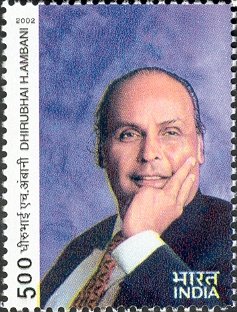
- Stamp: India Post issued a Dhirubhai Ambani stamp on 28 December 2002, the same day Reliance India Mobile launched.
- Name change: the company was Reliance Textile Industries until 1985.
- Net debt free, then not: declared net debt free in June 2020; net debt was ₹1,24,717 crore by March 2026 after heavy investment.
- Bonus: a 1:1 bonus issue in late 2024 doubled the number of Reliance shares, which is why the share price roughly halved.
- Soft drinks: Reliance’s revived Campa brand passed ₹4,700 crore of gross sales in FY26, according to the company.
Test Yourself: Reliance Quiz
1. What was Reliance’s first business?
2. Where was Reliance’s first mill?
3. How many times was the 1977 IPO oversubscribed?
4. When did Dhirubhai Ambani die?
5. Which company became Reliance Jio?
6. Which of these did NOT invest in Jio Platforms in 2020?
7. What was Reliance’s FY2025–26 gross revenue?
8. By what year does Reliance aim to be net carbon zero?
Explore More Timelines
People Also Ask
Frequently Asked Questions
Related AiTimeline Stories
⚠️ Editorial Note
FY2025–26 figures are from Reliance’s results release of 24 April 2026; June 2026 AGM figures are as reported from the meeting; Jio IPO details are from SEBI’s filings page. Historical milestones follow Reliance’s own history page, cross-checked with contemporary reports. Corrections to widely shared versions: Jio Platforms was created in 2019, not 2020; Microsoft was not among the 2020 Jio investors; the net-zero-by-2035 target was announced in 2020, a year before the New Energy investment plan; and “largest company” holds for revenue and market value, not every measure. Market values change daily. This article is not investment advice.
Sources & further reading
Every dated entry above was checked against these references. Last reviewed 30 September 2026.
- Reliance Industries: Q4 FY2025-26 results media release (24 April 2026)
- Reliance Industries: Our history
- SEBI: Jio Platforms Ltd draft red herring prospectus (June 2026)
- JioStar: Reliance and Disney announce completion of joint venture (14 November 2024)
- Business Today: RIL becomes net debt free after raising Rs 1,68,818 crore (19 June 2020)
- Business Standard: NCLT approves demerger of Reliance financial services unit (July 2023)
- Business Standard: Isha, Akash and Anant Ambani join the Reliance board (28 August 2023)
- CNBC: Google invests $4.5 billion in Jio Platforms (15 July 2020)