Northern Ireland Disputed Parades History & Timeline
Why Northern Ireland parades are disputed: the Orange Order, Drumcree 1995-98, the Parades Commission and the 2026 Garvaghy Road blockade, year by year.
Latest Story
Northern Ireland’s disputed parades are processions whose routes one community sees as tradition and another sees as unwanted. Most of the roughly 3,800 parades notified each year pass without argument. A small number, above all the Orange Order’s Drumcree church parade in Portadown, have shaped the region’s politics for three decades. On 27 September 2026 that parade was cleared by the courts to walk the Garvaghy Road for the first time since 1997, and thousands of protesters blocked the road. This page explains how the dispute began, why the route matters so much, and how the system meant to settle it works.
💡 Short Answer
Parades in Northern Ireland become disputed when a route passes through an area whose residents object to it, most often a Protestant loyal order parade through a Catholic/nationalist district. The Drumcree dispute in Portadown produced major violence in 1995–98 and led to the Parades Commission, which has barred that parade from the Garvaghy Road every year since 1998. In September 2026 the Commission allowed 35 marchers through; protesters blocked the road and the parade did not proceed.
Northern Ireland’s Disputed Parades: Key Questions
What the record shows
- Disputes are the exception: the Parades Commission recorded 3,813 notified parades and related protests in 2025–26, and restricted 141 of them. A handful of routes carry almost all the political weight.
- Drumcree changed the system: the 1995–97 standoffs persuaded the government to take contentious decisions away from the police and give them to an independent body.
- The route shifted before the crisis: the Drumcree parade used to go out through Obins Street and back along the Garvaghy Road. Police stopped the Obins Street leg in 1986, which put both legs on the Garvaghy Road.
- 1997 was the last walk: the parade went down the Garvaghy Road on 6 July 1997 after police removed protesters. It has been barred every year since 1998.
- The human cost was real: Drumcree-linked violence included the murder of Michael McGoldrick in 1996 and the deaths of the three Quinn brothers in a loyalist arson attack in July 1998.
- The peace deal did not settle it: the Good Friday Agreement of April 1998 left parading to the new Commission, and disputes moved to Ardoyne, Whiterock and Twaddell Avenue.
- 2026 reopened Drumcree through the courts: a High Court ruling on 25 August 2026 quashed that year’s ban on procedural grounds, leading to the Commission’s 25 September decision.
- A legal permission is not a walk: the Court of Appeal allowed the 27 September parade, but a mass protest (unlawful under parading law, according to police) meant it never left Drumcree.
September 2026: the Drumcree standoff returns
From a procedural court ruling in August to a road blocked by thousands
For 28 years the Portadown District of the Orange Order applied every week to finish the parade it began in July 1998, and every year the Parades Commission refused. That changed through a courtroom rather than a negotiation. On 25 August 2026 the High Court in Belfast quashed the Commission’s 2026 determination after a Portadown Orangeman brought a judicial review. The Commission conceded a procedural error: not every commissioner had approved the final text of the decision. The ruling did not say the parade had to be allowed, only that the ban had not been made properly.
The Commission reconsidered. On Friday 25 September its five-member panel allowed a parade along the Garvaghy Road with strict conditions: no more than 35 participants (the Order had asked for 60), departure from Drumcree Church by 8am, dispersal by 9:30am, no bands, no supporters and only the Portadown District banner. The Commission said the determination “should not be seen as a victory for one side or as a loss for another.”
- Saturday 26 September: the Garvaghy Road Residents’ Coalition sought an injunction. Mrs Justice Patricia Smyth granted it, warning that the “long-running dispute has the potential to escalate” and urging both sides to “step back from the abyss”.
- Sunday 27 September, 12:20am to about 2:15am: in what the court itself called unprecedented circumstances, the Court of Appeal, led by Lady Chief Justice Dame Siobhan Keegan, heard the Orange Order’s appeal and lifted the injunction, finding the first judge had erred in law. The Commission’s decision stood.
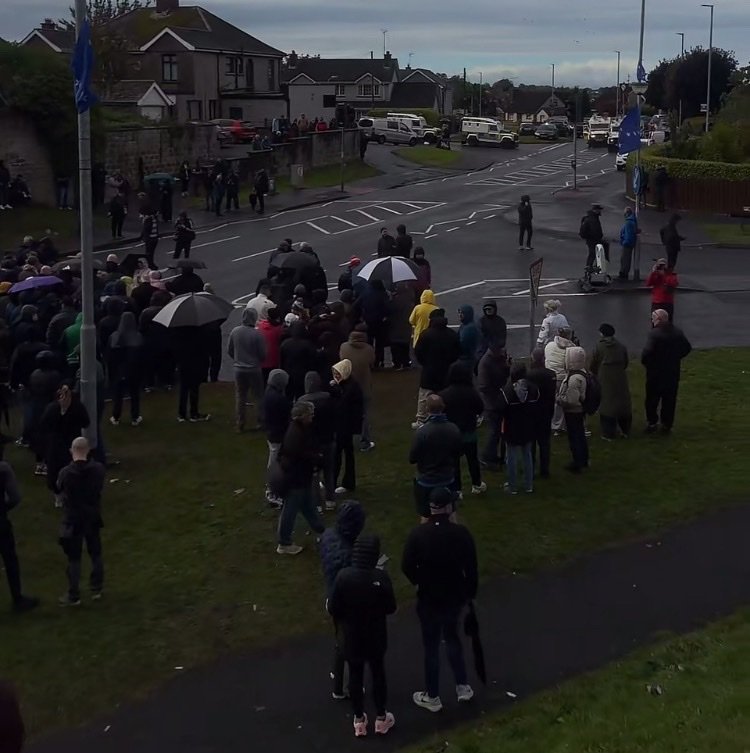
- Before 8am: a large crowd was already on the Garvaghy Road. Police warned by loudspeaker that blocking the road could lead to prosecution. The 35 Orangemen stayed at Drumcree Church.
- During the day: thousands gathered, including First Minister Michelle O’Neill and Sinn Féin president Mary Lou McDonald. Police did not move to clear the road. Loyalist supporters gathered in Portadown; by about 10pm they had moved into the town centre.
- Around midnight: Breandán Mac Cionnaith of the Residents’ Coalition told protesters they had secured a “victory” and that he would meet Northern Ireland Secretary Sir Chris Bryant and PSNI Chief Constable Jon Boutcher on Monday. Most protesters dispersed. No arrests or injuries were reported in the main coverage.
Reactions split along familiar lines. DUP leader Gavin Robinson said that in 2026 “Orangemen walking silently and peacefully down a road should not be a major issue in a shared society”, and criticised the First Minister for joining a protest he said disregarded the courts. Michelle O’Neill said “28 years of peace was not a problem that required a solution”. Taoiseach Micheál Martin called the original decision “incomprehensible and wrong”. Prime Minister Andy Burnham appealed for calm, saying “we don’t want to see things go backwards”. Sir Chris Bryant said no elected politician should support an illegal protest and that “everybody has to double down on compromise”.
The Orange Order’s position was that the parade had been lawfully approved and should go ahead. As of 28 September 2026 no new date had been set, and the talks announced at midnight had not yet produced a public outcome.
Why the route matters more than the parade
Drumcree is about roughly one mile of road, and who lives on it
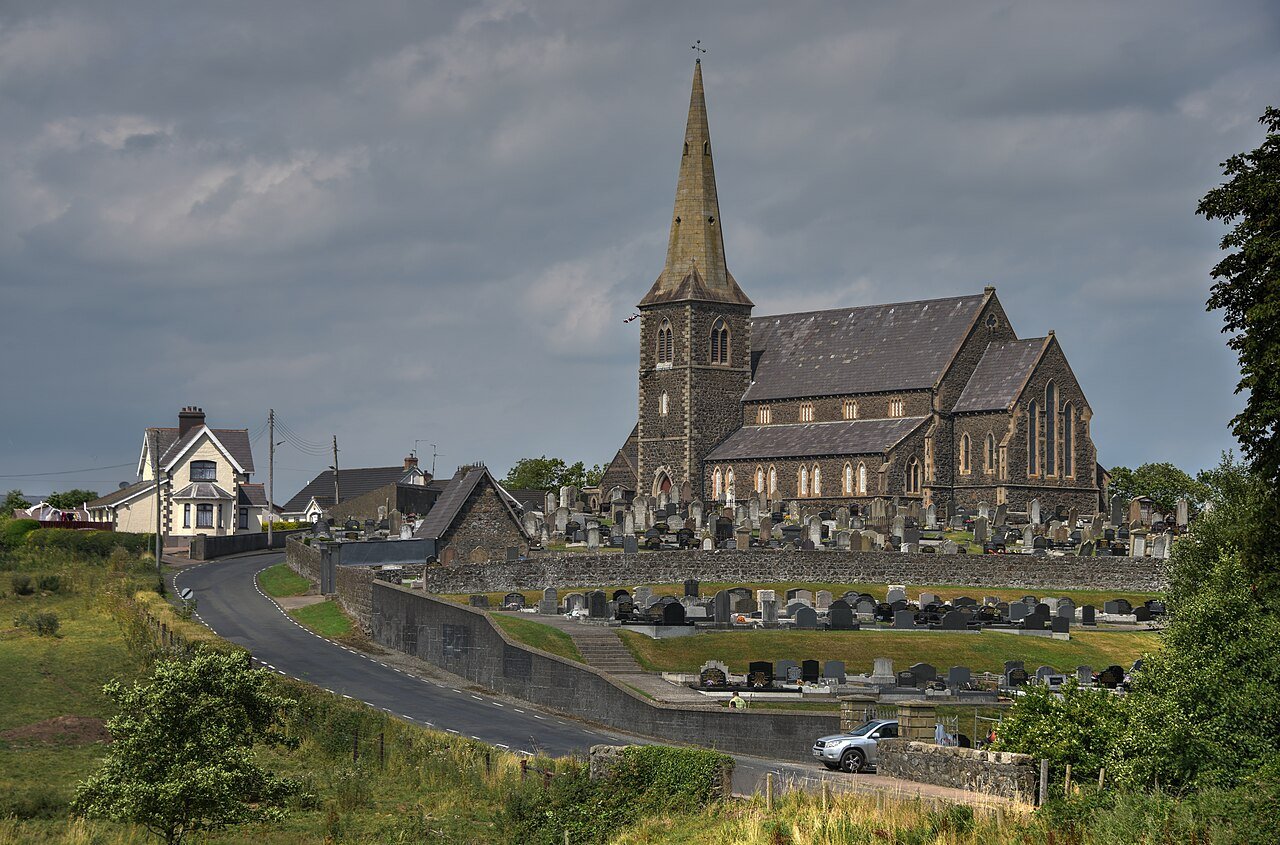
The Drumcree parade has run since 1807: Portadown Orangemen walk from the town to a service at Drumcree Parish Church on the Sunday before the Twelfth, and back again. For most of its history the outward route went along Obins Street, known locally as “the Tunnel”, and the return leg came back along the Garvaghy Road.
Portadown changed around the parade. Housing estates built along the Garvaghy Road in the 1960s became almost entirely Catholic, while other estates became almost entirely Protestant. By the mid-1990s the town was roughly 70% Protestant and 30% Catholic, and a 1993 survey found 95% of Garvaghy Road residents opposed Orange marches through their area. To marchers, the route had not moved. To residents, a parade that had once passed fields now passed their front doors.
The Obins Street leg ended first. After sit-down protests by residents in July 1985 and loyalist rioting when police rerouted the Twelfth parades, police kept the Drumcree parade out of Obins Street from 1986. The Public Order (Northern Ireland) Order 1987 removed the special status that “traditional” parades had enjoyed, which made that ban effectively permanent. According to accounts gathered by historians of the dispute, many Orangemen believed that giving up Obins Street had guaranteed them the Garvaghy Road. Residents did not see it that way. That gap in expectations is the root of everything that followed.
Drumcree 1995–1998: four summers that changed the rules
Blocked, forced through, forced through again, then banned
Bars show the relative scale of disorder reported in each period, as an editorial summary of the figures below, not an index.
1995. On Sunday 9 July, residents organised by the newly formed Garvaghy Road Residents’ Coalition sat down on the road. Police stopped the parade, and about 10,000 Orangemen and supporters gathered at Drumcree facing around 1,000 police and soldiers. Loyalists blocked roads across Northern Ireland and closed the port of Larne. On 11 July a compromise let the Orangemen walk the road silently and without bands. At the end of the road Ian Paisley and David Trimble raised joined hands, which residents read as a gesture of triumph; Trimble later said he took Paisley’s hand to stop him hogging the cameras. Residents also said they had been told there would be no march without their consent the following year.
1996. On 6 July, RUC Chief Constable Sir Hugh Annesley banned the parade from the Garvaghy Road. Up to 10,000 Orangemen gathered and loyalists blocked roads across Northern Ireland for four days. On the night of 7 July, Catholic taxi driver Michael McGoldrick was shot dead near Lurgan by loyalists. Police figures later recorded 758 attacks on officers, 50 officers injured and 662 plastic bullets fired during the standoff. On 11 July Annesley reversed his decision; police cleared residents off the road and the parade went through. Nationalist rioting followed, and in Derry Dermot McShane died after being run over by an army vehicle.
1997. At about 3:30am on 6 July, some 1,500 police and soldiers moved into the area and removed about 100 residents staging a sit-down protest. Around 1,200 Orangemen walked the road at midday. Nationalist rioting lasted until 10 July, with 815 attacks on the security forces, 1,506 petrol bombs and about 2,500 plastic bullets fired, by police counts. This was the last time the parade used the Garvaghy Road.
1998. The Parades Commission, now statutory, banned the parade. The army built a barrier of steel, concrete and barbed wire across Drumcree hill, and about 10,000 Orangemen arrived on 5 July. In the days that followed there were thousands of public-order incidents. On 12 July 1998 three brothers, Jason, Mark and Richard Quinn, aged 8, 9 and 10, died when their home in Ballymoney was petrol-bombed by loyalists. The killings drained support for the protest, though it continued in reduced form. In September, RUC Constable Frank O’Reilly was badly injured by a pipe bomb during a Drumcree-related protest in Portadown; he died in October.
“There was no question of marches going where there was no consent from the community.”Deputy Chief Constable Ronnie Flanagan to residents, July 1995, as recorded by the Mediation Network. Residents cited this assurance in every later year of the dispute.
Where the marching tradition came from, 1690–1872
The Boyne, the Orange Order and the first attempts to ban processions
The history many loyal order parades commemorate starts with the Williamite war. In December 1688 apprentice boys closed the gates of Derry against a Jacobite garrison, beginning the siege that the Apprentice Boys of Derry still mark each August and December. On 1 July 1690 (Old Style), William III defeated James II at the Battle of the Boyne. After the calendar change the anniversary settled on 12 July, the date known ever since as “the Twelfth”.
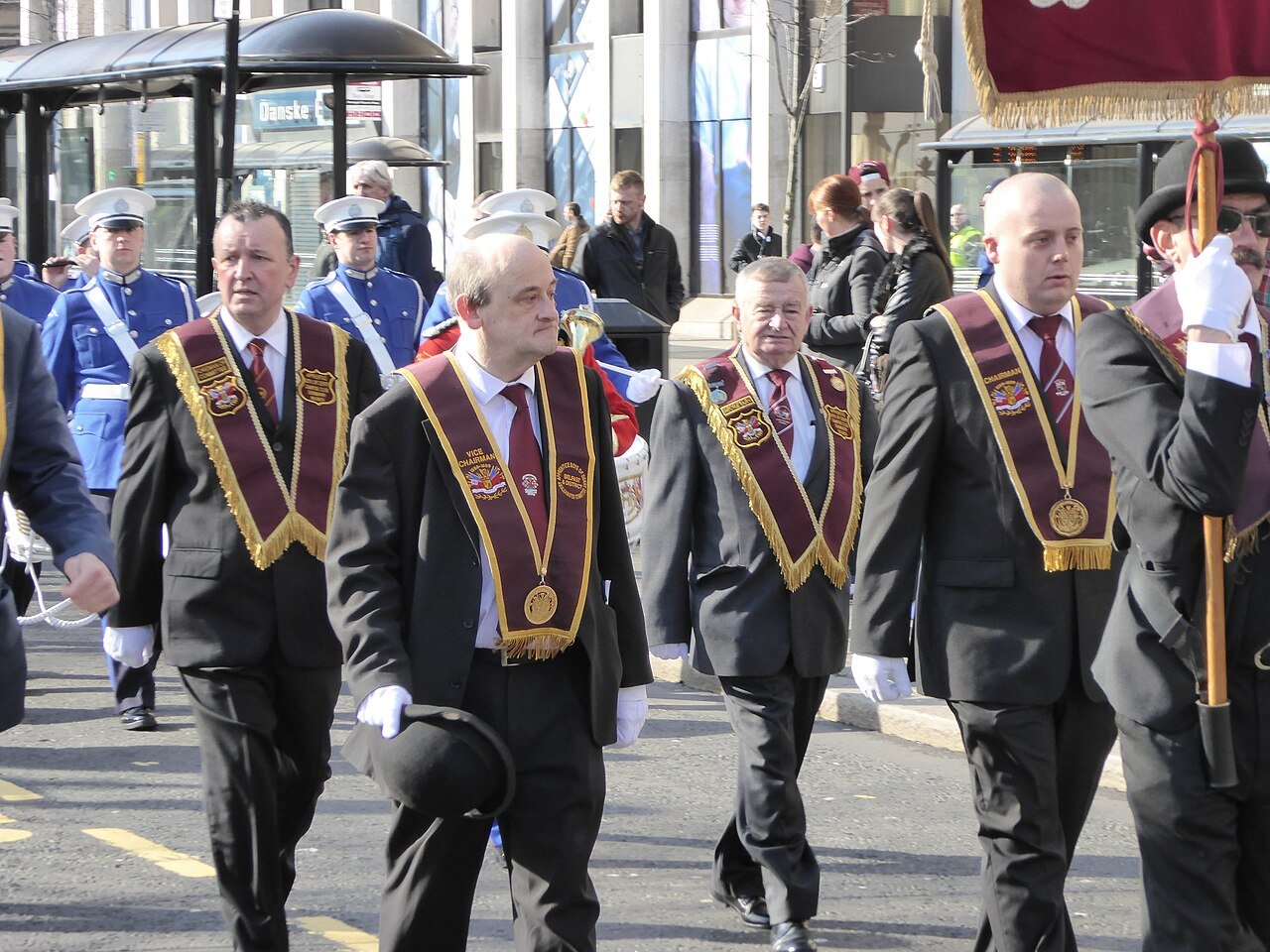
The organised parading tradition came a century later. The Loyal Orange Institution was founded in County Armagh on 21 September 1795, after the Battle of the Diamond near Loughgall, a clash between rival Protestant and Catholic groups. The first Twelfth parades followed on 12 July 1796. Portadown, the town at the centre of the modern dispute, was one of the places that marched.
From the beginning, parades and public order were linked. Governments tried outright bans twice. The Party Processions Acts applied from 1832 to 1844. After the clash at Dolly’s Brae in County Down on 12 July 1849, when armed Orangemen marching through a Catholic townland met armed Ribbonmen and many Catholics were killed (CAIN’s chronology puts the figure at about 80; other estimates are lower), the ban returned from 1850. It lasted until 1872. William Johnston, an Orangeman jailed for leading a banned parade from Bangor to Newtownards in 1867, was later elected to Parliament and campaigned successfully for repeal.
| Period | How the state treated parades | What followed |
|---|---|---|
| 1796–1831 | Largely unregulated | Recurrent clashes, including Belfast rioting after the 1829 ban on the Twelfth |
| 1832–1844 | Party Processions Act in force | Parades restricted or banned |
| 1849 | Act lapsed | Dolly’s Brae clash, 12 July |
| 1850–1872 | Party Processions Act reintroduced | Defied in 1867; repealed in 1872 |
| 1872–1986 | Police decide route by route; “traditional” parades favoured in law | Twelfth parades normal; local flashpoints managed by the police |
| 1987–1997 | Public Order (NI) Order 1987: no special status for tradition | Police rerouting in Portadown, Ormeau and elsewhere; Drumcree crisis |
| 1998–now | Public Processions (NI) Act 1998: independent Parades Commission | Conditions case by case; decisions open to judicial review |
The twentieth century added a second layer of meaning. After partition in 1921, the Twelfth became a public celebration in a state whose governing Unionist Party had close ties with the Orange Order. During the Troubles, parades were caught up in a wider conflict. The Apprentice Boys’ parade in Derry on 12 August 1969 set off the rioting known as the Battle of the Bogside, which spread across Northern Ireland and led to British troops being deployed on the streets.
The flashpoints: Drumcree was never the only one
CAIN’s research on parades identifies these as the main contested areas
Drumcree / Garvaghy Road
Church parade since 1807. Obins Street leg stopped in 1986; Garvaghy Road leg last walked on 6 July 1997; approved for 35 marchers in September 2026 but blocked by protest.
Lower Ormeau Road
On 5 February 1992 the UDA killed five Catholic men at Sean Graham’s bookmakers. When an Orange parade passed in July 1992, marchers were reported holding up five fingers. Residents formed the Lower Ormeau Concerned Community and campaigned for rerouting.
Ardoyne / Twaddell
Serious rioting on 12 July 2001. When the Commission barred the return parade in July 2013, loyalists set up a protest camp at Twaddell Avenue. A deal in September 2016 let the parade finish and the camp was removed.
Springfield Road / Whiterock
An Orange parade near the Springfield Road interface was rerouted in September 2005, and some of the worst loyalist rioting in years followed across Belfast.
Bogside and the city walls
The Apprentice Boys’ August parade sparked the Battle of the Bogside in 1969. Later arrangements with residents and traders turned the parade into a largely negotiated event.
Obins Street
The first Portadown route lost, in 1986, after residents’ protests in 1985 and loyalist rioting when police rerouted the Twelfth parades.
Ardoyne shows how a dispute can move once the most famous one quietens. On 12 July 2001, according to the Police Ombudsman, disorder began at about 6pm when police moved against protesters blocking the parade’s return route and continued until after 3am, with officers under sustained attack. The same summer brought the Holy Cross dispute, when loyalist protesters picketed Catholic schoolgirls walking to Holy Cross Girls’ Primary School through a Protestant area. It was not a parade dispute, but it involved the same streets and the same argument over who could use them.
Twaddell Avenue became the longest standoff after Drumcree. From July 2013 loyalists maintained a protest camp at the interface until the three local Orange lodges and a nationalist residents’ group reached an agreement in September 2016. The lodges completed their outstanding 2013 return parade early in October 2016 and the camp was dismantled.
How the Parades Commission works
From the North Review to 3,813 notifications a year
The 1996 crisis convinced the government that the police should not be the ones deciding contested routes. On 15 July 1996, days after the reversal at Drumcree, Northern Ireland Secretary Sir Patrick Mayhew announced an independent review, chaired by Sir Peter North. It delivered its report on 29 January 1997 and recommended an independent body. A non-statutory Parades Commission, chaired by Alastair Graham, was set up in March 1997. The Public Processions (Northern Ireland) Act 1998 received Royal Assent on 16 February 1998 and put the Commission on a statutory footing.
The Act gives the Commission duties to promote understanding of parading issues, to facilitate mediation, to keep processions and protests under review, and to issue determinations. It can impose conditions on route, numbers, timing, music, flags and behaviour, or bar a route altogether. The police still decide how to enforce those conditions on the day, and the Secretary of State can review a determination. Anyone affected can seek a judicial review, which is how both the Orange Order and the Garvaghy Road residents reached the courts in 2026.
- Notify: the organiser gives the police at least 28 days’ notice of a public procession, on the official form.
- Assess: the Commission receives the notification and identifies parades it considers sensitive, using police and community information.
- Engage: its authorised officers talk to organisers, residents and other interested groups, and encourage local agreement or mediation.
- Determine: for a contentious parade the Commission issues a determination, weighing public disorder, disruption, effects on community relations and the rights of all sides.
- Police and observe: the PSNI polices the parade and any protest; Commission observers may attend and report on compliance.
- Challenge: a determination can be reviewed by the Secretary of State or challenged in the High Court.
3,813
172
141
28
Parades Commission annual report for 1 April 2025 to 31 March 2026 (HC 455, laid 9 July 2026). Notifications rose by 140 from 3,673 in 2024–25. Bars are to scale: sensitive cases were about 4.5% of all notifications.
The numbers explain why Drumcree dominates coverage without describing the typical parade. Roughly 96% of notified processions and protests in 2025–26 had no restrictions imposed on them. The disputes are concentrated in a small number of places where a route crosses a community boundary, and a few of those have lasted for decades.
Competing rights: how each side frames the same parade
Positions as set out by organisers and residents, not a verdict on either
| Issue | Parade organisers typically argue | Objecting residents typically argue |
|---|---|---|
| History | The route has been walked for generations | The area and its people have changed since then |
| Rights | Freedom of peaceful assembly and religious expression | Freedom from intimidation in their own neighbourhood |
| Consent | A lawful parade should not need a neighbourhood’s permission | A “traditional route” is not the same as consent |
| Music and symbols | Cultural expression, often religious music | Can feel provocative outside homes, churches or memorial sites |
| Protest | Blocking a lawful parade rewards unlawful action | Peaceful protest is a legitimate response |
| Talks | Orange Order policy long refused direct talks with residents’ groups led by former republican prisoners | Residents have asked for direct dialogue before any parade |
Both positions rely on rights recognised in law. The Commission’s decisions cite the Human Rights Act 1998, which protects peaceful assembly (Article 11) but allows it to be restricted to prevent disorder or protect the rights of others. In practice, the Commission’s job is to decide how much weight each claim gets on a particular road on a particular day.
Who owns the route? Work through a decision
Open each step to see what the regulator weighs. There is no right answer at the end.
1. What kind of parade is it? Loyal order, nationalist/republican, band or community parade
2. Where does the route go? Supportive area, mixed interface or opposed area
3. Is there a protest? A counter-protest must also be notified and can itself be restricted
4. What does the regulator weigh? The factors behind a determination
5. What can the outcome be? Rarely a simple yes or no
🧭 The point of the exercise
Every contested route strikes a different balance between history, rights and public order. The Commission’s model, notify, engage, mediate, determine, police, does not claim to decide who is right. It decides what happens on one road on one day, and that is why the same dispute can return year after year.
Full timeline of Northern Ireland’s disputed parades
Newest first, 2026 back to 1690
Court clears Drumcree parade; protesters block the Garvaghy Road
What happened: the Court of Appeal lifted a High Court injunction at about 2:15am. The 35 permitted Orangemen stayed at Drumcree Church while thousands of protesters, including the First Minister, occupied the road. Most dispersed around midnight after residents’ leaders announced talks with the NI Secretary and the Chief Constable.
Why it matters: it was the first time since 1997 the parade had legal permission to use the road, and it showed that permission alone could not settle the dispute.
Parades Commission approves a limited Garvaghy Road parade
What happened: after reconsidering, the Commission allowed a silent parade of up to 35 people, with no bands or supporters. The Order had asked for 60. A residents’ injunction followed the next day.
High Court quashes the 2026 Drumcree ban
What happened: a Portadown Orangeman challenged that summer’s determination. The Commission accepted that not every commissioner had approved the final text, and the court quashed it. Some unionist politicians called on commissioners to resign.
Commission reports 3,813 notifications for 2025–26
What happened: the report recorded 3,813 notified parades and related protests (up 140), 172 treated as sensitive, 141 restricted and 28 observed.
“Football final” application refused
What happened: Portadown Orangemen applied to walk the Garvaghy Road during the All-Ireland football final featuring Armagh, arguing most residents would be watching the match. The Commission refused.
Twaddell Avenue dispute ends
What happened: an agreement in September 2016 between three Orange lodges and local residents let the lodges finish their 2013 return parade past Ardoyne. The loyalist protest camp, in place since July 2013, was removed.
Twaddell camp and the Haass talks
What happened: after the Commission stopped the Twelfth return parade passing Ardoyne, rioting followed and a protest camp was set up. Later that year talks chaired by Richard Haass and Meghan O’Sullivan tried to settle parades, flags and the past; they ended on 31 December 2013 without agreement.
Whiterock parade rerouted; Belfast rioting
What happened: an Orange parade near the Springfield Road interface was rerouted in September 2005, and loyalist rioting spread across parts of Belfast and beyond.
Ardoyne rioting and the Holy Cross protest
What happened: on 12 July disorder around the Ardoyne return parade ran from about 6pm to after 3am. From June, loyalist protesters picketed Catholic pupils walking to Holy Cross Girls’ Primary School.
Rosemary Nelson killed
What happened: on 15 March 1999, the day after the Commission again banned the Drumcree parade, solicitor Rosemary Nelson, legal adviser to the Garvaghy Road residents, was killed by a loyalist car bomb.
Drumcree IV and the Quinn brothers
What happened: the first Commission ban on the Garvaghy Road. The army fortified Drumcree hill. On 12 July, Jason, Mark and Richard Quinn died in a loyalist petrol-bomb attack on their home.
Good Friday Agreement signed
What happened: the peace agreement set up power-sharing but did not resolve parading, which stayed with the Commission.
Public Processions (Northern Ireland) Act
What happened: the Parades Commission gained statutory powers to issue determinations on contentious parades.
Drumcree III: the last walk
What happened: police removed residents before dawn; about 1,200 Orangemen walked the road at midday. Nationalist rioting followed for four days.
Parades Commission set up
What happened: following the North Review’s report of 29 January 1997, an independent Commission began work before its legislation passed.
Drumcree II: ban, reversal, review
What happened: the RUC banned the parade, then reversed the decision after four days of loyalist protest and road blocks. Michael McGoldrick was murdered on 7 July. On 15 July the government announced the North Review.
Drumcree I: the first standoff
What happened: residents blocked the road; after two days, Orangemen walked it silently without bands.
Lower Ormeau becomes a flashpoint
What happened: five men were killed at Sean Graham’s bookmakers on 5 February. A July parade past the site, where marchers were reported to hold up five fingers, turned rerouting into a campaign.
Obins Street closed to Orange parades
What happened: residents’ protests and loyalist rioting led police to keep parades out of Obins Street, leaving the Garvaghy Road as the only route.
Battle of the Bogside
What happened: rioting after the Apprentice Boys’ parade spread across Northern Ireland; British troops were deployed on 14 August.
Party Processions Act
What happened: contentious processions were banned until repeal in 1872, after an earlier ban from 1832 to 1844.
Drumcree church parade begins
What happened: Orangemen begin walking to Drumcree Parish Church on the Sunday before the Twelfth.
Orange Order founded; first Twelfth
What happened: founded on 21 September 1795; the first Boyne anniversary parades followed on 12 July 1796.
Battle of the Boyne
What happened: William III defeats James II; commemorated on 12 July.
Quiz: how well do you know the parades story?
Tap each question to reveal the answer
1. When was the Orange Order founded?
2. Which battle does the Twelfth commemorate?
3. When did the Drumcree parade last walk the Garvaghy Road?
4. How many marchers did the Commission allow in September 2026?
5. Which law gave the Parades Commission its powers?
Did you know?
- Portadown Orangemen have applied every week since July 1998 to complete their unfinished parade, making it one of the longest-running parade applications anywhere.
- The Drumcree parade used to go out along Obins Street and back along the Garvaghy Road. It lost the first leg in 1986 and the second in 1998.
- Before the Commission existed, contentious routes were decided by the police, which put the RUC at the centre of every dispute.
- A parade-related protest needs 14 days’ notice under the 1998 Act; a parade needs 28.
- In 2025–26 the Commission restricted 141 of 3,813 notified parades and related protests, about 3.7%.
Explore More Timelines
People also ask
Frequently asked questions
Related reading on AiTimeline
⚠️ Editorial Note
This page covers a live political dispute in which people died. Characterisations of either community’s motives are attributed to the people who made them. Casualty and incident figures come from police records as cited in the historical literature; court details for 2026 come from reporting by RTÉ, the Irish Times, the Irish News and the Associated Press, and may be updated as the talks develop. Last checked 28 September 2026.
Sources & further reading
Every dated entry above was checked against these references. Last reviewed 28 September 2026.
- Parades Commission: Annual Report and Financial Statements, year ended 31 March 2026
- Public Processions (Northern Ireland) Act 1998 (legislation.gov.uk)
- CAIN, Ulster University: Parades and Marches in Northern Ireland
- CAIN: The Independent Review of Parades and Marches (North Review)
- CAIN: Chronology of historical parading dates and events
- UTV/ITV News: High Court quashes Parades Commission Drumcree decision (25 August 2026)
- RTE: Orange Order given permission for limited Drumcree march (25 September 2026)
- RTE: Belfast court dismisses challenge against Orange parade (27 September 2026)
- Irish News: Garvaghy Road protesters disperse after being told of process to address Drumcree dispute (28 September 2026)