Blockbuster’s Downfall: Why It Rejected Netflix’s Offer
Why Blockbuster passed on Netflix's reported $50 million offer in 2000, what Antioco disputes, how Total Access nearly worked, and the 2010 bankruptcy.
Latest Story
In September 2000, Netflix was a money-losing DVD-by-mail startup and Blockbuster ran thousands of video stores. Netflix’s founders flew to Dallas and, by their account, offered to sell for US$50 million. Blockbuster said no. Ten years later Blockbuster was in bankruptcy. This history of Blockbuster’s downfall checks the famous story against both sides’ accounts and Blockbuster’s own SEC filings, and shows that the bigger mistake came seven years after the meeting.
💡 Short Answer
Blockbuster rejected Netflix in 2000 because Netflix was small, unprofitable and looked like a niche, while Blockbuster’s stores still made money. Netflix co-founder Marc Randolph says the price was US$50 million; ex-CEO John Antioco says no serious purchase was discussed. Blockbuster later built its own online service with 3.6 million subscribers, but could not afford it alongside its stores and filed for bankruptcy on 23 September 2010.
Blockbuster and Netflix: Key Questions
The Blockbuster Story in Nine Points
- The offer: Netflix’s founders say they offered to sell for US$50 million in Dallas in September 2000.
- The dispute: Blockbuster’s CEO John Antioco says no serious purchase was discussed then.
- The context: Netflix lost US$38.6 million in 2001; Blockbuster made US$6.1 billion of revenue in 2004.
- Blockbuster did respond: online rental in 2004, no late fees in 2005, Total Access in 2006.
- It nearly worked: 3.6 million online subscribers by July 2007, growing faster than Netflix at the time.
- The real turning point was 2007: merger talks, Antioco’s exit, and a new CEO who cut Total Access to protect profit.
- Streaming changed the game again: Netflix added it in January 2007, making stores and envelopes both obsolete.
- The end: Chapter 11 in September 2010, sale to DISH in 2011, corporate stores closed by early 2014.
- Today: Netflix expects about US$51 billion of revenue in 2026; one Blockbuster survives in Bend, Oregon.
The Dallas Meeting: Two Versions
The most famous part of the story rests on one side’s memory.
In 2000 Netflix had a subscription that worked for customers but not for its bank balance. With the dot-com crash under way, Reed Hastings and Marc Randolph sought a partner. In his 2019 memoir That Will Never Work, Randolph describes flying to Dallas to meet Blockbuster CEO John Antioco and general counsel Ed Stead. The pitch: Netflix would run Blockbuster’s online brand; Blockbuster would promote Netflix in its stores. When Antioco asked what Netflix wanted, Hastings said US$50 million. Randolph writes that Antioco was struggling not to laugh.
Netflix’s account (Randolph)
A formal pitch in September 2000, a price of US$50 million named by Hastings, and a clear rejection. Randolph has told the story in his book, interviews and speeches since 2019.
Blockbuster’s account (Antioco)
“There were no serious conversations about our buying the nascent Netflix business twenty years ago,” Antioco wrote on LinkedIn in June 2022. But “by early 2007, the success of Blockbuster Total Access did trigger serious M&A discussions between the two companies.”
Both accounts can be partly true: a price floated in a partnership meeting is not the same as a negotiation. The more important detail is the one the legend leaves out. If Antioco is right, the moment Blockbuster was closest to Netflix was not 2000 but 2007, when it had real leverage, and it was lost in the boardroom rather than in Dallas.
It is September 2000. You run Blockbuster. What do you do?
Netflix: a few hundred thousand subscribers, losing money, dot-com shares collapsing. Blockbuster: more than 7,000 stores, about US$5 billion a year of revenue, and late fees that bring in hundreds of millions. The reported asking price: US$50 million.
Tap A, B or C.
What actually happened
Choose an option, then tap Reveal.
The Full Blockbuster and Netflix Timeline, 1985 to 2026
Newest first. Entries tagged 2026 cover this year.
Netflix guides to US$51 billion2026
Netflix reports second-quarter revenue of US$12.56 billion, up about 13% year on year, and narrows its 2026 revenue forecast to US$51–51.4 billion. The company that once asked Blockbuster for US$50 million now brings in that much revenue roughly every nine hours.
Netflix walks away from Warner Bros.2026
Netflix had agreed on 4 December 2025 to buy Warner Bros. Discovery’s studios and streaming business. On 27 February 2026 WBD terminates the deal for a richer offer from Paramount Skydance; Netflix declines to raise its bid and collects a US$2.8 billion termination fee. The former DVD-by-mail startup had tried to buy one of Hollywood’s oldest studios.
2023
Netflix mails its last DVD
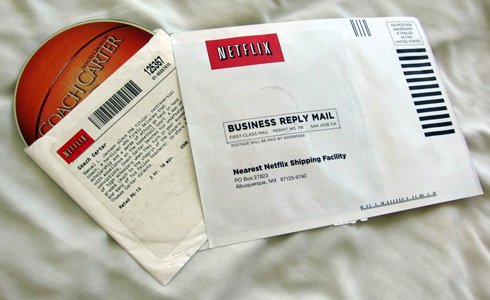
Netflix ships its final red envelopes and closes DVD.com, the by-mail business that had started the company in 1998 and that Blockbuster once chased with Total Access. Streaming had made the disc obsolete even for its most famous distributor.
The last Blockbuster on Earth
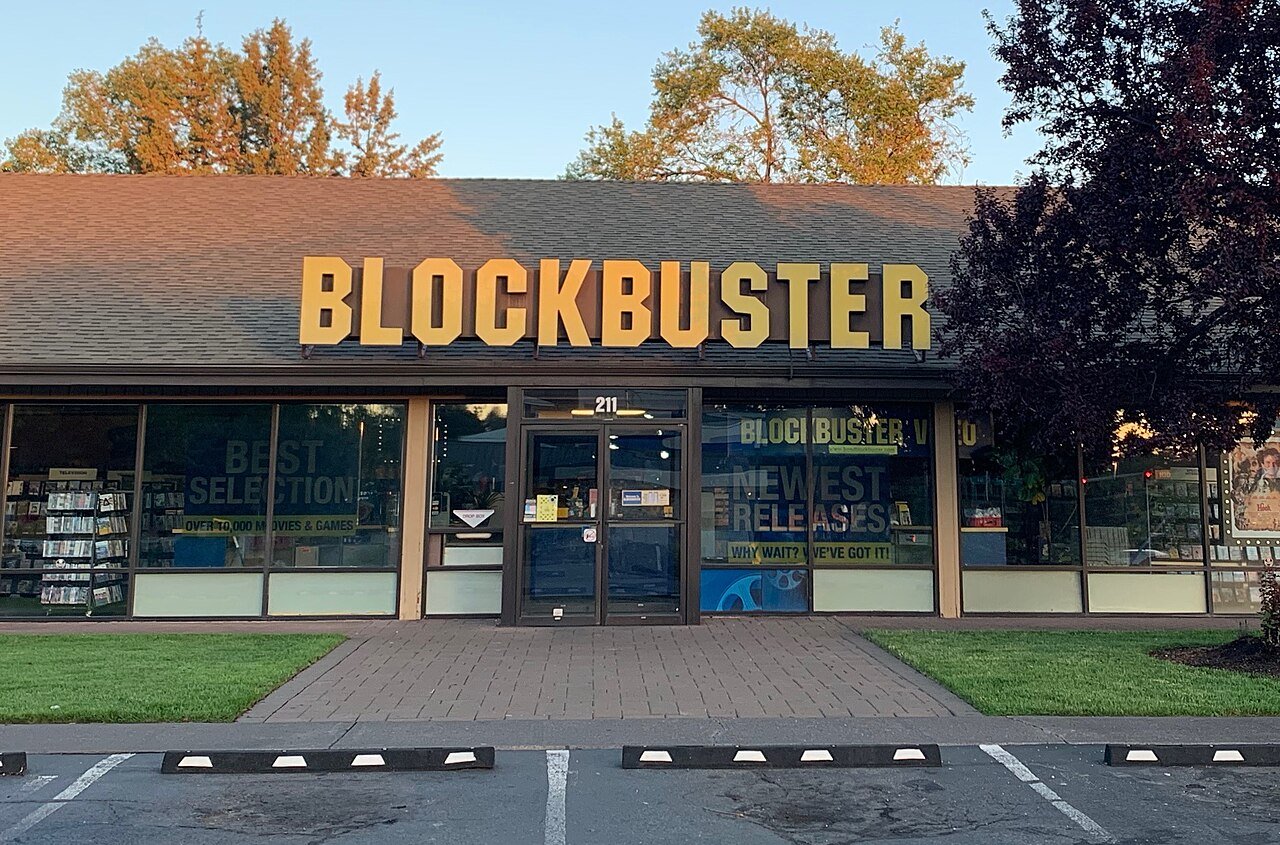
When a franchise store in Morley, Australia closes, the franchise store in Bend, Oregon, opened in 1992 and a Blockbuster since 2000, becomes the last Blockbuster in the world. It turns into a tourist attraction, stars in the 2020 documentary The Last Blockbuster, and is still renting DVDs in 2026.
2013
DISH closes the corporate chain
DISH announces that the remaining roughly 300 company-owned U.S. Blockbuster stores will close and the Blockbuster by-mail service will end by early January 2014, citing the shift to digital and streaming. Franchise stores, independently owned, can keep going.
DISH buys Blockbuster for about US$320 million
DISH Network wins the bankruptcy auction for substantially all of Blockbuster’s assets with a bid valued at about US$320 million, paying about US$226 million in cash after adjustments. It keeps the brand and some stores and tries to use Blockbuster to sell satellite and streaming services.
2010
Blockbuster files for Chapter 11
Blockbuster and its U.S. subsidiaries file voluntary Chapter 11 petitions under a plan agreed with most senior noteholders to cut debt from nearly US$1 billion to about US$100 million or less. The same month, Netflix launches streaming in Canada, its first market outside the U.S.
“Not even on the radar screen”
Blockbuster CEO Jim Keyes says: “Neither RedBox nor Netflix are even on the radar screen in terms of competition,” naming Wal-Mart and Apple as bigger rivals. Redbox’s US$1-a-night kiosks and Netflix’s streaming are both growing fast. The quote becomes one of the most repeated in business-school decks.
Peak, pull-back and a CEO change
By 1 July 2007 Blockbuster’s online service reaches about 3.6 million subscribers (3.3 million paying), up from 1.4 million a year earlier. Free in-store exchanges cost about US$140 million in the year. John Antioco leaves after a board dispute; new CEO Jim Keyes raises prices and cuts marketing, and by 30 September the base drops to about 3.1 million. Antioco later wrote that by early 2007 Total Access had triggered serious merger talks with Netflix.
Netflix starts streaming
Netflix adds streaming for its DVD subscribers, with a small catalogue watched on PCs. It is a side feature at first. Within a few years streaming turns Netflix’s biggest cost, postage and warehouses, into something it can phase out, and makes Blockbuster’s stores and Total Access exchanges look like the wrong battle.

2006
Blockbuster Total Access
Blockbuster lets online subscribers return DVDs at a store and take a free in-store rental in exchange. It is the one thing Netflix cannot copy. Blockbuster ends 2006 with about 2.2 million online subscribers, beating its two-million goal, and says it expects three million by the end of the first quarter of 2007.
No more late fees, and an activist arrives
“The end of late fees” starts at more than 4,500 company-operated U.S. stores. Blockbuster projects the fees would have brought US$250–300 million of operating income in 2005. Investor Carl Icahn wins board seats at the May shareholder meeting and questions the spending on online and on dropping late fees.
Peak stores, Blockbuster Online, and independence
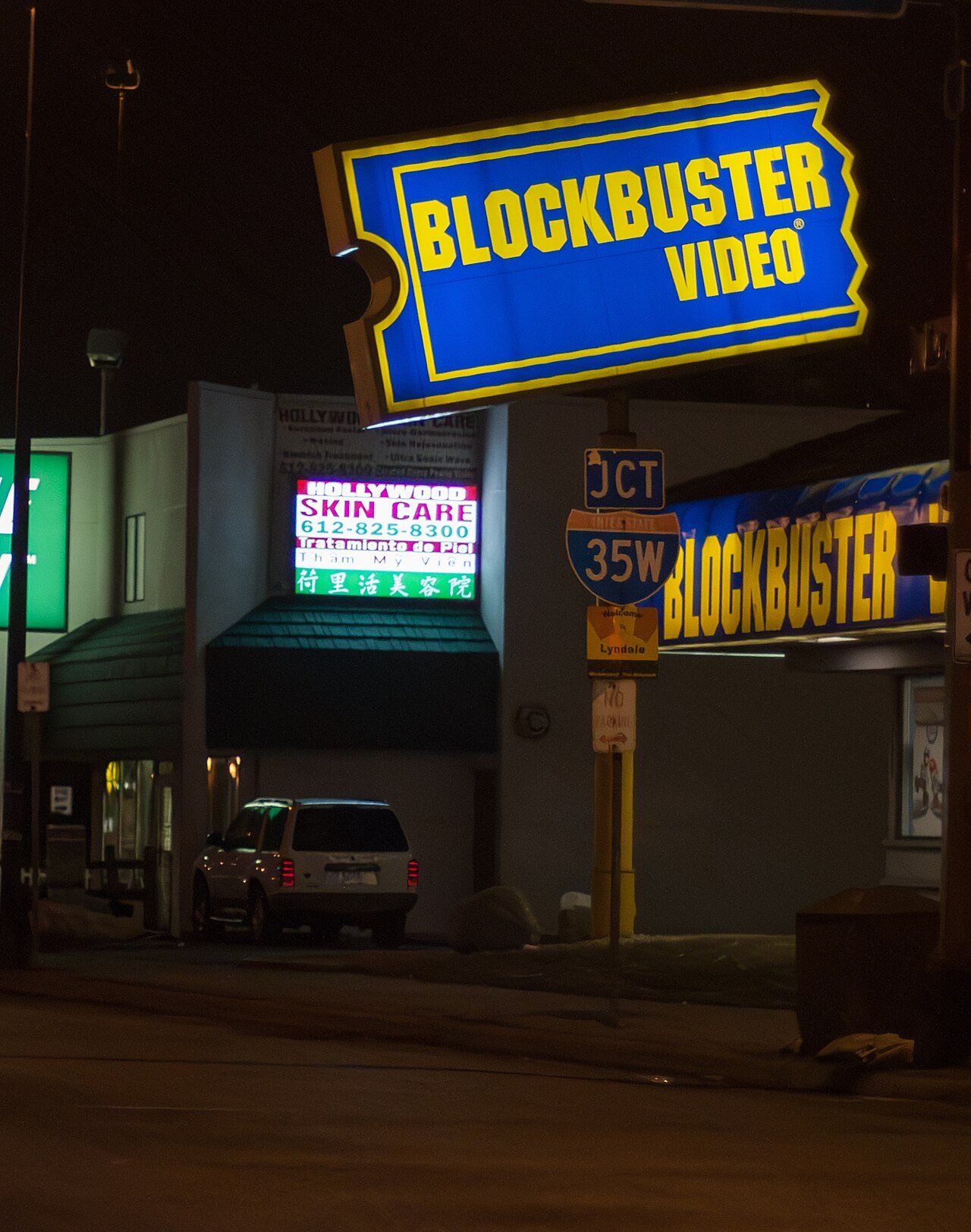
Blockbuster ends 2004 with 9,094 stores worldwide and US$6.1 billion of revenue. It launches Blockbuster Online in the U.S. in August, reaching more than 750,000 subscribers by 9 March 2005. In October it completes its split-off from Viacom, after paying a special US$5-a-share dividend.
Netflix goes public
Netflix sells shares at US$15 on Nasdaq. Its prospectus shows 2001 revenue of US$75.9 million and a net loss of US$38.6 million, and names “video rental outlets, such as Blockbuster” among its main competitors. Two years after the Dallas meeting, Netflix no longer needs a buyer.
The Dallas meeting
Netflix’s Reed Hastings and Marc Randolph fly to Dallas to meet Blockbuster CEO John Antioco and general counsel Ed Stead. They propose that Netflix run Blockbuster’s online business while Blockbuster promotes Netflix in its stores. Asked for a price, Hastings says US$50 million. By Randolph’s account, Antioco struggles not to laugh. Antioco later disputed that any serious purchase was discussed.
Unlimited rentals for US$19.95
Netflix moves every subscriber to a plan with an unlimited number of titles for US$19.95 a month, up to four at a time, with no due dates, late fees or shipping charges. The queue replaces the trip to the store.
Netflix launches its subscription
After a year of renting and selling DVDs one at a time, Netflix launches a subscription: US$15.95 a month for up to four titles, with no due dates or late fees. It had stopped selling new DVDs in March 1999.
Netflix is founded
Reed Hastings and Marc Randolph incorporate Netflix in August 1997. They choose DVDs, then brand new, because a disc can travel by first-class mail cheaply, which a VHS tape could not. The website launches in April 1998.
Viacom buys Blockbuster
Viacom acquires Blockbuster in a deal valued at about US$8.4 billion, partly to use its cash flow to help fund the purchase of Paramount. Blockbuster is now part of a media conglomerate whose studios supply the films it rents.
The first Blockbuster Video
David Cook opens the first Blockbuster Video in Dallas, with thousands of tapes, bright lighting and computerised stock control. A group led by Wayne Huizenga takes control in 1987 and expands the chain at great speed. The big-box video store, and its late fees, become part of American weekend life.
Total Access: The Year Blockbuster Almost Caught Up
Blockbuster’s online subscribers, from launch to the 2007 retreat.
Total Access was clever. A Netflix customer waited for the post; a Blockbuster customer could drop the envelope at a store and walk out with another film the same evening. From 1.4 million online subscribers in mid-2006, Blockbuster reached 3.6 million a year later. Antioco says this is when Netflix started taking merger talks seriously.
The same filings show the cost. Each free exchange was a store rental Blockbuster did not charge for. It put the cost at about US$140 million in 2007, “which contributed to a significant decrease in our profitability.” With late fees gone, debt from the Viacom split and an activist investor on the board, the new management chose profit: prices went up, advertising went down, and about half a million subscribers left in one quarter.
Follow a film to the sofa under each model. Tap a model.
The product never changed: a film for an evening. What changed was the chain between the studio and the viewer, and who paid for it.
Blockbuster vs Netflix by the Numbers
| Measure | Blockbuster | Netflix then | Netflix now |
|---|---|---|---|
| Revenue | US$6.1B (2004) | US$0.5B (2004) | US$45.2B (2025) |
| Stores | 9,094 (2004) | None | None |
| Late fees | Dropped 1 Jan 2005 | Never charged on subscription | Not applicable |
| Online subscribers | 3.6M peak (Jul 2007) | About 7.5M (end 2007) | 325M+ paid memberships (2025) |
| Ending / status | Chapter 11, Sep 2010 | IPO May 2002 at US$15 | Last DVD mailed Sep 2023 |
So Why Did Blockbuster Lose?
Five forces, working together.
- Netflix looked small. In 2000 it had a few hundred thousand subscribers and heavy losses; Blockbuster had thousands of stores. The deal looked like buying a problem.
- Late fees were profit. Blockbuster projected US$250–300 million of operating income from them in 2005. Dropping them to compete meant paying for the new model out of the old one.
- The stores were a cost as well as an asset. Leases, staff and inventory for 9,000 stores could not be cut as fast as rentals fell. Total Access tried to turn the stores into an advantage, and they became its biggest expense.
- Money and governance. The Viacom split left debt; the 2005 proxy fight brought an activist to the board; the 2007 CEO change reversed the online push at the moment it was working.
- The target moved. By the time Blockbuster matched DVD-by-mail, Netflix had moved to streaming, and Redbox’s US$1 kiosks were taking the casual renter.
Two Different Economies
| Blockbuster | Netflix | |
|---|---|---|
| Core asset | Thousands of leased stores | Warehouses, then servers |
| Revenue model | Per-rental fees plus late fees | Monthly subscription |
| Key product | New releases, many copies each | Deep catalogue, recommendations |
| Customer data | Store transactions | Queues and ratings, then viewing data |
| Who paid for change | The existing store business | Change was the business |
| Biggest threat | Anything that removed the trip to the store | Studios pulling licences |
Blockbuster vs Netflix, 2007
Myths vs Facts
“Blockbuster ignored the internet”
It launched online rental in 2004 and had 3.6 million online subscribers in 2007. It saw the threat; it could not fund both models.
“A US$40 Apollo 13 fine created Netflix”
Hastings told this story; Randolph has called it a simplification. Netflix grew out of months of brainstorming about selling by mail.
“Blockbuster could have bought Netflix for US$50 million”
Randolph says the price was named; Antioco says no serious purchase talks took place in 2000. The serious talks, he says, came in 2007.
“Netflix started as a streaming service”
Netflix rented DVDs by mail for almost nine years before adding streaming in January 2007, and kept mailing discs until September 2023.
“Blockbuster never gave up late fees”
It ended them at company-operated U.S. stores on 1 January 2005, giving up a projected US$250–300 million of operating income.
“Netflix alone killed Blockbuster”
Redbox kiosks, cheap DVD sales, video on demand and nearly US$1 billion of debt all played a part.
What Blockbuster Teaches About Disruption
Seeing the threat is not enough. Blockbuster’s filings from 2004 onward describe online rental, video on demand and downloads clearly. What it lacked was a way to pay for the new model without the old one.
The next technology may not be the last. Netflix beat Blockbuster with DVDs by mail, then made its own DVD business obsolete with streaming, and closed it in 2023.
Hindsight removes the uncertainty. A US$50 million bet on a loss-making startup in the middle of a crash was not obviously right in 2000. Keeping a working online service funded in 2007, when it had 3.6 million customers, is the easier decision to second-guess.
Did You Know?
- Why DVDs: Netflix’s founders tested mailing a CD to themselves in 1997; a VHS tape was too heavy and fragile to post cheaply.
- First Netflix price: the September 1999 subscription was US$15.95 a month for four titles.
- Late fees at scale: Blockbuster expected US$400–450 million of 2005 revenue from them before scrapping them.
- Patent fight: Netflix sued Blockbuster in April 2006 over its subscription method; they settled in 2007.
- Last envelope: Netflix mailed its final DVDs on 29 September 2023, exactly three years before this update.
Test Yourself: Blockbuster vs Netflix Quiz
1. What was Netflix’s original business?
2. When did Netflix launch its no-late-fee subscription?
3. What price did Netflix reportedly name at the 2000 Dallas meeting?
4. What did Blockbuster launch in November 2006?
5. How many online subscribers did Blockbuster have at its peak?
6. When did Blockbuster file for Chapter 11?
7. Who bought Blockbuster’s assets?
8. Where is the last Blockbuster?
Explore More Timelines
People Also Ask
Frequently Asked Questions
Related AiTimeline Stories
⚠️ Editorial Note
The September 2000 meeting and the US$50 million figure come from Marc Randolph’s memoir and interviews; John Antioco’s response is from his June 2022 LinkedIn post, as reported by Next TV. Blockbuster figures are from its SEC filings: 10-K reports for 2004, 2006, 2007 and 2009, the Q2 2007 earnings release, the Q3 2007 10-Q and the 23 September 2010 bankruptcy release. Netflix’s early history is from its May 2002 IPO prospectus; recent figures are from its 2025 and Q2 2026 results. Corrections to widely shared versions: Netflix’s subscription launched in September 1999, not December; Blockbuster’s US$250–300 million late-fee estimate was a projection of 2005 operating income, not 2004; and the 750,000 online subscriber figure was as of March 2005. This article is not investment advice.
Sources & further reading
Every dated entry above was checked against these references. Last reviewed 29 September 2026.
- Blockbuster Inc. 2004 Annual Report (Form 10-K)
- Blockbuster Q2 2007 earnings release: 3.6 million online subscribers
- Blockbuster Q3 2007 quarterly report (Form 10-Q)
- Blockbuster Inc. 2007 Annual Report (Form 10-K)
- Blockbuster: Chapter 11 recapitalization announcement (23 Sep 2010)
- DISH Network agrees to acquire Blockbuster assets (6 Apr 2011)
- Netflix IPO prospectus (May 2002)
- Next TV: Antioco says the famous Netflix rebuff 'didn't happen' (Jun 2022)
- The Motley Fool: Blockbuster CEO Has Answers (Dec 2008)
- Netflix Q2 2026 shareholder letter (16 Jul 2026)