Press Trust of India (PTI): History and Rise of India’s News Wire
Press Trust of India history from its 1947 founding: the first wire in 1949, the 1953 Reuters break, the Emergency merger, Bhasha and the 2020 standoff.
Latest Story
When a story breaks in India, the first version many readers see was often written by someone they never hear of, at the Press Trust of India. Incorporated in 1947 and sending news since 1949, PTI is owned by India’s newspapers and sells text, photos and video to more than 800 clients. This is Press Trust of India history in order: the Reuters-owned agency it replaced, the 1953 break, the Emergency merger of 1976, Bhasha and photos in the 1980s, the 2020 standoff with the government and the AI question it faces in 2026, with each date sourced and the brief’s errors corrected.
💡 Short Answer
The Press Trust of India was incorporated in Madras on 27 August 1947, with Kasturi Srinivasan of The Hindu as chairman, and began its news service on 1 February 1949 by taking over the Associated Press of India from Reuters. It became independent of Reuters in 1953, was merged into the state-backed agency Samachar during the Emergency (February 1976 to April 1978), and added Hindi (Bhasha) and television in 1986 and photos in 1987. Owned cooperatively by Indian newspapers, it now has more than 800 subscribers, a fact-check unit (2022) and a video service (2023).
Press Trust of India History: Key Questions
PTI in Ten Points
- 1905–1945: India’s first agency, the Associated Press of India, is taken over by Reuters (1919) and becomes a Reuters company (1945).
- October 1946: Indian newspapers decide to form their own agency to buy it out.
- 27 August 1947: PTI is incorporated in Madras under Kasturi Srinivasan of The Hindu.
- 1 February 1949: PTI sends its first news; it breaks with Reuters in 1953.
- 1961: a rival, UNI, begins service; India has two national wires.
- 1976–1978: the Emergency merges all four agencies into Samachar; they are split again on 14 April 1978.
- 1986–1987: PTI-TV, Bhasha in Hindi, satellite delivery and a photo service.
- 2018: 297 staff cut as the teleprinter era ends; a court stays the retrenchment.
- 2020: an interview with China’s envoy brings an ‘anti-national’ letter, a Rs 84 crore lease demand and lost Prasar Bharati subscriptions.
- 2022–2026: fact-checking, a video service and the AI licensing question.
What a News Wire Is
PTI is a supplier, not a publisher. That shapes everything else on this page.
One report, many outlets
A news agency gathers news once and sells it to many clients. A paper in Kochi and a website in Lucknow can carry the same PTI paragraph minutes apart without either sending a reporter.
Newspapers, not the state
PTI is owned by its member papers, which is why its chairmen are publishers. The design was meant to keep the national wire out of foreign hands in 1947, and out of government hands after.
More than 800 subscribers
Newspapers, TV channels, portals, apps, government departments and companies. A client can be powerful: in 2020 the public broadcaster used its subscription as leverage.
‘PTI’ on the byline
Identical wording across sites usually means one shared dispatch. Many outlets carrying a story is not the same as many outlets confirming it.
The Press Trust of India Timeline, 1905–2026
Newest first. Tags mark new services, ownership, outside pressure and turning points.
AI and the value of a wire Turning point
The question hanging over every agency in 2026 is what happens when chatbots answer the questions that wire copy used to. On 24 July 2026 the Delhi High Court refused PTI’s rival ANI an interim injunction against OpenAI, holding that storing ANI’s articles to train ChatGPT was prima facie fair dealing; the full suit is still to be tried. PTI was not a party, but the ruling bears on every Indian agency’s archive. PTI’s own recruitment brief for a head of sales, published in 2025, lists news licensing, partnerships and ‘AI-driven products’ among the revenue lines it wants to build.
2025
A Jagran chairman Ownership
After its annual general meeting, PTI’s board elected Mahendra Mohan Gupta of Jagran Prakashan, publisher of Dainik Jagran, as chairman, with M.V. Shreyams Kumar of the Mathrubhumi group as vice-chairman. Gupta, 84, had earlier chaired the rival agency UNI and been president of the Indian Newspaper Society. The rotation is how PTI’s cooperative ownership works in practice: the chair passes among the publishers who own it.
2023
The prime minister in the newsroom Turning point
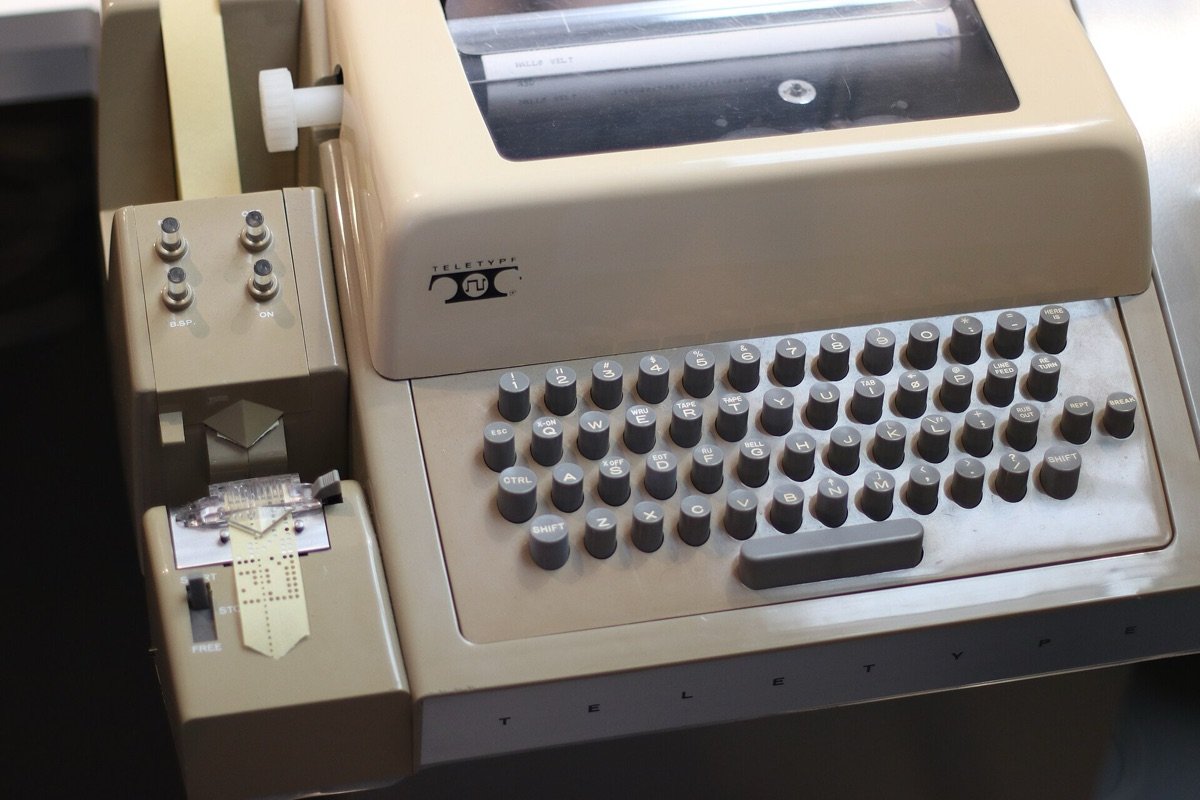
Prime Minister Narendra Modi spent about an hour at PTI’s headquarters on 9 December 2023, reported as his first visit to any newsroom since taking office in 2014. He toured the departments, stopped at the old teleprinter and Creed machines kept on display, and wrote a short poem in the visitors’ book. Three years after a government broadcaster had called PTI’s coverage anti-national, the visit was read as a thaw.
Chairmen from the south Ownership
On 30 September 2023 PTI’s board elected K.N. Shanth Kumar of The Printers (Mysore), publisher of Deccan Herald, as chairman for a one-year term, with Hindustan Times chief executive Praveen Someshwar as vice-chairman. He succeeded Aveek Sarkar of the ABP group, first elected in August 2020.
A video agency Service
PTI had launched PTI-TV as early as February 1986, but its modern video news service, built to supply live feeds and edited clips to television channels and news websites, launched in February 2023. Within months it was competing directly with ANI, whose business had been built on video. For newsrooms that now publish a clip with almost every story, it made PTI a one-stop supplier of text, photos and pictures that move.
PTI Fact Check Service
PTI set up a Fact Check unit in February 2022 to verify viral claims and debunk misinformation, with an emphasis on rumours circulating in smaller cities and regional languages. It publishes on a dedicated section of the PTI website and applied to the International Fact-Checking Network’s code of principles in 2023. Fact-checking is a different job from routine wire editing: it takes a claim already in circulation and tests it, rather than deciding what to send.
2020
‘Anti-national’, then a Rs 84 crore bill Pressure
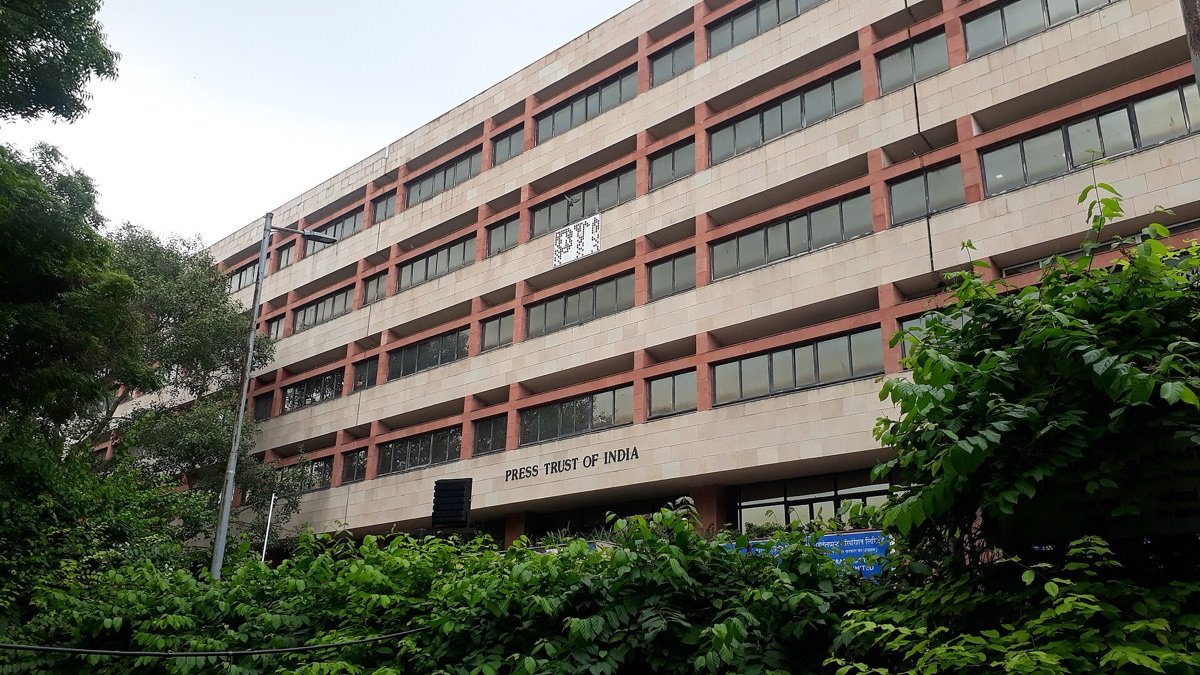
After the Galwan Valley clash of 15 June 2020, in which 20 Indian soldiers died, PTI interviewed China’s ambassador Sun Weidong and India’s ambassador in Beijing. On 27 June the public broadcaster Prasar Bharati, one of PTI’s biggest clients, wrote that the coverage was detrimental to national interest and threatened to stop subscribing. On 7 July the Land and Development Office served PTI a notice for Rs 84.48 crore over alleged breaches of the lease on its Parliament Street building. In October 2020 Prasar Bharati’s board ended its subscriptions to both PTI and UNI. A former PTI chief called the ‘anti-national’ label unfair and shocking. For an agency that sells to everyone, including the state, the episode tested whether a client could also be a censor.
2018
297 jobs cut in a day Pressure
PTI retrenched 297 employees across the country on 29 September 2018: 147 attenders, 80 transmission staff and 70 engineers whose jobs the move to digital delivery had made redundant. The company said it was protecting its ‘core business of producing and disseminating news’. Journalists’ unions called the move illegal, and in November 2018 the Delhi High Court stayed the retrenchment while it heard their petition. The cuts showed what the end of the teleprinter meant for the people who had kept it running.
An AP veteran takes over Ownership
In February 2017 Vijay Joshi, a former PTI reporter who had spent years at the Associated Press, returned as editor-in-chief; he later became chief executive too. In September 2017 the board elected Viveck Goenka of the Indian Express group as chairman, and the agency reported revenue of about Rs 1.73 billion (Rs 173 crore). Joshi’s brief was to move a teleprinter-era organisation onto digital desks, which led directly to the staff cuts that followed.
2010
From cables to the internet Service
PTI switched delivery to the internet in September 2003, so subscribers could take news and photos online rather than over dedicated lines. A Ku-band VSAT satellite system followed in July 2007 for places where connections were unreliable, and NewsView, in March 2010, delivered copy as text and XML files that websites could publish automatically. Each change made the wire faster to reuse, and made it easier for the same story to appear on dozens of sites within minutes.
Golden jubilee, and online Turning point
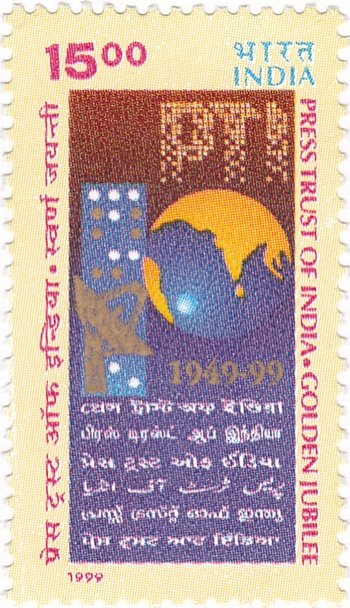
PTI marked its golden jubilee in March 1999, counting from the first service of February 1949, and India Post issued a commemorative stamp. The same month the agency went on the internet. In 1996 it had made its first investment in a foreign company, Asia Pulse, an online databank of Asian economic information.
1997
Magazines, graphics, markets Service
As liberalisation opened the economy and private television arrived, PTI added products for a more crowded market: PTI Mag (August 1992), a graphics service (August 1993), StockScan II for market data (March 1995) and a photo dial-up facility (December 1997). More clients, more formats and more business news meant a wire that was no longer only for the next morning’s paper.
1987
Hindi, television, satellite, photos Turning point
Two years remade the agency. PTI-TV launched in February 1986 and PTI Bhasha, the Hindi service, in April 1986, making PTI bilingual. In August 1986 it began experimental transmission of news and pictures by satellite through India’s Insat-1B, and its computer system became fully operational. The photo service followed in October 1987. For subscribers outside the big cities, satellite delivery meant news that arrived as fast as it did in Delhi.
1985
Features, science and computers Service
Back on its own after the Emergency, PTI widened its offer: a feature service in July 1980, a science service in October 1981 and Scan, an on-screen news display for offices and hotels, in November 1982. It launched services for subscribers in the United States in 1984 and the United Kingdom in 1985, the year it began computerising its news operations.
1978
Samachar is broken up Turning point
After Indira Gandhi lost the 1977 election, the Janata government set up the Kuldip Nayar Committee to examine Samachar. On 14 November 1977 it recommended restructuring it into two agencies, Varta and Sandesh. The government went further and undid the merger: on 14 April 1978 PTI, UNI, Hindustan Samachar and Samachar Bharati resumed as separate agencies. PTI’s Economic Service, launched in 1976, survived the episode.
Merged into Samachar under the Emergency Pressure
A month after the Emergency was declared, Indira Gandhi’s government decided on 26 July 1975 to merge India’s four teleprinter agencies into one. In February 1976 PTI, its rival UNI and the Indian-language agencies Hindustan Samachar and Samachar Bharati became a single agency, Samachar. With press censorship in force, the country had, in effect, one source of agency news. It is the clearest example in PTI’s history of why the ownership of a wire matters as much as its speed.
A rival arrives: UNI Ownership
The first Press Commission (1952-54) had argued that India needed a second news agency so that each could correct the other; United Press of India collapsed in 1958. United News of India, sponsored by eight leading newspapers, was founded on 19 December 1959 and began commercial service on 21 March 1961, starting with 13 rusting teleprinters. For the next six decades PTI’s growth happened against a direct competitor.
Free of Reuters Turning point
Under the 1948-49 takeover PTI had bought into Reuters and relied on it for world news, with its own office in London. In 1953 that link ended and PTI became an independent agency, free to make its own exchange agreements. Today it trades news with about 100 foreign agencies and has correspondents in capitals such as Washington, London, Beijing, Moscow, Dubai, Islamabad and Colombo.
1949
The first PTI service Turning point
On 1 February 1949 PTI began its news service, taking over the operations of the Associated Press of India from Reuters while keeping a partnership with it. Indian newspapers now received their national news from an agency they owned. This is the date PTI counts its service from, which is why its golden jubilee fell in 1999.
1947
PTI is incorporated in Madras Ownership
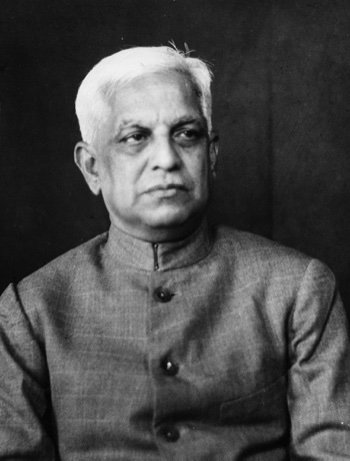
The Press Trust of India was incorporated in Madras on 27 August 1947, with Kasturi Srinivasan, proprietor of The Hindu, as founding chairman. It existed on paper for 18 months before it sent any news: the company was the vehicle through which Indian newspapers would buy out Reuters’ Indian agency business.
1946
Newspapers decide to own their wire Ownership
With independence approaching and Reuters changing its own constitution, the Indian and Eastern Newspaper Society (now the Indian Newspaper Society) took up the transfer of API to Indian newspapers in 1945. A sub-committee recommended that API be controlled by ‘a Trust or similar organisation’. At its meeting of October 1946 the Society decided to form a new company, the Press Trust of India, and elected its first board. The agreement with Reuters included PTI buying shares in Reuters and setting up its own office in London.
1919
The Associated Press of India Ownership
The story begins with the Associated Press of India, started by journalist K.C. Roy and often called India’s first news agency. Wikipedia, citing UNESCO, dates it to 1905; other histories say 1910. In 1919 Reuters took over its operations while keeping the API name on its copy, and in 1945 API was registered as a private company wholly owned by Reuters. So for the last decades of British rule, much of the news Indian papers printed about India was gathered and sold by a British agency.
Who sends the headlines first? Pick a year.
Drag from 1905 to 2026 to see who controlled India’s main news wire and what it sold. Mint chips are PTI services running that year; amber chips are rival agencies. Dates from PTI’s published history.
Thirty Years of One Product, Then a Burst
New services and delivery systems, counted by the decade they launched.
Follow a single dispatch
A hypothetical ministry announcement, step by step. Pick a stage to see what happens and what can go wrong.
PTI’s Services and When They Started
Dates from PTI’s published history unless stated.
| Service | Launched | What it supplies |
|---|---|---|
| English news service | 1 Feb 1949 | The core wire: national, state and world news |
| Economic Service | 1976 | Business and economic news |
| Feature / Science services | Jul 1980 / Oct 1981 | Longer features; science reporting |
| PTI-TV | Feb 1986 | Early television news service |
| PTI Bhasha | Apr 1986 | Hindi news service |
| Photo service | Oct 1987 | News photographs with captions |
| PTI Graphics | Aug 1993 | Ready-made news graphics |
| Internet delivery | Sep 2003 | News and photos online |
| NewsView | Mar 2010 | Text and XML feeds for websites |
| PTI Fact Check | Feb 2022 | Checks of viral claims |
| Video service | Feb 2023 | Live feeds and edited clips |
Who Has Chaired PTI
The chair rotates among member publishers on one-year terms. These are the chairmen we could date from public records; the list is not complete.
| Chairman | Newspaper group | Elected |
|---|---|---|
| Kasturi Srinivasan | The Hindu | 1947 (founding) |
| Viveck Goenka | Indian Express | Sep 2017 |
| Aveek Sarkar | ABP group | Aug 2020; re-elected Sep 2021 |
| K.N. Shanth Kumar | The Printers (Deccan Herald) | 30 Sep 2023 |
| Mahendra Mohan Gupta | Jagran Prakashan | 29 Aug 2025 |
India’s Agencies, Side by Side
PTI has rarely been alone.
Associated Press of India
K.C. Roy’s agency, Reuters-run from 1919 and Reuters-owned from 1945. PTI took over its service in 1949.
United News of India (UNI)
Founded in 1959 by eight newspapers as a check on PTI; service from 21 March 1961; Hindi service Univarta from 1982. Taken over by The Statesman group in 2025.
Samachar
The single agency formed by merging PTI, UNI, Hindustan Samachar and Samachar Bharati under the Emergency.
ANI
Asian News International, a privately owned Delhi agency strong in video, and the plaintiff in India’s first big AI copyright case against OpenAI.
PTI in Numbers
Company, reported and demanded figures, each with its source and date.
| Figure | What it measures | Source | How to read it |
|---|---|---|---|
| 800+ | Subscribers of all kinds | PTI company document, 2025 | Clients, not owners |
| 450+ | Newspapers in the cooperative | Encyclopedia of Journalism (2009) | Older figure |
| 500+ / ~400 | Full-time staff / journalists | Wikipedia, as of Jan 2022 | Plus ~400 district stringers |
| ~100 | Foreign agencies it exchanges news with | Wikipedia | Includes AP and AFP |
| 297 | Employees retrenched, 29 Sep 2018 | The Wire; Newslaundry | Stayed by Delhi HC |
| Rs 84.48 crore | Lease dues demanded, Jul 2020 | L&DO notice, via Moneylife | A demand, not a ruling |
| Rs 173 crore | Revenue, 2016-17 | India Today, via Wikipedia | Latest public figure we found |
Corrections and Clarifications
Claims in the brief this page was built from, checked against PTI’s published history, the Indian Newspaper Society’s record, PTI’s own documents and the press record.
“1905: the roots”
1905 for the Associated Press of India comes from a 1953 UNESCO study cited by Wikipedia. Many Indian media histories give 1910. Both are shown; neither is certain.
“1970s–1980s: a new era”
The brief gives no dates. PTI’s record does: computerisation from 1985, Bhasha and PTI-TV in 1986, satellite trials via Insat-1B in August 1986, photos in October 1987.
“2010s: photographs and video”
The photo service began in 1987 and PTI-TV in 1986. The current video service launched in February 2023, not in the 2010s.
“2020: the pandemic tests news”
The brief’s 2020 entry is generic industry context. PTI’s own 2020 was the Prasar Bharati ‘anti-national’ letter, a Rs 84.48 crore lease demand and lost subscriptions; that is now the entry.
The Emergency merger
A history of PTI that skips February 1976 to April 1978, when it was folded into Samachar, leaves out the most important test of who controls a wire.
UNI, 2018 job cuts, chairmen
The rival agency founded in 1959, the 297 retrenchments of 29 September 2018, and the chairmen from Kasturi Srinivasan to Mahendra Mohan Gupta are now included.
Company-registry mirror and IFCN link
The brief cites a third-party company-data mirror for the 1947 date and an IFCN mail-subdomain link we could not load. We cite PTI’s published history and the Indian Newspaper Society instead.
“India’s largest news agency”
The description comes from PTI and its partner the Associated Press. It is widely accepted, but no independent audit compares PTI, UNI and ANI.
What Comes Next
PTI’s strengths are the ones it has had since 1949: reporters in places no single newsroom can afford to cover, an editing desk that makes copy safe to reuse, and a distribution network that reaches hundreds of clients at once. Those are still worth paying for, but its clients are under financial pressure of their own, and the cheapest competitor is now a chatbot that summarises what the wire already sent.
Its 2025 plans point to licensing, partnerships and AI products as new income. The July 2026 ANI ruling suggests Indian courts may not make that easy. And 2020 showed that ownership by newspapers protects the wire from government control only as long as its biggest clients do not use their subscriptions as pressure. The next chapter will turn on whether PTI can be paid for being the source, not just for being first.
Explore More Timelines
People Also Ask
Frequently Asked Questions
The Bottom Line
The Press Trust of India was created in 1947 so that Indian newspapers, not Reuters, would control the news wire that fed them. It began service on 1 February 1949, became independent in 1953, survived being merged into a state-backed agency during the Emergency, and grew from one English wire into Hindi, photos, graphics, video and fact-checking. Owned by its member papers and selling to more than 800 clients, it remains the agency behind a large share of India’s headlines. Its history is a reminder that a wire’s value lies in who controls it as much as in how fast it is.
Related AiTimeline Stories
⚠️ Editorial Note
Last updated 12 October 2026. Service launch dates and the 1905-1953 chronology come from PTI’s published history as summarised on Wikipedia, which cites PTI and a 1953 UNESCO study; the 1945-46 decision from the Indian Newspaper Society’s history; subscriber numbers from a 2025 PTI company document; the Emergency merger and UNI history from Wikipedia, citing K.M. Shrivastava (2007) and others; the 2018 retrenchments from The Wire, Newslaundry and the IFJ; the 2020 Prasar Bharati and lease episodes from Newslaundry and Moneylife; board elections from Deccan Herald, The Tribune and PTI as carried by The Week; the 2023 video launch and prime minister’s visit from PTI as reported by Siasat; the ANI ruling from legal reporting. Staff and revenue figures are the latest public ones we found and are not current-year audits. Where sources disagree, both are shown. AiTimeline has no commercial relationship with PTI.
Sources & further reading
Every dated entry above was checked against these references. Last reviewed 12 October 2026.
- Wikipedia: Press Trust of India (history table 1905-2010, incorporation 27 Aug 1947, service from 1 Feb 1949, Bhasha 1986, photo service 1987)
- Indian Newspaper Society: History (1945 sub-committee, October 1946 decision to form PTI)
- Press Trust of India: company information (more than 800 subscribers, English and Hindi, text, photo and video)
- PTI Fact Check
- Wikipedia: United News of India (founded 1959, service from 21 Mar 1961, Samachar merger Feb 1976, split 14 Apr 1978)
- The Wire: Journalists' unions protest PTI decision to lay off 297 staffers (Sep 2018)
- Newslaundry: Delhi High Court stays retrenchment of 297 PTI employees (27 Nov 2018)
- Newslaundry: Prasar Bharati ends PTI and UNI subscriptions (16 Oct 2020)
- Moneylife: Govt tells PTI to pay Rs 84.48 crore for 'breaches' in its office premises (Jul 2020)
- Deccan Herald: Shanth Kumar of Deccan Herald is new PTI chairman (30 Sep 2023)
- The Week (PTI): MM Gupta of Jagran Prakashan is new PTI chairman (29 Aug 2025)
- Associated Press: Press Trust of India partner profile