Big Three Tennis Rivalry: Federer, Nadal, Djokovic Timeline
Explore the Big Three tennis rivalry timeline, from Federer's first Wimbledon title to Nadal's clay dominance and Djokovic's record 24 Grand Slam crowns.
Latest Story
For two decades, the Big Three tennis rivalry decided almost everything in the men’s game. Roger Federer made winning look effortless, Rafael Nadal turned intensity into an art form, and Novak Djokovic returned almost anything and survived matches that seemed lost. Between Wimbledon 2003 and the 2023 US Open they won 66 of the 81 Grand Slam singles titles played. This timeline follows the rivalry from Federer’s first Wimbledon to Djokovic’s 102nd title in Beijing this week, with the head-to-heads, the records and the matches that defined it.
💡 Short Answer
By Grand Slam titles, Novak Djokovic won the Big Three rivalry with 24, ahead of Rafael Nadal’s 22 and Roger Federer’s 20. Djokovic also leads both head-to-heads, 31–29 over Nadal and 27–23 over Federer. Nadal leads Federer 24–16 and won a record 14 French Opens. Federer retired in 2022, Nadal in 2024; Djokovic still plays.
Federer, Nadal and Djokovic: Key Questions
The Big Three Rivalry in Ten Points
- 2003: Federer won his first major at Wimbledon, the first of the 66.
- 2005: Nadal won the French Open on debut, aged 19.
- 2008: Nadal beat Federer 9–7 in the fifth set of the Wimbledon final; Djokovic won his first major.
- 2011: Djokovic won three majors and beat Nadal in six finals.
- 2012: Djokovic beat Nadal in the longest Grand Slam final, 5 hours 53 minutes.
- 2017: Federer and Nadal returned from injury to share all four majors.
- 2019: Djokovic saved two championship points to beat Federer at Wimbledon.
- 2022: Federer retired at the Laver Cup, partnering Nadal; Nadal reached 22.
- 2023: Djokovic won three majors to reach 24, the last Big Three Slam.
- 2024–26: Nadal retired, Djokovic won Olympic gold, and the majors passed to a new generation.
Men’s singles majors, career totals as of October 2026
24
22
20
Singles majors only, not doubles or Olympic medals. Each title takes seven best-of-five wins.
Meet the Big Three
Three styles, three personalities, three ways to win 20 majors.
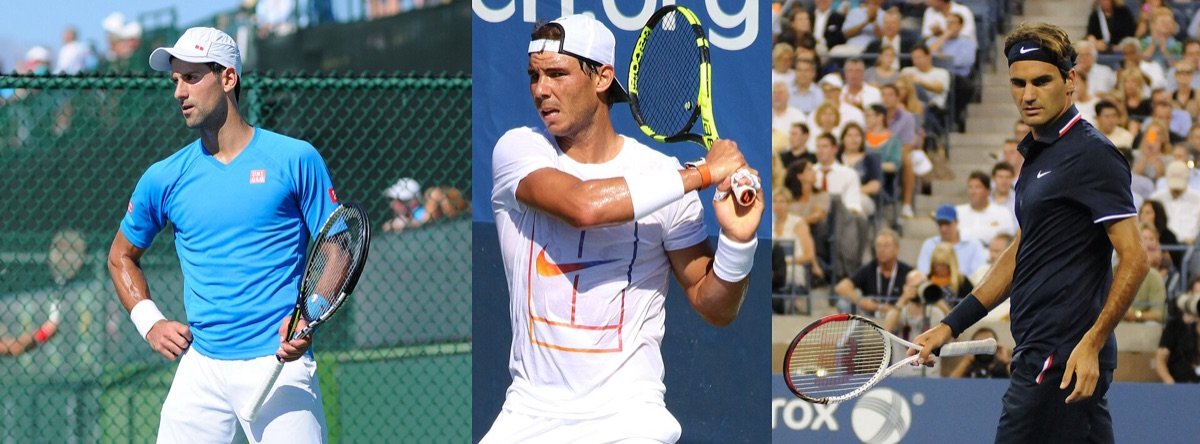
Roger Federer, the Maestro
Fluid movement, a precise serve, an attacking forehand and a one-handed backhand. Eight Wimbledons, 237 straight weeks at No. 1 and 103 titles. Retired September 2022; Hall of Fame 2026.
Rafael Nadal, the King of Clay
Left-handed, heavy topspin, relentless defence and unmatched competitive intensity. Fourteen French Opens and 112 wins from 116 matches at Roland Garros. Retired November 2024.
Novak Djokovic, the Return Machine
The best returner of his generation, with extreme flexibility, defence that turns into attack, and the most complete record across surfaces. Ten Australian Opens; Olympic gold 2024. Still active.
Pick a yardstick and see who comes out on top
The answer changes with the measure. Tap one. Nothing you click is recorded.
Choose a yardstick above
The Big Three: Full Timeline, 2003–2026
Newest first. Tags show whose moment it was.
2026
Djokovic wins title No. 102 in Beijing Djokovic
At 39, Djokovic wins the China Open for a seventh time when Alex de Minaur retires injured in the final, after Djokovic took the first set on a tie-break. It is his 102nd tour-level title, one behind Federer’s 103, and keeps alive his run of winning at least one title every season since 2006. A tired Djokovic loses in the second round in Shanghai days later.
Why it matters: the last of the three is still adding to the record books, and Federer’s career-titles mark is within reach.
2026
Federer enters the Hall of Fame Federer
In his first year of eligibility, Federer is inducted into the International Tennis Hall of Fame alongside Mary Carillo. In a speech of nearly 30 minutes, he says fame was never the goal and that he is “still writing my love letter to tennis”.
Why it matters: the first of the three to retire becomes the first formally enshrined.
Djokovic’s 38th major final, and a loss to Alcaraz Djokovic
Djokovic reaches his 11th Australian Open final, with Nadal watching from the stands, but Carlos Alcaraz beats him 2–6, 6–2, 6–3, 7–5. It is Djokovic’s first defeat in a Melbourne final, and makes Alcaraz the youngest man to complete the career Grand Slam. Later in 2026, Djokovic loses the Wimbledon semi-final to Jannik Sinner, and Alexander Zverev wins the French and US Opens.
Why it matters: the last chance yet for a 25th major went to the man who now owns the next era.
Four semi-finals, title No. 100 Djokovic
Djokovic reaches the semi-finals of all four majors at 38 but loses to Zverev (retired injured), Sinner twice and Alcaraz. He wins his 100th title in Geneva in May, joining Connors and Federer in three figures, and his 101st in Athens in November. Sinner and Alcaraz share the four majors for a second straight year.
Why it matters: the gap was no longer about form but about beating two much younger rivals in best-of-five.
2024
Nadal plays his last match Nadal
Exactly two years ago today, on 10 October 2024, Nadal announced that the Davis Cup Finals would be his last event. In Málaga he loses his singles rubber to Botic van de Zandschulp, Spain go out to the Netherlands, and he is sent off with a tribute video including messages from Federer and Djokovic.
Why it matters: two of the three were now retired, leaving Djokovic alone.
2024
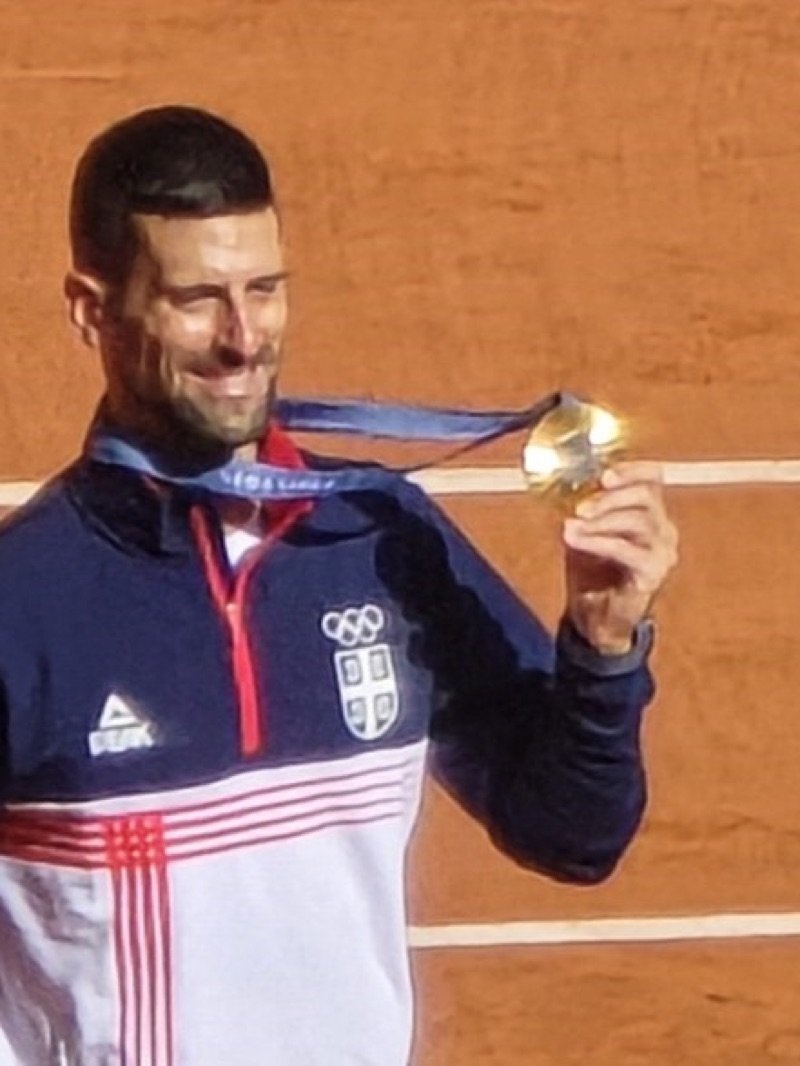
Djokovic wins Olympic gold Djokovic
On Nadal’s favourite court, Djokovic beats Alcaraz without dropping serve in the final to win the one major prize he lacked. A week earlier, in the second round, he had beaten Nadal 6–1, 6–4 in their 60th and final meeting. Earlier in the year Nadal had lost in the first round of his final French Open to Alexander Zverev.
Why it matters: Djokovic completed the Career Golden Slam, and 2024 became the first year since 2002 with no Big Three major.
Djokovic wins three majors and reaches 24 Djokovic
Djokovic wins his tenth Australian Open, then breaks the tie with Nadal by winning Roland Garros for a 23rd major, and adds the US Open for a 24th. He loses only the Wimbledon final, to Alcaraz in five sets.
Why it matters: this is the last major won by any of the Big Three, and it settled the title race.
2022
Federer’s farewell, alongside Nadal Federer
Federer plays his last match in doubles with Nadal at the O2 Arena, losing to Jack Sock and Frances Tiafoe. Earlier in 2022 Nadal had won the Australian Open from two sets down in the final and his 14th French Open to reach 22 majors, while Djokovic, deported from Australia before the tournament over his Covid-19 vaccination status, won Wimbledon for 21.
Why it matters: the photograph of the two rivals crying side by side became the defining image of the era’s end.
Djokovic draws level at 20 Djokovic
Djokovic beats Nadal in a four-hour French Open semi-final on the way to the title, then wins Wimbledon to tie the record at 20. He goes to New York one match from the first calendar Grand Slam since Rod Laver in 1969, but loses the final to Daniil Medvedev in straight sets.
Why it matters: for a few months all three were level on 20.
2020
Nadal’s 13th French Open ties Federer at 20 Nadal
In a tournament postponed to October, Nadal crushes Djokovic in the final without losing a set all fortnight. Djokovic had won the Australian Open earlier in the year for 17; Wimbledon was cancelled for the first time since the Second World War.
Why it matters: Federer and Nadal were tied on 20, with Djokovic three behind.
2019
Djokovic saves two championship points against Federer Djokovic
Federer, nearly 38, serves at 8–7, 40–15 in the fifth set and misses both championship points. Djokovic wins the first Wimbledon singles final settled by a tie-break at 12–12, and the longest in the tournament’s history, despite winning fewer points than Federer.
Why it matters: Federer’s best late chance at a 21st major went to the rival who would overtake him.
Djokovic returns after elbow surgery Djokovic
Djokovic has elbow surgery in February and falls outside the top 20, then wins Wimbledon, beating Nadal in a five-set semi-final, and the US Open. Federer wins his 20th major at the Australian Open and Nadal his 11th French Open.
Why it matters: the start of Djokovic’s second run of dominance, which carried him past both rivals.
2017
Federer beats Nadal in the comeback final Federer
Both return from long injury layoffs and meet in Melbourne, where Federer wins the last five games to end a six-match losing streak against Nadal at majors. Federer adds Wimbledon without dropping a set; Nadal wins Roland Garros and the US Open and finishes the year No. 1.
Why it matters: the rivalry that seemed finished produced one of its best seasons.
2016
Djokovic completes the career Grand Slam Djokovic
Djokovic wins Roland Garros at the 12th attempt and holds all four Grand Slam titles at the same time, the first man to do so since Rod Laver in 1969, though across two seasons. In 2015 he had played in all four major finals and won three.
Why it matters: the third member of the trio now had a complete set.
2015
Djokovic ends Nadal’s Paris reign Djokovic
Djokovic becomes only the second man to beat Nadal at Roland Garros, after Robin Söderling in 2009, but loses the final to Stan Wawrinka. Nadal had won the 2014 final against Djokovic for his ninth title.
Why it matters: even Nadal’s fortress could fall to the Djokovic of 2015.
2013
Nadal beats Djokovic for the 2013 US Open Nadal
Back from a seven-month knee injury absence, Nadal wins the French Open and US Open and regains No. 1. Djokovic had beaten him at the same stage of the US Open two years earlier.
Why it matters: Nadal proved he could win the biggest hard-court finals against Djokovic too.
2012
The longest Grand Slam final Djokovic
Djokovic beats Nadal after trailing 4–2 in the fifth set. It is his seventh straight win over Nadal in a final, after six in 2011, and both players are given chairs at the trophy ceremony because they can barely stand.
Why it matters: the physical limits of the era, in one match. It is still the longest major final by time.
Djokovic’s breakthrough season Djokovic
Djokovic starts 2011 41–0, part of a 43-match winning streak, beats Nadal in six finals including Wimbledon and the US Open, and becomes No. 1 for the first time in July. He ends the year 70–6.
Why it matters: the duopoly became a triangle.
2010
Nadal completes the career Grand Slam Nadal
Nadal wins the French Open, Wimbledon and the US Open in one season. At 24 he is the youngest man in the Open Era to win all four majors.
Why it matters: Nadal was not just a clay specialist.
2009
Federer finally wins Roland Garros Federer
After Söderling ends Nadal’s run in the fourth round, Federer wins the one major he lacked, then adds a sixth Wimbledon to pass Sampras with 15. Earlier that year Nadal had beaten him in the Australian Open final, after which Federer said “God, it’s killing me”.
Why it matters: Federer completed the career Grand Slam and took the all-time record.
2008
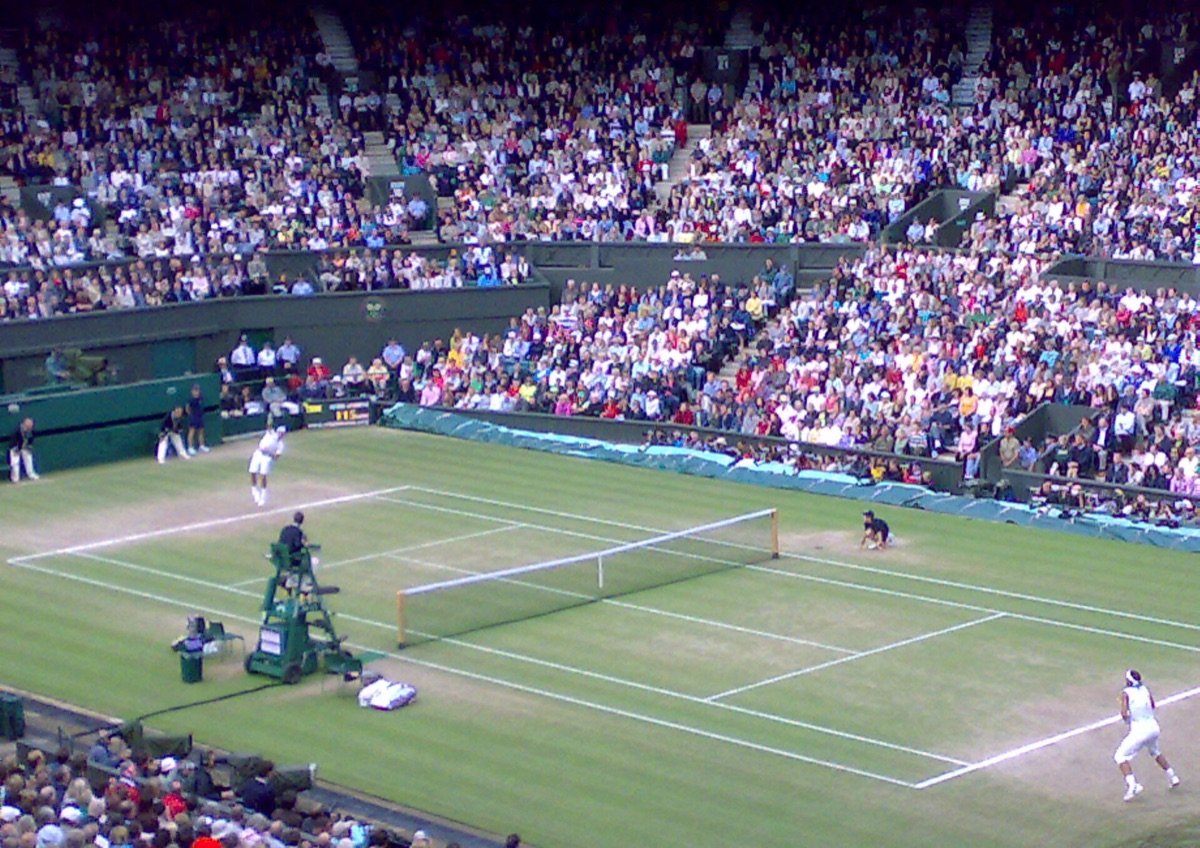
Nadal wins the Wimbledon epic Nadal
Nadal wins the first two sets, Federer saves two championship points in the fourth-set tie-break, and Nadal wins 9–7 in the fifth at around 9:15 p.m., ending Federer’s run of five Wimbledon titles and 65 straight wins on grass. Nadal adds Olympic gold in Beijing and takes No. 1 in August, ending Federer’s record 237 straight weeks.
Why it matters: often called the greatest match ever played.
2008
Djokovic wins his first major Djokovic
Aged 20, Djokovic beats Federer in the semi-finals and Tsonga in the final. He is the first man other than Federer or Nadal to win a major since Marat Safin at the 2005 Australian Open.
Why it matters: the third name arrived, though it took three more years to break through fully.
2007
Federer and Nadal split the calendar Federer
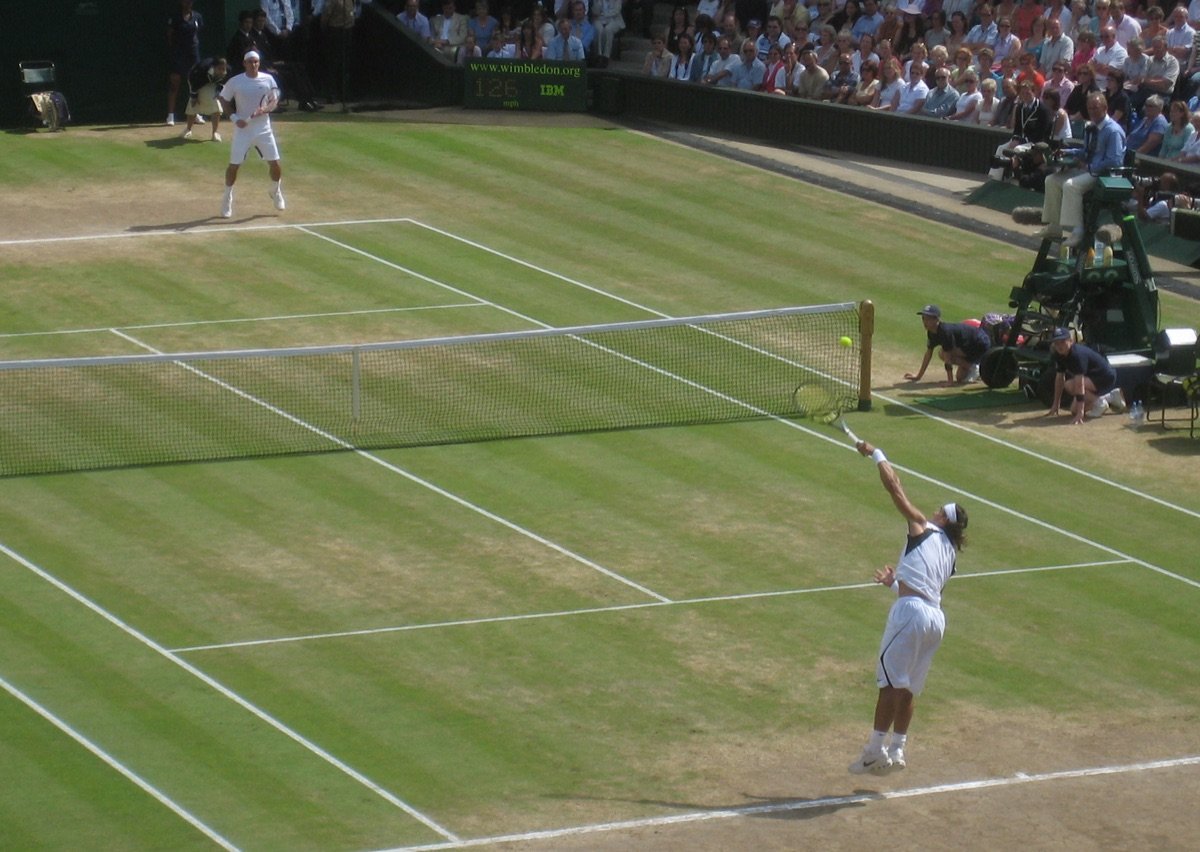
The two meet in four straight major finals: Nadal wins in Paris both years, Federer at Wimbledon, the second in five sets. Federer is otherwise nearly untouchable, winning three majors in each year.
Why it matters: a clay king and a grass king, each the only real obstacle to the other.
2005
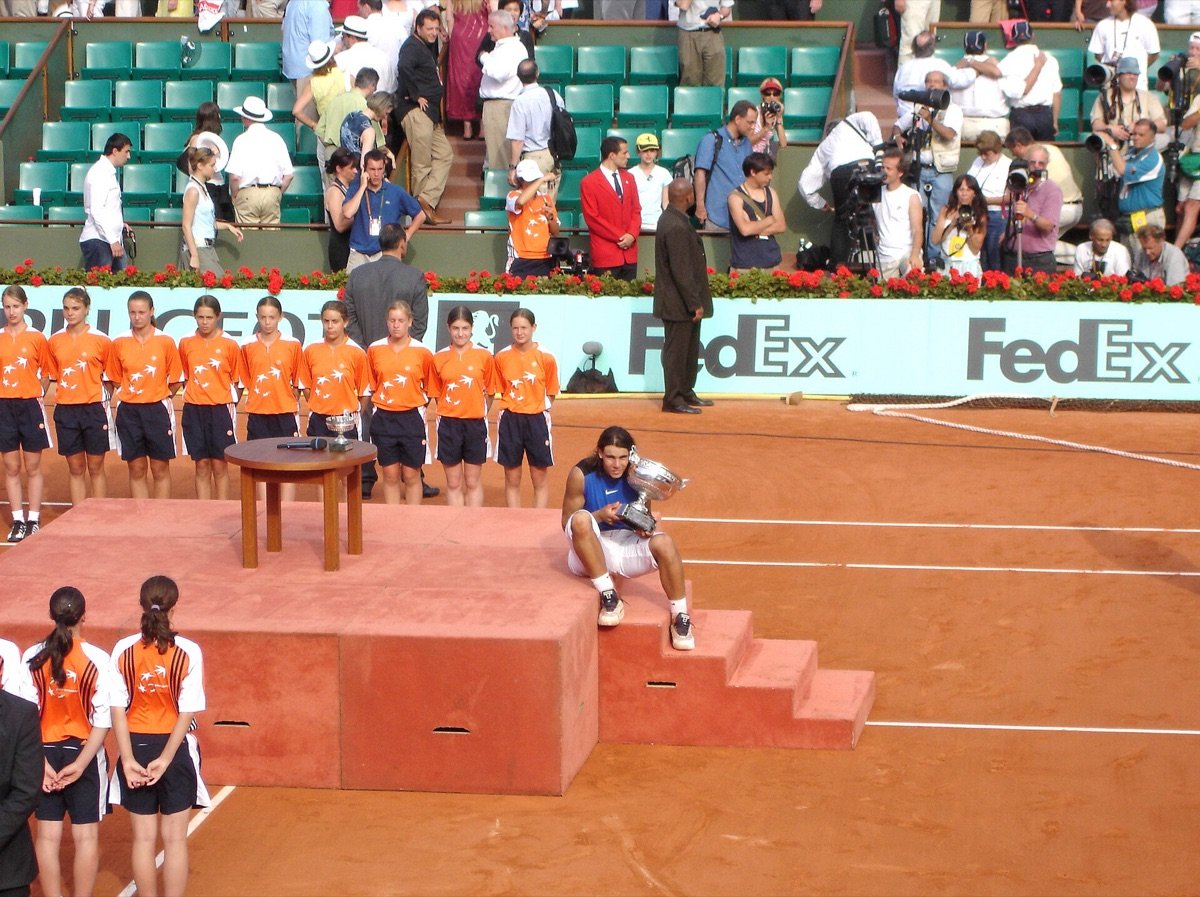
Nadal wins Roland Garros on debut Nadal
Nadal becomes the first man since Mats Wilander in 1982 to win the French Open at his first attempt, beating Federer on his 19th birthday in the semi-finals. Federer wins Wimbledon and the US Open that year.
Why it matters: the start of the 14 titles that define Nadal’s career.
2004
Teenage Nadal beats world No. 1 Federer Nadal
Weeks after Federer reaches No. 1, a 17-year-old Nadal beats him at their first meeting. Federer wins their next match, the 2005 Miami final, from two sets down.
Why it matters: the first of 40 meetings, and an early warning of a matchup Federer never solved on clay.
2003
Federer wins his first major Federer
Federer, 21, beats Philippoussis in straight sets for his first Grand Slam title. Seven months later he becomes No. 1 and stays there for a record 237 consecutive weeks.
Why it matters: the first of the 66 majors the three would share.
How the 66 majors were shared out, phase by phase
Swipe or scroll sideways. 81 majors were played from Wimbledon 2003 to the 2023 US Open; the Big Three won 66.
Federer arrives
First major at Wimbledon. 1 of 2 that year.
Federer
Federer’s peak
11 of 16 majors, plus Nadal’s three French Opens.
Federer
Nadal’s turn
Nadal wins 6, Federer 4, Djokovic 1.
Nadal
Djokovic’s first wave
Djokovic 11, Nadal 5, Federer 1 of 24; Murray and Wawrinka 3 each.
Djokovic
The old guard returns
Federer 3, Nadal 3, Djokovic 2: all 8.
Federer
Djokovic closes it out
Djokovic 10, Nadal 5 of 19 played.
Djokovic
After the era
0 of 12. Sinner, Alcaraz and Zverev win them all.
After the era
→ swipe for more
Grand Slams by Tournament
Each owns one major: Djokovic Melbourne, Nadal Paris, Federer London.
| Major | Federer | Nadal | Djokovic | Record holder |
|---|---|---|---|---|
| Australian Open | 6 | 2 | 10 | Djokovic |
| French Open | 1 | 14 | 3 | Nadal |
| Wimbledon | 8 | 2 | 7 | Federer |
| US Open | 5 | 4 | 4 | Federer (shared Open Era record) |
| Total | 20 | 22 | 24 | Djokovic |
Head-to-Head: Who Came Out on Top?
| Rivalry | Meetings | Overall | At Grand Slams | First meeting | Last meeting |
|---|---|---|---|---|---|
| Federer vs Nadal | 40 | Nadal 24–16 | Nadal 10–4 | Miami 2004 (Nadal) | Wimbledon SF 2019 (Federer) |
| Djokovic vs Nadal | 60 | Djokovic 31–29 | Nadal 11–7 | Roland Garros QF 2006 (Nadal) | Paris Olympics R2 2024 (Djokovic) |
| Djokovic vs Federer | 50 | Djokovic 27–23 | Djokovic 11–6 | Monte Carlo 2006 (Federer) | Australian Open SF 2020 (Djokovic) |
Thirteen measures side by side
Bold marks the leader. Figures are men’s singles, as of 10 October 2026.
| Record | Federer | Nadal | Djokovic |
|---|---|---|---|
| Grand Slam singles titles | 20 | 22 | 24 |
| Grand Slam finals | 31 | 30 | 38 |
| Grand Slam match wins | 369 | 314 | 409 |
| Weeks at No. 1 | 310 (237 in a row) | 209 | 428 |
| Year-end No. 1 | 5 | 5 | 8 |
| Tour-level titles | 103 | 92 | 102 |
| Masters 1000 titles | 28 | 36 | 40 |
| ATP Finals titles | 6 | 0 | 7 |
| Olympic singles | Silver (2012) | Gold (2008) | Gold (2024), bronze (2008) |
| Davis Cup | 2014 | 2004, 2008, 2009, 2011, 2019 | 2010 |
| Career Grand Slam | 2009 French Open | 2010 US Open | 2016 French Open |
| First / last major | Wimbledon 2003 / AO 2018 | RG 2005 / RG 2022 | AO 2008 / USO 2023 |
| Status (Oct 2026) | Retired Sept 2022 | Retired Nov 2024 | Active, aged 39 |
Why Each Rivalry Was Different
Federer vs Nadal: elegance meets intensity
Nadal’s left-handed forehand, hit with extreme topspin, bounced high to Federer’s one-handed backhand, the shot least suited to dealing with it. On clay the pattern was decisive: Nadal won 14 of their 16 clay matches. On grass and hard courts Federer could shorten the points and led. Their sportsmanship became part of the story, and in 2022 they ended it on the same side of the net.
Nadal vs Djokovic: defence meets defence
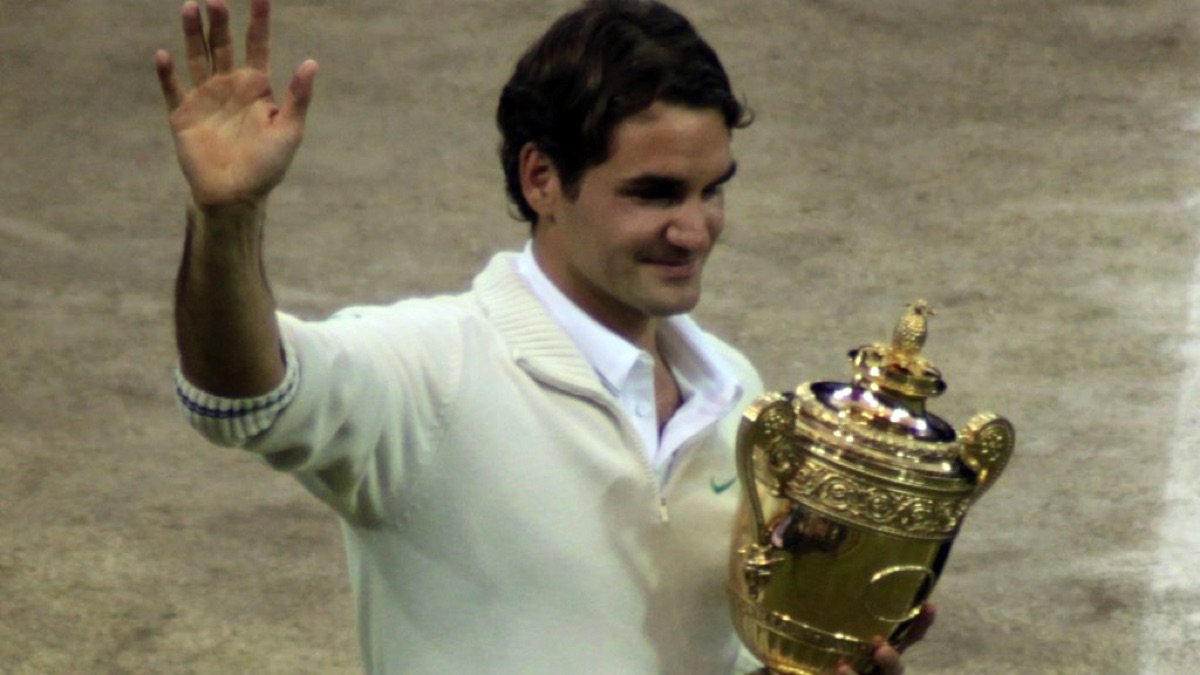
Both could absorb pressure and turn defence into attack, so their matches became tests of endurance. Djokovic’s two-handed backhand could handle Nadal’s high forehand in a way Federer’s could not, which is why he could beat Nadal on every surface, including twice at Roland Garros. Nadal, in turn, beat Djokovic eight times in Paris.
Federer vs Djokovic: attack meets elasticity
Federer tried to dictate early with serve and forehand; Djokovic returned deep and made him hit one more shot. Federer won their early meetings and ended Djokovic’s 43-match streak in the 2011 French Open semi-final, but Djokovic won the three Wimbledon finals they played, in 2014, 2015 and 2019.
Wimbledon final, 6 July 2008: open each stage
Before: Federer’s fortress
Sets one and two: Nadal surges
Sets three and four: Federer fights back
Set five: 9–7 in the dark
After: the order changes
Federer 4–6, 4–6, 7–6, 7–6, 7–9 Nadal. Four hours 48 minutes of play, seven hours including rain.
What Made the Big Three So Dominant?
Talent explains how they arrived; longevity explains the totals. All three won majors after turning 30: Federer won four, Nadal eight and Djokovic twelve. They invested heavily in fitness, diet and recovery teams at a time when that was still unusual, adapted their games as they aged, and avoided serious injury for long stretches.
They also raised each other’s level. Each had a direct benchmark that exposed weaknesses: Federer improved his backhand return to cope with Nadal; Nadal flattened his strokes for faster courts; Djokovic rebuilt his serve and fitness to beat both. Strong rivals outside the trio, above all Andy Murray, Stan Wawrinka and Juan Martín del Potro, won majors too, but none could sustain it over seven-match fortnights for twenty years.
Fact Check: Common Claims, Corrected
Checked against ATP and Grand Slam records, up to 10 October 2026.
“They won 66 of 79 majors”
From Wimbledon 2003 to the 2023 US Open, 81 majors were completed, not 79. With Wimbledon 2020 cancelled, the Big Three won 66 and others 15.
“Djokovic last reached a major final in 2023”
He also reached the 2024 Wimbledon final and the 2026 Australian Open final, losing both to Carlos Alcaraz.
“Federer has the most titles of all time”
Federer’s 103 is second in the Open Era to Jimmy Connors’s 109. Djokovic is on 102.
“Nadal never beat Federer at Wimbledon”
Nadal beat him in the 2008 final. Federer won their other three Wimbledon meetings: the 2006 and 2007 finals and the 2019 semi-final.
“Nobody beat Nadal at Roland Garros in his prime”
Söderling did in 2009 and Djokovic in 2015 and 2021. His fourth defeat came against Zverev in 2024.
“Djokovic won a calendar Grand Slam”
He held all four at once in 2015–16 and came one match short in 2021, losing the US Open final to Medvedev.
Explore More Timelines
People Also Ask
Frequently Asked Questions
Three Legends, One Era
Federer set the standard for elegance and consistency. Nadal made clay-court dominance seem impossible to challenge. Djokovic stretched the limits of defensive tennis and finished ahead in the title race. Their 66 majors were the visible result of a larger achievement: forcing one another to adapt, recover and improve for twenty years.
The numbers explain the era; the matches explain why people remember it. Whoever defines the next one, Sinner, Alcaraz or someone not yet on tour, will be measured against three players who mostly measured themselves against each other.
Related AiTimeline Stories
⚠️ Editorial Note
Last updated 10 October 2026. Head-to-head figures are ATP tour-level results; Grand Slam and ranking records follow ATP and tournament records. Djokovic’s figures are live and may change. The interactive capsule is a study aid, not a verdict. Photos are licensed under Creative Commons and credited in captions. Sources are listed below.
Sources & further reading
Every dated entry above was checked against these references. Last reviewed 10 October 2026.
- ATP Tour - Roger Federer vs Rafael Nadal head-to-head
- ATP Tour - Novak Djokovic vs Rafael Nadal head-to-head
- ATP Tour - Novak Djokovic vs Roger Federer head-to-head
- ATP Tour - Nadal announces retirement, final event at Davis Cup Finals (October 2024)
- International Tennis Hall of Fame - Roger Federer, Class of 2026
- ATP Tour - Federer inducted into the International Tennis Hall of Fame (August 2026)
- ATP Tour - Djokovic beats De Minaur for seventh Beijing title (October 2026)
- Wikipedia - 2026 Australian Open men's singles